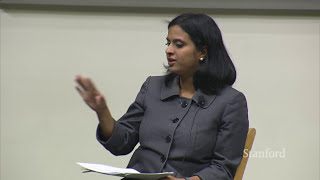
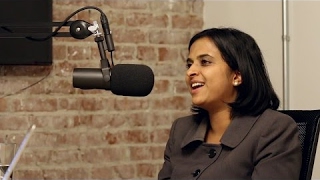
Building and Scaling High Performance Teams - Jeff Jordan + Anu Hariharan
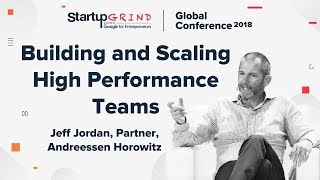
A conversational interview (YouTube) where Jeff Jordan discusses traits of strong founders, hiring early employees, prioritization/triage, marketplace product–market fit and scaling, fighting competition, IPO timing, growth vs. unit economics, fundraising dynamics, and key metrics founders should track. The dialogue emphasizes investing in people, perseverance, building early network effects for marketplaces, focused city-by-city launches, and honest, defensible fundraising pitches.
Chapters
Oh, I am here.
How do you follow that?
Well, you know, I've also worked with Jeff for two years, so I can make this really tough for him. But, you know, I'll probably start giving. You know, a lot of the people in the audience are founders and starting companies in the early stage. You know, one of the things I know you generally have done this really well when it came to investments is investing in people and, and not just ideas. Right. Even though it's consumer focused, you still look a lot at the founder. What are some of the key traits you look for to figure out whether they would make for a good founder?
It is the question. You end up investing in people. And this was something that I didn't think I fully understood when I first became a venture capitalist, because you say, okay, early it's all about the people, later, it's about the metrics. Turns out that's not the case. It's about the people every step along the way. And so some of the characteristics we look for, one is just, we call it product founder fit. Is this the person, the only person in the world you can imagine prosecuting this idea versus others. So the Airbnb guys, I mean, it is such a unique founding story that when they come and say, this is our mission, they're trying to, you believe that, okay, this team was built for this product and not a mercenary type of thing. You need to have the ability to tell stories. Because at its core, being a founder means you have to be good at selling others, on providing you equity, joining your company, becoming a customer, getting attention in the press. Tick down the list. That doesn't mean you have to have a certain style doing it. You just have to be effective in doing it. And probably the most important is just unbelievable perseverance and courage. Because the one guarantee in startups is things go wrong all the time and they always face existential crises. And if you can't power through, you're going to have a problem. So one of my favorite stories on this is at Facebook, Mark Zuckerberg, relatively early on, they faced a couple places where growth stopped. And one of those times, growth stopped and Yahoo comes and offers him a billion dollars. And if you look at the marks holding at the time, that would have made him a very, very wealthy man. And everyone on the board said, shit, sell. Everyone on a management team said, sell. And he, he didn't sell. He said, I believe I can build this business into something more valuable. Which it's only gone up about 600x since then. And interesting thing so he persevered, he powered through growth, started again. He did replace most of his management team. He couldn't replace his board, but he wanted people who believed and were on the journey with him.
And so when a founder is starting up, it's interesting you mentioned that people go through many switches in the people they hire or the management team. So what are some of the things founders should be looking for in early employees? What do you think are important when it comes to hiring, especially in that early phase where you don't have line of sight into whether it's going to be a multibillion dollar company?
I mean the early hires are just unbelievably critical. And essentially, even if they're not called co founders, you're hiring your co founders. So they have to have that kind of co founder skill which includes the same resilience, courage, creativity, multiple hats. So the first few, you really want to get them right. One of the that's not fully appreciated is a lot of founding teams end up fracturing early on and so they didn't put enough time into making sure there was the fit, shared vision, all that thing because you are getting married. I mean that's the equivalent. Some of the biggest mistakes I see, particularly as you get a little bigger, is people either hire too fast or too slow. Too fast is. I didn't do reference check, backdoor reference checks to understand, okay, this person told me something. Do others have the same perception or you hire too slowly. There's just no capacity to grow the business. So there's some fine line there. I've heard it said also everyone should, every employee should be a plus, just the most talented person at its position. I personally don't believe that. I think you want to hire for talent, but you also want to hire for chemistry and teamwork. A lot of the I'm a big sports nut. A lot of the most talented sports teams aren't the best sports team because they lack the chemistry, the teamwork, everything else. So I think you're hiring not only for skill, but for intangibles like collaborates well with others, has vision, will have diversity of points of view and things along those lines.
And in the early stages of the company, probably throughout the life of the company, but especially in the early stage, everything seems super important. Like the founder wakes up and there are probably 20 things to do. How do you think they should go about prioritizing? Or are there certain things that are more important than others and.
That'S a little challenging in the abstract. I do think it's important early on to figure out what needs to be done versus what you can do. You can work 247 literally as a founder because the amount of incoming's there, but you kind of got it beginning of the week. What do I have to get done this week? If I don't have capital, I will die. Okay, let's prioritize capital. If I don't fix this. You know, when we, when we were ebay looking at paypal early on paypal had this massive fraud problem where you know, you know, a large portion of everything, all the money emailed was disappearing into fraudsters coffers. They didn't fix that, they didn't have a company. And so you know, all hands on decks to fix that. So you know, what is today's existential crisis? And then by defining what's today's existential crisis, you kind of priority do your priority list. But it is completely a triage. You know, it's, it's, it's need to have as much as nice to have got it.
And you know, one of we often tell or I've seen founders who do as well do is they wake up and say what are the three things that might kill the company? And let's start fixing those and then focus on the rest. One of the things I know we've talked a lot about when we worked together was how marketplaces more often than not tend to be a long slog, especially in the early days. They have potential for great network effects, but if it's city by city or local, it just takes a long time. So what should a founder be really looking for in terms of do they have market fit? Especially in that phase.
We both love marketplaces, so if you know that just one of the things there, a lot of it turns out after I look back at my career, operating eBay, PayPal, OpenTable, investing in Airbnb, Pinterest, Instacart, they're all network effects businesses. And so the things that have worked really well for me are where the network effects and marketplace tends towards network effects. The hardest thing in a marketplace is getting the wheel started. I mean just because it's typically two sided, three sided. And how do you get it going? Because at OpenTable, consumer customers did not care about OpenTable until we had a selection of restaurants. And so we had to build the supply before because we cared. I mean my partner, Chris Dixon, you know, well, come for the tools, stay for the network. So we always, when we're looking at marketplaces, what's the hack that's going to get the flywheel started. And so in diligencing those investments we're looking for, are there any early indications of network effects? So from my perspective, take a local business, you're much better off establishing that their early network, network effects in two markets, and you are going to 20 markets and trying to get the revenue line as big as you possibly can by doing that. Because until you can show you have network effect, if you could show you have early stages network effects, you'll do a much better round at a much higher valuation. And investors typically would be more interested. I drive people crazy on just combing through a program made at Instacart. We did the deal over a weekend and I kept giving them information requests, okay, show me la. How much faster did LA go than San Francisco? And then show me Chicago. And just why is the gross margin there? It's just, you're trying to read tea leaves to glean, does he have early, does he or she have early signs of network effects? But yeah, that's what it all stands for.
So let's say that the marketplace has sort of proven that they have early signs of network effects and are now ready to scale. And do you think the job of the CEO really shifts from that first phase of, you know, early stage of figuring out product market fit to when now they're like, okay, I need to expand to 20 markets and we are fueling growth because I have a playbook.
It is a completely different motion and completely different skill set. You still want the founder who can get the product market fit. Because typically what happens is new challenges come in, new entrants, new everything. You know, just like the whole mobile revolution. Some were able to cross that chasm. You know, Facebook crossed the chasm, Pinterest crossed the chasm. There are others like Craigslist that don't realize there's a chasm there to be crossed. And so you do want that kind of. You want to retain the founder who got product market fit, because that comes in really handy down the road. But they need that new motion. Typically, a lot of them hire that new motion. You get someone the most valuable player at OpenTable for my predecessor and for me was the head of sales, Mike Dodson. He had run monstrous sales forces for American Express. And then he came to OpenTable and was like less than 10 people. And he was able to scale it for the entire up to the 12th year when I was involved, he was the one who did it. And he was fabulous at the go to market motion. It meant I could then go focus on other parts of the business because I knew the go to market machine was humming.
And what are some of the mistakes you see CEOs do in that scaling phase, which either stalls the scaling or it just took too long for them to figure it out?
I mean a couple are, don't take it seriously, figure it's going to grow itself. I mean we've seen that a lot of them, it's just kind of in some businesses, some pitches you're kind of like, okay, you have to have a go to market motion of this. What's your thoughts on what that looks like? And if you whiff on that like, well, it will grow itself. It will grow itself. If you can make it happen. It's a good answer, but usually it's not a good answer. A second is diffusing your effort too dramatically. In most network effects businesses density of the network is a big deal. So I would at OpenTable they spent a number of years trying. OpenTable was a classic build it and they will come business. If we get enough restaurants using our service, it will have utility to consumers and they'll want to use it to book reservations. And then the business model starts moving. That was unproven. So they picked four markets, San Francisco, LA, Chicago and DC and maniacally focused on those markets to try to make sure for years that okay, when we get a critical mass of restaurants, it'll interest consumers. Once they found the interest, once they said yes, they're interested, they were able to raise capital and then just very quickly go national and start that restaurant supply building activity again so that they now have a national network effect.
And let me ask you on OpenTable specifically because it's a very interesting example of how it was a city by city build, right? The diners were local and the restaurants were local as well. How did you fight competition?
There was this wonderful thing called the bust of the Internet. So there were early on at OpenTable there were three companies trying to scale venture funded, lots of money, trying to do exactly the same thing. OpenTable, my predecessor, had the good fortune to raise a big round right before the bubble burst. And so basically it was survival. I mean the other two companies didn't have enough capital to survive that nuclear winter of funding. And so all the complex competition melted away and OpenTable was literally the last man standing, largely because of the capital market situation. Now what OpenTable did really smart was they did not talk about their burgeoning network effect at all. When I first got there, the New York Times Calls. We want to do a feature story, front page on OpenTable. And you know, this network, no one ever talks about that. Everyone's talking about and the company, we just said no, we don't want any publicity. We don't want anyone to know what we're doing. As much as you can in a business that's incredibly visible to consumers. And then the coming out party literally was the S1. And we debated along because the S1, you publish your business plan and you publish your aspirations. We delayed that S1 till we thought the network was relatively invincible and then put it out there. That then did attract a lot of capital trying to attack the reservation space in the United States and abroad. That capital has not really deployed well. I mean, I don't think there's been much return in open table competitors trying to start new reservation systems. But they waited before publishing the business model till they were pretty sure, until we were pretty sure it was competitive, their votes.
And it's interesting because you actually took the company public in what now we call the Great Recession, probably arguably one of the toughest times to take a company ipo. And you did it really well. And today you see companies waiting longer and longer, you know, 11, 12, 13 years to go IPO. Why do you think that's the case and do you agree with it?
All right, so let me take the easy part of that, then I'll get to the hard part of that. We took OpenTable public. We started the IPO process in earnest in the late summer of 2008. We did our banker org meeting where we had six banks come in and pitch us over who would be the lead bank. It was on a Thursday. We told the banks on Friday who got the lead and who didn't. So we told them on Friday. On Saturday, Bear Stearns, one of the companies that didn't get the lead, went bankrupt. On Sunday, Merrill lynch, the company that did get the lead, traded to bank of America. And by Monday morning, it was obvious that the number of reservations in the United States over the weekend had fallen by 15% because of this economic panic that was going on. So we have our org Monday morning and I sit down and go, this is not going well. So we ended up putting it on hold and then restarting it when the business got predictable. And we went out in May 2009. A couple of comments. A great business can go public anytime. We went public at the absolute nadir of the Nasdaq and it was a very successful offering that worked really well. I'm a big believer a great company can go public every time. I'm also a great believer in the, you know, IPOs go back and forth in terms of are they attractive, are they not attractive? M and A goes back and forth. Is it attractive and not attractive? Some of it's cyclical. When I was in business school, which was a few years ago, if you asked any, if you asked a class, how many people in here want to run a public company, a 60 person class, you would have gotten at least 50 hands. I ask that question now at Stanford Business School because there's an open table case at Formation New Ventures about six times a year. And you know, I've had classes where no one raised their hand. I've had classes where two people raised their hand. So the pendulum clearly has gone from there to there. Now this is the class is Formation of New Ventures. So you're kind of, how many people in here want to start a business? You know, 64 hands. And then how many want to run a public company? One hand and you're like, okay, for the rest of you, do you want your, the business, you're creating it, do you want it to live long term? And they're like, yes, I do. And it's like, okay. When you accept venture money, there's, there are basically three doors. Door number one is bankruptcy. Who wants bankruptcy? Not a lot of hands. Door number two is you sell your baby. Who wants to sell their baby? Get a few. Who wants their new company to live into perpetuity? Brian Chesky just wrote about, I want to have an infinite time horizon. What he means is he wants Airbnb to be around next century. And so raise your eye. I want it to be around next century. Then your option is either it goes bankrupt, you sell it, or you go public. And so for me, the whole anti going public thing is definitely overblown. I mean, it is what gives you the capital to build an enduring business, as Jeff Bezos proved, Mark Zuckerberg, Larry Ellison, Larry and Sergey. I mean, it's just, that is where you go. So it'll be interesting to see if it can get dragged back because I'm involved in a number of companies that have the potential to go pump and then the question of when they will.
It's interesting, YC has not had a single company go IPO yet.
And I think there's a little overlap between those two universes.
Yeah, that's right. I want to switch gears a little bit of sensitive time. I have two more questions. One, I know especially from your experience with Instacart. You know, one of the questions, one of the things founders often debate is growth at all cost versus what point do we focus on unit economics? And it's a very sensitive dial in terms of which one you're dialing when. How do you advise founders should think about that.
It's a great question. First of all, I hate when founders come at you with it. Either or. It's either A or B. It's like you can't do like 80% of A and 20% of B. It's gotta be one or the other. So there's an element of false choice in that often. But a couple years ago when capital was free, just these high rounds, high valuations, it. It put a really tough choice on the entrepreneur in a lot of the markets that were competitive. Do I go for growth at all costs, assuming capital is going to be available on great terms forever? If capital is available for great terms forever, you want to go for growth at all costs. Because if you're the winner, then you can be profitable. If you're doing that and capital becomes dear and hard to raise, you're screwed. I mean, so you just, you kind of like you're just going to run. If you're burning 20amonth, you have to have 30 million in the bank and the capital markets close. It's hard to respond on that. So it confronts the entrepreneur with a really, really interesting choice. I think part of it is how confident are you in the capital? What's your line of sight to capital? I always like to over capitalize a company when you have the luxury of doing that. So Airbnb's got a few billion dollars of cash in the bank for a rainy day. They're actually making money. So it really is a rainy day. But it gives them high degrees of confidence and flexibility. Pinterest has a ton of cash, but part of that is just where do you think on that curve and how much risk are you willing to take? Because there's two errors. One is you burn high and it doesn't work. And the other is you burn low and your competitor who burned high, it does work. So it is really one of those art things. And I think that's where if you get the right board, right advisors, right people involved in the company asking the right questions. An EIR at Dreesen Horowitz is Ali Resnick of bp. You know, BP didn't do what Ali hoped it was going to do. It raised a ton of money and it didn't work. And it was interesting When I was talking to him afterwards, I thought he was incredibly thoughtful about what he did well and what he wished he had done differently. And part of it was there were he didn't get a lot of pushback from. You don't want to burn at infinity. You want to make sure you get there. So I think the other part of this answer is get people whose point of view you trust. Raising money is part about valuation. But early on, you're going to get some member of the firm who's going to be involved with your company in an advisory capacity, typically board of directors. If you listen to Reed Hastings, the one job of the board is to hire a fire the CEO. They'll hold the CEO accountable to performance and hire and fire them. You really want to respect the person who you are just giving the ability to hire or fire you to. And I see that mistake made a little too often where the entrepreneur will optimize for valuation or something over quality of person, quality of firm kind of thing.
Got it. And that actually tees in. Well, to my last question, which is a lot of them here are founders and probably will race soon or at some point. What would your advice be in terms of what they should focus on during the fundraising process, in terms of articulating like three or four things as part of their pitch or the entire process itself?
The fundraising process is a fascinating one. So let me give you a sense for what it feels like on our side of the table. No one ever presents a crappy value prop to us. Just kind of like, I know you're not going to fund this, but there. So everyone's trying to make their own, their business look about as good as they can. So part of what our job is is to try to discern what part of that kind of we believe and if there might be holes in the story. So one is just understand that we are paid to be cynical, to try to probe for areas of weakness because no one comes and says, this is the weakness. Few people come and say, by the way, I do this really well, but here are three glaring weaknesses in my startup. And so our job is to try to figure out, okay, it's all risk. I'm willing to take these are some weaknesses, but boy, look at those strengths. I want to invest. So one is understand that's our role. Two, understand that if we uncover things that we kind of get the sense you're trying to hide, it's not good for the dynamic because the immediate assumption is what else are they hiding? If I caught you on One, what else are you hiding? And that then kind of changes the dynamic of the conversation from, okay, we're having a discussion in your business, like, are you, are you accurately representing that business correctly? And that is a momentum killer in the room. So just understand the dynamic. Some of the best pitches I've ever seen or where the entrepreneur does come in of like, here's the vision, here's the progress against it. I still have to prove these. I got a pitch this morning, I still need to prove these two things. I mean, that's what I got to prove. But I'm raising my C round, so I think it's a great trade off. So the biggest thing I think you want to do is position your business in a good light, but in a light that you can defend all the way down. Because if we're going to end up, either of us are going to end up funding it, we're going to do confirmatory diligence. So these casual statements, oh, we're profitable in every market, we're going to come back and look, are they profitable in every market? Oh, we got early signs of network effects. Show us. And so the things that are easy to say in the 45 or 50 minute pitch, are you going to need to defend? And so just understand that that's kind of the relative roles that we're playing and just keep that in mind. We ended up collaborating, by the way. Anu was one of the best hires I've ever made. I'm so thrilled to have the opportunity to work with her. I'm so proud. She went to YC in the continuity fund. We ended up funding a blog together a bit out of frustration over the misrepresentation of metrics, saying these are what we consider the 16 metrics that matter. Then we did another 16 metrics that matter. So there are 32 metrics that matter. And a lot of it was from the mistakes entrepreneurs will make. So we love marketplaces. If you confuse revenue and gmv, we can only assume either you don't understand the difference or you are not trying to represent your business accurately to us. So, you know, things like that are, avoid those landmines. They're incredibly obvious landmines. And so, you know, don't step on them because it undermines your credit, the credibility of the pitch.
Yeah, that's right. And also, I think too often, you know, founders think that you have to clean up all these metrics when you're presenting to investors, but it's really how you manage the business. Because measuring the right metrics tell you whether things are working or not or which areas need attention. Anyway, thank you so much, Jeff.
Thank you, everyone. Appreciate the time, you guys.
More from Anu

Company Building, Network Effects, and Understanding Different Business Models with Anu Hariharan

5 Critical & Company-Altering Learnings from B2B Startups | Y Combinator MD Anu Hariharan

a16z Podcast | E-commerce, Payments, & More in India's Evolving Retail Landscape