How to Build and Manage Teams - Stanford CS183F: Startup School
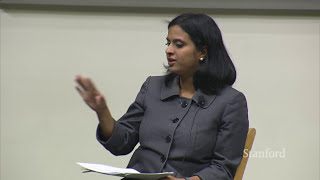
Vinod Khosla explains how the first 10-15 hires determine a startup's trajectory. Map your biggest risks to find candidates with relevant expertise, give founders the recruiting job, and expect 30-35% of early hires to fail. Generous equity pools attract the best people.
Chapters
Today we have Vinod Khosla, founder of Khosla Ventures and former founder of Sun Microsystems. He has advised a lot of startups in Silicon Valley. I'm going to interview Vinod today and we're going to talk about how to build and manage teams. Thank you, Vinod, for taking the time. So you've talked a lot about company building and hiring, and I know that you've often said that a company becomes the people it hires, not the plan it makes. So can you elaborate on what you mean by that? And especially for founders who are just beginning to start a company, like, what should they focus on in hiring?
Yeah, this is one of my favorite topics. Many, many founders, when you start, you know very little about what you're doing. If you did know enough, you wouldn't start the company. If you were really sensible and pragmatic, you wouldn't start companies. I'm an entrepreneurship zealot, as self described, and I'm a real fan of people trying companies and trying to build things. Especially when you're younger, when you can afford to take the risks, there's no reason to go work for somebody else. My book, and I never did, what I find is people have plans, but it is very, very rare for a company to achieve that plan. So the way to think about where you're starting is a collection of ideas in a relatively rich space that you find you can be passionate about. That's the way to think about a plan. And I have a separate talk on flexi planning, which is don't plan, just plan to plan. But the critical part of that is the team you build ends up making all the iterative decisions about where you're going to end up, whether to hire the next person from this area or that area with that strength or some other strength, or to pick path A or B is very, very critical to where a company ends up. There's a huge path dependence and the path depends so much on the people you hire, your starting plan becomes much less relevant than the people you hired initially, especially the first 10 people. Those 10 people will then go on to hire the next 50 and they will then hire the last hundred. You can fire the original team and its gene DNA stays in the company. So that's why it's so important and why the people you hire determine the company becomes. And we can come back later and talk about where I see mistakes made around functional hiring. People always ask me and I say this gets tweeted a lot. There's a huge difference between a $0 million company and a $0 billion company. And the difference is attitude and ambition and mostly the kind of team you build, which will reinforce certain directions for you, especially who else you end up hiring. So it's far more critical than people believe and it's very hard to hire those skills later. Hence my.
Yeah, and I think you've touched upon the first 10 hires becoming being so important and especially defining pretty much even the culture or the belief system that you would call for the company. So if we, you know, a lot of founders here have like a one or two, two member teams, how should they think about, you know, who should be those first few hires and how do they go about finding those candidates? And I know you also have talked, you have a strong view about how equity should be split for the first 10 employees versus the next 30. So would love to hear like, how should a founder think about that?
So many startups are very tactical and they should be, but in doing the tactics, you can sometimes forget what the big vision is and you may even exclude the big vision. So I was talking to a company fairly recently in our portfolio and they'd hired a bunch of people to do particular tasks they needed doing. And there was a new hire, potentially a big hire, very attractive person to have joined the team. And I asked the founder who's going to interview him and he told me who would interview this founder. And I said if I was a really great candidate and these three people interviewed me first, I drop out of the recruiting process. So I said, you know what, why don't I be the first interviewer? That can be a real waste of my time because I want him to grab the big vision first and not just be interviewed. Let me sell him on the big idea and why he can be a part of forming it. And so the best people almost can't be interviewed. They have to be sold and evaluated. Evaluation is important, but evaluation and interviewing are different things in my mind. So once you hire the first five and they're interviewing other people, you might actually exclude the best candidates. And that's very, very tricky for a founder. At the same time, sometimes you can't afford the big names or you don't have enough to attract them. And those are very tricky times. And that's why I think whether you're a $0 million company or $0 billion company sort of gets set by the time you're 15 or 20 people, there's people who've done it very poorly. I won't give you examples, but people like Stripe Patrick did an amazingly great job of his early hires and has continued to do that. So you can completely change the trajectory of a company by that hiring and how big you'll become.
Now, what are some of the things that you think Patrick at Stripe or some of these successful founders have done in the first year? Is it that they meet, you know, candidates in other roles? Because the founder often also doesn't know a lot of the other roles or doesn't have domain knowledge about the roles that they are looking to hire.
So let's talk about each of those separately because they're quite distinct things. First, I think of company building as going after Mount Everest, but nobody got to Mount Everest without getting to Base Camp first. Here's the misstep. You can't get to Everest without Basecamp and many people forget that Basecamp has to leave to Everest. So they set up Base Camp where it doesn't help reduce the risk to Everest. Building a company, you never shoot for the big enchilada in one step. You go after Basecamp one, then Base Camp two. It's a very good analogy, however, especially with bad investors. And I have a lot of beefs about investors. They want revenue or they want breakeven or they want management. All the things that can lead to setting up business here. That then excludes the possibility that you learn more about how to get to Basecamp two and three. You are out in some other local minima or maxima and that's really dangerous early on too. In fact, one of the beefs I was just talking to somebody in the YC class and sort of talking about this. I said this is one of my pieces of advice to yc. If you get too tactical and forget the strategic, you'll set up Basecamp in the wrong place. You want to decide which is the rich space you want to go after with the technology. In this case, starting with a great technology before you start doing all the tactical stuff. So there's this uncomfortable balance between tactics and strategy. I say be obstinate about your vision, be flexible about your tactics. Another way I'd like to say it is think big, but act small. These are really difficult things to navigate. Much easier said than done. But back to this issue. Let me talk about a process I call gene pool engineering. If you going after a space, assuming you pick the right space or the one you're passionate about, it doesn't even have to be right for others. Right for you. The first thing I suggest people do is say all the ways in which you can fail. Think about it. You want to identify the key risks in whatever you're trying to do, then you hire for those risks. So I always say to people, find your top five risks for each of those risks. Say risk one. Who are the companies that have dealt with that risk? Or where does the expertise on that risk lie? Make a list of three to five companies. And by the way, this document, you'll get a link called Gene Pool Engineering that's on our website that I wrote just for this purpose. If you've identified the five companies that have dealt with that risk, then you have at least the places that can reduce your risk. Within each company, identify three names. Now you have 15 names for the risk number one. If you do that for your top five risks, you essentially have a library of names that will help you reduce the risk in your business. And that's risk oriented management and startups. After you decide what space you're on, going after is all about risk management. There's lots of risk trade offs. Every time you hire somebody, you increase your burn. You're taking on financial risk, but you're reducing some other risk. Maybe it's product risk or development risk or feature risk. So it's a series of trade offs. That's how startups should think about what they're trying to do. So this is a process I call Gene Pool Engineering, where you engineer 15 names for each of your major risks and then go after all of them and hopefully hire one or two of the 15. And so you then engineered the gene pool of your company for the risks that are in the plan you're going to pursue. It's way more precise than the platitude of let's hire great people. I find that really disturbing because I've never actually had a startup come in to me and say they're only hiring bad people. Never quite happens. So how do you make platitudes into something concrete and actionable? That's a big thing with me. The second part of that is the reality that startups seldom pursue the original plan they started with. So they've hired. You also have to hire not only for the risks, you know, but all the other things that you might pivot to, change to adapt, to iterate to. Because building a business plan in a new area is a series of iterations. So suddenly this risk requirement goes in parallel with this other requirement, which I call smart adaptation. You adapt very quickly to whatever the market is teaching you. YC is particularly good at that. Teaching you how to iterate quickly and learn and essentially Very similar to what I call this flexi planning process where you iterate your way to a plan instead of saying this is my plan. I always worry when people make plans seven years out and give me forecasts because it tells me they don't have a clue what they don't know. That is one of the great benefits of YC from my point of view, this iterative approach. Other people call it MVP or there's other names for this iterative approach. I call it flexiplanning. But the team you build, in addition to this risk approach, also has to be open to new ideas, grab new ideas, ask a lot of questions, adapt quickly, brainstorm with others constructively. So you build on each other ideas. These are a parallel set of requirements around hiring that are very hard to quantify. They're also full of danger. They're full of danger for the following reason. Sometimes people don't hire for these. That's a danger at other times. And one of the biggest risks if you decide you want to be aggressive about hiring is going after names or titles or other things. Big names and titles in big companies are really, really dangerous and misleading for startups. My biggest mistakes early on in my career was getting too impressed with somebody's title at IBM or some big company. Now I take the view if somebody's been at a big company for 10 or 15 years, if they've been at Cisco for 10 years, they can't work effectively in a startup till they get re brainwashed by failing once or twice in the startup, then it'll work. So hiring for this other stuff and not falling into the trap of just big names is very important. Also depends upon your domain. If the domain your startup is in is radically different than your act doesn't, let me put it differently, some domains need a lot of expertise. So if you're doing a blood test like Theranos, you can drop out of school and start that. But eventually it's a serious physics and chemistry problem and you have to get that talent on board. If you're doing something like Stripe did, it was a very simple problem. You don't need three PhDs. If you're going to solve health care with AI, you're going to need expertise. It depends on the domain. You don't always need the gurus. It depends on your problem. You don't always need the big names. Another very counterintuitive thing, we were recruiting for a CEO for our company Alive Corps. They essentially do cardiac care. And I insisted I would not talk to any candidate who had ever worked in healthcare. And that's because healthcare executives tend to apply old rules because the domain hasn't changed very much. People are so used to applying old rules and applying good process as opposed to inventing this new future, this new path. And that's very dangerous. We should come back and talk about how founders should figure all this out when they don't have a clue what these other functions are. That's really dangerous. And so that's a big, big caution. It's seldom that a person out of a domain can innovate in a domain. And if you're a young founder and you hire somebody with deep experience in a domain, it is logical as human beings to defer more to their knowledge. And that is a real problem. It's important to understand the problems they raise, not the solutions they propose. Because if you take that, you'll keep doing what traditional people in that industry have done. This is why CEO hired into companies don't work very well, and why founder vision becomes so important and so critical. I'm wandering all over the place, but correct me.
Yeah, no, this is how I think you've also. Before we touch on the functional hiding and how to look for domain knowledge, I wanted to touch upon one other element that you talked about in the Gene Pool hiring paper, which is about diversity. And not in the literal sense, but you talked about there are different dimensions of diversity that are important. As you're trying to figure out candidates, can you elaborate on like, what are the different dimensions of diversity a startup should really focus on and why is it important to do that early on?
Yeah. So if you buy the thesis that most of what you'll end up executing on isn't part of your plans today, then the single most important thing becomes people who can help you evolve your plan. And the more diverse the set of people, and I don't mean diverse ethnically, I mean backgrounds and places they've worked, areas they know, age, level of experience. There's some really great things about experience. You want experience, but you don't want experience to have you guide you into doing what others have already done in that same business and not innovate. That is the result of too much experience. So mixing the right experience where you can identify the problems with first principles, thinking from fresh new ideas, people who've never worked in the domain, or people who actually are just fresh graduates and have no idea but can ask fundamental questions, those are the best kind of founders. Put it differently, in big companies, you need people with good process. In startups, you need people with good iteration and good adaptation. And those are very, very different skills. Because in startups you invent 90% of stuff. In big companies, 90% of what you do this year will be what was done last year. And so there's very little innovation. Takes a different kind of person. Both valuable, in fact. Every startup, if they're successful, will need some process people later. But process people early in a startup can be a disaster. Too good a manager is a bad thing for early startups, but at some point you'll really need to add that. So that's what I mean by diversity. If you have a bunch of PhDs, how many are experienced PhDs and how many are fresh, how many are from within your area and how many are from completely outside the area? Those. Every dimension of diversity will help because they will bring a different point of view as long as they have this ability to think from first principles, not say, this is done this way because we did it this way before. I should also sort of probably say this feels way more complex. This is why I've written about it extensively in two articles. One's called the Art and Science of Hiring. You'll get a link to that. It's on our website, too. One's called Gene Pool Engineering. There's a third one I actually wrote when Keith Roboy joined us, which talked about what boards should and shouldn't do. Boards do more damage to startups than anything else I know. That's why I don't go to board meetings anymore. Applying tradition just really hurts. So when you're looking for an investor, it's not money, it's help in building this team. That's way more important. Way more important to where you'll get to than anything around the amount of money raised or the valuation or other things. We should come back and talk about founder equity also. But I spend a third of my time, maybe more time on recruiting for our companies than any other single thing I do because of all the things I've talked about. In fact, at Startup Grind, the interviewer asked me, said Chamath was saying that you couldn't possibly spend that much time interviewing. And I said that's because he just fundamentally has a different belief system than me. I do, and it's most of what I do. I'll go through 100 LinkedIn resumes by myself on a weekend if I'm looking for a critical hire for a company. Because a few people can make or break a company.
Yeah, and I think you've talked about this too, which would be helpful here. Like the CEO's job initially is to be the chief recruiting officer. Right. So, so can you elaborate on what is the founder's role and how should they be thinking? Especially because we see a lot of startups where they say, oh, I'm looking for VP of sales, and they write down all the skills, but then they forget about all the elements needed for what it takes to lead in a startup.
Yeah. So let's come back to this notion of functional hiring. Let me talk about what founders need to do a founder's role. And when I was a founder, I spent probably 40% of my time recruiting. It's not coding. You're much better off hiring the people who can code than coding.
And was it throughout the life of the startup or did it change both.
In the beginning and throughout the life of the startup? I think it's true of very early mid stage and later stage companies and really good founders do most of that. Because if you can hire the people, you should generally be able to hire the people who can do any given job better than you can. And I tell founders about their role. If there's any job you can hire for modular money, which we can talk about, you should hire for that role so you don't have to spend time. Founders have some unique characteristics. They have sort of this entrepreneurial spirit, this first principle thinking, this attitude says, yes, done this way, but why this why? And I recommend a book by Simon Sinek called Start with why. It's a really good book about questioning everything and yet staying true to your vision, even if it's not precise. If you're doing something radically new, it's going to be ambiguous. And very, very few normal people are comfortable with that ambiguity. Let's charge ahead in this direction. Even though we don't know precisely what the business model is or why or what will take that. Leadership is a founder's role, and that's something it's almost impossible to hire for. If you hire a senior executive from another company, there's zero chance you'll have that they can systematize what you're doing and get much more boost to your efforts, but not without your vision. And so that's a founder's role. I call it leadership. It's belief system in the face of ambiguity, it's figuring it out kind of attitude, assembling a diverse team. I was very lucky as a young founder. I loved awesome people. I didn't know why we hired many of the people, but if you look at it, the first 15 people we hired at sun probably started more than 10 companies worth a billion dollars. Later on we hired Carol Barts who became CEO of Yahoo. We hired Eric Schmidt who became CEO of Google. We hired all these. We hired Joy. In fact, Bill Joy became a founder six months after we started. We should come back to it. I so badly wanted him. We made him founder retroactively. Anything is okay in this game of assembling great talent. I loved learning from great people, so we hired great people. In retrospect, that was why we were successful. And I started believing company becomes the people you hire. By the way, Andy Bechtelsheim was a student in Margaret Jacks hall not far from here where the computer science department used to be. And he'd licensed his technology to six companies. The only one that succeeded with it is us. And we started two years after some of the other companies had licensed the technology. But we got all the people. I hounded Andy till He dropped his PhD to join me. I hounded Bill Joy till He dropped his PhD to join us. So both of them dropped their PhDs when they thought they were six months from finishing. Selling is also a founder's job and it's gut wrenching because you don't know you're going to be successful and you're trying to convince somebody to drop their PhD. It's gut wrenching. Hiring is gut wrenching. Are you convincing them to drop a comfortable job at Google and join you? So many stories. Anyway back, what were we talking about?
Yeah, no, I think just to read. I know before you've said in one of the points that when it comes to selling for hiring, no means maybe and then maybe means yes.
I have my favorite When a candidate says no, I convince them it's a maybe. Then I'll spend enough time. Once they say maybe, then my job is to say a maybe is a yes. So I always say a no is a maybe and a maybe is a yes. And it doesn't matter if you fail occasionally, when you succeed, it's worth it. People give up on recruiting way too early and way too quickly. I just hound people.
I wanted to touch upon founders equity because I know you brought that up twice, so how should you know? Especially when you're trying to attract. You want to build a great team and a great team is a magnet for other people to join the company. How should founders think about equity, especially in the early hires?
Yeah, so I find by and large, and there are exceptions, plenty of them, founders keep much equity for themselves and they don't realize the following fact, anybody they hired who's exceptional will a year later figure out they want to start their own company unless they're a founder. So if somebody is really. So you self select for okay people, good people, not awesome people. So my son's starting a company, actually two companies right now. He graduated last June from Stanford and I convinced him that him and his co founders should just take 15% each. Leave 15% for a third founder, another 15% for three junior founders, and then a 20% pool after that. So they had this humongous pool. I said, because I fundamentally believe a company becomes the people it hires. I said, you'll be able to hire great people. So for one of his companies, and I think this is public, if it's not, stop recording. He just hired for one of his companies the VP of engineering of Quora. Why would that person join a fresh graduate? Because one, he helped define a fairly interesting large vision. But two, he had this huge pool and he's been talking to people who would take that kind of thing, any of whom could start their own company. Let me invert it and say when a team comes in to present to me one of the questions I ask myself in judging how good a team is. Yeah. Do they have expertise in all the areas they need expertise. But the single most important question I ask on this team, if some of these people left and started a company, would I want to invest in that company? If somebody has two people like that on their team, zero chance I won't want to invest independent of whether I like the plan or not, because they're collecting great talent. If I could have great talent or a great plan, I'd rather have great talent and somebody a founder who loves great talent. So it's a great way to judge a startup is what kind of people do they hire. I was telling Anu and I told Sam, in the last YC batch there was two companies we made an offer to if they hired in a critical area, they're both AI startups. If they left co founder equity, equal co founder equity for an AI startup, I said, I'll write you a check at the valuation you want if you do that. If not, then we don't want to invest. One of them took our offer and the other one didn't, which is okay, but I really religiously believe this idea. You get a bill Joy or Andy Bacterchan. And they weren't experienced, they were graduate students, but they made the whole company. Eric Schmidt wanted to come work for them. By the time we had first 10 people, we were getting so many resumes. Everybody wanted to join us because we had so many awesome people other than I was sort of. Me and McNeely were just fresh business school graduates. We didn't count. I would say. And I keep telling my son, hire some magnets. The people I tell him, you graduated from Stanford, you're young, nobody's going to come join you just to work with you. Think about who you could get that everybody wants to work with. That's how you'll hire. The numbers 10 through 30 or 50. A rough rule of thumb I use on equity. I think Sam has said at least 10% of the company should be reserved for the first 10 hires. I actually think that number is too low. I flip it around. Say when a company is 50, the founders should have a third of the common. Their direct reports should have. So if there's five or six direct reports should have a third of the common. And everybody else, the engineers, the worker B should have a third of the common. If you do that, people don't leave. People stay with you. Now Sam has a good blog post on how to attract a team. One of those is growth. Growth is always a metric, but you can't always close that. When things get tough, when you run into trouble, why will people stay? They'll stay because they believe in your value system. What are you going after? The vision you're defining. Define an interesting, ambitious enough vision if your vision is just to make money. The people who at the first dip will say, oh, I joined to make money, doesn't look like it. They'll leave. They won't stick with it. But the single biggest reason people stick with a company is because they have people around them who are really awesome, that they can learn from, who are better than them. Everybody should feel that way. That's a great culture to set up. And every time I've seen that done, it's turned out really well. This gene pool engineering article I mentioned, I put together in 1995 when we were starting Juniper. Nobody had ever challenged Cisco and nobody wanted to challenge Cisco. And no customer in the world wanted to buy TCP IP routers. None for the public network. It sounds incredulous, but go look up articles from 1995. Not a single carrier AT&T, Pac Bell, what is now Verizon, all said they would never introduce TCP IP in the public network. And we defined this large vision. We built this process of engineering the gene pool of the company and everybody got excited about changing the course of the Internet from What was atm? And nobody remembers this, but a very, very senior executive told me when I was looking at investing in this, they would never use TCP ip. This is what telecom carriers do. This is how traditional wisdom goes. But you need this awesome team to change that. And Pradeep Sindhu, who still was one of the great founders I've run into, not only built a great company, but it actually changed the trajectory of the protocols with the Internet. In my view, we would have ended up with something else, most likely atm if all the carriers had their way. Every single carrier from Deutsche Telekom in Europe to AT&T here had decided they would go with ATM, not TCPIP. So, great missions, great people to work with, all that is why you want people in your team.
Got it. And I want to touch upon functional hiring because I think it is a component of building a great team as well. And too often founders tend to prioritize a lot on skills for a particular role versus really figuring out the complete package or the fit of the person. So can you talk about how should a founder think about hiring?
So let me answer that question, but later. If you're a founder, you're a technologist, or have a technical breakthrough or a big idea and you start a company and you need a VP of marketing or you need a cfo, we should come back to the question, and I covered this in my Art of Hiring of how you judge somebody is a good VP of marketing or a good cfo. Because the first thing you have to realize is you're not qualified to judge. Knowing what you don't know is critical. And one of the most important things a founder does is decide whose judgment to trust on what topic and not just ask their friends, because they may not be qualified. In fact, founders just hired their friends instead of gene pool engineering a startup, and that's wasting slots and talent too. But let me go back to functional hiring. We can come back to this. Otherwise, I cover it fairly extensively in my paper on hiring. How do you interview people? How do you judge them? If you need a VP of engineering, you can look at somebody who's managed an engineering project. But if you're a founder, especially an inexperienced founder with a big breakthrough idea in a new space that nobody knows, you clearly need to build an engineering team and execute on that. But would you need more than that, somebody who's going to go help you evaluate all the pivots and changes and iterations in your plan? Now, let's say you hire a VP of engineering who's good at that. A VP of marketing who's good at marketing, a VP of sales who's good at sales and cfo, and they do their job well. Who's going to help you figure out what path to take? So I always say you need functions, but way more important, while hiring those functional people, you're getting something else, whether you recognize it or not. You're getting somebody who's going to participate in all the more critical decisions. Even more critical than having engineering run smoothly, which is, which path should we take? So ask the following question. When I hire a VP of engineering, how will it make my VP of Marketing better? That's by asking fundamental first principles questions. Elon Musk's book is worth reading because he knew so little about building cars or about launching rockets. He made so many screwy mistakes that could have been avoided. But if he had had all that experience and knowledge, he wouldn't even have attempted what he did. So I'd rather have somebody like Elon Musk who just fundamentally asks a lot of questions, why are we doing it this way? Not that we've done it this way for 50 years at GM. Remember, GM spent more money, more time, and started earlier trying to do an electric vehicle called the EV1. And Elon, with no experience, by asking a lot of questions and adapting rapidly as he screwed up, he got to a place where Tesla is a much more interesting company than GM today. So when you look for that functional hire, realize you're also getting this other thing which is much more important. Look for how they think, how fast they change, how much they become defensive when you challenge an idea versus saying, oh, why didn't I think of that? Or be much more brainstorm oriented. This sort of horizontal hiring that you get while doing functional vertical hiring is much more important and a much more important dimension. And by the way, most VCs don't look for it because they've not gone through building companies themselves. And so they give you bad advice. The number of times they say, go get somebody with distribution channel expertise. I'd rather have somebody figure it out and not have a source of inertia in this fluid, dynamic, evolving thinking method in a company. So when you're hiring more than anything, you're hiring a brain trust. And they happen to also have skills in doing functional jobs. But the brain trust is more important than the functional job. And evaluating them is very tricky. And it's tricky because partly you don't know how to evaluate somebody outside of your area of competence. Two, you call a VP of marketing at Cisco. I don't mean to pick on Cisco, but it's a good company to pick on. They will look at marketing very, very differently than what a startup needs. So they'll give you the wrong advice going through. And this is where the tricky part comes. Not being overly swayed by titles or positions and understanding why people did certain things and how thoughtful were they about it. What did they do that wasn't usual is very hard. It's also tricky to go back to this question of how you evaluate people. Most experienced interviewees know how to give you the right answers. They're going to fool you. You ask somebody, what did you do here? They'll retroactively look at what was great about the strategy and say, I did this. I've actually had people pitch me on why they did Sun's marketing strategy. Being very, very indirect, and have a list of questions in my paper on hiring, the way you get to the bottom. So I always, for example, give you one example. I'll ask the same thing three different ways. I'll say at the beginning, what do you love doing? What are you good at? Somebody says something. Then while talking later about a job, I say, what did you do really well there? If those two don't coincide, if somebody's making it up, they won't. I'll ask that question three different ways. Third time I might ask, if you were to join this company, what would you think your strength would be? I've asked the same question three different ways in three different contexts. People who are making it up will make up different answers. People who fundamentally have the truth will give the right answer. Then I might, at the end of the interview, ask, so what would your boss say about you? Now I've asked the same question a fourth time. If they say something, then I'll say, hey, can I get your last performance review that your boss did? If they say no, I know they don't want to share their performance. I have 100 tricks like this I use. You can never rely on the direct answer you get in interviewing somebody. It's the trickiest thing. And then it's good to get together with each other and see what each person looked at. One other danger in hiring, I find, like if I'm rushed today and I'm interviewing somebody, I'll evaluate them differently than if I'm doing it over coffee on a Saturday morning. So, other thing to keep in mind. Depending upon how your day went or what mindset you're in, how you evaluate people changes. So for critical positions I'll interview the same person three times at three different days, just so I'm not biasing myself, because humans, including yourself and myself, are really biased and so there's so many pitfalls. This is why doing a startup is so hard. Anyway, I'll let you ask more questions. Sorry I keep rambling. I could go on for six hours.
I'll ask one more question and then, then I'm going to open it up for Q and A. So I know you talked in that paper. You have a lot of questions and we will circulate that for interviews. But you also make the point that in spite of even if you follow all those processes, mistakes are inevitable. And at least one third of the time the hires don't work out. What, in your view, is the most common reason why the hires don't work out? And how should a founder handle that? Because sometimes startups wait too long to sort of fix it.
Look, if somebody wants a job in the interview, their job is to fool you. The question is, are they better at fooling you or are you better at getting behind the woods? I find after hiring many, many people, and I probably do hundreds of interviews every year, I have a success rate of about 65%. I'm wrong. And I find most people with less experience are wrong more often because usually if you're a young founder, the people you're interviewing are more experienced than you at fooling you. So it is a game. And we didn't talk about culture and other things. There's those reasons why candidates fail, but there's really not being able to get behind the scenes and dig deep. So one, you ought to plan on that happening. I always tell my teams, if you want four people on your team, hire six even make up a title you don't need. Yeah, so I always over hire because you're never successful. And hiring is a long process to hire a critical person in a startup, whether it's a technology critical technologist or a senior executive can easily take six months or longer. And then they take six months coming up to speed. So if you made a mistake, you lose a year. And they will have hired other crappy people during that time. And so it's very, very expensive this way. You really need to watch new people, so you need to really evaluate how they're doing. And this is where I think board members and investors should be much more about assisting a venture. I never call myself a venture capitalist. I say a venture assistant. Even our tagline for our firm says venture assistant. I like to do all this and spend all my time doing all this. I never go to VC functions, so I never go to financial conferences. I just spend my time with founders and people they're trying to hire. And by the way, it's a lot more fun and you learn a lot more and get excited about it. But you should over hire. Flip side, if you find somebody great, make up a title and hire them. Two things. No great talent is worth getting away because you don't have a slot. Make up a slot, they will pay for themselves. The flip side, with few exceptions, and there are some, a great talent is never too expensive to hire. So I've gone to all kinds of ridiculous things. We are trying to hire an exec today and I was arguing with another VC this morning. I said so his company offered him this. They're about to go public. Why don't we guarantee him the first $15 million out of this startup, give him a preference over the preferred stock. I'll go to any lens for great talent. Nobody heard of putting 15 million of preference for an employee above the preferred stock that the investor's money. I've done this more than once. So a couple of things around that. The flip side is plan for failure and evaluate new people. One other thing, you can also, when you hire somebody and I want to stop, try and assimilate them. People can fail because they're the wrong fit. But people can also fail because you didn't assimilate them. Well, if you have somebody really experienced in a business and you hired somebody from that business, they can advise you on how to assimilate this person because you might think of what they're doing differently than somebody who knows that person or that business. So getting advice on how to assimilate people into your business because they are going to be different. They are the diversity you're trying to be and you don't want to be too uniform. So getting help in assimilating, getting lots of advice on how to make them successful as opposed to reacting because they're acting so differently and doing things so differently. That's bad too. But then of course, if you make a mistake, you have to be quick and your investors can. Good investors can help you do that. That to me is the principal value good investors bring. Anyway, let's open it up to questions for a few minutes.
I have questions. So you talk about both Elon Musk with the space rocket and Tesla and then turn off like glasses and why do you think both of them are college dropout? But why do you think One of them requires good domain expertise and then one of them doesn't.
Well, different questions. One, I think Stripe hired really awesome teams. In fact, the Stripe co founder that is now running OpenAI, so he hired somebody so strong, even though he was a college dropout, Patrick, he hired awesome people around him. I don't think Theranos did this early. There's a culture thing we didn't talk about. And culture is very important. I think good companies acknowledge their problems, say what do we need to solve it? And Theranos early on tried to hide their problems. They didn't encourage discussion around their problems. And I think that was the difference. I think Elizabeth has learned a lot. I think if she was to do another startup, she'd do much, much better. But sometimes in trying to show the outside world you're a great startup, you tend to not acknowledge your weaknesses and that's a danger. In fact, most startups spend way more time on their assets, not their liabilities. Your liabilities can kill you faster than your assets can make you successful. So you need to spend time, you need to have open because you're a cohesive group. Generally when you're starting out, you tend to have groupthink, so you tend to lose sight of your risks and you want to encourage that behavior of asking a lot of. That's culture. We won't go too much into culture today, but establishing the right values. Why people are here, what the mission is, what kind of culture. And a number of people made the point. Having good goodies in your lunch menu isn't culture. You know, allowing dogs in your workplace isn't culture, though I love dogs. Culture is about fundamental values and how you behave and what you encourage. And the more people at every level in the organization can ask questions, the more you will identify your risks, sooner have a more constructive culture, and the more likely you will to increase success. Let me finish that by saying one other thing. Sam said something else that I really like. He said startups are a pass fail game. Let me put everything I've been saying in context. I like to say startups are not about dilution, they're about the probability of success. They're much more digital than you think. And if you can increase the probability of success by hiring great people, by asking a lot of questions, by finding your risks early, by having people surface problems, you're going to increase your probability of success. Either you're successful or you're not. It's about probability. And people worry way too much about dilution and not giving more Equity to a co founder or new hire who may need to be made a co founder. I'm seeing a lot of this in the AI startups now they're AI startups but they don't hired the AI talent because hey, the average AI person at Google machine learning person is making the median income I think is like $750,000 comp. What you going to do to get that person? You can pretend you can do without that, but you're fooling yourself. Sorry, there was a question there. You touched on this earlier and you spend your Saturdays going through resumes. So for like early stage, can you quickly go to like a 30 seconds, 1 minute? What you look for if you're hiring, let's say probably technical or like an early business dev person. What do I look for first? People who can think originally about their area, whatever their area is. LinkedIn. It may be the. You know, sometimes just if I ask somebody what interesting papers have you read in your area of expertise? If it's narrow diversity tells me one thing. If it's broad diversity, it's one of my hundred questions. Always this trick question like what books have you read? Or what it tells you how they think. And that's quite to a startup, in addition to knowing encryption algorithms. Anu, tell me when to stop. I'll keep asking.
Probably the last one.
So for an early stage startup that's bootstrapping.
Do you see any value in leveraging.
Technical advisors or an advisory board? There is always value in leveraging technical advisors. In an advisory board what's important is to get their opinions but not respect it too much. This is again this quandary, which is hard. You want them to surface the issues, but you as the founder, using first principles want to say do I believe this or not? Or how much should I weigh this versus some other things. That's the critical part, that's the hard part. That's what makes entrepreneurship hard because it is a lot of fun. But it's really hard too. I have a great presentation. I came up with the title in 1986 and still on our website, the entrepreneurial roller coaster where the highs are high and the lows are low and the lows are really low in every startup.
Yes, that's true. Well, thank you so much Vinod for taking the time.
Thank you everybody.
More from Anu

Company Building, Network Effects, and Understanding Different Business Models with Anu Hariharan

5 Critical & Company-Altering Learnings from B2B Startups | Y Combinator MD Anu Hariharan

a16z Podcast | E-commerce, Payments, & More in India's Evolving Retail Landscape