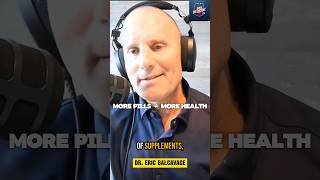
Is Fish Oil Bad Medicine?

Nick and Dr. Harris, an omega-3 researcher, discuss whether fish oil supplements work. They cover the omega-3 index target of 8%, mercury concerns in farmed fish, atrial fibrillation risk at high doses, and whether algae supplements work for vegans.
Chapters
The next question I have, the greatest controversy.
If you want to live longer, have less heart disease, less diabetes, you probably should have high linoleic acid in your blood.
Are you going to go on the record today and say salmon every day? Is this okay? Well, Dr. Harris, we are thrilled and honored to have you. I have to admit, I am a fan and I'm just blown away by your breadth of knowledge, your experience. You're a pillar in the field of omega-3. And I'm looking as a practicing family medicine doctor to get more educated, maybe push back a little bit too. And Anu, as a health coach extraordinaire, gets this question probably from every client as well. So—
Definitely.
And the goal of this show, as you can tell from the name, is bad medicine. So we're trying to find what are the pieces of bad medicine in the field of omega-3. How do the conventional doctors talk about it? What are the things they say that's incorrect? How does the wellness world talk about it and what is their bad medicine that they're getting wrong, whether it's dose or contaminants or side effects? Anu and I were talking earlier and you do such a good job at the basics and laying it out for people. What is fish oil, EPA, DHA? I was thinking if people are interested in the basics, that content is out there for them. I was thinking we go one step deeper.
Sure.
Kind of pick out and debate some of this bad medicine.
Sounds good.
I guess our first question would be, let's just pick out— if you had to pick one thing that would be the biggest, most common misconception the bad medicine in the fish oil omega-3 world. What would you say is just the classic misconception?
For me, the classic misconception is the dependence on, on randomized trials done with, uh, fish oil in people who are already ill, who are given a low dose of omega-3 on top of 5 other medicines and expected to change their risk for heart disease in 3 or 4 years. And because of those studies that are often done, 'cause they're easy, relatively, if omega-3 doesn't turn that battleship around in that period of time, they say, "Oh, omega-3s don't work," and just dismiss the entire body of evidence. And I think that's just, the wrong way to think about a nutrient. We should think about it as a lifelong omega-3, higher omega-3 exposure, and what are the health effects of that? And of course you can't do a randomized trial for that. You can do observational studies, but they have their weaknesses, of course. So that's, I think, the biggest bugaboo that I run into is the worshiping at the altar of randomized trials.
I completely see your argument. Of course, let me play devil's advocate. You have or I have a 73-year-old patient on 5 medications come into the clinic and ask me, should I start fish oil? And I'm estimating that they only have a life expectancy of 5, maybe 10 years. Would it then be reasonable for me to say, don't bother?
Well, that's a great question. I've never been asked that. And I think it's a very reasonable question based on the evidence we have. If you're gonna give people, you know, 1 gram, you know, 850 milligrams of omega-3, which is kind of a standard Lovaza dose, yeah, I could say the evidence is not there that's gonna make any difference from, at least from a cardiovascular disease point of view. Yeah, I wouldn't disagree with that.
I love it, I love some agreement. So we're already, not everyone should be on fish oil. We've already, we've already staked that, right? Because there's a group we know, there's this one group with this one. We'll see if we can chip away or maybe you'll consider it back.
Yeah.
So, Dr. Harris, even when I heard you speak at the conference in New York, I was thinking, I really need to ask him this. I'm plant-based and I'm always— I've heard you talk about the conversion of, you know, ALA to EPA/DHA, especially with sources like walnuts, flaxseed. So is my only way to get this is through a supplement like an algae-based supplement? Or is there some— is there truth to that the conversion is not good across the board for anyone? Or is it— I know that I've seen some things about the vegetarian gene and the genetic, genetic component of it. So can you speak to that a little bit? Because I'm sure there are many plant-based listeners who are interested in your answers.
Yeah, I don't— honestly, I think if you really want to get your EPA and DHA levels up in your blood, ALA is just not going to do it. Now, I can't— well, I guess I can. With studies we've done, vegans and vegetarians who've been chronically on those diet patterns, they have low omega-3 index levels. Their red cell omega-3s are low. So it's not a matter of after a while you upregulate and all of a sudden you're making as much as somebody who's taking or eating fish. It just isn't true. What I can say is just because you have a low omega-3 level as a vegan, for example, which they do, that doesn't necessarily mean there's adverse health consequences to that because we haven't really done a study looking at what's the effect of, what's the relationship between hard outcomes and omega-3 levels in vegetarians or in vegans, 'cause there's so many other lifestyle differences that you can cancel, you know, a low omega-3 might be canceled by 6 other things that you're doing right.
Right.
So I do think it's nice to get a high omega-3 index, and to do that, you really need to take EPA and DHA, and you can do it from algal, non-animal sources. That's great. But I'm not gonna say you're, you know, you're knocking on devil's or death's door or heaven's door, I guess that's the phrase from Bob Dylan. Anyway, so that's kind of where I'm at with that.
So if we think about a number, you know, what would you suggest for a vegetarian versus an omnivore?
Number of what?
Intake. Someone who doesn't do fish, you know, or other sources.
Well, we've done a study using the omega-3 index, which is the, you know, the red blood cell EPA/DHA, biomarker of omega-3 status. And we found that if you, if you're at 4%, which is kind of on the low end— it's not— most vegans that in our studies have been about 3.5% EPA/DHA in red cells. So that's below this 4%. Um, if you're at 3, 3.5% omega-3 index and you want to be at 8%, which is our kind of proposed healthy target, EPA, DHA, um, it would probably take about 1,800 to 2,000 milligrams a day of EPA and DHA combined to get there.
1,800?
I know for sure if you start at 4% and you want to go to 8%, it's about 1,500 milligrams. So if you're starting even lower, you're going to need a little higher dose. So maybe, you know, aim for 2 grams a day EPA, DHA would, would get you there.
Those are some big capsules.
Yeah.
Or multiple, multiple capsules.
Well, unless you do liquids. I mean, there's some liquids that— liquid fish oils that taste pretty good. Well, not really cod liver oil. Well, you could. It's just not very concentrated.
They do like a lemon flavor.
It still tastes like cod liver oil.
It's still cod liver oil. No way around it.
So way more what the bottle says, right? The bottle would say 500. Total, and you're saying way more.
The Nutrition Facts panel on a supplement, yeah, it will say how much EPA, DHA is there per serving. Of course, that is— you got to be careful because the serving might be 2 or 3 capsules. So you need to kind of do the math to figure out how much EPA and DHA per capsule there is. But there are, there are products out there that you can take like a tablespoon of kind of a pretty flavored emulsion and get a gram or 2 of omega-3 pretty easily flavored emulsions. Yeah, but doing it from capsules, it's going to be a challenge.
In medicine, when we have a supplement that has to be given in a relatively high dose— fiber, creatine, collagen— those are the big three that come to mind. We don't really even bother with capsules.
Oh, you just go straight.
We just do it as like a powder. And then we tell patients, you know, mix it, blend it, smoothie, you know, something like this. Is this an underused strategy for fish oil? Because it is an issue fish oil has when we're talking about doses like 1,500, 1,800.
No, I think it is. I think it's underappreciated. There's several products. If you look for fish oil emulsions online, you can find them. And they're, you know, I don't want to necessarily name names here, but they're out there. And yeah, very— I mean, it's not the cheapest way to do it for sure. Per, per gram of omega-3, because, you know, it's— but if that's not a big issue, um, then that's a great way to get 2 grams a day.
Interesting. You'd think you'd save money by not encapsulating it. I think, yeah, for the examples I gave you, I think it's actually more cost-effective to do it as the raw kind of powder.
Uh, sure, sure. But, you know, not with fish oil. You don't want to do that raw. You know, it's got to be processed and emulsified and flavored and deodorized, and so that just gets expensive.
Maybe we should just do sardines, but I know we're on the vegan side.
Yeah, sardines are kind of hot, hot these days.
I got sardines. I just ate sardines.
That's a great way to do it. I mean, it's one of the richest sources.
Get the calcium, extra virgin olive oil, right, right, right.
Good protein.
Yeah, but the question I always get is, what about the mercury?
And sardines.
I've actually run blood tests on patients who are worried about this and it always comes back fine. I know it's a low— it's a SMASH fish.
You got it.
So it's on the low mercury.
It's a low mercury fish. Yeah. There really aren't very many high mercury fish. It's very— Shark. Shark. Yeah. Tilefish.
Traditional fish and chips, I believe, is made with shark.
What? Oh, really?
So—
Not haddock?
That's kind of the newer Someone fact-checked me on this. Yes, original. They call it skate.
Skate.
They call it skate. So if you, uh, if you find yourself in, in, uh, the UK, um, you might find some, some interesting—
that's interesting. Now, uh, mercury, uh, yeah, and I do think the mercury thing is, is way overblown, honestly.
Yeah, that's the thing that comes up a lot, especially with pregnant women, you know, all the time.
Right, right. Yeah, we I mean, we did a study 2, 3 years ago now. I was part of a team. I wasn't the lead author, but the question was, what is the, you know, if you look worldwide at every study you can find that linked mom's intake of fish during pregnancy to the child's intellectual development afterwards, I think we had 32 studies something like that, that we looked at. And it turned out that regardless of mercury, mercury was irrelevant. Regardless of that, the more fish mom ate during pregnancy, the higher the IQ of the baby, of the kid. So it's, you know, that's the awful thing about the campaign against mercury is it drove so many pregnant women away from fish, from fish, a really good source of nutrition for their baby, but they were so scared of what was presumed to be a toxic level of mercury that they avoided fish altogether. They didn't just choose the healthy fish, the low mercury fish. They said, "I'm not eating fish. I'm not taking any chances," right?
And neither that nor supplements too, right?
Well, supplement, I mean, that's another, well, maybe that's one of another minor pet peeve is that supplements don't have mercury in them. I mean, they are—
Exactly. Yeah.
When you process to get the oil, the mercury goes with the water-soluble stuff. The oil comes separate and then it gets purified 7 times after they've got the raw oil. And mercury is just not in fish oil supplements. It's just not a problem.
I'd like to push you even further.
Go.
Salmon.
Salmon.
Every day. I know I have patients who eat chicken every day.
Tofu every day.
Soy every day. Are you going to go on the record today and say salmon every day? Is this okay?
It might be one of these do what I say, not what I do. I can't see any downside to salmon every day other than monotony. I don't see any adverse— I mean, you can flip it around with salmon and sardines if you wanted to.
Because we're saying 2, 3 times a week. I think that's the dietary cardiology guidelines, 2, 3 times a week. But, you know, knowing how much fatty fish is consumed in Japan and how hard it is to get the omega index above 8, the natural question was salmon every day. I mean, people eat chicken every day. I just— I— can we normalize that? Should we normalize that? Can pregnant women just do that and just assume that they're going to be hitting salmon?
For sure.
I got it in the freezer. You know, I got—
Yeah, yeah, exactly. I mean, You definitely could do that. You could do a can of salmon every day, like a can of sardines. It just needs canned salmon, it's fine.
But cost maybe.
And welcome to America, we're not doing this kind of stuff. That's just not our taste.
I think the highest index is in Korea, right, Dr. Harris?
Yeah, I think so. That's what we've seen.
Oh, wow.
A colleague who's a professor of nutrition there, and she and I, she trained under me, and so she's done a lot of omega-3 index work in Korea. And it's like 11%, it seems like, a lot of her control people who are in her studies. And I always puzzle about it because she says they don't really eat that much fish, not like Japanese. She says she's got her omega-3 index is like up in 10 or 11%. She doesn't take any supplements and she doesn't eat fish every day either. I think there's something—
Interesting. Genetic?
Well, I'd love to do one of those. That's what I'd love to do, find a Korean cohort in the U.S. eating American diet. What's their omega-3 index compared— you know, one of these like the Nihon-San study, the one that they did back in the '60s for cholesterol. You know, there was Japan, Hawaii, and San Francisco, and they're all Japanese, and they found the cholesterol levels went boop boop boop boop as they moved to the US. Um, so I'd like to do something—
I was thinking the other way, have some American expats living in Korea and, uh, who've assimilated.
There you go. Yeah, yeah, sure.
Maybe both.
Yeah, you can do both. As you say, the genetic homogeneity of Koreans is probably more so than a genetic homogeneity of Americans.
So, good point. I like your study better.
Yeah, who's gonna do it? I don't know.
Talked about pregnant women, and do you have, as far as babies, I know a lot of babies on formula, it's omega DHA is already added into it. What is your take on giving babies an additional supplement of DHA?
Well, I mean, of course, not every baby's getting a supplement with DHA. In fact, I think that's probably pretty uncommon. If moms, if the baby's breastfeeding, it's getting some DHA, but depends totally on how much mom's eating. If she's eating a typical American diet, she's not got much DHA in her milk. And so we, I mean, it's kind of why we developed a breast milk DHA test. So you can put a drop of milk on a dried blood spot card, a dried milk spot card, I guess. And we can then measure the DHA content.
Oh my goodness. Your company does the test?
Yeah. It's a mother's milk DHA test.
How many people are really interested in learning that? I'm curious.
We don't get many orders for it. Maybe we just, we don't promote it enough, I guess, or— yeah, I often mention it.
But if you're having salmon every day, probably, probably okay. Probably fine.
Probably okay.
Okay, good.
For the record, it's going to be the theme of today is can we, can we push the idea that, that this is a, uh, can be normal, can be normal in our country?
It's just not, is the problem.
So I think what I'm hearing you say is if your omega-3, you know, is high enough, then really not be too concerned about omega-6. Instagram is rife with, oh, seed oils, canola, you know, just the conversion of linoleic acid to arachidonic acid. And there's so much fearmongering around it that that's one of the questions I get asked a lot. Should we completely throw away the canola oil? And what is your take on that from a perspective of omega-3, omega-6 ratios?
First of all, the oils that would be the problem would be soybean oil. Canola is not. Canola is low in omega-6. So is olive oil. They're designed to be that way. In fact, most safflower and sunflower oil now is all what's called a high oleic variety, low linoleic. So really, corn oil, soybean oil, cottonseed oil. Those are the only ones that pretty much have the linoleic now. But those are— soybean oil is by far the one that's used the most. The seed oils controversy is going crazy, you're right. And yeah, I'm not gonna get into what is, you know, 8 hours of frying in a French fryer gonna do to oil. I mean, it doesn't sound great, but where's the evidence? I don't know. I'm more on the question about the presence of omega-6, linoleic acid in the oil or in our diet. And to me, the evidence, I mean, people can look at metabolic charts all day long and look at competitive enzymes and yada, yada, yada, fine. But I care about human disease, illnesses. And so the studies we've been doing, we and others, have looked at the blood level of linoleic acid in large populations of people. The UK Biobank, you know, 400,000, okay? And but we've done it in Framingham, we've done it other places. We look at blood levels of linoleic acid, which is the principal omega-6 by far in our diet and in our blood and in our tissues. The one that gets vilified all the time. And what we find is that the people that have the highest levels of linoleic acid in their blood are the ones that have the lowest risk for heart disease, the lowest risk for, for diabetes, the lowest risk for death, premature death, whether it's cancer, cardiovascular disease, or anything else. So a high linoleic— in other studies have looked at the reported intake of linoleic acid. So we look at the biomarker, the, the blood level of the fatty acid, which I think is a more objective way of looking at how much people are eating, simply because these are essential fatty acids. You can't make them, so they only come from the diet. So we look at blood levels, but even people who've looked at— done meta-analysis of, of cohort studies that have recorded linoleic acid intake, and they find the same thing: the higher the reported intake, the lower the risk, particularly for cardiovascular disease. So all the other stuff about— you can worry about yin-yang and others, but at the end of the day, yeah, it looks to me like the evidence says if you want to live longer, have less heart disease, less diabetes, you probably should have high linoleic acid in your blood.
I don't know how you can convince people.
I, I just straight up tell them I think it's disproven. This evidence is clear. If people want to get into the debate of having a soy oil versus an olive oil, I think that I would say olive oil always wins. You know, the data there is amazing. But is it bad for me? I think the debate is over. I don't think it's, it's fair to say it's toxic.
Good note.
No, no, no.
You know, I would honestly prefer a high linoleic oil to a low linoleic oil like, like olive oil. I mean, olive oil might taste better, but I'm not sure we have the same kind of evidence Again, it's part of the Mediterranean diet, olive oil is. And so which—
yes, from a polyphenol perspective and the microbiome, I would say it's got a lot of—
yeah, that could be. But again, we're extrapolating into health outcomes from some intermediate markers that may or may not actually predict who dies and who doesn't.
So do you fry your fish in, uh, in a seed oil or olive oil?
I think, I think my wife uses olive oil.
Yes. All right. Well, wife is right.
It's just the easiest bottles.
And that's another big question of olive oil and high heat, right?
That's no longer— Oh yeah, that's a whole other myth out there.
Yeah, it's just, you know, 2 or 3 minutes. It's not—
Yeah, I like a little smoke. That's how you know it's ready to put the salmon right there. And then that absorbs the heat, brings the heat down.
There you go.
You could talk about salmon this whole episode, right?
I think we have to.
Oh my gosh.
I never think about salmon as being controversial at all. Because any controversy on fish oil supplements, we could always just say salmon every day.
Salmon every day. Settled. We're done.
But that being said, we might get some pushback from people who talk about farmed. You know, there's the old study about the pollutants, the dioxins. I was reading that it varies. There can be antibiotics and maybe antibiotic concerns like we have in animal proteins. Could I get you to be on team wild-caught or farm, or do you feel like they're too close? I think it's too close to call at this point.
I think, yeah, that paper came out 10, 15 years ago. They found pollutants in farmed salmon. Mostly those are farmed salmon from the North Sea and from the Baltic. They didn't mention that, the fact, because most of the stuff we get here in the United States, either from Norway or from the Pacific Northwest, that was really low. But, you know, throw it in with a bunch of others, you get the average and all that kind of stuff. And since that time, the producers have cleaned up the food. It's all about what was in the food. And there's a tremendous effort made to reduce certainly some of the organic pollutants. I don't know. I really can't speak to antibiotics. I don't know what the situation is. They may be giving them.
Yeah, interesting.
Is it hurting us? I, uh, yeah, you know, you can make up stories all day long.
So is it still safe to say smash, you know, as far as—
I, I think so. If people need a quick— smash is best. You're right. Salmon, mackerel. I don't know about anchovies. Yeah, I mean, I always, I always like to—
on the Caesar salad, you know, you see—
and I just pick them off. And put them over there.
I don't think anyone eats the last two, herring and mackerel. It's not very—
not much of that either. No, I think salmon and sardines are probably the ones that are carrying the weight. And sardines would probably just because it's fairly new and popular for some odd reason.
They will take it if the fad works in favor of health. I'll jump on it.
Right.
Fiber is on the way. So that's the next fad.
You heard it here first. Isn't that a come and gone fad?
Olive oil needs to have its day again. You know, that's the fat I'm waiting to come back.
Okay, uh, it is having its day. It's already on the dietary guidelines. Can you believe that?
Oh, the upside-down pyramid that's going to topple over? Is that—
forget about pictures, but olive oil has a place, so I'm happy about that.
A lot of mixed messages in those guidelines.
Is there salmon on there?
There has to be. Yeah, yeah, Omega-3 is— and they, they promote essential fatty acids. And then they say— they almost say— they almost imply that essential fatty acids like you get in butter and lard, which is kind of like, what are you talking about?
Yeah.
In any event, that's not our problem.
The next question I have, I think, in my opinion, is the greatest controversy for fish oil supplements. Go for it. It is the number one reason I hesitate to recommend supplementation. I'm happy to recommend fish, dietary fish all day long, but study after study has raised the potential risk for atrial fibrillation. Now, for those listeners who don't know about the atrial fibrillation, this is a heart rhythm disorder. Where the two chambers of the heart on the top, they don't get a good squeeze. They kind of fibrillate, leading to the potential for a blood clot to form, which can eventually find its way in the brain, causing strokes, usually big bad strokes. I've seen a ton of AFib in my practice, and it's a real big deal. It even well-managed AFib, the number of cardiologists, electrophysiologists, ablation procedures, emergency room visits for fast heart rate, you know, a chronic disease like AFib, it, you know, there's the strokes, there's the blood thinners that people take to treat them. And then there's the bleeding risks. You know, they get in a car accident or they vomit blood. I mean, This scares me a lot, as you can probably tell. And I was looking it up. One estimate was 4.5% of the US has AFib. So we're not talking about a rare arrhythmia. This is like— this is bread and butter family medicine. You know, if I start recommending fish oil across the board, I could be doing some potential harm, which is— when there's that potential for harm, I feel like the data of efficacy needs to be pretty high rather than observational theoretical. So I always skirt the question in my practice and I say eat fish because then I'm good. Or I'll say take 1,000. You know, it's under the 1,500, 1,800 seen in some of the studies. Take 1,000, hedge a bit. The risk is minimal. But, you know, if they're older, if they've got A family history of AFib, super common. You know, these are real conversations I'm having. And many people, you mention AFib and they're like, oh, my father or mother had to deal with that.
I don't want to—
I don't want to go near this. Yeah.
Yeah.
And I think it has to be part of the conversation unless you think I can just omit it.
Well, I think we need to talk about the actual evidence. Let's talk about it. So the evidence came from two big studies, one called STRENGTH, one called REDUCE-IT. Both giving 3 to 4 grams a day of EPA and DHA, okay? All in patients at high risk for cardiovascular disease, not the general population, right? This is right, so let's just focus on what, where we saw it. And in those studies, I mean, we've just got a new meta-analysis that's almost accepted at Circulation on this topic. What we've seen is, is in that setting where the omega-3 intake is like over 2.5, 3 grams, patients are on— either have cardiovascular disease or at high risk for cardiovascular disease and are being treated with drugs for that. So in that setting, that dose, the— there was about a— there's a 43% increased risk, relative risk, for AFib. In that setting. But the— I mean, it's important to know, well, what's the absolute risk? Well, the absolute risk was 0.8% increase. So placebo group develops AFib, let's say 2% of them develop AFib during the trial, placebo. The omega-3 group would be 2.8% would develop AFib. So the relative— the absolute risk is quite small. It's not nothing, of course. And it's those people, when we look then at people who are low risk taking high doses or low risk or high risk and taking low doses, the 4 categories and low risk, low dose, there's no increased risk for AFib. And when we take out the studies that are done with the drugs, pharmaceutical products, and just do dietary supplement studies, there's no increased risk for AFib.
At any dose?
Well, at the doses that have been studied in these trials, right? Which is, you know, it's certainly one up to 1 gram is no problem at all, right?
Yeah.
So that, that's not—
so if I recommend 1 gram, I don't even need to bring up— no, that's— that would be ethical and reasonable based on the research, right?
And I think the other thing to think about is the first study that really found this was REDUCE-IT, which was EPA only. 4 grams a day, right? And they found a, like, a 1% increased risk for AFib, um, absolute 40% increase relative risk. Okay, stroke was reduced by 20%.
I saw that, I saw that.
So the overall stroke risk, overall stroke risk goes down.
So maybe it's a balance.
Yeah, maybe, maybe 3. You're not gonna— you're not clotting So much, excuse the omega-3. Um, so, but I mean, that doesn't take away from the fact that people who have AFib have to go on blood thinners and all that other stuff you mentioned. It's a problem, I get it. I just think we need to get the perspective of how big a problem is this and at what dose and in what kind of patient.
One of my patients said, comes to me and they're really trying to prevent, you know, they're 35, they're trying to prevent dementia, like a family member, and they're going for 3 grams a day, and they're ApoE4. Ah, yes, had they been tested, right?
For— yeah. So if you're— yeah, if you're a— if you got the gene, like they say, for Alzheimer's, especially have 2 copies of the gene, then your risk for, you know, dementia is like 12x higher than if you didn't have the E4 gene. And in those settings, I would 2 copies, right? Yeah, there's about 2% of the population has 2 copies of ApoE4. About 25% carry 1 copy and E3 or E2, the other ones, which reduces risk. But I mean, if I'm— I'm more worried about dementia in the long run. For those people, I'd recommend 2 grams a day from age 20 on if they could. You just got to—
So higher.
Higher. But that's because they have that particular risk.
My concern has to do with this concept of subclinical atherosclerosis. This is a term that's just been really popularized. March 16th, 2026, they released a new cholesterol guidelines.
Okay.
And there's a nice slide on this. And it really changes how we look at cardiovascular risk. And basically we know that people with who are low risk, never had a heart attack, could be building up substantial amounts of plaque in their coronary arteries that often the first symptom is sudden cardiac death. So this whole idea of, well, if they're not high risk, it's safe— for me, I would push back and say, how do I know they're not high risk? Have we done a coronary artery calcium score to see if there's plaque? And would that be necessary if I'm going to say 3 grams a day, you know, especially as you get older, 45, 50, 55, where we see these people having these, you know, events, heart attacks, and then they're taking fish oil at high doses. And it makes me worry about the—
Yeah. And if you're taking doses of 3, 4 grams a day of omega-3, I mean, that's pretty uncommon. Okay, maybe Hilbert in his world, but it's— yeah, to do that, to do 3 grams a day, you're doing— I mean, I, uh, you're doing about 4 or 5 fish oil, high, high-potency fish oil capsules a day. And that's— I mean, fair enough. I think that's very rare.
1.5 grams or less, 1 gram or less, we can leave this aside.
Is anybody not at risk for heart disease? Okay. Everybody's at risk.
Right, that's kind of my point, you know.
It's all, you know, whether you're gonna die first from something else or heart disease or like prostate cancer, right? So yeah, okay, if we gotta get real picky about defining high risk, all we did in our meta-analysis is we took the studies that were, the people in order to get into the study had to be high risk for cardiovascular disease by standard criteria, have high cholesterol, high blood pressure, have a history of cardiovascular disease, had diabetes, type 2 diabetes, those kinds of things that puts you at high risk. That's how they were defined in the study. That's why we put them in that category of high risk. But yeah, to your point, patient by patient, it's going to be very hard to say. You're— you are— and you're— it's not a black and white thing, right?
Very helpful. Uh, I am satiated with the AFib conversation. I appreciate it.
Well, it's on my mind. It's on my mind a lot. So you got it.
Okay, good, good, good. Me too.
Me too. All the stuff I've got on my head about it.
So do you get asked between heart health and brain health? I have a lot of clients who are postmenopausal, really starting to be concerned about cognitive health. They're getting— they're pretty proactive, getting themselves checked for the APOE4 gene. Would you consider that total number that we talked about earlier to be different? Do you need more EPA or DHA is there one that's more beneficial for the brain? I mean, what is your take on that?
I don't know that we can say one's more beneficial for the brain, EPA versus DHA, or the heart. I mean, they, in all the fish, they come together. They're both there. There's probably a reason for that. So I don't, you know, right. The knee-jerk reaction is the brain has a lot of DHA, doesn't have any EPA. Therefore, anything above the neck, DHA is what you need. Well, that's kind of simplistic. In fact, the studies they've done in depression have shown that the EPA-rich products have more EPA than DHA, are more likely to be effective at reducing symptoms of depression than a DHA-rich product. So, okay, we can't just assume simplistically that just because there's a lot of DHA in the brain that EPA doesn't do anything. I don't think that's necessarily true.
Jury's out on the, on, on this, it sounds like.
Yeah, yeah. I think, I, I think I always recommend both, take both of them together. Yeah, I don't overemphasize one or the other, but I think kind of, I agree to your point. I knew about people who are known high risk for dementia because of other biomarkers. I would emphasize taking more omega-3 than you would otherwise. And doing it, it's— dementia is such a long development. Well, so is cardiovascular disease, right?
But yeah, so maybe more like 2 grams, because 3 grams sounds impossible to hit.
Yeah, realistically, something like that would be great. But do it for— do it for 40 years. Don't try and do it for, you know, 6 months and try and change anything, you know. It's just—
and then use the Omega Index perhaps as a guide to make sure you're at least hitting the 8, maybe 9 or 10.
Yeah.
The index of 8 is fine for brain health or someone with that copy or 2 copies?
Yeah, I don't think we know yet enough about whether 10 is better than 8 or 9. It's so hard to get people to do, get up to 8%.
8 anyway.
I just think, you know, praise God for that if they can get there. And we've done most of the heavy lifting. Yeah, I think the biggest, like so many things, it's the going from a little bit to more. You get more bang for your buck than going from a lot to a lot more. You know, there's a plateau of efficacy. I don't know exactly where it is, but once you're at 8%, you're at least in the US, you're in the top 5% of Americans.
I mean, if they see the 8% that's great. But if they can actually feel the difference cognitively, saying, oh, I don't have the brain fog anymore, that's— they're more apt to stick to it, right? I mean, even just— even maybe just embrace a higher number. But without that difference, it's so hard to get people to—
Yeah, well, that's— I mean, the omega-3, almost every— almost any nutrient, it's hard to feel, you know, a feel of deficiency. Except in the extreme, you know, if you get scurvy and your teeth are falling out, okay, you know, that's obvious. Um, but brain fog is, you know, like one of those things that's so vague and so driven by God knows what else. But the thing that we see more often is that people who take omega-3 for heart health or lowering triglycerides or some other reason, they will notice that they're just— joints, their joints feel better. Yeah. So there's something symptom— like a symptom that could be used as a gauge. But again, that's pretty vague as well.
So when I treat vitamin D deficiency, cholesterol, I always get the opportunity to test the blood and use patients' insurance to give them feedback, keep them accountable. It is indispensable. There is an omega index test. Obviously, we've been talking about it, but it is widely or I think universally not covered by insurance or approved or recommended by, as far as I know, any guideline in the world. I'm wondering, why is that?
It's a good question. It's been sort of my nemesis for a long time. I— it's not the kind of deficiency that over the last 10, 15 years have been— people have been talking about, which is, you know, higher— your bones are not breaking or anything, right? There's no disease, no disease per se that's been defined, right? Right. So with omega-3, oh, I think part of the problem is, number one, it can be measured in several different blood compartments: whole blood, plasma, serum, red blood cells. The number is different, the absolute value is different. It can be measured as a concentration or as a percent, which is confusing. And part of the reason it's not been recommended, not only because there's multiple metrics that could be used— you got to pick one, you got to stick with one, right? Um, I would like it to be the red blood cell EPA/DHA level. I think that, you know, from a you know, the parallel with hemoglobin A1c makes a lot of sense, right? I think. Um, but you know, not everybody agrees with me. And they've got your whole blood guys, you got your plasma guys, your plasma phospholipid guys. And so Lab A will do this test, Lab B does that test. I mean, there are labs, clinical labs, Quests of the world, that, uh, offer these tests and they reimbursed. I mean, to my knowledge, they, they're submitting— they're not doing the test and expecting the patient to pay for it. In my— now, you, you live in this world. I'll have to check on that.
I'll have to. But last time I looked, it was like, don't try it, you're going to get an angry phone call.
Well, that's—
I mean, I don't need it.
That's why I think at our, at our lab at OmegaQuant, we have never dealt with insurance. We don't do insurance. Our— the test is— you can order the tests at home, uh, you know, dried blood spot collection. Costs, now it's $55, used to be $50. So it's $55 out of pocket. And you get your omega-3 index. And I mean, that's probably what you pay every couple months because that's—
Well, I wouldn't do it every 3 months. Red blood cell turnover.
I mean, maybe.
Well, if you're really aggressive on this.
Yeah, probably for 4 months. It takes 4 months for your red cells to pick up steam here, get to steady state. Yeah, I, I, I don't know that there will ever be insurance reimbursement because you've got— but part of the problem is all these studies, these, these crappy RCTs that have been done, randomized controlled trials, that show omega-3s don't work. And then there's the AFib thing. Nobody wants to—
nail in the coffin.
Yeah, yeah, nail in the coffin. I mean, look at the data, people. Look at the actual data. And look and weigh the risk-benefit. I mean, I hate to say it's better to have AFib than to have a heart attack, but nobody likes to hear it that way.
Right, no one likes to hear it that, but that's the math that the doctor needs to do and make the call that—
So I think there's a lot of factors as to why it's not an approved test by any, by AHA, ACC, or any other organization. Simply because there's a lot of controversy around it and it's just the way it is.
Well, we'll have to start with one organization and lobby them, right?
Yeah.
Yeah.
I mean, it starts with one.
Are you doing anything like that with insurance companies?
I mean, in a way. I mean, our lab is— we've been CLIA certified from the very beginning, but we haven't been— there's another clinical CAP, CAP. So we're getting CAP certified even though we have only, you know, 2 or 3 tests. It's kind of a pain in the neck for such a small number of tests. But our understanding is if we have CAP certification, then a lab like, like Mayo, like LabCorp, like Quest, whatever, could use us as a reference laboratory. Could send, you know, send samples to us because we have to have that CAP certification. So we don't know. We're doing, we're doing fine the way it is, mostly direct-to-consumer and direct through a lot of healthcare providers that do the tests.
Any cardiologists?
A few, not many.
Yeah.
What's, what is their biggest gripe, would you say, that they say, oh, this is bad?
Well, number one, nutrition. I mean, cardiologists, I think, are just Nutrition is way overblown, you know, and the omega-3s fall in that nutrition world. And so, eh. And then the RCTs, you know, you do one failed RCT and then that settles it. Then nobody asks any questions about, well, is this real life here? Or is this— they're treating it like a drug. It's not gonna work like a drug. It's a nutrient. You need it chronically for years. That's what we're talking about. And that's their mindset. So I don't think they can get out of that.
I think it's a little rapid fire time. Anu, what do you think? Should we do it?
Gosh, should I sit down?
Phospholipid-bound omega-3 hype, or is this potentially the key to crossing the blood-brain barrier?
It's a little bit of both. I think there— I mean, there's some evidence krill oil is primarily in a phospholipid form. But they're— the phospholipid form they're talking about now for crossing the blood-brain barrier is called lysophosphatidylcholine, LPC-DHA, or EPA-DHA. It's a phospholipid that only has one fatty acid instead of two. And that is a form that does cross the blood-brain barrier through a particular receptor. But the question is whether you need to take it in that form in your mouth for it to get to the blood-brain barrier where I think if you take any fish oil at all, any kind of omega-3s, you're going to increase levels of that particular metabolite because it's, it's produced by the liver and there's a lot of metabolism that goes on. So I don't know that it's necessary to take the preformed version of the LPC DHA to get transport into the brain.
But there's something to it worth more research is needed as usual. Salmon skin, yes or no?
No for me.
I don't know about you guys.
I mean, my dog gets it, right? That's—
you heard it here. Dog food has dog food.
Yeah, well, that's a whole other topic.
I was reading it said higher concentration in the skin, but also higher concentration of the pollutants, so maybe it's a wash.
Yeah, well, I don't even want to think about it.
Maybe it's just a taste thing, I guess.
You ever done that? Have you ever eaten the skin?
All the time. And they make salmon skin hand rolls, salmon skin salad at Japanese restaurants where it's just salmon skin in the salad.
Interesting.
It's a big, big salad. It's just salmon skin.
Well, yeah, I have to plead ignorance on that one.
Algae oil or fish oil, or is there a difference?
There's no difference. I mean, EPA and DHA are the same molecules in each one. It's just, you know, from algae. When I say algae, people think seaweed, you know, it's not, you know, the, the source of EPA and DHA in the ocean is single-celled organisms that actually— they're microalgae, they're called. And there's certain strains that make EPA and some strains that make DHA. And out of thousands and thousands of strains of these things, scientists have found the ones that do that, and then they cultivate them and, and take the oil out and put them in capsules. It's the same stuff that the fish eat. I don't see a problem.
Okay.
All right.
And Fatty 15, I have to ask, is that just hype or—
Hype, hype.
I get asked this almost every week, you know, should I take that supplement, especially the one bottle that I'm really thinking about?
Yeah, I know what you're thinking about. My opinion is that it's 95% hype and 5%, maybe some evidence.
Agree. We have an omnivore taking 800 milligrams total EPA/DHA. I picked that dose because you can find that. It's, sure, you know, reasonable pill burden. And they eat salmon 2-3 times a week, aligned with— yeah, it's pretty good.
Very good.
Uh, probably enough.
Probably enough.
Probably enough.
All right, I do an omega-3 index test just out of curiosity to know, but if I were to guess, I think that would probably be an That I think is maybe the best question because that's, I think, realistic.
It's doable for most.
Because if I say eat salmon every day, you know, we're going to get 2, 3 times a week.
Yeah, right.
And if I say have 1,500 milligrams, they're going to look at the cost and the size and they're going to take 800. So I think it kind of is a nice balance.
I think that's great.
I do have a question about brands. You know, a Costco Kirkland brand versus a fancier with Nordic Naturals, Metagenics, spending all that money. Am I doing bad medicine by saying don't take the Kirkland brand, or is it—
I don't think you're doing bad medicine by saying don't take the drugstore versions. I don't get real exercised about that. You just have to see how much EPA and DHA is in a capsule. And some of the products at the big box stores are cheap, very cheap. But if you look, it's a like a 1,200 milligram capsule with 300 milligrams of EPA and DHA. So it's, you know, 25% of the product is omega-3. But that's why it's cheap, because they haven't gone to the trouble of concentrating it. And the more you concentrate it, the higher the amount per pill, the more expensive it gets.
Rancid fish oil comes up all the time in this context. Is it— is that a bit overblown? Can we just look at the expiration date, leave it out of the fridge and call it a day? Or should we be thinking about the fridge?
I don't— I don't think it did need to be in the fridge. It doesn't hurt. It doesn't hurt it to be in the fridge. You can.
Okay.
And yeah, you can look at the expiration date and probably add 3 years to it and still be okay. You know, I love that.
Yeah, that's like most drugs too, right? Oh yeah.
We're not supposed to talk about that. Yeah, I think rancidity. Again, it's like mercury. It's the same kind of overly concerned about a very minor, minor problem. And the omega EPA and DHA content is gonna be about the same whether it's rancid or not. It's not the omega-3s that are generating those products.
I talk about fish and then people say, "What about shrimp?" Shrimp is very, very popular. And I looked it up and there's a pretty good, I mean, it's not great, but there's omega-3. And it's for many people much more palatable.
Um, and I'm not sure where you were looking really.
Is it not that much?
I mean, because it's like 200— well, I maybe per 4-ounce serving, possibly. I'm not sure. And, um, but you know, fish, fish, it's, it's very low fat. And if it's low fat, it's low omega-3 because it comes in the fat. I mean, it's I mean, they kind of go together. Um, yeah, I mean, tilapia is, you know, like almost like eating chicken. There's essentially almost no omega-3s. Tuna's pretty good. Yeah, tuna, especially the albacore or the white tuna, has got more omega-3 per serving.
But there's no T in SMASH for tuna.
Well, albacore, how about that? Okay, yeah, instead of anchovies.
It's an easy add-in to your salads.
Yes.
Things like that. Those little cans, Wild Pop, you know.
Yeah, I agree.
If I had to pick something outside of SMASH, go with like canned tuna over shrimp.
Yeah.
My final question, Dr. Harris, is you've been studying this molecule, what, for 40 years? I read somewhere.
Something like that.
I mean, how do you— where's the passion coming from and how do you— I know A lot of people ask you this as the first question, but I just wanted to hear you speak about it. And what is the next step? And how do you even kind of keep going? And, you know, what excites you?
Do you dream about fish?
No. I try not to do that. You know, so I got interested in nutrition and health, you know, back and went to graduate school in nutrition, got a PhD, yada yada. With the view that this is a natural way to be healthy with nutrition. And I got shoveled into the omega-3 niche in post— I did my postgraduate work and got convinced from very early on that there was really something there. Whether it's in vitro or in vivo or in animals or in humans, it just sang a consistent song that that EPA and DHA are functionally doing something. They're, they're, they are beneficial. And so I just, uh, I'm just convinced from the, the mass of the evidence. Yeah, yeah, you can pick— here's a randomized trial, there's one that didn't work, that one over there didn't work, AFib went out by 1% over here. Okay, deal with it. Um, I mean, 15, 20 years ago, they were giving omega-3 to prevent AFib. I mean, there was enough evidence for a drug company, GSK, to mount a multimillion-dollar trial in people with AFib to try to reduce the AFib. I mean, that's where we were then. So this is a big shock to come— now it causes AFib. I mean, that study did not show any benefit in preventing a second AFib event or something like that. Didn't work, but it didn't hurt either. So the whole AFib— I'm getting off on that again.
No, it's good. I think— I know.
Yeah, but I was just wondering, anything interesting in the pipeline as far as, you know, new study, anything about the microbiome, for example? Because a lot of fatty acid conversion going on there with our microbes.
Yeah. And I admit to not being up to speed on the microbiome. It's too many, too many Latin words for me. Um, but the— yeah, and I'm sure there's something there. I know there's some omega-3s change the composition of the bugs and all that, and that's cool. I don't know what to do with it. Um, I, I mean, I'm more excited kind of on the technology side of finding new sources of EPA and DHA that don't have to come from fish. So there are just not only the, the, you know, microalgae Everybody knows about that, but there are sources now that are being, uh, by genetic modification, so GMO, if, you know, if we can get over that. Plants, you can, right, you can modify land plants, soybean, um, to produce more. I'm not sure they've got EPA and DHA yet, but they definitely have another intermediate called SDA. But other plants, camelina is, is a, a type of plant that can be genetically modified to produce EPA or DHA. So that would be very cool if we could finally just grow it on the ground, have kind of an infinite source and not have to get it from fish. That's, that's great. But I—
do you think it's possible there's something other than the, than the EPA, DHA in salmon or the smash fish that make it so healthy? You know, there's always that argument with vitamin studies, right? It's like, well, it's the whole plant. You know, I'm wondering, is it the whole fish?
I know it's a good question because when we measure the omega-3 index, we're measuring the effect of the fish ultimately on the omega-3 levels. But there's 17 other good things coming in with the fish— selenium, good proteins, you know. And it's what, what you're not eating when you are eating fish. You know, it's the other thing, right?
Substitution principle.
That's why it's hard.
But, you know, I mean, so just what, it was 6 months ago, 3 months ago, there was a new study done with EPA and DHA supplements, not fish, supplements, in patients on hemodialysis. That was a smashing, pardon the pun, success. Placebo-controlled randomized trial with omega-3. Cardiovascular disease risk just dropped dropped like 50% in these patients getting about 2, 2.5 grams of EPA/DHA versus placebo. New England Journal article, you know.
So it's, uh, so, and no AFib risk, no increased risk for AFib, right?
You know, I mean, it's, it's the EPA and DHA.
What's the study called?
PIES. P-I-E-S, like the, you know, the star sign, you know.
I mean, that is That is an amazing name for a study.
Isn't it great?
They figured out the acronym. Well, cardiologists usually have the best studies— names for their studies. It's well known. They're famous for it.
Just to close out, I do think it is EPA and DHA, not to discount other things that are in fish too, which are also good, but it's not just that. It's not just the other stuff. The omega-3s are doing something.
So if there's no strong convincing argument, if you had to pick fish versus supplement, there's no strong convincing argument that fish would be better than if you had the equivalent EPA/DHA from a supplement.
If a person is willing to go either road and you're getting the same amount of EPA and DHA either way, fish is a better way to go.
It is better, you would say better? Yeah, because maybe substitution principle, these other potential—
yeah, and all the other stuff in fish and You know, it's just that it never is that way.
Oh, well, hey, we're on— I'm on a crusade here.
Okay, good man. Salmon every day.
I mean, think about it. They eat— people eat chicken every day. That's weird. Why is it weird to think about salmon every day?
That's a good point.
Yeah, that's the thing about omnivores, right? You know, I have so many clients who say they are, but when it really comes down to fish, oh, I don't do fish. So it's always chicken, turkey.
Yeah, yeah, yeah. You know, beef. Yeah.
Red meat. Yeah. So, and are these people still struggling with the lower index, you know, being omnivore? Yeah.
Well, you're right. I mean, you can be an omnivore and be a pescatarian. All you eat is, the only meat you eat is fish. That's probably the best omnivore kind of diet, pesca vegetarian, that kind of thing where, I mean, if I had to pick one diet, that's probably it.
Yeah.
Can't say I stick to it, but I like it.
I agree.
Good.
Don't tell Anu. Dr. Harris, it has just been a blast, a smash. Excuse the puns. My goal was that we ask questions that dug a bit deeper. I think we accomplished that. And I think people listening can have some actionable information.
I think that's the biggest thing.
Maybe they won't be eating salmon every day, but it's okay if they do. That's okay if they do.
Yeah, I enjoyed it. Great, great questions, Nick. And it's fun to get pushback.
I enjoy that.
More from Anu


The Bad Medicine of Travel: Why Airplane Food and Jet Lag Are Ruining Your Gut


We’ve been waging war on the microbial 0.1% and carpet-bombing the 99.9% that keeps us alive


Picky kids + mac & cheese: here’s one low-friction idea to expand their palate