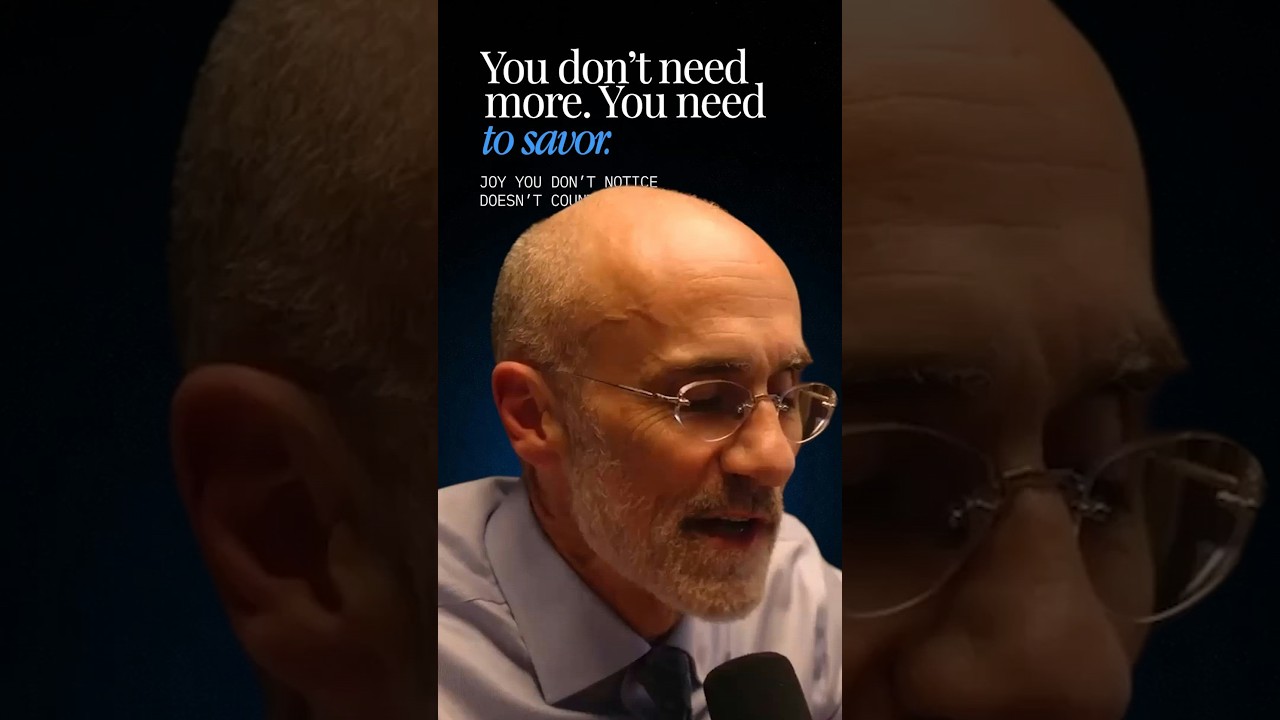
Arthur C. Brooks presents four evidence-based ways to savor life: smiling to trigger happiness, labeling pleasant moments aloud, sharing good news with others, and vividly recalling or imagining positive events. Each technique moves joy from automatic to conscious, making happiness stick.
Chapters
Psychologists found 4 savoring techniques that were really, really effective. Number 1 is what they call behavioral display, which means expressing positive emotion with nonverbal behaviors. Smile even if you don't feel it. You'll fool your brain. You'll be happier because of this behavioral display. Smile more. Pretend you're happier. Second, be present, which is mindfully focusing on the pleasant experience. And what that means is saying to yourself, I am doing this thing. I am sitting on the train looking out at a beautiful seascape. Being present means actually saying the thing to yourself because you want to bring it from your subconscious subconscious into your prefrontal cortex, into your consciousness, where you're really thinking about something. And the way to do that is by saying it. And it's really unbelievably effective. Number 3 is capitalizing, which means talking about and celebrating positive experiences with others. Don't just say it to yourself, say it to other people. Talk about the experience that you're actually having. Notice things to other people. And last but not least is what they call positive mental time travel, which is vivid reminiscence or anticipation of positive events to savor the past on purpose by paying attention to the positive parts