The essence of being alive is asking why questions
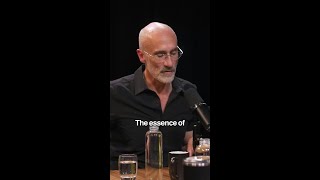
In this monologue, Arthur C. Brooks argues that the fundamental purpose of life is to ask open‑ended “why” questions that have no definitive answers. He links this practice to Zen koans and the right‑hemisphere functions of the brain, noting that many religious traditions use similar exercises to help seekers find meaning. Brooks describes a teaching prompt he gives his students—“Why am I alive?” and “For what would I give my life?”—as a way to cultivate this habit of inquiry. He claims that feeding these questions to AI systems like ChatGPT yields nonsensical responses, underscoring the uniquely human nature of existential questioning. Brooks also laments the cultural shift from late‑night dorm‑room philosophical conversations in the 1980s‑90s to today’s consumption of short, entertaining videos on phones, arguing that the latter stifles the right‑brain engagement needed for deep meaning‑seeking.






