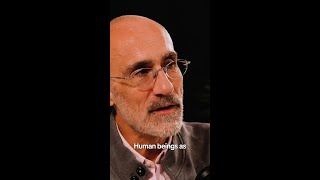
Arthur C. Brooks argues that lasting love depends less on passion than on deep friendship between partners. Oxytocin and vasopressin create a kin-like bond that sustains long-term commitment, turning romance into something closer to family.
Chapters
Human beings as a general rule, there's a lot of debate about this. Are we naturally monogamous, are we serially monogamous, are we non monogamous? And there's no consensus on this, except that if there is, it's that ideally, almost everybody wants to be single, unilaterally, pair bond mated. That's what people want. That's the ideal that people want. And so some would say that's sort of the natural habitat for us. And that's certainly how you feel when you're falling in love. This is it, man. This is going to be it for life. Or at least I sure hope it's going to be it for life. Life. Now, the goal at this point is to get there together at the same time to the oxytocin level, to the vasopressin level, for deep connection and deep friendship. And this really is the goal of a successful pair bond me is there's plenty of passion, 30, 40, 50 years, but it's deep friendship. That's the secret to a pair bond mate that lasts forever is deep friendship. That's what it's all about. And that has to do with this neurochemical bond where this person is your kin and is going to be your kin for the rest of your days.