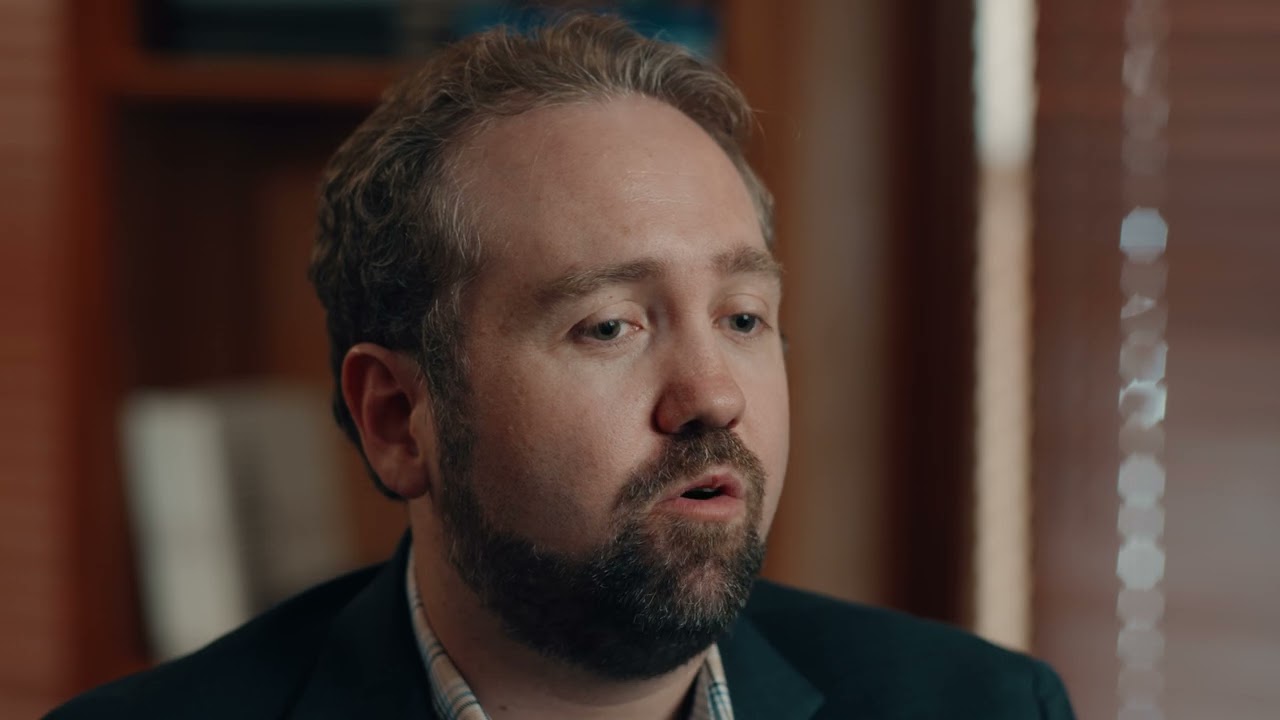
The Mission Generation: Working in Silicon Valley or D.C. ...or Both?

Arun Gupta, CEO of the Noble Reach Foundation, argues that the U.S. government struggles to recruit top tech talent because it pitches long-term security instead of purpose and rapid impact. His Scholars Program targets high-achieving students in tech, AI, and cyber, offering mentorship and exposure to senior leaders to reframe government service as prestigious and mission-driven.
Chapters
some of the smartest and most brilliant people I ever worked around were people working in the public sector. But I think sometimes the public sector has a little bit of a challenge in attracting the kind of talent that we need if we're going to solve some of these big problems that we need our public sector and our government working on. So why do you think there's a bit of a challenge in the public sector in terms of attracting the right kind of talent?
If the culture is one where you're saying, hey, come join us, you'll have a safe job here for 30 years and then there'll be a great pension at the end, that was very attractive to some of our best and brightest at a point where the world felt felt more stable. As the world started changing more and we had more innovation and things of that sort, I think it becomes harder to ask people to commit on the front end to being here for 30 years, which was kind of the pitch. You know, we haven't adapted it over the decades. So I think that's one. Government selling careers, young people are buying experiences, right? The other issues is, look, I don't think we tell stories very well of like the impact you can have when you're in government. The narrative isn't told. If it was a corporation, it would be talking about all the great things that it's created. Every piece of your iPhone can be rooted back to government research. People don't talk about that. We don't think about that. There's a storytelling and a narrative piece to it. You know, in the world that we're in right now, with all this change and flux going on, the only thing that will tether you to some level of stability is purpose and mission. And unfortunately, for the last few decades, we've been creating our identity around who we work for and what we do, which are proxies for prestige and power and money. And we have focused less on why we do it. Like what matters to us, what really kind of drives us.
Yes.
And what we're saying is in the world we're going into, especially with what's happening with AI, the what you do and the who you do it for are getting disrupted real time.
Absolutely.
And if you haven't spent time thinking about the why you're doing what you're doing and you get disrupted, it'll be a very disorienting experience. As we were talking to and creating the program for young folks about coming in, you could see the purpose deficit that was out there. But I think the surprise to us as well was that as we were interacting with the mid-career folks or the late-career folks, they they were having the same thing. It was applied differently.
Sure.
But the questions were still there. Like, is this it? Is there more I should be doing? How do I do it? Fear of failure.
Yep.
And from the outside, you would think like, why would these guys worry about it? That's why we say the mission generation isn't about age. They had a common posture and the posture was they all wanted to be able to tie personal ambition with civic responsibility.
Totally. I love that. Welcome into the TechEd podcast. My name is Matt Kirchner. I am your host. This is going to be an absolutely terrific episode. If you have seen me keynote an event any time in the last several months, you know that I've been using a quote over and over again from Julie Sweet, the chief executive officer of consulting giant Accenture, about today's guest's book. This is what Julie Sweet, the CEO of Accenture, had to say, quote, at a time when technology is reorienting what we do for work, The Mission Generation is a reminder that answering why we work is what really matters. This incisive book will inspire people at every level to create impact that strengthens business communities and helps build a better future for all. That, of course, according to Julie Sweet, the CEO of Accenture. Pretty high praise for this book, The Mission Generation. And on this episode of the TechEd podcast, I am joined by one of its 2 authors. His name is Arun Gupta. Arun is the Chief Executive Officer of the Noble Reach Foundation and author of The Mission Generation. Arun, so awesome to have you here. Thanks for coming on.
Thank you for having me, Matt. Great to be here with you.
We're gonna have so much fun. I mean, first of all, Melissa, our producer, knows that I love anybody that has anything to do with private equity or venture capital, so we could go down that rabbit hole for the entire episode. But let's start out with this question, Arun. You spent 2 decades in venture capital, including cybersecurity, government technology, artificial intelligence, and national security investing. What did you learn from that career and what did that ultimately teach you about talent in the workforce here in the United States?
Yeah, what I learned, Matt, being a VC for 20 years and, you know, just to level set, you know, the lens of which I answer these questions is one that my father was in public service, was in the Navy for 40-plus years. My professional career was in venture capital and then, you know, after that I was teaching, I was in academia, so I was at Georgetown and Stanford teaching. But what my venture capital experience taught me is, you know, I think we, we get enamored many times with the ideas that people have, and that's what makes great startups. We get enamored with the technology that gets developed, and that's what makes great startups. And, you know, what we saw and what we experienced is the correlation of success always came back to talent, and it always came back to the aspects of talent that aren't just IQ, but it's the resilience, it's the grit, it's the curiosity of exploring new ways of doing things. It's the leadership and humility that comes with wanting to attract and build teams of people that are better than you are and trying to get to the right answer versus being right. Absolutely. And so what we saw over and over and over again is that those unique individuals that could straddle that and really bring in talent in a unique way, addressing them or pointing them at a disruptive or changing market, usually won. Mm-hmm.
No doubt.
And I don't want to oversimplify it, but we just found that they would win. And yet over and over again, you found people really kind of assessing the ideas that someone had or the depth of the technology, all of which are important.
Mm-hmm.
But to me, the table stakes was always about the people.
Yeah, as somebody that ran, I mean, I ran companies, chief executive officer of two decent-sized manufacturing companies, chief operating officer of a tech company over the course of, you know, 25-some-odd years in manufacturing and tech before heading over to the education sector about 10 years ago. Absolutely true. I mean, the fact of the matter is that without great team members, without great people, the best ideas in the world fail in their execution.
You know, I think the other thing that we noticed with these founders is that many times I think we have systems that are focused on making mistakes. And so then the people in those systems focus on not making mistakes. And what the power of venture really brings to the table is unleashing the ambition of, you could focus on what happens if it goes wrong, but you can also focus on what happens if it go right. And in our previous book, we would talk about like, if I was measured at venture capital, like some other industries, um, I may never raise another fund because in our world I get measured by my best deals. Mm-hmm. So if 2 of my 8, 10 deals are great and 8 are kind of average or suboptimal, I'm still oversubscribed for my next fund.
Right.
In other industries, um, you know, you can do 8 things right, but if you do 2 things wrong, you're carrying that with you.
Absolutely.
And that's a very different way of looking at the world. And I think that really started to influence other ways of how other institutions can be be thinking about this and how do we bring this mindset to the table? I believe that the entrepreneurial spirit is really the American spirit, right? But some of our institutions have lost that. No question. And part of it is around the systems that we, that we create around that.
Yep. No question about it. And, and so let's, let's just think about that for a minute and for our audience's benefit, you know, and I spent, I'm, we're, we're in VC as well. I spent more time around the PE model, but, but the whole idea was, you know, if we could, if we could buy 10 companies, uh, in the, on the PE side or on the VC side, side, find 10 great founders and, you know, 2 of those companies are probably going to go belly up and not make it, maybe 3. You're going to have a couple of them that you hope to God are grand slam home runs. And then you, you get a bunch of singles and doubles in the middle. And that's the idea, right, is that if we get those couple of grand slams and those can generate a significant return for our investors, they understand that. They know that going in. They know that not every one of these companies is— every one of these companies is going to be successful. They accept that level of risk. But you're right. I mean, a lot of times if you were, you know, if you had a 200 batting average, you know, in a lot of other sectors, you're not staying around very long. So I like the way that you teed that up and I like the way that you kind of carry that concept over. I was going to thank your father, by the way, for his public service. I, for what it's worth, spent 6 years in government before I got into business.
Right.
And yeah, so yeah, absolutely. And that culminated as the special assistant to Milwaukee County Executive David F. Shultz. That goes back a long ways. Wow. But, but, but a really, really cool job and really, really early in my, in my career where we were, you know, driving to press conferences and sitting in cabinet meetings and just a fly on the wall to see these really, really strong leaders in the public sector doing the work that they did. And I can tell you, in some cases, some of the smartest and most brilliant people I ever worked around were people working in the public sector. But I think sometimes the public sector has a little bit of a challenge in attracting the kind of talent that we need if we're going to solve some of these big problems that we need our public sector and our government working out. So talk about that. Why do you think there's a bit of a challenge in the public sector in terms of attracting the right kind of talent?
Yeah, no, I think what I just alluded to is more the culture, right, that gets created. And I think that culture then attracts kind of the talent that would want to thrive in it. So if the culture is one where you're saying, hey, come join us. You'll have a safe job here for 30 years, and then there'll be a great pension at the end. I think that was very attractive to some of our best and brightest at a point where the world felt more stable. Mm-hmm. As the world started changing more and we had more innovation and things of that sort, I think it becomes harder to ask people to kind of come in and essentially commit on the front end to being here for 30 years, which was kind of the pitch. And, you know, we haven't adapted it over the decades. And I think that's a little bit of what the work is that we're trying to do. So I think that's one, right? Government selling careers. Young people are buying experiences, right? Two, I don't think we've done a great job of building the scaffolding that enables people to go to leave and highlight the transferability of those skills. They're highly transferable.
For sure.
And in fact, if anything, what we've done in some cases is, especially those that are on the policy and the legal aspects, we call it the revolving door.
Right.
You know, it's almost these— you metastasize the institutions where people feel like they need to either stay in one or the other, but the idea of being able to go in and out has a negative disparaging tone to it.
I just finished a book and I'm going to get the title, I think, about right. We'll link it up in the show notes, but it's The Greatest Sentence Ever Written. It was by Walter Isaacson. There's this whole concept in that book and it really goes back into— I'm not going to give the, give the the whole subject away, but it kind of goes back into the history of the United States, the Declaration of Independence, how we came into being, why. And it talks about this whole idea of the common good and kind of common ownership. And I think a lot of times we kind of conflate that or confuse that with socialism sometimes. We think about things like beautiful parks in a community like Milwaukee County where I spent most of my life, still live today, or you think about some of our common educational institutions, public education and so on. And how we've gotten into this kind of divided society in these days where it's like if it's a— if it's something that has to do with the government, it's inherently, you know, wasteful or it's inherently bad, which wasn't the thesis on which our country was founded at all. You looking at it the same way?
Well, I love what you just said, Matt, because it wasn't the thesis that our country was founded on, right? Our country was actually founded on the thesis that, you know, you go in and serve, right, for a period of time, and then you go back to your community, you go back to your business, you go back to whatever it may be. It was intended to be rotating through. Right? We, over the years, especially post-World War II, are the ones that started to kind of put those divides in, partially with the language that we use and the systems that we've created. And so that's a little bit of what we were talking about, you know, but going through the other issues is, look, I don't think we tell stories very well of like the impact you can have when you're in government. The narrative isn't told, right? Government can't tell it itself if no one else is telling it. If it was a corporation, it would be talking about all the great things that it's created. Like every piece of your iPhone can be rooted back to government research. People don't talk about that. We don't think about that, right? And so there's a storytelling and a narrative piece to it. But I think an important thing that you said is that those narratives were more implicit when you had people going in and out.
Right, absolutely.
Right, when you don't have people going in and out, then you just assume the worst on the other community, and that divide tends to bridge, and that gap grows over time.
Totally.
I think that's what we've seen is that that's why there's a trust deficit is that we don't have people that have been on both sides.
One of my very good friends is a guy named John Lowery, and John worked in the public sector— or the private sector, I should say— for a long time, had some impressive jobs at Harley-Davidson for one, a couple other large companies, became the Assistant Secretary of Labor focusing on Veterans Affairs, the first Trump administration. I'm going to I guess 2018-ish, somewhere in there. And one of the things that— and he's, by the way, a former guest on the podcast, we'll throw that in the show notes too. One of the things that John told me is he said, you know, you would not believe the incredible talent that exists inside the federal government and these career civil servants and public servants and, you know, whatever paradigm that people have about the incredible talent. And I think just here on the heels of watching Artemis II and watching what NASA did over the course of the last several weeks. I mean, just this amazing talent in many cases that we probably don't give anywhere near enough credit for when we're thinking about tech companies in Silicon Valley and so on. And I know you've got this thesis and we've talked a little bit about the fact that you're in Washington, DC, but Silicon Valley versus the Washington kind of mindset and what each side gets wrong about each other. I'm fascinated by this because having spent time around industry and education is a little bit of a parallel, I think, in some cases for how there's so much understanding about what happens in public education, what happens in industry on both sides. Sounds like you're seeing that on a greater scale between Washington, D.C. and what's going on out there on the West Coast of California. Talk about that.
Yeah. So, you know, when I look at kind of the divide that you see between the West Coast and D.C., you know, it starts with having people that understand the language of both places, actually understanding the culture of both places and then having networks in both. And so, you know, what we talk about trying to do at Knowbro is just create a community of dual citizens, people that understand all three and can bridge that. And so, you know, I think those are the major things that out of the gates that we see is the difference, because once you understand the language that people are using, you can translate it into something that you can help understand what they're trying to accomplish and the systems that they're having to operate in. Example, you know, you're a startup and you're collaborating with government. You are at board meetings talking about possibly winning a PO. Mm-hmm. And now that gets delayed 9 months.
Right.
In that period of time, you're, you, you may come across as extra pushy to the, to the folks inside without an understanding of why that may be.
Mm-hmm.
And, you know, without understanding that the ecosystem is, there's a cash infusion that's necessary for your next round, which is actually based on the ability to be able to demonstrate that you are able to win contracts.
Right.
It feels like a life or death experience for the founder.
Been there. Yeah.
If you don't understand that, you're like, well, what's the big deal? It's 9 months. 'Cause you're used to dealing with large companies. Mm-hmm. You're used to dealing with, you know, any of the large government contractors. And so not understanding what, how the incentives work is incredibly important. Likewise, trying to understand what the systems that the individual that you're operating with or having to to manage inside of the government system to get the PO out is incredibly important.
Yep, totally.
And so, a lot of this I find is about translation. And with that translation comes an appreciation for the culture. And once there's an appreciation for the culture, then you can start to have trust.
Absolutely.
And without that, I think that becomes really hard because the behaviors start to feel suspicious as opposed to leaning in with positive intent. And whenever you start any kind of partnership with negative intent or the perception of negative intent, it's rare that you ever get those partnerships to succeed.
Yep, for sure.
So I think at the core, I think it's that. You know, I think there's also a level of humility, you know, that is required on both sides of understanding, you know, what's happening in the Valley and how you go talk about it with folks in government. In a way that you don't feel like you have the solutions, but you need to be a better listener to understand what their problems are.
Absolutely.
And, you know, I think we missed that, but I think you missed that largely because we just don't translate well and we don't appreciate or have empathy around, you know, others' cultures. And that's largely because we don't have people on the team that have been in each other's shoes before.
Totally. Yeah. And I agree 100%. You know, I think we spend a lot of time talking, as I mentioned, with educators and industrial players. And it's so fascinating. When, you know, running manufacturing companies and the ones that I was running were, you know, midsize, mid-market manufacturing companies where you could literally make a decision on Monday, you could implement it on Wednesday, and you could start to see the results on Friday in some cases. And then you get over to education and expect that sector to work the same way. And it's like, you know, we tell industrial employers all the time, you have no idea the, you know, a lot of it needs to be there for some, some good reasons. But the bureaucracy, some of the red tape, the systems that then the rules that people on the public side have to play by, And so it really is just about understanding that culture, recognizing that you don't speak the same language, that you're going to call things different things, and that all does come back to culture. And I think you're right. I think a lot of that has to do with the fact that at least historically, people have chosen a career path. And if you were choosing the public service career path, you were pretty much on that path. If you were in industry, you were pretty much on that path, at least for the last generation or two to is in my way of looking at it and having more crossover, more people spending time in public service, more people spending time in private industry and understanding that they work differently. And there's some important reasons why they have to. Not all of them are good reasons, but there are a lot of them. Certainly changes that paradigm. Is that a little bit about the whole kind of concept around which Noble Reach was founded? Talk about that and what problem specifically you're trying to solve.
It's at the core of it, Matt. And I like the way you framed it. I mean, We think about the problem as how do we systemically inspire not only the next generation, but even mid-career and then, you know, even late-career folks to be able to collaborate across sectors in a way that we can now harness and unleash, I think, talent that is otherwise going underutilized. You take, for example, our business and tech talent. Less than 7% of tech workers in government today are under the age of 30. Right?
Huh. Wow.
We have 4 times as many over the age of 60 tech workers in government. Right.
Right.
So there's 2 conclusions that you could come to from that. One is this generation doesn't care. This generation, you know, doesn't— they're selfish. They don't care about government. They don't want to serve. All the things that is very easy to say.
Yeah. Don't buy that.
I've met you, Don. Had I not been teaching and having 2 kids of my own that are in college and a 3rd that's in high school, but 2 that have now graduated college and so I've seeing it through their friend's eyes and their peer group's eyes, you're absolutely right, Matt, that's nothing you would buy. And I didn't buy it because, you know, the other explanation is that the infrastructure to connect them to these opportunities hasn't been modernized.
Interesting. Right?
We haven't updated the language. It's almost like we're asking them to go into government in a DOS kind of framework and they're operating in a ChatGPT AI world. Right. And we haven't like connected the dots for them in any meaningful way.
Sure.
And what I mean by modernizing the infrastructure is at the core, the language we use is important. Like kids need to, and part of this came through, you know, I had two students, both CS majors, both female. One got selected to go into public service.
Sure.
Her friends go, why would you do that when you can do all these other things in the Valley? The other one was selected to go to Teach for America.
Okay.
And her friends go, wow, that's amazing. You're going to serve, you're going to give back, and then you can go do whatever you want. And the reason, Matt, that was a little bit of an aha moment was it highlighted for us that like everyone wants to say it's about the money because it's the easy answer. And that example shows the one getting the affirmative wow reaction, right? It's making half as much.
Yeah.
It's not about the money, right? At that age, it's about other things. We don't highlight them. You know, it's, it's about prestige of the program. It's about respect with your peers. And it's about it being viewed as a career enhancer. Career. That, hey, I could go here for 2, 3 years and I know other people will value that experience.
When they have that reputation too, so people are familiar with the whole concept. I think that's really interesting, and part of it, I mean, my experience with younger team members is they're more mission-driven, I think, than maybe not the baby boomers maybe, but certainly like the Gen X that came thereafter and Gen Z and Gen Alpha. I mean, it's just they're about the mission. They're about wanting to do something meaningful. They're about purpose. There's no question about it. And they're questions that they ask in interviews, yeah, the compensation is important. Yes, they're going to ask about benefits, but they want to know that they're making a difference. They want to know that they're part of a mission. I want to ask you this question that occurred to me as we were having this conversation, Arun. You think about the huge number of tech workers that are over the age of 60 working in the public sector, and you think about what might have inspired those career choices. So you go back to, they were born after the Manhattan Project, but certainly that kind of a public approach. And obviously, we can argue about the ethical results that came from that, but this huge effort around a common purpose, around a common goal, around ending the war. You think about the space program in the 1960s and putting a man on the moon and John F. Kennedy standing up at Rice University and saying that we have to do this not because it's easy, but because it's hard. And I mean, are those the kind of things that inspired people toward tech careers in the public sector? That maybe we don't have quite to the degree in the public sector that we used to. Is there anything to that, or am I off base on that?
No, I don't think you're off base. And I, but I do, I do even think it's more foundational as to the why now.
Okay.
And I say that because I saw a massive difference between teaching pre-COVID and after COVID. I felt like, you know, pre-COVID when the ground was felt stable, people focus on yourselves and you're just worried about yourself. Then we hit COVID, then we had geopolitical conflict with the Ukraine war, then we see environmental conflict, then we We see now AI ripping through, and now we have great power competition. That's a lot of swirl. The ground feels really rocky. And when the ground feels rocky, people reach out to others to be part of something bigger than, right?
Interesting.
And so I feel like we're in a moment in time where this generation, there's a lot of, you know, if you wanted to call it trauma that they've had to go through. For sure. That usually span decades. And this was all getting compressed over 3 to 5 years.
Absolutely.
And so in that period, I think this is why you're seeing exactly your observation, Matt, that this generation does want to serve. They want to have impact. They want to be part of the solution, you know, and I think that's what we're seeing right now is like, how do we go solve those tough problems? You look at what's happening in the national security sector with the number of companies getting created by young founders, right? Saying, this is where I want to spend my talent. Those same founders 10 years before were building social media apps. They were building Candy Crush 3.0. They, you know, that's where their energy was going. They're building now health tech companies. They're worried about energy companies. They're worried about different ways to solve solve, you know, um, societal problems in a for-profit way. Sure. And I, you know, and I think that's the opportunity that, um, really why I'm optimistic about what this generation can do. Because I think we've also had this language where if you were doing good, it was frowned upon if you were making money, and if you were making money, it was, it was thought that you couldn't be doing good, right? Exactly. The only sustainable solution for these folks going forward forward is a, a path where they feel like it's okay to seek financial security while also finding meaning and purpose in what you're doing.
Absolutely. You know, I was— we had Barbara Humpton on the podcast.
Yes, she's great.
You know, but yeah, isn't she awesome?
Yeah, she wrote the book.
She's— yeah, yeah, she's doing some stuff in the— and in rare earths and critical minerals now, but she was at the time CEO of Siemens USA. Well, it was just a wonderful, wonderful guest. We had such a, such a good And one of the things that she said, I've used this over and over and over again, is she said, and I want to add to, you talked about social media, you talked about healthcare, those kinds of careers. You know, her thing was, if you look at manufacturing, this is technology with a purpose as well. And huge, huge opportunities on the manufacturing front. And she said, we're at the ground floor of a Renaissance. I'm paraphrasing, but at the ground floor of a Renaissance in manufacturing. But it's about, it's about the purpose. It's about making a difference. It's about finding ways to do things. Things more efficiently, to create more sustainable products, to streamline the supply chain so that we don't have some of the supply chain disruptions that we've dealt with. And I think you're right. I think if you look over, you know, you think about just the last 20, 30 years of history from, you know, the Vietnam War, and then we had kind of, you know, relative stability, you know, late '70s were rocky, but, you know, then you had 9/11, obviously hugely disruptive. And then it was, you know, we had the Iraq War and things going on in Afghanistan and so on, but, you know, pretty insulated here in the United States. But then you get to COVID, And then, you know, and then you get to some of the things happening now in the Middle East that, you know, you can't— you can't not look on X or not, you know, not be on TikTok and see all of that kind of right coming right into your— into your device. And so it becomes more real. And I think you're right. I think young people are looking for, you know, whether it's that stability or that sense of purpose or something to tether themselves to, which, you know, in some ways is a sign of the times and maybe not a good one. But on the other side, I think creates tremendous opportunity I know your Scholars Program is part of creating that opportunity. I want to give you an opportunity to highlight that. So, so tell us about the Scholars Program.
So the Scholars Program that we have, and I want to get back to your comment of like tethering to purpose, because that's a great segue into what we wrote about in this next book. But our Scholars Program is really around like, how do we inspire top tech talent, AI, cyber, bio kids to start their career in public service? And then, but do it in a way where that they feel that not only while they're there, They're close to the problem and getting to work on really complex, hard problems. But they're also getting great mentorship, which we supplement from the outside while they are there. We also have them be seen by industry folks. And when I say seen, I mean having industry folks provide skill development workshops, financial modeling, primers on AI and tech by the tech folks, I mean, and cyber leadership things by the consulting folks. So the students feel like they're touching and feeling the things that, you know, a normal 2-year analyst program may have, and then building a community. And, you know, so we, you know, these scholars are coming, you know, our first cohort, we had 250 applicants for 20 spots.
Wow.
This year we had over 3,000, and we'll be placing them alongside TechForce.
Are these students that are coming out of undergrad programs, or tell me kind of where they are in their career?
Yeah, no, so great question. The latest stats we had were from 45 states, over 90 universities, two-thirds were graduate degrees.
Okay. Yeah.
And so these are very accomplished individuals.
Sure.
That are looking for another route. And you know what we saw with our first cohort is that, you know, many of them in the boot camp, we would run a boot camp before they would start the Scholars Program. We'd bring in very senior folks. Like Secretary Condoleezza Rice spoke to them and yet also had like Gina Raimondo speak to them. We had people from the Trump and Biden National Security Councils speak to them. We had state governors, R's and D's, speak to them. We had business leaders speak to them, partially because we want them to have a level of gravitas that what they're doing is important.
You bet.
It's valued. It's being seen. Absolutely. By people on the outside, because I think that then changes is that creates the wow factor that we talked about before. We want our scholars, when they're telling their friends they're doing this, they're not going, "Why are you doing that?" They're going, "Wow, you got selected to do that." And once you make that shift, game on, right? Like now you can start to create systemic change because now people want to be part of that. And that's the kind of movement that we were trying to do in our first cohort. As I said, we had 250 applicants for 20 spots. Our next one, we had about 1,200. And then, you know, we over-doubled in this one. And then what we found is that the residents, we started with federal agencies and then we've expanded to state and local. And with this third cohort, we've been collaborating with TechForce. So TechForce was inside of OPM. We had the benefit of chatting with them about what we were doing. Scott Cooper, who also has a venture background, had said, I really want to create a program that really rekindles, you know, the spirit of folks wanting to serve serve. And, um, he and I both have kids around the same age, so I think part of it is you see it as a parent and you see it as a professional, right? And, and that double whammy then makes you want to act, um, because, you know, you see that there's something that needs to be done here. And we both had the opportunity to be able to, in our minds, serve in our own capacities. And so what we're trying to do is create that systemic change, right? And, you know, with this, we've got a group of now industry partners that are around us that, you know, again, help lend their credibility to the program, lend that for the students. It's a great demand signal that what they're doing matters. And then as they come out, could be potential places that they want to hire, but or students can stay in public service. Very cool as things kind of play out. But what you do, though, is you start to take away more the social risk in going into government where your friends are going like, why would you do that? Like, you know, like, couldn't you find a job? Yeah. And now they're saying like, wow, from. That's pretty great. You just, you turned away this big tech firm or this banking firm or this consulting firm to go do that, right?
Well, it doesn't mean that that opportunity goes away, right? I mean, there's a point.
That's exactly the point, Matt. What you just hit on is the important piece, because up until now, I think that was the way it was getting pitched. You do this or you do this for your career. And we're saying, like, come do this and you can still do that later.
You've got that much more value. You got it. Yeah, I know. I love, I love that whole concept. As you were going through that, Arun, I remember early in my career— and I'll throw some names out might ring a bell. I'm sure several of them will, but I was a young chief operating officer in my mid-20s in an RFID tech company in the healthcare space. This goes back obviously a long time ago. We went to Washington, D.C. as part of a cohort that I was part of. Doesn't matter what it was, but we had these speakers that were there and I still remember almost every one of them. So like Bill Kristol, who is a political commentator, James Carville is still around, Haley Barber. It was a small group of people. It was probably like 30 of us. Haley Barber, Chris Dodd, Newt Gingrich were all these speakers at this event. And you're like, oh my goodness. I mean, like, you know, the work that we're doing is important enough that these people that I see every Sunday morning on the news shows are coming in to talk to, you know, less than 3 dozen of us about the work that we're doing. And it sounds like, you know, you have somebody like Kekandi Rice that's walking in, former provost, I think, at Princeton, if I'm not mistaken. And then obviously in the— Stanford. Yep. What's that? Was it Stanford? Okay. All right. Sorry. And you're a Stanford grad too, right? Did you do your undergrad at Stanford? Sorry. Yep, exactly. I've got friends from both. But absolutely, that's funny. But, but, you know, having people with that kind of a reputation that it's like, oh my goodness, this work is important. And, you know, we talk to young people in the startups that, that, you know, that we're involved with, you know, working crazy hours, you know, in some cases 80 to 100 hours a week, not because they have to, but because they want to. And talk about, hey, you got— you have like the coolest stories to tell your friends when you go out for drinks on Saturday night. And it's the same thing that you're doing. So I love the way that you set that up. That up.
No, that's exactly right. And it also is what inspired us to write the next book, which we call The Mission Generation. And, you know, it dovetails on a comment you made, which is, you know, in the world that we're in right now, with all this change and flux going on, the only thing that will tether you to some level of stability is purpose and mission. And unfortunately, for the last few decades, we've been creating our identity around who we work for and what we do. What you do, which are proxies for prestige and power and money. And we have focused less on why we do it, like what matters to us, what really kind of drives us.
Yes.
And what we're saying is in the world we're going into, especially with what's happening with AI, the what you do and the who you do it for are getting disrupted in real time.
Absolutely.
And if you haven't spent time thinking about the why you're doing what you're doing and you get disrupted, it'll be a very disorienting experience. And the tethering— that's why I love your word tethering— if you're not tethered to something that gives you stability, you could find yourself very lost. Um, and you know, that's, that was the inspiration of what we were seeing. And then, and the second was like, as we were talking to and creating the program for young folks about coming in, you could see the purpose deficit that was out there, like people searching for it, everything that you were talking about, Matt. But I think the surprise to us as well well was that as we were interacting with the mid-career folks or the late-career folks, they were having the same thing. It was just maybe it was applied differently.
Sure.
But the questions were still there. Like, is this it? Is there more I should be doing? How do I do it? Fear of failure.
Yep.
And from the outside, you would think like, why would these guys worry about it? But like, it, and so that was the inspiration then of saying, you know, like, let's try to write about this and capture this moment. Because it, you know, we need a new language to think about like how we inspire this. But what these generations had, that's why we say the mission generation isn't about age. They had a common posture and the posture was they all wanted to be able to tie personal ambition with civic responsibility.
Totally. I love that. Yeah. And, and I would just tell you, you know, and somebody who's a little, I'm in my, the second half of my fifties now. And, and the deeper you get, I mean, A, you know, the more, whatever it's economic success or, or prestige and what, and that's all fine. And I'm sure we've both had it or share, but that sense of purpose, I think, becomes even more acute. We say we're securing the American dream for the next generation of STEM and workforce talent here at the TechEd Podcast, and that mission actually pervades not just our media company, but 3 or 4 of our other companies. That's why we do it. It's just like, I want to get up in the morning and feel like I'm making a difference. And when we put, in our case, students and learners first, when we put communities and educators first, first of all, the money always comes. I've never had a problem paying the bills. Bills, it always comes. And sometimes I would say even, even more of it comes when you're focused on your purpose rather than just putting money in your pocket.
That's exactly how we were looking at it. And, and, and, and not only is it how we're looking at it, we try to show those stories.
Yeah.
Awesome. Right. Because I think it, what, what, what's important is, you know, I'm a big believer that if you can't see it, you can't be it. Yep. But we don't celebrate those stories for sure. We don't celebrate the stories of people that were actually not even looking for the money. They were pursuing the mission, and then, like you said, it followed them.
Yep.
And why and how and what did they do? And so, you know, a large part of what we do both with the program at Noble Reach is bring in folks like that to talk to the students, but also in the book is really talk about it through stories. Talk about it through people's experiences. And, you know, we have a variety of stories there intentionally because we're hoping that, like as a reader reads it, there's somebody that resonates with them.
Totally.
That is having the same question, that looks like them, that maybe their same age, maybe at the same transition point, and they read it and go like, wow, they did it. You know? And if we could just spark that, like, why not me question, um, that, that's the win. And that's awesome. And that's what we're trying to create with the— inspire with what we're writing about.
I was gonna say the resonate word was exactly the one that I was gonna use when you're talking about the stories and making sure that that message resonates with somebody regardless of where they are in their career. We're where they are in their lifespan, what have you. Super, super important. On that topic of resonating, we've all got something that resonates with us through our pathway through education, Arun. This is a question we love asking every guest on the TechEd podcast. I've got this one and one last one before we have to close up our time with you. But the question is this. When you think about your education journey— and I know Stanford undergrad, I think you're an HBS grad, if I'm not mistaken, as well— as you think about your education pathway and even going back into your K-12 experience, is there something that you think about education that would surprise people or is a little bit different?
Yeah. You know, I, when I look back at my education and, and I look back at what I wish I had done more of, and then when I look back at, you know, those that, you know, were my classmates and peers and what they did really well. Mm-hmm. Um, I felt like the education system was about more, um, following the system.
Right.
And the ones that did really well were the ones that thought outside the box. Mm-hmm. They weren't afraid to fail.
Yeah.
Right.
Awesome.
And, you know, I think that's, if we can bring that more into the educational system. For sure. Which is, you know, it's easy to say like, hey, don't have fear of failure. But like, if we penalize them as soon as you fail, then the actions don't support the words.
Right.
And people are gonna follow the actions.
Of course.
Right. And so that, that would be, I think, the observation I had because, you know, when I look I get, um, over the course now of like 30 years, it was, it was the folks coming out. Like, I graduated from business school in '95. Like you, I graduated undergrad in '91. That was like ground zero of the internet, right? For sure. And, you know, like, those folks that went and did that coming out in '95, you know, we were looked at, you know, people were looking down on them, like, I can't believe you're not going to this firm or that firm, or, right, you know. And, you know, they had the last laugh. Exactly. And it wasn't the last laugh because they made the most money, it was the last laugh because I feel like they led the most meaningful life.
For sure.
They did what they wanted to do and then they figured it out. And many of those failed the first time, second time, even third time.
Totally.
But they finally kind of like, you know, found what it was.
Exactly. Which is a great lesson for founders too, right? I mean, that's exactly what you were, you know, when, where we started, right? Which is this idea that if I've got 10 companies and, you know, 2 of 'em are grand slams and 8 of 'em are gonna be either singles, doubles, or, or strikeouts. We can't have the grand slams without the strikeouts, or we're not taking enough risk. And so if we penalize even that founder that maybe didn't get it right the first time, but had a great idea, great experience, gave it everything they had, you know, on that next turn, you know, maybe that's their turn to hit the grand slam home run and take everything that they just learned. I want to take you back with one last question, Arun Gupta. And this goes all the way back to you're 15 years old, you're a sophomore in high school. School, and you've got your whole life ahead of you. You probably maybe have no idea that you're gonna have this incredible route through, you know, technology and, and, and run through venture capital and, and doing the crazy amazing work you're doing now. And I mean that in the best of terms. If you could go back and give that 15-year-old young man one piece of advice, what would it be?
Learn to communicate.
Awesome. Awesome.
Learn to communicate. I think the power of communication's not gonna go away. The power of being able to— because in being able to communicate, you're doing a lot of things. You're able to engender trust in people. You're able to engender authenticity. When you engender trust and authenticity, you can get people to follow you into what you want to do. You can take your complex ideas and bring it to a broader group of people. And I feel like communications at the core is where a lot of these problems break down. And so So if I looked back on my 15-year-old self, I'd be having myself really kind of turbocharging on communications and then also team skills, collaboration. So communication's a collaboration. Love it.
Yeah.
The two things I'd tell myself, right? And I, and I feel like team sports does it in a, the most authentic way.
For sure.
You can do projects at school and all that stuff, but I feel like that ends up being curated. When you're on a soccer field or a basketball court You know, kids figure it out. You know, kids know who the good teammates are and you learn through that. And so that would be what I would be saying is collaboration and communication.
One of my best friends, his first question in an interview, and I won't say who it is or I'll give it away for everybody, is, you know, what team sports did you play in high school and college and tell me what you learned from that? And if they can't answer that question for exactly the reason that you just stipulated, then, you know, it's a, it's a non-starter as far as as his company is concerned. Love that. I love the communication part. And that really does sow the seeds of building trust and authenticity. So incredibly, incredibly important. Well, what a terrific episode we had with Arun Gupta, the author of The Mission Generation. We are going to, first of all, remind you that that book comes out on May 5th, 2026. So check it out. I will be definitely picking up my copy. You'll find it on the show notes, a whole bunch of other links on the show notes that we talked about on this particular episode. You will find those at techedpodcast.com/gupta. That is techedpodcast.com/gupta. When you're done there, check us out on social media. You can find us all over social, having all kinds of fun on the YouTube channel. You'll find us there. You can also find us at Facebook. You can find us on Instagram. You can find us on LinkedIn. You can find us on TikTok. Anywhere you check out your social media, you will find the TechEd Podcast. And when you do find us, please reach out and say hello. We would love to hear from you. Also love to see you next week on the next episode of the TechEd Podcast. Until then, my name is Matt Kirchner. Thanks so much for being with us.
More from Arun


Leading Innovation in State Government | NobleReach Scholar Melissa Lopez-Barbosa