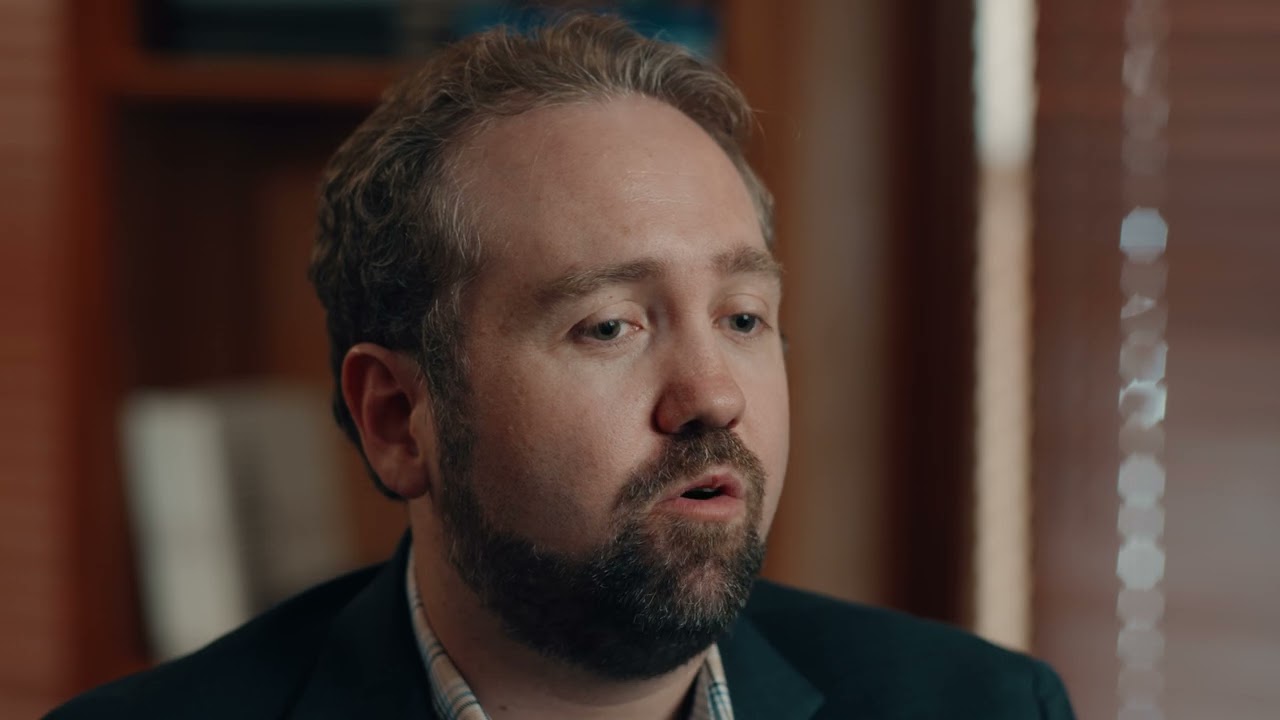
Video: Arun Gupta on The Mission Generation and a New Approach to Careers

In this interview, Arun Gupta, CEO of the Noble Reach Foundation and author of The Mission Generation, explains his new framework for building meaningful, multi‑career lives that blend personal ambition with civic purpose. He defines the "mission generation" as a posture—not an age group—where individuals pursue purpose (their "why") alongside achievement, especially in a world disrupted by AI, geopolitics, and climate challenges. Gupta critiques the traditional three‑phase career model (learn‑earn‑return) and argues that future professionals will have 4‑6 distinct careers over a 50‑60‑year span, requiring continuous learning and purpose‑driven decision‑making. He describes Noble Reach’s TechForce/SPARC programs that create pathways for technologists into federal, state, and local government, framing participants as "dual citizens" who bridge public and private sectors to rebuild trust across institutions. The conversation introduces the "Mission Flywheel"—a loop of acting first, gathering signals, and then scaling—contrasting it with the paralysis of waiting for clarity. Gupta also reframes feeling "stuck" as a useful signal that one’s current role no longer aligns with evolving interests. He offers concrete how‑to advice for early, mid, and late‑career professionals, emphasizing experimentation, leveraging existing skills, and aligning work with personal problems that feel "personal". Finally, he presents a multi‑capital net‑worth framework (financial, mission, health, experiential, learning, and trust capital) and suggests a weekly audit of time and capital allocation as a Monday‑morning action for readers. Throughout, Gupta’s tone is conversational, optimistic, and instructional, aiming to inspire agency and cross‑sector collaboration.
Chapters
Arun Gupta, I'm so happy to be with you. You're one of my favorite people. I love talking to you. You always make me think differently. And now you have this new book, The Mission Generation. I just want to tell people, if it's all right, a little bit about you. Long career in venture capital, now CEO of the Noble Reach Foundation. And you are the true bridge builder between government, tech, and academia. Okay, the mission generation. Who's the mission generation?
So we define the mission generation, Tammy, as being not defined by age, but by posture. And what I mean by that is that people that want to combine personal ambition with civic responsibility and people that want to take agency for their purpose. And we feel like we're at an important inflection point right now largely because, you know, over decades we've defined our identity by where we work and what we do.
That's true.
Which are proxies for prestige and power. And we don't define it by why we do it, which is a proxy for purpose and mission. And the reason we think this is relevant now more than ever is that what we're seeing is that the who we work for and what we do are getting disrupted. Real time. You look at what's happening with AI, you look at geopolitical conflict, there's a lot of disruption there. And so what we propose in the book, the only stabilizing force going forward really is your why. What's your purpose? What's your mission? And without that, it can be very disoriented when you get disrupted. Now, the other piece to look at from an— over historically is that like my dad had one job for 40 years. I had one career, multiple employers. This generation going forward is going to have 4 to 6 careers over probably a 50 to 60-year working period. And so when you start thinking about multiple careers, how you think about building your career journey becomes very different. And that's what we're really trying to highlight here in the Mission Generation, because I think we grew up at a time where people broke down their lives into 3 phases. You learn and then you go earn based on what you've learned. And then you go return, you give back at the later stage of life. And I think that's all getting compressed and now it's getting intertwined where learning is happening throughout your life and people are searching for purpose earlier. And so how we think about braiding our careers early on is incredibly important. And right now our institutions aren't doing that. Our institutions are still building careers, talking about them, especially our academic institutions, as if you're going to have one career. And they're still trying to send folks to search for stability and security in their career. And what we try to define in the book is, at the end of the day, I think stability is the new risk. Searching for stability is riskier than finding what you really care about and going and doing it.
That's funny, because the last time we spoke was when the Trump administration announced TechForce.
Yeah.
And it was you and Scott Cooper, who's the head of OPM, and launching this entire initiative to get more people to look at government and say, this is something that I should consider. And I know there were, I don't know, some 30,000 applications way back then. I don't know now. But when you describe it to me, Arun Gupta, and when you did that night, it sounds scary. It's one thing when you're, you know, you finally get to the place you think you want, or you're you're just working a job, maybe not your favorite. How do you get people to look at that and say, I'm gonna make a change because this is better for me in the long term?
Yeah, I, I think a lot of it is around language we use, Tammy, right? Again, when we think about like you're having a career, I think it becomes very hard for people to see the singularity around like how I can go do something different. When you start framing it that you will have multiple careers over a period of time, I think people have a little bit more agency to decide. Making shifts will become a more natural and normalized thing. I think second, this idea of moving into the public sector in what we've talked about with Scott and TechForce, but now even more broadly with state and local governments as well, is that it doesn't need to be forever. Again, government, I think, traditionally has been selling careers. Come join us for 30 years and there'll be a big pension at the end. Students today aren't thinking that way. They're thinking about like, give me an amazing experience over the next 3 to 5 years. And if you can show them how that experience enhances their career opportunities, that becomes really exciting. Same job, it's just different words you're putting around it. And so I think that's what we're seeing is that we were able to bring private sector partners around this ecosystem and it sends an important demand signal that the students, when they go into public service, they feel seen, they feel like their experience is valued, and they feel like the skills that they're building are transferable if they want to go do something else.
It's interesting. So you're really saying that people need to be responsible for their own career, just like they're responsible for their own personal life, that no great big daddy— you know, there's no GE or Target or, you know, that's going to take, take you by the hand and keep you all of these years because that's what you're talking about, personal responsibility. And paying attention to where you're going and, and making a difference too. I mean, we're really talking about making a difference.
Yeah, and what we're talking about again is, look, it's having an entrepreneurial mindset, but that doesn't mean being— you need to be an entrepreneur and start a company. Entrepreneurship is about agency, right? It's about you deciding what you want to do and then, and then forging that path forward. And I think that's the world we're in right now. And I say that because, look, things are changing at unprecedented rates. And why I think young folks especially are really searching for this and are thinking about it is that, look, you've got a generation that's coming off of COVID They're seeing geopolitical conflict like we haven't seen in decades. They're seeing environmental conflict. They're seeing the Great power competition resuming in a way that we haven't seen since the Cold War. And now you're seeing AI. That's a lot of unsettling trauma. And I think what you see is like when things are stable, which is what it felt like pre-COVID when I was teaching, I felt like students were just focused on themselves. When I was in the classroom after all this, I see that they're looking to be part of something bigger than, because when things get shaky, you reach out to other folks for stability. And I think that's the sentiment we're seeing. What I think surprised us as we were launching our program and even writing the book is that same sentiment is being felt by mid-career and late-career folks. We haven't given scripts, we haven't given language to how do you do, you know, how do you build your careers differently in this world that we're moving into.
I'm going to get to later career later, but we're at a moment of real tension around trust in institutions, government, big tech, higher ed, you name it. Does that make your argument harder, or you think it makes it a better moment?
I think it makes the moment more critical now more than ever, because I think you're absolutely right. The trust in each of these institutions is waning. Our theory on the case of why that is, is over decades now we've been siloing talent into each of these sectors. So if all you've seen is government, you think academia and the private sector aren't doing their part. If all you've seen is academia, you feel like government and industry aren't doing their part. And if you're in industry, you feel like the other two aren't. And I think that's true with any organization or any group, that when you are insulated only in that group, it's easy to demonize other groups. What we're really proposing here, right, is a new way of thinking about building your careers where you're going across these sectors, right? In Noble Reach, we talk about it as creating a community of dual citizens. When we bring young folks into government, we're not saying come here and be a public servant for your career. We're saying come be a dual citizen, someone that's in the public-private sector citizen, understand the language of both, understand the networks of both, and understand the culture of both. And implicitly then, you will rebuild the trust and fill the trust deficit that we have today. Because, look, I just firmly believe that this is all about people, right? When people are in other organizations, they realize that there's good people there. Does that mean everything's going as well as it should? Maybe not. But you also ascribe positive intent as opposed to assuming negative intent. And I think we found ourselves in a world where, because we've siloed talent, And the problem is the problems aren't siloed. The problems require collaboration. But if the talent doesn't trust each other, we're not going to be able to solve the problems at scale.
One of the things I like about what Dr. Oz is doing, and I know that can be controversial for some people listening, is that he and Chris Klomp over at HHS, the two of them talk about how good government employees are. That the AI folks there, not just AI, but the technical folks in one of our most critical parts of government. And it just reminds me of what you're saying, which is, hey, they didn't know anything about government and they come in and you can actually see the value that people have. But NOVA REACH has had 2 or 3 cohorts coming into government. Have you learned anything from that? Anything you want to share? Because I've seen, I met some of them and they're like in Hawaii at various government agencies at the state, at state level, not at the State Department, but at the state level. And you're giving people, these young people, incredible experience.
Yeah, so we're coming off of, we just had, we have them in town right now. And so we had an event last night where we all got to, we bring them together quarterly. So I heard firsthand in the energy that you feel with these young folks. I said to someone, I'm like, I leave here with a sense of optimism of where we are going as a society. Because these young folks really, when they're put in situations where they're close to the problems, they're working with inspiring leaders, they are as energetic and work as hard as, as what you'll ever see. And I think the generation gets a bad rap sometimes because people will say, oh, they're not working as hard, they're not as disciplined as previous generations. And the caveat is, I think they won't go do— they won't work as hard if they don't think the work matters. But when they think the work matters, they're all in. And so, you know, part of, you know, what we're seeing with them is, I think, their eyes opening up to, um, the quality of talent and the innovators that are inside of government. We've got one of our scholars, Tomer, that now is, I think, the forward deploy AI engineer at Navy. And he goes around with Justin Finnelli, and he's now being given so much responsibility at a really young age. And I think that's the other thing that's really surprising these young folks is the level of responsibility that they're being given compared to their peers that are going down the more traditional pathways. And so the learning— and then, you know, when we polled a number of them about their desire to stay in public service even after the internship, about 80% of them wanted to stay in.
That's amazing.
And we actually had a couple that were at private sector firms, you know, adjacent to government, that came to us saying, like, watching what my peers are doing inside of government, I now want to make the move inside. And so this is exactly kind of the ecosystem we wanted to to SPARC, primarily because like, you know, a number of them would say, "We would have never done this had this program not existed." Noble Reach has really made a difference because you don't know how to get into government.
You can apply on USAJOBS, right? You see something interesting, but you guys have really, you know, you guys have created the pathway and people take it. I mean, I tried to describe it I describe it to people as Teach for America for tech and inside government.
Inside government. And what I saw in them, touching on your point, what struck me mostly— I mean, most of this cohort went in in August, early September. We're now in April. The confidence that they carry themselves with. One of them was telling me, like, I just briefed Senator Rounds and Senator Toome on tech work that we're doing. And you just listen to them and you're like, wow, like, you know, you now feel the confidence, right, to talk about this with, with folks of that stature. Um, that's really empowering as a young, as a young individual, and especially on the technology side where they feel like they're the expert. That's the other piece. They feel like they're the expert educating, you know, legislators and people on the government side as to ways to utilize tech for better.
Okay, I know you're not a fan of waiting for the perfect moment. You talk about something called the Mission Flywheel. Walk us through that. How does it actually work?
So look, again, we're, we're looking at this from the context of a world that's changing, and the acceleration of change is only increasing. And I think, like, my generation and maybe subsequent generations, we were really educated with the idea that, like, First, you really learn something, you think about it, you internalize it, and then you apply it. And the issue is, in a world that's moving rapidly, you can't wait for clarity to have action. And so a lot of what we really talk about in the Mission Flywheel is you need to start acting and then let the actions bring you clarity. Reverse the two. And the reason being, Tammy, is that like when you wait for clarity by the time you get clarity, the conditions that you came to get clarity around have changed. And so you find yourself in this kind of recursive loop of like always thinking about it in paralysis. Whereas what we're really proposing within— with the Mission Flywheel is think about what you care about, right? Find ways to go experiment and try things out. But an important part of that is find allies that just support you. Like, I found this even when I was writing the book. You know, the first book we wrote, like, it was for me, like, I don't know if we could write a book. There are friends that you go and ask, you know, tell them that you're thinking about doing this, and they go, why would you do that? And you're like, you know, you get defensive, but then you quickly surround yourself with the friends that are like, wow, that's amazing, you're trying that out, right? Because that— those positive pieces of feedback are important in the journey. So we talk about forging that but always continuously experimenting and then doubling down on the experiments that are working where you're getting the signals that are giving you— it's really about feeling energy around it, right? And when you feel that energy, now you know which way to go, and then go down and scale appropriately.
Many people feel stuck, and you say, quote, "Being stuck is not failure, it's a signal." What do you mean by that?
Look, I think when people feel stuck, they assume they did something wrong to get there. And I think it's actually a signal that maybe the situation you're in isn't right for who you're becoming. So look, being stuck— many times I think people look back at their decisions, and it may just mean that, hey, look, this is a signal that I'm— I've either matured, my interests have changed, the things I care about are different. And I want to move in a different direction. You know, in the book we talk about being stuck many times has, you know, there are 4 resistances to it. The first being inside your head, like imposter syndrome— am I good enough? Can I do this? Fear of failure. The second can be the signals you get from your family and friends, from, you know, all from a good place, but many times they may say like, really, Arun, are you going to do that? That sounds risky. And then you question yourself, right? The third could be, you know, societal, like prestige markers. Like, will anyone value if I go do this even though I care about it? And the third— fourth, it can be institutional. Like, depending on an institution you're in, you know, they kind of lock you in. Like, you would never leave here to go do something else. And so we kind of try to propose again, you know, this idea of being stuck is like think of it as a signal for you to start experimenting with what is giving you that energy. It doesn't mean you did anything wrong. It's just you're growing in a different capacity and you're becoming a different individual.
I love this part of the book because it was more how-to, to get unstuck. But it seems to me that the conversation around mid-career is really the biggest concern today, right? You've lost your job or you're worried about your job and AI. How do you apply that to mid-career? What's your advice for those folks?
You know, what we try to do largely in the book, Tammy, is, you know, show stories of people that have adopted it, right? Because I think if you can't see it, you can't be it. And so that's really the philosophy that we had in writing the book, because we want people to say, like, there's a number of stories there, and that person feels like me, sounds like me, is going through the same questions I'm going through. Now if they can do it, I can do it. Largely for those that are in the mid-career side, it's again not thinking about like— I think people feel the sense of sunk cost. Well, I've put 10 years into this, I can't just leave it to go do something else. And they make it feel like they have to start over again. And we try to reframe it is that you're not starting over again, you're just reapplying the skills that you've developed in a different capacity. That's one. Two is like, even while you're doing what you're doing like, how can you start experimenting with other things to figure out, like, what is it that you really care about? And you can do that while you're still working, right? But I think we put up a lot of these questions ourselves when we're in mid-career, going like, I've got too much coming at me, I can't do it, you know, like, I picked the wrong career, I just got to fight through it. And I think we, we try to show there, there's a number of people that feel the same way, but they tackle it in a different manner. And I think it comes back to, um, thinking about like, what am I good at, right? You know, what do I care about? What does the world need, right? And how do I bring that to bear? Like, how can I make money doing that? And because we're all about like, financial security is incredibly important, but there's a way to bring all of that together. You know, in Japanese, there's a Japanese framework called ikigai, which captures all of that. But that's at the core of what we try to write about, which is like, you need to think more broadly if you're feeling stuck. And the questions and the, in the process are kind of the same whether you're early, mid, or late. The way they manifest themselves is different, and that's why we broke out the chapters in early, mid, and late career.
Why do you recommend people ask, what problem in the world today feels personal to you?
I think if it feels personal, it'll sustain you over time. Like working on that problem. Back to the idea that we've built our careers around who we work for, what we do, as opposed to why we do it. The why is like solving or working on a problem that you deeply care about. Um, that doesn't mean that you're not— there's not going to be disruption or it's not going to be ebbs and flows, but like when that happens, you still feel a centering around that you're doing something that you care about. Whereas when you're not it can be disorienting. It could feel like, where am I? What do I do now? And I see it around me. I just feel like so many people I know feel disoriented.
Right, they're working every day, and they're not happy. They just don't feel like they're making a difference, or they don't want to make a difference, or just going to work is enough.
Well, look, I think part of that is, Tammy, biologically, we're wired to seek security. We're wired to seek safety and stability. And there are studies that show this, that people will pick stability and security over happiness. And so our systems then have been created to find stability. And so, you know, you— it starts now early. Get to the right school to get to the right college to get to the right internship to get to the right job. And now I'm gonna, you know, you're always gonna be stable. And, you know, Arthur Brooks writes a lot about this, in that the derivative impact of that though is we've created a generation where it's almost like there's an achievement addiction, where you always think like, if this happens, then I'll be happy. If this happens, then I'll be happy. And when that happens, you're happy for a day. And there's biological studies that show, like, your limbic system resets. Like, that's what keeps you going to get to the achievement. But once you have the achievement, it resets, and now it's like a dopamine hit. It's looking for the next one. And so you're on this constant treadmill, and we haven't stopped and slowed that down. And that's where the why comes in, right? Because if you can answer the why, you're not just searching for the achievement, but you're searching for a problem that you truly care about. And that's a little bit of why we try to write about— I think that's what this generation deeply cares about right now, is like how to incorporate that in their careers in a more meaningful way.
Okay, if someone reads the book, what is the thing you would want? It's the weekend, they're chilling out, they're poolside, or they're at Starbucks, and they're reading The Mission Generation, which I really enjoyed. And especially the part about being stuck and the advice I thought was tremendous. But what would you want them to do Monday morning?
Yeah, probably two things. You know, one would really be to reflect on, you know, how much of their time in a week they're really spending on things they care about. Just do an audit of your time, and I think people will be surprised. At how little they spend on the things they truly care about and how much they spend on the things that are just coming at them where they're reacting. But the second, you know, you know, we, we, we put out in the book a framework around net worth, and so it'd be an audit of that. And so in the, you know, we talk about how our society right now You know, wealth is what you accrue, net worth is what you bring to the table. But we define net worth on one dimension, and that dimension is finance. If you go around and ask anyone, what's your net worth, they're going to give you a number. And so we shouldn't be surprised that those are the systems support that. And we all know, looking back on our careers, that like a career and a life is more than just a number. Finance is an important metric, but not the only one. And so we propose, you know, in, in the book 5 other capitals along with financial capital. One is mission capital, health capital, you know, how much time are you taking care of yourself? Experiential capital, how much time are you investing in creating new experiences for yourself? Learning capital, curiosity, learn and capacity to learn. And then maybe the most important is trust capital, how much are you investing in relationships? And I think if someone really did an audit around that for themselves it would be very telling. Like, where are you overinvesting and where are you underinvesting? Um, and we intentionally use the term capitals because, um, especially for young folks, we want them to feel that as they're making decisions about these early career opportunities, that they think about those decisions in a broader context versus like just the signing bonus and the salary, but how all the other capitals fit in and think about them in the context of an investment. Like, these will compound over time. And I look at, you know, what I'm getting to do now. I think it's more I'm able to do it because of some of the investments made with relationships and trust that you've built over time. We don't talk about that, right? And so I think if you did an audit of some sort— we propose a couple ways of doing that in the book— it would be an interesting exercise to see, you know, where are you spending your time. And then how do you reallocate appropriately?
You know, you are the mission generation because you made the career change and are doing this incredible work. I can't thank you enough for this interview. I have to, if you don't mind, quote Arthur Brooks on the front of the book. Finally, a guide that shows us how to build meaningful careers by deploying ambition in service of others. What a tribute to you and your work. I'm so glad to have you here with us at the Washington AI Network. The Mission Generation: Reclaim Your Purpose, Rewrite Success, Rebuild Your Future. Thanks again.
And Tammy, thank you for being such a, um, close friend, strong supporter, and advocate for the work we're doing. I appreciate it.
More from Arun


Leading Innovation in State Government | NobleReach Scholar Melissa Lopez-Barbosa