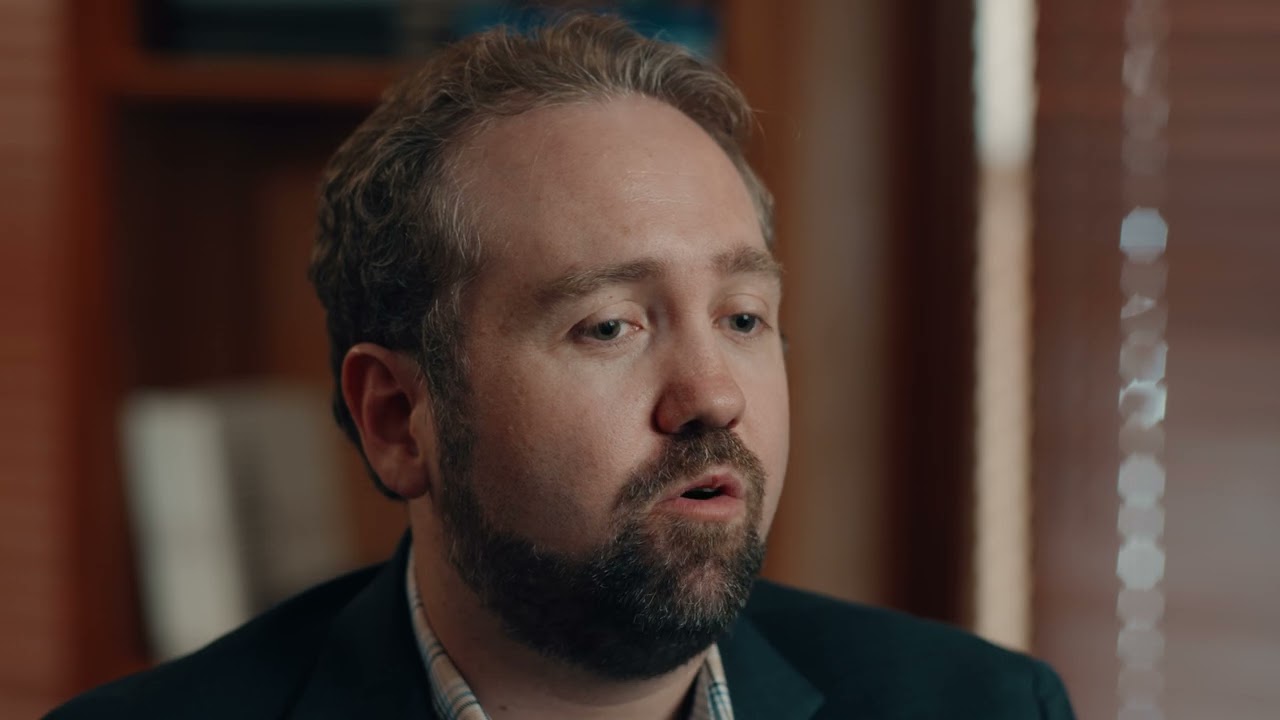
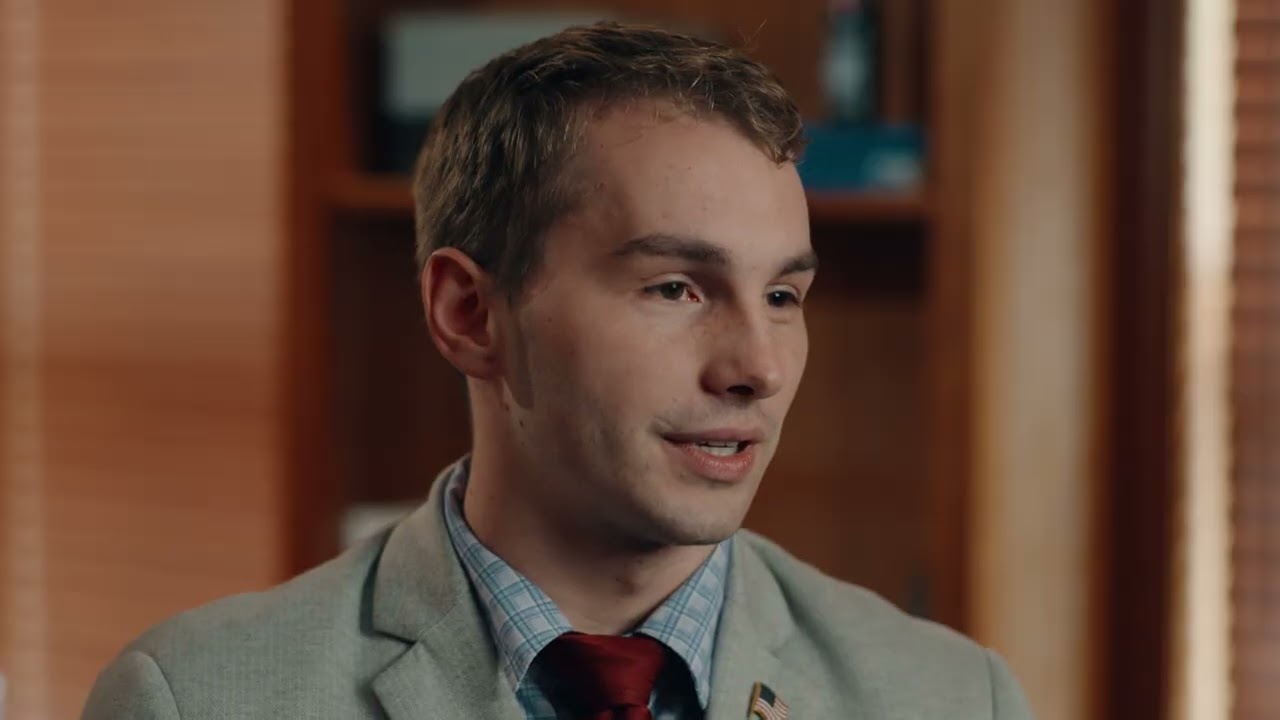
Video: OPM Director Scott Kupor & NobleReach CEO Arun Gupta on the Urgent Need for the US Tech Force

The panel, moderated by Tammy Haddad at the Johns Hopkins Bloomberg Center, brought together senior leaders from the U.S. Navy (CTO Justin Fanelli), Johns Hopkins Applied Physics Laboratory (Chief Mission Engineering Officer Christopher Watkins), the Office of Personnel Management (Director Scott Kupor), and the Noble Reach Foundation (CEO Arun Gupta) to discuss the urgent need for a modern U.S. TechForce. The conversation covered how AI is being integrated into naval and undersea platforms to improve decision speed, lethality, and survivability, emphasizing the importance of explainable AI and reducing operator cognitive load. Watkins described training and apprenticeship programs at APL that teach AI, robotics, and autonomous systems to a cadre of engineers. Gupta and Kupor outlined the TechForce initiative, which aims to close a talent gap, address an aging federal workforce, and replace degree‑based hiring with merit‑based skill assessments. They highlighted partnerships with 30 private‑sector firms, university collaborations, and a job‑fair pipeline that will place early‑career technologists in federal, state, and local agencies. The panel also addressed security‑clearance bottlenecks, the 80‑day hiring goal, and the geopolitical competition driving rapid AI adoption. Throughout, the speakers stressed the need for a culture of human‑machine teaming, community building among scholars, and a narrative that makes government service a desirable, mission‑driven career option for the next generation of technologists.
Chapters
Welcome to the Johns Hopkins University Bloomberg Center. The Hopkins Bloomberg Center is a public square, an idea incubator, intentionally designed to bring people together across disciplines and differences to inform evidence-based policy solutions and educate the next generation of civic leaders and scientists. As AI rapidly advances, government, academia, the private sector, and civil society must unite to prepare the American workforce and harness its transformative potential. For decades, the interrelationship between the government investment in academic research and private sector efforts to bring the fruits of federally funded discovery to the market have formed the bedrock of the most powerful innovation ecosystem in the world, one that makes America healthier, stronger, and more prosperous. With rising global competition and evolving challenges in emerging technologies, we must continue to invest in this future and nurture those symbiotic relationships. We look forward to this evening's discussion and to continuing the conversation with all of you. Please come back and engage with us here at the Hopkins Bloomberg Center soon. It's now my pleasure to introduce our first speakers of the evening. Moderating the conversation is Tammy Haddad, founder of the Washington AI Network. Tammy is going to be joined by Justin Fanelli, the Chief Technology Officer of the United States Navy, and Hopkins' own Christopher Watkins, the Chief Mission Engineering and Integration Officer at the Johns Hopkins Applied Physics Laboratory. Please welcome them for the first portion of tonight's program.
Hi everyone, how are you doing? Welcome to the Washington AI Network podcast from the Johns Hopkins Bloomberg Center. I, I'm Tammy Haddad, the founder of the Washington AI Network, and we begin today's program with Christopher Watkins and Justin Finnelli. Christopher is the Chief Mission Engineering and Integration Officer at Johns Hopkins Applied Physics Lab. I already tried to get a tour from him. Christopher is a Navy veteran, is now focused on naval defense technology, autonomous underwater vehicles, bridging research and strategic implication for national security. And Justin Finnelli is the Chief Technology Officer for the United States Navy. Justin is at the Center of Innovation at the Pentagon. Central to Justin's role is unleashing public-private partnerships to ensure our warfighters have the latest technology. Let's hear it for them. First of all, thank you so much for your service. And I want to start with you, Justin, if that's okay. When a sailor commander is in a time-critical situation, what does successful AI look like?
Wow. Okay.
That's tough, right? That was a good question, don't you think, Sabal? Good question. Okay.
The only harder piece is walking in late.
Right, exactly.
All right, so let's pan out a little bit as it relates to what we're doing right now and how we're viewing technology and where AI fits and doesn't. We're at a moment where, number one, a lot of capabilities have become mature, but the recognition specifically within the department that the cognizance of our sailors and Marines who want faster decision loops, who want more time saved, who want to be able to get back to the job or to have connections to more data sources or to know the signal through the noise, that recognition is the best I've ever seen it. And the technology tipping point, those continue, but right now, the craving for these capabilities has allowed us to work with individuals who are ready to pull things forward. And so what it looks like is we compare the baseline of how they work right now in exercises and challenges and pilots to how much better it can be. And there are places where it's not linearly better, it's exponentially better. So what it looks like is time on mission increased lethality, increased survivability, and increased power projection to the point that we are deterring and don't have to do things that we don't want to do.
Well, that's incredible. Let's hear it for him. That's amazing. So, Chris, when you were serving as a commander in submarines, don't you wish you had all that technology?
Absolutely.
Well, and at APL, you're focused on all this too. So tell us from your point of view where things are.
Okay, so to pile on to what Justin said, when we're thinking about deploying artificial intelligence on platforms, think about cognitive load of the operators, right? They are having to contend with tremendous amounts of sensor information, and it's really about decision advantage at the end of the day. Who can make the best decision fastest? This is where artificial intelligence deployed at the edge on our platforms is extraordinarily important. The other piece I want to bring up is trust. Okay, so how do you trust what the algorithms are providing to you? There's a different— a variety of different technologies that help with that. One is explainable AI, so AI that mimics the, the thought processes of a human operator. So take a submarine, a sonar operator, Jonesy from Hunt for Red October.
I told him I was gonna ask, but who loved that movie? The Hunt for Red October. That was his life. How amazing.
So, and what, what the algorithms can do is present evidence accrual as why it's saying what it's saying. It's calling this particular contact, this particular contact. It's, and then it presents that information to the operator so they can trust and promote it in the system.
Okay. But I have to ask you, how do you educate all of these, all, all the warfighters, all the technologists, all the people in the office on how to use this technology? Because it's happening all in real time. All these changes are taking place? Justin, do you want to start?
Yeah.
Well, so what, what Chris just laid out is the technology is good. It's about the human-machine teaming to result in outcomes. So we're spending money, but I guess different from in the past, we are trying to invest in our capabilities and our people to make sure that you can show night and day how much more effective this is. So like the difference between cognitive load before and after. Okay. What that actually looks like is on a ship, we have a common operating picture, and instead of that being a mishmash of a handful of systems, we have a current real-time system that allows them to make decisions faster. That reduces the time that they're swivel chairing. That reduces the time that—
What's swivel chairing?
Oh, this is— who here was in the military?
There you go. Raise your hands higher. Come on. Thank you. Who was in the Navy? Jonathan Clifford, second row. There you go.
All right. So then they know this better than most.
Did you swivel chair? Oh, he did.
And so swivel chair is— why there are axes on a chair is because we have so many disconnected systems historically that you have to actually turn not just your neck, but your whole body to get to the different systems. What we've done recently is we've integrated that in such a significant way that people can actually get back to the job, right? Like we are actually seeing both a ship afloat and ashore, a difference in how they operate because integration with our partners is a priority.
Wow. Did you swivel chair too?
Absolutely.
It's tighter. It's tighter on a submarine.
It's tighter.
It's a little— it's called something different.
Again, but you're dealing with all kinds of new technology and you're teaching here at Johns Hopkins. You've got the partnerships at these, not just Johns Hopkins, but research universities all around the United States. You've got companies and then you've also got government. This is again educating a lot of folks at the same time. In particular to Hopkins, you're trying to advance everything by years. How are you doing it?
Yeah, so at the Applied Physics Lab, we have, I'd say, a cadre of a few hundred folks that do live and breathe the application of artificial intelligence in the mission space, and then also into our back office type operations as well to make efficiencies in how we execute on the organization. Then we have a variety of training programs throughout the workforce to make sure that the entire workforce is savvy, in using this. How can we execute our jobs better? How can we find new and interesting applications of this technology in our mission space? And how can we deliver capabilities much faster? And then additionally, we partner with portions of the government. We've done something with the Naval Sea Systems Command on taking what we have learned and more broadly educating our government partners as well.
Mm-hmm, all right, so a little later, we're gonna talk to Scott Cooper, who started US TechForce First of all, Justin, I'll start with you. What is your take on that? Is that gonna help you build capability? How are you looking at it?
Yeah, will more talent in our workforce help us to go faster? Yes.
Oh.
So this is a knowledge work game, right? Something interesting here is if you're doing manual labor, you might get incrementally or linearly like a little bit faster. Knowledge work is totally different. So we had kind of version zero of TechForce in, in the Noble Reach cohort that we've been hosting for the last year. And we have 23-year-olds who are just moving so— they're running laps because they understand AI. They are in a hands-on role within the government with problems that are so big and hard that they're stimulated. Actually, there's a story. One of them, I was walking back from a meeting with a 3-star. We have a 23-year-old meeting with a 3-star because he's so savvy. And he said, "When I started, I was playing with a Rubik's Cube and you told me, 'I'm glad you did that. Your problems are about to get harder.'" And he said, "I thought to myself, 'Harder than a Rubik's Cube?'" And he said, "They are so much bigger and more satisfying than I could have imagined." If we can get more people like that, in this cause right now, it's an exponential impact.
And Chris, that's my point about serving, being in public service, where you have the opportunity to make a difference. There's many ways to make a difference, but make a difference for the public good. So TechForce and the Noble Reach Foundation are saying to young people, like many in the room, Hey, why don't you come into government first? And TechForce is pulling that all together. What do you think about it?
Absolutely. And I would say start even earlier, right? Go into the elementary schools, the middle schools, STEM education, but bring specific AI-type modules in there. So I think the earlier you get to people and you kind of give them an understanding what the future is going to look like and how they could apply their knowledge and their skills in the public good, I think it's a very powerful combination.
I want to riff on— like, so this is a game where you're learning by doing, right? And so what we've started to do with some of the talent— we have Data Science at Sea. We did our first hackathon underway recently. If you are closer to the problem and closer to the people with the problems, you're going to learn more. You're going to figure out what applications are there. And so this is— as much as it's exciting to see these advances, The proximity to the problems and the reps is the way that we win this game together.
What do you think the biggest opportunities are for TechForce?
I think that essentially in this— in the national security struggles that we're in right now, the TechForce could be an absolutely foundational capability to build that workforce of the future. So getting the people the experience at the problems right at the edge where they really matter and really be letting AI really become part of the ecosystem and not just an interesting technology, but something that is part and parcel to how we do business and how we fight as a nation in the future.
And what about the intelligence community? When you're talking about AI, we've talked a little bit about it, trust. How does the intelligence community deal with the trust issues? Oh, let's hear what they have to say. That was a pause for—
The HQ APL works on this a little bit.
Yes.
So let's—
I want to go to first principles here because AI is a general purpose technology, the other GPT, right? And the idea of allowing it to reshape the way that we do some things. Why did we get into government? Because you— to serve the people, right? You think that we can be so much better than we are right now. We want to be more efficient. We are being more efficient. How much better can this be? And so kind of independent of the domain, it's what is the baseline and then how can we beat that baseline from an intelligence perspective? Perspective, you know, like within our intelligence directorate in Navy, how do we use AI to save time? There's a lot of manual labor. And so one of our programs was saying, hey, I went to a watch floor at midnight and I said, oh, here are the two senior officers who are doing manual watch. How much faster could you do your job if this was infused with AI? Okay, and then they're just getting notified of anomalies. People were actually afraid the first time. They were like, "They're not gonna like you. You're gonna take their job away." I went and I said, "Is this okay?" And they said, "Do you mean me focusing on the mission?" Right, like me focusing on the signal and getting rid of the noise and still being able to go back and see where like anomaly detections tell me that these are, you know, like true positives. Yes, we want that. And so there are any number of things that we can do, but we have to do that A/B testing along the way so that we know what to scale and what isn't ready for prime time.
I want to hear about autonomous underwater vehicles, but let's first talk about robots. I just got back from CES. Anyone else at CES? It was— oh, look at them. It was robot central there. What role will robots play? Not just in the Navy, but in the military?
Well, I think robots are going to take over a lot of the dull, dirty, and dangerous jobs that people do not really want to do.
The ones that Justin had, he was clearly talking about himself with all that manual labor, don't you think?
Yes.
And I think it's a combination not only of the dexterity of the machines, what type of— how they can actually manipulate the world around them, but how they view the world. So that's machine perception. Right? That goes directly into artificial intelligence, machine learning types, interpretation of the sensor data that they're getting. So if you could think of a future robot with far different sensors than what a human does, it doesn't have to replicate a human, but how does it make sense of that information and how does it execute those types of activities? So I think it's, uh, the, the robotic world can really completely revolutionize the way we build and operate systems.
OK, let's talk about— that goes right into underwater autonomous vehicles. Can you talk about what you guys are working on and what you see in the future?
Yes, so unmanned undersea vehicles are proliferating around the world. It's not just the United States working in this area. When you think about the totality of the ocean, we operate in a very small part of it, and we understand a very small part of it.
Right?
So the trade space for understanding, getting intelligence in those areas, understanding what adversaries are doing, and covering down and monitoring what other activities other nations are doing is just a tremendous trade space. Unmanned undersea vehicles will help augment the size of the sensing force that we have. It can't just be manned submarines running around there covering down on all of this, all of the space.
Are you working on any of that?
Yeah, so this is a force multiplier, right? And so we just recently stood up a— everyone who has been remotely close to the Department of War knows about a program of record. This is the desired end state if you're working with the government. It is stovepiped and slow. And so we've shifted to portfolios, and our first portfolio that we stood up was called RAS, Robotic and Autonomous Systems. And so how do we make sure that we're evaluating with Trade Space the highest impact per dollar— robots, autonomous vehicles, surface vehicles, UUVs— across the board? Where is your best bang for the buck? And so again, imagine a scenario where people have spent their entire career just building something, and now we're saying, hey, we're going to let you buy, we're going to let you work with private sector, and we're going to augment largely either manual or piecemeal solutions with a web of capability. We need more talent to make those decisions go faster, but we have an awesome set of partners on the private sector side. We have the, the government is in this way smaller than it's ever been. We're working with DHS and Coast Guard, we're working with Department of Transportation, like the amount of synergies for us to figure out What works? Test, scale, kill, otherwise, in terms of the capability maturity process, that's going. So are we working in that space? Yes. Do we want that in manufacturing so that we can go faster? Yes. Do we want that just about anywhere? But we're gonna prioritize based on impact.
So Johns Hopkins is a legendary research, not just university, but foundational research like no other place, right? Not to promote Johns Hopkins, let's hear it for them. Thank you. A little louder. Sibel's in the front row. Thank you very much. The Energy Department, the Trump administration announced the Genesis Program, bringing the work of the national labs together. And it just makes me wonder, with APL, are you working with other universities? I know we have folks from other universities here in the room. How do you work together and coordinate this? In real time.
Yes, so we have cooperative agreements with a number of other research organizations, and it kind of spans the portfolio that Johns Hopkins APL is involved in, and that goes essentially from the seabed to space, essentially. And in fact, you're going to have a space talk here coming up at the—
I was going to promote space, Space Force next week. Mark your bingo cards.
And we'll be talking specifically to what's going on in that domain. So we have cooperative research agreements, both with the government and amongst ourselves as educational institutions. And we also have a variety of sabbatical and other types of education programs that allow us to work across organizations.
And all your free time, Justin, you also teach at Georgetown University. Let's hear it for Georgetown. Across the street, right? Crossway.
They host events here too.
Yes, they host events here too. That's right. We love them, all the universities. So how are you working with universities to drive AI adoption other than coming to programs like this and really explaining actually how you're changing things or trying to change things?
So the course I got this semester was a first-time run. It was software-defined warfare. It was waitlisted. I was really impressed with how kind of like hungry students were for this. And from a research perspective, from a student perspective, I think people are hungry. What we're looking for is a little bit less science fair and more translation. We want to make sure, like you said at the beginning, that we're getting solutions, better capability to our sailors and Marines faster. And so that means at the lab level, at the university level, at the commercial level, as much as we can usher in What's highest impact? That's why we serve. And that's frankly why we need TechForce to bring in more talent so that we can surge the best capabilities.
That sounds terrific. I want to thank you both. Please join me in thanking them. Thanks so much. And we're going to let you guys go. And if you guys can please direct your attention to the screen.
Want to help shape the next generation of changemakers? The Noble Reach Scholars Program launches top STEM and business grads into mission-driven roles serving the nation. They're ready to make an immediate impact on behalf of the American people, and you can be a part of it. When you become part of our community, you're not just joining a network, you're lending your name and wisdom to a testing ground catalyzing exceptional talent. When you connect with the best and brightest of the next generation, you build your legacy among tomorrow's emerging leaders. Join a bipartisan group of visionary leaders from federal, state, and local government and industry by becoming a speaker and mentor. Your expertise can illuminate their journey and leave your mark on tomorrow's innovators.
Thank you to all of our speakers for your support and dedication to our mission.
Ladies and gentlemen, please join me to discuss the new U.S. Tech Force. Join me in welcoming Scott Cooper, Director of the White House Office of Personnel Management, and Arun Gupta, CEO of the Noble Reach Foundation. Thank you both for being here. Thank you so much. So, Scott.
Yes.
Let me be the last to welcome you to Washington. We're so glad you're here. As a longtime Silicon Valley leader, you spent decades shaping how technology companies are built and scaled. You brought that experience to Washington, launching the government initiative called U.S. TechForce, designed to recruit the best technologists into government service. At a time when the influx of technology, new technology, is outpacing the speed of government. Now more than ever, government needs modern technical expertise, and I think most of the folks here agree, right?
This is the friendliest crowd I've seen in a long time.
I know, we liquor them up before. That's my secret. We're so pleased to have you here. Thank you so much, Arun. It's so great to have you back. Arun Gupta, CEO of the Noble Reach Foundation. Our neighbor, our friend, who 2.5 years ago, again VC, he left that industry to come and be with us and bring more tech scholars into government. The Noble Reach Scholars Program. We have some here. Where are the scholars? Raise your hands. You got 3. There you go. Thank you guys so much for coming. By the way, Scott, this program is so good.
I know.
I met someone at their last event and guess where she was going? Hawaii. These are good jobs, folks, in government, that's for sure. But Scott, let's go. So why TechForce and why now?
Yeah. So first of all, thank you for having me and thank you, Arun, for your partnership. It's been fantastic. So look, to me, what we're trying to solve are a couple of challenges that I think we have in government. One is obvious, which you talked about, is, look, the pace of technology is just going to continue to accelerate. And, you know, the government is, I would say, woefully underprepared from a talent perspective. You heard it from, you know, my colleagues who were here before. So number one is we just have to solve like a talent gap problem there. The other thing we're trying to solve with TechForce is we have a terrible age demographic problem in government. So only 7% of the workforce in government is under the age of 30, and about 44% of the workforce is over the age of 50. So if we do nothing, basically we have a pending problem where we're gonna have a ton of people retiring over the next 5 or 10 years, and we've done absolutely nothing to actually replenish the pipeline. So to us, this is the perfect opportunity, which is can we fill a talent gap in the technology area, and can we also start solve what we call the early career problem in government. So collectively, I think we can tackle those, those two problems with TechForce.
Okay. So it's been 3 weeks, I think, since you announced the program. What's been the response?
It's been phenomenal, like way better than expected. And again, we've had fantastic partners to go to market with. So, you know, what I think we did well and uniquely is obviously we teamed up, of course, with the Arun Gupta team, but then we also included about 30 private sector companies, you know, all of us.
What are they going to do?
So they're going to do a bunch of stuff. So let me take a step back. So what we really want to demonstrate in this program is if you're an early career person, you don't need to make a 40-year decision as to whether you're going to be in government or be in the private sector. What my hope is over time, my personal view is, I think it would be healthy both for the government and for the private sector if we had more people who come in and out, quite frankly. And I know the ethics lawyers hate me when I say this, but like, I think we can deal with the ethics issues. I'm not worried about that. To me, the bigger opportunity is what's the upside of having that mix. So the reason why we wanted to partner with the private companies is I want to demonstrate that, look, if you do great work in government and you ultimately decide you want to be in the private sector and not in government, then your skill set is transferable to the private sector. So among other things they're going to do, number one is they're going to contribute managers to help us kind of staff the program. Two is they're going to help us in terms of the programmatic elements of it. So speaker series, training, certifications, all kinds of other stuff. And then probably most significantly in my mind is we're going to run a job fair at the end of this 2-year period that will include both government employers and private sector employers. And, you know, my hope and expectation is if we do a good job on the front end of screening these folks and we do a good job of training them while they're in government, they're going to be eminently qualified to like get whatever private sector jobs, if that's what they want to do, or they'll get government jobs. But we want to create this optionality and this idea that there can be a fluid career track, particularly for early career folks.
So Arun, you've been doing this at Noble Reach Foundation for the last 2.5 years. What advice have you given, given Scott on how to engage the community?
Look, with Scott, you know, we've been fortunate to have a partner where we're very aligned on the outcomes that we're driving for, right? When we started Noble Reach, it was very much around the notion of like, how do we combine personal ambition with civic responsibility? We've created a narrative where people have, or students especially, think about doing either or. So do I go in the public sector or do I go in the private sector? But we haven't created the interdependencies, the bridges to have them feel like they can do both. And so a lot of what we've talked about from what we've seen at Noble Reach has really been around one narrative and shaping the narrative, right? What we talk about when we talk to students about coming into the program at Noble Reach and likewise with TechForce, is to think of themselves as ultimately becoming dual public-private sector citizens. And so where they have an understanding of how both sectors work, how they have an understanding of the language of both, the networks of both, and that will enhance their career opportunities. Because I think it's important for them to see that the opportunities get expanded and the aperture of that expands accordingly. I think second, you know, what we're also seeing is we talk about this not in terms of careers, but in terms of experiences, right? It used to be that government was selling careers for 30 years, and what we've been saying at Noble Reach is like, come for a year or two, and our scholars represent this, come learn and see what's going on here. You may decide you want to stay, which is great. You may decide you leave, but we celebrate both options because even if they leave, we want them to be ambassadors for understanding what public service is about and staying connected to public service. And they, as Scott's saying, they may want to come back. And that's an important piece of it.
And is it, Scott, are you looking for graduates, are you looking for graduate students with graduate degrees, people that have worked in industry a couple years? How are you looking at it?
Okay, so we are looking for people who have the right skill set. So one of the big initiatives also that you know that probably that the Trump administration is doing and OPM is supporting is what we call merit hiring. And I know that sounds like motherhood apple pie because of course we all want to do merit hiring. One of the challenges, though, in federal government, some people may not know, has been historically we have done kind of self-attestation of skills as a way to hire people. So we have not done assessments to figure out, like, do they actually have merit? The other thing we've done is we use a lot of proxies in government for skills. So almost every job in government has a college degree requirement or it has minimum tenure requirements. And look, there are many jobs for which a college degree might actually be helpful. But my general view in the world is Look, you want to hire people against the actual skills you need and then you want to assess them for those skills. And quite frankly, you know, if somebody is fantastic and they don't have a college degree, but they can perform at the level we need them, then, you know, God bless them. Like, we should take them basically. So we're trying to basically eliminate barriers to things that are kind of proxies for merit. So, you know, my favorite example, which, you know, if you'll give me 30 more seconds, I'll give you is, you know, there was an employee, an engineer who was working for Doge, and I won't mention his name because it's a very colorful— it was a very colorful nickname. Which many of you probably know, so some of you can figure it out. But among the other complaints that people had of him, there was an article, I think, in the Washington Post, and they quoted somebody from the administration who said, we never would have hired this guy because he didn't have a college degree and he didn't have 10 years' worth of work experience. And I literally wanted to kind of pull my hair out when I heard that, because I was like, to me, that's exactly the opposite culture that, at least from my perspective, we want to create, which is I want to create a culture where, look, if somebody is fantastic and they're awesome and they can do stuff, then let's get them in here and let's level them appropriately for that. And so much of the way the kind of federal competition compensation and federal system works is things are measured on proxies for success as opposed to actual success. So TechForce, one of the things we're doing here is look, we're not doing that. So in theory, so the short answer to your question is look, you don't need to have a degree at TechForce. If you have one, that's awesome, but that's not a requirement for the job. The requirement for the job is can you actually perform the skills that we need you to perform? And we want to level people appropriately for that.
And how many applications, or I say applications, but how many I know you've got like 35,000 responses.
Yeah, so I'm probably outdated. My partner Kevin is in the audience here. He can help you. But like, we're like, yeah, north of 35,000 people who've said like, this is cool, this is awesome. And then, you know, we're working through our funnel now of like, okay, how many of those people will give us a resume? How many people do the application? So that's kind of all live right now. The application is still open, so I don't want to bias people from doing it. But I would say like, we're, from my perspective, like the interest is phenomenal. And look, we're going to do everything we can to make this successful. 1,000 is our initial target. But my aspirations for this thing is, look, we should be doing 5,000, we should be doing 10,000. And then Arun Gupta and I were talking about this, you know, in the other room, like, I want to then kind of break off verticals and say, okay, maybe there is a TechForce-like thing for HR functions or for financial analyst functions.
Well, that's what I wanted to ask you. Are you targeting different areas? Yes.
Yes. So, look, TechForce is the first. Instantiation of this, right? And it's, it's critically important. But look, tech is not the only skill set that government needs, and it's not the only area where government has an early career deficit, basically. So one of the things that we're doing at OPM for the first time is we actually required every agency to submit their full annual headcount plan to us, which again, coming from the private sector, sounds crazy that we haven't done this before, but this has never been done. And one of the benefits of that now is we have a pan-government view of what is everybody hiring. And so we can say, great, you know what, it turns out there are 10,000 new HR positions that are being hired across government, and one of the things that we want OPM to do is we should create a program around that, and let's go target early career folks, let's do the marketing, the outreach, let's get a different set of private sector companies to partner with us on that and create a similar program like TechForce, and then just do that across verticals. So over time what we can solve is we can solve the early career problem, we can increase the efficiency of hiring, and we can improve the applicant experience, 'cause in the perfect world, Like, I want anybody who's interested in federal government who has a certain skill set to say, okay, the government needs my skill set. I don't need to know, is it at Department of War, is it Department of Energy? I just need to know, like, the government needs me as an HR professional, and then we'll screen them, and then we will basically submit their name to 10 different agencies and say, you know what, like, knock yourselves out, go compete for this applicant, and, you know, may the best person win, basically. So this is, this is both an important objective of getting more tech people in government, but it's also an experiment for us on How do we do centralized hiring in a way that scales across government?
And just to add to what Scott's saying, the reason from our experience this is so important is that the way we were having to go places, go agency to agency, right, and ask folks, do you need talent?
What do you need?
And things of that sort. To actually have some— one place to go to, because our issue when people would ask us about our program was, how are you going to convince people to do this? The issue is actually getting the placements on the government side. You know, we would have, you know, we had over 3,000 people apply, you know, for 30 placements. But with someone like what Scott's doing now with the program, that opens up the placement window, and that makes it easier for us to start filling these spots in a more meaningful way.
Yeah, this was one of the— again, and Arun and I talked about this— this is one of the most important things that I learned when, when we were kind of setting up this program is, look, as you know, there's nothing we're doing here that's rocket science, right? Okay, so, you know, there have been lots of programs to recruit people into government over time. But I think these things fail for a lot of reasons. One of the areas they failed was people didn't aggregate demand appropriately across government. So they would have the challenge, which Arun has done fantastically, which is he's got like a fantastic— he could place way more people than there are positions there. But the only reason he's limited by that is because he's not sitting inside of government and hasn't done the work that our team has done because it's understandable. Of literally going agency by agency and saying like, this is an important priority, the administration says it's important, like show me your headcount plan where this is in there, right? And so that's a role that I think we can do that will be beneficial to Arun's organization as well because we can help him expand his pipeline. And then again, as I said, like now that we have visibility across all these other areas, like we'll go surface the demand and then obviously our job at OPM is okay, can we build the top of the funnel and build the supply?
And then, and Tammy, as you asked earlier about like how do you make this successful, it's not only about placing the people, the students in. But, you know, the way we talk about it at Noble Ridge is providing the scaffolding once they're in. And that scaffolding includes mentorship. So each one of, uh, each one of our scholars gets a mentor. It's skill development, which the industry partners can help with so that the students feel like they're getting credentialed. And then the final, and maybe the most important, is community, right? So they're not feeling like they're isolated going into a department and getting lost, but they're part of a larger group. And that group is, is ultimately their peeps that they go on this next 30 to 40 year journey with together that have a shared mindset of combining personal ambition and civic responsibility. And as that network grows, and Scott and I have talked about this, that becomes what becomes attractive to the next cohort and the next cohort after that. It's not only the job that you're going to do, it's the people that you do it with, but then ultimately the terminal value is the community that you're getting to be part of going forward.
And Scott, I don't know if you know, Arun wrote a book which changed my kids'— are in the audience— life.
I knew he wrote a book. I didn't know it changed your kids' life.
Yes.
I didn't know it changed your kids' life.
It did. Well, and it's Venture Meets Mission. And the idea is that you need a purpose. And we all read all the headlines from Johns Hopkins researchers and everywhere else saying that people need a purpose. And to that point, I think you're— I mean, you don't need my marketing help, but I also think you could emphasize the fact that you, Chris Klump, Saval Oz, who's here in the front row, the fact that very successful people like Arun on the outside of government are saying that this is something that has value. I'm a successful person. I've worked with all of these companies. The fact that, you know, 2 years of working in government It's going to change your— not just your career path, but your life and to Arun Gupta's community. I think that makes a big difference too.
Yeah, no, look, I couldn't disagree more with you. My team has heard me say this, so apologies. But so this is a whole thing. So look, there's two things we have to do to be successful broadly in terms of getting, I think, early career people into government and by the way, getting them to stay in government. So, you know, look, it'd be great for the private companies if everybody goes out to the private companies. But we want to also, you know, hopefully have continuity. So the challenge we have is, I think in my mind we've got two challenges. One is we've done a horrible marketing job. So your point is right on. So one of my first meetings I had when I first got to OPM was with one of my managers who's like, hey, you guys are ruining everything. And I said, what do you mean? By you guys, she meant Doge. And I said, well, first of all, I'm not Doge. I'm my own person. But I said, what do you mean we're ruining things? She said, well, our pitch to people has always been come to the federal government and you have a 40-year lifetime guarantee of employment, basically. She's like, that's our pitch. And so I said, okay, you're really not gonna like me now when I give you my answer. So I said, first of all, like, that's just a lie. Somebody's been lying to you. Like, there is no such thing as lifetime employment. And I was like, by the way, that is the worst pitch I've ever heard. Like, what young person coming out of school, like, is excited about a pitch of like, I've got like permanent employment at an organization that I've never stepped foot in, you know, for a single day of my life. So to me, like the pitch we gotta make, and this is what, you know, Arun Gupta and I are making with TechForce, which I think is broadly good, is like, We got to pitch what is unique and exciting about government, right? So, yes, there's mission orientation. There's working on the biggest problems in the world. They're solving really complex problems. And then to Arun's point is then you create optionality. If you want to stay in government, great. If you want that 40-year career, that's awesome. We'll help you with that. But if you also want your skills to actually be generalizable in the private sector, then we can do that as well. And so, like, to me, you're exactly right. Like, everything starts and ends with like, do we actually tell people what the real opportunity is for them? And look, we got to deliver on that. So it can't be a BS story, of course. But like, we just— we've done such a poor job of telling that story. And look, that's where, again, I'm excited about, you know, what I'm excited about this administration is there are lots of people like me, people who, you know, have been very blessed and very lucky in the private sector who want to do this. And we need to bring some of that optimism and some of that kind of culture in the government.
What did your friends say when you told them you were moving to Washington and you're going to be the head of OPM? I mean, come on, this is not a glamour job.
No. So they said a couple of things. So what my wife said is, why are you ruining our life? That was her comment to me. And then the next question was, what's OPM?
Right.
Right. Which actually was a very fair question because, as I've said, I said this publicly, I did not know what it was either. You know, look, all kidding aside, look, the reason I'm here, which is why a lot of us are here, is, look, I've been very, very lucky and very, very blessed in my life. And to me, this was a unique opportunity to work on things that I think are really important. McLaurin, who runs our marketing, always kicks me under the table when I say this. But like when I told my kids I was going to do this, I said, look, what I really want to do is I want to make government cool again, which I told them actually when you say it, it's magaca is how you pronounce it, which does not really roll off the tongue. But my point is exactly that. It's kind of what we talked about, which is, look, like what I want is my kids and hopefully my grandkids, I want people to think about what is great about government, what they can do to actually make government great. And again, that doesn't require that you commit 40 years of service to it. And so we've got to kind of change the marketing message. And then look, the other things that being in the seat gives us the opportunity to do is then once they get here, we also have to change the environment so that they're— it's attractive to them. So a huge portion of the other side of what we're doing at OPM is, okay, what does the work environment look like? Do I get promoted when I do good stuff? Do I have artificial barriers to, you know, making it through the organization? Is it a merit-based culture? You know, are we actually holding people accountable and removing people who are not performing? Like all those things, we have to do both things, right? So we have to like tell the story of what's great. But then we also have to make sure that once people land here, the environment actually is consistent with what I think people want. So, you know, look, I've been lucky to manage people for a long time. There's some— there's always— there's— Arun knows this probably from his venture days. Look, there's some small segment of employees who are like pure mercenaries. And there's, by the way, on the other side, there's probably pure missionary people. And those are great. And look, the pure mercenary people are never going to come to government, and that's fine. But my experience is, look, the vast majority of people come to work every day because they think they can learn. They think they can be challenged. They can be held accountable. If they do good work, they're recognized for it. They have a boss who cares about their career development. Like, those are all the things that OPM outside of TechForce has to actually solve also in order to make the experience of being government as exciting as it can be in any other kind of non-government.
You know, Michael Kratsios was at CES last week and he said, he talked about how many applicants, and he said, I quote, "I think it shows how patriotic Americans are and how they realize what benefit they can do for their neighbor and for everyday citizens by coming to support the federal government." I never heard any White House person talk about how government helps you locally. I mean, that was— that's a headline.
Yeah, I think that's right. Look, I also think and Michael and I have talked about this a lot, and actually there was an article in like Fed News Network or something about this that was good, is look, to me, like tech and AI, for all of its warts, like this is a real rallying cry around which we can kind of create like a new mission and a new kind of goal within the country, right? And I don't wanna be overly dramatic, but like to me, this is not that different from kind of President Kennedy saying, you know, look, we gotta get people on the moon. Like we have not had a lot of these moonshot opportunities where we have a direct competitor. In that case, obviously it was the USSR. In this case, China, where like the future of what our children, our grandchildren, you know, will do, I think will be very dependent on kind of how well or not we embrace this technology, we have the right talent, we do this stuff. And so that's what's exciting to me about like, you know, working with guys like Kratios and others is like we finally have like a rallying cry. And again, it's got— I'm not here to say like tech is the panacea for everything in the world, but like we should use that as a way to marshal resources to kind of convince, you know, early career people what they can do for their country in the same way, quite frankly, that, you know, kind of Kennedy did when he said, "Look, we are going to get somebody on the moon." And, you know, again, it's a little bit hyperbolic to say it, but like to me, like the opportunity and the challenge is of equal scale.
Just to add to that, like what I think is interesting on the, there's historical context for this from before, and that's "Freedom Forge." If you look back at pre-World War II, like when we had our private sector rally to really come up with—
That's such a good book, by the way. Have you read that book? Yeah. I just started reading it.
It's really good. And it's all on bringing manufacturing expertise expertise into government so that we could really compete globally. It's the same model, but we now need to do it for digital and technology expertise.
It's Vannevar Bush too, right? It's the same.
That's exactly right.
All the same.
And so there's an importance that we need to kind of highlight and showcase. You know, Scott says "magaca" as their marketing thing. At Noble Reach, we use "why to wow." Wouldn't everyone want a hat that says "magaca"?
Come on. Come on. Definitely. And by the way, just so you know, Arun was cool before Noble Reach.
I know.
Am I right?
I know, exactly.
Yes, he was.
But we say "why to wow," which is like, was informed by two of our students. You know, one was selected to go into government, and, you know, friends go like, "Why would you do that when you can do all these other things in the Valley?" The other one was selected to go do Teach for America, and her friends go, "Wow, that's amazing. You're gonna serve, you're gonna give back, and then you can go do whatever you want." And what was poignant about that example is that everyone says people don't go into government because of the money. That really didn't rank there, 'cause in that vignette, the person going in and getting the affirmative reaction is actually earning half as much, right? This is about creating respect, prestige with your peers, and then having it be viewed as a career enhancer. So people feel like when they leave, it's opening up opportunities for 'em. And, you know, I think you do this right, and people will be like, when you tell 'em you got selected to go to TechForce or be a Noble Root Scholar, they should be not going, they'll be going, "Wow, you got selected for that." that means something. And that's how you start to create, I think, a real kind of force multiplier with how you're able to kind of get people really in a movement in a more meaningful way.
Yeah, the metaphor is not apt because we're talking about technology here, but look, the long— like, the big goal here is, like, can the federal— in my mind, could the federal government basically replace the analyst programs at McKinsey and BCG?
But that's what you're saying.
That's what it sounds like.
That's basically— and I think I think that's a— and again, some of my best friends are at McKinsey and BCG and Goldman, so please, if anybody's in the audience, I'm not offending you. But like, that's the aspirational goal, right? Is like, why can't the government be the place where we take really smart, ambitious people and, you know, we invest in them by training them. And then quite frankly, they can go do whatever they want to do in life. Like, and then maybe they come back 10 years and do it again, right? 'Cause Arun's right. Like, basically we're trying to jumpstart a network effect here, right? That's what we're trying to do. And network effects live or die based upon the reputational value of people and word of mouth and all that stuff. Right now, of course, you know, look, we're marketing, but at some point in time, word of mouth needs to carry this or not for it to be successful. And so the way you do that is exactly what Arun said, is like, people have a great experience. We create an alumni network. That alumni network goes out and tells other people, and that's how you create like, you know, an unbeatable network effect. Like, that's what I want to do with this program.
That's, you know, it's amazing. We work with the White House Historical Association, and you've got, you know, the teams that worked with each president. And they're other than anniversaries of elections. We always say that the relationships of those who worked in the White House or whatever department, it's one of the most valuable things. It's the thing they always go back to. But there is no one trying to bring that together to advance either the public sector, private sector, or any initiative. You're really stepping in where there's a big opportunity. Maybe previous administrations, would help as well. Yeah, just saying.
No, look, you know, since I mean, you know, look, many of you probably— a lot of people here probably worked at a place like McKinsey at some point in time. They're like, look, one of the assets, the amazing asset McKinsey has built is the alumni network, right? They are so good at it. Like I did once, I was a summer associate for one summer, like 30 years ago. And then I was lucky enough to get offered to join the board of what's called the McKinsey Investment Office, which manages the pension fund for them. And literally they had a file on me from 30 years ago that like when I interviewed with them. They were like, oh, like, we see you did that.
And I had—
I couldn't remember at all. But like, but to me, like, they are just world-class at it. And like, we should be world-class at it at the government. Like, we are the largest— we are, you know, next to Walmart, I think, basically we are the largest employer in this country. And like, we should be mining our alumni network and like have like word of mouth and have people like literally in every corner of the earth who are like, wow, like, this was the greatest experience ever. And like, I'm gonna tell everybody about it. And like, then we're gonna have a a world-class opportunity.
Yeah, and I think we're at a transformational time right now too, whereby, you know, how people think about their careers is gonna be very different. Like, I look at my dad who served in the Navy, same job for 40 years, right? You know, our cohort probably had one career for 30 or 40 years. We stayed in a lane, multiple employers, but we kind of did the same thing. This next generation's gonna have 4 to 6 careers over 50 to 60 years. And so like, even when we talk about this with young folks, It's not saying like, come be a public servant. It's like, why not have one of your careers be public service? There aren't— to your point, there aren't many people that don't say yes. Like, why wouldn't I want one of those to be that?
Arun, you should talk about how you've— the program's so successful that you expanded to states. I don't know if you should tell Scott and the audience about how you're working with states as well.
Yeah, so Tammy, thank you for bringing it up. You know, so our first cohort, we were in 8 federal agencies, and then we expanded in the second cohort to state and local. And a large part of it, and, you know, and Scott's a partner in this, is really about getting scale, right? There have been talent organizations before, and, you know, the idea, but we've always had like 50 or 100 going in. The size of the problem is so great right now that we need to think about like, how do we get thousands coming in, right? And so part of it for us was also like, how do you start to, rebuild trust at the state level and the local level. Because people going into government has a few force multipliers. One is the impact that they can have in government, and so the impact on the agencies, but also at the state level and local level. But the second is the trust that they start to build in government institutions, because they've now been on the inside, right? Because once you're on the inside, you humanize government. When you're on the outside, it just feels like something you can throw rocks at, And when you've never been in industry, it feels like something you can throw rocks at.
But when you've been in—
Did you feel that way before?
No doubt. Yeah, no doubt. Like I had very different views of what I thought things were until I got here. And you're right. It's, look, it's easy to demonize things that you don't understand for sure.
But once you're inside, you humanize it and you know there's good people and there's people are doing their best and have positive intent, right? And so, you know, our notion of wanting to expand this down to state and local is the need is there as well, right? And arguably for citizens, They're interacting more with their state and local governments than even the federal government, right? And so if you want to really start to rebuild the perception of trust with government overall and public service overall, you do need to address the state and local piece as well. And that's how we're expanding into it.
And what about universities like Johns Hopkins? Are you working with universities? They are foundational. They've been, you know, right there all the way through, and so much research has taken place.
Yeah, no, look, we, we, we are and we want to do more. Yeah. So we're just starting that. Certainly, you know, obviously Arun has built a ton of relationships. Part of what our team is going to focus on is also expanding our university relationships. So yeah, we want to do that. As I said, like what I, what I want to do also though, is I want to make clear to applicants in particular that, look, there is not a requirement that you have a university degree to do this. We are looking for people who are— this is a skills-based opportunity. But there's no question that, look, many people who are at universities are going to have the skills that are appropriate. So Demonstration of skills is still the requirement, not, you know, that you have a piece of parchment paper that, you know, says you graduated from university.
So did you call Mark Zuckerberg and say that you wanted to borrow some of his engineers, $100 million engineers, or the $5 million engineers? I mean, what's been the reaction? I mean, look, you know all these CEOs. What has been their reaction?
It's been phenomenal. So, look, we had no idea what their reaction was going to be. And so, you know, like any other startup, we said, look, let's just start calling people and see what happens. It's been incredible. So look, they're all incredibly supportive. Yes, the biggest ask, which is hard, is, OK, can you take 10 of your engineers, your engineering managers, and give them to the government for a year? Luckily, we're figuring out how do we navigate all the ethics and other issues, which the team has been doing a great job on. But look, I think they all want to do this. And look, I'm sure— I get it. Look, they're corporations. Selfishly, it's good for them, right? It's really good for them to have more people who have government experience because, look, the government is a massive customer for all these places. So, look, I'm not like, you know, I'm not here to like, you know, suggest that, you know, they're just purely, you know, doing this for, you know, for the good of the nation. But, but I think they also recognize that, like, it's a real problem and it's really important for them also because their talent base continues to also be challenged. And so one of the things I think we can do, and this is why to me eliminating degree requirements is really important, is again, if we can find a set of talent that maybe they could not otherwise get to because it's not at the Stanford CS program or the MIT CS program and stuff like that, but we can go to community college or trade schools and others and the government, again, this is why this training to me is so important. If the government can be also a training ground for people to develop their skill sets, that's gonna be a massive benefit to those employers because look, Arun knows this and look, I've been in the Valley my whole life. The number one constraint to entrepreneurship in the Valley is the number of engineers that you can hire to actually, like, you know, man your startup. And, like, that constraint is never gonna go away. And so, like, we have to create new supply lines. And I think this is an opportunity for us to tap in, particularly to sources that are just not traditional mainstream sources, but have really smart people who just, by dint of the zip code they were, you know, born into, don't have the same experiences that many of us have had.
What about security issues? Because we do have China and other countries that are, you know, trying to penetrate the US government. How do you handle that?
Look, I mean, that's true with everything we do in government. And so look, we don't— I don't think we need to invent something new in TechForce. Yes, everybody who comes here will have to go through all the same, you know, background check and other issues. And look, we got to do that more efficiently because we can't hire somebody and expect them to wait 8 months to get through a, you know, a process.
So do you know how long it takes for someone to get hired in the US government? Is there like a number? I'm like 3 months, 2 months.
So, well, let me tell you this, which is the goal that the president has set for us is 80-day time to hire for all employees, which suggests to you that it's a lot longer than that today. Yeah, because 80 days to me, 80 days to me seems like an eternity, quite frankly. So I don't know the answer. The bottleneck is— that is the bottleneck. The bottleneck for most hiring is it's not— it's not the front end hiring process. The bottleneck tends to be the security and review process. The government, we are working on this actually. It used to live in OPM, it now lives in DISA, I think, or something. But this is one of the things we're working on is automating that process better. But yes, that is still a bottleneck, which is a problem. So yes, of course there are security challenges and stuff, but those are not unique to TechForce. That is just part of what we have to do in government. So we're not creating a new apparatus. What I hope we can do, because we want to obviously increase the volume here, is encourage the security apparatus to get faster and more efficient so that that doesn't does not become the bottleneck that it is today.
And do you have to hire people to do that?
Sure, yeah. There is, so like there is an organization in DISA who does this, so that exists.
What's DISA? Sorry. Does everyone know and I don't?
DCSA, sorry. Thank you. Sorry, I screwed it up. Okay.
I still don't know what it means.
So what does DCSA stand for? Now that's the next question you're gonna answer it.
Defense Counterintelligence Security.
DCSA, Defense Counterintelligence Security. Okay, thank you for the contribution from the TNet gallery. But yeah, so they— I mean, there is a team to do that. One of the things that we can do with TechForce is get them hopefully the tech skills they need to actually modernize that system, because today it is a very manual process that they're doing. And again, one would hope in the year 2026, like there are lots of kind of AI-related resources that ought to be able to vet people, you know, from a security perspective.
Is there a department you're looking at first in terms of placing people? Yes.
Well, the good news is we have almost literally every single department in the kind of CFO Act agencies, which are like the large 24. I think to a T and my team can correct me, like everybody's there. So like if you want to work at Department of War, you know, Department of State, IRS, SSA, Treasury, Interior, VA, who am I forgetting? HHS, CMS. I mean, basically right now, like we have opportunities pretty much everywhere. So like what we've told—
Are they lobbying you to be first in line?
Yeah, that's what I want to know. Yeah.
I mean, I was very aggressive.
Yeah. Look, the beauty of where we are is we have the opposite problem that Arun has had, which is like We have, like, I'm not worried about filling demand. I want to make sure our big challenge, which we're awesome at, is supply. We got to get great people in there. But yes, like, you go talk to Dr. Oz, and since we have a relative— Dr. Oz is in the room. Like, you go talk to Oz, he's like, I need like 75 people yesterday, basically. Like, the faster you can get me 75 people, the faster I can actually deliver the patient portal, which can tell people how good or bad their physician is and encourage price transparency. And I'm like, great. That's awesome. Or you talk to the IRS guys and they're like, look, we're going to completely modernize how like the US consumer deals with the IRS. Like, if you can get me 1,000 people tomorrow, like, I'll take 1,000 people. So I'm not worried about the demand side. Like, I want to make sure that though, like when we put people in this program, they will be successful and the skills they bring to government will also be successful.
By the way, were you surprised by AI to totally change the conversation? Sorry, I have to ask because you've been on the front lines of the Valley for a long time in technology. Did that surprise you? I mean, the day that ChatGPT was released?
So, yes and no. Look, the dirty little secret of AI, which some of the people who study this know, is, look, AI is like an overnight success that's 80 years in the making, right? So you literally can go back to, I believe it's 1942, and find the first, like, paper on neural networks, basically. So, and, and again, for people who study this, AI has had, like, lots of, like, peaks and valleys, right? There have been many, like, 5 or 6 winters of AI where people thought it was there. So, so for those of us who've been in the technology industry, the idea of AI was never— that was not a surprise. And remember, you know, Google comes out with their white paper in 2017. So like it was in the water. Certainly, I think the biggest surprise was that Google never commercialized anything until ChatGPT obviously comes out in November of 2022. So that was a big surprise, I think, to people. I think what has been a surprise, look, just the pace at which things are changing. It's an exhilarating surprise, which is, you know, like the amount of like change that happens in any given day, in any given week is just remarkable. So, but the idea, the concept of AI, like that again has been in the water for, you know, literally, as I said, almost 80 years.
So Deepseek, were you surprised by that?
Yeah, I think we were all surprised by that. Yeah, I think, look, I think everybody knew that, I think everyone who studied this, at least I believe, knew that, okay, like the idea that China was not going to be competitive in this area, that was kind of probably a lie that we were all telling ourselves. I don't think we understood it until we saw Deepseek. So I do think, yes, like the level of kind of activity they had was, I think, far surpassed what most people expected.
Arun, do you think the competition, not just with China, but it's truly competitive time in the US being ahead on AI, but wanting to stay ahead. You know, it's like in the old days, no one would talk, you know how you talked about the movie, you know, that this movie, you know, made this amount of money this on the weekend.
Right.
You know, now there's so much focus on OpenAI is ahead. You know, what's Jensen doing? I mean, everyone calls him Jensen like he's Madonna or like, I don't know, Adele.
He does have a last name, though, so it's not really. Yeah, that's not good.
All right.
So that's different. All right.
Good point.
Good point.
He's not Cher.
Yeah, he's not. Yeah, he's not Cher. But I don't know, Sam Altman's kind of close to Cher, I gotta say. People stop when they see him speak. Philippe, tell him I said that. Philippe, tell him I said that. But now I'm totally lost my question, but—
I'm sorry, I should have—
No, no, it's totally fine. But Arun, I wanted to ask you, 'cause you've been here too, same point. AI, was it a surprise? I mean, you've been in this VC community, you're talking to your founders, all, you know, for years, you're a professor over at Georgetown. Was that a surprise to you, and how it changed the Washington community?
Yeah, I think it was a surprise. I think it was a surprise at how ready it was for prime time as quickly as it was. I think it was also— has been a surprise at the velocity of innovation that's continuing there. And like, I I was just over break, was spending time with my two boys, and they're in that space in the Valley. And I feel like I'm pretty up to speed, and I just felt like I was so far behind. So unless you're living it and in it, you're falling, you don't realize how far behind you're falling. And what it also has been surprising to me is that, back to Scott's point, this isn't about needing 10 years of experience or 20 years of experience. I mean, some of the best— I mean, the best probably AI folks are under the age of 25.
Right.
And so we need mechanisms if we're going to attract them to come into government, right, and give and inject that knowledge base, that enthusiasm, that entrepreneurial spirit in a way. Because I think the other piece of AI is that it's about really testing and learning, right? There's no training module for it. It's about getting out there and experimenting with it. And so that's a cultural mindset shift that also needs to take place. And that's been a surprise to me how easy that's been.
And that's good for your marketing too, which is you can create anything here. You've got, you know, all kinds of opportunity, not just opportunities in government, but levers of government. Again, going back not just to DARPA, but just in all these different departments. So that's good marketing too.
Yeah, I agree. Like, look, like to me the marketing is look like these are the biggest, most complex problems in the world. In the world. Like, there is no bigger database, I guess, than the IRS or the Social Security database, basically. So if you want to, like, actually— if you are interested in AI and you want to manipulate, like, data and understand stuff at that scale, like, you know, go— where else you're going to find that? Like, it's pretty amazing.
There's a confluence of forces going on right now. We, you know, we have, um, you know, a geopolitical competition that we didn't have before with great power competition, right? We've got the technology through line of AI that's It's central to that. And we've got this technology that really is so new that it really speaks to the youth. And so that's a movement that you can bring together to start to energize folks as saying, come serve, solve on really meaningful and big problems. And back to what Scott was saying, these will be transferable skills for you to be able to take wherever you decide to go in your career. So this isn't about just altruism, but this is about really nurturing and understanding and building your skill sets. Over a 30 to 40-year horizon. Yeah, I like that sound. Because it's a unique, it's a unique infrastructure and skill set. I mean, data that you're going to be getting to have access to, the kinds of problems that you're going to be close to, no one else is seeing.
Well, this gets back to mission, right? That you want to have a purpose and you want to be successful and you want to have an opportunity. How many here are going to go home and apply for TechForce? Yeah, all right, raise your hands.
Love it.
How many? Here we go. We got—
we need more.
Some. We need more to step in. Scott, I cannot thank you enough, first of all, for coming up with this program, coming to Washington.
Thrilled to be here.
Being willing to be here tonight and tell more about this program. I think it's really important for everyone in this country. Thank you. Thank you so much. Arun Gupta, thank you so much for all your work at Noble Reach and in Washington. Let's hear it for both of them. Really, very, very grateful. And I have some thank-yous. And also I have to thank— this is a special TechForce edition of the Washington AI Network podcast. And we have to thank Sibel at Johns Hopkins University, Sally O'Brien, the whole team at Johns Hopkins. Let's hear it for them. Come on. And Tina Pad, everyone at the Noble Reach Foundation, we thank you so much. And all of you here, we hope you go to TechForce. Force, and please be part of it. And also next week at Hopkins, in all your free time, Space Force will be here. We hope you guys all come back, and you'll get an email with that information, and we hope you can join us here at Johns Hopkins University. This is— I'm Tammy Haddad. This is a Washington AI Network podcast. Thank you for being with us. Have a good evening.
More from Arun




Leading Innovation in State Government | NobleReach Scholar Melissa Lopez-Barbosa