Aurionpro Solutions Investor and Analyst Meet 2023
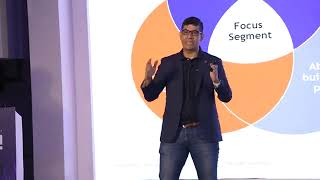
Aurionpro's Vice-Chairman Ashish Rai outlines the company's shift from services to IP-driven products across banking, mobility, and cloud infrastructure. The company targets 25-30% revenue growth annually with EBITDA margins of 20-22%, recently posting 31% YoY growth. With 2,100 employees across 14 countries, Aurionpro is scaling sales and product delivery, though execution risk remains the biggest challenge.
Questions this video answers
14 countries
About 2,100 employees (up from ~1,200 nine months earlier)
Approximately 25–30% (long term)
About 20–22% (target/plan)
Approximately 7–8% (expensed; not capitalized)
Chapters
Showcase, wasn't it? Well we can do better than those of you like. Also gave us a glimpse on how OrientPro is set to be the next leading global tech provider. Ladies and gentlemen, now to set the context for the evening I'd like to welcome on stage Mr. Ashish Rai, Vice Chairman OrientPro Solutions Ltd. Ashish is a fintech industry veteran bringing with him an extensive 22 plus years of track record of building enterprise software businesses for global markets and he guides the overall business at Orient Roads. Ladies and gentlemen, put your hands together and welcome him on stage. Very warm welcome to you Dive deeper.
Into what we do as a business and then. Really nominal I was so this is remember episode from from before the pandemic days when I out in the US I listed one of these TED events where you know fairly hardcore still is mand kind of put a lot of those events and I talking to a speaker where you know my question was very simple as therapy and I think the first T stands for technology and there's hardly a tech speaker. There's people talking about life and diet and things like that and there's no tech speaker advise that. And he said you know there's three problems with tech speakers. One is they tend to be really boring, they don't know how to talk. Second they tend, they tend to lose a lot of I mean what was the latest thing going wrong with like frosty and composable ranking things like that which no one really wants to hear about. And the third thing is they just don't know when to stop. So problem number one, I can't do anything about so you stuck with me for the next 30 minutes or so. So boring is what you get. Problem number two, we will do something about. My goal is to really try and boil the essence of what we are trying to do. The strategy very, very simple in English at least when we set the context for what is it that we're trying to do and then we'll, we'll try and stick to the time as far as the, the prepared section of this, this plan is concerned. Right so we will a little bit about me and I can see a lot of people who, who met me before over the last few months that we were talking so I joined Orient Pro as an investor in 2020. I joined Oriented Executive last year coming up to almost 11 months now and it's been a fairly rewarding journey for me personally overall I'll share some of that as we go. Orient Pro has been around since 1997. We truly stand on the show flow of giants as they say IPOed in 2005 when we IPO we were for the many of about 10 crores, 10 and a half crores thereabouts. We finished last year at 660 which is a a cat of something like 26%. While we were in that journey we also divested a number of number of our businesses. So some of those to the right. We sold the ideal business to KPMT Cybersecurity into a fairly different force point in the US we demerged a company called from us. If you look at all of that together before we caggle 53, 35% something like that over a bit of time. So it's grown over time, it has phases. We've always done acquisitions to build out the product portfolio which we've done from time to time. And then we were expanding around the services business business till sometime before we start simplifying the business overall. Right. So we started our I, I joined with an Investor set in 2020 and we, we sat together and said okay, we need to really refocus the business in terms of where it, where it needs to go. And we started a strategic Pivot in, in 2020 some of which you'll share as you, as you go from here. Where are we today? Just to give you some key sort of information points. We are a products and platforms player that operates globally. We are present in 14 countries. We have now over 2,100 people overall and that's actually gone fairly fast over the last nine months where we went from some something like 1200 people to almost 2100 now. And there's a lot more, there's a lot more very, very high quality talent that that has come in and joined us from the industry. You saw some of those videos from, from actual you know product shops across the world pretty much coming and join us in the journey to try and build global products and platforms out of, out of. Out of India. We work very deeply with a select set of clients that is almost 100 or mostly financial institutions across the world and a few private organizations. Right. I will not spend a lot of time on awards and all. I will come back to it when we are talking through the products. Right. So what is it that you started doing right and to just really bring it down to the essence of what we are to trying. Google Core Thesis had just a few points right. One we were doing a lot of services business and we said we can't really sustain the margins for the services business. That will come down over when we were looking at it that time back, obviously the structural cost in the services business was changing. That would, because the margins you would probably see, you know, go on to GitHub, LCD shift, shared libraries, all this stuff. And you can see the productivity of an average program is coming down now with obviously, I don't know those of you who still enjoy coding. You go to GitHub and you see copilot and you say, okay, that is just, you know, I don't need be the programmer anymore, right? And almost any, any of us can do it. So the productivity offer, you know, a lot of labor arbitrage that we were writing over that that more of us seem to be gone. If you have every programmer can become five, six times more productive demand. If so, one is we said we don't want to be in the services game anymore. That's not for us. Center the business around ip. So even when we do some services, center IT around it so that we can actually drive better margins from it, then the second thing is if we are in an IT business, we don't want to be a single product IT business. We don't want to be a one trip only because that exposes us, our shareholders to too much timeliness in the ministries. We said, okay, if we build our ip, we want to have a portfolio of IT as we go. Third, if I want a portfolio of ip, we don't want to be restricted to one sector when we go and go about building that ip because again I expose myself to the cyclicality of that sector even if it's sector as large as banking is. So we said, okay, where else can I go? Even if I use the same payment stack that I use in banking in transit, at least the demand is not provided, right? Go to adjacent sectors which at least have a unprotected demand and build out our IT portfolio there as well. Right? And the fourth very simple insight was look at the value chain. Look at how does the customer buy. So we are not trying to sit in a box which says we have software or we have hardware or we have services. We are saying how does the customer really buy? Can I go and occupy and every point on the value chain? And that is what helps me by so if a customer is a bank and they buy software with cloud, we do software and service in cloud. If the customer is a transit organization that buys hardware to software, two banks, we will do the whole chain. How can I actually optimize every point in a value chain? How can we actually become the most cost efficient producer Every single one of those points, right? So I think that was sort of a key insight that we were driving with today. How do I really integrate across the chain? Rather than say I'm a software company and a hardware company, I'm a services company, I'm an operations company or something like that, right? If I said 200, I said I will sell, what will the. So that was sort of the, we'll come back to it. The core sort of thesis that we are working in when we started this Pivot Back in 2020, we want to build a business centered around IP that goes across sectors, ideally and, and that allows us to really like as many points in the value chain as we can. And as I, as I go into this sliding, roughly, I'll spend a little bit more time trying to explain that. So if we choose to build ip, how do I really choose the segments to come in? And that boils down to very, very similar things. Which segments do I want to be in?
1.
A single segment has to have a long demand Runway. That's quite obvious. You know, if you're building a business out for the next 15, 20 years, we should be able to see that demand environment. Lasting products is a very different business from services. Right. I think, I think the important thing to understand here is, and, and the reason I make that point is bulk of Indian ideas is all of us know is services. So I think people understand that this is better. Services are very linear. If I sell a thousand people, I make one. People are revenue. I sell 10,000, make 10,000. It doesn't matter what those people are doing. As much product is a very different thing. I need to put a lot of capital up front to build the product. I don't know what my success rate is going to be. Even if I have a very high quality team, when I succeed, I don't know what the scale of that success is going to be. So I need to be very, very careful when I get into building that product, right? So I need to be very sure about the demand and way when I go and build out that product. The second is it has to be a segment which has fragmented sort of players. At least, at least the leadership is contested, so it should not be. I get into the payment networks, whether there's a visa and a MasterCard, a business or third one. I want to be in a place where at least I have the ability to contest for a global leadership. The third is it has to be an area where I can pin down a table asset, right? So because if I'M building a product. The, the idea is to go out and create a leading product in the world. So Abhish should have the ingredients and we agree to go and build out this product. So as long as you meet those three categories, that's it. What are those segments we are in right now? Corporate banking is one large is another, payments to the third one. And we look at that, right? But essentially just how do you actually choose that segment? And the second then very simple aspect of driving leverage to give margins. I made this point before, some of you know that we are actually a very profitable shop and there is a reason we can buy those margins, right? So first is at the core is the ip, the product that you build out. That itself allows you to drive a fairly, that itself is a very high margin play and that allows us to drive it. Right? So that's one. Second is surround that product with a set of platform services that allows us to, to go after a bigger market, allows us to drive a higher margin on it. Right? So that is essentially things like crowd sources sector that we do around that IP. And the third that is, which is really a five to 10 year play, bet on the convergence of these platforms coming in, work with other partners to drive the leverage on an ecosystem. This is our platforms like borrow pay. On the payment side is the platforms like Autobees which is a SME SaaS platform. Platforms like Ravi, which is a healthcare SaaS platform in the US right. So essentially from an immediate revenue standpoint, that third lever is actually not very relevant because this is a very, very long term betting on the convergence of platforms coming together. Right. But that is how you actually drive margin in the space. I essentially have three levels of leverage on the same piece of it, right? And that's how you increase the market size as well as you're increasing. So that's essentially what we are trying to do. In very, very simple English, to the extent that I explain, you know, we say go after focus segments, build IP in those segments and then drive those three levels of leverage on that IP that you build out. So where, what are we trying to, trying to get to? Right? So we're building out a global products and platforms leader. We started out in 2020. The goal in 2020 was to one, simplify the business. We were in too many places. This is where we divested out the cyber security business in the US in 2020. We closed down a few lines. We actually shunned the business as many of you would have seen. And we said anything which is not Gold we stopped doing or most of what is non core we stopped doing. It doesn't mean we certainly stop our contracts and walk away. But to the extent that we can divest the business, we did. To the extent we can close it down, we did, we simplified our organization, shrunk the business and we said let's focus on building the products out which is what we've been doing for the last two years. So most of our core product build got demoed last on the list. And that is essentially the 2022 phase. And then that is what brought us to this year where we say now let's go out and see what we need to do to expand the sales for these products which is where we have a more or less brand new sales organization that came in over the last 12 months. Really Bulgar in the US, Bulldog in India, Bulldog in Southeast Asia, Middle East, India. This is usually a team that came in with a lot of experience with other from other MNC product shops and we worked on fine tuning the product for the specific markets that we're going after. Right. So once your code page is done now we fine tune and we go there. So that is the second thing, a lot of investment in the organization which has been going on now. And that's why you see our headcount go up from 1400 to almost 2100 people over the last three quarters essentially. And that is essentially us working up the organization to get it ready for the global scale. Both the sales organization as well as the RND organization and the delivery teams. Right. So there's been sort of scale in every aspect. Get the structure more streamlined for scale under the leadership of Shekhar for the banking fintech side, under the leadership of Sanjay for the transit side. You know, we obviously both of them in the businesses we've actually built up a very strong wave of leadership under to grow the business for all. Right. So that's essentially what we are at right now. That's essentially what we will do for the next couple of years, go out into new markets. So our core base is always in Asia. Our core RND has been in Asia, our core client base has been in Asia. We will go in and try and get as much share as we can can in what is our home, whether it's on the banking side, whether it's on the transit side and then we will expand the channel out into us which we've done and we'll start picking up share. It's us right now is 7,8% of the firm's Revenue that number will go up over the next few years as we expand and then expand into Europe as well as we go. Right. So go after the market, Asia will continue to be with home for quite some time, but slowly in the that scale with competency as we fine tune the products and expand out. Right. The final goal when we get into 2030 is very, very simple. We've already chosen the segments, we've already built out the IP. We will build out the absolute V1 best in class IP that can be built out. We will benchmark against the global leaders. Whether it's a FIS to Nastra, whether it's Pfizer, whether it's. We will make sure we have the talent and the capital to really build the products to that level and then we will in each of those segments get to the top three position in the spaces that we chose. Right. So in the markets we are at, which will usually be the global markets. So that is essentially what we are trying to do and that is where we expect to get to by 2030. Right. So that's, that's the game. We made a lot of progress over the last two years. I was talking to some of you, you know, before we, the event really started and I can see there's some excitement around it. I would say we just about started on the journey. I think we've done some cool work that needed to be done, but this is a fairly long train. This is the not going to happen tomorrow, it's not going to happen in two years. To get to a top three position in any large market takes time, takes stamina and, and, and we have the determination to get there. But that's not going to happen over three months. Right. So that, that will take its time that hopefully instead of without using any technical value so far explains what we are trying to coming on to the products. They're essentially. So there's a lot of products and I've heard that observation before as well and feel free to make it Q and A as well. But you know, the idea is this. I think it's important to turn that around, come back to that point what value chain that I was making and come back to what is the bet that you are making. We have four large bets essentially that we are making. Bet number one is transformation into corporate banking space. We believe, and you know, Sheikh and his team Shekhar will spend some time with you as well. Have done a, you know, have a lot of deep experience in the space. We believe the time has come for a lot of investment to go into the corporate transformation space, we have a set of products we believe our really, really strong space, corporate loan origin for pollution, for example. We have pretty much the leading product in CO Asia. We work with two out of the top three banks in Singapore, some of the largest banks in Malaysia, some largest banks in Thailand, some largest banks in Vietnam, some large banks in India. What tells me that the IP is tier one. So chart is there's this analyst which is probably the most respected analyst in the risk technology space. Shekhar and me, you know, kind of spent a lot of effort participating in that risk tech quadrant maybe six or seven months back. And this is the first time we participated and we are squarely in the leader squadron, the only player from Asia, the only player from India which is squarely in the leader squadron on every product that we participated with. Corporate door origination, collateral management, limits management, each of those three quadrants, right? So that kind of helps you benchmark against global players. We are squarely a leader in terms of what the product can do, how deep it is and the reason for that. Again we will spend some time on it, but we have really spent a lot of time building out the table product there. Same thing with transaction banking. We've launched a brand new product over three months back in the digital banking space for Lodgi which again, you know, we think the time is right for. So there's a lot of investment banks around on retail side. There's not been that much on the corporate side in terms of bringing the experience together. We believe the time is right for the banks to move that way. Right. So, so that's, that's number one. Especially as you know, as the world goes into a high interest environment, there's a lot of talk, there's a lot of talk around the western world going into recession banking sort of slowing down the spend which is totally true if you're interested in bank, you read the MNA fees and stuff like that. But a high interest rate environment is not necessarily bad for a tier one bank. Sending out corporate lanes, corporate loans, that is where you are making your money. And we actually see the spend going up when it comes to digital transformation in that space. Right. So I think we do believe this is a, a long sort of multi year spend that will help us like the second major bet is what I call smartification of mobility. Essentially transit is a very large space and in that space, so there are two sort of features, right? There's a western world which has a lot of legacy tech, there is the emergency world which has no deck moving from low tech to some tech. Right. And both of those are moving towards what you call open book payments. You know, the latest in the space. So you used to have a prepaid instrument. You take it out of the Metro gate and it deducts money from the prepaid and goes in. Now you want to take your credit card out or you take your other phone out and pay. You want to do account based ticketing, you want to do QR based tickets. So the world is moving there. We believe this is a movement that will not be stopped. We believe this is a decade long movement probing the western world. Moving from the legacy tech to the open to tech. The emerging world moving from no tech to the open to tech. As you've seen, India is continuously in the way on those things. And, and, and that itself poses a huge opportunity. What are we doing in the space? We are creating what we believe is the most integrated end to end offering in the space. So we not sitting in a box and say like Odex is not federal or my new validators or we do gates. We've done acquisitions back over integrated into the chain completely. We've got, we can play on pretty much every part of the chain. Sanjay and his team have built up in my head at least sort of almost an unmatched R and D capability to engineer things in the chain. And I should have made that point maybe when I walked in. But if you really want to have a good experience out here or India, a lot of work putting out some things out there at the back of this room. You can see a validator unit there. You can see, of course we do not bring everything in, everything in here. You know, if you want to spend more time, come to an experience center either in Mumbai, Singapore, wherever and we'll put on a better show. But have a, have a look at that. The amount of R D it takes. And this is old hard R D. This is, this is not sitting on a computer and writing a piece of software or GitHub. You know, this is actual hard R and D. And I think Sanjay and team have built up really the best in class. R and D set up to do that. Last week in Barcelona, I think we announced card bidder which has taken probably a couple of years for us to perfect and get certified and all this stuff. But solving property Barcelona with women launched it, right. So, so a lot of work gone into that. That's what ecr. So I wanted to call it products. But I just put one thing out there as it's sort of from last week and better to stand out that way so they can spend a lot more time explaining to you what the products are. So just like, you know, on the lending side, what tells me we have the absolute DOM asset in the space state of California, 300 transit operators, they wanted to move from Rose to Overlook and they went on global rfp. We selected three vendors to do it and we are all those three vendors already rolling out in five or six cities. So again, you know, global competitive rfp, no choosing favorites and probably alas, explain that a little bit as we go or catch him for a day after this. The it's not an easy thing. There's no fixing that game. This is global competitive, every big player in the world competing and we still work and being a small, you know, transit player of Singapore. So. So, you know, that kind of tells you when it comes to tech, we can go head to head and win pretty much anywhere in the world. This is probably the more as competitive as any RFP gets. Right. So again, the same story. The third major bet is on what almost everyone in this room is sort of very aware of what we believe is a multi decade sort of digitization of India and riding on the growth of what happens in India. Right. So this is where one, we play in India with all our global platforms, whether it's on the banking side or the transit side. And we've built up some very special capabilities which are very, very unique to India. So, you know, for example, your data center in hybrid cloud, we have Robbie Faster engineer in the room here. You can ask them after this short talk gets over. We built up probably one of the highest quality teams when it comes to that. And the idea is it takes a lot of skill to get into data center design. It's not that it's not that easy a field. So it takes time to build up the offering and the capability. And we've got one of the best sellers and we've got the bills to sort of prove that. We also do a lot of work jointly with the government and some of the flagship programs that, you know, we can't really talk about, but we have a very strong collaborative relationship on a number of government projects as well. Right. So that's essentially, obviously we built all our global platforms in India. This is the whole market. We want to sell the shop and say, okay, I get over eight years, so I won't be here. We really want to guide. Capabilities that the. That's number three. And the fourth big bet which we are playing is Is is essentially what we call co engineering co building ip. Now there's something very unique about Gonia Pro that almost doesn't really get seen that much in the market. We are a product shop ourselves. We know what it takes to really build a product, how hard it is, how to go about doing it. We know what it takes to stand up an implementation tool for a project or product. We know what it is to surround the product with a make it cloud native. You know everything that goes on doing the product. It's not so easy easy for the computer services firms to get that and because we are so bright. Second, because we have a whole portfolio of pre built it we partner with several leading technology firms in the world. Some of them we've announced and now we saw Mr. Technology not pronounce the names there because of competitive reasons. But there's a couple that we belong before. So I can talk about it as for example I mean you know, technology firm in the world, very large digital banking player in the US So the idea is it's so when you look at a typical, what you call IT company in India and you go to their website and you look at the link which says partners and you see a list of players, Red Hat and Microsoft, whatever else it essentially says I am a player. I'm consuming technology from the Microsoft or the Red Hat or whatever to implement what we're doing. When we talk these partnerships this is these partners consuming our technology. So it's being a technology provider, two technology providers. This is a game that cannot be fudged. I can still make a product and sell it to a random brand but if I sell to the number one trade finance technology provider in the world, I sell to the number one capital markets technology provider in the world. They are the IP really needs to be poi. The IP really needs to be very, very good. Otherwise it doesn't appear you you're talking to a highly mature partner who's capable of migrating. Right. So but we are getting very, very good at that game. Also the transit business for example again you know, partnership with MasterCard et cetera. Right. So you've been talking to buyers who are really, really in a different topic when it comes to evaluating technology. But we are very, very good at it. We believe this, this is something very new for us. There's this Sanjay about my students. I think you're again catching for this. He came in from a bias to try and help us build out this a little bit more. Our core engineering teams have been building all part of this Anyway, so I think, you know, you can spend a lot more time, but we believe this can be very, very large as we build this business out and, and sort of collaborate with the partners instead of. And we will compete where we need to, but also collaborate where we can. Right. With the, with the global players. So those are essentially the four large bets that we are making. Each of these, we believe is a very, very large target market. There's one part I don't know how many of you noticed. I actually ignored a TAM number which was there on the previous slide. So I'll go back to it now and talk about it because it did not make sense to talk about it before I cover this slide if I can figure out. Yes. So when it comes to products, we believe the target market is fairly large for the products that we're focusing on. That 11 billion dollar number, I think it's a number being calculated. You can challenge it. Why you will challenge it. It's very, very simple. One of the reports I was reading before this was for example, transit, transit, somebody saying just the transformation that needs to happen on transit payments is a 30 billion dollar opportunity globally thereabouts. If you say digital banking, some would say it's a 700 billion. So we say why, why do I use a much smaller TAM number? We sort of qualified that down. It's not a simple sum total of total market size of each of the products we make, but it's sort of a qualified judgment on which markets do I want to compete in. For example, we would want to be in Tan Am for any business are in transit, you know, which, which segment of the market you want to compete in, which, which countries you want to compete in. Right. So we believe it's still $11 million annual spend that we can go after with the product that we built out. Similarly, when you add the layer of services we offer, that's a $27 billion spend that we can go after again. You can challenge it. I mean, I was reading this last week, someone was saying just the amount of repurposing you need to do to traditional data centers to make them sort of repurpose them for generating AI is a trillion dollar opportunity. And that probably is. Right. We don't play that game. So, so it's sort of you say, okay, you guys do data center design and build and why is that not the size of the market? It is not size of market. It's sort of we qualify for what the game we want to play. Right. So, but it's still a very large segment and I would really hesitate to qualify for the convergence platforms because then you're just covering the entire world. Right. But I think if you, if you basically one message you want to take away from that whole thing. When you look at these four strategic facts, each of these is a very, very large target market. And if you're playing for the global field, you will get access to a large part of that market as we go. So that's essentially maybe quickly since this is a investor meeting and I, I suppose people are interested a little bit in the numbers and what is going on. I'll cover this out briefly. So, so we like I covered in the first slide, we've been growing our candidates 26% even after, you know, a lot of diverse spends and all that stuff overall in our history, we intend to keep that banner. So whenever we share our plans, we say we want to grow 25 to 30%. That's what it's not a number. We got our hat, it's number we believe is the right number for us.
To keep doing that.
Last year we obviously overshot that number and the revenue grew by 31% and PAT grew at 25%. But that's I would say long term that's still a 25 to 30% trend. Debt to equity is fairly down as of you know, last three years we worked on paying down the debt level in the business. It's at a level where it will keep going up and down a little bit. But we are very comfortable with where we are. At 0.14 you've got enough ability to add on business. If we ever needed capital for any opportunity, we hold our each of those businesses to a a bar of delivering. If you use capital, you deliver to us at least 45% income that capital of that ROC bar. It will probably keep going up a little bit as we go, but that is one of the very, very hard bar we have and I think we by and large have been delivering to it. And now talking back from that pivot we delivered, you can see those lines. You know, that makes for a neat chart. Each of those lines is essentially the revenue trend. So 11 since beginning of 2029, 11 quarters of consecutive fairly good sequential quarter on quarter growth. It's been actually pretty much within thresholds for three years in a row. And that's why we intend to India to keep it happy to sort of delve into details on anything as far as numbers are concerned as we go into it. So just to share what do we hold in ourselves again against right as the management team inside Audio Pro the goal is to always stay across some key metrics that we, that we. That we track. Right. And this is, and this is where I'm talking about generate long term. This is where I want to be kind of goals. Right. I'll revenue Like I said we've last 17 years grown at a higher of 26%. I don't see why we can keep growing at that given the amount of repurposing we've done in the business. We will stick to the 25 to 30% for this year specifically because of all we said 30 to 35 in terms of the range but materially it's not going to change that much long term EBITDA margin we will keep at. So we finished this year about 22. We will keep it at between 20 and 22 as. As we go. The way to look at our big data. I've explained this before on a few earnings calls. So in the product business you do need to expend a lot of capital in terms of building out products. But we are not big fans of adding on a lot of intangibles to our balance sheet. So we're following a policy. Unless there is like for example algorithm is a specific regulatory reason we do not normally capitalize. We will keep experimenting seeing that is going at a clip of somewhere here 7 to 8%. Right. So the way to look at AMITA is if you're capitalizing that's 20% EBITDA.
Right.
But because we don't want to do it we will keep on doing the expense. We will keep at that level someone I'm pretty sure as we go we make the point that oh yeah but as you get scale your economics will improve. Yes it may but we will use the excess and pour it back. So we'll keep the E at 20 to 22. That's the plan. Even when we get an excess we'll pour it back into RND and probably you'll see the RND spend go up rather than the go up. Right. So I probably, you know it's easier way to understand it in the path we will. We've kept it at 1516 to the last three years. I think that's where we, we plan to keep it in terms of our goals. So the this, this next one is a pretty interesting one. So we don't really need to sell much to deliver our next 12 months of food. That's a nature of the products business. So by and large what we try to do is 75% of the incremental growth that we're targeting for the year would come in from the existing base. And we try and go to that metric so that we're not adding on too many new customers. That's the point I was trying to make earlier about going beef with specific clients rather than having a very large number of clients because it's not really a a great thing. We would much rather have few strategic customers with whom we are growing power and have a very large number of customers. So that 75% again is a hard bar that we do and capital as I said, maybe the bar gets raised in the next couple of years but by and large we will keep the 25% when it comes to the long term growth. So that that's in a nutshell is what we're trying to do. If you take away two numbers revenue we will continue to target going at 25 to 30 over the long term. And every doubt we'll try to keep it 25:32 over the long term. I think that's essential. So the final thing. So one of the questions I always like asking every manager whose to me right. So when it comes to growth it's.
Really.
So growth is an aspirational thing. Everyone wants to grow 30% and some want to grow at 50% like and you say okay so so to me it's a very simple thing. Can you explain in 50 seconds what really gives you the right to go at that. That that sort of 30% or 35% whatever you say right. And so I'll probably try and do that test for myself and and explain basically comes what, what really gives us the right to go and and which is essentially a very very simple thing. One when I build out the car in a very very large segment right. And I combine that with a. So I call it small market share. My team didn't like it so they changed it to headroom for growth. But basically, you know when you combine a very complicated global product with a very very large market, that product should be able to win, win sort of in the globe and combine that with a very small share that we are at. So you know when I call CNO leaders in Asia at a global level, we less than 4% market share it the space you really have the right to go and how can you not go right when you have that? So that is essentially what I would want to leave with. Thank you for your time. We will spend more time when it comes to Q and A. The more the questions the more interesting for us as we go ahead. But before that I will invite am I inviting Shikhar and Sanjay for the. Thank you very much.
Thank you. Thank you so much for that brief insight into Orient grow and I'm sure you want to learn more. The experience zone is here and we are going to have a spotlight discussion right now. Ladies and gentlemen, it's time to shine the spotlight on an engaging and thought provoking discussion. Something we are all eager for. As you see, the stage is also being set up for the same. We are. Well let's move to the next segment. That is the spotlight discussion. In this captivating session we bring you the brightest minds who will delve deeper into the business and the way ahead. I'd like to first introduce you to our moderator for the session. We have Ms. Ruchira Sharma, a seasoned communication specialist and content strategist with over 20 years of experience in TV events and print. Ruchira will be leading our panel discussion today. So please put your hands together and welcome her on stage. Can we do that, ladies and gentlemen? Yes. And now let me introduce you to our panelists for the spotlight discussion. We have with us Mr. Shekhar Malati, President and global head banking Shekhar overseas sales, operation and delivery across Asia Pacific, the Middle east and Africa. Ladies and gentlemen, Shaker Mila. Very warm welcome. We also have on our panel Mr. Century. Very warm welcome to you. Gentlemen, over to you. Thank you. Thank you so much. Congratulate. Comprehensive and detailed presentation and definitely a 30% revenue in. All. Right, well welcome again. It's great to be here with all of you and as I mentioned before, thank you Ki and thank you to Ashi for their confidence. I welcome you all to this panel discussion and I have two visionaries with me. We will come back to that later. I will just take a few minutes to kind of set the context. So as I was mentioning, Warren Buffett, the legendary investor said that digital transformation is a fundamental reality for all businesses. And truly if businesses do not wake up to the need for digital transition, they will be forced to either phase out and fade out. So while there are stump is businesses which are actually struggling to go digital, there are some organizations that are working towards making this whole journey smooth and seamless. And Orient Pro, we're very proud to share with you is a front runner in this space. But because all of you are investors, I don't expect you to just take my word for it. So let me share some numbers. Aud Pro has close to 2,000 capitalizations. It has a presence across the world in more than 14 countries, it has more than 100 customers and it offers unique innovative platform solutions which are backed by more than 2,000 technologies. So those are some great numbers there. And of course it is accelerating enterprise transformation globally across sectors, across banking, across mobility and across government sectors. How does it really do that and what further to the checker plans for that? I'm going to come to our special guest today. We have with us Mr. Shrink and Mr. Sanjay. So let me begin by asking. Other employers to grow so share which is the major milestones that you have achieved as a visionary, as a leader in your. In New York at home.
Right? Working. Okay. Yeah, yeah. Well, you know, gosh, it's, it's hard to pick any one milestone. Whether it's been 10 very, more than 10 very eventful years, all leading up to just moment now we feel, you know, we're really ready to play a much bigger part in the world. That we see ahead of us. And you know, the confidence that we now have that the products that we have built are truly worldwide. It's not easy to build technology.
Focus.
So, you know, it's really been a journey of, of overcoming the many obstacles to get to where we are and it just feels great that the time is now.
All right. If anyone here much?
Well, I, I think like, you know, last year was, was very momentous, you know, in the banking world for two major reasons. First is we want validation from the industry leading analyst to say we are in the leadership that was big. And the other is, you know, we, we got recognition from already the best in the world, from trade, finance, finance, saying that they want to use our technology to grow, you know, their business further. It's like, you know, Apple choosing Foxconn. Right. You know for sure that if Apple is that good, Foxconn better be damn good too.
Definitely. And that's how you're accelerating enterprise transformation across the world. All right, thank you for that coming to you. Mr. Sanjay, what is your major milestone that you'd like to share with the audience?
First of all, good afternoon everyone. Very happy to see everyone sitting out here and worrying with the prince of all our investors. Every year, actually every year was a, you know, kind of event for me. I turned almost 10 years back. We started with, I was there given the responsibility to start the government business. And till 2016, 17, we did everything eventful in the government. As Ashish was telling the digital part of growing India, almost 10 years now and 2014 was something, you know, change of time when the new government, they were more focusing on the digital side of the world and they wanted to take the India took a digital strike. We became immediately a part of the growth. And 2017 when we first won our transit business or the mobility business project with Nakpur Metro, we realized that this is the time when the world is known towards digitizing the transit business. And as we were doing out there the next, you know, as you asked for changing path, we thought of that, you know, this is the time we should have something which is scalable, which can grow at the fast pace. And then we converted something and we named PIG like Innovation Group and we created a service business line which just was not government but it was cutting across all the verticals. So we thought of what to do. So we, we thought yes, PR the right thing and we are moving in the right direction and which is a global scalable thing. What the next thing is, everybody's moving towards data, AI OT platform, everything. Can we be part of that? It's very difficult and what we should do, he said let's build it for them.
So that's how you know, Bhaskar joined.
Us from IBM and we made it data center platform. We created a data center business and when we were doing the data center business we realized what to do next. So that should be next scalable thing. We said who's going to take care of the data center? So we got into the hybrid cloud service businesses. We brought in another expert from this. You know, of course it was a lot of discussions and a lot of things going on. So we got into a thing and then we scale up to hybrid cloud services. So being in hybrid cloud services just not is for the policy world but we thought it can also enhance our existing platforms. Like you know what, me and Shaker were thinking of collaborating and see how we can give an end to end solution to everyone. So we just collaborated and see that okay, if we are going to sell our IPs we need to you know, serve our customer with bringing them on the cloud platform or everything like that. So we got another scalable product is our hybrid cloud services. Now as you know the fourth part which Ash has told that, you know we think they're part of the digital platform. I can't name many things here because we are born with ndx so we fall into with the government of India and we tied up in many of the projects, some of them we announced. So I can tell you that we were part of the first Indian digital platform creation. That was almost 200917 just before COVID where we went into 3D City, creating a virtual city. So that was one of the specialization we did on the platform. It's successfully completed the product. Second, we went into the next digital platform with government of India, you know, all the big, you can say folks, digitization of the books. So we just went into the fourth part of the digitization code and of course we are building many of the software applications and being part of many of things which we can, I can announce with the government and we are building a digital platform.
Multiple minds don't go. All right, coming Back to you, Mr. Shender, the company has won multiple awards, many accolades, but being the sole Indian vendor to be recognized as the global category leader in the charters respect quadrant is of course an impressive feat. So could you really take us through that and tell us more about that and how does it make it the whole proposition? Absolutely unique and different from the others?
Well, you know, I think you, some of the answers are in your question. You know, like I mentioned before, building a product, a technology product is not easy. It takes, you know, a lot of effort. And when you're investing all that time and effort, you don't really know what is your success rate going to be. You did something that customers will actually see value in and buy. Even though you might have put in your best efforts, best investments. The failure rate in products is also very high and the risk technology space is in itself very wide. In a space the recent years of the pandemic, the global financial crisis, you know, it's accentuated the importance of this dynamic and a industry watcher like Chartis. So Chartis is like the Dartmouth of this technology.
Right.
And they go deep into analyzing every major vendor playing in this space. So we didn't know about them. You know, they, they certainly didn't know about us. Then we got to meet them and we were, we were astonished at the level of depth they went into to try and understand what we bring to the table. And when they mapped our capabilities.
Yeah.
And they mapped it into what we call the leadership quadrant.
Right.
Of course we're the only India based vendor, we're the only Asia. We expanded. But all the other players in that corner are multi billion dollar companies. Right. And we say wow, if the industry expert sees us in that bracket, I mean we have to look at ourselves in the mirror and say look, this is where we can go.
Absolutely. Thank you for sharing that. Coming to you, to Sanjay, could you you know, provide more insight about winning the RDS team, global RP platform and partner that also quite achievement yeah, of course.
And we were looking for scale up in the global market and what better than, you know, proving your skills or proving your things in us. So just before COVID and somewhere around 20, 17, 18, you know, I just think about Hollywood even like. Years dealers and they're working on it. But if you see the rest of the US which is a big market, the small players were not, you know, coming up or they were not getting the right, you know, kind of focus.
From these large guys.
Then Department of California came up and said that we can't be left behind. They are 300, you know, kind of agencies, small, big, you know, right from having a 15 bus project, 50 buses, you know, to almost 2,000, 2,000 buses and light rail and other transportation system. So we need to, you know, change the culture and see what, how we can do these of traveling for the civil English. So they, they asked, they published a expression of interest for the companies to come and show their technical capabilities. And that's how we participated. It was absolutely thorough, you know, testing. Now because we were competing against the world and fortunately we were being selected as among the top six players with our capabilities, our products which were absolutely world class and we could deliver it more. We were not working on them. So once we got selected there was a closed bid call as you know, and that's how we won the bid. And now we got one of, you know, we have already implemented seven out of 300 and we are the leaders right now we see on this. We are the leaders who have implemented the maximum order in California. And the best one which, you know, I personally want to go is any ham, which is Disneyland of course, you know, where so many people are going to go and you know, they will take their kids and when they go there and we find the validators from the Indian company and you know, using them. So it would be fun and we will feel very proud that we are one of the.
You definitely. I'm going to plan my trip soon.
Yeah, I'm getting discounts. Great.
Looking forward. More investors will come to you for that. But anyway, coming Back to you, Mr. Lake, of course partnerships are very crucial for any organization. So could you tell us a little bit about the recent Finastra partnership and what kind of value is it delivering to the table?
Yeah, partnerships are, you know, really important for a company of our scale. You know, where we are versus where we want to be is a big, big distance. And we want to use FPG World and that we're able to get there a little bit about Finance finance is a well known company, but in the context of trade finance, they are the global leader. 6% of trade, 6% of global trade goes through Finastra's platforms. That's the magnitude of their trade finance business. And, and for a company of that market leadership position, that scale, they ran a RFP process, a global rfp, two years to find a company that can provide them a risk engine because you know, trade down all digital, it's a highly risky business. And they ultimately landed on us and selected us after two years of diligence process. So it really gave us the confidence that the people doing due diligence on us are product experts themselves for a lot longer than we have been. And so there are so many best practices that we can also learn from benefits, certainly from each other. But now in the process of them not taking us to market, it benefits us in a few very key ways. First of all, whenever they're selling to a new customer, it's their trade finance platform powered by our risk management. This is number one. The second is that on their existing base, so Finastra is a long standing company, they have over 500 leading banks with their existing customers. They're going to go back to those customers and say, hey, you know what, use our latest risk management engine, right, to power your business and transform your trade finance business to the next level. And the third is they're taking us to geographies that for us would take either, you know, longer time or in intensive investment to get there. Like yesterday I was on a call with Finaster and one of the largest banks in Europe. You know, so it's really a very, you know, shows us upside on multiple dimensions and we're very excited about it.
And that was quite normal way, you know, it all panned out. Coming back to you, if you could also elaborate. Of course the company has multiple feathers in its cap, but you've recently been recognized as one of the global partners of MasterCard and SBI and that itself is also a big achievement. So could you tell us about what it really offers to you as an organization?
Yeah, it's a very interesting journey for us. You know, normally like everyone in our minds, we are in Bombay Bollywood. When a new hero comes into the space, every large director for him to see that, how he's going to perform in the first picture, if he does it well then you know, they try to cast him in the next movie and then his increases. So similarly, Akpur gave us a chance with State bank of India. First of all, State bank of India put a lot of pass in us when we did the first project for Nagpur Metro on a true open loop.
Which we are digital.
India was moving as national using national common mobility car, the RuPair car. So we successfully implemented that with SBI and immediately involved while the next one was Noida Metro. So after successful implementation and during the COVID period when the world was moving to contact labs, we did the pilot projects in Latin, that is Lena Peru. And then we did, when we were implementing the California bid, MasterCard recognized us. We had, we were doing multiple discussions with them and then we won along with them the entire country for implementation on the template mpgs. This is MasterCard Payment Paper Solutions for Mali. So we got the first entire country to implement not only the buses but the ferry system only because, you know, Maldives pretty scattered along and all those things. So we did in Malay and we are the first in the Southeast Asia who integrated with the MPGS platform which doesn't only accept the MasterCard, credit card or debit card when you travel, but you can also use Visa, you can use Euro or even you can use MX card to implement. So that's how you know, we are now doing multiple projects with them and we got selected as one of them.
Congratulations on that in fact. But you know. Mr. You know, the products are to be cultured. Products and performance define any company's success. So let's talk about product launches. If you could tell us a little bit about. And what is it usb? What is the differentiator and what makes it unique?
Well, you know, if you look at the digitization journey of banks, you know, probably the last 10 years or so, the first phase, a lot of that digitization and happen on the retail banking space. Now all of us as customers or consumers of banks, you know, we're used to very digital experience on the corporate side. That time is coming. Now all banks are focusing their investment on giving corporate customers that same level of digital experience. And we feel we are at the right place at the right time. The banks are investing and that's where we have built our Digi, which is our digital engagement platform which will help corporates have a great user experience, reduce their transaction processing costs. And for the banks, we make their customers a lot more sticky. So we're in that right place during that right, right time. We have invested in things like, you know, UX user experience, which traditionally on the corporate banking side, people don't spend a lot of time on it. Yeah, because corporate bank, you know, customers, it's usually a Lot of bulk work, you know, grant work. So it's you know, very detailed, you know, complex. So it doesn't naturally lend itself to UI and ux. But we have gone against the grain, we've invested in that. I mean just yesterday we were with one of the largest banks in India showcasing what we have and you know, the, the, the bankers were just globally.
They said, you know, we didn't expect.
To see this on the corporate side. Your corporate digitization is even looks even better than what we've seen on the retail side.
Definitely. In fact you spoke about user experience. So I have recently read a report which said that most companies have only one shot to impress their users because now the millennials, the Gen Z, they want the best experiences at the click of a button. So definitely working towards an optimal user experience is critical for companies. And thank you for sharing what you did. Coming to you if you could tell us about your new product launch ECR1 and about also the market potential that it has.
Yes.
Of course. You know, this is one of the most, you know, the most hard and the entire R and D team and everyone, it's tough what Ashish was saying to create a product. It took us almost two and a half, three years to come around and it's a very interesting journey for that. There are in the world there are about six or seven, you know, players who have it or they don't give. Like for Singapore skmicrobils are totally for themselves and for Singapore and there are few more like globally, you know, who are there who are giving this particular product and it's kind of a monopoly onto this product. So we thought as we are moving towards being an end to end player, right from having a acquiring issues platform to automatic pay collection system, our own hardware, but the heart of the hardware we are always dependent on a third party. And there we thought of that, you know, okay, let's create something, some product which doesn't only go into our own validators but we can sell it to the upcoming people or they are creating validators across the globe and, and not only onto the transit, but the next big business which is coming up is the non transit part. That's, that's the edge of anything. When you get down to Metro, you use a parking lot, you go to and use the cycle, you use everything. So you know, you need to have some product which goes into every aspect. So we created this ECR1 first of all was for our consumption for ourselves. So it's a product. So if you use your tap you know, you can not only accept rupee but you can use full master visa, you know, acceptance. So we just launched in Barcelona and already we are working with the non transit part of the business. It's like bike sharing and parking lots in India. Very interesting Use case came up and somebody asked me can you accept the digital RTO hubs, our license cards or our, you know, what do you say?
Rcs?
And to check we said why not? You know, if that has been given we can integrate anything with this. So this has become a very large global scalable how much we can sell in that market or for anyone. So this is what we could achieve in this product which was successfully launched in parcel.
All right. So definitely the opportunities are endless. But since the company is enabling multiple enterprises to pivot to growth and adopt and adapt to a new paradigm of innovation. Let's use a crystal ball. Amazing. If I ask you, Mr. Shekhar, what is your vision for the next decade or what is your vision for the air 2030 where you see the company? So what would you say?
Well you, you know I, I think we are quite confident in where we're going and also how we're going to get there.
Right.
You might recall, you know when Ashish was making this presentation he had that Venn diagram intersection.
Yes.
We've chosen segments where there's a long demand bumping. Then we've chosen those segments where the leadership is either fragmented or protested. So that gives us a good shot at a recent position. And we've chosen segments where we have the ready capability. We're not thinking of it on paper. Our products are ready to occupy a tier one. So we feel we have the ingredients. What we need to do is, you know, step up our sales and marketing.
Yeah.
And, and, and, and growth in and with that get into a top three position globally. That's really what I see for ourselves.
Great. Thank you for sharing that vision. Mr. San, what is your vision for the next few years?
Shaker and Ashish has already elaborated that you know where we are headed. We are absolutely aligned to our vision as an organization. We are pretty clear. As you know, Ashish has given a very elaborated thing so I will not say much about it. But yeah, absolutely. We know where to go, how to scale and each of our businesses which we have taken, you know the responsibility which I carry on the tech innovation group or we are collaborating with, you know, everything within the organization additional so we absolutely focused and ready to go. All right.
So. Right. Plan for the future with one last question before we wrap up this spotlight discussion and I'll start with you. A quick key takeaway that you'd like to leave our audience with all our investors there.
Please buy your shares. Invest in us. We are so glad you invest in us. I'm sure you know, you get whatever, but much bigger. Thank you so much.
That was quite candid and short and sweet. Mr. Shekhar, what's your take? What would you like to leave the audience with?
I just think the timing is now we're ready. Yeah, we are. We are equipped and we are ready and we're looking forward to the future.
All right, thank you so much and gentlemen, for that insightful discussion. I'm glad to hear your experiences, your learnings and thank you to our audience. And just to wrap up, definitely, companies need to pivot to growth and as we are doing today, accelerating enterprise transformation across the world. Companies need to embrace change and adapt to the new paradigm of innovation to stay agile and stay relevant. And that's what OrientPro enables enterprises to do. So thank you all and I hope you enjoy this discussion. Discussion and handing over to you, Kathleen. Thank you. Thank you. Thank you so much, Rishira.
Thank you.
Gentlemen, I request you to please take a seat in the audience and we have one big round of applause for that very and as we promised, for a very engaging Q and A which is going to happen right now. We're just going to set up the stage one more time. So if you have any questions, ladies and gentlemen, just raise your hand and we'll bring the mic to you. Just a few feelers or rather hygiene announcements I'd like to make here. Please restrict one question per person. Should you have any more questions we can connect during hi team or also you can write to us@investor road.com we will have that email id also flashing on the screen. As you can see right here. You can take a quick check on this email id. Just write it down. If you have any more further questions, you can discuss it during writing or you can also write to us and we'll circle back to all of you. All right? And for this Q and A discussion, I'm not going to be answering your questions. We have experts here who will answer all your questions. Just give us a moment to set up the stage for the same. And our volunteers are on either side of the room, so you can just raise your hand and the mics will come to you.
It.
All right, so ladies and gentlemen, I have to answer your questions. May I please invite on stage one more time Ashish Shhar and Sancher. Now ladies and gentlemen, the floor is open for your questions. Our experts are here on the stage. I'd like you to just please raise your hand. Great opportunity to quickly get any of your queries resolved. Yes, EBONY might do such a.
Just give us. Sir. Story right from the beginning and the 2005-2023 journey of 18 years. I see that the company is on the threshold of an exclusive growth. Whereas your projections of 25, 30%, 22% and I felt for conservative but nevertheless.
And the question which came to my.
Mind was you are at the head of your organization. So always there's a blueprint in your boardroom. Like many good girlfriends, they have set themselves a goal 10x in the next 10 years. What will be your goal? There will be 10x in the next 10 years. Business. IT business is general. It's a very hard business, right? It was running a business. I had 10,000 movies. Put a four people joining, no complexity to it. I just hire a few more project and think that in the, in the product business, if you go to. We really looking at the whole chain especially for, for a full spectrum player like us, you know, honestly it's very hard to benchmark us with others because we really play the whole game. Hardware 2 software and everything involves capacity, it involves hardware RIT it involves software development. So if you run too fast delivery reputation is very, very important to us. For me, clear sort of messaging to the team always is telling the reputation overrun any single day, right. And we will, we will hold ourselves to make it. We believe 25 to 30, 35% is sort of the right level for us to be at now like I said, another 12, 24 months. We feel we are ready for scale which means the manufacturing is lined up, which means the, the you know, right teams in the right places and stuff. We will scale and then we will come back to you and we'll tell you we are ready to, you know, grow faster. I think there's, there is no need to really. That takes a 15, 20 year play to create a global leader. There is no way to do that. That brings me to the second thing. The 10x game, right? We not after the 10x game. The goal is very, very simple. So someone was asking me just last week, you know, a couple of weeks back, you say oh, every Indian IT firm is in the US Why you guys come to the US Why do you keep doing this stupid. And the reality is how many Indian Indian products do you actually see in the US I don't mean software products I mean soap, shampoo, anything. Today you go to California, you actually tap in, tap out on the bus. You are doing it on a private provider doing it with the payment stacking and everything outside. It takes time. It's hard. It's a 15, 20 year play. It's, it's not going to happen two years, right? So you're going after becoming a top two top three players there in very, very large segments. We have to focus on the product, have to focus on that time will come. There is no need. I mean you are a $20 billion player. I mean 25 million. We don't declare numbers on transit but you know, whatever it is, right. All together we are $100 million company. I mean 10x is a billion. You will have a very large spaces, right. I mean so what is the point, right? So I think the goal is go for leadership. Very long segment is let's see the numbers will come and let's see what those numbers are. What is the point in putting a million? Everyone like every CEO likes saying I will become a billion dollar company by 20, 30 years. What the point? We'll see where we get to, right? We keep growing at the rate we say and when we're ready to accelerate we will come back. We will tell you we perfect. Thank you and thank you.
Thank you for your question. Do you have any other question? We bring the mic to you, Please raise your hand. That's the next question. Yes, I would like to send it to you. This is Richard from NPD Master S. A very engaging presentation. My question is we do see the growth opportunities. What are the top three challenges or risk that you foresee? You know, constraints in achieving this goal of 25 to 30%.
Sorry, richer, I did not get time to me so top three what?
Top three challenges or risk or constraints that we see.
Okay, yeah, I got that. So about the presentation, honestly I do a quick feedback after that and people said the start was a bit shaky. But thanks for, thanks for the comment. I hope it was engaging. But the, you know, I think the biggest risk we have is the execution risk for this one. Right. If you look at our core products right on shaker side on the corporate loan originations for Aqua elevate transaction banking. The build is done. We've got the core products ready to play at a global stage. Same thing on the Sanjay side. You got probably one of the most integrated end to end stack you will see in the transit space.
Right.
I think the big risk is the execution. It, it's, it's can we scale. We've never been a thousand crore company. We've never been a 10,000 crore company. You know we just not need these. Right. That's why I say it's very important to calibrate the growth. Right. We need to have the right organization, we need to have the manufacturing capacity lineup. We did this time with Micronics on Sanjay's side with Malaysia. Now we're going to scale up manufacturing capacity at least the second year of. Right. We'll be trying to scale up the machine. That's how we get taken care of in 12 months or something. The scaling of the R and D set up, it takes time. So you know there is, I think that is the biggest risk. You become too big and the execution has not caught up. We are being very, very careful about the growth rates. We're being very, very careful about the organization structure. We are attracting probably the best talent find anywhere in the world in the special spaces we are seeking. And I think that is a way of mitigating that risk. Like we don't need a lot of people, we're not a service response but we need a lot of very high quality people. We need a structure that supports them. We need capital behind the manufacturing capacity that go in. We need to ship all times we need to ship territory. And you know I think that is where biggest is. That is your, you know between those things, organization capacity stuff, that is the number one. Number three I think it is essentially execution risk. We have to be very careful as we go. I think that's, that's essentially the problem.
Thank you, thank you for your question. Yes, I'm bringing the mic to you.
Hi Ashish, I wanted to understand on the data center opportunity, you know I think you mentioned it in your presentation and your strategy. Could you highlight and tell us what exactly is the kind of opportunity of growth for or enclosure and you know how can you know the company capitalize already some work has been going on. I would believe in the next two to three years we're going to see a lot of data center capacity getting added. So in that position, you know, how are you planning to capitalize on that?
Start with it and then I'll. Sure.
Thank you. Actually this is a, you know, if.
You see multiple papers, multiple things, you.
Know India itself is going to be.
Around about 5 billion US dollar kind.
Of opportunity building and India is becoming the hub of you know all these data center platform. So yes we have a very talented team with us and very unique thing which we have our own design capabilities of Data center. That's very few have. And then we have the capability to implement the design which we have. And the third thing which we have is our consulting business. So it's absolutely complete stack on the data center business.
Yes.
We are taking step by step onwards. What Ashish said that you know we are just building our delivery capabilities around it and we are picking of course we are getting a lot of opportunities on our way and we are working with all those. And one of the few things, you know, partner. You asked for a partner or a customer which we have right now. Yeah, I think which are the customer. And going forward, you know how will be scaling up this opportunity? What kind of road do you visualize? So I said, you know, 4 billion is the opportunity. You know, kind of 5 billion is the opportunity. Of course it depends on hustle and.
How much it can scale up the.
Of course we have a plan on doing and we are moving at a very good pace. Some of the customers which we are doing is Web Works Iron Mountain. We recently you know launched. They announced it and they declared us awesome. One of the platinum tightening partners for them. We did five data centers together for them. We did you know something with Tata Projects doing something for Utah. We did IIT Guate. So there's a list which is happening out there and there are many which we are out to. We cannot announce right right now. But there are many in the pipeline to do that. And one of the you know, I cannot announce the name but one of the very leading fi. You know we are being chosen to build a tier the latest data center for them which has multiple things. I cannot dive as much but that is one of the prestigious thing that Indian company has been chosen chosen to design an Indian data center for the largest economies. So that's one thing I can tell you. Thank you.
That's probably one of the most complex deals. That was probably one of the most complex deals in the market that Sanjay. So that's how really furnished our directions in the space. I think only I finished off the answer to that is Sunday's business last year grew at 55%. I think the data center setup is going faster than that. Most of the right. So it is. It is really how we grow here in this side.
That's a great number. Any other questions please raise your hand. Yes sir. Bringing the M to you. Can somebody go at the back please?
You recently got license for payment aggregator. What is the game plan for that?
When do you get started and what.
Sort of scalability you think in next two to three years you find so payment.
So the question was about payment aggregator license that we got recently and you know I think you have to go back to that theme of backward integrating into the chains that we are in. Right. So payment business for us is a very specialized business at a large scale, mostly in the market. I would say to you know, it's a questionable business in terms of who makes money, who doesn't make money and to what extent they can make money. So we've chosen to be very, very strategic. Our goal is not to become the 51st payment patriot India and join the race to border 1 margins. Our goal is to help where we already are present expand the margins that we have, expand the share we get from the revenue by Clarity Transit. For example. We have, we hold the business, we, we have the contracts we can play, we can control the margins that come through it. Uncontested spaces faces e.g. b2B payments that go through our SLE supply chain platform. You know, the supplier shipments, things like that. So we will compete based and DDP in the place. The goal of the business is to help us backward integrate into mobile chains they provide already in right. And make money there. We will of course you know, flesh the business around. I think it's a great demonstrator of what we are capable of as a business in terms of putting things in place and RBI rule as many. It's a very, very rigorous process. There are many old names who've been applying for licenses. They're not very hip hop for quite some time. Our team came together because we always had the tech stack. Of course because we supply different technology, those are providers. But getting the process in place, getting the operations in place and getting to that approval, I think that really points to the quality of product, the quality of operations that we build up. We will be doing something with the business but it will scale, it will scale quite significantly as you go.
So that would be a little longer.
Journey or maybe a year or so.
You had started because you already entrenched.
Into payments and I didn't get the.
Question so I said you have already.
Entrenched into the payment part. You make the software for others, you're handling the payments. So as an aggregator you would take a long time or you would get started. No, no sir, it won't take time. So we already live with B2C in India. We line the page to be in Singapore. We've got the, we got the offering up and ready. We will just scale in places where we want to scale right. So Would you go for licenses elsewhere also in the world or this area is. You know, I'm sorry that the. The mic is not very clear. It's very fake. I'm asking like this.
Licenses the aggregator businesses focusing on in India only or you would like to go and fetch license elsewhere also in the world.
So we have applied in Singapore as well for the. For the licenses because we. We launched the. The SME platform or ods in. In Singapore, India as well as other markets and it plays well together with that platform. So that is a license that is still pending evaluation from the multi or Singapore largely B2B and Asia play. But right now at the moment it's. It's essentially India and Singapore.
Thank you.
Thank you sir. Thank you for your question. If you have any other question, please do raise your hand. Yes. Come to you sir.
Hi, as this is from Envision, I have a bunch of questions. One, if you can give some flavor.
On the competitive environment and some of.
Your major strategic areas, what are the kind of players that we compete with and talk about a few deals and in terms of what kind of competition we face. That's one. Two is what I gather from your presentation is that you probably have a bunch of revenue streams machines that we basically provide and maybe in some cases we account for revenues on a sale basis. In some cases it's empty spread over peers. We have technology products that we sell and we just put some bit of services that we also provide.
So if we kind of really look at say the 100 million dollar party.
If you could just kind of give a flavor in terms of what comes in this direction product sales, what comes in as maybe products as a service sometimes maybe software or software products as a service could give that flow as well. That just really helps us to kind of see how the basket.
Yeah, thanks.
Thanks.
So look, that's a. A whole bunch of questions right. So I'll only hit a few areas that I've seen shakers and they want to add to it.
Right.
Competitive environment one in really varies depending on what we're selling. But on the software side for example lending if you have. You compete typically with the few key players who have a loan origination system mainly FIs and OD's in most markets. Right. So I think that's. So typically you compete with an FIS OD's. In some cases you compete with VAs all over play so much in the Asia market on the C side. On the trade side you. You compete with mostly fast trans like that. Right. So that's largely the the game it's usually the large global software players who compete in the banking side. On the transit side again usually the large global transit players LS wix, you know, fewer special players. It's typically product shops, it's typically shops which are known globally and the global players can compete globally. On the transit side we also compete compete more or less globally these days on the banking side we are correlation. That's essentially the difference among the other things that you, you look at how, how do we sell on the banking side typically banks would buy a license that license would go as an enterprise, could go as a SaaS could go as a software vendor. If you do a typical deal I would say just as a ballpark roughly it's a third license, a third implementation and a third AMC over five year period. Right. So I think that's, that's essentially how the sale gets done. On the transit side it's a lot more complex scale. There would be large long term revenue share deals. The only thing to note is as an organization we've developed a distaste for Capex deals so we don't do capex so we would prefer some one off payments, you know where we can sell our invasion. Then it becomes almost like a soft right. So especially as we move out. So like you know like Sunday was explained on the tech stack we are completely cutting edge. We can go head to head with anyone on the balance sheet. Don't even try, right. There's no point. Right. So if it's a large Capex or you can deal with partner with the master partners, someone else who, who can have a capital and will cover the technology. Right. So so typically that will change the nature of payment because the capital deals are usually a very share but when we take one off payments we will just take that and, and you know run the m on it. So that's, that's all the thing in nutshell. Any anything you guys want to add.
You know in India we are there share you know of course.
So like.
Up we are doing a rev share but when it becomes tonal metro it was SBI with much of the money and we are the tech players. You know some are partial Capex and.
Opex deals so it's a mix off.
On the transit side I think you know on the competitive landscape you mentioned our competitors now are mostly the big boys. So we are the David to their. The advantage for us is that we know all about them. They have no idea who we are. Right. So we have that element of surprise saying hey you know, where did this company suddenly come in and win this bet to bid from under our numbers? Right. And then we've done that on a couple of occasions and we, we can do that.
Thank you. Thank you for your question. Yes, can we bring the right to the first you. Thank you.
Hi, just wanted to sort of ask you on your R and D. Your R and D budget this year as you said, 78% is like 754g. Seems rather small way meeting with large global players that could cross multiple platform, multiple sort of segments. Just wondering what kind of disadvantage does it place you at when you try to compete with these guys and you know, why do you restrict yourself at 70%? What stops you from making 20% of sales?
Yeah, that's a, that's a great question. You know, I think so there's a lot of R and D that gets done by the so called startups or privately listed players who essentially have almost no limit on the amount of RD spend that they can do because there is no real pressure to earn. And in the product business if you, if you let that sort of, if you go down that thread you can really go wide with it. You know, if they is really no limit to the amount of spend you can done, you can do what we chose one, because we are a listed player and second, we want to be responsible for what we spend and also accountable to our shareholders. We said we spent the last couple of years doing our core builds. We said we will sort of center around those core ip. We will not try to build new products till we get to scale on the current months. Right. Which means the current funds don't really need that much of incremental R spend. Right. Because the core platforms are built up whether it's lending, whether it's transaction banking, whether it's transit. We aren't obviously doing new RND to fine tune the product for a new market or spin off an incremental module or things like that. But we are not only building out core new products, we believe we can manage that in 7 to 8%. What we do feel happening in software business, especially over the long term, the economics are highly rewarding. It's very. So what was our goal?
Right.
We said we want to set up a product business that is run the way global software firms are run. We haven't seen too many of those happen in India. We haven't seen see people run with the commercial model. The discipline of a global vendor when you run it that way. It is fairly common with the FIS with NASA and all to run businesses with 40, 50% betas. So as you get to scale, the Ebitdas are very, very large. So your ability to route back into the business is also very high. So you will be able to do that R and D spend and we're talking about. It just means what you said. Till we get there, let's stay focused, let's say focus on the products we have. Let's do the incremental build around this. And for that 78% is enough.
Right.
Three years down the line we can revisit this question. Or maybe two years down the line we can revisit this question. I don't think we will have enough access to up that spend without. That's what I think time will tell. We can have the conversation again in 12 months, 18 months and we'll see today.
Thank. Another question. Sh. You talked about this risk engine bit that you entered with Finaster. Again, curious to understand what was the risk platform before your Inca and what prompted Finaster to change it. Well that's, that's a great question. So Finastra, like I mentioned, the trade controls 6% of world trade.
Right.
So obviously they already have risk engine. It was their own in house risk engine. And what they figured out was that as the demands for risk management became more sophisticated, the need to measure and monitor those risk dimensions more granular that their own internal component was no longer able to do. So they had two choices. Number one to build a fresh one or number two to go and you know, find somebody else who can build a tool. And they did that analysis as well and they found they figured out that it was going to be too expensive and it will take too much time.
For them to build their own.
That's, that's why they decided to look for a partner and like I mentioned, the due diligence process and the total RFP they found. So you're saying the reason to select an outside vendor was a combination of cost as well as expertise? I don't. Was it just cost? No, it was first of all obsolescence in their existing component. But they could have chosen route themselves. Yes, it was cost and time. Yeah. By the way, Nastra is not just a market leader. They also the fastest growing in trade. Right. As you know, during the pandemic supply chain and trade is really the flavor of them all. So if they laid out what Baker would take another three to five years to build a new component of that robustness and sophistication, this probably not worth their time.
One of the Reasons, you know, I think we bought into this whole space of licensing technology to other large global ISPs and in that we are basically very selectively choosing only the top region. So who's the number one, number two lending vendor, who's the number two trade finance technology vendor? Who's the number one payments guy? And you know, just work with the big guys. But you know, a few things that I've seen, some of it probably my personal beliefs but I believe the really large players just don't have the agility to react to where the market is going anymore. So they are, you know, what, what does a large builder have? You got the sales muscle, you got the attention account base, you obviously have a balance sheet, you got the brand and the client base, but you no longer, you know, you have less agility to react to where the market is. The need to preserve what you have is bigger than the need to grow. And in the process, you know, there's a lot of. The second thing is product is a very hard game. Getting the right level of tech, getting the product right, it's, it's, it's, it's a toss up. You could start building a new product today and lots of firms do that. You think it takes two years and 200 interiors.
In reality it ends up taking five.
Years and 500 interiors. It still doesn't get done. So there's a risk, right? So it's not just the cost. You know even, you know like been building in universal banking system for. I was there in 2006, we started building it in 288, I left in 2400% on main and similar to. Right. So it's, it's, it's. And this is a form with banking systems, right. So you know, you would think it's easy but you know it's, it's really a hidden risk.
Right?
So and that's the reason why we also said you don't want to build new products, right? Not till you get to some scale, right. So it's a lot less risky as well as you know, you are a lot more agile if you're working with a sort of partner like us. And we said that's good for us because, because typically even with the pricing and even the markups, these actually end up making more than what we normally make and they make it a bit less anyway. It's a good sort of co. You know, sort of co sort of opportunity and you give us fast. So yeah.
Obviously any of the largest banks as their customers from a bank's perspective, what will it take for them to shift their risk engine to you from the existing risk? What's the incentive to do so? Well, so we've already started having a few conversations as we speak. One bank, which is one of the largest banks in South Asia, is a large district. Volume has already bought into it. And that integration process as we speak for others, they really want, you know, a couple of things right now. They still want Mastra to be accountable for this new company they brought out. And because Finaster has confident in us, they're willing to sign a. That's. That's number one. Number two, they want to know that this risk engine is not just good for today, but for the next five years. So these are typically the kind of questions that, you know, we've been encountering actually, you know, leading bank in south Southeast Asia, leaning back in. In the Middle east and, you know, yesterday, leading bank. Thank you.
Yes, we have a couple of questions from the back. Can you pass?
Yeah. Good evening.
This is Warak from Capro Capital. I have two questions. First, the promoter stage is very low in Oriental and Ashish. You are steadily increasing your promoter stay every quarter. I've been noticing. So what is the strategy and would the promoter values more or how it.
Would be going forward? So, so this is the story, guys, right? So promoter stake in my head actually just doesn't matter to what the company is doing. But just to give you a story, I think the promoter stake was at about 28% three years back. Today, if you look at the promoters, promoters, which is basically parish, have taken it up to almost 33%. In addition to it, there are a couple of directors, one of which is me, who bought in as well from the market. So total promoter plus director share is 51, 52%. I don't think it's too low. If it went a little bit more than that, you'll be asking next week in the vision saying it's too high and there's not enough room in the market.
Right.
So, you know, there's no end to that conversation. I think, you know, over last three years, it's gone up almost 20%. So across the board is at least 52%. Right. And I think that is just the right number. You know, personally, only if you see I've been buying from the market, every single share for the last three last three years and bought every quarter. You know, that's the story.
Thank you. See, we have our next questions. Interested in going very well. So from that perspective, I just wanted some insight on what would be the share of top five or top ten ranks.
At the moment we really don't have the the share that we want share the volume that we want with our clients. I think the top 10 clients together is something in the range of 35, 36%. It's not a huge concentration. So the goal is this, right? I think when I say clients we want to go big with a few players right now someone like Fynasta can be a large relationship for us and they could take us to 100 clients which is the road. And that is fine because we are largely building on the back of one nation's right. But what we really want to do is for some of these large banking relationships that we have be a much, much wider variable there than we are. Right. So lending we are one of the top players. We are basically the leader in the loan origination space out there. But our in Southeast Asia, but our transaction banking presence in Southeast Asia is broadly right Factor is pretty big in India and Middle East. But lending presence is not big.
Right.
So the question is can we get a lot more strategic with these few. I believe we have some very talented managers who coming from organizations who run that size of relationships and it's getting there. And the other thing is also so like Sanjay was talking about network relationships that are really scaling up in some specific spaces. And you know, the more we keep our delivery reputation intact and the more we find in our sort of, you know, mature our solution offerings to the specific markets, I think that will happen organically. So that is essentially the platform just, just go wider within the clients you already have. And that is the whole idea of getting 75% of your from your existing base. It's just not easier for you to sell an existing base. Already done the hard work for the last 10, 15 years. Why go out and break your head against. You know so we will keep getting new clients but for the in year growth we want it for.
One more.
Question geographically if you can, you know, just give me some idea of how do you see the revenue next three to four years from now. Currently it is India. Every 60% is coming from but based on the current out of work and you know, the opportunities you see, how do you see those revenue things? Because I believe that you know the margins are higher in non energy markets.
Yeah. So there are two types of weeks we look at. Right. So one is the mix between banking and T. The second the mix between India and the globe banking at TIG it's 52, 48 sort of in the favor of banking so far, banking grew 50% last time year. The IG grew 55% last year. The hope this year is banking growth to pick up which team a lot of build around the products. Super is we sell and accelerate that. And Pig Sunday is trying to slow the growth down. So we'll try to converge these in the middle.
Right.
So slowly the share will change there. Right. That will also affect the mix of global versus Indian and.
Right.
So I think what will happen is banking, because banking, when it expands, it expands a lot more globally. Tig, the only business which is expanding globally is the transit side.
Right.
So I think as that mix changes, you'll see the global versus Indian mix change. Right now it's a 60, 40 in favor of India. Right. So I, I would say you said three, four years down the line. I would say we at least cross the 50, 50 threshold. We totally go the other side. Right. But it really depends on the growth rates. If TIG continues growing at 50% plus, I think that deadline will get postponed a few years. Right. So those growth rates between banking and TIG have to converge at the middle, which is what we are working towards. Banking will go up. Tig, we're trying to be very selective on the business that we take on. So, you know, as it converges, you'll see that changing if you know. Yeah, that's basically the solution.
Thank you. Thank you for your question. Do we have any other questions? And welcome back to you if you have more questions. Yes, if you have any questions, please do raise your hand. We'll bring the mic to you. Great time to ask a question. And we have 10 more minutes to go. All right, so, ma', am, would you like to ask that last question then? Can we bring the M back? Okay, after the gentleman, ma', am, I'll bring it back to you. So please go ahead.
Our investment global and revenue from.
Global. What is the revenue from global?
Yeah, what is our investment in the global and what is our revenue investment.
As well as revenue? So investment over the last year, we have done a lot in terms of excess, expanding the sales channels out globally. So we, we've had. On the product side, the investments are more or less set. We did a few acquisitions se soft, especially in Singapore. Product investments on the banking side as well as in Singapore is Vietnam. I think those things have already happened. The main investment has been in expanding the market channel. So we expanded listings in Southeast Asia in us. So that has been going on in terms of revenue. Right now, Southeast Asia is a large Market for us, especially on the banking software side US it's about 7 or 8% of revenue right now. It's not very good. But we expect that to accelerate quite rapidly both on the banking equipment fintech.
Side as well as so banking and fintech.
For example, I think two months back we announced this $80 million deal that we won on the, on the, on the payment side. I think we'll build more transactions that and transit is having a, it's a big bet for Transit. Sunday's expanded sales team in the US Obviously on back of California there's a lot of positive sort of perception for us. We are expanding into Central America, we're expanding into Latin America where again we expect to see a lot of business. So I think there's a lot going on for transit in America in general and on the banking and a few more large deals. So I think us will definitely go up in share as we go. Right now it's seven to eight and you'll see that picking up.
Thank you sir, thank you for your question. We have a minute and a half. So ma', am, bring the mic to you. Just ask the last question for the day. Bring it back to. Sir. The. Yes, more small form with a big vision. So I think that retaining, you know the leaders and people who are critical to the same essential is very important. So could you share some of the steps that we are taking to ensure that the talent is there and if you could also share the attrition rates in the company.
So our attrition rate last rate was last year was a bit high. This year it's down to less than 20% for sure. Right. So it's in some fairly acceptable rate. We honestly we become one of the big magnets for talent especially when it comes to high end tech, you know and I think the reason for that is very simple. There's almost no one in India doing the really hard R D that Sanjay Ste is doing. There is no one. Right. The amount of actual hard energy it takes to build out reverse engineering down to the, to the motherboards, to actual carburetors, no one really does it. So you know, if you really wanted to do real hard rnd, where else do you go?
Right.
The second is on the product side as well. There is really not a lot of competition. So we see a lot of and I'm talking real high in the market. We see a lot of talent wants to come in and work in a product business which is 4,000 people. The really high end work master businesses around data center, for example, one is doing the actual design and consulting work. So we become a good magnet for the quality of talent that we want. I don't think there is a massive amount of competition obviously at a development resources level. There's been competition in India, but that's also come down quite a bit. We've been running centers in Vietnam, in Singapore. Very few firms do that. Most firms would base the resources out of India and take it out. So almost no one is running an RD set up in Istanbul, in Singapore, in Vietnam, in Malaysia. So, you know, I think we've got a fairly diverse set of places where we are recruiting talent. We have a very unique proposition to that talent. There is not that many places they can go to get the quality of work. And just the, you know that video right up front that came in and you saw some of those, you know, new sort of leaders who come in from some of these big MNC firms talking about why they came in. It just points to the fact that, you know, you're talking really leaders who've been doing really well in many large domains, organizations who come in and believe in the story of what we're building out. And I think that really works at.
Thank you.
Thank you for your last question and thank you gentlemen. Thank you for answering all these questions. Request you to please take a seat. Can we have a big round of applause for them? Yes. Also, I'm sure there will be some more questions in your heads. So we'll flash the email ID once again on the screen for you so you you can take a note. And now I'd like to hand over the mic to Mr. Nur, our company secretary and legal head to deliver a vote of thanks.
Thank you friends. On behalf of O I wish to thank all the my friends from investor community for participating in large numbers and making quests and grand senses. We appreciate your insight, good questions and feedback which will definitely help us in.
Navigating a hybrid journey ahead.
We assure you that Orempolo remains dedicated to delivering exceptional value to all our stakeholders. I would also like to thank to the our executive team for their time and strategic vision and thanks everyone who made this event possible, especially our leading team, hotel staff and our IR team. And thank you once again for your presence. Let's march forward together towards a future filled with prosperity. Looking forward to many more such engagements in future. Thank you once.
Thank you. Thank you so much Nad and ladies and gentlemen, before we move up, just quick few announcements for all of you if you haven't already then we invite you to visit our experience zone, which is right behind you, where you.
More from Ashish


'Rs 5,000 Cr By FY30': Aurionpro CEO Ashish Rai Reveals His Plans To Grow 30% Annually
Ashish Rai, Group CEO of Aurionpro Solutions on How India Is Emerging as a Global Tech Hub
Global CEO Ashish Rai on CNBC-TV18 | FY25 Results, Growth Strategy & FY26 Outlook
Aurionpro Group CEO Ashish Rai on CNBC-TV18: Growth strategy and Fintra acquisition

Ashish Rai, CEO of Aurionpro, featured on ET Now discussing Aurionpro's Arya.ai acquisition
Ashish Rai, CEO, Aurionpro Solutions, in an Exclusive interview with NDTV Profit