High Performance Starts with Self-Compassion | Dr. Kristin Neff
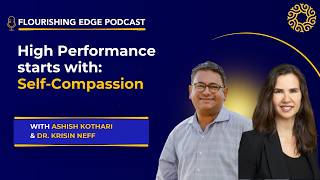
Dr. Kristin Neff, who pioneered self-compassion research, explains why it beats self-esteem for high performance. Her three-part model includes mindful awareness, self-kindness, and recognizing shared suffering. A 20-second self-compassionate touch activates your parasympathetic nervous system and reduces cortisol.
Chapters
Welcome to The Flourishing Edge, the podcast where we share weekly tips on making flourishing your competitive edge. I'm Ashish Kothari, your host, and each week we'll dive deep with flourishing experts, changemakers, and executives to share best practices that can help you unlock higher performance through science-based interventions. Let's step together into the edge of what's possible and live, work, and lead with more joy, health, love, and meaning. What if the thing you've been told will make you weak is actually the foundation of your strength? For decades, we've been taught to push harder, be tougher, demand more from ourselves. But what if that voice in your head, the one that criticizes, judges, and pushes, is actually limiting your performance? In this episode of the Flourishing Edge podcast, I sit down with Dr. Kristen Neff, Ashish Kothari, the pioneering researcher behind self-compassion, to unpack a radically different approach. We explore why self-compassion is not self-pity, but a powerful driver of growth and resilience. How shifting from self-esteem to self-compassion creates a more stable, unconditional sense of worth, and why learning to be with your struggle, not avoid it, is a gateway to clarity, learning, and flourishing. If you are a leader operating under pressure, this conversation will challenge how you think about performance, failure, and what it truly means to thrive. Let's dive in. Kristin, I am so excited to have you on our podcast. Thank you for joining us.
Well, thanks for having me. I'm really excited as well.
Well, listen, I have been a big fan of your work and research around self-compassion. And so I want to start with right, you know, tackling the big elephant in the room. People think about self-compassion as not a strength but a weakness. And so I want to start with, what is— talk to us a little bit about the most common myths. That is one, but there are so many others around self-compassion.
Yeah, well, so if you break down what the word compassion means, it's concerned with the alleviation of sufferings. So self-compassion is concerned with the alleviation of your own suffering. And I think when people think that self-compassion is a weakness, They think that if you can alleviate your own suffering, that means I'm just going to go for the easy road. Like, you know, get rid of, like, I don't feel like getting out of bed. I can alleviate my suffering and I'm going to cause myself harm even though I'm going to get fired for work or something like that. That's not what, that's not what compassion is. A compassionate parent who spoils their child and doesn't motivate their child to go to school or to reach their full potential isn't a truly caring parent. It means, you know, it's like They're kind of making it easy for themselves. They don't really have the child's best interests at heart. It's the same thing with self-compassion. And again, the research supports this. When you really care about yourself and you have your best interests at heart, you aren't going to take the easy road. You know, you are going to do the difficult. You are going to do things that are maybe unpleasant or challenging in the short term for those long-term gains. But, you know, again, people confuse it like with self-pity, which is just feeling sorry for yourself or going easy on yourself. That's really not what self-compassion is. Compassion is. It's understandable that people get confused because, you know, we can do those things, but that's not really what we're talking about here.
You know what I loved, Kristin, was when you talk about it in your book, Self-Compassion, but you didn't start researching self-compassion. You were actually researching a different topic, right? And you kind of decided that this was what mattered even more. So talk to us a little bit about that.
Yeah. What had happened is, well, so I learned about self-compassion when I first learned about mindfulness meditation and I started getting interested in like, what is this thing called the self? And, and so I got, you know, I got my PhD and I needed a job and an opportunity came up to do 2 years of postdoctoral research with one of the country's leading self-development researchers who, who focused on self-esteem and I mean, I, I always thought, you know, it's good to have high self-esteem. We wanna raise our self-esteem. Yeah. If we, if we have low self-esteem, we're gonna be mental health issues and, you know, be depressed perhaps. But I started realizing that the field of psychology was actually falling out of love with the idea of self-esteem because usually the way we get our high self-esteem isn't very healthy. For instance, baseline, just like baseline self-esteem, you have to feel special and above average. It's an insult. It's like a failure to be average. You're kind of, you're so like, you're starting out with a logical impossibility, right? Because it's impossible for everyone to be above average at the same time. And it sets up this model of social comparison. For instance, we found out that one of the reasons young kids start to bully each other is because they want to feel good about themselves. They think they'll be seen as a cool, strong kid. And you can see this still applies, you know, in the workplace or even politicians as you get older. You know, this need to feel superior to others is kind of built into this need to feel special and above average. And the biggest problem with self-esteem is this affair with a friend. I mean, you have, you feel good about yourself when you succeed, when you perform, you know, when you look the way you want to look, when people like you, but what happens when you fall a little short or you don't succeed this time, or maybe someone rejects you, right? Then what happens is your self-esteem deserts you. So self-compassion is about caring yourself. Again, it's much more of an unconditional sense of worth. So we are worthy of self-compassion, not because we've achieved anything, but just because We are human beings. You know, the moment a baby is born, we don't say, maybe once that baby goes to graduate school, all that, that baby is worthy of compassion. No, it's just part of our very humanity and it's rooted in our very humanity. And to be human does not mean to be perfect. It means to be flawed and to struggle, but to be human also means to try to, you know, reach your full potential. That's also part of humanity. And so what we find, what I found in my research, actually I'm jumping ahead. So when I first introduced the field of self-compassion, the construct of self-compassion to the field. My first paper was called Self-Compassion: A Healthier Alternative to Self-Esteem, because it gave you that sense of worthiness, right? It's not like I'm worthless. I am worthy, but my worth is intrinsic to my humanity, which means it's a good, stable friend. It's there when, you know, when I succeed and when I fail. And having that sense of worth, especially when you fail, is so huge because that means, okay, I failed. Everyone fails. To be human means to make mistakes. What can I learn from this failure? And that's really the engine of self-compassion. You might say caring for our long-term health and well-being, as opposed to the sugar high of, oh, I'm so great. I'm special and above average. People like me. How long does that last?
You know, it is this point around self-compassion and this property around unconditional, right, and worthiness because of being human and recognizing humanness has suffering and it's perfectly imperfect. We are all perfectly imperfect.
Exactly.
That really spoke to me, you know, because operating in kind of high-performance environments, you know, I was in consulting for 25 years. I was at McKinsey. You know, you always— the feedback you get, it's an environment of rich feedback. You get feedback every meeting, every week. It's not once a year. And so that it's very easy to feel not worthy. Right? Or, uh, because most feedback is also developmental. And so this notion of you don't have to beat yourself, you are more than your last failure, right? And to be able to, to enter into that, never questioning your worth, never defining your worth by what you're achieving, but by who you are and still striving from that place for more, because we all are wired for achievement and growth, right?
Yes. And, and because, again, because we care, but it also does make you start to look at your values. Right? So if you don't value what you're doing, then maybe you're in the wrong job. You know, it's like this thing about being authentic. What do you really care about? You know, what contribution do you really want to make to the world? And for some people, you know, creating a business doesn't matter what they're selling. Maybe you're selling widgets, but the idea of creating a business, employing all these people, you know, supporting your family, you really care about that. And that's amazing. But if you're doing something that you don't care about, your heart's only going to be half in it and your work isn't going to be actually as perspective.
Yes.
So finding what's true for you, what do you care about, and then doing it again, because you care, then this is what allows us to learn. It's such a truism, failure is our best teacher. And yet we act as if we aren't supposed to fail. Like, how can both be true simultaneously? Failure is our best teacher. You know, the real key, this is what I found more and more over the years, is not to take things personally. This is interesting. Self-esteem is very personal. It's how much do we esteem the self. Self-compassion, even though the word self is there, it kind of means the self is the one who suffers, who feels limited, who feels flawed. What we're doing in a moment of self-compassion is we're moving away from identifying with that self, taking it personally, and we're moving into, you might say, like this larger compassionate presence, which we are more used to giving to other people.
Yes.
Right? You know, our family, our loved ones, maybe other people who are struggling. And so when we do that, there's actually a lot of— we take things less personally. There's less focus on self. And it's taking failure personally that dooms you, because then if you feel shame and you're, you know, your head's down— look at the Olympics. You know, when you take it so personally and you make a mistake, then you get in this downward spiral. But if it's like, hey, I'm just going to do my best. My worth isn't dependent on whether or not I win the gold, then that frees you not to take things so personally, to get that feedback and actually use it in a productive manner.
Yeah. Well, I think Elissa's story— I do a lot of work with USK, and Elissa was kind of an epitome of version 1 versus version 2, right? Just unbelievably in her game, wanting to do the best, and let everything— that pure joy that you could see is what you're talking about.
Yes, yes. Not doing it— from a sense of trying to prove your worth, but doing it just because it gives you joy. And if it stops giving you joy, find something else.
Find something else.
Yeah. So, I mean, to the extent that you can, right? If what gives you joy is putting food on the table for your kids, it's not to belittle that. It's not that every— I don't think everyone has to have a job that, you know, you know, there's different ways to contribute to society. So no one can say from the outside, but you're doing it because you want to. Because it's authentic for you. And because it's not about proving yourself, it's about doing it because you think it's worth doing for whatever reasons, whatever values you hold. And when you do that, that's what allows you to learn from your mistakes. I'm sure you've talked a ton about, you know, a performance orientation versus a growth orientation.
Yep.
People for whom it's all about growing and learning do much better than people for whom it's all about just, you know, Did I get the A or not? Did I perform well? That's kind of short-term game, and it messes you up whenever you fail.
Yeah, and I think as we talk about learning organizations and orientation towards learning, what I love about this is self-compassion is such— so powerful to be in that learning orientation, even from a neurological point of view, rather than this perfectionism that you're in operating from fear. Am I doing enough or am I not? Versus when your worthiness is not in question, you can actually more objectively see what's working, what's not, and choose to take the next step.
Yeah. And so that's very true, Ashish Kothari. It's even more than just your worthiness. Self-compassion is very special. There's a reason I think it's— still think after 30 years, it's the best thing since sliced bread. So one of the reasons it's so important is because it's my worth comes from being human. But also it's the way we deal with negative thoughts and emotions, suffering, right? So if you look at the roots of the word, passion means to suffer, calm is with. So how are we with those moments of suffering? That might be because I failed. It might be because I'm going through a really difficult time. I'm feeling something difficult. Maybe I'm feeling, experiencing physical pain. So when we are with that pain, that negative thought and emotion in a caring way, in my model, we could talk about it more, but we're present with it. We aren't pretending it's not there. We're present. We feel connected to the larger whole, to our shared humanity. And we're being kind, we're being supportive. Those are actually positive emotions. So what happens if there's no compassion and it's just the suffering is we get a narrowed mindset. We go into a downward spiral. The purpose of negative emotions are to narrow our attention. We cannot learn when we feel threatened because we're like, we're just, we're like laser focused on the problem. And you know, that can be helpful sometimes, but if you're just laser-focused on the problem, then you can't look up and say, oh, I wonder what else I could do. You know, you're just, you're just in survival mode.
Totally.
So compassion brings the positive qualities of presence, connectedness, warmth to our negative emotion without— we don't, we aren't pretending. It's not like positive thinking. It's not like we're saying things are good when they aren't. No, it hurts. We're acknowledging that it hurts. It hurts. Everyone hurts sometimes. So we're generating positive emotions alongside of negative emotions. And that actually, we know this from research, allows us to do the, what Barb Fredrickson calls the broaden and build cycle, which I'm sure you know very much about. It allows you to pick up your head and say, wow, this hurts, but huh, I didn't think of that before. Or there's also this other thing going well in my life. And that's the key. It's like, it's like alchemy. It helps transform the negative so we aren't locked and stuck in it, into these positive emotions, which then open the pathway. Like it's linked to curiosity, hope, for instance, learning. And because of that, because our head's not stuck in the sand of I'm bad, this is bad.
You have such big of a perspective. You have a so much bigger lens rather than just small, right? And it's around action.
And so, and I know you're in the field of flourishing and all these other things are so important. Gratitude, savoring, et cetera. The thing about gratitude and savoring, is you're grateful for the things very important. And of course they're linked, but this is the only construct that I'm really aware of that's directly aimed at suffering.
Yes.
Directly aimed at suffering. It's not noticing what's good. It's like, I'm looking directly at what's broken. I'm looking directly at my failure. I'm not savoring my failure. I'm like hurting. But then what happens is instead of taking it personally, we move into like this field of compassionate presence. So we aren't so identified with it. And we're feeling like the love and this connectedness and this kindness and this warmth while we are with what hurts.
While we are with what hurts.
And that's what transforms it. So it's like a bridging construct. And then once we've dealt with that, kind of related to the suffering in that way, then that opens the door to things like savoring and gratitude and values and all that stuff. And without self-compassion, there's no way to really make that bridge from the negative to the positive. At least in my opinion.
I agree with you. And I think that's why in today's world where so many people are anxious, so many people are struggling, I think self-compassion is a powerful step towards whatever else you wanna do out there. If you don't have this, you don't have access to anything else.
Exactly. You know, tell, tell someone who's anxious, be grateful, you know, savor the beauty outside, or like, you know, think what's important to you. It's like, okay, fine. But in, in the meanwhile, I'm just like, Anxious, anxious, anxious. So we knew the only, I like to say the only way out is through. We need to kind of embrace the fact that, wow, I'm anxious. This hurts, you know, and just like allow yourself to be with that pain of the anxiety. Remember that you aren't alone. It's so human to feel anxiety. And also we don't have to take it personally. Like my son has, you know, a lot of, he's autistic and he has neurological differences. We don't choose to be anxious. We didn't choose our brain wiring. You know, we don't need to take it personally. This is arising. We can feel warmth and care. We could ask ourself, what do I need right now? And that caring kind of more spacious mindset is precisely what then allows us to do the steps of the positive thinking or the exercise or all those other positive things we're supposed to do. But to go from one to the other without any step in between—
It's super hard.
It's very, very hard. Yeah.
Yeah. Well, so let's get into those three elements and describe your model. Kristin, you define it in 3 parts, and I would love to hear that from you, and we'll go into each one of them over the rest of the podcast.
Yeah, yeah. So it's funny, when I decided, you know, I certainly didn't come up with the idea of self-compassion. The idea of being compassionate to yourself as well as others was, I actually learned that from a Zen master called Thích Nhất Hạnh and his tradition. He talked a lot about it. But I was, I think, the first to operationally define and measure it, right? And certainly the first to publish that definition and measurement of it. And so I really had to think, okay, well, what goes into self-compassion? And I realized that it had to be the same thing that goes into compassion for others. Right. So it's really the same thing. It's just, we're applying it to ourselves as well as others. So the first thing, in order to have compassion, you have to notice it. If you don't notice that your spouse is really upset, you can't give them compassion. If we, and we say, well, of course, you know, of course I would notice. Well, you might or might not, but if we definitely, if we don't, if we don't notice, we don't, we not only, it's not only just noticing, it's being willing to be present with.
Yes.
Like we might notice that homeless person on the street, but we aren't, we don't really want to go there. So we just like, just, you know, keep moving. We have to be, we have to be willing to be present with the fact that we're hurting. We're anxious. You know, this failure hurts. We're feeling shame or we're angry or whatever's coming up, whatever difficult thing is coming up. We have to be willing to pause and to be present with it. So this is mindfulness for, I call it mindfulness versus over-identification because what often happens is we might not be present with it, but we're stuck in it. It's like we're fused with it. Like we just are the pain. So mindfulness allows us like to step back and give it space. Like, oh wow. So we have awareness in there. This awareness is huge. Not only am I hurting, I am aware that I'm hurting and that awareness is a total game changer. Because then it allows us to think about how I want to respond to the fact that I'm hurting as opposed to just reacting because I'm stuck and fused with the pain. So that's, that's one element. And then how we respond. So there's spaciousness, but there's also how we respond to that pain. You know, is it just like, you should have not filed in the first place. It's your fault, which is judgment. And by the way, we don't want to judge ourselves for judging ourselves because it's just a fight, flight, or freeze response. We fight ourselves because from kind of an unconscious biological level, we think if we're really hard on ourselves, we're going to be able to change. You know, like I should have been able to get it right. I didn't, but I should have been able to. And that makes me feel empowered. And maybe if I like am hard enough on myself, it's going to be so painful. I'll never do it again. I mean, again, this isn't really happening consciously, but irrationally we're kind of assuming that this harshness is helping us in some way. So the fact that you beat yourself up is kind of unconsciously a desire to care for yourself. You don't want, you don't want this to keep happening. You don't want to hurt other people. You don't want to fail all these things. It's a caring impulse, but it's just like, it's not very realistic. We think the best way to help ourselves is to be really harsh with ourselves. Is the best way to help your child get better math grades to yell at them and call them stupid and ground them forever? It's like, well, no, there's another way. Why don't you hire them a tutor? Why don't you talk about like what's going on? Why don't you encourage them? Why don't you support them? We know that that's going to be more effective with other people, but with ourselves, we just kind of, our default is like, you know, it's natural, but it's just not very effective. So encouragement, warmth is a, it's a much better way to help us learn. Warmth and encouragement and support. Support is huge. You know, if you don't support yourself, you're making it harder for yourself to grow. I'm sorry, duh. I mean, it's just like so obvious. Whenever I talk about self-compassion, it's like, it's so obvious, but the reason we don't do it is not logical. It's not because we're stupid. It's not because. We aren't being logical. It's because the drive to criticize ourself is coming from our evolutionary heritage, right? This is coming from the fight, flight, or freeze response. We aren't thinking about it. It's just arising. That judgment is arising. We don't have to identify it with it. We don't have to take it personally. It's just arising. We can have compassion for that too. Okay. So that's mindfulness, which is the space.
Yeah.
There's the kindness, which is the warmth, but then really important is this thing about I'm not taking things so personally, which you've already discussed. What's the difference between self-compassion and self-pity? Self-pity is poor me. It's very self-focused. Compassion, you know, compassion is by definition connected. If I pity you, Ashish Kothari, you aren't going to like it because I'm like looking down on you. I feel separate. If I have compassion, it's like, hey, I've been there. I've done that. There's a sense of connectedness built in to compassion that's rooted in our shared humanity. So it's common humanity that provides the connectedness, which is so huge. And in fact, as I, you know, over these last 20 years, part of me thinks that's actually the number one thing we need. Again, so many of our problems come from taking things personally, identifying our sense of self with what's happening, as opposed to stepping back and kind of seeing the larger picture, seeing the larger whole. And this is kind of what grounds us. It gives us a sense of connectedness. It gives us a sense of groundedness and stability. So in my model, we need all three. It's like a three-legged stool. If you only had two of these elements, it might wobble a little bit. But when you have all three, it gives you this real stability that tons of research— you know, there's over 10,000 studies now, Ashish, I looked the other day. Over 10,000 studies. That's crazy. I've done about 100 of them. The other 9,900 are done by other people.
My God. You know, I discovered your work around 2016, right? So it's almost been 10 years ago. And it really spoke to me because I'll tell you the old version of me when I discovered your work. I was a partner at McKinsey. And so first thing, you know, this notion of mindfulness and being with, right? You don't want to be with failure, right? In fact, you fail, you beat yourself up, and you either numb yourself with alcohol, food, or you kind of are like really kind of acting furiously against it. You're acting it out. You're getting upset at others. You're getting— first you get upset at others. Like, why did this happen? How did this— how did we mess up this one word on this slide, right? Really at that level. So one is my move always against things that weren't working was just to either numb it away or to actually just act out on it rather than just be with it. Like just say, hey, look, this is really, you know, this is really hard. This is what's happening. I'm going to give myself space. I'm hurting. So are others. Right. So I think that was really, really important. I think the second thing, which you talked about, which again, you know, 40 years of learning and living into the story of perfection is the price you pay to be loved. If it's not perfect, I am not worthy of love.
Yeah.
And so, you know, you would not, and so I would always beat myself up. Right. In fact, you're like, listen, that's to your point. If I didn't do that, I was telling myself like, you're gonna mess up again, right? So don't mess it up. And back then, early days, right? I wasn't aware that millions of years our brains haven't evolved to keep us safe, right? They have evolved to keep us safe, not keep us happy. So that's what we do.
That's what we do. That's all we know.
That's all we know. And it's evolved.
Well, it's not all we know. We also know how to make others happy, but it's more aimed outward. That's a compassionate response. Exactly. Inwardly, we're threat-focused. Threat is first. That's our—
Threat is first. And it served us, right, in prehistoric times when there was enough threat around us. But in our world today where there is not as much physical threat, I think this is a liability. And I did that. And then the third, of course—
Yeah, I gotta say, to just to add to that, Ashish, animals, they feel the threat, but then they, they don't have this idea. They don't take it personally because they don't have this self-concept. So for humans, it started being a disadvantage because instead of just being, you know, being threatened, fighting it, moving on. We like, we keep ruminating on it.
We ruminate over and over. Exactly.
So it started becoming a liability at some point. Yeah.
I think that's a great, I think that is so true. Right. And so I did that. I did all of that. And then I would ruminate over it all day long. Why did it happen? You know? And then the third, which again was in that moment, it's about you. It's about me. And I'm like, oh my God, I'm going to get fired or everybody's going to look at me and say how wrong versus recognizing that everybody messes up. Am I the only one who sent the wrong email out? No, those get— happen millions of times, right? And again, it's not to give yourself slack and say, it's okay, everybody does it, so don't worry about it. But it's in that moment to know that this is— you are like, you know, we are imperfect by nature. There are other things that happen. This is not the first time. So that shared humanity point. I think is really, I think, giving, allowing ourselves to give space. But that's why this spoke to me. And I think this, you know, I'm doing this work right now. We're taking a bunch of folks at McKinsey through this program. I think it really resonates with them too, because we do not speak to ourselves as our best kind of coaches, champions, right, with the same level of care that we would give to a colleague who did something else.
Or a client. Could you imagine if you had a client and you said, you're stupid? Give up now. No, your, your job, but also your job is not to like say, oh, it's not a problem. Your job is to point out areas of improvement, but to do it in an encouraging, constructive way. So you can think of your inner self-compassionate voice as the best McKinsey coach you could possibly imagine, who's very clear-sighted, but encouraging, warm. You know, that's what you want. That's, that's just like for your clients is the same thing for yourself.
Yeah, be your biggest coach rather than somebody who's constantly tearing yourself down.
Yes, exactly. Right? I do think people are afraid that if we let ourselves off the hook, we're gonna say, oh, it doesn't really matter that the name was misspelled in the slide. And that's not true. It does matter. You know, we do need to pay more attention. So we, you know, we don't wanna like belittle that. We don't wanna belittle what happened cuz that's not compassionate. But in order to really see, I mean, Sometimes it's not that big a deal, but what if it really was a big deal? In order to really take in the magnitude maybe of a mistake you made, you need the like strength that compassion gives you to really be able to say, shit, wow, that was bad. It's so hard to do that without the strength of compassion. Having, you might imagine, a whole army at your back to say, I got you. Hey, and then you can really take it in. And then that's, you know, more likely. Again, doesn't mean you'll be perfect ever. You'll never be perfect. But to really learn from it, to really take it in, you need to be able to help yourself do that hard thing, to face the pain of it.
Yeah.
And that's what I found in my self-compassion practice is it's so good at allowing me to admit mistakes. People have said, I can't believe, like, you just admitted that about yourself. But, because I can, because I have the strength of self-compassion.
You know, it ties into this other conversation that, uh, that we were having. People talk about psychological safety and an environment out there you want to create that allows you to talk about failures. I think that's great. But I don't think self— people who are not self-compassionate even have the space to go do that.
Well, psychological safety has to start inside.
Yes.
The exact same principles apply in terms of your organization and what's going on inside the different parts in your own head. Yeah. How are you gonna be honest with yourself? How are you gonna speak up honestly? How are you gonna point out problems if it's not safe to do so?
This conversation is brought to you by Happiness Squad, where we help leaders build new mindsets, new habits, and transform their ways of working to truly flourish. If you are ready to unleash the untapped human potential in your organization and operate at your best, Come visit us at happinesssquad.com and start your journey today. Yeah.
So if you have the taskmaster with the whip, just like the boss who doesn't allow for anyone to speak out, I mean, the exact same principles apply internally as they do externally.
Yeah. We don't allow that other voice, right? And I think that's why in the programs, Kristen, I was talking about that we're doing with clients, we are doing inner work at the individual level. And we are actually pairing at that work with many of the flourishing concepts which are at the organizational level. Because that was the disconnect that I was seeing. You know, when we talked about psychological safety, when we talked about how we speak to others, very rarely was that work about how do you speak to yourself. And, right?
It needs to be both.
It needs to be both.
It can't be personal. It's kind of the exact same principles apply, whether it's internally or externally. And you know, one of the other things I've noticed is one of the reasons people criticize themselves is because they're feeling shame. They're, they're imagining that other people are looking like unfavorably on them. And so it's like, first of all, you beat them to the punch. It can't hurt if you're, you know, no one's going to put me down as much as I'm putting myself down right now. And also when we do it out loud, we're hoping the other person will kind of give us a little compassion. Right. And so the culture kind of supports self-criticism, but when you create a norm of self-compassion, like you can actually help each other, like, you know, help each other to say, hey, it's only human. It's okay. I know you feel badly, but it happens, you know? So the compassion outward can also help people model compassion inwardly as well. If I think I, you heard me give a talk where I talked about Dell Children's Hospital, which, you know, children's hospitals are very much all, they used to be at least at Dell Children's, all about the culture of self-sacrifice. We actually changed it to a culture of self-compassion. The people helped each other say, have you, you know, have you asked yourself what you need right now? Have you taken a break? You know, what is it that you need? And they actually helped reinforce this notion of helping each other practice self-compassion. And it made a big difference. Same thing with the NCAA athletic teams we trained. If the message of other people are reminding you to be self-compassionate, because remember, it doesn't come naturally. It's not only built into our evolutionary, you know, nervous system, it can really help when it's a cultural shift.
You know, I so love it. The other place this conversation came up is, you know, we had a conversation around working moms and the working mom guilt, right? Because there is the story that is internalized that work, family, kids, everybody over you. And even if there is a moment of, you know, me, people feel guilty. They don't have it. And yet if we don't start from there, I think we are frankly also suboptimizing every other piece of what we are giving because you can't give from an empty cup. And yet we're not self-compassionate to ourselves of the struggle.
Yeah. And we admire, we tell these stories of this mother, you know, so I'm an autism mom, for instance, and this mother who sacrificed everything and gave her whole life for her child and gave up everything or, or worked 6 jobs. And like, that's what we idealize is this self-sacrifice. I actually didn't do that. I mean, I, I helped my son, but I still kept my full-time career. You know, I let other, other people, you know, help raise him. And there's part of me that felt like, you know, is this right? But I made sure that, you know, this is a really good woman I really trust because I knew I needed to be able to, you know, do my, also my career was important. I, I didn't, I didn't subjugate my needs to those of my son, but I made sure his needs got met, but it wasn't necessarily me personally. And you know, that's enabled me for a lot of reasons to now be able to give him a trust fund that will take care of him until, you know, the rest of his life. You know, it doesn't always work out that well, but, but I remember feeling that tension because you hear those stories. We just idolize self-sacrifice. We need to stop idolizing self-sacrifice and start saying, you know, actually it might've been a little healthier if that person would've taken some time for themselves.
Totally.
You know, it's a cultural message, partly.
In fact, you know, there's a story in your book where you talk about, by the way, if you start from there, you also help the others. So there's a story in your book about your plane journey.
Yes.
And I want you to tell that journey of like how that actually made all the difference.
Yes. Well, so this is another reason why we shouldn't take things so personally, because the way the human brain works is we have neurons, neurons called mirror neurons. We're always resonating with the emotions of others, with the presence of others. So what we cultivate inside, again, like going back to psychological safety, influences others just as they influence us. So if you're in a work environment where everyone's stressed, everyone's self-critical, we're feeling that tension. So I'll, so I'll tell the story with my son. So we were on a plane, a transatlantic flight. We were go— we were— his parents, his grandparents live in London. And it was the time just after we ate our meal and they turned the lights off, which, as they do in transatlantic flights.
Yep.
And my son was very sensitive to environmental triggers. So for some reason he was scared by turning off the lights and he just went into a full-on meltdown. I mean, just screaming and flailing and he was like 5 and I felt really bad because I know that they are resonating with the screams. And so they, I was feeling the tension. They were feeling the tension. It was really uncomfortable. And so, you know, I thought, well, I know maybe I'll, maybe I can take him into the toilet and he can have his meltdown in there and somehow that'll help. I don't know. It was the only plan I had. We get to the toilets, which were of course occupied. And so what I did is I started practicing self-compassion and I, you know, I didn't care. Everyone was already staring at us. I just put my hands on my heart and I started rocking and I started saying, this is so hard for you right now, Kristen. This is so hard. I'm so sorry this is happening. I'm here for you. Because I couldn't reach him when he was, when my son's at a full-on meltdown, it's very hard to reach him. So I worked on myself. And so I went from being like, mm, to like, you know, and I just kind of filled myself with this compassionate presence and then he calmed down and then I could work with him more directly. And so this idea that somehow it's selfish, you know, that you're somehow being good if you're really hard and harsh with yourself and you're being bad if you're warm and kind with yourself, it's totally opposite because this harshness, this criticism, this stress you're causing yourself, self-criticism, stress, depression, all very highly linked. You're actually influencing your family members, your coworkers, because they're, you know, and by the way, this is pre-verbal. It's not what you say. We feel it. We evolved to feel the emotions of others. This is the energy you're carrying out in the world. But if you cultivate presence, warmth, openness, you know, loving, connected presence, which are another way of talking about the three components of self-compassion, this is what you're bringing out in the world. And people can feel it. So you aren't just helping yourself, you're helping others, your children, but also your coworkers. As a leader, there's research showing that people respect self-compassionate leaders more. And I think it operates for two ways. One, they're seen as wiser, more emotionally intelligent, which they actually are, because the ability to say, hey, you know, everyone, everyone makes mistakes. You know, I don't want to have, I don't want to repeat it, but what can we learn from this? People respect that. But also I think a lot of it is kind of unspoken. It's just, you just pick up on someone who's self-compassionate, a sense of presence, a sense of stability. When you have that compassion, it's like you're less shakable. By the way, ton of research shows that when the going gets tough, whether it's COVID, whether it's combat, whether it's earthquakes, whether it's first responders, having that ability to be with the tough stuff, like having your own back with compassion, like, what do you need? I'm here for you. It's okay. You know, I want to help. That, that's sense of presence and warmth and connectedness makes you a lot stronger. And other people feel that safety and that stability and security. So it's really good. It's a really good leadership quality to cultivate. Just saying.
Well, I think that is it, right? We are energy.
We are.
Speaks way more than our words. It does. And I think if we want to be authentically caring, And you start from caring for yourself.
Yes.
You know, it resonates. People, people end up being a lot more open. You know, this notion of people don't remember leaders on what they said, but how they made them feel. Well, this is, is the place you start.
Yeah, exactly. Exactly. What, what you're cultivating inside of yourself. Absolutely.
Right?
Yeah.
And this notion of really training ourselves to be with when things are hard. Not personalizing them, right?
Not taking it personally, not blending with it. So, so this is the mindfulness. This is why mindfulness has made such a big impact in business. But space is not enough. We also need the warmth.
Exactly.
But warmth is also not enough. We also need the connectedness. This is why, you know, I'm, I'm pretty happy almost 30 years later that I came up with this three-prong formulation because each is really important.
And it reinforces the others.
It builds up the others. And they reinforce the other. Yeah. When you feel more connected, you feel safer to open up a little bit more when you feel warmer. All of it works together. But the reason I like it is because they're like, they're doorways in. You can practice mindfulness. You can remember that you aren't alone, that it's human, or you could like give yourself a kind gesture, say some words of support. And so there are 3 different ways of approaching it. The ultimate is to remember all 3 because that's going to make you the most stable.
Yeah. Well, I think what I also love about your research, Kristin, is this is not just a trait. There's some people are self-compassionate, other not. We can actually cultivate it. We can develop it.
Absolutely.
And so I wanna go there next and say, you know, 30 years in this field, what are some ways in which if there was a leader who says, okay, I get this, I beat myself up all the time, but I wanna be a different leader, what might be some places they could start? To practice?
Yeah. So, um, I usually, the answer to that is whatever works and whatever fits best in your lifestyle. Ironically, what I've, um, I don't know if it's ironic, but maybe surprisingly, uh, I find that physical touch is often the best place to start because so much of this is how our nervous system is operating. So when you fail or you get that bad news or you have that difficult thought, what's happening is you're activating your sympathetic nervous system. Because you feel threatened. Again, this is all happening unconsciously. Most of what happens is produced unconsciously. I think only like 5% of it pops up in your conscious awareness, right? So your nervous system is saying there's a threat. And again, your activated cortisol is going down. So what we know is that touch, because we're mammals, we are designed to interpret touch as a signal of care, of safety, of stability. Touch activates the parasympathetic nervous system, reduces cortisol, and like increases heart rate variability and coherence. So, um, some sort of physical touch to let your body know that you're here for yourself and that you're safe. And it could be something that can sound hard if you're alone, but even just like crossing your arms. If you're in a meeting, you know, if you just cross your arms, no one needs to know you're giving yourself compassionate touch. It doesn't have to be obvious. When you cross your arms, but in a way, like you could do it in a way that's kind of, wow, I'm really holding myself. This is hard. I cannot believe this person said that. You do it in a caring way. What that does is you're kind of priming your nervous system to respond. And then just a few words of like, you know, this is hard, like acknowledging that it's hard, you know, like it's, it's okay. Things, you know, this is human, any, any kind of words of support. So there was an amazing study that came out of UC Berkeley last year that found that 20 seconds a day of self-compassionate touch and a few supportive words for a month is enough to significantly raise your self-compassion levels. So you don't need to learn meditation. I mean, that helps. If you have more time, if you want to take a program, great. You know, all for it, but just the small little change.
20 seconds a day.
20 seconds a day. I don't care if you're president or what, I don't care who you are. You have at least 20 seconds, right?
Yes.
Everyone has at least 20 seconds. It's remembering that's hard, but But just that, just that little bit consistency is also important because again, you're, you're kind of retraining these habits, but here's, here's the good news is compassion is also natural as, as mammals, as human beings for others. Unfortunately, just for in-group members, not necessarily for out-group members, but for family, for people we're close to, it's natural. So the whole parasympathetic nervous system is like designed to be activated through touch. Feelings of care, wanting to help, they're totally natural. By 3 years old, children naturally want to help. So this is also natural, but we just have to do the hack. We don't have to learn a new skill. We just have to hack into the care system and make a U-turn and turn it inward. And it can be done with just a little prompting. Again, 20 seconds a day is enough to make that big change.
You know, I love that. And it's so true. I'm reminded, you know, and I think I reminded of my son when he was 3. He was just going into kind of this preschool. And I remember the teacher pulled us aside and said, you know, we had a new kid and she was crying. And Ashwin went across the hall and spent, gave her a hug and held her hand. Right. Talk about touch. We are wired this way.
We're wired for it. Yeah.
But we forget. We also get conditioned. You know, we pick up all of these stories as we start to grow up. About the other way, which is actually hurtful, right? Like where, hey, don't be so focused on yourself, right? You don't be selfish. You learn that. Or, you know, people are like, great job, right? Because only when you get a great job is if you achieve something. And we start to kind of, you know, our ego and our brain starts to kind of get socialized. And so we have to remember, to your point of coming back, this is in us. We just have to Compassion is in us. We just need to be learned to be able to do it to ourselves and reprogram our brains back to what we were born with.
Yeah. Yeah. And if there is any line that just sums it up is not taking things so personally. Because again, this really, when we tell the story of what does this mean for myself? Does this mean I'm a bad person? Does this mean it's my fault? Does this mean people hate me? Does this mean I'll be rejected forever? It's like that sense of self, you know, that's also part of our evolution, right? There's a part of our brain that creates a sense of self, which again is designed— the brain naturally creates a sense of self, projects it into the past and future, and looks for problems. You've probably heard of this default mode network. It's natural. Again, don't beat yourself up for doing it. It's a survival mechanism. But at this point in our evolution, you know, when it's not Physical survival is just actually causing more problems than it's solving at this point. Absolutely. So we need to find ways to tap into these other systems like the compassion system.
Well, I want you to talk a little bit, Kristin, about, you know, you have a community, you have a program.
I do.
That I think for those who are like, hey, listen, 20 seconds is great if I start to, but I really want to kind of make this a core part of who I am and how I operate. Share a little bit about the resources that you're actually making available to so many.
Yeah. So really the last 15 years have been focused. I mean, it didn't— I kind of did the research to prove what I already knew. Maybe that's not very scientific, but you know, there's a lot of research. But I'm really interested in how to help people develop this. So I co-created a program called the Mindful Self-Compassion Program with my colleague Chris Germer. And so we founded a nonprofit called the Center for Mindful Self-Compassion. And if you go there, you can take longer training, like 8-week training. So recently I've created something called the Self-Compassion Institute. So I do have a community where, um, I have meetings once a month. We have, we have guest conversations talking about self-compassion. We have small group mentor sessions where you can get some guidance in self-compassion. I have like a 1-hour video course you can take and lots of practices. I have a practice toolkit where you ask, what do I need? And you can get a little help. So that's available. I also teach workshops, a lot of 3-hour workshops, and we're going to be starting very soon. I'm not sure when this is airing, but probably in May of 2026, we'll be starting a 6-week training courses, short 90-minute training courses, because we realize people need a little more than the 3-hour workshops. So, but people don't have the time they used to. So we're going to start offering that as well. So if you just go to selfcompassion.org, I also have a ton of stuff just freely on my website, like, you know, free guided meditations, exercises, explanations, videos. It's really the best place to start. And if you like data, you can also take the self-compassion scale I developed and get your self-compassion up.
I love that one. Yes. Look, we will put all of those in our show notes.
Okay, great.
Kristin, maybe we'll end with a set of rapid-fire questions for you.
Okay.
That I love always asking my guests. So here's the first one. A belief you've changed your mind on.
A belief I've changed my mind on. This is interesting. It's kind of personal. I always thought I wasn't a dog person. I was a cat person. I know this is not, this is not like a big thing. I don't know if you want to.
No, it's—
But I started dating someone who's got a dog and I actually like the dog. So maybe I thought like, I'm always going to be a cat person, but actually maybe, maybe I could like dogs. He's kind of sweet. So.
I love that. Love that.
Some of these things aren't as wired in us as we think they are. Maybe, maybe doubts are okay.
Maybe at one point, but not now. What's a habit or a ritual you rely on when life gets hard?
So what I do is I, rituals, I think about it as shifting into compassionate presence. So it's even, it's kind of like remembering, right, when I'm stuck in that sense of separate self and I'm judging it as negative. I just ask myself to shift. So I shift from the sense of being a separate self and the, and this negativity into this field of compassionate presence. And I might use touch, I might use the three components, or I might just ask myself to shift. It's almost become automated now. And I do that several times. And when I'm giving a talk, in the middle of the talk, I'll find that it's like I get congealed into this sense of separate self. And it's like, I'm doing it and it's really hard. And then when I just shift into the field of compassionate presence, is like a, ah, it's not so hard. So that's really been effective for me.
Yeah. I love it. So like, how do you train yourself where it just becomes, instead of going into a fight, flight, freeze response, you go into a compassionate presence response?
Well, the interesting thing is that's also natural. Like children naturally are just kind of open. It's almost like we've been trained to be totally identified with our brains. So it's just, it's just, I think doing it with enough repetition, we actually, again, we actually aren't learning a new skill. Skill. We're just training our brain out of some of the habits that it has learned, which is the habit of identifying with that separate self and judging it negatively. So I kind of find the more, the more you do it, the easier it is.
The better it becomes. Yeah. More accessible it becomes.
More accessible it becomes. Yeah. But it's actually not learning a new skill. This is really huge. You already know how to do it. It's actually our natural state. Children quite naturally, like your son, we're just naturally open and present and compassionate. Yeah.
What's a book or a research finding everyone in this space should know about?
Oh, right. So I already told you that great 20-second one. Yeah, well, I think especially for this audience, just the research that shows that really clearly self-compassion increases performance. Again, like when we trained NCAA athletes to be self-compassionate, it also not only helped them deal with the psychological stress of what they're doing, and actually increased their performance, partly by reducing performance anxiety. So it's self-compassion not only makes you feel good, it actually allows you to perform better. It helps you perform better because you're working more at your optimal skill set without being so distracted by fear of failure or performance anxiety. Yeah.
What's a question you wish leaders, more leaders asked?
What do I need in this moment? It's interesting. Leaders are so focused on, what does my team need? What should I do? What's the thing? But what do I need in this moment? It's like, that's the, that's the ultimate self-compassion question. And maybe it's just, maybe I just need that, that 20 seconds of touch and support.
What do I need?
You know, but remember, it's not selfish. We aren't saying, it's not like my needs are more important than those of others. It's just that normally we totally forget about our needs.
Yes.
You know, you need to include yourself in the equation. What do I need in this moment? So you're in a big meeting or So I'm giving a big talk. What do I need in this moment? I actually need to take a breath. When I remember that, it's like, oh, that helps.
Yes.
You know?
Yeah. I love that. What do I need in this moment?
Yeah.
And then my last question, what's a playlist or a song that turns your frown upside down?
What's that song? I forget. You know, the one, you know, 'cause I'm happy.
Yes, it's Happy.
What's with Happy?
Pharrell Williams. Pharrell Williams.
That one, I cannot— there's no way you could listen to that song, "Happy," without being happy.
Happy and tapping your feet.
Yeah, for sure.
But listen, Kristin, thank you so much for the amazing work you've done, pioneering work. I think it definitely can say, in addition to the gratitude practices, this work changed my life. It changed my life, and it is— and I'm such a big fan of it. It's one of my favorite modules to introduce in programs that I run. Thank you. Thank you.
Well, thank you. And thank you for bringing this out into the corporate world because it needs it more than ever. Yeah.
Yeah. Well, I'm grateful to you for joining, and we'll definitely add this to our show notes. I hope to get more people into the community. I do think in the world in which we're living today, self-compassion is a foundational skill. And if we start there, I think it'll actually allow us to create a better world.
Yeah, I agree. Yeah, because things are tough out there right now. Yeah.
Thank you.
Thank you. All right.
Okay. Thank you for joining me on The Flourishing Edge. If today's conversation inspired you, share it with someone who's ready to flourish too. Subscribe, leave a review, and stay connected for more tools to achieve breakthrough performance through flourishing. Until next time, keep learning, practicing, and growing into your fullest potential.
More from Ashish





Reducing Regrettable Attrition in Organizations by Fixing the System, Not the People Reducing Regret