Why Happiness at Work Starts with the System, Not the Individual with Jennifer Moss
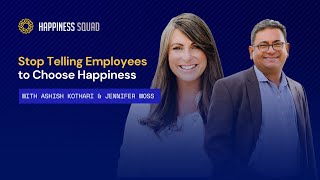
Jennifer Moss argues that workplace happiness depends on systems and leadership, not individual effort. She discusses burnout's root causes, why psychological safety matters, and how organizations can change policies to protect wellbeing instead of blaming workers for stress.
You go into an environment where it's toxic, where you're working 80 hours a week, where there's discrimination, where there's microaggressions, where you're feeling like you're underpaid and it's not equal to others, where you feel a loneliness or lack of community. All of those things are root causes of burnout and they cannot be solved with just choosing happiness.
Foreign why are so many high performers burning out even when they're doing everything right? In this episode, I sit down with Jennifer Moss, globally recognized expert on happiness and burnout, award winning journalist and author of the Burnout Epidemic and Unlocking Happiness at Work. We explored why burnout isn't just about individual choices, it's rooted in the systems we work in. Jennifer challenges the outdated idea that happiness is simply a choice and makes a compelling case for why well being must be baked into the design of our workplaces. From powerful organizational interventions to tapping into hidden power of small daily rituals, this conversation is packed with practical shifts. Every leader can make many in under five to 20 minutes a week to boost flourishing morale, loyalty and performance. If you care about building resilient teams and a flourishing culture in the age of rising complexity, AI and overwhelm, this episode is your roadmap. Let's dive in. Hi Jen, it is so lovely to have you on our Happiness Squad podcast. Thank you for joining us.
Oh, I'm so thrilled to be here. It's been a long time coming.
So Jen, as you know, I'm a huge fan. I first discovered your work in around 201920 when you know I was a partner at McKinsey. I was building out adaptability and resilience work and I read your article on burnout and then I discovered and read your book. And then from that I went to your first book which is now being released. We'll talk a lot about that book today on happiness at work. I've read your why Are We Here? That's the book I'm holding. So for all our listeners, go check out Jen's work. It's truly amazing. Not only is it highly research based, but I love the stories. I love your own personal life story through it. I love the story of the clients. I think they're just such wonderful reads because they combine the brain with the heart.
Thank you for saying that. We can talk about the data and the research and that's important because we want to know that it's evidence backed, but it's in the work. It's in the moments that we truly see the data and the research being lived out. And I think that we can all connect to that. Those moments where we can see ourselves in it or we can see someone that we care about in it. And that's where for me, the stories are where it resonates most.
Absolutely. So look, I want to start by a statement you used to make. You know, it's actually quite funny because I still write in my books when I sign Hardwired for happiness, I always say, dear xyz, choose happiness. And I said, cheers Ashish, that's how I sign it. But you now talk about, you used to say happiness was a choice, but now you realize you're wrong. Tell me more about that. Maybe I'll change my signature too.
You know, I think that there's this sort of gray area with this statement because I do believe that we still need to be engaging in self care. We still need to develop psychological fitness so we can deal with crisis when it hits. We should be practicing gratitude and focusing on what we have versus what we don't have, building up empathy skills. You know, these are all the, the traits of a happier, healthier, higher performing person. So there's an element of where we can choose happiness in those moments. We can choose kindness and altruism, which is part of being happy as well, instead of being angry and cynical. The thing is, is that I, I think what I like just to apologize for in that first book or even just with Plasticity Labs, which is the company that we started up that was focused on building happiness at work, is that there was sort of a very, I think, linear way of thinking about it. Like, you know, if you choose happiness, then all these things are going to come after that. And I, I feel like maybe it contributed to toxic positivity because then it made people feel like, oh, especially in the workplace and organizations, like, oh, it's your problem, the individual. You know, you're the problem for being stressed out. It's your fault that you're, you're burned out. It's, you're on you to go to self care and just breathe more, take a bath, listen to rain for 15 seconds. It's all self help. And that sort of world of happiness was built around the individual to solve. And when you really look at certain institutional pressures or policies that hold certain groups back, it's a privilege sometimes for people to choose happiness. You know, you ask that woman who is a woman of color, she has three kids at home, she's the primary caregiver, she can't always in that Moment when she's working 70 hours a week, you know, and dealing with maybe not having very good healthcare and supports to choose happiness. No, that's where workplace has to come in and support her so that she can make those choices. Choices in the moment. And I think we need to talk about both sides of that coin.
I think it's so important. And when I write about happiness, when I say choose happiness, right. For me, I am so I think it's funny how the same words can land differently, right? As part of. As kind of where we are. For me, when I'm asking people to choose happiness, what I'm really asking people to choose is practicing these nine practices that allow them to have more control over their inner climate, their inner weather. Right? I'm talking about choosing happiness as an outcome of these practices. I'm like, don't blame the others. Choose these practices. And it is so true that 70% plus of our wellbeing and 97% of the burnout is not in the hands of an individual. Right. In fact, I was talking to one of a very senior, you know, former senior partners at the firm. And his mission now in his life, as he's gone into his late 50s and 60s, is all about helping people live their best lives. And he's like, you know, I'm thinking about how to make that happen. And I said to him, come join us, because Happiness Squad is all about changing workplaces from one of suffering to one of flourishing. And he's like, why work? I think we should teach people to meditate and we should do all these. And I was like, no, because here's the data. If we don't change work, we have zero shot at any person. Right. It's like the equivalent of telling someone who is in a toxic relationship at home, right. To say, you know, why don't you meditate or kind your way out of, you know, a spouse that beats you every day?
That's an. That I think is the. One of the most important points is that, you know, you have a role to play in your lifelong happiness. Yes. You don't want to have learned helplessness and, you know, you don't want to feel like you have. Don't have any agency in your life. But you do have to consider that you go into an environment where it's toxic, where you're working 80 hours a week, where there's disc discrimination, where there's microaggressions, where you're feeling like you're underpaid and it's not equal to others. Where you feel a loneliness or lack of community. All of those things are root causes of burnout and they cannot be solved with just choosing happiness. And so I think that that for me is, it's like almost like keep practicing happiness or keep, you know, keep up the effort to build your resilience and psychological fitness and all of those things. But a lot of what I learned when I went from being the happiness expert and I joked to becoming the unhappiness expert as I was writing all about burnout was that it is just this, it is this impact in the timeline. And you can go up or down, you can be neutral and be optimized, but you cannot go to optimized until you at least get to a place of neutrality where you're open to those things. And so we need to do a better job of like understanding that there is a continuum and that happiness is, is maybe that goal or well being or satisfaction, contentment. But you need to really start with the hydra, hygiene, the all of that stuff like the table stake stuff about work so that we can get to a place of motivation.
Yeah, I love that. So look, you also start with this. You know, you've always been one Jen, who I feel has, you know, who live this notion of skating to the puck rather than skating towards today. You've always been kind of a futurist and a trendsetter. You know, just earlier this, this year, right, Actually two, three weeks ago, there's a new buzzword that's now capturing because a new buzzword is going to fix it. Brain capital is the latest, you know, Brain capital is what we need to measure. Brain capital is what matters. I'm like, we've been measuring things seven times from Sunday, right? But that's fine. Great. Brain capital it is. But you talked about that way earlier. You talk about it, you know, and you talk about this notion that just as a brain that is healthy and happy is high performing, so is an organization that is healthy and happy. So that's why I call you a futurist. You wrote about burnout when burnout was just starting to become a really big deal. But that was before, not after then tons of other people wrote about burnout, especially in the organizational workplace. So I always look for a futurist perspective from you. But unpack that a little bit for us. You know, why is an organization that is healthy and happy high performing too?
It's interesting in the why are we here? I had that talk with Adam Grant about measuring and why, you know, why are we so resistant in leadership and in organizations to understand the value of this data that has been around for a long time. I mean there's been people like Sonia Lieborski and Adam Grant and others that have just. They're like the goats, you know, they know that well being translates into business outcomes on acher. I mean they have all established that it is true and factual and real. And so I said, you know, to Adam, why is it that we just don't believe it? What is the resistance? And he said it's really about this having to kind of prove things on such a short term level now and it's even increased. Right, We've even seen that. I mean. Yep, you know, you know you need to respond to shareholder value in these quarterly earnings and even if you're exceeding projections, if you had projected more, you're still in trouble if you don't meet those projections. And so it is very acute responses to the problems at hand to solve for public sentiment towards your company to ensure that you're kind of have this safety net around shareholder expectations. And so we don't look at the long game. Even though if you look at Raj Sisodia's work on conscious capitalism, you see that, you know, on the S and P there's this huge outperformance of those companies that don't care about well being. And when you have a healthy, happy individual, they're more likely to go to the ends of the earth for you. Especially if they feel like you're the one contributing to their happiness and their wellbeing. They're going to be so much more loyal to you. They're, you know, that whole kind of idea of above and beyond. People tend to feel like they're more engaged, there's higher morale, they're going to produce more, they're clear headed. So they're also not dealing with brain fog that comes with stress. There's all of these influences that happen to that person that contributed the organization. But then you look at the network effect of that, you know, the social contagion effect. You've got all these people that are feeling better and coming together. They create all of these exciting and wonderful business outcomes. It's just a trust in the process that it is going to take time, that it does take time to build that culture. And we're so impatient and a capitalist world right now is becoming increasingly impatient for us to show things in a way that are measurable.
You know, we live in this real interesting dichotomy, Jen. So you know, as I don't Know if you knew. But you know, I grew up in the world of ops operations, transformations, right? 12 years. That's the practice. I was a partner before I shifted to the work around flourishing and we really live. And I was seeing this real massive dichotomy in how both in terms of our patience with results and how we approach anything when it comes to our physical assets, whether it is plants, whether it is warehouses, whether it is fleets, whether it is data centers. Right. Which SAP implementation happened in three months that you know of.
Right. There's we have a patience for a certain type of shift in an organization and then a complete lack of patience.
For culture and the other which lean transformation across 50 plants happened in three months, takes four, five years. And yet we bet on them because we fundamentally believe that as a strategy will unlock massive shareholder value. But when it comes to our people, we lose that. And part of this conversation is I wonder if as core practitioners or folks who are leading this work, I think we are actually doing disservice to the field. So for example, I just finished a TED talk two weeks ago. It'll come out in a couple of weeks. But I asked this question. Why is it that when it comes to our physical assets we look at data every day? There is no retail CEO who doesn't look at store data every day. There is no manufacturing CEO there is no who doesn't look at plant production data every day of where things are, where we are. Why for 15 years are we okay looking at engagement data once a year? Why? Why do we accept that as the norm? Right. When it comes to physical assets, you expect 20. I've asked this question to a hundred plus leaders I know. How soon do you expect somebody to take action if there is a problem? 24 to 48 hours. How long does it take for any action to the survey on engagement? 6 months, 9 months? 12 months? Never. I was talking to somebody yesterday and he said, you know, the first, the number one feedback on the survey, the worst, you know, what we scored the worst on. And I said what? That nothing happens from these surveys.
That is the major problem. First, engagement surveys are looking back surveys and it's a point in time survey. So there should be a lot more data that we're gathering. Managers should be given autonomy to, to be able to measure, you know, just simple measures of trying an intervention. You know, let's cut out 20% of our meeting, you know, our meetings every week because everyone's over meeting and they're exhausting. Let's take, you know, take it down by even 10%. And I'm going to measure how people feel when it comes to their stress and job satisfaction on day one. Simple. And then ask them how they feel in two months when we reduce meeting fatigue by 10%. I mean, this is what those kinds of constant, you know, irritants that lead to chronic stress and burnout, that's the pebbles turning into boulders. And we need to, as leaders and managers, be asking, like, not just pulse surveys. So everyone thinks, oh, you know, speeding up the measure is pulse surveys once a quarter. But still no one does anything with it every, you know, quarter. So it should be that, yeah, the big surveys are great, and then you have the pulse surveys. But what are managers doing to use data on a regular basis so that they know what to do? And I think a real big problem, too, with investing in happiness and wellbeing is that most people don't know how to operationalize that 100%. Understand, you know, I'm going to do this transformation that I have lots of practice doing, or at least there's a framework. And we've tried. This is tried and true. And here I am trying to increase happiness. I don't know how to do that. And it's hard to think of how you have to operationalize it, but it is actually quite simple. And there's lots of tactics that every manager can be deploying and measuring, but they either don't have the autonomy or they don't have the. The foundational knowledge of how to do it, or they think at an organization level, it has to be a big overhaul. We're just going to add a value and we're going to be happier. It's a interesting thing because it's not complicated in the activities and the actions, the tactics and the strategy. It's the intentionality of it that is the hard part.
100%. And helping people create space for it and giving them the agency. Right. So, so critical.
That's the. I think that that is the intentionality is saying, okay, we're going to give these managers autonomy. We're going to make sure that they have enough time and that employees have enough time. But we're losing sight of that because of this level of workload that's increased. But a lot of that has to do with so many inefficiencies from the pandemic that have just made it really difficult to kick some of these bad habits and get back to some of the things that we used to do. You know, we used to have serendipity. We used to be able to kibitz by the water cooler. We used to, you know, focus on having lunch together and just breaking bread together. Simple things that actually improve morale and community. But when you're meeting for nine hours a day and then you have pajama hours in the evening, getting the work done that you couldn't get done in the day, I like pajama hours. How are you doing things?
I like that. Oh, my God. So look, you have studied this from both sides, right? You originally started on the Happiness Journey. As before our podcast, you were saying you're One of the 500 companies, Plasticity Labs you started that was really focused on this happiness in the workplace. And then you've gone the whole continuum. You've studied burnout, you've asked questions around, why are we here in the first place? So I want to dive a little bit into burnout and wellbeing and really, you know, somebody who's very well positioned to answer it. What do leaders, you know, Jen, in your work you're finding don't fundamentally understand about well being and burnout.
It is a real issue right now, especially because leaders are saying, I'm burned out about talking about burnout or I don't want to talk about the pandemic. You know, I just want to talk about transformation and the future of work and how to get there. And I just, you know, had this interview where I said, hey, I don't think we can forget about the pandemic ever. It was such a disruption and it has such an impact on the neural wiring of our behaviors right now because it was, it wasn't acute, it was years. And we're still in poly crisis. So we are going to continue to have this behavioral mindset shift. And when you think about how you, you know, how you look at the data now, we're finding that Mercer Trends just came out and said 81% of the global workforce is at risk of burnout. This year it was even higher than peak pandemic. So we can't forget some of the things that has changed us. We can't stop talking about burnout because there's catastrophic impacts. And what we also need leaders to understand is that we put so much effort in the downstream tactics. It's like resiliency training and, you know, all this programming around well being and it is the meditation or subsidized gym memberships and, you know, all these things that I think and I believe there's good intentions that leaders do think, okay, I want to help, I want to do well. By my employees. I do care about them. But it was for me the Herzberg's two factor theory of hygiene motivation that completely changed my mind about how we have to look at well being. Wellbeing is really in the, in really in these like way upstream strategies and tactics and wellness, you know, is downstream. That's the optimization. Herzberg's theory really looks at the fact that you need the table stake stuff. You need pay equity, you need psychological and physical safety. You need to make sure that people and that means, you know, fairness and justice.
Yep.
We also need, you know, those feelings that what we're doing in our work is actually effective, that we have the resources to do our jobs. That is that hygiene. And then once people feel like all of that is being done and we, we don't even want to think about it. I love how it was sort of described to me is that we don't really think about it about being paid nor you know, our, what we should be paid. We don't really notice like physical safety and stuff like that, but we feel the absence of it. So when we don't have that, we're really aware of it. So we just want that to be neutral. We want our employees to take that for granted. And then the optimization is where people have that taken for granted now. It's like those, you know, flex, the, the added flexibility. It's the, you know, other things that really do create a level of optimization. And it is things like flexibility, it's workload, it is manage being managed. You know, it's, it's making sure that we have time to have friends at work. Those are the things that optimize. It's not, you know, the, the wellness and the technology that's way downstream. That's, that's a perk. These are rights. And we need to think differently about what is a right. That's well being what is a perk. That's all the other stuff that's wellness.
You know, I find that I love Hertzberg's theory. Right. It is one of the core foundations. We describe these well being pieces around this model. By the way, I love the word you use, irritants. So that was the inspiration behind the model. Jen. So my wife and I were sitting in Costa Rica and we had this model. We had all the five attributes. Three of them were influenced by some of the Michigan Ross work. One was from Oxford, one was from Harvard and we were coming up with this. And so I asked Lizzie, my wife, and she came up with the name and so literally, our model is called Pearl and I describe it as, you know, oysters have the ability to take irritants and turn them into something of value.
Pearl. Yeah.
Are the skills for managers to turn those daily irritants at work. And we have lots of them, you know, bosses, colleagues, clients, suppliers, the government today. Right. Every university. It's the biggest irritant. Like changing our way of, like how anything gets done in the US Turn them into sources of value. Right. And you'll see the Herzberg theory more reflected. Because Pearl stands for peace purpose, Right?
Yep.
For every manager. It's not nice. It's your obligation to make sure you help every person connect, meaning to what they do every day. Right. E is energy. Is the workplace something that creates energy or drains energy? And if it is, drains energy, people are not excited to show up on Monday. You're losing people, you'll have more absenteeism, right?
Yeah, absolutely, yes.
Awareness is all about leveraging the strengths rather than focusing on the weaknesses of people. We do so much of that and helping them be more resilient. Art is exactly about what you said. Friendships, relationships that feel like I belong and I have friends at work. And Lifeforce is all about really redesigning work in neurofriendly ways. You know, somehow we have forgotten that most of the work we do is cognitive. And back to back meetings, no deep work, constant interruptions are not going to help people do their best work.
And policies that are being clawed back right now, taking away people's sense of fundamental freedoms is a big part of that. We have lots of data to talk about the optimal scenario for hybrid and what works and what doesn't. These mandates that are just forcing people back in the office that actually are going completely against the data and you know how important flexibility is for diverse groups, especially women. I mean, it's an exclusive policy to have five days back in the office. Especially, you know, when we're looking at unpaid labor. Until we resolve again, this is the hygiene piece. Until we resolve and everybody is being paid fairly, that every partnership is equal at home and there isn't one gender doing more than the other. Until we solve those institutional pressures, then we can't have those other opt. We can't have an optimized workforce. I mean, it's just, it's not simple. And so this is where policy is really important. And I love that when the WHO put out the statement around burnout being institutional and or workplace stress left unmanaged. Institutional is those are those policies, you know, paid family leave and equal pay policies and right to disconnect policies and a whole bunch of other things that the more that we find that then this is interesting research that just came out. But when we do have policies, we find that in those states, those looked at from state to state, those policies where the state has actually adopted a policy to make those types of workplace environments healthier, you see just across the board, more adoption of those policies inside of workplaces. And then it translates into all of these outcomes that they're starting to measure, you know, these positive business outcomes. So government plays a huge role in executing and just making it so that leaders can, you know, because they might have been on the fence and they've had pressure to bring in these policies because they have financial pressure not to do it. But now they can just say, you know what? Hey, it's, it's the law. And it completely changes whether they're, you know, because they might have been on the fence and they've had pressure to bring in these policies because they have financial pressure not to do it. But now they can just say, you know what, hey, it's, it's the law and it completely changes whether they're going to adopt it or not. It's a risk mitigation factor now, not just I get to be a human centered, centered leader.
Tell me a little bit your perspectives on the role of boards. It comes to this topic.
Boards also play a massive, they have a massive role because they're the ones that are saying, this is what the shareholder needs. We can fire you CEO if you're not, you know, performing, but if there is, again, it's like, it's all layered. I really look at it as a quadrant. When you look at wellbeing, it's like we need policy and we need to make sure that the government's involved in institutional changes need to be made. And then you also get sort of the top, right? You have board members, CEOs, highest level leadership, modeling the behavior and also providing agency to managers. And then you have managers where, you know, their impact on the individual is massive. It's like a sway, right? 70% influence on whether an employee is going to be happy or not happy at work. It really is. And impact. And so they play a role, but they also need to feel like they have permission to do that. And they also need to be people centered. Unfortunately, we put managers in roles where the only way to move up is to be a people leader and they're not great at it. So that's a, that's a Foundational design flaw. And then we're here too, in this quadrant where we have to come in without just expecting the workplace to make us happy. We need to demand that it doesn't make us unhappy. But we, you know, but we can go in with, you know, without learn helplessness and a desire to really make work something that works for us too. And when you have those things working really well together, you see, I mean the, the highest level of performance in an organization.
We hope you're enjoying this episode and would love your help in spreading awareness and furthering our mission to help a billion people with Rewire for Happiness. Please consider leaving us a review and sharing this podcast with others in your personal and professional life who you feel could benefit from some of these very insights. It's a really simple way to extend and spread positivity. Also, check out Rewire, our proprietary offering to move you from knowing to doing. On the Happiness Squad website, www.happinesssquad.com. rewire uses the science of habit formation and the power of community to help you build happier habits in five minutes or less daily. Now back to the episode. I love that you know all four. So the role of policy and government, the role of boards, the role of managers and really upskilling managers, and then individuals, right, who are showing up, advocating for themselves and collectively really working together to solve this really complex challenge. It is unfortunate that our workplaces today are one that amplify human suffering rather than human flourishing. And every one of those, you know, like, I think there is such a case for it. Right? Like, so boards, you know, I always point them to the first person who I actually found did causational work on this, which was Alex Edmonds. We had him on our podcast. We have a second podcast with him coming out in a couple of weeks where he showed employee satisfaction, which is another word, let's just call it, for employee happiness. I don't know of a single satisfied employee who was unhappy.
Right. Yeah, they don't tend to correlate.
They tend to, you know, it's not true, but he showed 2 to 3.5% alpha year over year in incremental shareholder returns for companies that have more satisfied employees. And so my point is, guys, this is your fiduciary responsibility as boards. You know, this is not. You care about shareholders or you care about something else. At that level of impact, you're leaving like 20, 30% of shareholder value on the table. You know, that's my call to private equity, guys. I'm like, look, I get it. That most public companies will say, yeah, that's great, that's long term. I don't have long term. An average CEO tenure is 18 months to two years. So I don't have the luxury of four years for all of this to work out. So I'm not going to do it. Going back to Adam Grant's point, right, But I'm like your private equity. You hold companies for four or six years, probably even longer now because the markets aren't participating. Why would you not fundamentally pursue flourishing as a core part of your strategy?
I think you're right when you say it's a fiduciary responsibility, because I completely agree with that. I think, you know, there should be a measure to say and there should be a measure outlining the business outcomes. We're sort of letting a lot of leaders off the hook by not measuring and demonstrating the return on that investment. And I also think it's the CFO needs to understand there's a litigation risk that we're starting to see. I mean, when you look at this right to disconnect in Ontario and Canada and there's just a lawsuit now because this person exercised their right to disconnect and, and they're suing now for 850,000 because the manager was mad that they couldn't connect with that person outside of those working hours and fired them. And, and so now there's this almost million dollar lawsuit. And I've always sort of said that, you know, that I, I've, I've said it's a bottom line issue. If we see this like we did in the pandemic where there was a lot of mobility, the great resignation happened and what did employers do? They put everything towards well being invested in well being, increased flexibility. It was like an increase in diversity, equity, inclusion. It was all the things that lead to retention, which were all well being related, all happiness related. But then when they felt like there was less mobility and they control again, they took it all back. We're seeing this climb back and you know, I see that this is shortsighted because we're also going to have this risk liability that's going to pop up and employees that have left, organizations that had those things claw back to go to other organizations that had flexibility, had wellbeing, were investing in their happiness. They're going to stay there and those companies are going to start attracting all the talent that now has mobility. And you're also going to find we're in silver tsunami. We have 10,000 people in the US hitting retirement age every single day for the next five years. You know, that's a very large shift of the labor market that they have no desire to stay because people that are 55 are super burned out. And they say, I don't want to be here anymore. And you see young cohorts, they're saying, I'd rather take less pay to have more work life balance and flexibility. So I'm going to do other things. I'm going to put off buying a home, I'm going to put off buying a car. And I might still live with my parents for a little longer, but I at least then have choice and agency around what I do for a living. Leaders and organizations are, are not seeing this five year, 10 year, you know, like realization of the labor force shift. They're looking to AI to solve a lot of problems. And a lot of senior leaders I've talked to have said we were bullish on AI. I don't even know, you know, how it's really fitting in if it's really going to be replacing all these jobs. So, you know, there's a lot that we need to step up as organizational leaders and say fiduciary responsibility, litigation and risk and a labor market that's going to instantly before our eyes in five years going to be in a total state of flux.
Yeah. And a technology that either will really help us, as Rasmus in his book writes about, be more human, or it can further take away humanity from us because we start treating people as completely fungible. Oh, you don't want to be available? No problem. I've got this agent who can work 247 so no problems, don't show up. You know, I think it can either make us really hard or it can really make us to say, hey, Look, I spent 80% of my time really collecting data to have a 20% conversation with Jen on, you know, how she can do better. Now I'm going to spend 80% of my time having the conversation because I could collect that data in 20% of the time. Right?
Yes.
I think that potential. Do we lean to the left or do we lean to the right to say, actually, I'm actually going to just have AI collect all the data. In fact, there's an AI avatar of mine who's just going to call Jen and have a conversation and then we're going to be done. Like it's our choice. It's our choice where we want to go and what we create.
It is, it is a very important moment that we're in too, because there's lots of discussion when we talk about policies. There's some legislation that's on the table right now that talks about every state committing to 10 years without having any sort of restrictions on AI, that the commitment would be in this bill that AI will not be at all regulated in any way. And so what we need to make sure is that AI has regulations in that it ensures the humanity is the priority. And we need to also, in leadership roles, make that position clear. We're finding that one in two employees right now are feeling fobo that fear of becoming obsolete. And this AI anxiety is so huge. I mean, it's just so incredibly toxic. And young people are fearing that by the time they end university that they might. Their job that they were hoping to get based on their education is still going to be there. And they don't even know if that job, you know, that they plan to be able to, you know, get with that four years of investment in university, it could have disappeared. And they're feeling that sense of like, what does that look like for me? And when you look at The Microsoft Trends LinkedIn report, that was so telling. They found that 67% of CEOs don't know the why of their AI, so they're really unsure of how to communicate it. I think we need to just take a moment. It's happened so quickly and rapidly and I know there's been pressure to adopt it, but it's like, what is the point of it? And this is why people are going like, what is the point? Why am I here? Why are we here? It's because they're not seeing themselves in the future of work. And we can't have a hopeless generation. You know, we can't have people that don't see the future because that's survival mode. They're in survival mode, then they're not looking at investing extra time or being loyal or they're always on the lookout for something safer or better because that's what happens when we're in survival mode. And that's where AI I think just the reset needs to happen around what is a point, because there's some where it makes an excellent point. There's some areas of AI, it is just. It's a match made in heaven. There's great partnerships that can happen. There's a lot of time saving that I believe AI can do. But when we start to look at it as replacing humans, I feel like that's a bridge too far. We want technology to be a partner. We don't Want it to become human. And a lot of the goals, it seems like, is this push for it to replace us. I do want to make this point too, that I think this hyperbole of AI taking over everyone's jobs is just. We need to nip that in the bud. Because there is no way that a government or a politician, a prime minister, president, that they're going to have all of their entire country of employees, you know, of humans, they don't want society not working. How are people going to purchase things? How are. Is it going to be then that the government is going to just pay for everyone to live? And then now that has to become an entire welfare state that we're looking at, you know, giving people money so that they can survive and that they can buy things. None of this capitalist kind of this. The way that we run the world is based on no one working. And we need to come up with a solution for funding no one to work. That doesn't make sense. So this idea that everyone's jobs is going to be replaced is just not an economically viable and sound prediction.
Yeah, it goes back. You know, as I'm hearing you, Jen, goes back to kind of your book why are we here? And, you know, if you look at why are we here? And if we ask that question as executives in a company, you know, we're not here to make. Just to earn profits. You know, I always love Alex's line, if you want to reach the land of profit, follow the road of purpose. You know, we are here to serve. We are here to create value for all stakeholders or the stakeholders that matter. Employees, for sure, is one of the stakeholders that always matter in the research. Always it shows up others questionable for, you know, do all other stakeholders equally matter for an enterprise? But for sure, employees come first because whatever you do through shareholders, we do it through our people. Right? So shareholders matter, but employees matter. There is no doubt about that. And so if we reorient ourselves to say, why are we here? We are here to serve our stakeholders, we are here to serve humanity. Then any solution that says we create more value for one at the cost of another will not hold. But you have to ask the question, why are we here? Right? That's point number one. As I just reflect on this, I hadn't thought about this, but as I was hearing you and I was having your book title here just stare at me, I was drawn to it. And my second I think question that I think every leader and I think every person needs to ask is, why are you here? And unfortunately, in our hustle culture, most people, their identities are tied up in work. We are here to work, right? But if you go back to the orientation of we are here to serve others, create value, right? Well, we can think about it either to say, well, if I can replace 30%, which I do think 30, 40% of work can be replaced, I think in programming almost 80, 90% today, we can replace what programmers do through AI. The question we can ask ourselves is if we are here, if we define ourselves, why are we here not just to work, but to live our best lives? Why would we not use the advances, let's say 20, 30%, that we can gain productivity from AI, right? Why would we not as leaders use that to go to a four day work week where we can still deliver the same impact but not require people to be overworked? Why is the answer Fire 20%?
This is the thing that I feel like the lie of AI or the under delivering on the promise of AI is that it's supposed to give us our time back. You know, we should be looking at this as increasing time wealth and reducing time poverty and making it so that we don't have to worry so much about a huge swath of our workforce going on long term disability leave so that, you know, from burnout or mental illness related issues. Instead, if they have AI that's giving them their time back, let's not just throw more work on them because they've been more efficient. And the promise of AI was to solve for that. It was also supposed to increase our chances of working on more creative, you know, parts of the job. So have we also, when we adopted AI, have we continued to focus on that program of upskilling and reskilling? And we see that's not happening, it's just that AI has come in, but we haven't really been strategic around, you know, making sure that that person maybe that was inputting data, is now able to read the data and provide insights because they've been trained to give that layer that I think is really a human aspect to it. But there is a very special, there's a very special thing that humans have always needed and what is core to humanity and that's cooperation. That's where we have progress, that's where we saw energy being built and why we've survived for so long and why we continue to be at that kind of high, you know, high up on the food chain. It's because we learned how to cooperate and we can't take that away because we can Say, yeah, every single job could be replaced, but should it be replaced? And that's the question that we need to continue to ask. What aspects of the job can we say? You know, technology can play a part of that, but we shouldn't be replacing jobs, you know, just, you know, at this sort of wholesale level. It should be, how do we think strategically about what kind of economy, what kind of world we want? How can we make sure that there's human connection and cooperation that's still part of that strategy and then technology and the role that that needs to play. So this is where the idea of not having any sort of regulations on that means that humans aren't at the, still at the center of our future. And that is so critical to not just happiness at work, but happiness in society. Happiness writ large across our global community. Us getting along, us still can, you know, respecting each other and not ending up in a world war. I mean, the, the, the implications of us not cooperating as human beings anymore. There's so many, you know, future potential risks to that that I think leaders in every organization should be advocating for and lobbying for and making sure that, you know, this idea of unregulated tech is really focusing on bridging the divide that humans are feeling right now. And using technology for good is, I think, the most important kind of strategic lens we need to be thinking about in the happiness space for this next five to ten years before we can't go back.
Yeah, I can see a book coming, Jen. I can see a book coming from you.
You can see me noodling on this conversation, you know, on this. It's been something I've been really concerned about and usually it's my concern of my own things. I feel like my books are therapy because I feel this gut, gut fear about something and then I go out and research and explore it and then lots of other people are also feeling those feelings and then we have to talk about it so that we can protect happiness. We, we need to protect happiness.
Yeah.
That is crucial.
Well, I have a outline of it around how we elevate, well being in the world of AI, you know, because I do think it can solve, it can solve so much problems if we choose to. So, so we'll find some time. We should brainstorm a little bit and it'll be fun to do something.
Next time it's going to be the happiness AI conversation and we're going to solve this whole. We're going to solve it in an hour and it's going to be, you know, we're going to be able to execute on a framework for people and it'll be, it'll be great.
Yeah.
World peace.
So bring us Jen, towards this. Look, you've been in this whole continuum, as I said, you ran a company for seven years, Plasticity Lab. So you worked with companies to implement happiness. You've studied burnout, you've looked at, well being the business case as we talked about is very clear.
Yeah.
What are four or five key ways that you would encourage our listeners who most of them are leaders. You know, they're running, they might not be running companies, but definitely running functions. Several of them are running companies. What are four or five really specific things that you would invite them, you know, you know they work from all of the practice, not just from research that they should start tomorrow.
Well, as you know from the books, it's really important for me to bring these big ideas and these big, you know, conversations into super practical applications. I mean you need a manager to not be thinking it's an overhaul. It needs to be 20 minutes or less to change culture like that really how is how it has to be no overhaul. No one has time for overhaul. It has to be 20 minutes or less a week. Not even 20 minutes or less a day. It's like 20 minutes or less a week. And so why are we here? And on Locking Happiness at Work, it's all focused on how can we do things in these micro incremental ways. And I mentioned in, in, in Locking Happiness at work too, Charles Duhigg's idea of like building habits and see stacking habits, that's a big part of changing culture is a manager just making these simple choices. And I, I, you know, some of my favorites, one of them is altruism. When you look at Williams, you know, work from Oxford and he wrote this kind of big headline about the only well being program that works is altruism. And, and what I thought is, what I think is really important to that is, is that it is about kindness. It's about choosing kindness. I love this new research that just came out from the World Happiness Report and they did the Lost Wallets experiment. Experiment. I don't know if you're familiar with this but I love this Lost Wallace experiment. And so this is across all over the world but the, the, I'll give you the Toronto Lost Wallet experiment. And what they did is they place wallets and people say do they perceive if the wallet's going to be returned or not to them? And in Toronto, 23% of people believe that their wallets would be returned when in reality 80% of the wallets were returned to them. So our perception is way off on how good people are. And that's playing a really big. That's, that's making us unhappy. But it, we're, you know, we, we are becoming unhappy perceiving people to not be good when they are good. And what they found even in Canada, that our pro social behavior from 2019 to 2025 has increased by 10 points. So we're even nicer than we were. Even though it seems like people are not nice anymore.
Yeah.
So this belief in others and just looking at the good and, and going outside yourself to do a nice thing for another person inside of the workplace, you know, don't just say good job, but spend some time going, okay, I'm going to pay attention to this person and what they're doing in this meeting because I'm really valuing what they're saying to me. And then sending a note on a Friday afternoon. Create a calendar that you just say like a nice thing about someone. You say, hey, I heard what you said in this meeting and I actually found these two points really important. Note those two points, say I'm going to bring them back to my team and we're going to talk about them because I think we could leverage those. So great job. This is the difference between something being lasting and having an impact versus something just being fleeting. And it literally takes 20 more seconds. Cornell University came up with a study on eating lunch 20 minutes once a week, eating lunch. They tested this across lots of different groups. They even tested this with firefighters. And what they found across the board, morale improves, team cohesion improves, productivity increases. And with firefighters, they had less risk of getting hurt on the job. So it's like 20 minutes of lunch for them is life or death. I mean that really is a big impact. Spreading positive gossip. Great research that found that when you talk behind someone's back nicely inside of an organization, that onboarding increases. It's like a 5x difference of the speed of onboarding for people because they go in and they spend a few days realizing everyone says nice things about people behind their backs. They perceive this is perception, reality. They perceive that people will say nice things about them behind their back. So their psychological safety increases immediately. They're more risk taking. They speak up. The innovation goes up in those organizations. Again, these are, you know, very small tactics. 20 minutes. Have a 20 minute meeting once a week that is non work related. Ask what lights you up, what stresses you out. And what can we do for each other to make next week easier? Those are the pebbles that are being solved every single week. That's learning about someone's, you know, things that they love. We're moving from simplex relationships that are transactional to multiplex relationships that are multidimensional and we care more. There's higher team cohesion. There's, you know, there's better shorthand. We work faster together. I mean these are so fundamental. And look, they're so easy, they're free, they're like easy to adopt. And any person can do it. Like it's just really anyone can do it. And there's loads of these ways of thinking about that. It's just intentional. And we need to realize that when we are busy we tend to let go of those things like the non work related check in or we're exhausted. So we don't take the two minutes to say thank you that week. It's really consistency and frequency that equals trust which improves happiness at work. So the one thing we should never drop off is the happiness interventions. They should always stick because we can get through all those other things if we have this higher well being and happiness within the groups.
Yeah. And friends, today's world right now, we need to be more adaptable and resilient. It's the number two skill in the World Economic forum. We all feel it. You don't need to look at the research right at the pace of AI changing, the way our tariffs are changing every day, the way the world is evolving, there is nothing more needed than adaptability and resilience. And if it is one sure short way to increase your adaptability and resilience, it is through the science of happiness. So Jen, thank you. I can't wait to read the second edition. I love the first one so I can't wait to see how you updated it. We'll have a link of it in our show notes for everyone. I'm really grateful for the amount of time you spend and amount the care you send bringing human stories to the research which sometimes can be pretty dry in a very practical way for people to apply. So thank you for your work. Thank you for being who you are. I'm grateful to call you a friend.
Oh, the feeling's so mutual. I feel exactly the same way and I'm so glad you invited me on here to chat and I think we can all have a role but the more we do it together, the more we collaborate, the more we cooperate in this space, the more prolific this conversation will be. And that's our goal. That's our altruistic goal. Right in the end.
Absolutely. Thank you, my friend. Be well.
Thank you.
Bye bye. That wraps up another episode of the Happiness Squad podcast. We hope you found the insights actionable to enhance your journey towards happiness and fill your life with more joy, health, love and meaning. Please consider leaving us. Review and share the podcast with anyone in your professional or personal life who you feel will benefit from some of these very insights. It's a really simple way to extend support and spread positivity. Take care and remember, happiness is a choice that's available to you moment to moment in the here and now. Take care and see you next week.
More from Ashish











Reducing Regrettable Attrition in Organizations by Fixing the System, Not the People Reducing Regret