First Time in Cape Town? 10 Tips From 11-Year Locals
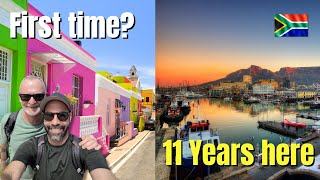
A first-person travel-advice vlog from AskRobAnything (11 years living in Cape Town) offering 10 practical tips for first-time visitors. Covers money and budgeting, safety rules and transport (Uber/Bolt), phone/data options, eating and markets, healthcare/insurance, visas/vaccines, accommodation by neighborhood, and timing/weather tips (Table Mountain, wind, UV). Emphasis is on sensible precautions, local costs, and planning Table Mountain early in the trip.
Questions this video answers
23.5 rand to the pound.
10–15% for good service.
About 25,000–30,000 rand per month (about 40% more if a couple).
Approximately 50–150 rand per journey.
91 rand (speaker's city bus example).
Chapters
Are you thinking about visiting Cape Town? Well, after us going for 11 years, spending extended periods of time there and buying a home there, trust me, we've made every single mistake. So today I want to share with you 10 tips that you should know before visiting Cape Town. And trust me, number seven could literally save your life. I'm going to talk about the pound eight dinner, how to alleviate any of your safety concerns, and how to ensure that you don't miss Table Mountain because of the winds or the infamous tablecloth fog. And also at the end, I'm going to share a bonus tip that's really going to help with your planning. So let's jump in and get started. Now, Cape Town feels really cost effective, especially as a European or an American, until you only visit tourist hotspots and pay foreigner prices. As I said, things in Cape Town are typically much cheaper than what we would pay in Europe or North America, Australia, New Zealand and so on. Typically you can expect to pay 40 to 50% less. For example, I've had amazing dinners that cost eight pound. That would have cost £50 pounds in Europe. And this is largely because of the weak rand. So for example, in the UK right now there are 23.5 rand to the pound. Now, everywhere you go will accept credit cards. And you'll be surprised to know that banking and finance in South Africa is a lot more advanced than it is in many countries like the UK or the US in terms of tipping, you should expect to pay 10 to 15% tips. But it's not like the US where everyone expects you to tip them. So tip if you have a good meal or a good experience. And if you're spending extended periods of time in Cape Town, then bank on having about 25 to 30,000 rand per month and 40% more if you are a couple. And as I said, you don't need a ton of cash, but it is worth having small denominations such as 1, 2, 3, 5 or 10 rand. So you can tip. For example, the car parking guards, who are guys often in yellow or a green vest that are walking around car parks and they're actually looking for after your car and that, you know, they're authorized a lot of the time and they're just trying to make some money in an entrepreneurial way. So have some small change to give them and don't be afraid of them. And when it comes to paying things on your card, always make sure that you pay in the local currency, that's rand rather than yours, otherwise you'll get a terrible exchange rate. We Use our Revolut card and we wait for when the exchange rate is good in favor of the pound and then we transfer some money into our Rand wallet. So we've always got Rand preloaded and you can then just use that as a local credit card. Now saving money is great, but safety matters a lot more. And that leads me on to tip two. Now undoubtedly the most common question I get asked all the time on these videos or when I'm talking to people about South Africa is they say to me, yeah, but Rob, is it safe? And by and large the answer is yes, if you are sensible and if you stick to those well trodden tourist routes and the busy places such as the Water Cant, Green Point, Sea Point, Camps Bay and the VA areas. So let me share with you some of my common sense rules. Number one is only walk around and walk around on your own during daylight hours. And in the same vein, don't walk on beaches late at night because beach muggings can happen even in the safe areas. So when it gets dark, use Uber or Bolt to get around. Now the reason I prefer to use Uber and Bolt and by the way, they are super cheap and they are everywhere so you're never going to wait very long for a taxi. But the reason why I use them over just picking up a taxi cab is because you know exactly how much it's going to cost. You can see the route that they're going to take and they're not going to screw you. The one time we got a taxi from the from the VA to Camps Bay, the taxi driver could tell that we were a tourist and he took us on some convoluted route. Now we knew where we were going so we said to him, why on earth are you going this way? So that's why we always use Uber or Bolt. So make sure you've downloaded those apps, you've put some credit or you've loaded your credit card onto the apps before you arrive in Cape Town. Now if you're driving, then make sure you always lock your doors as soon as you get in the car, keep your windows up and do not leave valuables lying on the seat. And also one tactic people often use is they try to flag you down. They're like pointing at your headlight going, stop, stop, you've got a problem, please don't stop if that happens because they may well be trying to rob you, especially if they can see a mobile phone on display like you're using it as your sat nav. Or I also suggest that you avoid the City bowl and Long street areas late at night unless you're walking in a group. If you need to carry stuff with you, like a wallet and phone and so on, I suggest using a cross strap bag where you can keep the bag in the front of you. And of course, don't walk with your wallet or your phone sticking out your back pocket or even wandering around with it in your hand. And if you are out late at night, then share your live location with someone so they can see exactly where you are. Now, I'm not saying all of these things to scare you, because let's face it, these are just common sense things that you should do in your own country, let alone alone in Cape Town. And a few other essential things to consider. If you are swimming on the beaches, make sure that you are swimming between the red and yellow flags and that there are lifeguards around because rip currents are real. And so therefore, if you go to an empty beach and think, this looks amazing, be really careful if you're swimming in the sea. But to be honest, you're probably not going to swim in the sea. You might see these beautiful pictures of Camps Bay and a beautiful ocean, but remember, it is the Atlantic Ocean and it's bloody freezing. Now, that doesn't mean that people don't swim in the sea, because you do see people in there, but you just need to be braver than we are to go into very cold water. And if you are going to swim, then swim around the Moosenberg area because the waters are warmer there. From an LGBTQ perspective, we have always found Cape Town really safe. In fact, South Africa was one of the first countries in the world to legalize same sex marriage. So it is a very open country. And obviously areas like Devoltican are kind of the gay area. But, you know, we've never had a problem. That's not to say that James and I walk around hand in hand, but we have never had any issues anywhere we've gone in Cape Town or indeed outside of Cape Town in other parts of South Africa. Now, if you do need to call the emergency services, then you need to dial 10, 11, 1 or 112 from your mobile service and that will get you in touch with the police. Now, since people are always saying, hey, Robert, is it safe? Leave a comment down below and let me know your safety concern and I will answer every single one of them. Now, the first thing you're going to want to do when you land is make sure you've got some data on your phone. So that you can use your phone, for example, to book an Uber. And that leads us to tip number three, which is SIM cards or ESIMS for your phone. Now, mobile phone shops are plentiful. You can find them at the airport, you can find them throughout Cape Town City and I think Vodacom and MTN have the best coverage citywide. So you can easily just pop into one of their shops, ask to buy an ESIM and it won't cost you too much money. Or you can use a global ESIM like Air and Low for your phone. Or if you're lucky like me, I'm with Vodafone and I have a plan that allows me to use my current data in South Africa without paying any extra charges. I think I can use up to 25 gigabytes per month. So do check your plan before you leave because you do not want to end up with massively high costs of data. And so if your phone isn't going to work locally, then make sure you've turned off your roaming data as well. And one thing I've learned where I've had to go through the process of opening a bank account and buying the home and everything is having a local phone number really helps because sometimes you need to receive those one time passcodes and you can't get them to a foreign number. So there are some reasons why you might want to actually buy your own local number and it isn't expensive and you can easily switch using your ESIM between your home number and the local number as well. So now we are connected. What about some of those other really important things like drinking water, food and what's that thing where everyone seems to put ice in their wine in South Africa? So first of all, city tap water is completely drinkable, so you don't need to worry about drinking from the tap or cleaning your teeth with water. But if you are concerned about that, then bottled water isn't expensive. And the ice in the wine thing, well we, when in Rome do what the Romans do, we always ask. Well, you don't even need to ask for it actually you'll get given a glass of wine, your Chenin blanc and you'll get a glass of ice as well with some tongs. And people put ice in their wine just to keep it cool, which I think is a great idea as long as you don't put too much in and water down the wine. So we certainly always do that and give it a try. But let's talk about the really important thing here and that is the Amazing quality of food in South Africa. The thing that really surprises the so many people when they order their first meal. And of course you can expect to pay something like 8 to 15 pounds for a really good meal with a good bottle of local wine. The same meal in the UK would cost you 50, 60, 70 pounds, and I bet you it wouldn't be as good. You're going to get amazing steaks in South Africa, amazing fish in Cape Town. And of course you need to try some of the local food like the baboti, which is like a spice mincemeat bake boros, which is a sausage. And of course you must have a braai while you are there. Really common. And a bride is basically a barbecue. Now, if you get a chance, make sure you visit one of the amazing markets where you can sample all sorts of things, from local crafts to amazing artisan foods. So you can go to the old biscuit meal, you can go to Orangutat City Market. Sorry, if I'm butchering my pronunciation. I can never say that. Right. And you can also go to the Bay Harbour market as well. These are local markets around Cape Town and there are ones further afield as well. And if you do want to do wine tasting, which absolutely something you have to do while you're in South Africa, they are amazing. Make sure you book it in advance and try one of the wine pairings where you pair it with cheese or chocolate or you have an amazing food board with it as well. Now, when ordering food, language will not be a barrier. Now, English is widely spoken, so how's that will go far? And dunky is a way of saying thank you. South Africa has 12 recognised languages, the 12th being South African Sign Language with Afrikaans, kosher. And I apologise for my pronunciation of that. I'll put the correct spelling beneath. And English being the three widely spoken languages in Cape Town. So now let's get you around the city smartly and safely. So, as I said, Uber is reliable and safe, or you can use Bolt, which is another version of Uber, basically, and expect to pay anywhere between like 50 and 150rand for a journey. Now, if you want to go a little bit further afield, like to the Winelands or down to see the penguins in the Cape Peninsula, then hiring a car is advisable. And if you're going to do that in peak season, make sure you have done it in advance. I think driving in South Africa is really easy, but if you're driving in Cape Town, you do need to have your wits about you. It's not a difficult city to drive in, but is sometimes a bit like an obstacle course with cars coming from all directions. But by and large, South Africans are pretty compliant when it comes to obeying the rules. Unlike Italy where we've just come back from where the drivers are absolutely crazy and no one obeyed any rules. So in South Africa they drive on the left hand side of the road, which is the same as the UK and Australia and New Zealand. But if you're coming from Europe or from the US then obviously you need to factor that in that you'll be driving on the other side. But I always just think to myself, as long as the driver stays in the center of the road, then you can't go wrong. And that's how I make sure I don't end up on the wrong side of the road when I am driving. For example, in Italy now you'll see my city buses all over the place. And actually getting from the airport into Cape Town, my city bus is the cheapest way of doing it. But you can also take an Uber and that's going to cost you around 150 to 200rand. Whereas my city bus is 91rand. So a few tips about getting about in Cape Town. As I said, everyone drives on the left hand side of the road. There are lots of speed cameras. I've actually been caught by speed camera before and they are enforced. So be mindful about your speed limit. And of course don't drink and drive. I've been stopped more in Cape Town than I have anywhere else normally to check my insurance and the car rental registration. So never been breathalyzed. But if you are driving in Cape Town, make sure you carry your driving license with you at all times. And if you're going on a hike then make sure you've pinned your car location so you can find it when you come back. I've lost my car a few times before because I didn't follow that tip. So I'm really. I've got a really bad memory. So when I go into a big multi story car park I always take a picture of my car and the location. And most car parks have got colors or alphabetical numbers, letters and numbers so you can find your car again. But I have a bad memory. So take a picture of your car so you don't lose it. And I think that's particularly true if you've got a rental car because most of them look white and they all look the same. Now be mindful about rush hour getting into and out of Cape town on the N1 and the N2 and rush hours between about sort of 7am to 9am and probably 3:30 to 6pm Traffic can be an absolute nightmare then. So just be really mindful about that. We always make sure we leave if we're going out of Cape Town, that we leave after rush hour in the morning and when we're coming back in the evening, the traffic's going the other way because all the workers are trying to get out of Cape Town. So it's not too bad. But it will be busy if you're leaving in those rush hour times. And if you're going to the beach today, to one of the popular beaches like one of the Clifton beaches or Camps Bay, then get there early because parking is free. But it will be really difficult to find parking. What you'll see is lots of guys sort of patrol a certain stretch of road and they might be pointing to a space. Again, they're not trying to mug you, they're just trying to help you. And they expect a few rand in return. And tip number seven is one that I wish I'd known before I flew and little did I know how important it would be. Now, healthcare in South Africa is excellent, but it can be expensive if you don't have the right cover. So make sure you've got the right travel insurance. It covers you for South Africa and it also includes things like evacuation if needed. Now, if you followed this vlog before, you know that last year I used my travel insurance while I was in Cape Town because I had really bad toothache cut. Long story short, I ended up having my tooth removed. An expert dental surgeon because the root had cracked and the experience was excellent and I was able to claim back on my insurance. In fact, I'm starting the process of having an implant put in where the tooth was removed when I go back next month with the same dentist that did the extraction and it's going to cost me £450 versus two and a half thousand pounds in the UK. Now, I was able to claim for the extraction and all the pain relief and the antibiotics. Obviously I won't be able to claim for the implant, but there is a big difference in price between the UK and South Africa and indeed medical tourism is on the rise there because their private medical services are so good. Now pharmacies are really easy to find, they're everywhere. And if you have repeat prescriptions, then make sure you bring them with you. Now, Net Care and mediclinic are two of the big private Hospitals, God forbid, if you need to use them, but they are very, very good. I have friends that have local policies in South Africa. They go every year and they have full medicals while they're there doing all the things that they need to check their health again, because it's much more cost effective to do it there and better and faster than it would be in the uk, especially if you compare that to the NHS or even private medical cover in the uk. So now it's paperwork time. So we're talking visas and vaccines. So first of all, most UK, EU and US visitors get a 90 day visa upon arrival. Now, you don't need to do anything, no paperwork to fill in to get that visa, they'll just stamp it into your passport and I suggest that you take a photo of that and you keep a copy of your digital passport on your phone just in case. And when, if you're visiting just Cape Town or the Western Cape area, you don't need any kind of inoculations. Yellow fever is only required if you come from an area where yellow fever is endemic. And you don't need malaria, unless you're going up to Kruger, So make sure you've checked that before you come and you've got your malaria medication. If you are going to a game reserve up north in Kruger or some other areas, but certainly in Cape Town, the Western Cape, the Garden route, you do not need any vaccinations before you arrive. So now you're in Cape Town, where on earth should you stay? So let's break this down by areas. Airbnb and hotels. First of all, Airbnbs are everywhere like they are in so many major cities, and expect to pay anywhere between 800 and 3,000 rand per night. And that will cover you for a room or even an entire apartment in the popular areas like the City, Boulder, Cant, Greenpoint, Sea Point and the VA area as well. Now, of course, the prices will vary based on location and season, so do do your research and if you're there in the height of the season between December and mid February, then make sure you book in advance because you will find very limited accommodation and high prices for a hotel. You're going to pay somewhere between 1500 and 5000 rand to stay in a nice hotel in one of the upmarket areas or one of the beach locations like Camps Bay. Of course, if you're staying in some other areas, you're going to pay less than that. And again, prices vary based on the season. My advice is decide which area you want to stay in first of all and then decide what kind of accommodation you want to book and then research the accommodation and book it as early as you can. Now, if you're a first time visitor to Cape Town, where on earth should you say? Well, I suggest that you stay in the Green Point, Sea Point, Camps Bay area. Or if you want to be the shop near the shops and the restaurant, stay down in the VA where you will find some very swanky expensive restaurants. But you're right in the heart of things. You don't need really to walk very far. Now you could stay in the City bowl area where there are lots of cafes. Or if you want to go further afield, you might stay in Stellenbosch or Franschhoek. But either start on end your trip in Cape Town and then travel around from there. I think you can do day trips very easily to Franschhoek in Stellenbosch. But of course if you're wine tasting, you don't want to be driving. Finally, timing is everything and nature has a few rules. So let's discuss the best time to go. So I think September to November is a real sweet spot time. It's before everything gets crowded. If you want to do whale watching, you're more likely to see the Wales at that time. December to February is a really buzzing, busy time. You're going to find more people on holiday. Bear in mind that their holidays over December to January are their summer holidays. And so there are a lot of people in Cape Town. There are a lot of people from elsewhere in South Africa like Joburg coming down to spend their summer in Cape Town because the climate is better for them. Although do be really mindful that it can be really windy, especially if you're staying in a place like Camps Bay. You see all the pictures of it looking absolutely beautiful, but the truth is that most days are really windy and you're seeing those kind of Instagram videos on the really calm days. A few other things to bear in mind. Easter weekend is really busy with lots of local travel. The Cape Town City Cycle Tour happens in March and brings about 35,000 cyclists into town and it gets really, really busy. In fact, that is a weekend that I always make sure I'm away because not only are all these people here, but all the roads get closed as well. Now, if you happen to be in Cape Town on the first Thursday of the month, head over to Bree street and Long street because all the galleries open their doors, lots of people are out and about and it's a really kind of Buzzy, exciting time to be there. Cape Town, as a big city has lots of other festivals happening, like the Gay Pride Festival. So do your research before you leave to know what's going on, and then you can decide if you want to be in Cape Town or, like me, when the cycle race happens, you want to escape. Let's just talk about the sun and the wind for a minute, because UV is really high in Cape Town, so even on a day that doesn't look too sunny, make sure you're bringing high factor sunscreen and you're putting on every day as a matter of course, because you don't want to ruin your holiday by ending up being sunburnt. The Cape Dr. Wind can close the cable car going up to Table Mountain, as can the infamous tablecloth fog that covers Table Mountain often and cancels all the cable cars. So my advice on this is to do Table Mountain, which should absolutely do, because it's amazing. Do it as early in your Cape Town trip as possible and buy your tickets online, because otherwise you're going to queue twice. You're going to queue to buy your tickets and then you're going to queue to get in the cable car. So save yourself at least one queue and buy them online. And if it does happen to be closed, then you can just move your booking to another day. But if you do it early in your trip, you're more likely to see it. Whereas if you say do it on your last day and the winds or the fog close Table Mountain, then you kind of are a bit screwed. As I said earlier, the Atlantic Ocean is the ocean that surrounds the Cape Town area, so the water is really cold. If you want to swim, go to Muizenberg or to the Force Bay area. Otherwise you might well need a wetsuit. Or, like us, just not going beyond dabbling our toes in there. So, quick thoughts on where you should go. So, as I said, do Table Mountain early in your visit. Make sure you go to Cape Point to see the penguins. You might want to go right the way down to the base of the Cape Peninsula. You're probably going to want to visit Fransch and Stellenbosch for the wine. And you can do that as a day trip, as I said, or you can stay there for a few days. Make sure you go to Kirstenbosch Gardens as well. They're absolutely beautiful and well worth a visit. And then just take some time to walk around. And obviously a lot of people are going to head down to the V and A. Do your research on restaurants, because you don't want to necessarily eat in those kind of touristy, expensive or chain restaurants because you won't be experiencing the best of Cape Town. And remember that Cape Town has a massively good coffee culture, so you are going to really struggle to find a bad cup of coffee and they are so much more cost effective than what it would cost in the UK. So there you go. 10 tips that I wish I'd known when I first visited Cape they would have saved us a bit of grief and helped us be a bit more organized and strategic on our visit to Cape Town. So what tip surprised you the most? And if I missed a tip, do leave a comment to let me know if you have a tip to add. And if you did find today's video useful, then please do give us a thumbs up and make sure you've hit the subscribe button so you are alerted when each new video goes live. It doesn't cost you anything to do that, but it really helps us and the algorithm show our videos to more people just like you. But other than that, this is Rob and James who's working upstairs and we will see you next week.