Black Women Business Podcast with Thuli Mgwebile on Youtube
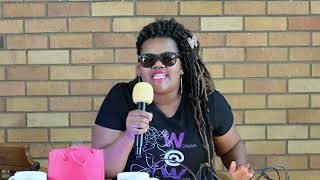
Live podcast episode (20th episode) hosted by Nokuthula (Tuli) Mgwebile where she explains leaving a corporate engineering career to start businesses. She describes starting very small (running an office from her mother's garage), learning procurement/tender paperwork, pivoting to photocopying and printing booklets for a nearby college, obtaining NYDA funding after multiple applications to buy printing machinery (quoted ~100,000), expanding to a national company with chemical and energy divisions, employing about 35 people and servicing a 17-region cleaning contract. The episode closes with audience Q&A covering challenges (self-doubt, funding), registration advice (start as sole proprietor then register when scaling), intellectual property guidance, hiring practices, diversification, reinvestment and persistence.
Questions this video answers
2016
About 35 people
Four attempts (approved on the 4th)
About 100,000 (currency not specified)
17 regions (national contract)
Chapters
Thank you. Thank you, everybody. Welcome to my podcast, Black Woman Business by Tuling. Today we're actually having our 20th episode. It's very exciting for us to be in this type of setting because usually I do the podcast in my own space privately. I've never ever had to sit in front of an audience. So I think this celebrates our very big occasion of reaching the 20th episode. Please, guys, give me a round of applause. Thank you so much. I'm just going to get a few things out of the way before I dive straight into it. First of all, I don't know if I'm offending anyone by having my shades. Like I said, it's very unusual for me to have cameras and things when I shoot my podcast. I just do the voice, I just do the visuals. I don't do the visuals. Sorry. And worst of all, I've always grown up a very skinny person. And then after Covid, something happened and I just, I just, I just became like this. So I'm still a little bit body conscious, but I'm getting there. Firstly, I don't want to just start dumping all business information with you. This will be very much informal. I will do a delivery which will be about 20 minutes. And then after my delivery, you guys can come out and start asking questions and then we can have a good discussion about it. And then also, first up, I will just introduce myself so you know exactly who you're talking to and also what qualifies me to talk about business. So like I said, I'm tulum Kwebele. I'm 38 years old. I'm a nuclear technician by profession. That means I studied chemical engineering and then I went on to study industrial engineering as well. So I've been very, very fortunate. I've worked at some production plants at Petrosa. I've also worked at Chevron, the refinery, and also I worked at Kubrick, the nuclear power plant. That's where I received my training as a nuclear technician. I've really enjoyed being in corporate, but I found that it has become very demanding in terms of my time. I started working shifts and it just became a rollercoaster ride where I had to start working more, more hours, if not more hours, study further, more training to get to more money. It was just a never ending cycle to the point where the people that I started work with now have left their families, go overseas, more money. It's just a never ending cycle. And I forced, I did foresee this. And then I said to myself, I can't. This is not the lifestyle that I want to live. I really, really want to live a more relaxed life, a more abundant life. What was my biggest stress and made me ultimately start a business was that I really wanted to give more and I couldn't pay my bills. Like, I still was in trouble with money. No matter how many hours I still put and all the overtime, the shifts, still my financial needs are not met. So I said to myself, there has to be a better way or another avenue at least. And then I, I went into the business world. It was very, very tough, especially for my parents and husband to understand, because obviously to them, I'm leaving a very cushy job and. And now I'm gonna start begging people for money because that's how family thinks of it. You know, right at the beginning, you studied, you did all these difficult courses, and now you want to tell us you want to go sell ice cream. So what's your problem? Basically, that's my long and short. That's my story. I love that in this 20th episode, we going to be talking about how to become your own breadwinner. Very interesting topic. Actually, I was summoned to this topic so that it fits in to the whole idea of what we are trying to do today at this podcast event. So I'm going to be speaking under a few headings. This is how I usually do this. I first will explore what is a woman? The nourishing aspect of a woman. Your needs, your priority, enough is enough, start small, your light element of equality in the world, and practically what to do. Okay, so I want to bring it back to what is a woman? Because now we're going to be going back to being your own breadwinner. So when I think of a woman, I think of nourishment, I think of warmth, I think of security, I think of a provider. I think of somebody who's able to multitask. I think of somebody who's able to give love and somebody who's able to make the home a warm and friendly place. That's what I think of when I think of a woman. I think of somebody who's got an intuition. I think of somebody that has a sixth sense, somebody who always wants to protect, somebody who is beautiful, somebody who is soft, who is light, somebody who is very intelligent, very knowledgeable, well rounded. That's what I think of when I think about a woman. And these things, these things lead me to the nourishing aspect of a woman. The nourishing aspect of a woman that I'd like to cover is, you know, we as women, most of the times, we know what is needed in the home. We know what is needed by people that we love. And sometimes these things are our biggest priorities in our list of things to do. But I want to remind you of a place where we've always, where we, all of us have been as women, where you feel like if you send somebody to go and do something, they won't do it as well as you would, or sometimes they will even forget because to them it's not a priority. You know, it's just a priority to you. Not that they don't care or they don't want to. Maybe sometimes they don't want to, but they just don't want to give it that effort that you would give it. They don't want to give it that attention that you would. So it leads me to this focusing of, of the need. Focusing of what is really, really wanted and what needs to be done. So my question here is, when do you say enough is enough when it comes to that? You know that if somebody is the is doing your errands for you, when it comes to finances, they are the ones that are providing these finances. Obviously when you say they must buy school shoes for your son or your daughter for them, that's not the focus. They are thinking something else. Maybe to them, you know, going to the movies is more important. But you know that need when you're lying in bed and you start thinking about these school shoes that you really want your son to get, but you can't go yourself because you don't have the money, the power, you don't have the bread actually to make it happen. So I want to ask us, when do you say enough is enough with that so that you can come to a place where you have a freedom of money going into your own bank account, labor of your own hard work, sweat of your own going into your bank account and you're saying, iman, wait with the electricity, wait with everything else, I'm going to buy my son school shoes. Now you have made it your own. You have actually grabbed your own power and you've started your own stance. Because now you are the one that comes to decide. Because you've got the power, You've got the money. This is all in your hands. So guys, what does it have to take for us to want that for ourselves instead of always waiting for another person to do it for us? Giving instruction, waiting, begging, be nice when you don't even want to be nice to this person because you need it, you need that 50 rent that he's gonna give. When are we gonna take it upon ourselves to do it ourselves and say now I have the power. This is my money. This is how I'm going to decide how to move things around here. Guys, sweat of your own labor these days with jobs it's very difficult to get a job. It's good to try. Others are very, very fortunate to get jobs. But if you can't, you need to start something. If you can't get a job, you can't just sit and wait and beg and you know, just be a walk over because people mistreat you when they see that. Or ah, this one. Always needing stuff. Always need. No, no, you know, it's a very internal thing. It's a very personal thing. It's a very personal choice that you make and you decide, no, this time I'm going to do things my own self and I'm going to do it in a small way. It's fine. I will start very, very small. I think. Sorry. That is the most empowering, empowering feeling to come to that decision already is, is the most empowering feeling. So I just want to say it doesn't have to be a big thing that you start. It doesn't have to be a big thing because remember when you're starting the first few steps it's mainly to encourage yourself to get to the better place. And guys, when it comes to this thing of business, persistence, persistence and keeping going, consistency and also just being alert and very alert. When I say alert. If you're having a problem where you are staying, you're having a problem with, what can I call it? Just making a typical example of if you have a dog or you, you don't, you don't have anybody to walk your dog when you're at work or whatever. Now there is a problem to solve. You know, if you don't have anybody looking after your child, you, you're not sure like where to keep them when you're going to work. Like that is a problem that needs a solution. Guys, we don't have to do supernatural things when it comes to business. The solution to a problem is a business. A solution to a problem is a business. So I think if we can try to bring that forward and try to not be too super trying to think of two supernatural things or sometimes, you know, just doing the most simplest thing can grow you to the next step and to the next step. So I think that is also very important. Another thing is that, and I quite enjoy this one, this is Why I enjoy also helping people with their businesses or whatever that we do. You know, all of us in the world, we bring a different element. We bring a different texture to the room. We present something unique, each and every one of us. It's like a fingerprint. Everybody has got their own light, and everybody has got their own way of presenting themselves to the world. So I need us to start thinking of when we come out to the world and we, you know, other people have done it before. Superstars. And I may made a typical example the other day to my brother about Beyonce, saying that, you know, Beyonce didn't wake up and everybody just knew her and she was just, you know, a superstar. There was a day when she was 4 years old, she was 5 years old, she was 16, she was 20 that time. She's cultivating her light. She's being persistent. And if I think we can come to the realization that all of us contain some sort of light because we all bring different elements to the world, we need to shine a spotlight inside and make sure that we bring out to the world what we've come to do. Our purpose in the world really matters. And whatever that we have to give, nobody else can give except for you. So if you decide to sit on it or you decide to not do anything about it, you are depriving yourself and you are depriving the world of what we could expect. So basically, that is my stance around that. But just moving on to be very, very practical now on the nitty gritties of trying to provide bread to yourself and being a breadwinner for your own self. I would like to say if there's a problem, like I say, the solution is business. If you. You, you want to transact and started. I started very small with my business because I left corporate in 2016 when I started my business. And I thought to myself, I'm a bit worried because I. What I want to sell is not that common. Like, my knowledge is of plant production, valves, pipes. Like, also, who's gonna want to buy those stuff? Like, what am I gonna do? You know, how am I gonna sell these type of things? And then I. I sprinted into a. A wheel of action where I asked my boss, can he please put me into the procurement department? It was an unusual request that they lend me out to the procurement department because I wanted to see the process of tenders. How do tenders go? Like, what do you actually do? What is this fuss about the paperwork of tenders? Fortunately for me, my boss agreed. She load me to that department, then I got to learn about the paperwork, how be certificate, registration of a company, tax clearance and so forth. So it took a long while because obviously now I had to completely downgrade my, my life. You know that sob story that we all have, losing the car, losing the house, because obviously you can't keep up with all those payments. You don't have a salary anymore. And also the self doubt that comes with it, that whole roller coaster. So we ended up moving into my, my mom's house in a small town called Mamasbury in Cape Town. And then we moved into her house. I still ran my office from her garage. And then eventually we opened an office which was close to a college. But then college students kept on coming to our office to ask for photocopies. And then when they were asking for photocopies, I'm asking like, what is the problem? I started charging them. Then I started charging them one run for photocopies. Then I realized the college also struggles to get photocopies for exam papers and stuff. I went and approached the college and then we started making books for the college. Then I approached NYDA and asked them if they can help us with machines because we were working like from very small printers us. NYDA put in an application, was a very long process. But eventually we got big, big machines. We were able to put together booklets and exam books. And then we were servicing the college. And then our train started moving and it started moving until we were able to now open an office in Johannesburg. After opening the office in Johannesburg, now the areas of expertise in our business is it chemicals and energy. So in the energy sector, we supply technical components. The ones that I actually started off with, we are actually supplying them now. We're not just wondering like when is the next transaction going to come in. And then basically the company is now national. We also have, under the chemicals department, we have a cleaning wing. We service 17 regions in one of our contracts nationally. So what I'm trying to say, guys, start small, start anything you need to start. You need to start no matter how small. Because can you hear my story, guys? The turning point was when we moved to an office that is opposite the college. My intention was never to sell photocopies, but people are knocking every two seconds they want a photocopy. Want a photo? Okay, no, let me charge you 2 rent. After charging 2 rent. Ah, no. Sometimes we would have even an Internet cafe where they start doing their assignments. But it just got started getting too much because you know how students are, they want to submit later. They all want to Come, they all want to come like one time and then it's a frenzy. Anyway, so that was the turning point. And then we started getting worthy contracts from the college on their books. And because the college also outsourced their work to places around the country. So we used to print books for places also around the country and make sure of the delivery, you know, so we didn't go in there wanting to start like that, but it eventually falls in place once you have started. So basically guys, I really want to encourage you. You want that feeling of the freedom of owning your own money, having your own power, making your own decisions. You don't want to always be begging and asking the next person and smiling if you. If you don't want to smile. So it's a very empowering feeling. So we employ about 35 people. We've got five people in the head office. Both my husband and I work for the business. So it's been a very exciting roller coaster. And yeah, basically that's it, that's my delivery. I don't know if you guys have any questions or anything that you'd like to ask. I see a hand.
My name is Mangele. So I'm like, I have a question for you. It's based on you actually. So were there any challenges during this business of yours or during your life.
Actually come against me?
Were there any challenges?
Oh yes, definitely, lots of challenges. Firstly, when, when I had to start the business, I had to completely remove myself of that thought of what are people gonna say when you start losing your things? You know, when you start shedding all the fancy cars, the things that you had when you were employment. But within the business itself, the challenges is definitely self doubt for me was the biggest one because we have these conversations which are so self defeating, you know, and it's like self mutilation because you are hurting your own self and you're not going for the big things. And as soon as I realize that trait, it's. I'm constantly working at it. Money, definitely the biggest challenge when it came to money, being able to fund transactions. Sometimes I got myself up to the point where I talked myself into working for a big deal, speaking to a very big business. And then when we land the deal, now we don't have money to actually carry the deal. That one has been a big challenge, but. But we always overcome because you will go out and source funding, speak to people. When I reached that challenge, I actually had to go back to my ex boss and ask him, who is now retired white guy. Gary Wilkins. I asked him, I have this big transaction and I need your help. He said, okay, Tuli, I can help you with a portion of that. Then you can come back and use the money again and finish the the project. And that's what we did. So you go all out and make things happen. You overcome with challenges. But the biggest one by far, smile for me was self doubt. There was another hand here.
Hi, my name is Richard. I have a small business, right. I started it last year, July. So my business about decoration and decor. But my plan was to hire. Because I come from a small place, most of the things are not there. So I thought like, okay, since they're doing parties and they love going out or even events too. We plan events and all that. But the thing is that I don't know what's happening. You know, sometimes you do get a geek or sometimes you do get somebody, but there's this thing that is holding back. Like my question is, how do you survive? How do you keep on going?
Bridge, I get your question. We all face it. It's not like every morning I'm ready to do business, far from that. And it gets very difficult at certain points. But how I overcome that, I always look for something bigger. I find, I don't know, like my sadness, it makes me so scared. It makes me so scared to think that I'm not going to be able to make my. You must remember this business is our family legacy. My husband is working in it. This thing can't fail. Otherwise my kids can't eat. You know, so when I start thinking of those things and it starts to scare me and then it just triggers a reaction, you know, when you think about the situation you are in now, Bridge, you look around you like, is this my how my life is gonna be? Like, am I gonna die living like this? No. Then you need to go for something bigger. You need to go social media, do your advertising, do Instagram for your business, do pictures, put it on your status. You know, just give yourself a kick because nobody's gonna do it for you. She already said when she was speaking here, nobody's gonna wake you up, Nobody's gonna do it for you. So when you start to feel all sluggish, ah, this thing, look at it, it's failing anyway. So what am I doing? You look around and you think, but is this how things are gonna be for me? Is this how I want things to be? But let me tell you, Linda, I've got days like that. But like I say, I always go for something Bigger. Something bigger. And I try to line up my options so that when I don't get a certain gig, I don't feel like yo, now it's over. I don't want to feel like that. So I will line up the next one and say okay, so Bridge doesn't want maybe sm. Let me speak to Smart. See what about when we spoke about this. You know, always line up a lot of gigs in one go. Do the social media things. We love pictures on social media. The status also people want to see what you up to. You know, also go around with people that do the decor and do the, the things and just be around, just be around that energy so that you keep on encouraging yourself.
All right, thank you.
Hi, my name is Takani. Okay. I want to ask how do you protect your intellectual property? Like for example, like you find yourself like you have a lot of ideas but you don't know whom to share with those ideas because some people take advantage of your ideas and make it theirs. So going forward, how do you protect your intellectual property?
Okay, so with the IP issue, I've got a friend who always preaches to me and she works in those type of department. When you have something like a logo, there is a certain avenue of registering or if you have a certain invention, there is a way to protect your intelligence and there are departments that protect your intelligence. But when it comes to an idea. Sorry, I just want to see her. When it comes to your idea, only talk about my idea for people that are going going to be part of it. You understand, if it doesn't concern that person, why am I sharing this idea? So, and then also another thing. Obviously the people that you are now pitching to, they might steal your idea. Now you want them maybe to fund your idea and you are afraid that they're going to take it and make it happen somewhere else. That unfortunately there's no concrete answer to that one. But my true belief is when people take your idea, they will never execute it the way that you would have. Also I always tell people when I walk into a room, it's because it's me, you know, I mean, nobody can copy and paste. Tuli, even if you're going to want to say what I'm saying, you're not going to say it the way that I would. So it's the same for everybody. You are you and your delivery will not be the same as the next person.
To the questionnaire. Bridget. Bridget. Hello. I want to give you some few tips. I'm into decor and briefly what I can say to you is that I started being in construction but at the same time having that area, the decor thing. But it happened that my husband got involved in an accident and I couldn't. What I want to say to you is that realize something in you while doing deco, there's something that you also good at. So that when for instance in your case, when the deco is not working, it's not.
It's you.
You don't get get work or whatever, you can switch to that. I can tell you now I'm doing three things at the same time. I started construction here and there. When a person needs something, I. I can help here and there and get some money from that. But I'm not that much on on it again. You can see even the age doesn't also allow anymore. I'm doing deco, which I started after realizing that I can no longer do construction because of the condition of my husband, my late husband. Then I started deku. Along the way there comes a Covid. And then I started baking. Because during COVID you could not cook at the funerals and whatever. I knew I know cookie. I love cooking. I loved baking. Then I started the two at the same time. Right now, even if I don't have any weddings or funerals or parties or whatever, but once, twice or thrice in a week, I get orders the baking, I bake, I supplement the baking, I get orders the cookie, I cook, you know, so look at something you cannot love decor without. I think if I look at you, you can know how to cook. They go parallel. One thing for sure. So cooking, baking and deco is not for the faint hearted. So look at that. So that if this one doesn't work, the other one should at least supplement.
Yes. Thank you so much. Thank you so much, Ma. Thank you. And really, just to top it off with Umama's comment, it's very good to diversify, guys. Diversify or die. Basically that's the slogan. Diversify or die. There's a reason why my company has three departments. And the reason is just like Mama says, we juggle between this and we balance that. Because I've learned like from very eloquent business people. There was one friend of mine who was very successful doing aeroplanes and she was doing a stellar job. She was milking it. And then something happened with her licenses guys, they like show over because she can't do much after that. Then she had to start opening other avenues. But obviously because we are business people, we are start. We are the ones that start these things. Most so we can always start another one. So. Okay, next question.
Hello.
Yes, my name is Elizabeth. Your name is Elizabeth.
Okay, my question is, when I start.
A business, should I go with the.
Registration first or should I start with my business then the registration after?
Yes, Elizabeth. What? The thing is with the story of registration, most times we like to hold ourselves back. We know we use registration as an excuse not to do anything. I need to register. I need to register. Like I don't know how many times I've heard people say that you don't need to register first, just start. There is a form of business called a sole prop. Sole proprietor. So that means that you are running your business with your own personal bank account. Everything is still normal when you're starting. It's good to do that because sometimes to run a registered business, it has a few costs. But while you're still finding your feet, just start, you know, just start your business and then after a while you can register your business. The reason why you are registering your business is because now you want to go into a bigger clientele. Firstly, bigger clientele, they're not gonna knock in your door first. You gonna set the standard by having your registration, your tax clearance. You are lining up now you're putting a garage before you have a car. You understand? So when you are now building this thing and making a formation of it, you're making your garage, you're making it two door for two cars. Or maybe you don't want to be too AMB Ambitious, you want to do firstly one, one door. Because before all of these things happen, you need to set the pace. Because comes the time when, when somebody says, listen, we need your registration papers, we might be able to find your business. You are youth owned, you're a black woman, you know, we want to move forward with you. What are you going to do now? Start running around for registration papers? It's too late, you know, it's too late. So it's good to set the platform and the pace. But if you haven't started your business, you just need to start. Don't wait for that day where you register. Don't wait for that day. Registration is just to set a different pace. And saying you want different, what you call transactions now, bigger transactions that are going to make you really eat.
So another one.
How long it took you for NYDA to sponsor you? It took a very long while. So I applied at nyda. First application, they declined it. They didn't understand what I was selling. I was selling valves. Second one, it went quite far. But they came over to my mom's house. I actually remember in the garage, they were looking for the valves. They are like, you don't have valves. But I said, no, what I'm doing is I'm buying. Like, when I get an order, then I will get like what you call my supplier. And then they will deliver straight to my customer, you understand? So there's no need for me to keep stock here. They never understood things like that also decline. Then I went again. Third time. The numbers are not right. Whatever, whatever. Another decline. I got it the fourth time. That time I was already now at the office. They can see now, okay, this girl is in an office. This is like a real business. Most now because she's got an office. It's. It's little. It's in a shady corner. I mean, close to a college. But we can see that she's doing something. So what do you need here? That's when it started to make sense for me to do the machinery. I gave them the quote, the machine was about close to 100,000. And then they funded it. So it was literally about four tries before they acknowledged me.
Okay.
Hello again. It's taken. Okay, ma'. Am, I've registered a cleaning company, but my problem is I don't know how to start go or which door to knock. And another thing I want to know, is it necessary that if we have registered a company, do we have to like to. To open an office or something like where they have to come and assess where you are working?
How does it work?
No, you don't need to have always have an office. It depends on your target. And what, what wins are you going for? You understand? For even for a cleaning business, we. Who needs cleaning, which offices need cleaning? So those are the doors that you knock at also. Another thing that has really helped us is to get ourselves on databases of government departments. But for me, you know what, Let me just tell you up front, as somebody who's already doing cleaning. Government don't want to pay your invoices. Government don't want to pay your invoices. We are owed. Yes. I don't even want to tell you. Just faint. So it's always better to just go for a private company. If you see a block of companies, ask them, who does your cleaning? Can't I come here like once a week for 350, something like that? You know, those are the doors you knock at. It's. It's straightforward. It's very straightforward. There's no. It's not like, just ask Them. Don't you guys need clean. Who does? Who cleans your offices here? Are you happy with that? Can I give you a better rate? Then you start from there. You. And then you. And then you get somebody to help. That's how it. It happens most. And then you get another person to help. And then that one that you are cleaning for also tells another one, you know, start. The rest will just follow. Okay.
My name is and from. I'd first like to thank Mama from talking. Actually learned a lot. And from what you sound like, I can tell that you are a go getter. You're confident and you're actually very passionate about what you're doing. And what I would like to know is if you could just tell me about the challenges that you faced as a black woman who is a mother, a wife, and just how is. How did the industry treat you? Because I think that your business is very, like male dominated. So this is. I would just like to hear and if you have any tips on how to handle the fear that could come with, like some of the decisions that we have to make, like, do I change my business, Do I pivot, or do I just leave it altogether?
Thank you so much for those kind words, much for that wonderful question. I actually had chills when you asked the question about being a black woman married with children. I've actually got three children, but fortunately we got married young. So my husband has always been like a very good support. The challenges that I face as a black woman in business is I get a lot of undermining. Most government or even private entities, they don't believe in us. I think maybe they've been failed too many times by black business. Black business take money and run, you know, doing all sorts of funny things. So when you come along already, they've made up their mind about you. That is usually the biggest, biggest problem. And it turns into a very big fight, which sometimes also involves lawyers. Yesterday I set a two hour meeting with our lawyers. Just it started off as that one challenge where somebody is just completely undermining the decisions that you are making for your business. And then it just escalates. That's been my biggest challenge also. Juggling, Juggling marriage, the kids and, you know, it's. It's an uphill. But I always take it as a blessing. I just feel so blessed that I have so my life is so colorful. You look with all these things, a husband, children, you know, I'm excited about it. Like, sometimes I. I try to remind myself or like I have a look at the pic, at my pictures, I'm like, is this my life? So those are the things I do just to excite myself about my state. I mean, anybody can always do it for their own selves. Having a look at what you already have and practice a state of gratitude. That's how I overcome those challenges. I really, really cling onto that one. Practicing a life of gratitude and making sure that I'm always grateful for what I have. But my challenges have been mostly been we get undermined and then also there's no room for failure. Remember, this person is looking at you and thinking, you're gonna fail, maybe just by God's grace. Because there's always also that good Samaritan that speaks so good about you in a closed room. Because if the bad guy was going to win, you are not gonna do this work anyway. So there's somebody speaking good of you and standing up for you. Now when you have to perform, you can't afford to fail. You can't afford to make a mistake. That is also a challenge because you don't have room for failure. And other things are just out of your control. So those are the challenges that you have to face and you have to juggle and just make it through. You just make it through because you don't have a choice.
Hi, Tuli.
Hi.
My question, I am running a business, but it started as a side hustle. Like I think from late last, where I do laundry. Like I mentioned, it was as a side hustle, but. And it has failed. I've been able to break even and also make some form of profit from it. But how would you advise someone in terms of who's in a small business, in terms of reinvesting in your business Again, Because I find myself with whatever profit I make now, you save that up and then you're like you. I'm gonna put it blank. I'm too scared to over invest. I'm not sure whether I'll be able to make profit from whatever investment I want to make from that. Whether in like, for instance, with my business.
This could be.
Someone suggested, one of my clients suggested that I should start doing sneakers. And I'm like something I've never done before because I've only just been doing clothes. But then now, in terms of my company getting whatever it is that I needed to start now, venturing into that. It. It scares me. It scares me. But then. And like I've mentioned, I'm also a small business. But then. And it's something that I've been as A side hustle. Because also I've been working like full time. So in terms of reinvesting in for a person who is a small business, what.
How.
How would you advise me to actually.
Go about it in business? I'm just gonna put it very bluntly. You must take risks. You. You must. Otherwise you will stay where after 10 years, it will still be how it is now. Your numbers will still look the same after 10 years. To get yourself to that next level, you need to stretch it and you need to push yourself the wins. I can't begin to tell you when you win with this sneaker thing. It's unbelievable because it just escalates and just takes you to a level that you never even thought. So you can't be playing small, playing here, you know, because even that money that you lose, you still have a good opportunity to make it again, you know, instead of losing out on an opportunity of taking yourself to the next level. You know, for me that those are the things that really excite me now to just push it up a little bit and just make it something else. This is comfortable. That is very comfortable. This doing here, doing. And, and you know what to expect, you know. But just take it up a notch.
To add on what was saying Bonolo, business is about taking risks. And for the fact that you see growth, you see profit. To ask your question of how I. On what I. I maybe want to invest in. Invest in buying the very same. Buy the assets related to the washing and grow the business. You are talking about Detec. You can, you can start, gather turkeys, extend it to this carpet, directs in the houses and employ two, three people who can help you. But what I can say called whatever interest you are getting, buy machines. If you think of directs, buy this power, whatever that. Yeah. The one that washes cars, you see, for the. For your carpets. Because now you see the washing business is growing. You are on the right track. Don't start something new. Grow what you see that it is already growing. Yeah.
So we're just going to take two more questions.
Again, you are a CEO and being a CEO is not a joke. It's a just imagine CEO.
Wow. So.
So I'm like, how does it feel being a boss? Yeah, being a boss. How does it feel? I just wish in nice shape.
It feels good. But it comes with so much responsibility really. And it's not. I also thought like, oh, being a boss. But it. It's not even like that because the team that you are working with, I just feel like everybody's Got something in the team bring forward to the table. The ladies answering phones is bringing that. Me pitching to other business people, I'm bringing that. You know, everybody's bringing their own element, and we need to make this thing work. I don't feel like, hey, you guys are down there. It doesn't feel like. It doesn't feel like that. Even when I started the business, maybe I thought it would, but everybody has got such an important element to add to this thing. Even the lady who's cleaning out there in. In Danin, in Musina. If that office is not thoroughly cleaned, there's a problem. We're going to lose a contract of 16 places that is dependent on her. She needs to do a proper job, you know, So I don't think I'm more important than her because we are both serving each other now. I just need to make sure that her money is ready so that when she's done, she gets paid. You understand? Everybody's got something to add in this thing. I don't feel. Feel like, yeah, I am makulu. Like, I don't. I. No. Yeah. All right, we're gonna take one last question, and after that, we're just gonna do some takeaways. Lady there at the back. Very.
I feel very honored to have met someone like you. I've met quite a bit of males in business about what she does and so forth.
And so, Frank.
You were speaking more about what to do as a. Someone to start a business and so forth. And so, Frank. So I'd like to know employment. You know, we have an issue with employment in South Africa and so forth. So fake. So when you hire your people, do you do. It's this, you know, this common thing like, are you experienced?
But.
But words, you know, those other things, you know, of which other people, you know, they don't get jobs because people usually say, we want someone who's experienced. So how do you do your employment? Do it based on that or based on people's capabilities? And you are maybe one of those few people who are willing to give someone a shot, you know, even if someone is new in the industry, whatever, you know, they want to do or contribute to your company. Ma', am, I'd like to know.
I didn't get the lady's name.
My name is Ginger.
Yeah, yeah, I remember Ginger. So, Ginger, for me, personally, I'm that person that will just employ this whole room, really. I'm that. I'm that one. In fact, I would just run the business to the ground, trying to take on everything. Family members, everybody, you know, who needs a job, let's just find them jobs and just put them, you know, so people work and have a salary. So I delegate because I know that I don't reason to the point of making, advancing the business when it comes to those areas. There's somebody in the business that looks after people's CVS and whatever and then they will kind of shortlist. But I never go through a lengthy process of, of, of employment anyway because I just feel like it's so tedious and actually painful. People are waiting for calls, you know, people are waiting to get a response, response and it's so overwhelming the amount of applications that come through. So what I personally prefer is we just have CVS on a database and we always try to see that we've got the right person from that database and so forth. Putting out an advert. Yes. As you get hit with a wave of cvs, some that have absolutely nothing to do with what you are doing. I personally delegate that to our HR practitioner and then she's the one that will come up with maybe a short list of people. I'm not crazy about experience. Listen, I just want to employ basically so. And I just need to employ somebody that's going to be fit for the job so that I don't end up with egg on my face when we don't deliver for a client, basically. Yeah. Yo guys, I, I think we can.
Round it up, close off on yours.
Okay guys, thank you so much. Thank you for the lovely questions. I feel honored to be sitting here amongst you and sharing my story. I hope that you can also self reflect and do the same. Listen, I'm also shining my light. You also have your light. Please shine it.
Another hand of applause.
Sam.