Bart Decrem, Cofounder at Mammoth | CP46
This is a recorded interview (Chase Palmieri with Bart Decrem) about Mammoth, a new client app for the Mastodon social network. Bart explains Mastodon's decentralized/federated model, why it can be hard for new users (server choice, discovery), and how Mammoth aims to simplify onboarding (one-click account creation, curated hashtag/people recommendations) to help scale Mastodon. He also discusses Mammoth's open-source commitment, launch status (App Store review/TestFlight), growth goals (short-term thousands of daily users; long-term ~1M users), and his reasons for betting on Mastodon versus other decentralization projects.
Questions this video answers
March 1, 2023 (video metadata / recording date).
Approximately 10 million registered accounts (as stated in the transcript).
North of 10,000 people signed up for Mammoth's TestFlight/private beta (as stated in the transcript).
A couple thousand daily users on their app/server in the next 30–60 days.
He cited a goal of ~1 million users within roughly a year (acknowledged as uncertain).
Chapters
Foreign.
Welcome. Welcome to another episode of the creditor podcast. I'm your host, Chase Palmieri, and with me today for the second time on the podcast is Bart Decram. He's the co founder at Mammoth, which we're going to be talking a lot about today. And also one of the co founders at Block Block. And just for a little bit of background before we dive in, Bart and I met a couple of years back when Creder was participating in the Mozilla Builders incubator, which Bart actually helped found and run at the time that we were there. And like I mentioned, this is his second time on the podcast. So welcome back.
Thank you. Great to be here.
So let's dive right into what you're working on today. You're now a co founder once again now with Mammoth. And what is the neat. First, you can kind of give a little bit about what Mammoth is, but also while you're doing that, try to touch on, you know, what was the need or the opportunity. Was there really a gap in the market that you're trying to fill here and what are you trying to do?
Yeah, I think there's a big gap in the market or a big need, which is Mastodon, I think, is fantastic. It can be quite intimidating and complex to navigate, especially as a new user, starting with the dreaded question, what server do you want to be on? And so what we're doing with Mammoth is, is we are building an iOS and iOS app that's a client for the Mastodon social network. And our goal is to build a great one that's great for folks that are already there, but more importantly, that's great for the next hundred million people that we hope will be joining Mastodon. So we're trying to make Mastodon accessible for the rest of us.
Okay. And why is Mastodon different than Twitter or, you know, some other centralized social media application?
Yeah, I got an account on Mastodon, I believe, in 2018. I don't know. Is that, is that. When did you try it out for the first time, Chase?
Probably 2019, 2020, maybe even. I can't say I'm an early adopter of Mastodon now.
It's the first time I it. I'd heard of it years ago, just like you. And I thought it was an interesting idea. And the idea is a decentralized social network. Let's just call it that at the highest level. And then what happened is it didn't get 200 million users, as most things don't. And then the next thing that happened is the crypto wave, which is all about that is one version of decentralization. And I think there's a lot of really cool stuff going on there. There's also a lot of noise having to do with the hyper financialization of crypto. But the next thing that happened, other than decentralization getting increasingly more attention, is the Elon Musk drama at Twitter. And if we were worried about, you know, this machine trying to hijack our attention and a small number of companies centralizing our social media platforms and our conversations, that's been a great concern, of course, since 2016, you know, when Trump became president. All of those concerns got brought to the fore again when the drama with Elon started. And here's one of four or five really important social media companies being taken over by the wealthiest men on their planet, engaging in really erratic behavior. That and also arbitrary behavior of like, you're banned, you're not banned, you're back. And it shows everything we don't like about social media and everything we don't like about centralized social media. And so because of that, the world started looking at Mastodon again as of last November, December, and 10 million people have created accounts on Mastodon. It is similar to Twitter in many ways. It is different from Twitter in that it's not just micro blogging, it's also communities. Maybe it's more similar to Reddit in that part of it. And it has a thriving user base of a couple million folks that are living there and microblogging and building community with each other. And the world is interested in an alternative to Twitter that's hopefully more resilient to arbitrary decision making and the pitfalls of centralized, one standard fits all moderation and other systems. And so I think the world has really taken notice of Mastodon in the last few months, and it has a real chance of breaking out. I believe that it's still wickedly hard to understand as a beginner. Some of it is conceptual things. What's a server? And why do I have to pick one? And a lot of it is there's not quite enough people. It's not super easy to find topics of conversation and people to connect with. And there's a lot of user. There's a lot of buttholes in the road that have to do with it being pretty raw and open source and also with the federated nature of the thing. It leads to interesting technology decisions that are all very well thought out, but that leak into the user experience. For example, oh, your friend Chase has 800 followers and then when I click, I only see 20 because we have 20 of them have a server in common with me. So weird concepts like that that make a lot of sense if you think about it as an architect of a federated system. But if you're just a normal person trying to get off of Twitter because Elon's a little too crazy for you, it can be very confusing and it can look like a broken user experience. So that's what we're trying to work on.
Okay, so you kind of led into my next question there, which was going to be talking a little bit about some of the disadvantages of starting a decentralized media platform. And you kind of touched on it there, which is that some of those design and architecture decisions spill over into the user experience as the user has to make some of these upfront decisions that can be very intimidating for, you know, somebody's mom or dad or grandma, grandpa that's trying to join a social network, let alone, you know, your average, somewhat tech savvy user. But I'm curious if you can maybe discuss some of the advantages of launching a decentralized social network.
Yes. Here's what I think is cool about Mastodon. I started looking for a new home when Elon started going nuts. And I looked at post is one of a handful of interesting smart people with really good intentions and a really distinct vision. And I was like, oh my God, it's just so quiet here. There's nobody here, there's no features yet. It's really hard to start a social system with a cold start, to get your first thousand users and then million users. And so I was like, oh, that's hard. And I know that that's hard because I've tried it a few times and I've gotten to a couple of million users. But how do you get from 0 to 1 million to 10 million to 100 million users so that it actually becomes interesting? So what happened is I took another look at Mastodon in early December and I ended up on Twitch with a woman named Chris Nova, who is a sysadmin and she runs a server called Hackyderm. And so I was curious about Mastodon, so I go, hey, Mark, Mark Mayo, what do you think about Mastodon? He's like, hey, check out this Twitch by Chris. And I went on Twitch. I was like, cool, I'm on Twitch. That's a modern day. That makes sense. What's going on here? What was going on is that there were a couple of thousand people hanging out with Chris, upgrading her server And I was like, well, that's a tribe that's cool. That's a bunch of nerds nerding out on cool shit, building stuff because they think it's cool, having a fun time at it and doing technology stuff because they love technology and they think it can build a better world. In this case, it was a lot of sysadmins that want a safe place for non binary folks, LGBTQ folks, trans folks, all that stuff, Right? And I was like, that's cool that these folks are building shit together and they have a community and it feels modern and relevant. They're not building an open source Twitter clone, they're building a microblogging platform, but they're building a natively digital new social system that has some attributes of Twitter and some attributes of Reddit or Discord. I was like, that's cool. And then what's cool is I went down the rabbit hole a little bit and started understanding the Federation system. And I was like, oh, this is cool. Let's say I'm building a community that's all about LGBTQ folks and giving, providing a safe space and a voice to my community members. Then I'm going to enforce very aggressively, no transphobia. And I'm gonna. And I can lean into that and block people and kick them out my network as I wish, you know, and then if somebody else wants to build something that's much more libertarian and everything goes, you can do that too. And with Federation, nobody can stop me. And I was like, oh, wow, that's like snpp. That's like email. That's like the Internet. There's no gatekeeper. Nobody can stop you. That's why I came here in 1993, whatever, you know, when the Internet really took off for consumers. That's exciting. And then as we think about the technology choices and how those features play out, that's cool too, because now what we can do is if I'm on Hackyderm, then Chris sets the rules and she's going to have a moderation council and her rules are going to evolve and they're going to be different from the next server over. And then what happens is I'm going to be able to chat with people all over the with you. If you're on a different server, this, that, the other, I can then look at the conversation in my social network, Hackyderm, and meet new people and join conversations there. That's cool. And then I can also see what's trending and everything that's happening elsewhere on Mastodon. But what's cool about that is that Chris, who runs Hackyderm, she gets to defenerate or blacklist sites that she doesn't want her users to be exposed to. So if you have a site that has a lot of racist content or otherwise inappropriate content that you believe is inappropriate, use blacklist that site, and then your users will never see that. So you end up in this system that's really decentralized, and there's different layers and pieces to it. It's not just what can you post on this server, it's also what are you exposed to, what is blocked, what is the general consensus of what There is sort of federated values, you know, that have to do with, I don't know, safe speech and being respectful of minorities and et cetera. And what's great about that is when we started our server, we just pick up the standard Blacklist that's like 150 bad citizens that most of us have decided we don't really want to give a voice to. I don't have to do that. I can change that list. But you see that there's different layers of consensus and moderation and cultures emerging in a decentralized manner and best practices and general consensus that's built around it. So what I think is exciting is we have a digitally native platform that has some attributes of Twitter. So if you're annoyed with Twitter, you can come over here and do your thing. That's what I do. It also has a lot of Reddit and micro communities bonding together and doing their thing. And it's the architecture that we love from email and the Internet, where there is no gatekeeper or there is no single gatekeeper. Each community can manage itself according to its own values, and then the successful ones grow and the less successful ones don't, or they just stay niche or the bad ones atrophy. So that's some of the stuff I like about Mastodon.
That's very cool. So would it be an apt comparison or an oversimplification to compare this kind of different communities with different levels of content, moderation and gatekeepers to kind of the state system in the United States where you can kind of move with your feet, and if you like the policies or kind of the restrictive laws or less restrictive laws in a certain jurisdiction, you just kind of move with your feet into that jurisdiction?
Yeah, yeah, that's exactly right. One of the cool things about it is that. And one of the unsettled things about it, if you will, is that many people choose to be part of different communities, and then you can have accounts on different servers. So it's this equivalent of having a driver's license and a residency in four different states. You know, people do that. You don't. The elegance of the Fediverse and Activity Pub, which is the technology that's powering most of it, is that it has different ways of. It's all kind of based on RSS or RSS like technology. And so what's great about it is if I have my San Francisco Bay Area community site, it's going to be called SFBayArea Social. Then the theme there is that we're all in Northern California, for example, but also I'm in Hackyderm because I'm a sysadmin and I believe in the values of hackyderm. Maybe I'll live in both places. And then also because it's all rss, I can live in one place but visit or consume content from the other place. We have a hashtag system so that you can subscribe to content streams that are not literally tied to servers, etc. So there are multiple ways that you can find content. Join communities as an account holder, meaning a registered user on the server, or just by browsing the local feed of a remote server. It's a very elegant architecture. It comes with user experience and onboarding issues and lots of work to be done. But it's charming and beautiful and elegant like email and the Internet. And it kind of feels old school that way, but it's also modern. It really does feel like a digital native social platform that's not just a Twitter phone.
And so Mammoth, the company, which again just to clarify for listeners, is separate from Mastodon, it's basically an app on top of Mastodon's open source software. Correct. Mammoth, did you just launch, you're about to launch. What is the status of the launch?
That's a great question, Chase. We are awaiting review from Apple. And so as we record as it's Tuesday 21st February, with a little bit of luck, we'll be live on Thursday in two days on the App Store. We have been in test flight, private beta for a few weeks. We've had somewhere north of 10,000 people sign up for our test flights and Mammoth is an iPhone app and an iPad app and we have a beta of a Mac OS app that is, we think, fairly elegant and beautiful and fun. Full featured app for Mastodon. It's the. We think it's the best way to use Mastodon on your idevice, iPhone or iPad or Mac. And that's aimed. That part of the story is aimed at the folks that are already there. But what's cool about Mammoth is that if you're already on Mastodon, you can just log in and do your thing. But if it's your first time discovering Mastodon, there's a big button in the app that says, get an account. And then we just give you an account. We never ask you, what server do you want to be on. We have a server. That's how we onboard you. You upload your profile picture, then we show you a list of hashtags that are popular and a list of interesting folks that you can follow. So already in our first release, I think we are going way beyond any other Mastodon app to help make it a little less intimidating for new folks to join Mastodon. So we think as we launch on Thursday, this will be by far the most user friendly way for new folks to join Mastodon.
Yeah. And as somebody who's been on the app for the last three or four days now and trying to, you know, use it a lot in the lead up to this conversation, I can say that it's very user friendly, very clean experience, and you definitely have taken out a lot of the friction there when it comes to. Yeah, of course. When it comes to trying to bootstrap the community from, as you mentioned, kind of 0 to 1 million, 1 million to 10, 10 to 100 million, are there any strategies that you've learned from other kind of product launches in your career that you're applying here? Because obviously you did the 10,000 person wait list and that's a great way to kind of build up the community in the lead up to the launch. But now you kind of let everyone in and you're going to need some other kind of tactic to keep the numbers going. I'm curious what strategies you, you guys have in mind.
Yeah, I think it's early days for Mastodon. 10 million registered accounts, but really 1 or 2 million active users, that's tiny. However, the awareness, the positive brand associations for Mastodon are very high. So I think even though the numbers are actually tiny, there's a lot of goodwill and brand equity around Mastodon. And so that's great. And as a, I think it's a three year journey to get that number to move to 100 million daily active users. That's my personal mission. Hopefully we can get, I don't know, 10 million of those or whatever the number is for us. Right. But the overall ecosystem needs to grow a lot. And I Think we can help with that by making the onboarding easier. And by, and what that really means is how do I help you find amazing conversations much more quickly? If I have an app that's a little rougher on the edges with some bugs and some error messages and latencies and some shit that's a little weird, that's okay if there's amazing conversations going on. The killer feature in a social app is not the buttons in the app or even the mechanic. It's can you find cool conversations very quickly. What's killer about TikTok is that you boot it up and there's a video playing and it's a video that you want to see. Right? And so that's the actual killer feature that we need to nail. And it's going to take a year or two because we got to get enough interesting people with lots of different interests on there, build community, build thriving conversations around these topics and people, and then when you boot up the app within your first minute, you need to go find them and then if not, you'll leave and if you do, then you'll stay. Right? That's the general rule. So that's the broader challenge for the Mastodon community. It's a significant challenge because this community, it's a little bit insular. It's a group of folks that are like, mind, like minded that have been here for years that think, they think it's perfect and they don't want to ruin it with ads and crash commercial considerations and algorithms that hijack your brain and all that stuff. Right. And so there is a lot of strong values that are amazing. So how do we keep what's special about the Fediverse and this decentralized thing, but allow regular folks to join in on that without ruining it? Right. That's, to me, the high level challenge in terms of how we get those users. Whether it be for our little company and our app or for overall Mastodon. I think there's two very different systems that are at play. One of them is, hey, Elon just said something crazy and a million people got mad and want to quit Twitter and they show up at the App Store or on Google, whatever, and they go, get me onto Mastodon. And when they show up, you've got about 30 seconds to give them something that makes sense to them. Ideally, it's 10 people they already know, and if not, it's 10 people they want to hear from and conversations they want to connect with. That's one thing that we need to solve. And one group of people it's very important because I bet you I would think that millions and millions of folks have tried out Mastodon in the last two months because of Elon Musk craziness over on Twitter. They show up and they're like, I don't know, give me something better than Twitter. And then you got to give them that. The other thing that I think is actually bigger and the main flywheel for Mastodon is communities that organize around a server, around a host, around a person or a small group of people. So whether it be Hackyderm SysAdmins or free and open source software communities. So then what happens is, as we now play that out, let me just take an extreme example. Let's say you're Snoop Dogg, and Snoop Dogg wants to have his own mastodon server. Well, 40,000 people or whatever are going to follow along with Snoop because Snoop is Snoop, and they're going to be stoked with their onboarding, because their onboarding is going to be Snoop saying something, right? And they're going to run into all these other Snoop lovers, folks that love Snoop, and they're gonna have a great community. They're not gonna care that all their friends aren't there. They're there for Snoop. Right? And so the micro community part of it is, I think, the easiest way to solve the onboarding problem because they're there for a reason. They're therefore a conversation topic or community topic, and they're going to congregate around that water cooler. So as a company, we have to sort of keep an eye on both of these drivers of users coming in, you know, and this one is actually a lot easier to solve because we can then say, oh, Mastodon is already doing well with early tech adopters. It's doing really well with free and open source software developers. It's doing really well with sysadmin and with infosec people and with indie Mac developers. What's the next vertical that's sort of ancillary? That's right next to those verticals that we can bring on and who can we onboard and what influencers and activists and community builders can be bring in to set up servers? You know, maybe it's the New York Times and, you know, journalism, social or whatever it is, you know, and you can build out verticals and then you can have critical mass of conversations and people such that when the next person on boards are going to be like, cool, of course I want to follow this conversation because I'm into Snoop, I'm into music, there's five Other pop musicians, et cetera, you know.
Yeah. Okay, so it sounds like you're going to. Both Mammoth and Mastodon are going to have to have some presence on Twitter so that they can be part of the conversation to capture those kind of disgruntled users as they, you know, continue to grow or there continues to be content decisions, content moderation decisions on Twitter that upset folks. It sounds like maybe you guys have to maintain some kind of a presence on Twitter still just to help direct people over.
Ish. Not really. I think that's nice to have. Not required. There's like every story that talks about Twitter in the second sentence it says Mastodon. So I feel like there has been a lot of education. I was part, as you may recall, chase of the launch of Firefox. And what happened was Escape Velocity. What happened around 2004 is there was all these stories about spyware and people's bank accounts getting broken into and all this kind of, you know, noxious behavior around Internet Explorer. And then people started using Firefox and they started telling their friends and then the press started talking about it. So then the story would be in the first sentence about Internet Explorer and in the second sentence they would talk about Firefox. And it becomes this inevitable thing and it seeps the word seeps out into the broader culture. And I think that part of it has already happened to Mastodon, even ahead of the actual user base that's using it every day.
Okay, I have a couple more questions here before we wrap. One of them is because Mammoth is building on open source software, does that mean that you guys would not be open to non open source tools that integrate with Mammoth or because I've dealt with pure open source projects before and they tend to only allow other pure open source integrations. Just curious if you guys have a hard line on that or how you think about it.
Yeah, we haven't sorted it out yet. We're gonna, We. We're pretty committed that everything we do is open source. Now how literally do I take that? Well, what I take that to mean is that any changes that we make on back end and server code will be out under the agpl, which is the license that the Mastodon source code is under the client code of the Mammoth app. We're gonna all release it and we're gonna do community around it, the open source edition. And so it'll be a full open source project. Now then I think our job is to build great products and great user experiences that are compatible with what makes Mastodon special. And so we then have to say, where do we follow the orthodoxy and what is expected, and where do we deviate from that? So to take an example, Firefox and Mozilla, they decided that the whole thing was open source. But the one thing you cannot do is call your thing Firefox and use our logo if you don't have our permission. So that was one example of being 99% open source, but retaining control over your brand identity. That's what Firefox did. It allows you then the ability to incorporate, I think there always were some proprietary, maybe some directory services and other services in Firefox. I suspect they're still in there. So there's probably 1%, some partnerships and collabs and integrations maybe in the Firefox product that are not open source. I don't know. I suspect. And so similarly, we may have probably we're going to depart from orthodoxy every now and then. And so the first thing we're doing is there's a big blue button in the app that says, get an account. And we're not asking you to choose from a list of 100. You can do that if you want. But asking people to pick a server, we think it's really weird. Normal people don't know what a server is, so. So we don't want the user to have to think about that if they're not already thinking about it. You might say that's a little bit unorthodox in the world of Mastodon. So similarly, it may be that there is proprietary software that we think would really enhance our commercial products, and then we will use that. But we are committed to having Mammoth be open source software. And so I would suspect that 99% of the code will be open source, even if we do some integration of something proprietary. And we may do that at some point in the future.
Okay.
And before the vibe that I'm trying to preserve. Sorry, Chase.
No, please.
How do we make this a cool little company that acts like a startup, but also how do we make this feel like an open source community? Like what? What got me excited about Mastodon was Chris Nova and hackyderm, because it's a bunch of people hacking on cool shit. And so in our little company, we wanted to feel like it's a bunch of people hacking on cool shit that can be a startup, but we want that vibe of an open source project, a community that's building cool shit. So over time, we want to see more and more of that energy in what we do. Cool.
Yeah. That makes Perfect sense. And before we wrap, I wanted to make sure that I got your take on what's going on with Nostr or Nostr. I'm sure you're following this kind of getting hot right now. A lot of people on Twitter talking about it, this kind of decentralized version of Twitter, perhaps a potential competitor for Mammoth. I'm wondering if you can kind of steel man the case for what Nostr is doing, right, While kind of explaining for listeners what it is that they're doing.
I don't have an opinion on it. Here's how I think about that stuff. Chase is there's always something cool going on in the world. And for example, in the case of Mastodon, there's lots of forks out there that have a different approach to the software and have different features. And this stuff happens all, all the time. By the way, the Fediverse is not just Mastodon, there's also image sharing services, right? Et cetera, et cetera, et cetera. So there's a lot of interesting going on in the world. And then, and then the way I think about it, it's really hard to get the Flywheel spinning on a social system. And so if Jack's all excited about a new thing, that's amazing. If Twitter goes and open source as part of their future code base, that would be amazing. If Post takes off among as a news source, as a social platform around news, that's amazing. I think most social platforms fail because getting the flywheel turning is so hard. And so the reason that I'm betting on Mastodon is that it's been here for six years. It's got its core values and its core contributors and its core community really well settled. And to me it reminds me of Linux when I joined the Linux community. It reminds me of Firefox when I joined that it is very hard to get those routes to take. And I think it's like for Noster, whatever, whatever the other platforms are, that is years of hard work and getting kind of lucky on timing and some other things for that to all plan out. So as an entrepreneur, I feel like I placed a bet on the horse that I'm the most excited about. I like the values, I like the people that are here. It's six years old, it's got 10 million accounts, it's got all of this ecosystem of developers and community and technology and content medium is betting on it. There's all sorts of cool stuff going on. It's very hard to get that flywheel turning like that. And that's why I'm bullish on what we're doing around Mastodon.
Okay. And do you have a sense of what success will look like with Mammoth? And do you think you'd even know if and when you get there? Is that a certain number of users, a certain level of kind of awareness or, you know, playing a key role in the larger media and wider political conversation? So what does success look like, in your opinion?
Yeah, in the short term, I would like to have a couple thousand users that are using our app and hopefully our server daily. That's sort of the next 30, 60 day goal. Longer term, I think it is at least a 12 month journey to get to a full user experience that we envision. I'm very proud of our shipping now. And we have some like 80% usability fixes. You know, we're like, oh, wow, now you can create an account and not leave the app. That's amazing. But I think we have at least a full year's worth of work to get to the full user experience that's ready for, I don't know, your mom who's a librarian. You know what I mean? Like a, like a, like a person that's actually new to all of this, you know, that's at least a year away. And so my goal would be, I think the minimum number that I can understand that makes sense is a million. And so for us, I would love to have a million users in a year. It might take two years, I don't know. It's an interesting place. I love decentralization. I love this old school spirit, the OG spirit of the Internet that's coming through here. I love the intrinsic motivation of a bunch of people setting up servers because they care about their community and they love open source and the federated decentralized vision. I love all that. There's a lot of work to do. I feel like I got a tiny little team that's doing kick ass work. I'm having so much fun. And so if we can get a couple thousand users and then we can keep working and see that number move up and it starts looking like it might hit a million users at some point, that's success in the short term and I think we have a shot at that.
All right, well, great, Bart, congratulations on the launch because by the time we get this out, I hope that you will be launched and maybe we'll sync that up to make sure that everyone listening can go sign up any places you'd like to send listeners.
Well, we have a little app that you can download. So you can go to get Mammoth app to download it by the time it launches in a few days.
Perfect. Bart, thank you again for coming back on. And we'll be tracking the progress. Thanks again.
Thanks, Chase. Ciao.
More from Bart
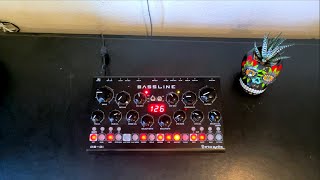





Techno jam on Subsequent 25 & eurorack (2hp Turing Machine, Varigate, Intellijel Scales)