Bart Decrem, Studio Lead at Mozilla | Credder Podcast #10
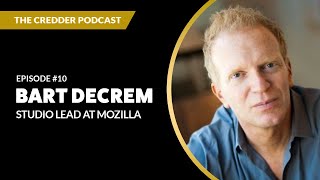
This is a transcript of a Credder podcast episode (Dec 18, 2020) with Bart Decrem, Mozilla Studio Lead. Decrem recounts his early history with Mozilla and Firefox, describes the Mozilla Foundation/Corporation structure and the revenue relationship with Google, and explains the studio's Fix the Internet incubator. The conversation focuses on internet harms—misinformation, polarization, platform monoculture—and funding/talent dynamics in tech, closing with personal rapid‑fire questions.
Chapters
All right, welcome. Welcome to another episode of the creditor podcast. I'm your host, Chase Palmieri, and with me today is Bart Decram. Bart is the studio lead at Mozilla. He's also the former senior vice president of mobile games at the Walt Disney Company and was the founder of companies such as Tapulous, which was acquired by the Walt Disney Company. So I'm guessing that's how you ended up there.
And.
And founder of Flock, which was acquired by Zynga. Clark, thanks for being here.
Yeah, it's great to be here. Thanks for having me.
So why don't we start by you kind of outlining what it means to be studio lead at Mozilla. What is that position like?
That's a great question. So I was around in 2004. That tells you right there how old I am. For the year that we launched Firefox 1.0, I had done a startup called Eazl. A guy named Mitch Kapoor, from a venture capital firm, Excel, at the time was on the board of directors. EAZL failed in the great 2000 crash. And then Mitchell Baker, I think for a heartbeat, worked for Mitch at the Open Source Application Foundation. And I got a call from Mitch when I was in Korea living for a while. He's like, hey, can you help us with a press release? Because we're building this Mozilla foundation thing. And one thing led to another. I spent nine months or so working under the auspices of Mitch Kapoor and with Mitchell Baker on the. On the first. The beginnings of the Mozilla Foundation. And when I came in, it was Firebird. It had. It was Oasis. I'm sorry, Phoenix was the first name. And there had been a trademark thing and that was getting spun out, and there was a new trademark thing with the name Firebird. And we had to come up with a name. And it was at 0.7, and it was sort of coming right up from the side. We were still focusing. We thought our main thing was the Mozilla Suite, if you remember that there was a thing called Netscape Communicator, and we had a thing called Mozilla Suite that was the same thing. But then this thing over here was starting to get a lot of buzz with Firefox 0.7. And in those nine months, it went from this little promising little sprout to a real thing. And so I was part of that whole launch and helped give it a name. And we negotiated a deal with Google and we launched it. And then I went off and did other stuff, starting with Flock. Mitchell Baker and I reconnected a good year ago. I was doing some work at the time at DuckDuckGo, and she was like, oh, we could use some of your, some of your kind of thinking. It's a little bit nonlinear. There's a lot of stuff that needs fixing on the Internet. What else should Mozilla be doing? Can you go noodle on that? And so I ended up connecting with a couple of other folks, starting with Mark Mayo and a man named Bijan Morashi. And we set out to build a little innovation lab. And that's why I think you maybe looked on my LinkedIn. It says Studio lead. We're like, oh, we're doing a thing here where we're trying to cook up cool new stuff. And the thing that we actually cooked up was the beginnings of an incubator. And so we've run two seasons of the incubator, one in the spring and one in the summer. And the general idea is, who are the people that are out there with great ideas for shaping the course of the Internet for the better? That's how we met you. That's how we met a lot of interesting people. So it is a great way to finding talent, fresh ideas, and seeing how we can play a role in making the Internet be all that it can be. So that's what I've been doing at Mozilla for the last year.
Cool. And I think a lot of consumers perhaps don't know that Mozilla and Google actually have some kind of relationship. I think a lot of people think about Firefox and Chrome as direct competitors. If you can. Can you elaborate a little bit on how Google and Mozilla work together and in which ways?
Yeah, it's kind of a funny story. When we started the Mozilla foundation, the original mission, we had 12 employees. I don't know if you remember, but AOL wrote a goodbye check because everything had been part of aol, if you remember that. If you remember that you have a CD ROM drive somewhere in your house. But we had a million dollars a year and 12 employees and then a. An army really of open source contributors. And the original mission was, can we raise Bart as your day job? Can you help us find a million dollars a year? And it was interesting because we started selling T shirts and manuals for Mozilla and then Firefox, and that was a million dollars a year of income. And then the next thing we did is we put a PayPal button on the website support Mozilla, kind of like what Wikipedia does And that started looking like a million dollars a year. But around that time we thought of the idea of, wow, we're sending a lot of traffic to Google and they're doing syndication deals, you know, like you go to Ask Jeeves, I think was one of the ones at the time. And the search results are all powered by Google and they're paying out, I think it was 70% at the time. Google would 70% of the ad revenues generated from that Adjeevestarfik would go back to ads fees. So we set up a conversation with the top leadership at Google and said, hey, we're sending you a lot of traffic. It doesn't have to point to Google, it could point to some other search engine. And we negotiated. To be honest, I think it was the very first browser monetization deal of that kind. I don't know if you've been following the news, but in the antitrust lawsuit against Apple, that's a big part of that lawsuit, the default search on the iPhone, et cetera. But I think the deal we did with Google around monetizing, getting compensated for all the traffic that Firefox browser is sending to Google, that was the first time that was done. It is the bulk of the revenue for the Mozilla Corporation and the Mozilla foundation is when you use Firefox and you use that search box and you end up on google.com, mozilla gets a part of the revenue that Google makes off of that search.
Yeah, and that makes sense because you guys don't have your own search engine and search is such a key part of the browser activity. It's kind of a perfect partnership in a way. Can you explain how the Mozilla foundation and the Mozilla Corporation work? Because it's such an innovative idea actually in the space to have a nonprofit for profit kind of combination with the nonprofit overseeing the for profit. So that yes, it can go and try to be revenue generating and you know, be competitive in this kind of capitalist system, but it has this kind of check and balance of the Mozilla Foundation. Is that how you see it? Is there a little more nuance to it?
No, you got it about right. And I'm just wearing my civilian hat. I don't work on these issues. As I mentioned, I'm a little satellite program. Right. But I have been around the open source community and I was around when we, when Mitchell and the organization set up these structures. You know, I remember before working on Mozilla, I worked on a Linux startup that's how Mitch Kapoor and I met. It was called Easel. We were making the GNOME desktop for Linux more user friendly. And the dream was an open source, user friendly alternative to the Windows operating system. But we created the GNOME foundation and we were trying to figure out can we get IBM and Oracle to write a check and then we can get. And so they. There were. It was a fairly established format for open source projects that had hundreds and thousands of contributors. Some of those come from large corporations that have economic interests and can you get them to all pay in and contribute to it? And that's kind of like a consortium, but then some of it is more researchy and some of this real charity. And so that's. I helped set that up for Gnome and that's one of the options that we thought of at Mozilla. Right. And then I think what happened as Mitchell and the organization started seeing Firefox really take off and the kinds of money that came from it, I think the financial results for Mozilla were just announced last week. It's hundreds of millions of dollars a year. They realized this is a lot of money. Why are we here? How do we craft a setup that allows us to achieve our mission? And is that cookie cutter or are we going to do something a little different than the usual thing? So the usual thing is you're either a non profit or for profit. If you're for profit, you get full autonomy to do whatever you want and then you pay taxes right on that. And usually there are, well, always there are owners and shareholders and then a lot of times there's investors and then they want to see increasing rates of return and all that sort of stuff. You don't have to do that. But in Silicon Valley that's sort of where your head starts going as you think about what a for profit is, right? On the nonprofit side, you're pursuing a public benefit mission. You're trying to do something of value to the broader society. And in return for that, the IRS gives you a tax break. You're getting subsidized by the taxpayers, but there's some oversight. You got to do stuff that's for the public good. And so the entity that was set up in the end is not that unusual, but still somewhat unusual. There's more. If you look at what Laureen Jobs, Steve Jobs widow is doing with the Emerson Collective, I think Chan Zuckerberg I think they have some of those. There's more of these vehicles today that say we want to be able to act like a private industry actor or Like a charity actor. Depending on what's going on, we want to be able to use all the tools in the toolbox. That's that same general thinking that's now more common. What we set up at Mozilla is the Mothership is a non profit entity, the Mozilla Foundation. I think there's about 100 employees there and you do public policy work and advocacy work and lots of research and coalitions and white papers and all this sort of advocacy work to help be a force for making the Internet better, largely around these campaigns and policy work. And then underneath it you got a group of engineers and people that are running the Firefox machine, that are running this thing that's a for profit business, the Mozilla Corporation. They're like, I don't know, somewhere between 500, 1,000 people working there and they're running a for profit corporation that is accountable and owned by that nonprofit subsidiary. And so by doing that we could do business deals, commercial deals, such as the Google one, and we can have a working environment for most employees that's similar to what you would get at a Google or some other, you know, people understand the benefits, packages, et cetera, et cetera, et cetera. But it's secondary and subsidiary to this larger goal of we want to be a force for good on the Internet. And so what's cool about it, if you sort of step back from it, it's like, wow, here we have an entity that's self sustaining, that generates hundreds of millions of dollars a year, that can do user acquisition and analytics driven stuff and business deal, all that good stuff from the private sector, but ultimately towards the public benefit of building the Internet that we all want to live in. So you get to have all of these tools in the toolbox. And I think that's Mozilla at its best. And there's a lot of examples of how we're at our best.
It's such a great structure. It's something that a lot of people in the industry admire, but even us at Kreder, when we were in the early founding days, we were looking to Mozilla's structure and thinking how can we make sure that we don't end up becoming a part of the problem? And, and we still to this day think that we might ultimately create a foundation as the larger kind of overseer of the Credder for profit entity. So I think it's a great, great structure and like you said, a very mission driven company. And that makes me want to talk about the campaign that we met on, which was or is the Fix the Internet campaign and your incubator program. So before we dive into like some of the interesting problems that companies in that incubator are solving and just how the incubator is going more general, Fix the Internet. If you could wave a magic wand and fix one aspect of the Internet, just one little piece of it, what would you fix?
It probably would be the problem that you're focusing on. Misinformation and polarization around news and our information bubbles. 100%. Yeah.
Why is that, do you think? It's like, like I do the root problem?
Well, a couple of reasons. I actually want to loop back to this corporate structure one more time. Let me do that first. And then let's circle back. We're going to do a little rewind, like when you flip the sample in reverse. And I'll be in about 90 seconds, people skip forward. I'll be answering that question. As you were talking about the governance stuff and what you were thinking of, there's also B corps, right? And I think one of the reasons, one of the things that struck me about what's wrong with the Internet and how to do things different and why we're so lucky at Mozilla to have the economic engine and the legal setup, et cetera, that we do is I think there's been a monoculture in technology and Silicon Valley especially. Maybe it's sort of tied to everything that's great about the American work ethos and all that stuff, but it's sort of this idea that if you're working in technology, then what you're doing is you're going to Y Combinator and you do a seed round and you get angel investors and you try to get to billion dollar thing and you try to have the double trigger protection and do do, do, do, do, do, do. There's like a whole, there's like a whole playbook, right? That 99% of every, like everybody I know, they follow the playbook. And it's weird. As soon as you bake one of the rules in the playbook, people look at you funny like, oh, you're not using a safe for your seed round. That's weird, right? Like the playbook, it's like, it's quite specific. You're not using hello Sign to sign your do. I mean, you know, like the playbook got very specific best practices and, and they're so good, right? So it's like McDonald's. I mean, there's a reason they have a thousand of these and they're all the same fryers or whatever, right? So and so and so that's. It's a very efficient system of finding talent and ideas and sending it to a Funnel where every 50th or whatever becomes worth 100 million and every 500 becomes worth a billion or whatever. The thing is, and capitalism at its finest in many ways, the monoculture part of it is there's not enough new thinking, there's not enough people that are questioning it. And so as you look at, I don't know if I step back and go like, hey, whatever happened to the American dream? Like the 1950s? And we're all getting better. Every generation has more opportunity and we're becoming more enlightened. And now we're like, we don't accept elections anymore. Everything is fake news. We don't believe in vaccines. Like, there's a significant amount of dystopian stuff going on around us, right? And some of it has to do with economic concentration, inequality and globalization and things moving so fast and objects and balances and blah, blah, not trusting government. And I think this monoculture is part of that. And so with the incubator, and I noticed that when I was at Duck Tago, because Gabe has a different ownership structure and they have a different compensation structure and they're in Philadelphia, in Pennsylvania and Peoria, Pennsylvania, I think it is. And they're growing slower. He's saying, well, we don't have to grow 30% every year. There's nothing wrong with having this much revenue and this profitable. We can take our time. And I was like, it is good to have different models out there. And I don't think we've had enough of that, specifically in technology. So I go to Santa Cruz to go surf and there's all these co ops and these bookshops and it's like, there's a lot of people questioning capitalism, you know, And I think there can and ought to be more than one way to build great technology and bring it into the market and do it for a living, whether it be running an open source thing versus startup or B Corp or DuckDuckGo type thing or whatever. The thing is, I think we need more models out there than just the cookie cutter way. It's been done in all the newspaper headlines about all the billion dollar exits for the last 20 years. So that's part of what I think is the power of what we're trying to do in our little incubator and what you're doing and what we're all working on. Sorry, that was my. Well, no, I want to follow, I.
Want to follow up on that. So a lot of the problems that we're talking about where it's kind of grow fast or die and go away, this kind of tech culture of grow fast, a lot of it has to do with the funding dynamics because. And people who are outside of the industry don't necessarily realize this, that when somebody, an investor or a VC invests in you, you are one of a hundred, maybe even more bets that they're making. And they don't really care if you make it or not, if you don't make it big. So for them, what they care about is that one, two or three of the hundred bets they make becomes a billion, three billion dollar company and that pays for the rest of the fund. So for them, their dynamics, their incentives, their motivations, who, you know are the ones that in some ways founders have to please and kind of kowtow to, their motivations are totally different than the motivations of even the founders. Because most founders would be happy growing 10, 15% a year and, you know, having a job and a lifestyle that they love and a team that they love. But that's just not how the environment works. Because like you said of this monoculture playbook, I don't know how we get away from that. Other than maybe founders who are more expressly stating that they don't have an incentive to grow 10x each year when they're going to try to get the investment. But even still, then they are at a disadvantage. So there's kind of this little bit of a cat and mouse game where the founder, even if they don't want to grow incredibly fast, they pretend they do, and then they take the money and then they say, actually we're comfortable just growing at this rate, building our foundation, we like what we're working on. But then you can't come back to that investor the next round because they didn't see the level of growth.
Yeah, it really is a follow the money thing. You're talking to the worker, go talk to the manager. You're talking to the manager, talk to the boss. You talk to the boss, go talk to the owner at the end of the day who owns your company and that person has ultimate power. Right. And so we're living in capitalism. Capitalism is the least shitty of all the systems that we figured out to organize our, our work systems and grow wealth and create opportunity. It's the best of the batch. It's far from perfect. Right. And it needs to be carefully managed. And it spins out of control and it's got all these potholes in it, right? And so, for example, let's say you are trying to build a better search engine. It turns out, in my opinion, there's not an infinite pool of talent and ideas and technologies out there. It's actually finite. And so the best people, you know, that you're looking for, they may have job offers from somewhere else. They may be a PhD student at Stanford or some such place, or maybe they're gonna. The good people get found, you know, the best people get found. So how can you offer them a compelling work environment? Hey, I'm building the school up and we're building a search engine that respects people's privacy and it's gonna be solidly profitable. But then that person you're hiring, their peers are getting million dollar compensation packages and they turn, I don't know, 30 or whatever and they start going, wow, how does this work long term? How am I going to retire? How does this work on my LinkedIn? Because my classmates, they're part of a system at Google where they've gone from line engineer to manager to director, whatever the thing is, right? And they have a recruiter that's calling them, that's their partner, to give them new opportunities. But I'm not getting that from you because this thing I'm doing is kind of weird. So wherever you look, when you, the system has got a lot of infrastructure and best practices that work. And so as you break those rules, you get amazing upside and new opportunities, but you're also making your life more complicated and you're going to have to say no or not be able to tap into some things you really might want to tap into. So. So nothing comes for free. But I think the monoculture is a bad thing. And I think if there was more duckduckgos out there and if there were more co ops and basecamp other companies out there, and you started seeing them in the news and on the COVID of Fast Company and whatever the glory moments are, right, where we all become heroes, it's the same thing. You know, you start seeing more women on the COVID of magazines or more people of color or more people running nonprofits as we tell those stories and they get exposure, then people get intrigued and interested and it becomes validated and you'll see more of it. Right? So I think it's one of those things.
Yeah, maybe we need to create a new publisher called Slow Company that celebrates the companies that are just growing or staying sustainable throughout their business practices and Celebrate that. Because lifestyle businesses, you know, they're not what's best for the investor, but sometimes they're what's best for the consumer or the problem that you're solving, or even the founders themselves. So let's. Let's dive back into what you mentioned a moment ago about if you could fix anything with the Internet, you would do, you know, I guess.
Why? Misinformation and filter bubbles. Yeah. Well, part of it is this one thing that I realized, you know, like, I have all sorts of interests and I see, oh, wow, you know, Elon Musk is trying to put somebody on Mars. Whatever. The thing is, right, there's all of these things to be done in the world. The things that I've been part of that have been successful have been really simple, kind of like meat and potatoes ideas. Your browser sucks. This one doesn't. That's the Firefox story. You know, it's like, it's kind of a simple thing. I mean, it's hard, hard work, right? But like, not a wildly original. You got this browser, it crashes and spins Spyro on your computer. How about we give you one for free? That doesn't do all that. The thing that I did when the iPhone came out was this very simple music game called Tap Tap Revenge. It was basically Guitar Hero on the iPhone. It's free, it's Guitar Hero, it's got music. What's not to like? You know? And so I have this thing where I'm like, I tend to make things too complicated. And the things I've been part of that have been successful have been like, really simple ideas. And so as I think about what's wrong with the Internet, There are many great things about the Internet and there's many things that are wrong with the Internet. But, man, if you go and knock on 10 random doors in America, people are going to say, well, all this fake news is what's wrong with the Internet? That'll be the first thing that comes out of their mouth. Maybe, you know, if they're all fancy, maybe they'll say, there's only four big tech companies and why does Facebook run our lives online? Maybe. But I'm pretty sure that if you ask them to say, what's wrong with the Internet? They might say, my cable's not fast enough when we say, fixed the Internet. And normal people go, you're the cable guy. But I think normal people would say the biggest problem is this erosion of trust and news and facts. And it's a big deal. The work, the area that you're focused on it is a big deal. It's farther and harder for Mozilla to touch because it's sort of like the thing that we've been doing successfully is software, right. For the Internet with a user experience, Firefox and lots of places plumbing underneath it. Right. So it gets pretty geeky down there. Pretty protocol Y down there. Right. And so as we think about what can we support and bring into the world, the closer we are it is to that, the easier it is because we can use our channels and talents and technology and know how and all that kind of stuff, bring that to bear. The farther away from that we get then, the lower our odds of success gets. Right. And so relatively speaking, if you said to me, oh, can somebody build an alternative to Facebook, right. To just say it sort of really simplistically. Well, that's closer to our core competencies and we have enough sort of piece of the puzzle there, more of them there than if we said, can you. Can you solve misinformation? Because you're going to get closer to content issues and moderation, curation and people with journalism degrees and all this sort of stuff, you know. But that's the one I would actually see as the top one.
Yeah. So let's geek out on this a little bit because I wasn't actually expecting you to, you know, point out a problem that hit so close to home. Let's talk about what we think is causing the trust crisis. Personally, I think a lot of it has to do with the kind of broken incentive structure where news, when it moved online, now it has to chase down advertisers and clicks and so everything gets a little bit more sensational, maybe a little bit more rushed to print, would you agree that that's like, if not the main core cause one of.
Them, it's one of five. I don't have a whole dialectic in my head, but you could uplevel it easily. One more step, right. If we go back to, I don't know, 30 years ago, I don't think news, ABC, CBS, NBC News, I don't think those were profit centers, like literally. I'm pretty sure those were loss leaders. Right. Those were prestige calling cards for the network, exempt from the requirement to make a profit. I think that's the story I've been told. I think if we then go back to the newspaper industry, that's been a business all along, but I think their margins were really cushy. And so I think if there was a wall between editorial and ad and revenues was really straight because it was a very healthy business. So I think you can uplevel it and it's like, you know, like the incentive structure, I think it was like public benefit work that we were doing in news. If you go back 20, 30 years ago when I grew up in Belgium, the news was brought to you by the official government run news service. In fact, the newspapers were already subsidized by the government. So I think if we go back a little bit, you're going to find a lot of news organizations that were not at all driven by profit motive.
Yeah, there are some organizations that do that still. Some that are subsidized by the government, kind of your national state media. And one other aspect of why these publishers are struggling is that platforms like Facebook and Google have swallowed up what used to be their only revenue stream. Can we talk about social media? Just more generally is social media problem? Because I have this debate with people all the time. Personally, I think that they're just pipes. I think they're pipes that humans interact through. Some pipes are different. The pipes on Facebook are different than the pipes on Twitter. But that when we get mad at these platforms in some ways we're getting mad at the reflection of ourselves in the mirror.
Yes, yes. Well, you remember the mark and recent piece from like 10 years ago, software is eating the world.
Yeah.
Just like I think it was two weeks ago they put out a news a new. It's almost like a book, you know, on the Andreessen Horowitz website, I think they're calling it Social plus and they're not seeing it like that, but it's like socials eating the world. The headline is social is back. And you can look at any sector and if there's not, if it's not. If a big players, they are not powered by social, you know, in the same way like transformed by software. Sort of transformed by social. If that hasn't happened yet, somebody's gonna do it. It could be you. So they're basically, they're saying social is about is eating the world or is about to eat the world. It is the logic of capitalism and progress. Right. It's like, oh wow. When you digitize things and you bring software and data to bear, you're gonna have a more efficient business. That's how software is eating the world. Right. And so when you are able to tap into the desire of people to connect with other people, to talk to others, to share with their friends, to hear from their friends, what they should be thinking of, getting recommendations or whatever the thing is, that's a pretty fundamental thing and that's a major source of energy and major power. So we'll see more of that. So it's why I go back to. I love startups and I love technology and I love Silicon Valley and I love so much about. It's so like, for example, with the incubator, when we started it and we announced we were going to give away some grants, I literally thought I would just sort of sit back and wait for people to come knock on the door with their amazing ideas. Sir, you have money to give away. Please allow me a moment to explain my business idea to you. Like, that's what I imagined it would be, right? Because that's how it used to be 30 years ago. What it's actually like is there's some stuff that comes in, but you're out there hustling because everybody's got an incubator and an accelerator and all good ideas are getting offered seed funding between 50 and 500k. You're out there on LinkedIn, trolling people, asking if they can take a minute so that you can explain to them why they should take your money. And I'm like, it's kind of amazing. It's so much better than 20 years ago. If you've got a good idea, you're in the driver's seat. And so a lot of the progress and what's happening in Silicon Valley, it's kind of amazing, you know, you can be 18 with no money and all that great, you know, but it's not perfect. It's in the same way that capitalism is great, but it's not perfect. So it comes right back to that, which is to say, so, so now we've got the social network and we figured out that we can hire a psychologist that last worked on a game. Before that he actually worked in Vegas building gambling machines. And now we're going to come do like dopamine triggering systems that again, before they came into Instagram, they were in games. I know because I worked on games. And before they were in games, they were in Vegas. Right. And we're just going to find systems that work really well to make our system work better. It's a logical thing to say, but all of a sudden our brains are getting hijacked, right. And our weaknesses are being exploited. Right. And so the specific case of Facebook, I think it's way too big. I think it's insane that there's Facebook and they also own Instagram and WhatsApp. And I think it's insane that they're a dominant source of news and information in, what, 150 countries? That's crazy. That's way too much power for anyone to have. So that's why I'm like, if you ask me what's wrong with the Internet, I'd be like, it's kind of what's wrong with our economy. I remember reading a story about how, like, in 1950, there was a shoemaker that was about to get 3% of the shoe market in the United States because they were gobbling up some shoe companies elsewhere in the country. And it was an anti. That was an antitrust lawsuit. That was too much concentration of power. We've got companies that are worth trillions of dollars. Isn't Jeff Bezos worth $600 billion all by himself? The Bernie Sanders. The three families own 50% of all the wealth in this country. It's crazy. So you end up with too few companies, too much power, suffocating innovation, buying up cool ideas before they can really make their mark and keep the ecosystem diverse and interested. And so to me, the problem isn't Facebook. The problem is the monoculture of it and that we've not regulated it and that we've just the simple, the solo logic of grow faster, get bigger is the only thing. You know, like, there's other things that matter too, and there hasn't been any checks and balances on that.
Yeah.
And we as humans, we kind of were easily hackable. You know, we're pretty flawed systems, right?
Very easily hackable. Yeah. Just change the color of a button and see what happens to us. Yeah, I want to talk about that.
Actually.
I'm glad you brought it up before I did. The FTC is coming for Facebook. It's in 48 states, attorney generals, and they are coming after them to break up Facebook and likely pull Instagram and WhatsApp out of the Facebook brand family. Even if they get pulled out, they're still going to be a majority owned and operated by Mark Zuckerberg. So let's take the scenario where it happens and the government gets their way, which they tend to get when they want their way, and Facebook, Instagram and WhatsApp become three independent companies. Does that change anything? If Mark Zuckerberg is still the solo operator and decision maker in all three?
Yeah, boy, there's a lot of ifs there. Right. Because I think these lawsuits take like three to five years. I noticed that Instagram, I deleted my Facebook, but Instagram is a harder habit to kick. I noticed that they keep wanting me to upgrade to their chat system where I can talk to Facebook people. So that new thing, they're clearly in some stage of the world of the thing already, right? So I'm sure it'll take them five years to the thing, whatever. If it took them three years to put it together, I'm sure it'll take them seven years to untangle it. Right. Instead of being what they are. If there is a breakup, one can imagine that a breakup happens. One can imagine that it's the kind where you say, no, you got to like, that's going to be a publicly listed company and Mark Zuckerberg cannot have a controlling stake. And controlling stake means 7% or whatever that is in this kind of a public company. Right. So I'm not sure it has to be the case that Zuckerberg himself still controls it. Right. In the extreme case, it would get bought by ByteDance or whatever. Right. So that could come to be. Would the Internet be significantly healthier place if there was an independent, fully independent company called WhatsApp and another fully independent company called Instagram next to TikTok, Twitter, Snapchat, LinkedIn and Facebook? Yeah, that's a better Internet because there's less monoculture and maybe some of this cross data sharing that's happening, there'll be less of it. Maybe Instagram will focus, maybe they'll have a CEO that's really focused on more aggressive. It's been kind of interesting to watch these elections, right? To sort of see Twitter does a thing to flag fake news and then Facebook does another thing and then Snapchat does a third thing and then they learn from each other. You can see it's been interesting. Like, to me, it was quite striking to see after three years of, I'm going to call it inaction, fairly aggressive action in terms of labeling and maybe taking down a couple of stories, etc. And really choking the distribution of content right, between YouTube and etc. So I actually do think that you can see when there are different managements and they're doing different things to manage a problem, how they learn from each other. So I do think the Internet will be better the next day because of that. Does it make the Internet magical? No. Does it make polarization go away? No. Kara Swisher put this post up like it was like a week ago where she said, January 21st, pretty sure Twitter's about to get banned from. Trump is about to get banned from Twitter. Right? Because they have this head of state rules, right? That's why they're not Banning him as a. Just kicking him off the platform. Right. And so what it made me think of is like, that's quite possible that that'll happen. Right. Easy to imagine how in the next six months, Trump literally does get banned, kicked off of Twitter. Right. Because of the incitement of violence or whatever. Right. Do you wake up two years later and because we deplatformed that voice, now there is less shittiness on Twitter and in the ether, it's quite possible, Right. Sort of the example of when you put guardrails on bridges, there are fewer suicides. Right. The number not as many people take their lives. And you do that. Right. So the world gets better. So that happens. It's just as likely that Trump moves to Parlay and they merge with Aon and then they merge with Breitbart and then they do some reverse merger financial transactions and somebody pours a billion dollars into it. And this thing looks bigger than Fox a year from now and it's a lot worse than Fox ever was in terms of sort of like the quality of the information and the extent to which we are all stuck in our perfectly segregated information silos. Right. I don't know. Right. So there's always an intended consequences. I do think it is one of the bigger moving pieces to building a healthy Internet is having more companies with less of a footprint each.
Yeah. I actually don't think Twitter is going to get rid of Donald Trump for two reasons. The first is that, yes, he will no longer be an active head of state, but we already know that former presidents get special treatment and this kind of they're a newsworthy world leader treatment. She's still going to be walking around with Secret Service. So on some level, yes, he won't be an active leader, but I think he's still going to get the classification of a newsworthy world leader or former world leader. But then the second reason is actually what you mentioned. If Trump were to leave for Parler and bring his audiences with them, that would be a huge hit to Twitter and probably the most direct threat to what Twitter is and their use case. Because, you know, Facebook and Instagram aren't really competing on the same use case as Twitter, but Parler is. And Parler would love to have Trump get kicked off Twitter and bring his supporters there. And I think that's the biggest threat to Twitter and it's worth a conversation of is Trump actually the most valuable user that Twitter has ever had? Because if you think about it, he probably creates the most engagement and the most time on site and the most kind of conversation and awareness of Twitter in general. I mean, how many people that didn't have a Twitter account created a Twitter account just so they could follow Trump to see and keep a kind of a finger to the point of what he's doing every day? Because that's where he's disseminating information from. Do you think that, you know, those arguments bear weight?
Yeah, that's good logic. Right now in the real world, Jack has lots of different considerations. I think he's trying to do the right thing. I mean, I mean, I actually think he is more concerned about his legacy and is he making a positive impact? I mean, I think he's genuinely concerned about that. Right. So that's a big thing. He's got thousands of employees and they get really worked up. And you look at the more employee morale at Facebook seems pretty bad. You know, I think there's a lot of people there that feel like, why do I want to come to work in this place? I feel like I'm part of a problem and I just don't feel good. Like I mentioned, scarcity of talent, man. If you lose the talent, you're out of business. Right. So when your employees feel like we are part of the problem, that's a major, major consideration. Right. That's like, oh, wow, my backend is not scaling. Right. You know, it's like it's a fail wheel kind of a problem. Right. So there are a number of considerations. So that's why I'm like, I don't know. It's quite possible they've been kicking people off more. It's like clearly he's violating terms of service. I could imagine happening. I was sort of asking myself, what are the odds that it leads us to a healthier Internet conversations versus working worse? I don't know. It's impossible to predict the effects of it. Right?
Yeah.
Or very hard to predict the effects.
Yeah. And one more thing on what you just mentioned, again, the scarcity of talent. There was this kind of unspoken rumor, I guess that would make them spoken, but kind of this unspoken understanding that in the early days, maybe a few years ago, and even to some extent today, Google and Facebook hire as much engineering talent as they can. And sometimes they don't even really have work for them to do. Like they'll sit them there and they'll pay them a salary. And the idea is that it keeps that talent from working on other companies. Do you think that that's something that actually happened and is still happening to a certain Extent trying to swallow up as much of the actual dev talent in the, in the Valley.
I mean, I, I try to live my life sort of assuming good intentions, you know, and assuming that there's not a lot of conspiracies out there because we're all way too incompetent, et cetera. You know, it was kind of like, I remember in my first startup I was worried about some other company that was doing something very similar. We thought they might copy us. It's like, dude, like most people are too busy trying to execute their own business plan to go copy yours. It's kind of complicated copying somebody else's business plan. So I've tried to live my life and sort of generally it's sort of a better way to live your life. It's, etc. I think there are, I'm sure there are some companies that sort of like the CEO, things like that, you know, like remember Andy Grove, if you remember back in the intel days, he wrote a book, Only the Paranoid Survive. Like if you write a book with that title and you read that book, you know, Peter Thiel, there's some people that think like that, right? Like, I gotta manage a couple more that think like that, right? Do most CEOs of tech companies sort of like generic side, do they like that? Probably not, you know, because it seems a little bit indirect and slow and expensive. Maybe it's like in the ether a little bit. And what you're saying is like we're going to grow a lot in the next five years. You find smart people, you hire them and we'll find a place to put them to work. Which you could say it's a variant of that same kind of thinking. I think it's a different nuance. So I think there's. Yeah, you know, I remember there were like the browser talent wars, you know, because. Because I had a little bit player in one of them, right? Because I built a browser, right? There's a finite number of people that have shipped a browser with hundreds of millions of users. You know, I know I tried to get a couple of them and then Apple wanted to have that team and then Mozilla wanted that team and Google wanted that team. We were all chasing the same 30 people, right? Look, I think it's a big world with a lot of talent. We're all. As entrepreneurs, you're finding ways to the talent. When somebody finds a new channel, it's not that easy. When somebody cracks open a new channel, whether that be a demographic group or a school or a Part of the world or a way of engaging with them or incenting them. People notice and they copy. Right. In general, because it's hard work, you know, and so there's infinite talent in a broader sense, but in your ability to identify it in the next two weeks so that you can hit your sprint or achieve your goals for the quarter, whatever. The thing is, in practice, it's a scarce resource, that's for sure.
Yeah. And so now the Mozilla's Fix the Internet incubator is kind of done, or at least this batch is done. Are you going to keep this particular incubator going? Is it going to take on a new mission or a new brand in the coming kind of quarters here?
I don't know. We wrapped up the summer one, I think we had an event at the end of October. Right. And now we're taking stock. What have we shown? We've shown that when you put out a call for ideas for fixing, the first of all, fix the Internet is a rallying cry that people really respond to. This is another one of these things in my life. I come up with like these fancy names and slogans and stuff, you know. So when we first said fixed in, I was like, well, it's a little negative and it's a little meat of potatoes and not super inspired and whatnot. Right. Like, I'm not. No, people understand what that means and they want to be part of that. They want to go rally under that flag. So there's a powerful rallying cry that says fix the Internet. Like it's kind of like build something people want at Y combinator. Right? That's a beautiful thing. I actually love that, that sentence, you know, Fix the Internet is a rallying cry that carries a lot of weight, number one. Number two, the Mozilla brand stands for something special. I was actually surprised how special the Mozilla brand is. I thought Firefox was the thing and Firefox is a thing, right? But this idea, in a fairly cynical age in Silicon Valley of Google and even Apple, but Facebook especially, not standing for these forces of good and progress that we hope they would stand. And we're little soiled on them, sullied on them, people really look up to this promise of Mozilla and the rallying cry fixing is very powerful. And so a lot of really cool people showed up from all over the world. Very diverse new ideas, new backgrounds, all kind of goodness there. We did not see as many super product oriented teams and ideas as I wanted to see. Like when I go on my daily TechCrunch feed or whatever. There's more product first, consumer first thinking than we saw in our batch. So this is the challenge of we did a beautiful, beautiful job reaching out to the people that have already done the Kool Aid, right? Like the believers in technology for social good. We found them and a lot of people showed up with a lot of cool ideas. But I think there's a lot of other people out there. I mean, I remember walking through a YC interview room. There's a lot of really cool people that are trying to get money from Y Combinator for their startup. Good people with great values that got into technology for all the right reasons. And I don't think enough of those folks heard about what we're doing and brought their ideas for technology and new products too. So as I don't think we got enough of the civilians, if you will, that don't necessarily wake up, you know, reading the web, the Omidyard website, whatever it is that we all get our information diet on, pick for social good, right? So that was interesting. So we'd want to do more work there. It's very early stage, right? We're looking for ideas that we can scale across the Internet. Most of the stuff we saw was super early stage. I love super early stage because I'm like a garage starter kind of guy. If you're Mozilla, you're probably also wondering, how do I get stuff that already has some traction, that already has a million users or a million DAUs or whatever? You know, that's still a long ways to go from a million DAUs to 3 billion, right? Which is the Facebook print. So those are some of the things that we're thinking about. What is the time horizon? Is there the opportunity? This is the most exciting piece for me, but I have to convince everybody that that alone makes it well worth doing, right? It's like, I think there is an opportunity to build an alternative to Y Combinator. I think it takes five or 10 years, but I think if we are able to see this work through and, you know, start it again and et cetera, et cetera, et cetera, There's a version of the future where Y Combinator is doing really well and there's lots of other incubators, and then ours attracts the same kind of talent and best people in the world. And many of them are going to do for profit startups, and some of them are going to do nonprofits, and we're going to do open source, and all of them are there first and Foremost because they have an idea that can make a positive impact on the world and that's why they got into tech and that's what they want to do with their companies. And that's what's so different about this community of people. So it becomes sort of like an intellectual counterweight to that monoculture. I think that's possible. I think that would get a lot of energy and we could build around that. You know, it's a lot of work. It's going to cost money, it's going to take time. So we have to think about, can we do that? What would it take to actually make that happen? Because one of the things I did learn is, you know, with a duct tape incubator, you know, you go to demo days and you see the resources that incubators bring to bear and help to help people raise money and package up their story and the network of mentors and alumni and there's a whole industry with best practices. Right. That's now an industry. Right. And we did a duct tape bootstrap version that did 10% of the offering that, that, that the really established companies that I'm very proud of how fast we did it and how many cool things we were able to spot and help. And help make progress and how fast they made progress. But there's. You'd want to set it up correctly and it's a lot of work.
Yeah, no, I think you guys can definitely create kind of the more people focused profit. As a sidebar type of incubator, you have the perfect brand for it. I know you and Bijan are great leaders in there and you guys can do that. We definitely enjoyed the incubator ourselves. I don't know if you know this, actually. We were one of the Mozilla Builders Award winners. So we got that award and the cash prize, which, you know, is great. So we loved our time doing it and would probably do it again if you accept, you know, previous back into a batch. Are you thinking that you might do that? Let's.
We're going to take a month or two and figure out like it's going to take us a couple of months to figure it out. So I think some, somewhere early in the year we'll probably make the decision and then start talking about it. But it's interesting what we were able to, to, to, to. To bring together in a couple of months. Right. So, so thank you and yeah, you guys are doing beautiful work.
Thank you. Before we get to the last two questions that I ask every guest at the end of every podcast. Why don't you give listeners and anywhere they should go to follow you or the work you're doing at the Fix the Internet campaign?
Well, we have our website. That's@mozilla.org builders and then I'm not super active on social media for some of the reasons we've already discussed. I deleted my Twitter, so I lost all my followers. Now I'm starting to use it again. And I think my handle on Twitter is just my name, Bartikrem.
Okay, great. So last two questions here. Question number one is bitcoin. Are you a believer or not so much?
I don't know. Not smart enough. I own some and a couple of other cryptocurrencies. I don't know.
Okay, and last question for you today is are we living in a simulation?
Oh, my God, that's such a good one. I just had this debate in the last 48 hours.
Let's hear it. What was the verdict?
I grew up. I grew up Catholic, and I was like, I don't know about this thing. It seems a little literal. I'll go with agnostic. And so I'm still with agnostic, you know, which is to say, is there really a difference between living in a simulation and there being a God? There's like an organizing system around you and you're part of it. Right. There's some larger force, and you're not the force. 50 50, man. I think I read the mathematical model that shows that it's a 5050 odds. Right.
Isn't that crazy that it comes out 50 50?
Makes sense. Makes sense to me. That would be 50 50. How about you?
I think it's so tough, but I would have to say that I lean in the direction of, yes, we are in some kind of a digital simulation with the kind of caveat that it doesn't really matter. And I wouldn't change anything about my life because. Because it's still real to me and I'm still doing the things I want to do and trying to make myself happy and the people around me happy. So to me, it doesn't really matter, but I guess I lean towards. Yeah, we're in a simulation.
You know, I like to read books, and I took philosophy and I have this law degree and stuff. Right. But, like, at the end of the day, there's like, serious limits to my intellectual curiosity, but relative to my builder urge. So. So when I came out of law school, I did community work in East Palo Alto, and I spent a lot. I was an Echoing Green fellow and So I spent a lot of time with the social change community and they'd have these theories of change and all this stuff. And I love that stuff, you know, but it doesn't grab me in the way that, hey, let's rent that building over there, put 20 computers in there and see if kids will do interesting stuff with them. Like. And so that's why questions like, you know, do we live in a simulation? It's interesting. I like to read the article, I like to debate about it, but then this is the one life that we have and am I living it correctly? Am I, you know, do I have values and organizing principles? Do I try to leave things better than they found them? That's where my energy tends to go, right? And that's why I'm like, I'll take 50, 50 and then I just sort of sleep well because I like sl. But that's why I'm like, fundamentally I'm not intellectually driven in the way that some other people. I'm like builder driven. I have a question for you.
Sure, yeah, hit me.
What's your goal for the next year? Personally and then with Creditr personally.
Interesting. Personally, I feel like I don't think about my personal goals much. They come second to credit goals, but personally I would love to be in a little bit more of a financial stable situation. But that really comes down to getting credit to break even revenue. Personally, I wish I was, you know, finding more time to exercise even in the pandemic. I kind of promised myself I would and I haven't held up to my end of the bargain. And I guess last thing on personally is I want to keep having interesting conversations like this. You know, if I can't meet people in person, maybe I take advantage of the fact that I can get somebody like you on a call and hear how they see the world and benefit from that. For Credder, we want to go into 2021 and keep growing through our kind of search engine strategy, keep growing the user base, get as many reviews on the site as we can and kind of take advantage of the head start that we have as kind of the leading news review platform. But the big goal of 2021 for credit is going to be to land our first licensing deals, a few third party partnerships and those will achieve break even revenue for us and give me and my fellow founders a big sigh of relief and let us kind of start to rebuild our expectations and the kind of pace of growth from there. So that's what we're looking at.
I really hope you succeed on the personal side, but especially on the credit side. I mean, I said earlier in this conversation, I think there's no bigger problem on the Internet than helping people understand what's real and what's fake and get to the truth then. And that's the work you're doing. So it's beautiful. I hope you guys succeed.
Well, thank you, Bart. And thank you for coming on this episode of the credit podcast. We wish you and Mozilla and the Fix the Internet campaign the best of luck.
Thank you. That was great fun. Best wishes for the new year.
Take care.
See you. Sa.
More from Bart








Techno jam on Subsequent 25 & eurorack (2hp Turing Machine, Varigate, Intellijel Scales)