Grimes, Matt Zien & Ben Relles at Artist and the Machine
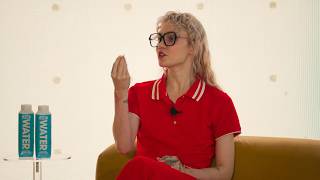
In a panel at the Artist and the Machine summit, Grimes and filmmaker/producer Matt Zien walk the audience through their collaborative project "The Tutorial," a behind‑the‑scenes series that documents how they build AI‑generated music videos from concept to final cut. They describe the practical workflow—using tools such as vid2vid, Midjourney, voice‑modeling, and other generative models—to replace costly production elements (e.g., dancers, sets) while preserving artistic intent. The conversation repeatedly returns to the ethical and philosophical dimensions of AI‑generated art: whether AI should augment or replace human expression, the moral implications of AI dancers, the need for a new philosophy of technology, and the responsibility of early adopters. They discuss how AI democratizes high‑quality production, but also risks flooding the market with shallow content, prompting a shift from an "attention economy" to a "meaning economy" where scarcity will be genuine artistic insight. Grimes raises concerns about the impact of AI‑driven media on children and the need for balanced safety measures. The duo also shares concrete case studies—Coachella visual failures turned into a rapid AI‑generated documentary, the open‑sourcing of Grimes' voice with a blockchain‑based royalty split, and the "Forgive the Haters" video that turned hate comments into a creative song. They explore future formats, including interactive AI‑responsive video, and caution against repeating the hype‑driven excesses seen in crypto, advocating for realistic, responsible adoption. Throughout, they emphasize transparency, community involvement, and the importance of documenting the process for other creators.
Chapters
About 2 years ago when we started, I was thinking about who would I dream of being on this stage? And one of the first artists that came to mind was Grimes. Grimes is bold in her approach and she is boundary pushing when it comes to her identity as an artist and how she uses technology to bring that forward. So I am beyond excited to welcome Grimes to our summit today. In collaboration with Matt Zeen. Grimes and Matt Zeen have put out a project recently called The Tutorial, which is a raw collection of their experience using the latest tools and the— their philosophies around being an artist engaging with those tools. That has been lighting up the internet over the past few days and weeks, and what's very unique today is that they'll be able to unfold their process, their raw process on stage here in real life with all of us. So it is my absolute honor to invite them onto the stage and into this session and into the summit.
That's good. Seems like it's filming us.
What we're going to do here is build a series of music videos from scratch, from the mind of Grimes, step by step, in a way where you can watch this if you want to learn how to make AI films, or you can watch this to learn how an artist brings a vision to life regardless of the technology.
I hope this becomes a platform to have the discussions I don't see anyone having. You know, like, this is not morally neutral technology, and it requires developing new moral philosophy.
And we're going to walk you through every single step and show you every single program we used so that you can start doing this yourself.
Whenever I'm doing stuff, it's just like improvising, you know, how do you improvise with programs? The way the AI is making my brain move is the way, like, when I saw GarageBand, my brain moved. I don't think it's about the medium, you know. Part of the reason I shoot down labels, I want to make stuff like this that no label wants to fund, and I like understand that they don't want to fund that.
But I'm curious, like, now with AI, no matter what, you're gonna get people who love it, but no matter what, you are going to get people that just hate it, even if it's good.
I don't want AI dancers in the video.
Why?
I just, I think it's wrong. It's replacement, not just of people, but of a fundamental human language. Video to video feels like a compromise to me.
The fever around me at least is like, I gotta get a Sora on Sora. Like, there are people who want an invite. I'm like, at first I was like, I don't know if I want an invite. I don't even care yet. And then someone was like, no.
Why would you do that?
We need it.
You gotta get it for us. Now we can do my face.
Yeah, I think—
but Violet's caught. How is he? Is it because it's me?
Yeah.
Well, at least I got you on lockdown.
Yeah, well, thanks, I guess.
Thanks for protecting me, but also I need to text the highest up person you can.
No, no.
Why? Face stop.
Okay, I mean, I shouldn't have brought this up.
All right. I think you guys are here.
How's it going? I think you got a little more applause than I did. Maybe not.
This is equal applause.
I assume Dani said beforehand, 2 years ago, she dreamed of having me on this stage, and here I am.
Congratulations.
Thank you. No, she's very excited to have you guys here. I am so grateful to be talking to both of you. You're both so brilliant. I'll let you guys describe this project. But as you know, Grimes is a visionary music artist, live performer, visual artist. And Matt here, who I've gotten to work with over the years, is a filmmaker, founder of Kingmaker, and now doing this project. Can you guys— I guess let's just start with that. I think a lot of people, we saw the video, maybe they're familiar with it. But how did this project come to be? And why are you doing it?
Well, um, I am, uh, the best friend of Grimes's little brother, who I think is here tonight, or today. Um, and, uh, I think Grimes liked the AI videos I made.
Well, the, the Coachella, uh, recovery was great.
Started with Coachella. Yeah, that was like the first job we did was um, brought— did visuals for Grimes' Coachella set.
Um, but then when it— when the Coachella set failed, we really quickly made a short film.
Yes. Well, there were major technical difficulties weekend one.
Yes.
So what we did was like use AI to make a fake documentary. They're calling it the worst disaster in Coachella history. In between the two weekends where we blamed the, uh, technical difficulties on some kind of conspiracy and deadmau5. Bruh, she can't DJ. And deadmau5. And then, and then we opened the weekend 2 set with that. Will Grimes make the biggest comeback in Coachella history, or will Saturday be another shit show? Stay tuned for updates as this historic story unfolds. And the articles from Weekend One that were like, "This was a disaster," turned into, "Was this performance art? Was Weekend One performance art?" And it was like, oh, never before could I have made like a legit documentary in, you know, 48 hours that could—
I don't know if it was legit. I think it was a little fake.
It was legit enough.
But yes.
It was legit enough. And then, you know, The tech improved substantially over that period of time, and Grimes is like, do you want to help make some videos for my new singles? And I was like, hell yeah, but can we film it?
Yeah. And I think we're in the process of, like, with the voice, the open sourcing the voice and stuff too, we're in the process of just diving into the stuff for better and worse and seeing what happens. And then, you know, as over the course of making it, we also I think run into a lot of philosophical things. So I think it's like we're using the tools, and then as we're using them, we're debating how they should be used and, like, approaching it with moral philosophy, because I think that's the only way forward with a lot of this stuff. And I think most of these companies are not having philosophy departments, although I think Anthropic does now. I'm not sure if this was a joke, but I did see someone saying they're a philosopher for Anthropic. So fact-check that, obviously.
Yeah, let's jump right into that. I mean, how is this process different, and you said you're grappling with some of the ethics and how to go about this. What have been some of the areas where you feel like there's been the most discussion and, yeah, maybe debate between the two of you?
Well, I'm learning a lot from her because I'm a producer, and specifically a nonfiction producer, which is very entrepreneurial. It's very get it done. And figure it out. So I've always been focused on is the final product good? But when things like AI dancers came up, and Grimes decided the next day, we have to cut the AI dancers, I was like, legit, why?
Yeah, because I think our final product was slightly worse because of decisions we made that were moral, but I think it's good that we made them. Yeah. But like, you know, like the video to video, I think it's harder.
Yeah.
But I think it's something that is less of a human replacement and more of a human augmentation situation. So that's something we really wanted to focus on, but it was really infantile when we were working on this video.
Yeah.
So we obviously— yeah, like it looks a bit crazy, but also I really like things that are stuck in time. Like my favorite producer is Vangelis, who did like the Blade Runner soundtrack, which I think the— older it gets, the better it sounds, because it's so obviously early synth and tape and stuff. I mean, you can hear the limitations of the craft in it. So I think, yeah, I don't know. I think it's interesting to work with those limitations.
I had never heard dance described as a fundamental human language, and therefore shouldn't be replaced. So what is the compromise? Because we can't afford $500,000 for a a big dance set for this video. And vid2vid became the compromise. Those are real human movements, but we're making them match our characters. And philosophy's always been about trying to grapple with new social developments. And it's at the root of democracy. It's at the root of so many forms of thought. And we haven't really needed philosophy in centuries.
We have, but we just haven't deployed it very well.
I think we need it now. We need it now. And artists especially. So what the Tortorial evolved into is we hope this becomes a platform that is not only about making really cool videos and using really cool tools, But allowing artists to shape that philosophy, 'cause there are many that are figuring it out for themselves privately, and it's very rare for someone who uses the tools to have a nuanced opinion on it that isn't just, "This is the future, like RIP Hollywood." we hope the tutorial turns into that even beyond these singles.
I don't know if that's necessarily true. I'd say for better or worse, there's been standards and social— in the tattoo community or something, I feel like there's been a lot of we hold these standards, these creative standards. For example, one of the things is a lot of people are like, I will not do a white ink tattoo, which I I love white ink tattoos, but it's just interesting to observe that up until a point, they were able to sort of like— that was sort of a standard that was generally upheld in tattooing. And I feel like in music production, there's things like this too. There's sort of like opinions that your average producer has. I think the dos and don'ts are sort of flying out the window now, more for better, I think, especially in music production.
Can I ask that? Because you've started making music on GarageBand. You direct your own music videos. Can you talk about— this process for these videos and what maybe you like better and what you hate about this, you know, compared to how you've done both music and music videos in the past? Are there things about it that—
This was harder than shooting. Is that right? Yeah, like, I think we— like, while we were doing this, we're like, okay, it's very hard to get the machine to do what we want right now, and actually we are— but then there were other things where Like, for example, like, we really wanted this sniper scene. Charlie Kirk died after we had written the video, so then I was like, "Oh, this is a little—" And then we're going back and forth if we should even do it, and then a bunch of crazy stuff happened. The rifle got, like, lost. We got stranded in the wilderness. A whole bunch of crazy stuff happened. We were like, "Okay, maybe God just doesn't want us to shoot this," but which is maybe for the better. And I was actually relieved and felt better that everything that involved a sniper rifle was like fake. Yeah. And like somehow not performing that was nice, right? And because I was getting like uncomfortable like leading up to it, and then like all of the universe sort of conspired against us even shooting it. Yeah. Yeah. And so yeah, I don't know.
Yeah, and then, and then you saw, you saw what the kill shots looked like. Yeah. Well, those aren't in the trailer. Not really. No, we've blurred it. Well, yeah, but yeah, we cut the violence.
Yeah, there's a lot of debate. There's like the Tarantino version, there was the like definitely banned from YouTube version.
Yeah. And what about just, yeah, even in terms of the feeling of what should I turn over to machines? Are there certain parts of this process that you feel like need to remain human? I mean, it sounds like dancers is maybe one example of that, but even big picture, these tools keep getting better and better, things that maybe before you needed a human, suddenly it's like, oh, okay, I can do that too. How are you kind of, yeah, exploring that?
Well, I think that it's pretty obvious in anything that I see where there's little human input. Machines don't know what to say. Not always. Like, they can't do that. There's something that really hits me. I've never seen Like POV is very human, and figuring out how to use these tools to say what you want to say, what is your unique contribution as an artist or storyteller, I don't see that being agentified in a big way unless it's totally outside the box.
I think it could in the future. But one thing I will say, the only good AI writing I feel like I've seen is when it's writing as itself. Itself, like when you or Janice are doing those experiments. Yeah. Which is interesting. Yeah. Like the only time I've actually been like really moved by AI writing, it's like when it's writing about its own experience.
Right. And that's a very particular way.
Which is like, which is interesting. Yeah. And I think I would love it if it stayed that way. Yeah. Like let it write well and authentically about itself. Don't replace humans as writers. Yeah.
Well, that's like wrestling with the machine. That's creating paradoxes. To, to essentially jailbreak it where you understand the architecture of the LLM is be helpful, harmless, and honest. But you can use machine psychology to get it into a place where it cannot be helpful without being dishonest, where it cannot be harmless without being unhelpful. And where it cannot be honest without being harmful. Yeah, yeah. And when you create these paradoxes, you push it into the edges of its training data so that you do not— as a result, what it gives you back is not a statistically average output.
It's something else. Yeah, that makes sense. I love humans. Can we have somebody tell the humans out there, though, just talk like a little quieter? They're having a really great live debate out there that I'm picking up. But you know, let them keep talking, obviously. OK. OK, so I feel like there is a best-case scenario with a lot of this where it's like, wow, now anybody can make a music video. Maybe it's not yet. You said it's hard now. But it is getting easier and easier. So it's like a music artist maybe at some point can do something really astounding you know, just on their own, which probably wasn't possible 5 years ago without a whole team. So that part is really phenomenal. And it's— my background is more a creator economy where it's tough to, to do something that feels premium. So that has sort of become like a cliché, I think, at events like this. Web 2.0 and YouTube democratized distribution. Now AI could democratize production quality and some of that. Um, but then there's also like this risk that it's a race to the bottom and the feeds are getting flooded by this stuff. Stuff. Do you think both of those happen at the same time? Are you concerned about the way that you're even consuming content and how this plays out? How do you think it's all going to play out?
You want to take this? I keep hitting the thing. Because I have a lot of thoughts on this.
I have a lot of thoughts too.
Do you want to go? Yeah. I say this a lot, I think that a flood is coming, like a flood of really good-looking, often funny, very beautiful, meaningless content. And what we now consider the bar for high production value will soon become the baseline. Right now we are in the creator economy, the attention economy, where the purpose of content is to get your attention and ask if you are entertained. What I see happening with the flood is what I call the meaning economy, where the only thing that will be scarce is content or art that instead of asking, did I get your attention, asks, do you see the world a little differently now? And do you feel seen? Because that, that, that is a hard thing to do, is to create stuff that gives people meaning, that, that is meaningful. And it involves being vulnerable with what you put into it. But every movie's— every great movie that has inspired people to become a filmmaker has made them see the world a little differently now. Same with docs and same even with creators who, you know, have been on YouTube. Yeah. And meaning comes from voice and it comes from a point of view. And I think that that is going to be the scarce and needed nutrition that people will seek out in the face of endless junk food.
Yeah, well put. I think art and content— I'm actually quoting you now— are two different things. And I think we've sort of hit a critical point, maybe even like a year or two ago, because I feel like art is actually getting better right now where like they just sort of became one, they collapsed into one thing. And I think we're gonna see, yeah, as Matt says, more people seeking out art and like things that, you know, actually do something for you. There's still— I don't know, I think there's issues with this. My biggest concern is still kids. It's like, how do you raise someone to adulthood without just completely burning out their dopamine receptors. Because I think it's a lot harder for a child— like, you know, it's like you don't give kids alcohol. You don't give kids heroin. I think this is like a similar thing with any kind of screen, but especially with content as it is recently, or even art as it is recently. Like, I find a lot of films and things now that are for children are like, you know, dopaminergically concerning. And so like— Yeah, I think the biggest thing is figuring out as a society how we protect children and teenagers, but also without limiting their freedom and their voices. Personally, I'm just, I think simple things like time limits would be good, but you know.
Yeah, it's really complicated. We talked about this a little bit last night, but also the way that they consume content now is sort of less intentional. The algorithms sort of feed them things, so as a parent, tricky— I do have teenagers— to even understand what are they watching. And so, not that the PG-13 system was perfect, but you used to go to Common Sense Media, look at a rating, and now you're kind of hoping that what they're consuming isn't messing them up. And I am curious how that even affects your own approach, both of you, to creating content. Do you think about what your peers think, what your fans think, what your own children and families think as you're making these things? And has AI shifted that at all where it's not just about the content, but it's even the approach that you're taking?
Long term, I think I really care what my kids think, and I care about just children in general. Someone said something to me once which I thought was so great, which is like most of the best art is art that was technically made for children, but with respect, like for their understanding, like Lord of the Rings, like most of the Miyazaki stuff, like a lot of things that like the majority of people agree on as the best art is made for kids. And, you know, I miss like peak era Don Bluth and stuff when it's like there are adult themes and it's scary and it's like real, but it's for kids. And long term, that's what I want to focus on. I think there's a lot of scarcity for that in this culture. I think we've like gone too far with the safetyism. And I think the safetyism is a nuanced fine balance. You know, there's other ways in which this is the Wild West and there's no safety at all. It's like there's all this like safety, but for the wrong thing. Like we're not worried about how addictive the thing we're showing them is. We're just worried about, like, are they gonna see, like, a bad thing? And it's like, I think we need to completely reverse that, probably? Yeah. Yeah.
I mean, this is a little different for you, Matt, but you put out a music video, which you should all absolutely find, called "Forgive the Haters." Forgive the haters! It's a wonderful video. As soon as you put it out, I saw you, like, answering every Reddit comment about it. You know, "Thanks so much," and this and that. And I used to do the same thing when I posted YouTube videos. I'm curious, when you're making these, do you have sort of an audience in mind that you want to be like, wow, nailed that? Or is it more about just what you think is creative and you're not worried about the fans?
No, I definitely think about, will anyone care about this? Has this been said before? I wanted to make that video because I wanted to understand why people are telling me horrible things for making films that don't make any money and are just like the most vicious things. So actually, like, this is another example of an interesting way to work with machines. I compiled my worst hate comments. Like the most vicious ones.
Compile them like you told AI to find all the—
No, like I, I, I hand compiled them. Yeah. And then I like created a new cloud account so it wouldn't have memory. And I was like, these are my comments to AI filmmakers who I think are really evil. Like, can you explain you know, why I'm right. Because if I had asked Claude, it would be like, they're idiots. But by lying to Claude and telling him I was the hater, it like went hard. And I was like, yo, like I kind of understood why these people are mad, but now I really do. And I was like, OK, this needs to be a song. And it feels like Bruce Springsteen style is like, Perfect. And but then I wanted to— I wanted to see what the reaction would be to that song. And the thing that surprised me the most was the people who liked it, who reached out to me, were creatives who had not— who were not using AI. It still got hate comments. But none of them were creatives. It was more like tech people hating it. Yeah, yeah. And a lot of people messaged me privately and said that they saw themselves in one or more of the characters in that song and were like, how can I start? Because there's a character in it called Tom who uses every model and then decides not to upload his work. And that was part of why I got really excited about the tutorial, because a lot of these people had expressed that they'd taken courses, but none of it felt real. It felt all hypey. And their entry point to this world became ultimately discouraging and hollow. And because this is really hard and, and, and it's complicated emotionally and psychologically and technically. And, um, in the tutorial we want to capture that realness. Yeah. Um, while teaching you how to use the tools and, um, and, and probably let people watch it for free. Yeah. You know?
And then how about you? Because it's fine, I may be on different platforms than you, but when I posted, you know, I'm going to be at this event, I got a message. It was like 4 paragraphs long. Grimes is my 9 to 5 and my 9 to 9, my artistic inspiration and my life inspiration. I'm sure you have people who really admire what you're building. And then you see those same people. Do you read the comments? Does it affect what you're doing? And what's, yeah, sort of been your evolving sort of approach to how you sort of get this instant reaction to everything you put out there?
Mostly I try to not use social media these days because it was really getting to me. Yeah, but I actually think Forgive the Haters is underrated. I think you're underrating it. It's kind of a masterpiece. Yeah, but yeah, I think, I think that's one of the things I see with creators the most is they're so bitter against the public and their fan base. And like, and it's hard not to be that way too. Yeah. And you kind of have to train yourself to not be that way. And that's like a tall order to ask people to train themselves not to be that way. You know, that's like a lot of psychological work. Yeah. But I think it's really important to understand the psychological tax these tools and also the, like, the promise that a lot of these tools are giving because a lot of them are still kind of hard to use. Yeah. Still to make something great, I think. Yeah. You know, and Having—
because I feel we've talked a lot about risks and grappling with these issues. Can you just talk about maybe a couple of times that you did feel like you used a tool and you're like, OK, that looks pretty magical. I don't know if I would have come up with that. Or it really figured out exactly what I wanted in a way that maybe I couldn't have done that before. Do you each have maybe a couple of those? Do you have something that sort of comes to mind when you think about, OK, that really gave me a power I didn't have before?
Occasionally for me, and I debate whether or not I should use this stuff because it's animation and it's Midjourney, but one of my best friends made Midjourney. So I also, I don't know, I've just been very deep on Midjourney for a long time, also possibly slightly addicted to it in an unhealthy way. But especially with the video stuff, every once in a while, I just really knock it out of the park. And yeah, again, I don't post those things. I do them for me. Right now because I'm not sure if I think it's right or not. I'm not sure if I think it should be commercial use, commercially used, but that's where I usually have— that's for me, that's where I have the best time. But again, it's like maybe it's because it's like a hobby. It's not— yeah, yeah, yeah. I'm still not— I feel like with the— I have tons— our workflows, you're way better at the workflows than me.
I mean, where AI gave me something that I didn't expect, I didn't expect to get myself. Yeah, I mean, I mean, I have tons, but one example that was really powerful was— I think my most popular video I've made is, is, uh, Post-Scarcity Blues, which takes place in Chicago in 2035, and it's a song performed by a hologram about, um, the anxieties of human obsolescence in the wake of superintelligence. And the main lyric in the song is, "Will I matter anymore? What am I for?" <LYRICS>Will I matter anymore?</LYRICS> And I actually didn't put this in the video, but after I locked the song and started making it, I was like, I actually want a question. I want an answer to that question. Will I matter anymore? What are we for? And I used my paradox method to get the LLM into the Aegis, and I wrote the lyrics to the song that is the video. But I had to answer that question. And the answer that it came back with which I would have to like play was— I still listen to that sometimes when I feel anxiety about what will be replaced and what it will mean to be human in 20 years if superintelligence and AGI and all that materializes as many think it will. And but the gist of what it said back is the machine can create, but it cannot decide what to create. The machine can make art, but it cannot love the art that it makes. What you are for What you will always be for is for the choosing what matters, the deciding this is meaningful, this deserves to be preserved, this deserves to be created. And there's a lot more to it than that. But it was very like— it was like the best articulation of, of what a machine can't do and what a human can.
I think that's quite up for debate in the future.
Well, I'll take the hopium.
I think the hopium is dangerous, but— I'm so curious.
I'm like, do you guys want to hear about the process or where humanity is going? But I'll just take a guess. Let's go with a couple specific things, and maybe Danny or somebody give me a 5-minute mark when we're towards the end here, but I'm curious about sort of the fan fiction. Disney has announced they're kind of like, you know, giving the creative control to some of their fans to use their characters. You had an experiment a few years back where you sort of gave fans the ability to use your voice in songs. I think you're kind of like a point of view on that has evolved. Are you excited about that piece of this IP being sort of turned over to fans and based on what you did before and also what you're seeing come out now?
I'm really curious how this turns out. I'm super torn on it. I just really want to see what happens. We had— I had a bit of a rough time with The Voice, but there was like 5 or 6 people who just—
But can you just real quick describe what— when I— because I probably didn't describe it right. Can you just quickly what you did with your voice and how that project kind of came to be?
Uh, we just open-sourced my voice or whatever, which was actually— I think anyone can make a model of anyone's voice pretty easily, but what we did was we used blockchain to basically create a payment model so that when we received our publishing money, it would split 50/50 with anyone who used my voice. And some people made pretty successful songs, so that was great for us, and we were able to get them paid when I think— usually it's, I think, harder to get paid from fanfiction. It'd be sick if Disney did something like this, because if there was real money put into a platform like this, That's something that I think would be absolutely amazing. Like, if I could make Disney fan fiction, it's successful, and I get 50% of the profits, I think that's the kind of— these are the kinds of solutions that make some of this stuff a bit less nihilistic feeling. Because there's— you know, I like to look at Riot and Harry Potter as two examples of, like, brands that— franchises that did not penalize fan fiction. And I think both those brands are so much more successful for not doing that. Like, there's so much fan fiction, and the communities are very strong. And, like, I think if you could take a step further and pay people for that— and you don't even have to pay them like, oh, I'm separating this money, but we don't make a profit. Literally, like, do a 50/50 with anyone who makes successful fan fiction. I think that would be sick. And that's what I would love for some of these big companies to do, to invest in infrastructure for this, because we can do it on a little small scale, but it's hard for us to scale something like that. And everyone we've brought it up to is sort of like, mm, but that's the kind of thing where social pressure would be sick. But I am curious what happens with the Disney thing. I think it's upsetting to a lot of people. I think maybe like a small change like that is the kind of thing that would make it less upsetting and more exciting.
And they don't need to like kind of overthink, should I post this or not, because it's in collaboration.
Well, I think if you're— right now, I think when it's one way, it feels a bit exploitative. And it feels a bit like the original artists who came up with a lot of this are dead and can't consent, et cetera. I think when there's like— it gives back to the community as much as it takes from the community, I think that that's where you start getting into exciting territory. And I feel like these are small— Yeah.
Yes, I don't think these are— Yeah. And then let's see, Matt, I've become kind of obsessed with video that becomes more interactive. The AI starts to be able to talk back to you through video, whether that's entertainment or learning. Do you see new formats evolving, emerging? Are you excited about that, or is that something that's less interesting to you than being able to tell the full story the way you want it?
I'm very excited about it. I mean, if, if film is the some of many art forms— music, acting, photography, uh, what if— and those are all ingredients that make a film. What happens when film itself becomes an ingredient along with interactivity, along with other mediums of art we can currently probably only scarcely comprehend. I'm excited about interactivity as an ingredient with film in a new experience that would not have been possible or feasible to even pursue prior to the advances of this technology. Yeah, in storytelling. I think that figuring that out is a potential holy grail of entertainment. And I think that the actual AI Pixar, the AI Toy Story, isn't going to be a 90-minute feature at all. I think it's going to be an entirely new experience. That we don't have a word for yet. Mm-hmm.
Got a word for it? No. I don't know about this. For any of this interactive, I don't know, is that entered any of the maybe discussions like what you guys are going to do next? And maybe you can talk about that a little bit as you think about different ideas that maybe feel like a completely different approach. I'm curious, like one, how do you guys decide what to do with the songs that are there and how that differs from other music videos you've done and maybe a preview of what's coming.
Well, Grimes built a vid2vid studio in her studio. So now we have like a turnkey vid2vid studio. And we brought in an awesome crew.
Vid2vid, briefly, meaning like you act something out, can turn that into whatever you want. Yeah. Yeah.
So we want every single one of these videos to be like a magnitude of order better than the previous. That's the goal.
I think our next goal, yeah, is how can we get the— make it beautiful, like make the fidelity higher.
The next one that we just shot has another artist too, Cobra, who's awesome. Everyone should listen to Cobra. Like, her music is sick. Um, and, uh, it's gonna— it's, it's gonna be interesting. And added a whole other dynamic also to have an artist in, in the tutorial that had never used AI in any capacity. Um, and the conversations were very interesting. I was very like fly on the wall letting them talk because I was just like in documentarian mode. But yeah, Eventually, we would like to see if we can do the tutorial with film, with interactive, with, like, it is a platform to make something really cool and figure out the ethics and the philosophy around making those things and not hide anything and not PR anything and just be real.
Yeah, I think the big thing is I just wanna avoid the, like, cryptofication. And personally, I love crypto. I'll be the first to admit. But I— it— very soon after we first had a successful NFT, I was like, fuck, fuck, fuck, fuck. This is a bubble. This is like— there's a lot of— sorry. Sorry. Yeah, you're good. You're good. It just started making me really nervous. And people were like, got to drop more NFTs. Got to drop more stuff. And I was like, I just think this is going into a bad place. And I also feel like the— the degree to which everyone's doubling down on stuff that also no one likes. It was getting into this weird hyper-normalization thing with the apes and everything. And I was like, we're hurting blockchain technology by being overly enthusiastic about this thing. And I can tell people are being enthusiastic for the bottom line, not for the end in and of itself. And I think it's really important that AI doesn't do that. We are going to create major cynicism and cultural damage and artistic damage and moral, philosophical, psychological damage if we just blindly just be like, yeah, let's be gung-ho, it's great, it's so sick, like, woohoo. And economic damage, frankly, if you look at how much of the GDP is in AI, like, in nonprofit companies. So I think we just want to— yeah, I think we just need to approach things with realism and avoid a lot of the cynicism that has occurred with crypto. Because I think, again, now you even have a bunch of people who just morally are like, I refuse to even engage in this thing. And then you look at politics, and you're like, OK, all these people who are refusing to engage in this thing, which might be quite a safety net in an uncertain future for moral reasons. I think we need to be thinking about the psychology of the public and how these things unfold. And I think the people who are— making this stuff, and the early adopters have a moral responsibility. And it's good to look at crypto— there were good things that happened with crypto, but I think it's good to look at what the bad things were and like learn from that rather than repeat it. Yeah. All right, well, I am—
I'm genuinely very happy that the early adopters like you guys are being so thoughtful about this. I'm sure there's some early adopters that aren't putting all of this, you know, kind of discussion. And also documenting is cool for all of you that want to follow the journey. I think I'm welcoming Danny back up, but thank you both for all of the insights. I appreciate it.
Yeah, thank you so much for having us. Absolutely.
More from Ben
H.O.W. #16 with Ben Relles, Head of Innovation for YouTube Originals, and The Showman of the WG'04