Ask Me Anything .... It's Your Space for Coaching and Advice
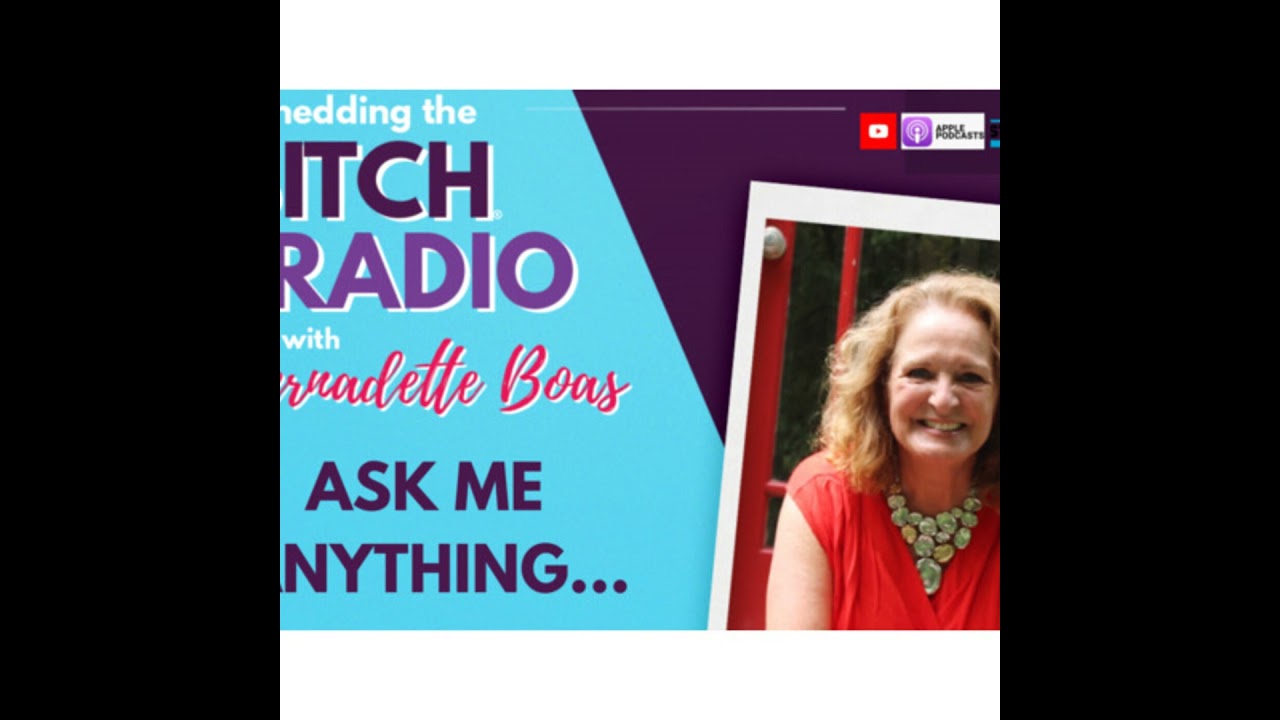
Bernadette Boas coaches entrepreneurs on three things: building a clear 2022 plan, managing post-pandemic stress and building resilient habits, and moving prospects to commitment through structured follow-up. She shares personal stories and emphasizes routines and decisive communication.
Chapters
Are you ready to create riches in your work and life? It's time for Shedding the Bitch Radio and TV, where you can discuss, debate, and get advice on how to discover and shed the bitches of fear, insecurity, self-doubt, and negativity so you can realize your dreams and life purpose and create and accelerate the riches in life you deserve. So let's welcome your ball of fire host, Bernadette Boas.
Good day, good day, good day, everyone. How are you? And welcome to this first Tuesday of the month Ask Me Anything episode. So what we do, if you are joining us for the first time, is we take your questions, even your challenges that you might be having, and I provide you some expert coaching tips and advice, sometimes tough love. So if you are dealing with something at work or at home If you just have a question about something or you, you know, need some advice in regards to relationships, planning, goal setting, what you're doing in your business from a sales or marketing perspective, whatever the case might be, you have an opportunity to not only call in live right here at 1-818-572-2910. You can also go to BlogTalkRadio where we're broadcasting our podcast, and you can go to this episode, stream down, and there's a chat function. And we're paying attention to the studio as well. At the same time, you can go to Facebook, Twitter, on, onto our Shedding the Bitch pages and leave a, leave a comment there as well, especially on Facebook and Twitter as well. As we are streaming live, I am seeing your comments and any input as we go through the episode, so feel free to post your question or your challenge and let me help you. Let me give you some tips and advice and sometimes, sometimes a little bit of tough love. Let me just make sure I'll go over to our stream in our chat room and see if what we're up to over there, if anything. We're going to be talking about several things today. We're going to be talking about questions that I've received in regards to employment. Planning 2020. We're going to be addressing questions that I've received about adjusting to the new norm and, and kind of what is that actually. That also had some elements of PTSD in it when it comes to just all the adjustments that have had to be made over the last, uh, 20, 24 months or so. And then lastly, we're going to be talking about dealing with a potential client. So you have leads and you're just not able to get them to convert. So we're going to be kind of addressing that as well. But again, if you have any questions or challenges yourself, feel free to reach out live, 1-818-2910, as well as across the board on Facebook and Twitter. Uh, let's see, where else am I streaming? Facebook and Twitter and YouTube, our Shane the Bitch TV channel. I don't know how I forgot that. On YouTube, and you can share your, your questions and your challenges there, and I will make sure I get back to you.
All right.
But before we get into all of the questions, let me just make sure I thank our ongoing and our new viewers and listeners. You are leaving, you are leaving comments and ratings, and you are subscribing, you are sharing, and you are even providing us tips and suggestions in regards to the topics you want to hear about, and the guest experts that you would love to hear from. So continue to provide that input, and you can always reach out to us at media relations at fallafiremedia.com and share with Deborah and the team kind of what is it that you'd like to learn more about or hear about or discuss or dialogue or even debate about. All right, but I want to thank all of you for finding us, whether that is on any one of your podcast streaming services or on our Shitting the Bitch TV channel on YouTube. So go check us out as well there, and you can see my smiley face, and most of the time, majority of the time, you can also, uh, see our guests as well. Okay, also I need to thank our sponsors, our longtime sponsors, NG Tax Solutions. They are a full-service financial and tax services company, and they service businesses small to corporate all over the country.. And, uh, should you have any personal or business financial or tax services needs, then reach out to Debbie Snelling and her team at ngtaxsolutions.com. And then I've been sharing with you how proud I am and honored that a local Moore, Georgia, uh, business, uh, Up Top Roofing of Atlanta, uh, has been sponsoring us for the last several months now. And Jay and his team are Fabulous. If you're in the Atlanta, Georgia area and you have any home services or roofing, gutter type of needs, then please be sure to reach out to Jay and tell him I said hi. And you can reach him at up-toproofingofatl@yahoo.com. All right, so let's, um, all right, I'm getting some comments. And that must be coming from YouTube. Uh, so let's get into your questions, shall we? Um, all right, so the first one that was brought to me— and actually, this is coming from several people— and I should note too that I often hear from you, uh, via LinkedIn, a lot of direct messages, um, from LinkedIn once somebody sees my profile or sees the testimonials that are out there or some of my content. That is out on LinkedIn, I'll get questions, especially the business questions. Majority of them come through LinkedIn, while a lot of the personal relationship or, um, just mindset type of questions come through Facebook. But wherever you want to reach out, um, feel free to do so. Okay, we just want to be sure that you are getting the support that you need. All right, so planning for 2022. So basically the detailed question was I haven't laid out my plans yet for 2022. I'm a little bit overwhelmed, not sure exactly what I should be focused on. This is an entrepreneur. They've been in business for, uh, between 4 to 5 years, uh, and, um, they— you would expect, you know, even they're expecting for themselves that if they've been in business for that long, they should already have this kind of this process in place, this routine in place, in order to get their goals and their plans laid out for the new year. But let me just reassure all of you, any of you, that even from a corporate perspective, you, you, you'll often find, I'll often find because I work with, you know, with a good number of them, but I'll often find that it could be May before they actually have their goals and their plans laid out and trickled down to the rest of the organization. So don't beat up on yourself. Don't beat up on yourself. However, the difference between them and you, if you're an entrepreneur— and I don't care how, you know, if you're a solopreneur or if you have, you know, a $100 million business, which could still be considered, you know, small— you know, what I would advocate to you is planning is all about setting the roadmap that then gives clarity and focus and and a lot of confidence to those that have to then execute against that plan. So the longer you go, even as a solopreneur, the longer you go without a plan in place, then all of a sudden, you know, things start breaking down. There isn't the real focus on what is it that I'm supposed to be doing today. There isn't the drive on what am I supposed to be accomplishing, what am I going to be measured on, what is the end goal, the end scale. State that we're looking for. So obviously, the sooner you can get those in place, the better, not only for yourself but anyone, uh, that is, um, kind of supporting you. And that could be employees, it could be relational partners like at-home partners that are supposed to be supporting you in your journey, uh, it could be part, uh, vendors, it could be strategic partners and affiliates, uh, so forth and so on, who really want to understand, okay, what is it you're trying to work on this year, and how can I support you? So, and those are the conversations you also should be having in this, you know, early of the year time period. Have those conversations about what is it, you know, that they need from you, what is it you need from them, how, what support can they provide you in return. You know, those conversations then help to kind of formulate your, your plans that you're wanting to pursue. So, what kind of plans?
If you—
and we're going to be really speaking to those entrepreneurs out there. Again, corporate often has their processes. However, if any of you are a corporate professional listening or watching the show today and you have some questions or you struggle in this area and you know that you or your team and maybe the collective corporate office as a whole could benefit from, then feel free to reach out to me. Of course, you can go to BernadetteBoas@BallOfFireInc.com and shoot me an email. But for those of you, the majority of our Shedding the Bits community who are entrepreneurs, what should you be planning is the question. You know, everything from overall, overarching, overall, what is your business going to stand for and what is it that you're going to work toward in this year, in 2022? Now, you could be one that plans 3 to 5 years out. Awesome. Fabulous. The big picture, wanting to really understand what you're doing even every month and every year leading to that bigger vision. But if I find, you know, one of my clients or someone who comes to me that just struggles with planning overall, then I just have them focus on this year. And then as we have conversations about what it is that they that they're working so hard toward. And we'll start having that bigger conversation, 5-year vision, and, you know, some other aspects. But even the vision comes into play with your 1-year plan. Because vision is, you're here today, where do you envision yourself in 12 months? Where do you want to be? And so at least lay out kind of for a 12-month period, what you want the world to look like on January 1st, 2023, a year from now. What, you know, what does your business stand for? What is it doing? Who is it serving? What products and services is it deploying? Um, what type of clients are you serving? What, what problems are you solving? What benefits and impacts are you, um, uh, giving to to your customers, to your clients, uh, kind of draw, you know, and putting all of that onto paper so you're very clear as far as what you stand for as you go into each and every day of this new year. Um, you could, you know, start, and I would suggest, you know, finding those experts that can help you with your mission statement, your, um, overall vision, your customer journey, drilling all the way into more specifically your marketing plan. But, you know, initially what I would want you to focus on is have that big picture, even if it's just, all right, what are, what are my overarching goals? What are my revenue goals? What's my profit goals? What's my take-home income goal? How many clients or customers do I want to serve? How many products or services do I want to put out, you know, put out there? And then I would want you to absolutely to then consider your personal goals. And that could be adventure. That could be your personal savings or financial. That could be your health, your fitness, your social life. Because we don't want to— as much as in corporate, a lot of times it is highly focused, majority focused on the business metrics, the business goals. We also work, especially as leadership coaches like myself, we work to introduce and make sure they're focused on the personal goals as well. And because we are people, we show up at work as people. We don't kind of leave part of us behind or at the door when we walk in. And therefore, we should have some sense of what it is, what passions do we have as individuals when it comes to our social, personal life as well as our business life, because oftentimes— and this is a real key no matter who it is that I'm working with. Oftentimes what they'll find, especially in corporate but also entrepreneurially, they'll find that what they're passionate about, what an individual is passionate about, and therefore what skills and expertise and forethought are put into their passions actually has a lot to contribute to the business goals. And what it is that they're working to, to accomplish from a business perspective. So I would definitely want you to, in your planning for 2022, consider all of that. Obviously look at the business. What is your business goal and objective? Where is that revenue, profit, income, number of clients, products and services that you want to be achieving by the end of the year? At the same time, ensure that there's personal and professional development goals included, because again, ask yourself, what in my personal life can I contribute to my professional life? For instance, I play pickleball. And I started off playing singles as an individual contributor, if you want to look at it that way from a business perspective. And then, of course, I moved on to doubles, so a team. And so now I'm part of a team, and therefore— and trust me when I say I have struggled with this from a pickleball perspective. Because, you know, because now I am, you know, someone is relying on me. Someone is depending on me. So, my skill is important, but the combination of our skills are important, or the combination of our expertise, the combination of our talents, the combinations of our experiences all come into play. And yet I have brought so much from my pickleball playing now into my business. As well as, you know, I definitely have leveraged my 35 years of business into my pickleball playing. So don't eliminate those from your planning as well. That would be where I want you to start. Now, of course, there's planning, like I mentioned, you know, your marketing plans, your sales plans, specifically drilling into, okay, so we have these overarching goals for the business. Now what are we going to do strategically and tactically to achieve those? And that creates your kind of your sub-functional plans, which could be your marketing and your sales and your HR, so forth and so on. Right now, and, and what this individual is looking for, because they felt very fragmented in regards to just like not really having a solid foundation at all for their business. And, you know, they were concerned going into a new month of already the new year, um, you know, they didn't want to get further down the pipeline in order to, uh, address it. And so that's what I would suggest. Okay, all right, let me take a peek at a couple of places. I am getting some comments from YouTube, um, but let me take a look over here, make sure I'm not missing anyone. Good afternoon, Healer Medium. Good afternoon. Let me just type you a quick message. I don't have Alex or Deborah with me today, but that's okay. And again, should you have a question, you could post it into the chat, chat room. You could call 1-818-572-2910. I am here live. Or you could put it on Facebook, Twitter, or YouTube, and it'll come into my stream as well. All right, so I'll keep an eye out for Healer Medium just in case they have a question. But we'll move on to the next one, which is from Sandy. Adjusting to a new normal. How do I adjust effectively to a new normal? I feel like I'm dealing with PTSD. Sandy, I am so glad you kind of extended that and recognized that you might be dealing with a form of PTSD. We all, I have talked about this a number of times over the last 20 months or so. And oftentimes we consider PTSD to be more, you know, about those coming home from the military or dealing with, you know, some severe tragic event in their life. And for many, this past 24, you know, months, and you will find me not wanting to use the C-word. Because I do not want that to be anyone's focus. Your focus, and to Sandy's question, is right where you are right now. You kind of focusing on and putting energy into that bigger issue, and in this case, the sea, is what is going to cause you to continue to be a little bit breathless, if not a lot, stressed, anxious and, you know, kind of feeling as if, yes, I am dealing with PTSD. And you have complete, well, I want to be careful here, I want to be careful here. You have control over that, how you respond to it. But I do want to address the comment in regards to the new normal. The, you know, new normal, oh, great question from, thank you. Great question from Sandy. Yes, it is. It's not Sandy, is it? You're not Sandy Healer, are you? Uh, because if you are, I'd love to talk to you directly. But, um, so the new normal— the new normal is what you make it out to be, okay? The new normal is— so for instance, a lot, you know, people have had to adjust from a business perspective. That oftentimes that's easier for people to start with is because it almost logical versus emotional when, if they have to start talking about their, their life and their life as they go into society, as they interact with their family and friends, or they, you know, feel that they can't. And therefore, you know, that's where the anxiety starts when they really focus on what they're lacking, what they're missing, what they're not able to do, as opposed to let's start at least having a conversation in regards to what can you be doing, and creating a new normal around your business. Because again, people don't look at that so emotionally. So from your business perspective, yes, a great many— I don't have a statistic on it, I wish I did— but a great many, if not everyone, had to adjust even from a business perspective. Corporate, entrepreneurial, solopreneur, uh, product companies, service-oriented companies, uh, and Some have done it very effectively and others, and maybe it's Sandy, continue to struggle. And so what I would suggest doing, and actually this is a good segue from the conversation in regards to planning. So what I would consider is go into a planning mode. All right, so where was my business in 2020, 2020, early 2020? Use it as a benchmark. Don't use it as a point of anxiety or as a point of comparing or judging or feeling like you're lacking. Just simply look at it as, okay, where was my metrics, um, in January of 2020? Where were they in January 2021? And where do I want them to be? Or where were they January 2022? And where do I want them to be in January 2023? So just logically work through your business plan, unemotional. Just work through it as far as where do you think you can, you know, what you can accomplish and where you can be in 12 months from now. And then start looking at, okay, so how has my business changed? What did it look like in early 2020, even 2021? Because a lot of people, you know, already had adapted and pivoted to a new business model in 2021. Now, if you are a little bit delayed or stalled in regards to that, there is no judgment. Do not beat yourself up. Just use today, right now, at this moment, as an opportunity to say, okay, so this is where I am at today. Where do I want to be? What do I need to do? How do I need to adjust? How do I need to pivot? What does that look like? You know, is it one that many of us— I have been online for 10 years. I didn't have a big adjustment at all because all my business was— not all, 90% plus was done interactively, online, across Zoom, virtually, you know, so forth and so on. But a lot of people have not, and therefore that was an adjustment for them. And now some are going to more hybrid. They're finding that, yes, they can go and meet, you know, people face-to-face. They can go do speaking engagements. For those of us in the, you know, in the services industry. They can go and do something, even product development. I can get now into a plant. I can meet with my, you know, development teams. So now there's more of a hybrid. Yes, we're still focused online, but now we're starting to blend in some virtual, some remote, some in-person, some face-to-face type of activities. So what will that I want my business to look like, and where do I want it to look like between now and next year? So I'll use myself as an example. I, like I said, I've been online virtual for many, many years. And yes, I did love going out and doing public speaking, and I did love going out and interacting face-to-face and across a conference table, so forth and so on. Yet I was also effective virtually, even became even more effective, found great tools, and just a kind of a mindset and an approach, um, over the last 12 months. So then when I started looking at 2022, I said, you know what, whereas it might have been, uh, 40% in person, 60% virtual in 2020, um, it started moving to like more 50-50. I'm sorry, I'm sorry, it started moving more to, you know, 70/30, 30 being face-to-face. And I would say for 2022, my goal is I'm going to do 80% virtual, 20% face-to-face. The 20% will be kind of high-level, critical, must-do face-to-face type of, of activity and engagements because I've you know, just have found an approach and a framework for doing as much as possible virtually. And I do have— I've always had a global presence, so consider that in your planning. Consider that in adjusting to your new normal. You know, were you more local and now you spread to country, but now you can spread to global? What does that look like? So that has been my plan and will continue to be even greater percentage of my business over the next 12 months.. And that too allows for virtual. It doesn't mean I'm getting on a plane and flying anywhere. So again, look, start with the business and start getting into a mode of adjusting and planning from a business perspective, because as I mentioned, it's more logical, unemotional. It's all kind of black and white, matrix graphs. I'm trying to make it, you know, as simple as possible in, in the description. Before we move into what do you do from a new normal kind of emotionally in your personal life, in your, in your being, and that can get a little bit, then it gets a little bit touching on, what is the word I am looking for, touching on your heart. Touching on your heart as opposed to touching on your brain. Business is brain. Life is heart, so let's move into that, okay? Because the, the, the brain and the business, you know, you're locked in on that, I'm sure. If not, then reach out to me and let me, you know, help you and, and, and share 30 minutes of my time to help you with that. But from a heart perspective, as an activist, I feel the need to help facilitate change. I'm not Sandy's. I didn't think you were a healer because I figured if you were, you would have said, "Hey, it is Sandy." But, you know, that is funny. I am not Sandy. But she is an activist and she feels the need to help facilitate change. That is awesome. Now, I would like to throw a question at you, and you can continue putting it in the chat. But are you saying that that is a good thing? Or are you saying that you just kind of fall into it? Do you, is it beneficial to you to help you with your new norm? Or is it a little bit challenging and stressful? I would love to know. Just as a, I am just curious. And thank you for sharing. Thank you for sharing. So, like I said, you can reach out to me in so many various ways. She is out on BlogTalk. She found today's episode. She scrolled down and found the chat room. And at the same time, she has an opportunity, just like any of you, that should you want to reach out and talk to me, you can dial 1-818-572-2910. And I will keep a watch out for that. But now let us kind of pivot into more of the emotional, personal space. "I do not want the new norm, so the only way is through change." That is, that is beautifully said. That is beautifully said. But I want to throw something out at you. Your change is then naturally your new norm. But, you know, because a new norm, and this goes to Sandy as well, I'm just making sure I have the right names to the right questions. But this goes to Sandy as well. The new norm, that is kind of a sterile, kind of it feels almost forced upon type of term. So let's kind of put that aside. What does life look for for you and what do you want life to look for you now? And how do you make your life— these are the questions you want to ask yourself— how do you make your life the most effective, the most joyful, the most fulfilling, the most happy, the most complete regardless of what's going on around you? But you have to take those things into consideration. Because, you know, you were not required to walk outside your door and wear a mask. You were not required, you know, 20 months ago to walk out your door and worry if you are 6 feet, you know, apart or too close to somebody. So, there are reality checks we have to all bring into it to say, okay, so that is not normal, or it has not been, but it does not look like it is going anywhere anytime soon. And I'm talking from a general perspective, not your personal beliefs or your personal, um, uh, approaches to it, just generally. Um, so how am I going to change? To Healer Medium's point, how am I going to change? Um, and how am I going to allow that change to feed me, to benefit me, to make me happy, as opposed to all the other negative and I don't even like to use a lot of those negative words. So what am I going to be able to do, and what can I do? What do I have control over? So as I had mentioned, not only did I, you know, not have a huge adjustment business-wise as a result of 2020 and 2021, you know, I just took the percentage I was doing online and I just amped it up. And I spread it out, and I, you know, elevated kind of my appearance or my approach to being online and being virtual. So, my pivot wasn't a huge pivot like some of yours has been. At the same time, even personally, you know what, if I want to, you know, if I want to be healthy, if I want to prevent myself getting sick or preventing me getting someone else sick, then I need to wear a mask. Okay. I need to stand 6 feet away. I need to stand 6 feet away. I need to not go out in public places. I need to not go out in public places. You know, I need to not see my family. Okay, then I do not see them physically, but I do get on Zooms and I, you know, visit them that way. You know, we all have a choice as to how we handle situations that disrupt our lives. And it doesn't have to be— it, and it can be— I'm going to put it in the positive— it can be however you want to construct that. Okay, not allowing the, the noise around you to have such an impact. Of course it's going to have an impact. Of course it is. Are all of our lives changed? If anybody says that it hasn't, they're, you know, they're BSing themselves. Okay, our lives did all change. It's just a matter of how much control did you have on how you responded to it, and therefore how you worked your way and walked your way into it. Um, let me see, I want to read Healer Mediums. I've been seeing it come across. All right, she's saying, standing in my truth, being the loving, compassionate person I am. I used to volunteer for hospice but can't anymore. Oh my gosh, I could get in a whole conversation with you about hospice because talk about a beautiful, beautiful process. I went through it with my father. So all the love to you for that. She goes on to say the small business people in Canada are suffering greatly. They are forced to close and open at a whim. You know, I definitely do not want to dismiss— I do, and I'm not dismissing the fact that people's lives have been turned upside down and they don't have that choice. Of pivoting. But I would also— I would need to throw out, because I'm a business coach, right? I, I spend all day long on, on calls kind of strategizing of how to take, you know, a good, a strong business and make it stronger, and take a weak business and totally change it or totally pivot or make adjustments to where it can continue on. So, um, I don't want to dismiss that, like Healer Medium saying that, you know, there's businesses in Canada that are suffering greatly. I totally, you know, appreciate that and understand that. And, you know, what I would love to be able to, you know, say and help each one of those business, business owners with is, you know, find those individuals around you, find those— whether it's experts you pay for or it's just people in your life who can strategize and help you with creating new ideas and new approaches. And, you know, new ideas— I said that— new approaches and new ways, strategies of how to continue. How to continue. Maybe it's not with that same business. Maybe it's with a whole other business. Maybe it's with a whole other job. Maybe it's with a whole other request for investment or request for, you know, help and loan or whatever the case might be. I guess my point, and what I will leave Sandy with in this regard, and all of you with in this regard, is PTSD, when it comes to everything we have been through, is real. You know, the, you know, it is going to be a long time, if ever, that even if when the masks go away, and when the social distancing goes away, and, you know, we are back to the new environment. I will not call it the new norm. I will call it the new environment that we are in. They will, there will be, you know, kind of triggers that we all feel, that, that people feel. That people feel. I do not want to make generalizations. That people feel. And we have to appreciate that. We have to support that. We have to recognize that. And we have to help with that. And so, what I would say to adjusting to a new environment is just Identify those things that you can control and you have control over. And then, like many people, including myself, I used to listen to the news the minute I— my schedule was based on when I woke up, I wanted to be up at a certain time to turn on the television for a certain news briefing, news, news show to give me what I needed for the first 10, 15 minutes of the day. And then I would go off into my, my world. I would watch some degrees of news in the evening. I do not do any of that now. I look for what I need. I listen for what I need. And then I kind of close out everything around me because I just cannot take all of that. You know, we have had a lot of drama beyond, you know, the, the C-word over the last couple of years. Think back to 2018 all the way to, to now. So, find your, Find your happy place. Focus on finding the place right now where you can thrive, where you can really feel fulfilled, have fun, be complete. Make the adjustments that are needed, recognizing that it is what it is, because it is, it is. You can fight it all you want. You can fight it all you want. If you have mandates, if you have restrictions, It sucks, and we all need to acknowledge that. But we're just killing ourselves if we just fight, fight, fight against it, as opposed to figuring out what can I control around it. Okay? So, you know, again, reach out to me further, Sandy, when you watch or listen to this, and let me, you know, let me see what I can do specifically beyond what it is that you provided. Okay, um, all right, I'm gonna— I'm just bouncing back and forth, but we're gonna get on to our last question, um, that we have. And again, there's still time, uh, to, you know, post your question, call in your question, um, what— whatever you might need. And keep in mind too, especially if you download this and you listen and watch it later, you can reach me anytime. Go out onto Facebook, Shedding the Bitch, go to Twitter, Shedding the Bitch, go to LinkedIn, Bernadette Boas. Shoot me an email, BernadetteBoas@ballofireinc.com. Don't feel as if just because Tuesday, you know, the broadcast is over that I'm done, you know, following and, and making sure I get back to whoever reaches out during the program or after. All right, the last question, um, and I don't have a name to it. The last question is, um, I'm dealing with a potential client Who won't commit? Who won't commit? Oh, I— oh, wait, wait, I am sorry because I have a note here. I do want to say one more last thing about the PTSD and adjusting to new life. One thing I do want to make sure I get in there. If your routines and habits, like I said, my half, you know, my morning routine of turning the news on, if they have changed, then I— then kind of create your new habits and routines. But have habits and routines in your life. I like purposely sit down and consider what are the habits and routines that keep me sane, that keep me organized, that keep me focused, that keep me happy, that keep me fulfilled, that keep me, you know, whatever you want to be, active, lazy, you know, whatever. What are those habits and routines? Habits and routines are absolutely critical when it comes to staying, you know, kind of in place, staying in control of what it is that you can control., all right, and being happy and fulfilled. Um, okay, so the last one being, um, how do I deal with a potential client who won't commit? Well, welcome to entrepreneurship is all I have to say about that. And actually, this isn't a new, a new, um, a new customer, a new business owner, um, but relatively, uh, and I had to say that because that is, that's, that's the one That's the one thing, you know, that if there was a genie in a bottle, every entrepreneur would want to, you know, kind of rub it and go, oh, I want every one of those leads that I find, that I qualify, I want them, 100% of them, to be converted into clients, paying clients as well, and more importantly. And yet, you know, we can only do what we can do. So what can you do? You can have in your sales process, right? You have, you know, the touches, the communications, the follow-ups, the persistence that you, that you, you need in order to see a lead go from, you know, you know, cold as ice because you don't know them at all, to all those stages and communications and marketing and touches that you're going to do along the way. And then when you finally get them, it doesn't end. It doesn't end, you know. And let me say, when they finally get them even being a potential client— so you take that cold, it gets warm, it gets warmer. Oh, they've voiced interest. Oh, they've agreed to the price. Oh, they've agreed to the framework of what it is that, you know, you're providing them. And yet, chirps. You just hear chirps for days, weeks, you know, when it comes to actually opening the wallet and paying you. But even that section of your sales process needs to have steps that you're going to take with the frequency you're going to take them. Because my philosophy is this, and it's one I learned when I came, you know, from corporate and onto my own, struggled with sales, struggled with rejection. And, you know, someone said to me You follow up until you get a solid yes or a solid no. You don't get maybe, I'm interested, yeah, that sounds great. It has to be literally the word, written or verbal, yes or no. Yes or go away. Yes, I never want to hear from you again. What, you know, whatever that is. So you need to come up with steps and a time— and time— as a frequency is the word I was looking for— as to what you need to do to get that yes or that no. So you just get creative in the type of messaging and in the frequency. Keep in mind your own practices when it comes to sales, all right? Put yourself in their, their shoes. Uh, in this case, yeah, in this case, um, she followed up and got a message on a Friday, um, and she sent a message on a Friday saying, okay, we're good to go, let's go. And it's now Tuesday and she's questioning, you know, that they're still not pulling the trigger. And so the first thing you need to ask yourself is, well, is that reasonable? Between Friday and Tuesday, because I don't know about you, but one, it was the weekend. I might not even have seen that email, uh, depend on any time on Friday when it was sent. It was my birthday weekend, by the way, um, and therefore I didn't really do much of anything until last night, because then all I— when I did do work over the weekend, it was on a huge project I had yesterday morning. And then I was so exhausted afterwards and not necessarily feeling well that I really didn't get to anything other than scrolling through my email, but I still didn't pay attention to really anybody or anything until this morning. So you want to kind of really consider a lot of aspects, you know, the amount of time in between and messages you could be sending. So the messages could kind of elevate from, "Hey, I'm so excited that you're, you know, coming on board." "Here is the information to lock down your program, your payment, and your schedule. And I cannot wait until you come on board and we work together." And then you are getting chirps, chirps, chirps. And then the next one is, "Hey, I just want to make sure your message, my email message, did not get into spam. And I am holding open these slots for you." please let me know by, you know, by week's end that you're moving forward. And then if you still haven't heard from them, you can get direct and say, hey, I, you know, I'm, you know, have you decided or have you found another program to participate in to get the results that you and I have talked about? And, you know, all you need to do is say yes, you're moving forward, or no, because I'm going to start giving those slots, you know, to other participants, that type of thing. So that's the type of kind of momentum that you want, but you keep persisting it until you get a yes or a no. All right? You know, recognize that this is part of entrepreneurship. This is part of business growth, business development. And it happens in corporate as well. And so all you need to really focus on is what do I need to do and what do I need to say and when to get a yes or a no. Okay? All right. So those are our questions for today, and right on time. I want to definitely have you join us each and every Tuesday. We have experts 3 weeks or 4 weeks, depending upon the month. And then we have this Ask Me Anything episode the first Tuesday of every month. And all through the month you can post your questions. Questions or challenges out on our Facebook, Twitter, YouTube, LinkedIn pages, and I get with you right away. And then we just bring them here so more people can understand how they would address if a similar question or situation came up for them. All right, so for everybody here in the Shedding the Bits community, look forward to seeing you and hearing from you this time next week., and have a prosperous, rich week. And don't hesitate to reach out should you need absolutely anything. All right, we will talk to you soon. Bye.
Thank you for taking part in Shedding the Bitch Radio and TV with Bernadette Boas.
We would would love to know what your biggest takeaway was.
Go to Shedding the Bitch on Facebook or YouTube and leave a comment. You can also subscribe to the show on Apple Podcasts and YouTube so you don't miss a single episode of the show. And with your input, we can help other powerhouse women just like you find the show and decide if it's right for them. Learn more about Bernadette at balloffirecoaching.com. See you next week.
More from Bernadette



From Stuck to Leading, Episode 2 — Meet the 5 Inner Fears Destroying Your Leadership



