Ask Me Anything with Bernadette Boas
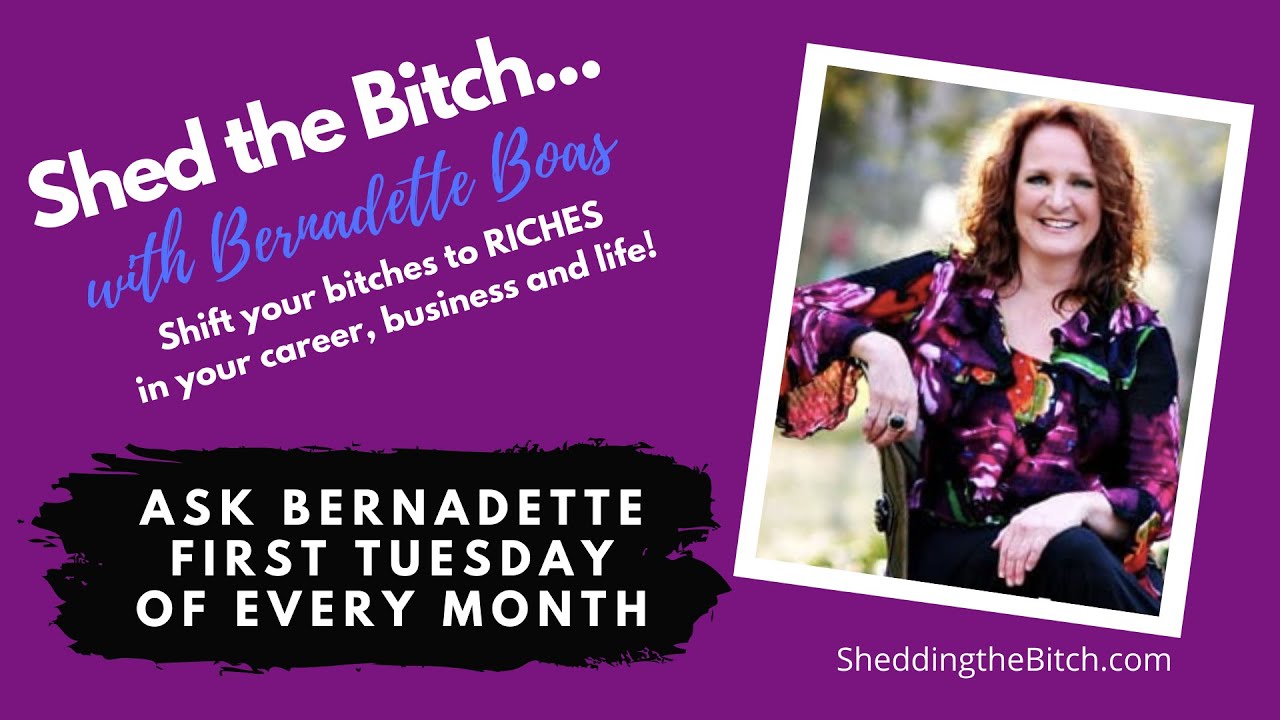
Bernadette Boas answers listener questions on coaching certification, vision boards, accountability partners, and how to stand out as a coach. She draws on 25 years in corporate work to offer practical advice on motivating job-seekers and organizing your business with an organizational chart.
Chapters
Good day, good day, good day everyone. How are you? It is a beautiful day here in Atlanta, Georgia, and I hope it is wherever you might be. Today is our Ask Bernadette episode, and this is gonna be all around what your questions, your stories, your challenges, the things that you're dealing with. So I have a number of questions here in front of me that you have DM'd me, that's becoming more popular with you, as well as you sent me, whether that was in an email or through LinkedIn, which is where I get a lot of them. So we'll be addressing all of those today, but if you do have any questions, stories, or challenges that you're dealing with that you'd like to have answers to, then be sure to go to our Shedding the Bitch Facebook page. And leave a comment in one of the posts that lists our Ask Me Anything episode. We're also attempting to broadcast to you live on our Facebook page. However, it seems to be having an issue right now coming through Zoom. So we'll see what happens there. But anyway, so this is, our— let's see, our first Tuesday of May. Can you believe it? We are 4 months past the new year. It's amazing. It's unbelievable. But I do want to remind you of a few things before we get started. Some of our earlier episodes that have been all around kind of what you all are dealing with right now through this isolation, through this pandemic, through however it is that you're interpreting it. So we've had conversations about how, how serving others could actually be a great tool for you to use to kind of get you out of your head and maybe out of where you're uncertain and stuck and confused about what it is that you should be doing and, you know, how you need to be maybe pivoting or shifting. So if you actually turn it away from you and what you're going through and turn it over to helping others. Maybe volunteering, maybe, you know, people are making masks, people are packaging, you know, bags of food and bags of supplies and distributing in their community. Some people are just picking up the phone and calling someone and seeing if they need anything, if they need help, or simply to say hello. So that was that whole conversation around how You could be using service to kind of help you jolt yourself out of whatever it is that you might be consumed with. We talked about persistence being a really key, uh, to your success, especially in trying times, whether that's today, tomorrow, or in the future. And the fact that, you know, if you stay focused on not only having that plan but taking those actions. And whether or not it's harder than it was a few weeks ago, or it's easier, or it's just more challenging, or you're not sure what to do or what to say in these times, just keep doing it. Persistence is key. And then we had a conversation with Melanie Brown, a fabulous conversation in regards to finding hope in the darkest of places. And that was just a very inspiring discussion as well, because she collects stories stories around overcoming tragedies, women who have really gone through hell and back and have overcome and thrived and achieved. So take a look for that. You can find all of our episodes on both sheddingthebitch.com/radiopodcast page, or you can go to our Shedding the Bitch YouTube channel because many of the episodes, especially recently, have been recorded, and so we're sharing them via YouTube as well. All right, now next week we do have a guest. We're gonna hear from Howard Wolpoff, and he's gonna talk about how to prepare for post-COVID-19. So that's really for business owners, and actually there's a lot of conversations for just about anyone in regards to what do you need to be doing now to then be prepared for when things do start loosening up, things start attempting to go to a new normal, and, uh, what, uh, kind of sales marketing strategic steps could you be taking, um, in regards to that? So that'll be next Tuesday at noon Eastern time. Now, um, as well, I want to remind you, uh, Monday, May 11th— that's next week if you can believe it— uh, we kick off our 5-day Goals to Riches Challenge. And so basically what we're going to be doing is we're going to be really challenging you. I will be challenging you. I'll be your coach for the week to really instill in you and help you to create your goals, or even maybe you have them but you need to enrich them, change them, pivot them, whatever the case might be. So you're actually going to be, you know, given that opportunity to create your goals We're going to talk about how then you need to find the best way to— ways to prioritize, time block, and take action on those goals. I'm going to be coaching you along the way as well. So these will be live demonstrations, live modeling of what coaching looks like, because I get that a lot. You know, what do you do as a coach? So you have an opportunity in a free 5-day challenge to not only get yourself motivated and inspired, but also to get those one-on-one or group tips, advice, and inputs that you need in order to really act on your goals and achieve them. You're going to learn how to be a time manager. Now, I go beyond time management when I say that you really want to take on a role of a time manager, and trust me when I say it's going is going to massively increase and maximize your productivity and therefore your results. And then of course, for showing up, for doing the work, for focusing on you, we're gonna be giving a lot of things away. We're gonna give away Amazon gift cards, we're gonna give away journals, we're gonna give away copies of my book, Shedding the Corporate Bitch, and I'm giving away a 3-month coaching engagement with me. For showing up, for doing the work, for participating, for collaborating, for you really taking the time out to focus on you. All right, how does that sound? You can go to goals2riches.com to learn all about it. All right, now as I mentioned, today is all about you and your questions, your challenges, your stories, and I even got one of those. That we'll discuss. And again, feel free to DM me, feel free to comment on our Facebook page. And I do, it looks like we have gone live on Facebook. Deborah can always go out and verify that for us on the Shedding the Bitch page. You can, you know, DM me or comment right there if you have any specific questions. Now keep in mind, if we don't get to them today, 'cause we have a number of questions to get to, and/or I don't see them or Debra doesn't see them before we get off the call, I will respond to you quickly and at the same time may even suggest we jump on a 10-minute call. All right? So take advantage of that. And we're going to be talking about, you know, stepping in and asking your questions because that was one of the stories that I had gotten and I kind of turned it into a question because that's basically what they were asking for. All right, so let's think about a couple things. I just want to thank a couple of organizations that have supported the Shedding the Bitch community and all the work that we've done here in the last, wow, 5, 6, 7 years. And that is Deborah, Deborah Parker of Parker House Virtual Services. She provides admin— virtual assistance and social media support to small to corporate-sized companies. So should you be interested or want more information, please email her at deborahparker.va@gmail.com. I also need to thank, and more than I could ever imagine, thank Debbie Snelling of the North Georgia Tax Solutions organization. They provide financial and tax services to small and corporate size clients. You can learn more about her and her fabulous team at ngtaxsolutions.com. All right, okay, let's see, what else do we need to talk about before we dive into this? Oh, oh, um, since we don't have a rich question today because we have a number of them that have already come in, um, you can still tag with us, rich tag with us. So if you are on Facebook or Twitter and you have comments or feedback or anything, then hashtag with us #AskMeAnything or #AskBernadette or of course, hashtag #ShedTheBitch. All right, okay, so let's dive into this because the questions are very interesting for sure. Uh, now the first one is, uh, okay, courses for becoming— oh, okay, so courses for becoming a coach are popping up everywhere. Some tout getting a certificate while others simply say you can learn to be a coach in a matter of days with their training. Do I need certification to become a coach? Ah, this is a great question, and you're gonna learn why in a minute, in a second. But let's unpack that question first, okay? Because there was a lot of things in there. Yes, there are tons of courses and, and tons of certification opportunities to become a coach online. You just need to go to Facebook, Twitter, even Instagram, and you will find them. You can even go to LinkedIn and you will find them. Now, there is nothing wrong with that because the fact that there are so many people transitioning, pivoting, shifting, deciding what it is that they now want to do. This whole pandemic isolation has caused a lot of people to rethink what, you know, what matters to them, what their why is. So, and a lot of them are steering into other business opportunities, one of which is becoming a coach slash, slash, a consultant. Now there is a difference to that, so you could take that slash out. So coach or consultant. Now the important thing about that, and I'll get to the question about certification in a second, but the important thing to consider about that is if you are looking into any of those things, you are most likely a professional, right? You're, you know, whether you've worked on your own before and now you just want to pivot your own business, or or you worked in corporate and now you might want to go out on your own. So be smart about this. Consider what that means when it also says that they're touting you can learn to be a coach in a matter of days. Now, there are quick, uh, get quick rich— get quick rich— get rich quick scenarios. And then there's, no, I've been doing this even though I've worked for corporate for many, many years, for even decades, And no, I have a lot of those skills and a lot of those talents, and I've been doing it, whether it's coaching, mentoring, whatever the case might be. And so therefore, simply kind of, you know, changing my— the front banner of my office from whatever you were doing in corporate to a coach isn't a huge transition. And, you know, that's a case for many, many people, even people that really never considered themselves as a coach or a mentor while they were in corporate, like myself. I didn't necessarily put those titles to anything and then realized, yes, those are a lot of the skills, a lot of the responsibilities that I had as a manager/executive was to coach and mentor. And therefore, I do have, you know, the skills necessary to become a coach. But those of you who really feel that, well, I never really have been a coach or, you know, a mentor slash a consultant, then you really need to dig into the viability of whether or not in a few, you know, in a few days, in a few weeks, you could walk out and start coaching. I'm not saying that you can't. You just really want to make sure that you're doing your due diligence before you make any sort of investment in that you're going to get out of what it is that you need from the various types of training programs that are going on out there. There's some that are, are just a matter of days, and then there are some that are actually weeks and months long programs that you have to go through to prove your ability to be a coach. And then there is the more formal certification process that actually takes even more than a year and you actually need to get hands-on experience before you can get that certification. Uh, now, uh, so I hope that answers a lot of those questions. Now, to answer the question about certifications, um, I am of the ilk that not all certifications are good certifications, not all certifications are needed or required certifications. And not all certifications hold any weight or value. So why do I say that? Well, first, from my 25 years of experience and 25 years of being in corporate, being even responsible in my last several years around the certification programs, I really, you know, kind of dug deep to really evaluate What is it that the people are putting into the certifications? And then what are they, you know, taking out and being able to leverage and maximize with a certification? Well, majority of the time— and when I say majority, I'm talking 85% out of 100% of the time— I found that the only people that were able to get certifications were people that were on the bench because of the fact they didn't have the real-life skills and proof, evidence, that they could do a certain job that required that certification. So the people that were on the bench had all the time in the world to get certified, to take courses. Now, the key to certifications is the— what I talked about in the formal certifications is actually applying what you're learning into actual work, into actual coaching. In this in this regard. Uh, so you go into a training course with never having sat down with a client and actually coaching them and walking through a process and walking through, you know, an approach. Um, certainly can be done, and yet at the same time, uh, it, it will have an impact on what, you know, how slow you are to being successful or if you are successful in doing that. Okay, so, um, look at certifications as you need to be able to not only put in the time to get training and education, you need to put time into getting the application of what you're learning and the evidence and the proof that you have. Um, all right, so that's one aspect of that. The second aspect is this: In the 12 years— yes, 12 years now, uh, let's say it's 11, let's say the first year doesn't count. So in the 11 years that I have been coaching, um, and I am not certified, okay, so I, I'll put that out there, I have never lost business because I don't have a certification. And the amount of times that I was asked if I have certification is 1 or 2. I won't even go higher than that because it's not. Uh, so you have to put— you have to weigh that as well, because real certifications that not only are teachings but are application— are you having to go out and find clients and coach them and bring back kind of evidence and proof and, and verification, um, of how you've applied all the learnings and the lessons. It's not inexpensive. It is an investment. I'm not going to call it a cost or an ex— or an expense, although I said expensive. But I, you know, don't look at anything as an expense or a cost. Look at it as an investment. And is the investment going to give you what it is that you need so you get a return on that investment? And personally speaking— and so all those certification companies out there, don't come smacking me upside the head, it's just my opinion— you need to weigh that very closely as to whether or not the investments that you're making are going to give you what you need in order to get clients. So one thing I would just suggest is start coaching, start applying, start doing and get the verification and evidence yourself. And if you're finding that you're, you're getting hit up, um, with questions about your certification, then by all means make a decision as to whether or not you want to make an investment in that. But, uh, you know, personally speaking, granted I had 20, 25 years of on-hand, hands-on experience that I was able to then immediately take out to building my own practice, you know, that counts for a lot. But at the same time, I wouldn't want to discourage anyone if this is a calling for you to be a coach, to be a mentor, and even if you were going in the space of being a consultant. All right, just do your, your work. Now, as far as, you know, really quickly, as far as finding, you know, the right place, the right training, the right certification program that you might want to take, then do— just do your, do your homework. Make sure that you're looking at their credentials. Make sure you're looking at their background, client testimonials. Not everyone has client testimonials. I'm just starting to work on client testimonials because for 7 or 8 years of those 11 years that I talked about, it was with clients that didn't, you know, that didn't want to disclose. I still have a few of those. That they have a coach. Now, yes, a lot of people are proud that they have a coach, and yet others are not, and I'm not here to judge. So just be sure to do your, do your homework. Look at their, you know, testimonials. Look at their recommendations. Look at their endorsements. Look at their, you know, the clients that they have, the type of clients that they have, so forth and so on. All right, so I hope that answered your question in regards to certification. All right, let me just take a look here. Deborah is not seeing this streaming live on Facebook, just FYI. However, it is recording, so I will get it posted up on— I will get it posted up on Facebook, okay? Because it doesn't show that I could It's showing actually that I'm live on Facebook. Let me just hit that just real quick for a second and just see. But while that's doing its thing, I will— the next question we're going to talk about is vision boards. Vision boards. Share on a page. Okay. So I'm going to just play with me. Bear with me for a minute, especially those listening. To the program as opposed to watching it. We're just going to give this a shot and see what happens here. And Deborah, just keep an eye out for that. But again, if not, then we have the recording from Zoom that we can use. Okay. Vision boards. So the question was— and this is why I really wanted to ensure that we were kind of broadcasting live, but again, Zoom will have it on its recording. So they said, I saw a vision board behind you on one of your videos. Do you believe in them? How can I go about creating one? And you're right, I will pull up— yes, if you can look over there, you will see— you're not going to see this live, by the way, but if you come back and look at the video, you will see my framed vision board over my shoulder. And yes, I absolutely love and believe in vision boards. And let me explain why. And this, a lot of this is my opinion, but at the same time, it's also that of, you know, of just other believers. But it actually comes down to, if you're a visual person, vision boards are great for you. If you're not a visual person and you're more of a spreadsheet type of gal or guy, then, you know, that might be good enough for you to just spill out your goals and your dreams and your aspirations on a spreadsheet. I actually get from a number of my clients, I actually get them sending me their business performance and personal goals on a spreadsheet. Fine with me, as long as you have goals. That's, you know, my biggest, my biggest interest. So, but the real reason why I feel strongly about vision boards is very much for these, these, you know, overall beliefs. And that is what you focus on expands. You know, what you focus on expands. So if you know, that also has to do with just getting your goals out of your head and putting it onto a piece of paper, whether that's a piece of paper in handwriting, piece of paper on a spreadsheet, or piece of paper from a magazine on a vision board, or a photo on a, you know, virtual application. It doesn't matter. So you just want to focus on what it is that you are wanting to achieve, and in a lot of cases, what you're really working hard to achieve. The other thing is your dominant thoughts rule your actions. So if you really write them out, you give them a lot of thought and consideration and planning, then, you know, they start to be instilled, and therefore, you know, you, you find focusing on them a lot easier. And what you put out in the world comes back to you. So those are 3 beliefs that I have. What you put out in the world comes back, meaning you lay— you put out your goals, you put out your dreams. Now again, you don't need to do it from a verbal perspective. You don't need to do it like I. I have no problem sharing my goals, my dreams, my aspirations, my bitches, as we talk about here, or my vision boards or anything else. You know, and I don't even mind sharing that I'm going after a certain goal and I share it on Facebook and Twitter. Some people think I'm friggin nuts, but I like to put it out there. It's a form of accountability, which we're also going to talk about. It's a form of accountability for me. It's not to boast. It's not to brag, as I've been accused of in the past. It's really to hold me accountable. And shoot, when you go out and put it to the world that you're doing something, you kind of feel like you need to do it. You don't want to be going back out going, "Yeah, no, that was just a fluke." So anyway, so yes, vision boards are great visual interpretations. You know, of your goals, of your dreams. At the same time, they don't necessarily only have to be, like I said, visual. You could create— if you're audible, if you'd like to kind of put in a podcast or put on a recording and listen to something, you know, on the radio as you're, you're driving or walking or sitting at home, you can always put together an audio of your goals and your affirmations and your quotes and your statements. And you could describe visuals of what it is that you're working to achieve and use it from an audio perspective. There's a great many ways that you can kind of basically put your goals down so you can focus on them and they'll expand so you can think about them. And then take action on them. So you can put it out in the universe what it is you want so they can come back to you. So let me give you a few options that you have in, in regards to creating one. Um, so there's a number of apps out there, as you probably know. There's a number of apps out there. Uh, you know, you can use Dream It Alive or Hay House Boards. They are actual, more so virtual Vision Boards. So they're online, they're an app, or on your computer. And they are a vision board app. And the reason why I emphasize that is because— or you could go to just Canva or Pinterest or PowerPoint, and you can grab a bunch of photos, a bunch of quotes, a bunch of affirmations, a bunch of statements, you know, just individual words. If you look at mine, I pretty much— and again, if, you know, we aren't live from what I can tell, and I'm sure Deborah will verify that. So noon on Facebook Live may be heavy traffic, but we will get this recording so you can always look at my vision board. But if, you know, you're looking at my vision board, you'll, you know, you'll see comments there. You know, it says, "I'm sexy and I know it," and it says, "Fashion liftoff." And then there's things that say— I'm going to turn around— there's things that say, "It's like a big exhale." There's things that say creative and pitch perfect. That has to do with— not me singing, trust me— but me pitching my screenplay, which is— that's what that's all about, pitching my screenplay. Going places, sky's the limit, limits, abundance, riches. There's a photo in there down in the corner. Let me see where my finger is. You can't see it, with Oprah is, you know, is on there. There's a picture of Jennifer Garner because that's who I want to play one of the main characters, the main character in my film screenplay. So yeah, I love vision boards because I'm visual and I like to kind of, you know, look at them. And I do. So how can you really, you know, kind of create that energy around your goals? I'll sit here. I'll just sit here and be really relaxed, and I'll just take a break and just kind of stare up at them and kind of read the affirmations that are on there, read the words, look at the pictures, and create a story in my head of my goal and just take them in. Because again, what you focus on expands, right? So I am old school. So, you know, you can use all those virtual apps if you don't want anything kind of, you know, tangible. And on those virtual apps, I should tell you, or even PowerPoint or Pinterest or Canva, you can actually create it as your screensaver, which I believe mine is. I might be wrong. It was at one point. But you can, you know, put it as your screensaver so you have it up on a wall. So you could sit there like I was explaining. And you could, you know, just kind of take in a couple of minutes a day your goals. So there's a lot of different ways, and we also talked about Audible. Now, this question has come up quite a bit over the last, I would say, maybe 7 to 9 months. And so if you are interested at all in doing a virtual vision board session where we actually right there, you know, are creating vision boards, then let me know. Send me a DM or a comment or a LinkedIn message and let me know. I'm happy to put something like that together, you know, to get all of you engaged in putting your, you know, goals out of your head and onto a piece of paper, because you know that's all, you know, that's what I'm about. Okay, moving on. Let's see. What should I expect? I'm sorry, I'm gonna just take a little swig of water here real quick. What should I expect from an accountability buddy? I feel I need someone to connect with me to keep me on track. It just so happened I posted something about this yesterday. Yes, Monday, challenging, you know, not challenging, actually it was a rich tip, just saying, hey, grab an accountability buddy. You know, for the week. Tell them what your goals are. Tell them what your actions, you know, are that you need to be taking. Tell them what, you know, how they could help you throughout the week to make sure that you are taking the actions needed and overcoming whatever hesitations or procrastinations or excuses or delays that might get in your way, as well as just, you know, then check in with you. So I did that because of the fact that over the weekend, two of my girlfriends and I had decided that that's what we were going to do for each other when it came to our fitness and our eating habits, or lack thereof. So, you know, we've been discussing, you know, putting together a GroupMe with just the three of us and you know, kind of starting to get ourselves back on track when it comes to our habits so we can prevent the COVID-19, which many of you might be dealing with as well. But, you know, more directly, accountability buddies or partners are awesome. Of course, I'm a coach, so I am an accountability partner for anyone that I work with, anyone I engage with, anyone who even reaches out. And says, Bernadette, I just need some guidance, but I can't hire you. Um, I love, you know, kind of having an accountability partner. I've had a coach in my life since 2009, uh, and I've had mentors throughout my life, and accountability buddies, you know, come and go based on kind of more immediate goal needs. And so right now with health and fitness, that's one of them. But to get more factual about it, Research studies have shown that publicly committing your goals to someone gives you at least a 65% chance of completing them. However, having a specific accountability partner increases your chance of success by 95%. 95%! Who wouldn't want that? Who wouldn't want— I mean, that's almost like saying, and I did this a few weeks ago, that if you were guaranteed that you couldn't fail, would you, what dreams would you pursue? Would you pursue the dreams that you have? And people were like, yes, yes, yes, yes, yes. Well, so 95%, if you just simply ask and reach out to somebody around it being an accountability partner for them, for you, and vice versa, you're looking at pretty much being guaranteed. Now, there's a lot of stipulations to that, mind you. A great reason for why, you know, coaches are so relevant and so critical, especially in these types of times, is because even with accountability partners, people kind of slow down on their reasons for engaging that accountability partner. They get very resistant and very hesitant and even try to avoid having to be accountable to that individual because they know that accountability partner, they're there to hold them accountable to what it is that they've committed to for themselves. It's not about the other person, it's not about the accountability partner, it's about that for themselves. You know, if you like what I mentioned about putting my goals out online, you know, if you tell someone, this is your goal, this is my objective, this is my why, this is my actions I'm going to take, this is my deadline, this is what I want to achieve this week, and then all of a sudden you don't for many reasons, although as a coach, majority of the reasons I get are excuses, delays, procrastinations, avoidance, and that's okay. Because life gets in the way and we're all human and we all have those bitches that cause us, even me, I was gonna say especially me and maybe I should sometimes, but we all have those times where just our head gets in the way. But your accountability partner is there to inspire you, to motivate you, to ask the questions of what's getting in your way, not in any form of judgment, ridicule, Shame, nothing. They should be there to uplift and inspire and motivate you. And I often say kick you in the butt in a very supportive, in a very gracious way. But that's why a lot of people don't engage an accountability partner or engage a coach for even more formal, not just accountability, but everything else that comes along. With a coach. But you know what you need to be thinking about in engaging an accountability partner? Your friend, a family member, a peer, somebody you know, you play sports with, it doesn't matter. Or a professional, it doesn't matter. Just, you know, look for them to provide you an ear, provide you a nice sounding board, and an unbiased sounding board, but a challenging one. Because once you disclose that you have these goals and the reasons why you have these goals, they should have an investment in the fact that, well, they want that why, and I need to, you know, help them. I'm not responsible. I'm not in control of it, but I want to help them and guide them to achieving that why. That is what you want to look for in your accountability partner. All right, so there's huge, huge benefits in regards to it. So if you are truly seeking to advance yourself in life or business, if you truly are looking to elevate yourself, enrich yourself, uplevel yourself, be successful in your personal life, your relationship life, your spiritual life, your financial life, your work life, anywhere, then find that accountability partner and use that 95%. Damn, why not? Why not? Now, I also just will preface it by saying, look, your accountability partner is also there with the knowledge that you are gonna slip up and you are gonna have bad days. Okay, we all do. Days, weeks, even months. Use an accountability partner to take those months and weeks down to just days, even hours, because your goals are too important to you. And if they're not important to you, then find the goals that are, okay? Find the goals that are, and then find that accountability partner. I believe in it so much so that I was given the suggestion, and I'm going to do it, that during our May 11th, uh, 5 Days of Goals to Riches Challenge that we have next week, I'm going to be, you know, having you find an accountability partner amongst the, the people that join in on the program. And you can reach out, make a new friend, learn about someone new, and ask them, you know, I want to be helped, you know, help, um, I want to have support and be helped, uh, during, you know, this challenge. And maybe it goes beyond the challenge in achieving my goals. Heck, someone said to me, well, as a coach, you know, isn't that like intruding on your space? Oh, look, I just want you achieving your goals. If you've— if someone finds that, no, they need more than just a friend or a buddy and they want to engage me, that's awesome. I'm honored. But at the same time, I want you achieving your goals, bottom line. Okay. All right, we're gonna move on. Because we have still a few more questions to get to. Let me just check in on Deborah. She seems to be good. And for those of you expecting this to be live, it is not, but the recording will be out there if you're listening to this and you want to go and see my smiley face. We'll get that out there. Okay, how can I stand out from the crowd, as they say? There are a lot of coaches and trainers out there all doing the same thing I do. I'm trying to figure out how to market myself differently. Wow, did I— I struggled with this, but not for the reasons you might think. There are, you know, right now there are, just like there are a lot of courses and training sessions and certification opportunities out there. This environment that we're in is creating a lot of noise, is creating a lot of other experts getting online. And let's take the coach thing out of here because you can look at every industry, even, you know, academic is a huge one that now everyone is online. They were forced to be online even if they didn't want to be online. They had to continue taking care of their students. So now all the online at-home colleges and schools that you, you know, homeschooling services that were out there about a month ago, 2 months ago, well, now they're inundated with competition because now everyone has been working to figure out how they need to get their school, their college, their vocational program online. Okay, so this applies to any type of industry. And so if you are one and now you're, you know, building your business online, how do you stand out and how do you market yourself differently? So first I want to start off with be you. Just first and foremost, don't change who you are. Don't all of a sudden go try to copy, you know, what the other person's doing, you know, and you don't want to go copy the content or the approach or the presentation or even the messaging of someone else. You could certainly use it as benchmarks and find things that are relatable to you and kind of model what other people are doing, especially model those that are successful, by the way. That have a proven track record, that, you know, have a business. You know, you can certainly do that, but you want to bring you to the table. You don't want to bring a made-up or copycat of somebody else to the table, because trust me, and trust me, I know this for a fact, people, you know, people smell it. You'll reek of it. And therefore people will, will catch on and they'll be turned off by it. Okay, so you just need to be you first. Now I've gotten this question in the past. Well, I'm not sure quite who I am. This comes to like almost personal branding. You know, I just don't know who I am, you know, when it comes to what I'm unique about or what makes me different. So the first thing I would say, and this is what I do a lot of coaching around, is You figure that out. I mean, you know, even before you go worrying about trying to market yourself differently online of the business that you have, focus, be more concerned and focus more on learning about who you are because it'll help tremendously for you to figure out, you know, what your niche is and what you're special about and what makes you different than other people. And you could have the same exact type of business. I mean, there are millions of coaches out there, and I'm not saying that, you know, sarcastically. There are. And yet that doesn't worry me and scare me. And that's what I meant by the fact that you might not, you know, realize that, yes, I had this issue, but it wasn't because I was nervous about there was all these coaches and consultants out there. I wasn't concerned. I just needed to figure out what makes me different, what made me special, what made me unique, what made me stand out from, you know, all everyone else. And this is going back to 2008, '09, '10, and '11. So, you know, you just need to take time to find out and learn about yourself. Now, how can you do that? Go and ask friends, ask family members, ask coworkers, ask people that you, you know, engage with on a regular basis. You know, you know, ask them to come up with one word, words to describe you, or statements to describe you. Um, you know, what, what do they, what do they, what's the first thing that comes to mind when they think about you? What do they really love about you? What do they think, you know, makes you special or different or unique? I would also ask hard questions like, what is it that turns you, turns you off about me? What is it that frustrates you about me? Because you also want to learn all of those things. And I won't go into it because we don't have a lot of time, but I did this back in roughly 2010. I was writing my book and wanting, you know, and publishing it and marketing it and wanting to find content as to how to position myself. And I sat down with my 5 sisters and my mom. During one of our yearly beach trips, and over a couple cocktails— mistake— I asked them, and boy did they tell me. So, you know, be prepared, but at the same time, ask. Ask. Learning about you, good, bad, or indifferent, is a good, beautiful thing because you have the choice to say, great, I'm gonna hang on to these beautiful riches, and you have a choice to say, okay, I need to shed these bitches. Whatever the case might be, you have, you know, you have that opportunity. But if you don't ask and you don't really become aware of it, then you're not going to be able to change it. Okay. Now then, you could sit down and even write out what you love about yourself or even like about yourself. You can even write out what turns you off about yourself. And then you can also make note of what do other people say about you? What have they said about you in the past? You know, your performance reviews, your, your birthday celebrations. Maybe you got married and someone cheered you and made comments about you. Consider all of it, and it's just more learning for you. Now, if you really want to stand out and be different and unique, then set your expectations high as to what it is that you're going to do and how you're going to do it. Now what I mean by that is I'm not saying that if, you know, you all of a sudden have to elevate your prices or you have to go after, you know, these mega corporate organizations when your heart is in the small business environment, for instance. What I'm saying is have expectations of your promise to your customers. You know, promise them bigger, better, and different than what other people deliver on. And you know that. To be true that majority of people have a great, you know, FaceTime, Instagram, Pinterest, uh, website presence, and yet they fall short in actually how they deliver to their customer in any number of ways, which we won't get into. So set the expectation for yourself to be bigger, better, and different, and make a promise to your customers as to how you're going to fulfill those expectations, how you're going to fulfill that promise. You know, showing up and being consistent, for instance, being early, let alone on time, delivering when you, when you, you know, committed, always having a smile on your face, whatever the case might be— product, service, you know, your personal brand. It doesn't matter. Just set your expectations high, create a promise that is bigger, better, and different than others, and you will stand out. And then keep that promise. Keep that promise. And this is probably one area— I'll admit it— I've struggled with over the years, is I've made these promises, even if I didn't verbalize them or put them in writing out on my website or my social pages, and I have fallen short. A lot. I've allowed, you know, other projects, other distractions to come into the way, and so I fell short. Now, that's a dangerous thing because once you fall short and you're not consistent and you're not delivering on your promise, then, you know, people are turned off and you start losing them. So be sure that you're making commitments, and when you make this promise, that it kind of is— becomes part of you, is instilled within you. Because the minute you are inconsistent or you fall short on delivering it— not the minute, maybe, maybe I'm a little harsh there— but, you know, you don't keep that promise, and trust me, you won't look different and you won't stand out from the crowd. You'll look like everybody else, the 90, probably 99% of people. Because if you think about it, if you really think about it, you know, think about who stands out to you online, on TV, in the business world, in the creative world, in the financial world. Who gets your attention? Who makes you stop and pay attention and to really invest your time, your money, whatever? That's 1% probably of the people out there in their industries. So just, you know, figure it out and then commit to it. Okay, we're gonna move on. This was the story, and— but I kind of culled it down into a question. But it was all about a partner not, you know, needing to swallow their pride because they haven't had a job They haven't even, you know, sought to find a job. And this person's getting more and more agitated and frustrated, and the relationship is getting more volatile as the days go on. So what can they do to kind of get this person to basically get off the couch and find a job? Well, you have to, you know, this is where active listening And compassion comes in. You know, someone's actions are rarely the reason or the cause. It's basically the symptom of what's really going on. So if you really love this person and really care about this person or really are invested in this person— maybe it's from a business perspective— then You know, you need to kind of step back, and what you want to do is you really want to learn to understand. You want to listen to understand. You want to ask to understand. You don't want it to be demanding or abrasive or accusatory or judgmental or ridiculing. That's not what they need. It's why they're not stepping up and asking for help, which is what really, you're wondering is, why isn't this person looking for help, seeking help, asking for help? And you know, trust, I'm gonna simplify this. I say the same when it comes to even my communities, my own Shedding the Bitch, Shift to Riches, Ball of Fire communities. I've been doing this Ask Bernadette program for a number of years now. And yes, like today, I'll get a whole flurry of questions, and then there, sometimes there'll be crickets. And I'm sitting there going, God, I know for me, every day I have a question about something. And every day I'll reach out and I'll seek help and I'll seek advice, or I'll seek, you know, Google or query something. But in a lot of cases, I need somebody to ask a question to so they give me an answer. And I'm probably well known on a number of Q&A boards. Because I don't hesitate to ask a question because we all have them. We all need help at times, you know, and needing help doesn't mean that we're weak or doesn't mean that we're not good enough or smart enough or, you know, we haven't— what, you can't figure it out for yourself? It has nothing to do with that. Seeking help means that you are looking to be more creative and open-minded and considerate and And you want— and it's not an area of expertise for you, so you recognize that and you want to get answers and you want to get support. So when it comes to this situation, that's why I'm saying you have to be a little bit more compassionate and a little bit more understanding. And in order to do that, you need to start asking a lot of questions and then just listening, listening to understand. Not listening to respond, not listening to tell them what to do, not listening to advise or even coach. Just listen, and they'll probably reveal a great deal to you. Okay? Because the reason why, this is what I've surmised when it comes to why there's times we get a flurry of questions and sometimes, and it's the majority of times, we get crickets. I think it is because there's pride. I think it is because that's, that someone, maybe you, are thinking, well, I should know that, or thinking that, you know, oh, they're going to think I'm stupid if I ask this very simple question, or, you know, they're going to judge me, or I'm afraid to ask the question because I don't want the answer. Ah, I've dealt with that myself. You don't want to ask the question because you don't want the answer. And especially if you're asking the question of someone like myself, that's what my job is. My job is to be very truthful and direct with you, compassionate, loving, supportive. But if you do ask a question, I'm not going to be— someone's not going to be there, or they shouldn't be there to necessarily stroke you to a point of not giving you the directness that you might need, not giving you that accountability, not giving you that that honest, loving support. But what your job is, or at least for this situation, ask a lot of questions of this person. It could be that they don't want to ask for someone for a job. They don't want to ask their neighbor if they know someone who needs somebody. They don't want to ask a colleague who maybe they lost their job too, And now they're feeling sorry not only for themselves but for that other person. Pride, fear is really the main reasons why people don't ask for help. So what you just want to do is get under the covers, and maybe you have to get to a point where you say, hey, look, you know, is this a pride thing? What are you scared of? I made mention of that In our series back last month, I made mention of that, of a scenario with a prospective coaching client. You know, calls me, says, "Oh, I think I want to work with you. You know, I have this goal, you know, yada, yada, yada, but I'm questioning why I'm not doing anything in regards to that goal." And I'm like, "What are you scared of?" And he was like, "Whoa, whoa, whoa, whoa, wait a minute. I'm not scared of anything." I'm like, well, if you were confident about your goal, would you be doing something about it? And he was like, damn. You know, so pride gets in the way and we need to recognize it. Okay, I'm gonna do this very quickly because I noticed we only have a couple of minutes. And then I'm gonna, I'll do an audio, I'll do a special recording on this, video on this. Alright, so you're not going to be able to see this since we're not broadcasting live, but come to the recording and you'll see it there. So the question was about the org chart, and I've been asked this a couple of times. So here's an example of an org chart, right? If you're— when you see this online, that's an example of an org chart. What I want you to do, and I'll do it better when I actually create this Rich Tip video, what you want to do is What I was talking about was the question, you know, you said something about this org chart. I didn't really get what you were saying. What I was saying was get an org chart if you're a business owner. Fill in you and whoever you have working with you in the roles and the functions that they hold. Anything else that's empty and blank, and it has to cross over the entire, you know, functions of a business, HR, sales, finance, marketing. Operations, product development, you name it, legal. You fill in those people that are working with you right now and yourself in the positions, and it might be all of them if you don't have anybody working with you. And then your job as a CEO is to put yourself out of those other, other boxes, meaning that you're to hire or delegate or contract or whatever the case might be. But your job as a true CEO, as a true business owner/entrepreneur, is to recognize that you need every function of an operating business that's out there. If it's just you, you're doing all of it. If you have people, then you fill in the blanks of where they're doing, you know, those, those tasks and those functions. But after that, you need to put yourself in anything that remains open, and then your job is to delegate, hire, contract out of those, of those boxes to where you're only in the box that you want to be in. All right, we'll get into that a little bit deeper on a special audio. All right, so those were all of our questions for today. If you have any, again, if you have any, then feel free to DM me on our Shedding the Bitch pages or any other of our posts. Of our Facebook pages. Comment on any of our Shedding the Bitch posts, especially the ones that say, "Ask me anything." Send me a LinkedIn message, like many of you do, or email me, BernadetteBoas@sheddingthebitch.com. Whatever it is, just ask your questions, okay? And then come back next week. Howard Wofoff will be here to talk about post-COVID-19, what you should be doing, what you shouldn't be doing. And keep in mind, May 11th, go to GoalsToRiches.com for our 5-day goal challenge. It'll be fun, it'll get you moving, and there's a lot of giveaways. Haha. All right, I'll talk with you next week, everyone. Thanks, have a great week. Bye.
More from Bernadette



From Stuck to Leading, Episode 2 — Meet the 5 Inner Fears Destroying Your Leadership



