Discover Your True Self From The Inside Out with Dean Hallett
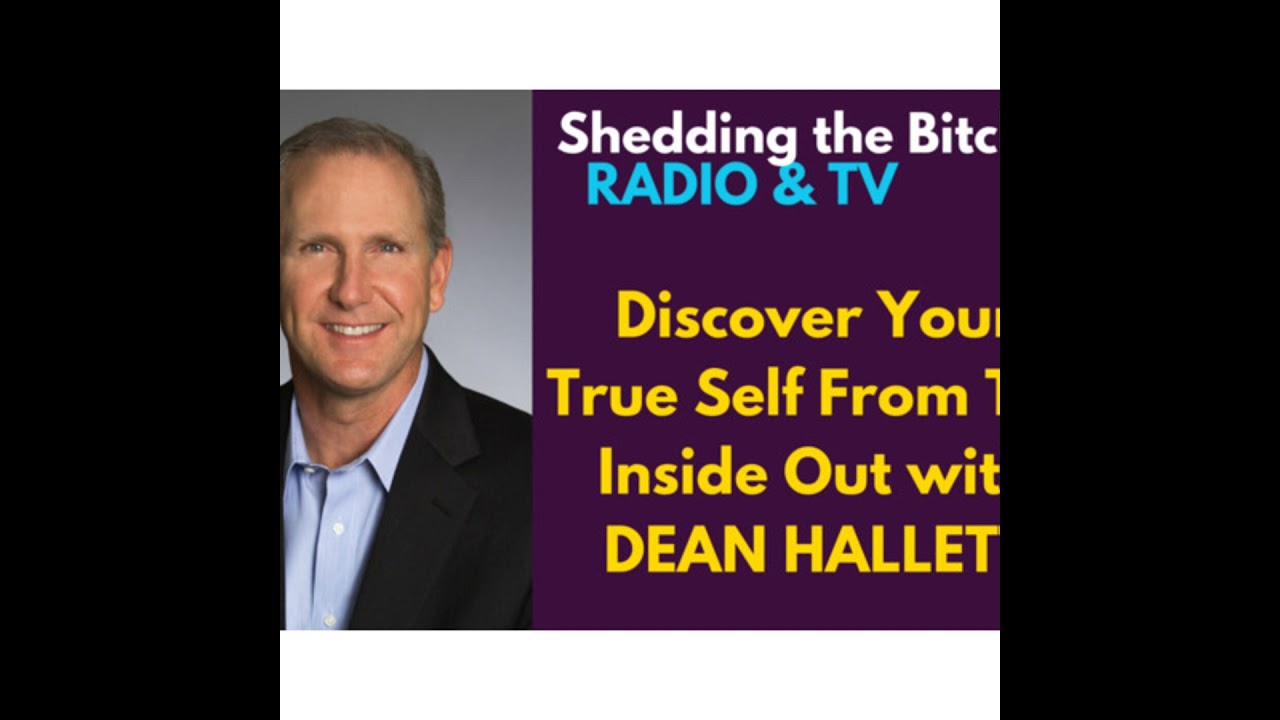
Dean Hallett argues that only 5 to 6 percent of our decisions are conscious, with subconscious patterns shaped by life experiences suppressing our natural traits like honesty and courage. He uses the Stop-Look-Choose mantra and tools like the Johari Window to help people rewire those patterns and build high-performance cultures, starting with middle managers.
Chapters
Are you ready to create riches in your work and life? It's time for Shedding the Bitch Radio and TV, where you can discuss, debate, and get advice on how to discover and shed the bitches of fear, insecurity, self-doubt, and negativity so you can realize your dreams and life purpose and create and accelerate the riches in life you deserve. So let's welcome your ball of fire host, Bernadette Boas.
Good day, good day, good day everyone, and welcome to another episode of Shedding the Bitch Radio and TV. And I'm Bernadette Boas of Ball of Fire Coaching. I'm so thrilled you're here today because we have a fabulous, fabulous conversation that we're going to be bringing you, and we're going to have you getting in touch with your true self, whether you're at work or at home. Um, so we definitely will dig into pretty much everything that has to do with how so much of how we operate is driven by our self, uh, our subconscious self, and how much we are driven by the need to be right.
Who—
raise your hand if you're, you know, if you can relate to that. And then the feedback is a gift and can be key in breaking through our fixed beliefs and fixed behaviors. So what we are really going to dive into as well is we are born on this earth with wonderful traits honesty, powerful, spontaneous, caring, open, trusting, courageous, and so much more that define our true self. That then life happens, of course, and we form fixed beliefs and fixed behaviors that lead us to close off those parts of ourselves, of our true self. We have the ability though to break through those fixed beliefs and fixed behaviors and tap into our true self. And that is what our guests really want you to hone in and understand. So let me introduce you to our guests. Dean Hallett is a mission-driven thought leader and senior executive proven to drive innovative organizational change for major brands and organizations. After a successful career driving leadership and organizational culture as senior EVP at 20th Century Fox and EVP CFO at Disney, Dean now leverages his expertise to support companies in powerfully transforming their employee cultures from the inside out. In early 2022, Dean published his first book, The Missing Piece: How Successful Companies Develop High-Performance Cultures. The book highlights the need to develop high-performance leaders at all levels of the organization. So help me welcome to the program Dean Hallett. Hi, Dean.
Hi, Bernadette. How are you?
I am fabulous. And I'm so excited about this conversation because I'll be honest with you, even in the last couple of weeks, I've been having so many discussions around this, what you call true self. And so for, for our viewers and our listeners, kind of explain what true self is for those that might not tap into that side of themselves.
Well, when I look at it, when we're born on this earth, when we're young babies, toddlers, we have a number of tremendous qualities that we have no fear in displaying. We are caring, trusting, spontaneous, courageous. We'll walk on the back of a couch knowing somebody's going to fall or somebody's going to catch us before we fall. We'll do all— we have all these incredible traits. And then it's funny, I'll ask people, I'll say, is that true about most babies? They say yeah. And then I'll say, is it true about you? And they say, well, no, or maybe in small groups. I asked the question, what happened? Life happened. And we end up having certain encounters and we draw conclusions from those encounters and form fixed beliefs. A good example, I'll tell you, I started my journey early on through personal growth before I ever figured out how to bring it into business. I had a bully for a big brother when I was really young and it went on for way, way too long. But I formed a belief that it was better to be seen and not heard.
Okay.
And so I, I remember in second grade, I was actually pretty wild. And I remember becoming very reserved. I withdrew and pulled back and took that spontaneous, wild, fun side of myself and just put it on the back burner. Probably didn't even know it was there. It was down in my subconscious. 'Cause these weren't conscious choices I was making. It was survival for me.
Sure.
To recede. And ultimately I broke through that. I was lucky enough when I was 20, I broke through it probably when I was about 16, but it was still a long journey to get back in touch with all those parts of myself that I had denied for a long time.
But what happened at 16, if you're open to sharing, but what happened at 16 to make you realize something?
Well, my brother actually, I let him bully me all the way until I was 16 years old. And at 16, he didn't like something that he thought I had done. And he made the big mistake of, coming in and punching me while I was asleep. And you hear the story about the incredible strength of somebody when somebody's in trouble, being able to lift a car, right? That's the strength that I felt when that happened. And I grabbed him and I threw him down and I had him pinned. And he said, you let me up right now. And I said, I'm not letting you up until you swear you'll never lay another finger on me. And without hesitation, he said, okay. And he never did again. So at that point, I was free from the bullying, but I still had a lot of reconstructive work to do.
Sure.
With who I am.
Sure. Because I love that you use the word reconstructive work to do. Um, at the same time, you know, practically, can we almost like call it PTSD?
Sure, absolutely.
Okay.
I mean, there, there— what we talk— you mentioned in the introduction about how much is driven by our subconscious, right? Maslow did a study of Einstein, Edison, all those kinds of people, and he determined that on average they operated consciously, consciously making decisions about everything that was happening in their life about 10% of the time. Everything else was driven by their subconscious.
Wow.
Which is good because we don't want to have to think about everything we're doing every moment of every day, right? We want some of it to be automatic, right? He found that the average person was conscious only 5 to 6% of the time.
What's a good place to be?
Well, I think Edison, Einstein is pretty good at 10. But my point is, if you could just move one percentage point, you're getting that much closer to where they were.
Yeah.
So it doesn't take a lot. It all starts with self-awareness. And I was lucky enough when I was 21 to do a, what today would be considered an emotional intelligence training. And I was able to— it had a lot of Discovery Model exercises, which are experiential exercises that I use in the work that I do, which allowed me to experience those parts of myself that I had shut off.
Yeah.
And once I experienced them, that was a matter of practicing and learning to be comfortable and taking risks and moving out of what we call our comfort zone to, to expand my, my area that I operated in beyond my comfort zone to what I call the high performance zone. Put myself out there, being willing to be vulnerable, being willing to take a stand on something, to not give my power away to other people. A lot of those may feel like buzzwords, but to me, they're very real things that I consciously choose to do. And it's, it's easy now in my life.
Yes.
But for 4 years, it took a lot to develop it into an to redevelop that competence.
So let me ask you something, um, because you had this situation at 16 and then 21, and does— have you found that it, it, it happens when all of a sudden someone does have a situation that comes up in their life that all of a sudden is— it provokes them? Or to your point about high— your— the high performance zone, you actually are able to, even if they're not necessarily self-aware and tapped into that, your exercise and the work that you do help them to, to, to get there, even if they didn't, you know, have it, an incident that triggered it.
Yeah, I think it's— I use the term, um, we, we need to wake up. And it goes back to, if we're only 10, or if only 5 or 6% conscious, the more we can become aware of what we're doing, the impact, the choices that we're making, We're so often our subconscious is making the choice for us. So if I'm in a situation that is uncomfortable and I get defensive or protective or frustrated or whatever it is, if somebody gives me feedback and points that out, then I can realize it. And then I use an expression called stop, look, choose. And it's funny because in the business world, people go, we don't have time to stop. We don't have time to stop. I go, no, no, no, that's not what I'm saying. Stop for a moment, a split second. Am I reacting or am I making a conscious choice here? And do I have the right information to do that?
Right.
Whether it's how I'm responding to somebody, whether it's a plan I'm setting out for people to do. And, and it really takes some self-awareness to do that. So it's just about waking up. Yeah. And that might be somebody like— I can do it on my own now.
Right.
But I assist people in doing that. I help them raise their level of awareness. Help them raise the number of conscious choices they're making. And are you familiar with the Johari window? I imagine.
Yes, I am. Not deeply, but yes, I'm familiar with it.
Johari window is just how others see us and how we see ourselves and what we put out there. And there are two— what you see about me that I don't see is my blind spot. And what I see about myself that you don't see is my private self. The more I share with you about my private self, about who I am and connect with you more deeply, And the more you give me feedback about my blind spots, the more I'm able to show up authentically. More of myself is going to come to the forefront.
Yeah.
And that's the work that I do. And that's why I say feedback is a gift because, you know, people are afraid to give feedback, but that feedback will assist people. So everything I do in my work is either with the individual or with the group, create an environment where we have trust and mutual respect. And we can share openly and give and receive feedback openly.
Right, right.
From there, we can make tremendous progress.
Absolutely. Well, because like you said, self-awareness is paramount, right? I actually— it took me 45 years, Dean, but I couldn't figure out why I was— I just never felt like I fit in, I belonged, that I was, you know, I dealt with a lot of what I call bitches in my world. Right within me. And it wasn't until I was 45 or 46 and I started doing it— that's how long it took me to do personal development work— and I started digging into it and realized that, oh my gosh, it was because I, you know, was one of 12 kids and I thought I was adopted and I didn't— therefore I didn't belong and blah blah. And I was stunned at myself. And this is why I think your work is so powerful, because I was stunned that I was 45, and I allowed that self-conscious, deep-seated belief kind of rule, you know, everything that I had been doing for the, you know, for 30, 40 years, 45 years. And when I kind of had that opportunity to discover it, like what you do with your, your clients, it was so liberating.
Sure.
And so what have you seen in your own clients that kind of is that result?
Oh, I see it in all different ways. I mean, the beliefs can run the gamut. You shared what your belief was. I shared my belief was better to be seen and not heard. But what goes along with that is I'm not good enough, I'm not worthy, I am only my intellect. Because I had shut off my emotions. All these different things. And then we not only behave in that way, we then find things happening around us that reinforce those beliefs. So if I get emotional and, or if I open up and express myself emotionally and somebody shuts me down, I go, "Oopsie. I'm just my intellect. My emotions aren't valuable at all." Right. So it runs again. I'll give you an example from a feedback standpoint of something that happened. It's one of my favorite examples in the programs that I've done. This was a 9-month program that we did at 20th Century Fox, and there was an individual in the program. She was a single mom, and she felt that she had more life experience by being a single mom than the rest of the people in the program. And so she would say things like to me, like, you know, I understand why this is valuable for them, but not necessarily so much for me. And I, I cautioned her. I said, be careful. I said, because people can misinterpret what you're saying as they need this program and you don't. And so she kind of heard it but didn't really hear it. And, and we're 5 months into the program now, and she hasn't really dealt with it. She's kept the same attitude and talked with people about it.
She—
we did a feedback exercise where there was an opportunity for people to sort of evaluate each other and their level of commitment in the program.
Okay.
She was not evaluated very well because people hadn't connected with her.
Right.
And it was for the same reason that I had talked about. And she was, she was blown away. She was shocked. She couldn't even talk at first. I always have HR present because I wanted somebody to be able to, like, you know, talk her off the ledge because it's a learning experience.
But right.
When she was able to communicate with us again, she came back in the room and she's talked about what a challenging process it was for her. And I looked at her and I said, I just want you to know that I would hire you in a heartbeat because she was an amazing performer.
Right.
And she said, that's why I'm so upset. People are telling me that, yet I'm the one who got evaluated so poorly. I don't get it. So I said to the people in the room, who wants to give her some feedback? And they told her what I had said to her months before. They said, we don't feel connected to you. We feel like you're— you act superior to us. You're not part of the group. On and on and on. And she was upset, but not about the feedback. She was upset that people had waited 5 months to say it to her. She said, why on earth would you wait so long? I could have been working on that all this time.
Right.
We always think like if we spare somebody's feelings and we don't give them feedback, we're doing them a favor, but we're actually ripping them off.
I absolutely agree.
Yeah. And there's ways to do it elegantly. We, we teach how to give feedback in an elegant way, how to be constructive about it, and even how to introduce the topic to get permission to do it.
Yeah.
So it's, it's, I think feedback is the least expensive, most valuable management tool we have.
Amen to that. Amen to that. Because I just see it too often, as I'm sure you do, that Even in performance reviews, you know, yearly, you know, once a year, and they don't do it right.
Oh, yeah, they don't even put it in writing.
Right. Yeah. Now, if we got down to the nitty-gritty of that, it's, you know, having— do you find that it's because people not only don't know how to, but they also don't want to hurt somebody? Like, they're, you know, they're going from it from their heart and not necessarily from that, the good of and the purpose for the other individual?
I think there's two parts to it. I think there is an element of that, but I actually believe that the greater force in play most of the time is fear of the blowback I'm going to get if I give somebody feedback. Are they going to jump down my throat, not like me, push back on me, whatever it is? And why would I want to put myself into that circumstance?
Right. It's almost like that confrontation.
They don't want to Self-protection.
Yeah. Wow.
Protection is a big thing, right?
So what do you say to those who are— have this wall up of self-protection? You know, what do you say to them to kind of help them see that they're doing more damage than they are good?
Oh, there's lots of things we do. Um, you know, I spend a lot of time talking with people about, uh, the First of all, if I'm working with somebody, they've already probably shared some of the things that aren't working in their life. And then they talk about how they have this wall of self-protection up. And it's easy to then talk about, well, why do you feel disconnected then? Right? If you're not sharing who you are with someone, why are they, why are you going to, how are you going to develop trust? Are they going to share that back with you? And probably not. But we spend time giving and receiving feedback with each other. So I I get, I do a DiSC behavioral assessment. I do a 3, a leadership 360, where people give feedback about what behave, how they're, how often they're experiencing someone exhibiting certain behaviors.
Sure.
Positive leadership behaviors.
Right.
So that's all, that's feedback.
Right. Sure.
And then I give them feedback based on my take. And it's, you know, it's something I've developed over the years, but I, if they're, telling a story where something's gone wrong and why everything around them hasn't been working, it sounds like what we call a victim story. It's like, okay, how powerful do you feel in your life when everything's happening to you as opposed to you creating it? And we start having a dialogue, and then I'll have them tell the same story from an accountable point of view. How did you set it up? How did you create this?
Right.
And the more you start to— the more I start to own my own personal power, the more I can take ownership of the results that I want to create in life. I know I've thrown out a few expressions, but one of them that's really important is coming from be, do, have.
Be, do, have.
Be, do, have. The advertising world says have, do, be. You have a BMW, you can do anything you want, be happy. Then there's another model, which is do, have, be. If I work really hard, do, then I can have a lot of money and be happy. And you know, how many people do you know that work really hard, have a lot of money, are not happy?
Right. Oh yeah.
My daughter is a great example of who I use as— she wakes up every morning and chooses to be happy. And then she creates the things in her life that she wants to. She does the things she wants to. She has the things she wants to in her life. She has her meltdowns. She has her moments. She's got a 14-month-old at home. She chooses every day to be happy. She doesn't wait for the world around her.
Right.
To provide that happiness to her.
Right. And, and, you know, that just triggered me because that's almost like, you know, someone who wants everything else and everyone else to control them as opposed to them taking control. So where does control fit into your dialogue and into the work that you do with your—
with— yeah, I know, I know it's semantics. I tend not to use the word control because that— when we're controlled. We're not open. We're trying to control the situation as opposed to being open and creative and spontaneous and bringing other people in. Okay, so I do use that, that, that, um, that accountability. Okay, accountable for what I create in my life. Um, and you know, there's, there's lots of— it's incredibly powerful to be able to choose and create what you want in your life. And you can't do any of that, going back to what we talked about early, until you are aware.
Yeah.
You can't change anything you're not aware of.
Right.
If I become aware— by the way, sometimes that awareness is awareness of what's happening around me. Sometimes it's self-awareness.
Yep.
If I— and again, that's when it comes back to feedback. If I realize that I'm exhibiting a behavior that's getting in the way, Now I have the ability to change that. That's a powerful place to be. I can actually be at cause— is an expression I use— to create the results, to create the relationships, to create the teams that I want to create.
Yeah.
Wow.
And when it comes to, you know, the idea of true self, self-awareness, all of these emotional intelligence, touchy-feely, where, you know, if you had told me 12 years ago that I'd be in this space, face, I would have just told you you were nuts because I was one of those robots in, you know, in corporate. I was one of those people who didn't, who didn't think I needed to do any work on myself. How do you break down those barriers, especially if they're coming from the senior leaders, let alone the people underneath them?
Yeah, it's no accident that the, the primary place where I focus my long-term program is in middle management. Because they're just starting to lead teams for the first time. And they don't believe— to some degree, they believe what they've done so far to be successful has worked, and therefore they don't want to give it up. But what they've done so far is to be an individual performer.
Right.
And they haven't really had a lot of practice yet in leading teams. So we can get them to look at being— not being an individual performer and instead building the best team around them. And that middle management's much more open to that. Senior management programs, I charge more money because it's that much harder. They believe that they have all the answers. And, you know, there is this— the challenge is, think about how we come through school, right? We're taught to be, for the most part, individual performers, not to work with the person next to them, because if I look at their paper, I'm cheating, right? And so we go through as individual performers, and then suddenly Somebody gave me a statistic. The average age of somebody leading a team for the first time is 32 years old. The average age of their first leadership program is 42 years old.
Oh my gosh.
For 10 years, they're winging it. Wow. And we create this, again, you talk about beliefs, right? My belief as I start to oversee a group is I'm more senior than they are. I'm supposed to know the answers. So I want to appear perfect. I don't want to demonstrate any weakness, so I don't want to go to them and get their input. I should just be telling them what to do and guiding them. And then you get the command and control mode of behavior where you're just telling what people, what to do. They're not engaged because we don't like to be told what to do. We like to be part of a team that has input, has a voice, right? If they're not getting that, then they become disengaged. This. I've— that's the book, The Missing Piece, is the kind of stuff we're talking about. Teach people this at all levels of the organization because it's, it's what's missing. And you have a lot of big companies out there that are giving it lip service. They're not really doing it. I would say probably maybe 10% of the companies out there are doing it effectively. Wow.
And so what, what do you need to do? What do you often find yourself having to do to even influence— I'll say influence versus present or pitch or propose— but to influence a stubborn organization into seeing how valuable this would be to their—
I do a lot, you know, I wrote the book, I put a lot of— I post a lot of things out there on social media so people can see work to be a thought leader out there on the types of things that we do. But the reality is, when I left Fox and I decided I wanted to do this exclusively and do it inside of companies, I specifically wanted to do it in companies where it was embraced. So I don't spend a lot of time trying to knock down the wall because it's a hard, it's a very difficult thing to do. Right. But when you have somebody that realizes something's missing, and they want to go to the next level and they've heard the stuff about, you know, it's important to build teams, it's important to have emotional intelligence and things like that. And if they're truly interested in it, that's where I want to play. That's the space, because then you can move at such a rapid pace.
Sure. Absolutely. The buy-in is critical. But are they senior leaders that you're— that all of a sudden are going, oh, wait, I have this middle management group of people that are coming up and I need to make sure that, or, you know, are they senior or are they even the middle manager teams?
It's you. Well, it can be both. Well, it happens 3 ways. I'll coach a CEO and they'll see the value that we bring and we talk about the value that can be brought to the team. So, and with the CEOs on board, that's easy.
Right.
Or this is the one I don't like so much. A CEO will call me and say, can you fix my VP of sales? He's broken. And I don't like to do that because, A, the person's not, not willingly coming into coaching necessarily.
Right, right.
And I'm not in the world of fixing people. I'm looking at taking people that are performing at a certain level and going even higher with it.
Right. Yeah. Yeah.
The other way it happens is somebody reaches out to me and says, because they've heard it's important to develop leaders in the organization, they say, look, we want to do a program. We have a middle management group. We want to take, you know, 15 people and put them through the paces and help build our bench and have them be ready for the next step. Yeah, that's my favorite one, right?
Yeah, right, right, right.
People are being tapped and say, you know, we're investing in you because you're a future leader here at this company. And most companies, because they don't do that, when they do it, the people that are the recipient of that have such loyalty to the company. It goes far beyond salary and benefits because they say, no one has ever invested in me like this before.
Yeah.
And then it creates a lot of really, really great stickiness.
Right. I love that word, stickiness.
Yes.
Love it. I love that word. So how would you say you shift individuals and teams into high performance? And you mentioned the high performance zone. So I want you to drill into that a little bit more to make sure everybody understands What does that mean? What does it look like? What are the qualities of what that is?
Sure. Whenever I work with an individual or a group, I spend a fair amount of time in framing the— what we're going to be doing, because I— it's just like when you build a building, you know, they built a 102-story or whatever it is, 101-story skyscraper in Taipei that had to be able to withstand typhoons. And they spent 2.5 years building the foundation. And then the building went up very quickly. When I'm working with people, I want to build a foundation. So we spend time talking about fixed beliefs, fixed behaviors as concepts. We talk about anytime you go into organized activity, don't just, you know, we so often will go to a meeting and we're just talking about do this, do this, do this. What's the purpose? Why are we here? What are we trying to accomplish? What's our strategy? Building those components so people get aligned about what are we really doing here? And then when I go off back to my office, back to my cubicle, back to my work-from-home space, I know that what I'm doing is in alignment with where we're trying to go. So we talk about awareness, we talk about alignment, we talk about all these different factors. So we almost create like a shorthand. We talk about coming from excellence as opposed to coming from perfection. Because if we come from perfection, we're in fear that anything could go wrong. And as soon as it does, everything's ruined. If we come from excellence, we do our best moment to moment to moment. So we talk about all these things for, I'd say if I'm coaching somebody, probably the first 4 sessions. So over the course of the first month, we are doing nothing but building this foundation. Then we get the feedback from the 360 and the DiSC assessment. And then we start, and I get a questionnaire from them about all their background, how they were raised, everything. Because as you and I talk, you can't separate work from personal. It all becomes interwoven.
Right.
And we, and we start talking about that stuff. We start talking about based on the 360, how are you showing up? People don't feel that you're very clear on what your leadership style is. People don't feel that you are asking for feedback on how what you're doing is affecting the rest of the team. So you might think you're doing a really great job over here leading them, but you're not listening to them. You're not asking them for input. And we can't be— if we want to go into high performance, which we'll talk about in a moment, we need the eyes and ears of the whole team. We need everybody working together. So we as leaders need to foster that environment.
Right.
So then I challenge them and, you know, I'll have somebody who I was working with recently, she said, you know, I go in and I have these conversations and people just aren't hearing me. Well, okay. Are you accountable for how you're communicating your message? You, and I think it's important that again, as we get this feedback, as we get these examples, talking through those and I push on them. And they'll tell me like, you know, if you usually, if you're trying to do something and you don't get the result, if you're trying to show up in a different way, you're not getting the result, you have an excuse. 'Well, they weren't really listening, this, that, or other.' And I go, 'Well, you know, how's that working for you, right?' All those people around you, they're not going to change because you want them to change. The only one you can change and the only one you can impact is you. So how do you want to show up? Do you want to show up with somebody that's going to foster collaboration? Do you want to foster creativity and innovation in your team? Or do you want to just tell them what to do? And I'll— we'll just have the conversation, and we do it elegantly. Rarely do I really have to push because my whole point is just to get them to be aware and catch themselves in the moment and then make a different choice.
Yeah.
Love that.
High performance to me is showing up as the best version of myself in order for the team to be at its best. And so what that looks like is if— I'll give you an example. When I was at Fox, I would get into a situation with my finance team where I would always know when things were not clicking, when people weren't collaborating with each other most effectively, because people would start coming into my office and complaining about somebody. And I'd get it, you know, all of a sudden there'd be like not a line at my door, but a revolving door. So-and-so's not sharing information. This person is doing this. And that told me, nope, they're not working as a team anymore.
Right.
So I would take them in and do my, uh, I take my weekly staff meeting and I'd have them come in the room and I would say, okay, today we're going to do something different. And we might do something like this. We might say, all right, today, uh, we're going to do a feedback exercise. Go and find somebody in the room and you'll do this with one person. Then you move on to as many people as you can in the room and just answer two questions. What I admire about you as a leader is, and fill in the blank. And then what I believe would make you a better leader is, and then fill in the blank. And so people would get feedback and they would, they would learn to develop a level of trust with each other. People would come out of that discussion and they would say, they might love it, they might hate it, but they would all say it was worth it.
Right.
Because they would come out feeling better about each other, feeling like the air has been cleared. And that high performance, if you have that trust in a room and you've created a place where people can share openly, and that fosters creativity, that fosters innovation. And so people can, that's what is high performance. So if you throw out an idea in a room and I say, well, that's a stupid idea, that's probably not a high performance environment.
Right.
But if you throw out an idea and you're not so so territorial about it that you believe it has to be done your way. You throw out an idea and I say, that's a great idea. You know, what if we also take this idea over here and blend them together and go in this direction? And we start working it together as a team to get the best result possible without being invested that it has to be my way.
Right.
That's where high performance starts to happen. Yeah. Because now you've got the collective effort the collective minds of everybody in the room working an issue and not having some hidden agenda about it. It's all about if this wins, we all win, right?
Well, and but yet at the same time, and, you know, being at some point long ago being in middle management myself, which is where you were, you target, there's a lot of ego in that space. So how do you, you know, What would you tell people, not how you do it necessarily, but what would you share with individuals that are at that level that are looking to elevate and they do have this, you know, this self-agenda, this ego, this greed about themselves? What would you share with them as far as whether it's working for them or against them and what to do about it?
Uh, it depends on the personality and the situation. I think, uh, some people I actually have somebody I'm working with right now and there was a situation and I just flat out said, you need to get your ego out of the way. I said, all you care about is being right and get your point across here and winning for you. And that is not going to work. And if somebody in, when I was, if they were reporting up to me and they were like that and it would happen over and over and over again, eventually they probably wouldn't be there.
Yeah.
Because if you let that If you tell everybody, hey, we're going to be a high-performance organization, we're going to work together, we're going to look, you know, to accomplish something greater than ourselves. And I'll even say, get our egos out of the way. And then you let somebody else get away with it.
Right.
All you're doing is telling everybody that it's just lip service. There's exceptions. It's not going to work. I'm not always that direct. Sometimes I like to give people the opportunity to shift on their own.
Right.
Right. So I just keep working people, uh, working the group to want to accomplish a goal. Um, I'll give you another example. We were building the digital supply chain at Fox. We had had analog supply chains in every division, but we didn't want a digital supply chain in every division because it would be really inefficient. So we had a guiding principle which became our vision for the project, which was one master film element, period. And from that, every division would be able to download the version, develop a version that they needed for DVD, for video on demand, for HBO, whatever it was. There were lots of people that were invested in keeping things the way that they were, in having their division control information.
Sure.
And we had to keep going back to What we did is we sort of did an end around. Instead of dealing with that directly, we said, is there any reason anybody can give me that we should have more than one supply chain, that we should be making more element— making these elements more than once? Nobody could give me an answer because it would be inefficient. It would have been more costly. So as long as we had a vision that would hold up, we could constantly get people realigned toward that vision, right? Their own egos, their own agendas, their own territorial out of the way.
Right.
But creating alignment is not a one-time deal. That project went for 3 to 5 years, depending upon when you— it was evolving. So let's just say 3 years. For 3 years, we had to go back week in and week out and recreate that alignment. Because as soon as they went back to their own division and started talking with their people, they'd hear all the reasons why they wanted to control the information. They wanted to control the elements. And they'd be, they'd be bashing the centralized system again. Yeah. So it's simple, but it's not easy.
Yeah, exactly. I love that. Yes, it's simple but not easy, because I, I hope someone caught on that's listening or, um, watching too, that at the very beginning of this we were talking and you had mentioned that you had this 9-month program that you were working on with blah blah blah blah blah. And do you, you know, how often do you come into contact with maybe a team leader, you know, a CEO, and they're like, hey Dean, I just want you to like go in and talk to them a couple times and everything will be, you know, beautiful with the world, versus your understanding that, hey man or woman, this is a long, slow, patient process. How often do you run into that? Because I'm sure our Listeners and viewers are intrigued.
I run into it a lot, not necessarily with my clients wanting me to do it, but I see companies doing that. They'll do a quick workshop. Let's— we're going to have a leadership workshop for 3 days and everybody go back and do what they do.
Right.
I think there's a place for workshops, but not on a standalone basis. There has to be follow-up.
Yep.
Or there has to be other work going on around it. So what I do is I'll do my 9-month program because after 9 months, it becomes part of people's DNA. How that shift in behavior towards high-performance leadership, they start pulling their teams together. They really start behaving that way and they can't turn it off because they realize the benefit of it. Now, you might have a company of 1,000 people. You're not going to do a 9-month program with 1,000 people, but you might want other people to get exposed to this. Yeah. You could do some workshops so that the people that go through the 9-month program are your champions for this kind of culture that you want in the company. And the workshop is getting the word out about how we want the company to be. So in a, in a 2-day workshop, you could learn all about alignment and building a foundation and Johari window and, and giving and receiving feedback and all these things and understand that we're better together than we are alone.
Yeah.
And then the champions can be interacting with these people on a regular basis and realize that this is the message that's being pushed through the company. Yeah, so they don't have to go to the 9-month program, but you do have to have a group of champions that are going to live and breathe it every day for it to survive, right?
Thank you, thank you, thank you for that, because I, you know, I hear it so often and I'm just like, you know, if, like I said, I was 45.
Yeah.
Oh, and, and if you have these, you know, what you call those, you know, deep-seated fixed behaviors and, and fixed beliefs, you know, they're not— they don't disappear, you know, as in a matter of just a couple of conversations or a couple of workshops.
No. And if you're going to have these new behaviors, you want to develop a new competence around it. You have to practice them. When I coach somebody, I'll tell them, I say it this way, we're going to sign a 6-month deal minimum. I said, but I don't ever want to work with somebody who doesn't want to work with me. So if you don't think it's working, fine. But I don't want to commit to less than 6 months because if we're really going to see change and have it stick, We need 6 months.
Absolutely, absolutely. Love that, love that. All right, so what would you say to someone? What would that, that one piece of really juicy, you know, insight or advice that you would give someone that might be watching or listening that is either a team leader, you know, or the CEO, and they are contemplating this and they've been thinking about it but they really haven't kind of bought in on it. What would you say to them?
Let me answer it this way. Because this is something I wanted to mention. I'm not sure it's going to completely answer that question. But vulnerability in the workplace or vulnerability in our lives, so often we view as weakness, as a negative. And I think it may just be the word itself. Because if I'm not open with you, if I'm not sharing authentically, we're not going to connect. And you're not going to trust me because you're going to feel that there may be some hidden agenda or something. So I need to be open. The word I like to use is wholehearted. And I love Brené Brown. And I think she puts it very well. These wholehearted people, and by the way, when I say go out there and be wholehearted, that's easier for people than go out there and be vulnerable. Because now they think they're just going to be wholehearted. They're going to show up and lead with their heart. That's different than being weak. So I don't use the V word, the vulnerability word too often. But if I go out there and I'm wholehearted, Brené Brown says, it's interesting because if you look at the people that live their lives that way versus the people that don't, the ones that live our lives that way, it's not good or bad. They just believe that it's necessary to be wholehearted. It's necessary to be that way. To have to be worthy of love and belonging, that's just how they have to be, right? So they are just out there leading with their heart. It's not because they've got some other agenda around it.
Yeah, well, let me, let me ask you something, um, because I just had a conversation with someone, you know, who actually said, I'd rather leave the personal, you know, the personal has no place And I'd rather keep it just as purely business and professional behavior and discussion. And, and we were having this conversation about vulnerability, but wholeheartedness. And, you know, so what would you say to someone that you're working with that is just convinced that, again, like we said at the very beginning, emotions don't have a place or personal, personal, you know, beliefs don't have a place in the Yeah, in work.
Uh, I, I have— I'm yet to work with someone where, uh, it doesn't cross over. Um, I mentioned to you before we started the show, and I'll just tell it really quick, when I worked at Disney, I had to be— people were trying to constantly take my, my legs out from under me. I constantly had to be on the lookout, and I was, um, I was less trusting I was probably more irritable, and I couldn't go home and turn that switch off. And so I found myself being that way with my family, and I felt more disconnected from my children and from my wife than I wanted to be. I ended up leaving Disney because of that. And I went— wow, because I don't think you can separate the two. I, I, I don't know anybody that can turn that switch on and off that easily. Um, maybe there's some people that can act that way like everything's good, but to me it's I might be wrong, but to me it's a, it's a, and I'm always at least, I'm always 1% open that maybe I haven't met that person yet. Right. But I don't know how people can do that because to me, if I am not being genuine, it's going to take its toll on me. And I'm not going to be able to immediately flip a switch. I, it just, they go hand in hand. Everything I do in teaching people to be wholehearted, open, encouraging, collaborative, all these different things in business, they're all the lessons that I learned in my personal life. And I bring them into the business place because my building my family in so many ways is not really any different than building a team at work. Building trust, wanting everybody to be their best, you know, having goals, supporting each other, all those things.
Love that. And it's, it's, I'm telling you, I think we're like brother and sister from a different mother or something because, because I talked to, I talked to individuals about the fact that, you know, we are, you know, I mean, we're not robots. I mentioned to you that earlier. And the fact that what we do in our— I talked to them about the fact that think about it if you're a parent with your child. It's almost like the, you know, the relationships and, and, you know, that you have with a manager and your team is it's like parents with their kids, you know, and what would you do to kind of formulate your family, your unit, you know, to make them all the best that they can be? Because you certainly want your children to be the best that they can be. So how is that any different than you as a leader wanting your team members to be the best that they can be?
Clearly, and we didn't even get into empowerment and delegation, but it's the same thing with your children. You know, allow them to become more and more independent, to make their own decisions, to make some mistakes and learn from them. Same thing with your team.
Right. It's so true. Gosh, we could talk forever. We could absolutely talk forever. And I want to just mention too, for everybody, you know, definitely be sure to check out his book. It's on Amazon. It's also on his website, which is hallettleadership.com. But The Missing Piece: How Successful Companies Develop High-Performance Cultures is definitely a read that you would want to consider whatever area of the hierarchy you're at. And especially if you, like he mentioned, if you are elevating and getting into those leadership roles and you really want to do it right from the beginning, then definitely check out his book. But at the same time, go to hallettleadership.com. Learn all about what he does and how he does it and reach out to him directly. He is on LinkedIn, so be sure to link in with him as well. Follow him on Twitter.
And if you read the book, you'll find my personal stories again reinforcing what we just said. Can't separate the personal from business. So much of what I learned in my personal life, you'll read in that book and how it's impacted me in business, which is even more powerful than anything else.
Is someone's personal story and the lessons that they've learned and what they've overcome. Dean, thank you so much. This has been fabulous. I can talk to you forever.
Yeah, it's been an honor. I'm so happy you asked me to be here.
Yes, I am thrilled. I am thrilled. So everyone, thank you so much. Definitely again, go to hallettleadership.com, learn all about Dean and check out his book. And then be sure to be right back here at noon Eastern time next Tuesday for another episode of Shedding the Bitch Radio. Take care, everybody.
Thank you for taking part in Shedding the Bitch Radio and TV with Bernadette Boas. We would love to know what your biggest takeaway was. Go to Shedding the Bitch on Facebook or YouTube and leave a comment. You can also subscribe to the show on Apple Podcasts and YouTube so you don't miss a single episode of the show. And with your input, we can help other powerhouse women just like you find the show and decide if it's right for them. Learn more about Bernadette at balloffirecoaching.com. See you next week.
More from Bernadette



From Stuck to Leading, Episode 2 — Meet the 5 Inner Fears Destroying Your Leadership



