Ditch the Act with Ryan Foland, AKA Ginger MC
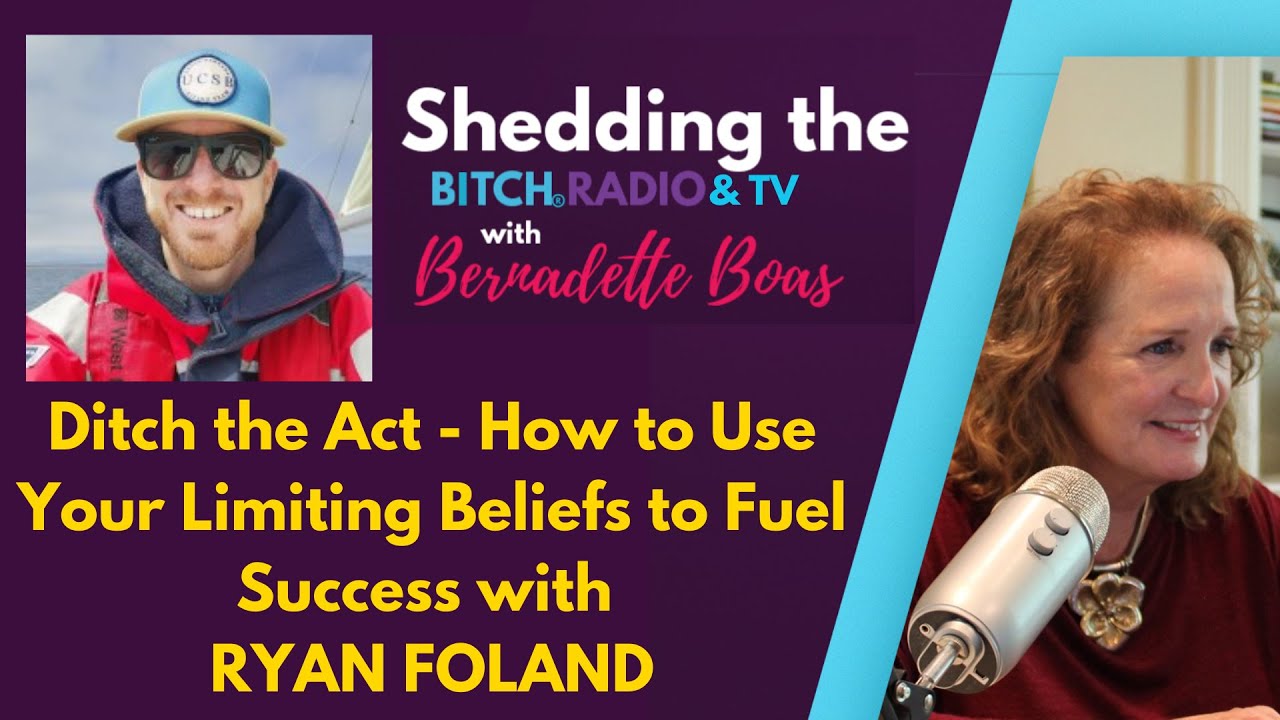
Ryan Foland, the Ginger MC, explains how vulnerability and fear become sources of power in personal branding. He shares his 3-1-3 messaging framework (three sentences, one sentence, three words) and uses unconventional tools like stick-figure NFTs and rap performances to reinforce authenticity. People buy from those they know, like, and trust, so ditch the polished act and be imperfectly human.
Chapters
Are you ready to create riches in your work and life? It's time for Shedding the Bitch Radio and TV, where you can discuss, debate, and get advice on how to discover and shed the bitches of fear, insecurity, self-doubt, and negativity so you can realize your dreams and life purpose and create and accelerate the riches in life you deserve. So let's welcome your ball of fire host, Bernadette Boas. Good day, good day, good day everyone, and welcome to another exciting episode of Shedding the Bitch. And I love this topic because we're going to be talking about ditching the act. But before we get into that and before I introduce our guests, let me just thank all of our new and ongoing viewers and listeners because we are broadcasting across our platforms, uh, which means you can watch us on YouTube, you can listen to us on BlogTalk or wherever you get your podcast streaming services. We're also going through Facebook and Twitter and LinkedIn. So wherever you want to reach out to myself and my guests, uh, please do so, because each and every topic that we discuss is really all about you. And actually, you're the one who's providing us recommendations on both the topics and the expert guests that we have through your ratings, your subscriptions, your tweeting, your sharing, your commenting, and our direct messages., to our team in regards to, uh, what topics you would love to hear more about. So we thank you so much for that, and please continue to do so, so we can, um, get some more eyes and ears into our Shedding the Bitch community, and we greatly appreciate it. I also need to, uh, thank our sponsors. We have, uh, NG Tax Solutions. Debbie Snelling and her team are a full-service financial and tax services company that services small to corporate size clients and personal tax and financial needs. So you can reach out to her at ngtaxsolutions.com. And then I've shared with you that I'm very proud that a local Atlanta, Georgia company who I've been affiliated with for about 6 or 7 years, and he's been part of our Shedding the Bitch community for about 4, And he, uh, also wanted to jump on board and sponsor and support everything that we do here in Shading the Bitch, uh, uh, community. So if you have any home services or roofing needs and you are in Atlanta, Georgia, uh, then you can always reach out to Jay and his team at up-toproofingofatl@yahoo.com. All right, but thank you very much to our new and ongoing, uh, listeners, viewers, sponsors. And advertisers, because without you, we wouldn't— well, we would be doing this, but we greatly appreciate your support and ongoing viewership and listenership. All right, let's get into this conversation, shall we? Because it's all about ditching the act, ditching the act around how to use your fear, insecurity, and limiting beliefs to really fuel your success.. And so what we're going to talk about is basically the fact that business professionals are finding it harder and harder to break through the noise. The problem is most of it is just that— it's noise. What if you could gain more respect and become a better leader by being your natural flawed self instead of pretending to be perfect? Learn why exposure is important and how it helps cultivate more durable connections than any polished persona can. Use your fears, insecurities, and failures and vulnerabilities to fund success. A Proving Guide to Building a Powerful Personal Brand Through the Fearless Admission of Just Being Human. Now, I want you to be listening to— and so does our guest Ryan— I want you to be listening to a few things as we get into this conversation, and then I'm just— I'm going to give you a rich question to ground you into what we're gonna discuss today. All right. So we want you to be listening to Discover Your Why by looking into your past, finding the experiences that shaped who you are. And then we're gonna talk about getting a better understanding how humanizing yourself and leverage— leveraging new forms of communication like social media can spark relatability. We're going to talk about establishing your expertise in a way that is not showboating and building a reputation of trust as you get vulnerable and show others that you are not better than they are, but are in fact a lot more like them than they think. All right, so your rich question— and then I'm going to introduce our guest— so your rich question is, what is that number one thing getting in your way of just being you. Okay, what is that number one thing getting in your way? Maybe it is vulnerability, maybe it is vanity, maybe it's pride. Whatever the case might be, really think through that, and then I guarantee you our guest is going to be able to hit on it. All right, so let me introduce him. Ryan Folan, aka the Ginger MC, is a high-energy keynote speaker, podcast host, and consultant who teaches executives how to build their personal brands and helps corporate brands feel more personal. His 3-1-3 method uncovers core brand messaging to guide bespoke content marketing strategies. Ryan has given 4 TEDx talks and has been featured in Forbes, Fortune, Inc., Entrepreneur, and more. His award-winning book, Ditch the Act teaches you how to get ahead in business by simply being human. For fun, Ryan sells draw stick figure NFTs and raps. We got to talk about all of that. That is just too cool. And you can learn more about him at ryan.online. Ryan, ah, adorable. Adorable. Ditch the act. I love it, love it, love it. All right. So, so, and you ditched it. So, so before we get into all that, though, and we do know that you love to sail and draw stick figures and whatnot. I do. I have to act old because I am. And I have to first ask, NFTs.
Mm-hmm.
I have a feeling I know what they are, but I'm really not sure if I'm aging myself. What are NFTs?
It— the NFT stands for a non-fungible token. And think of it as a way of owning digital property. That's the basis of it.
Yeah.
Yeah. You might have heard of it over the last, I don't know, about 8 months or so, 2 years, become more popular. You might have heard of the Bored Ape Yacht Club, you know, with these, these JPEGs that are selling for millions and millions and millions of dollars. Well, there's some really exciting stuff behind the technology, and it's built on what's called the blockchain. And the blockchain is a way of making sure that transactions are transparent, removing the middle people out of transactions to create more trust instantly within people who don't know each other, whether it's transacting financially or transacting with items, and those items could be digital. So NFTs are a way of creating more value through, um, kind of creative utility. And here's an example of how I'm using it. There's a lot of applications for them. There are some people who use them as tickets to enter into events or tickets to enter into things. I'm excited about unlocking my consulting services through NFTs. So if you go to my website and you want to work with me, well, instead of just working with me and paying me, you can purchase an NFT which unlocks what we would be working with. And so it's a fun way for me to explore the new technology on blockchain and understanding how cryptocurrency can work with transactions. And basically it's an opportunity for me to take my stick figures, which I've been drawing for about 6 or 7 years, and turning them into something that can increase in value over time. Because at the end of the day, um, if you buy an NFT from me, you're kind of buying into me and my journey, really, at the end of the day.
Well, and I do want everybody to go to ryan.online and check out his stick figures, um, because I did. I spent like 10, 10 minutes just scrolling through and looking all at all of them and whatnot, and Um, so definitely do that and, and then get a better understanding of what the NFTs are and how, how he's using it. It's very cool. All right, so rapping. I, I mean, we're gonna get into all the Ditch the Act stuff, don't worry about it, but I, I need to know, like, how do you, how do you get it? Like, how did you get into rapping?
So it, it actually started from the stage, and I'm kind of a high-energy speaker. I figure if I'm having fun, everybody's gonna have fun. My dad always taught me that if you get them to laugh you'll get them to learn. And, um, I was— I have some of these concepts like the 313 and some things that kind of can get heady, and it's information and formula-based and sometimes just, you know, kind of goes over the head, and you really have to, uh, kind of dig in to understand it. Now, the value that's unlocked is huge, but in order to make it a little bit more fun, I decided to in addition to giving the talk, I would say, well, let me go ahead and wrap this up for you here. I played off the rap, W-R-A-P versus rap. And then I just started flowing into what the concept was, but in a more melodic tone. And it really takes people by surprise. Yeah, because here I am in a suit, no tie, but, you know, as professional as it gets. And then I just bust out into it.
Right.
And then that leaked into one of my TEDx talks. So I rap in one of my TEDx talks. And it's now just part of a fun process of the creation. So that's— I have a talk or topic, and then I challenge myself to come up with a rap that puts it together. So there's a Ditsy Yak rap, there's a This rap, there's a public speaking rap, and it just helps to keep things creative and fun, really, and different.
Because we're going to be, you know, we're talking about that, right? Like, how can we be authentically ourselves? And yet, you know, and you— not yet. And use all that to be, you know, to be fun and creative and, you know, and, and be successful. So that is so— and, and on top of that, you're called the Ginger MC.
Yes.
So Ginger MC who raps. I mean, yeah.
And I, I've done a lot of MCing, and I'm a ginger. Uh, if you're listening to this, you might not be able to tell by the sound of my voice, but I have freckles and red hair. And as a kid, it was really challenging because I got made fun of a lot for it. And I actually— it created issues of me feeling belonged or not, and things that I've just sort of struggled to overcome, and, and I've worked through and continue to. But part of that process for me was like reclaiming it. And I'm like the proudest ginger that you know. I love my freckles. I feel like they give me energy. They're little solar power— they're little solar panels. And it's actually kind of funny because the word ginger it just has this connotation of liveliness and, you know, aside from the root and sushi, but it has this sort of liveliness to it. And well, I do a lot of international speaking, or I did a lot more, and I was speaking in Haiti and Ghana and Nigeria, and the word ginger actually means high energy there. And so they ended up calling me Bra Kwekwe Ginger, which is bra for like the brother or mentor, kwekwe, which is, you know, somebody in the business aspect, and then Ginger. So like, I'm known around the world for my Ginger brand.
Yeah, that's awesome.
I'll add this just as a little side tip is that let's say that you're a speaker, let's say that you're an author, okay? Regardless of what you talk about, right? Or let's say that you have a podcast, whatever it is. There's millions of people who are speakers and authors. There are millions of people who have podcasts. But when you also add a little fun factor in there, like, I am a speaker, I'm an author and a ginger. They're like, wait, what? I know a lot of speakers and authors, but that combo, it comes up all the time. But what is, you know, what is your ginger? And you look like you've got a little bit of ginger in your hair, so you can be an honorary ginger. We can all be more ginger.
Yeah. Well, mine's a ball of fire.
Ah.
So I'm a, you know, speaker, author, ball of fire type, you know.
There you go. That sounds very ginger. Yeah, for the redhead, right?
Yeah, exactly. Oh, I'm a redhead, all right. A little gray now, but no, we are fast-friended kidward souls. Yeah, exactly, exactly. Well, okay, so that is awesome. And then, you know, that naturally would either lead me, or you kind of, uh, will go back. How did you all of a sudden find this concept? Because a lot of men don't talk about limiting beliefs and fear and insecurity. How did you take all of the, all of your experiences and then kind of frame it around ditching or Ditch the Act? Where'd that come from?
Well, there's a good story behind it, like everything, right? Yes. I knew at a certain point that I wanted to build a personal brand, but I had no idea what I was doing. So I do what most people would do. You talk to your friend Google and you find articles and you read what you should do. And the general consensus is here's all these things you can do. So I started to write blogs. But nobody read them. I started to offer my speaking services for free, but nobody cared. I was, uh, doing what they call tweeting, and no one was responding. And I just got frustrated with the whole system. And I was actually, uh, able to go to kind of a, an exclusive entrepreneurial networking event for millennials. And I'm like right on the border, so like I'm on the, on the older side of the fence. So I felt a little bit out of place because I was still older than everybody there. But, uh, it was at a gentleman's house named Keith Ferrazzi. He's a brilliant marketer, uh, and it was the first time I had ever met him. But his books were influential for me— Never Eat Alone and Who's Got Your Back. They're some of the most fundamental networking books that you can, that you can get. Okay, so I was just like awestruck in this house on the Hollywood Hills at all these levels. There was a person playing an oboe in a suit that was clouds on the railing with clouds behind. And so it was like this— it was just, it was very chic and hipster. So it got nerve-wracking when he said, all right, everybody look under your plates. And looked under those plates, said, you have a number, that's the table that you go to, sit down, and we have some prompt questions for you. The proctor of the table said, all right, we're all used to sharing what is good great in our lives. But today, we're going to challenge you to share what is going wrong personally and professionally. And that's how we're going to get to know each other. I was like, whoa, this is odd. And you prepare for like explaining, oh, I've got this going. And this is what I've got going. And everybody's working at all these crazy companies, right? So it's my turn. So the Toastmaster in me actually stands up, which felt awkward for everybody. But I was like, hey, I'm gonna stand. And I said, you know, I've got this, this I have this concept called the 313 that I just want to get out there in the world, but I don't know what's going on with it. I want to build a personal brand, but I can't seem to get any traction on it. And, you know, I love speaking, but nobody wants me to speak. Thanks. My name's Ryan. I sit down. So we go around the different people and this other guy stands up and says, well, you know, I've got 10 million reads on my content. I've got people asking me to speak all the time. But I'm not a super confident speaker and my girlfriend just dumped me. Oh, sat down. But what I heard was 10 million reads and you have incoming requests and something must be going right, right? So afterwards I literally went up to him and I said, I can help you if you can help me. If you can help me understand how to get people to read my writing and build a brand so that I get people who want me to speak, I can help you get a girlfriend. I can help you with your confidence or your speaking. We can be a good sort of, you know, yin yang. So that was where I first met, um, who was my business partner. So it's a long story.
That's okay.
In working with him, we did something that really worked for me. I became the test dummy, and he said, write down everything that you're doing and I'll help you out. And I wrote it down, and then he actually said, well, it's going to cost you X amount of money for me to help you. And I was like, wait, what? And he's like, yeah, you know, my time is valuable. So here I am scratching a big check with money that I don't have to some guy that I just met to try to work with him to complement each other's strengths. And he basically came back to me and said, well, good news is you're doing all the right stuff. Bad news is you're doing it in the wrong order.
Oh wow.
And this is a major point for anybody who's trying to build their brand. You can be doing the right things. You can be writing, you can be talking, you can be podcasting, you can be tweeting, you can be Facebooking, you can be Instagramming, TikToking. But there's a particular order that favors others. And so really what I found was he helped me to structure doing things in a particular way, and I still didn't get traction. And what— when I started to get traction was when I stopped trying to pretend like I was someone who I thought other people wanted to see on stage.
Right.
I started to get traction when I stopped writing articles thinking that this is how I should write articles instead of just writing articles the way that I wanted to.
Right.
I started getting traction once I was comfortable with my own doodles and sketches to start sharing my little stick figures out there into the world. And so for me, it was a combination of two things. It was learning how to do things in the right order, but then the real changing point when I stopped worrying about what everybody else was thinking about what I thought I should be.
Right.
And then just sort of, you know, just was myself. And so that was, uh, we didn't really actually know what it was at that point, but that's what I had sort of internally felt. And we got approached by a publisher because we both had built successful brands, and we basically pitched them a how to build your brand book. And they said, we're not interested in that because everybody can go to the bookstore and find that. Everybody can go up and, you know, into the Google and find that. So we really went introspective and went, what was the one moment that changed for me? And, you know, I've got a theater background and I feel like we all are actors whether we know it or not because we put on these different faces and it's like you're one thing to your boss and another thing to your wife and another thing to your— and so we just thought like, well, as soon as I just sort of ditched this act that I was trying to put on, all of a sudden it worked. So we took the same book, basically, right? Rebranded it as Ditch the Act and then resubmitted it, and they're like, we love this. And that's when we were like, okay, so it was a fascinating exploration of self-reflection, right? What has worked was when I stopped trying to make it work and I just started letting my guard down.
Yeah, yeah. Well, letting the guard down is the important part, right? Ditching the act, letting the guard down. And I had mentioned to you before we even came on that I loved kind of the alignment or the synergy even with Shedding the Bitch.
Yes.
Because what you're, what you're talking about is, you know, using your fear and insecurity and limiting beliefs to fuel success. So how do you, how do you advocate for that? Like, what do you tell your clients and, and listeners and audiences about that?
Well, I'll stick to a 3-step process because I love the number 3. I would say the first thing I help people understand is that people don't want to do business with businesses. People want to do business with people. So that's a fundamental understanding. And so once you kind of get out of your head of like, oh, this has to be businessy, like, there's a person behind that phone, there's a person behind that computer. Right. The second principle that I would really try to relate to somebody is to say, you're, you're— maybe your Instagram instincts are wrong. As far as we think that people care about our story of success, so we think that that's what we should put forward, but people actually don't care as much about your story of success as they do seeing themselves in your story. And that is a relatability.
Yep.
Then the third thing which I will say is that in order for there to be truly an authentic connection with somebody, one of you has to go first. And this is the real tipping point that keeps people back, because maybe they're open to being authentic, they're open to being open, but they're not going to be open unless the other person starts it. Right. And so you find these situations, even like in water cooler talk where people are just meeting or like pre-Zoom and everyone's like, oh, hey, how are you doing? Oh, I'm great. Great. How are you? Things are great. Good. I'm great too. That's so fascinating. Oh, it's great. And then there's like no window of opportunity, but if somebody goes, hey, how are you doing? You're like, actually, I did not get good sleep last night. Unfortunately, it just, there's something. And then the other person's like, me too. Oh my gosh. And then, and then now you're swapping stories about, you know, well, did you try melatonin? Well, no. Did you try this? Are you sleeping with a weighted blanket? Like you can support each other, right? So when somebody goes first, it opens up the window for somebody to go second. And these aren't like, like major baggage moments. You're not like, I got a divorce today, that's how I'm doing, you know? You're not like, this is like, I spilled coffee on myself, or I had to reheat my coffee twice this morning. Yeah, I feel stupid, but maybe that might resonate with you because you also forgot your coffee in the microwave 2 weeks ago.
I love it. It's so simple, Ryan. But why is it— but it's so hard.
There's nothing more difficult than making things simple. And so just because it's at surface level a simple solution, that actually means that it's probably harder than a complex solution to implement.
Right, right. It's true. It's so true.
Wow.
Yeah, it's so true. So your 3, 1, hold on.
So I just gave you 3, 3 sort of steps in order to understand how this works. One, just to recap for everybody, one is people want to do business with people. Secondly, people don't care about your story of success. They care about how they see themselves in your story. Right. Third, somebody's got to go first because if you go first, it opens up the window for somebody to be second. And it's these, it's these human interactions. Like the rapport that you're building with the customer service agent, even though you're upset. And, and instead of it being like a you're angry and they're taking your anger, you just being genuine about maybe what's frustrating about it and them actually relating to it. And then you feeling like she gets it. This is cool. Okay, thank you.
Yeah.
So it has many applications.
Absolutely. Now, is that part of your 313 method?
The 313 method is separate. It is a way to simplify your messaging.
OK, so it's all about the messaging.
Yeah, well, with, with, with the messaging, you know, somebody asks you— when someone asks you what you do, do you ramble like a babbling fool? Do you talk so fast that you're blue in the face? Is your big idea all over the place? Do you say the same thing every time? Do you bore everyone out of their mind? You might even do it and you might not even know it. Your startup hasn't started. All you want to do is grow it. And every time you open up your mouth, you wish you blew it. And every time you wish there was a method or a way you could control it, but have no fear because the 313 is here and it will make your message clear. First you state the problem, then you say you solve it, and don't, don't, don't, don't, don't forget the market. There you go.
Wow.
This idea is that— that's a little sneaky wrap there for you.
There's the wrapping. There's wrapping, everybody.
There's wrapping. But the idea is we all get asked the question, what do you do?
Mhm.
Probably the most common question ever asked.
Mhm.
But how you articulate that answer is going to really determine on how quickly you can get somebody interested in what you do, right?
Absolutely.
And the more you talk, the less people listen. And the less you talk, the more people ask questions. And questions leads to conversation. Conversation leads to connection. Connection leads to whatever that, whatever that connection or that closing that you want. And so the 313 actually helps you explain what you do in 3 sentences, 1 sentence, and ultimately 3 words, so that you're doing less talking and more listening and interacting with people who truly want to know what you do.
Interesting, fascinating. And I'm sitting here thinking to myself, you know, those chatty catties, you know, and those, those people that do just kind of, you know, are on autopilot. Um, does your coaching as— again, simple, right?
Simple.
3-1-3. Simple to keep in mind and probably hard, very hard for folks to implement. So what aspect of your work is in the not only just kind of educating on the concepts and the methods and that kind of thing, but also helping them to overcome those things getting in their way, their fears, their limiting beliefs that are getting in their way?
Well, in particular, addressing that question, the fears that people have usually are around opening up and sharing the stories that they think people are going to judge them about. And when you can get people to understand that when you are fearful, it's actually your body telling you that, like, you're headed in the right direction. There's something that means something to you, there's something that's important, there's something that's foundational, there's something that other people can learn. And so if there's the, the thing that I will help to implement is letting people understand that the stories from their past is how they became who they are. And when you understand that, when you can find these stories that are these pivotal foundational moments and you can share them in a way that also shares the lessons that you've learned, then you're able to help get— you're able to let people get to know you. And if you let people get to know you, it's up to them whether or not they like you, right? And if they do like you based on knowing you, that sets a foundation for trust. And people buy from those who they know, like, and trust. So this all comes down to, well, I'm afraid to share 'that story in my past because it doesn't— it, it didn't go really well.' Well, are you— what did you learn from that situation? How are you different as a person now? Yeah, okay, that's all really good information for people to know, to get to know you, right? And so the biggest thing I think I help people with is using their fear as a way to guide them towards finding their experiences that they can share with people to relate to people so that those people get to know them. And if you can get people to get to know you and genuinely like, be like, well, I kind of have a good idea of who you are. Right. That surface level pleasantry. Everything's perfect.
Yeah.
Then you actually have a connection with that person. It's a real— it's a real connection. You can talk with them. You can go to them. You know, it's what builds relationships.
Okay. But you said something that I need to go back to. And have you talk deeper into. Okay, because I don't even know it. I mean, I know, I think you recognize how powerful it is, but from a listener's perspective— yes, um, and a receiver's perspective. So you made mention that one's fear— and I want to make sure I get this right— one's fear is actually signaling that you're in the going in the right direction. Yes, I mean, that's huge. I mean, and then you kept like moving on.
Okay, well, yeah, let's, let's just talk about that for a second.
Yeah. So sitting on that, how can someone use that to really understand how that could shift their whole mindset?
Let's use what might be like an iconic example and let me know if you think this could resonate with enough as a baseline. Posting something online, whether it's a blog, whether it's a video, whether it's a tweet or a Facebook post or an Instagram post, like that act itself oftentimes has a lot of fear around it, right? I don't know if I should share this or not. Do I look good in this or not? Are people going to judge me if, if I share this or not? Is, is this, is this okay to share? Do I need another filter? Should I share all 10 photos? Am I getting too personal? Am I not business-like? Those are the type of fears that come around creating content, right? And I would say that that fear is usually what holds people back from pushing the go button. As Brian Fanzo, a friend and speaker friend of mine, he says, push the damn button, like, just push the damn button. And so I think we're hesitant to push the damn button. And if you look at the fear around that and you dissect it, like, well, what are you really fearful of? Well, people are gonna— they might judge me based on that. Okay, so if they did hypothetically find out that information, what do you think that they would think about you? Like, not what you think they would think about you, but actually, like, if they read that blog or if they look at that picture. And usually you go through that thought experiment, you're like, well, you know, maybe I was overthinking, or maybe they wouldn't think that big of a deal about it. Okay, well, if you shared that information, that post, do you think it would get people to to get to know you a little bit more? Well, well, maybe. Well, what did, what did this experience teach you? And so you're just kind of coaching it. The reason why maybe you're so nervous about it is because there's all this potential energy of, of sharing who you are with people and connecting with people on a non-surface level basis, like a little bit deeper, right? And so I think fear holds us back. I think procrastination holds us back. And I think that limiting beliefs holds us back. Because we believe the stories that we tell ourselves, right? Life is all about stories. The stories you tell people and the stories you tell yourself.
Yeah, and more so the stories you tell yourself, because you never even tell a story to somebody else because sometimes you're just so consumed with the fear within telling your— like admitting it to yourself.
Exactly.
I mean, I've lived in that for years. I lived in a very like, oh God, I was just— I, I had no pride. I had no self-respect. I had no self-love. Toward myself because I just had done so many things and had been so many different things that I just was like, I'm not sharing who I truly am, you know. And it wasn't who I truly was, and that was what I had to peel back, right?
But even in you saying that sentence, a few of the words that you had mentioned like resonated with me and like, oh my gosh, I've been in really bad spots before. I've been down to the depths before. And even you just mentioning those, I felt a little bit of like, okay, oh, it's not just me, it's you as well.
It's true. Yeah, that's true.
When it comes to limiting beliefs, one of the biggest limiting beliefs that will hold people back from building their brand or creating content is answering— is their answer to the following question: do you consider yourself a public speaker? It's a yes or no. So if I asked you, do you consider yourself a public speaker, would you say yes or no?
Yes.
Okay. If I asked everybody who's listening or all of your listeners, I'm pretty sure it would be a mixed bag. And a lot of people are going to say, no, no, no, no, no, I'm not a public speaker. To which I would reply, if you speak in public, then you are a public speaker. It's a scientific fact that you cannot argue either. And so the idea is, if you say you're not a public speaker, that's the story that you tell yourself. And you all— your brain looks to verify what you think is true. Fancy word is cognitive dissonance. And if you tell your story that you're not a speaker, then you will be looking for data in the universe to support that. And you will be hard on yourself if you actually do give a presentation. You're like, oh, I knew it, I shouldn't, because I'm not. So when people want to get better at public speaking, the first thing I tell them is convince yourself that you are working on becoming a public speaker, or just admit the fact you spoke in public today. Get over it. You Check that box. It's the words that we choose to use that will help us improve or not, because we always want to be right. So the fear of public speaking, you know, that means that like maybe you do have something to say. Why, why are you so nervous? Is because this could be powerful. Well, ease into it, but start with a story that you tell yourself.
Yeah, that's all. Yes, that is awesome. Well, storytelling, right? I mean, that is public speaking, but then The storytelling of our lives. Yeah, you know, within ourselves and, and whatnot. I absolutely love that. So do you think it is really— is it limiting? No, but is it just the judgment factor, um, of, um, that why people don't want to be vulnerable? Or is there also expectation in there? Is there perfectionism? You know, are there other— the other—
absolutely, absolutely, absolutely. There's all those. There is perfectionism, there's procrastination, there's thinking it— there's thinking and do it too hard. There's the project that you've been wanting to do for the last 6 years, you haven't really done it because you know you want to do, but you don't have the time. Like, there's, there's all of these things, right? But here's another sort of polarizing question that, that I'll ask people. If you had to choose what people are more interested in? Are they more interested in your experience or are they more interested in your expertise? If you had to choose between those two, what do you think is more important for somebody?
Experience.
And I would say you're 100% correct. But there's a lot of people that think that their expertise is what people care about.
I can see that.
And if you're showcasing yourself as an expert and you're saying, I am an expert and look at me, I'm an expert. Sometimes that can come across as braggy. Instead, if you look to your past and you find the experiences, the stories of when things didn't work, that you learned to do things better, about the time that that startup failed, which now you're smarter because of it, the time that you weren't a good leader, which is why you are now a stronger leader. When you can identify those stories, which are usually rooted in failure, it shows that you actually have experience and it shows that you do have expertise as a result of these stories. So if you just go out there and say, I'm an expert in the subject matter, yet you haven't shown me any of the experiences that back that up, I'm going to look at you half sideways.
That's true.
And so the power in showcasing your journey is that it actually legitimizes the expertise that people will see in you.
Yeah, right. Yeah. And I would also say, because something jumped out at me while you're explaining that expertise is to me, for me, is more academic and technical, like, and technical not being technical, technical, but just it's, it's academic, whereas, and that's kind of like not relatable as much as experience is life is heart. Is soul, and that is relatable. Yes, like one's a human and the other's a robot, right?
And one is a lot— one has a lot more opportunity to relate.
Yes.
Here's an example that people can look at and, and check themselves. If you go to your LinkedIn bio, if you're on LinkedIn, chances are you have a bio, and if you read your own bio My question is, are you a human as a result of reading that bio? And normally it's not. It's, I did this many years over your sales and I'm an expert in this and here's my experience with this. And I did this and I did this and I did this. I did this. Like, I'll look at somebody's LinkedIn and say, like, honestly, can we just read this together? And can you find one thing that makes you like a human, like something that you do outside of work, something that you enjoy?
Right.
And most of the time it's not because culturally, we just think we put all of our accolades out there. But if you do have a dog named Fido and he's your best friend, for people who read that, who have dogs, that love dogs, all of a sudden they're like, this guy's a dog guy.
It's true. It's very true.
So I think it's just about putting the personal in the brand for yourself and for the brands to find themselves ways to become more personable. And that, I believe, just comes with looking at your employees. If you empower them to share their experiences and, and their expertise and you encourage them to share out there, they become de facto brand ambassadors.
Right.
Sometimes that has a better connection than hiring somebody as an influencer who's sort of in a role of selling the fact that he or she is human or they are human. Yeah.
Love it. I absolutely love it. And again, simple, but sometimes very hard, right?
Yes. Sometimes the simplest advice is, is what we seek. Yet once we get it, we assume it's going to be harder.
Right.
Here's an example of a magic— I'll call this— I haven't named it yet, but this is the magic talent acquisition equation.
Okay. Okay.
Give me something that you want to get better at.
What do I want to get better at?
Underwater basket weaving, guitar lessons, painting.
Yeah, painting.
Okay. If you want to become a better painter, paint more. If you want to be a better speaker, speak more. If you want to be a better writer, write more. If you want to be a better blank, blank more. Sometimes people are looking for these, like, like they want, they want to know the nugget. They want to know that one thing that's going to happen. That one thing is actually doing what you're trying to find a hack to do, right?
Right, right.
So if you want to be a better blank, spend time doing blank more. Yeah, we're looking for these hacks and apps to shortcut things, which takes more work and brain damage than creating a sustainable habit. For example, with my stick figures, I just said I'm just going to draw one every day, and it would— it took that type of frequency for it to become part of my habitry.
Yes, even though that's not a word, but hey, habitry, we're all about creating lingo here, you know. I mean, you rap, now you can create lingo.
Just came up with a scientific equation, which is, you know, it's all true.
All right, so Um, we talked about your rapping, we talked about you being a Ginger MC. Sailing pops up, and you actually said that that's one of the 3 things that you love to do is sail.
Yeah.
So, um, what is that about, and how did— and how has that also fed in? Because I, you know, I've been to your website. How has that also fed into Ditching the Act?
Yeah, well, sailing, I believe, is magical because it means something different for every person. For me, it's a connection to nature. For me, it's about excellence in the details. For me, it's about having to be mindful. For me, it's about the adventure. For me, it's about the sounds. For me, it's about the experience. And there's a lot of life and business lessons that I've learned on the water. And my ability to take something that I enjoy doing and weave it into the business that I do makes my business more interesting. Like, it just is, is more fun, right? I'm giving a talk in India soon, and the title is "What Sailing, Selling, and Storytelling Have in Common." And here's the basis of the whole keynote. I talk— I tell a story about when I was in an offshore race stranded with no wind, 109 miles off of Mexico. Why am I telling you the story? It's because Sailboats need wind to move, right? And you need stories to sell. And so I use the analogy of thought leadership. Okay, ship.
Yep.
So thought leadership is a combination of your experience and your expertise. And if you build your thought leadership and you have a sail to catch the wind, and it's a certain type of content that you're creating, then you can actually move. You can generate your own wind. And so drawing these analogies for me makes it fun. It makes it not the normal— merp, merp, merp, merp, merp.
Yeah.
It allows me to use more imagery and be creative with stick figures. And so for me, sailing is, is really a place where you can learn about life and business. I have a podcast where I've partnered with a 40-year-old published magazine called Latitude 38 for sailors. And the podcast is called Good Jibes. And so we talk with sailors about their sailing adventures, and we learn from their lessons, and we can take these things and apply them to our own lives. And one of the things that you'll hear over and over on a sailboat: keep it simple. The more complex instruments and doodads and gadgets means that you're responsible for fixing them in the middle of nowhere, and that you're responsible for understanding how they work. So to build an effective boat or leadership that can sail around the world, it's got to be simple. It's got to be something that you're mindful of. It's got to be something that you're— your hands on the tiller, the wind is blowing. And the final thing I'll say, okay, is that you cannot control where the wind comes from, right? You cannot control this crazy world that we live in.
Yep.
But you do have control over the sails. You have control over your boat. You have control over the equipment. You have control over that. So I just love to see those parallels because I obviously get excited talking about sailing. And so if you apply that to business, then it's like I'm having more fun and it's not a selfish thing. It's, it's just a, it's me. It's, it's a win-win.
It's a win-win for everybody. But there is one element you mentioned that I want to bring up is you said that, um, it also is excellence in the detail.
Yes.
From, from a sailing perspective or, or a novice's sailing perspective, and then keeping it simple. So what do you mean by excellence in the detail?
So if you're racing on a sailboat, the difference between you pulling in your mainsheet an inch or two could make a difference based on where the wind direction is, and then here, and then based on the current and swell. Like, it's— there are so many fine-tuned details, right? But you're talking about One line, one sail, two sails, like simple. But when you limit yourself, when you constrain yourself, it doesn't limit your creativity. It actually makes you focus and you use whatever you can within those limits. Heading up 1 or 2 degrees and see how that works. Okay, now we're heading back down a little bit. Let it out a little bit. Let's look, we got— so it's all of this, like excellence in the details will make all the difference. Now you can be lazy if you're not racing and just set it and forget it and kick back and have a drink and sail and you go where the wind blows. But you have that option, and that's the type of control you have over your brand, right? How, how, how particular do you want to get and how strategic? Because when you talk about branding, you've got funnels, you've got technology, you've got all these different things if you're building a business. Yeah, you know, or it could just be that you just want to share some of your passions. It could be a nonprofit project or helping friends out.
Right.
It's all, it's all comes back to a boat was meant to get out there, right? Not just to sit in the harbor. And I think people are meant to get out there and share their experiences.
Absolutely. And there's, yes, and there's always somebody like, you know, there's always, even if it's one person who needs to hear your story, right? So, but I know that there is, and I want to go back a little bit to our conversation in regards to, um, social media and sharing stories and whatnot. So there's always a concern about oversharing. Yes, how much do I share, but how much do I not? So what would you say in that regard?
So on one level, be very careful about sharing things that are extreme. So extreme politics, extreme religion, extreme drugs, extreme sex, extreme anything. You have to realize and like pump the brakes on it because it could be very polarizing and you are what you tweet. So you have to be very careful in that respect. That's what I'll say first off. If there's something that you're going through in the moment, like in the heat of the moment, go through it before you start to post about it.
Yeah.
Oh, and, and this is a lesson that, like, to ditch the act doesn't mean to, like, emotionally vomit on everyone because it's not fair. Like, you're still in, in the, in the midst of it. An example I had— my dad had some real health challenges over the past few months, and when I was going through it, it was very challenging. And I was reaching out to my close friends and family and sharing with them and my, my support group how I was feeling, what I was doing, and other business partners knew. But once it came to the point where it was— he was okay, then I felt like it was okay for me to share. And I shared that I really had some challenges these last couple months, and these are some of the things that I learned and did. And people were there to support and still recognize. But it wasn't like I was like, oh my God, he's in the ER, and everybody's like, what's happening? Is he— is he— so this idea of like, just like if you're angry at somebody and you want to write them an email, a letter, like, look at it the next day See if it still makes sense.
Yeah. Yeah.
And then the final thing I'll say to round it out to a 3, right? 1, watch out for anything extreme. 2, try to not share in the heat of the moment. And number 3 is start small. So it's all about just like, like, don't, don't think about sharing your divorce or your, you know, the disaster that you're afraid of sharing, but like start small.
Yeah. Okay.
One example that was a game changer for me. I had done like 2 or 3 talks in different cities. I was flight to flight to flight and I was exhausted.. And I was timid about sharing how exhausted I was. I was like, I'm a speaker. I don't want people to think that I can't handle this. My friend was like, dude, just share it. So I was like, I've been really tired and like, I'm super exhausted. Like, just put it out there. Everybody came up with their own solution on how they become unexhausted. You need mint tea. You should take some rest. Like when you share these little tiny things, it gives people a chance to contribute.
Right.
And so once you start to build a relationship with your audience, then you can start to share some of these other things as they come up. So absolutely, anything starting small.
Now I wanna— I, I do want to ask you, um, something in regards to that. So I know a lot of coaches, consultants, speakers, um, who, you know, use their life, but then they're concerned that, well, if I share that I'm struggling they, you know, that— and say that they're a, like, a mindset, leadership, health, wellness type of individual, consultant, coach, whomever. And they're like, well, but if I share that, then it's going to make me look weak as somebody's coach, consultant, you know. What would you say to that?
Well, historically, the cobbler's son usually doesn't have shoes. And I think that if you talk to any good coach, they understand that they also can use a coach. And so if you come across as a coach who's not coachable, I think that can make you not somebody who I want to work with.
Awesome.
And if you look at maybe the relationships that I have with my clients, some of them are so strong is because like I tell them if I'm having a rough day or I'll admit to it, like it gives a chance for it to be a relationship and not just a I'm going to tell you to do this and I'm awesome and this is what I'm going to do. Those people turn me off.
Oh yeah, big time.
So I think that I would point back to Brené Brown and the idea that to be vulnerable is actually courageous, and people will respect you more. They will want to do business with you more if you actually show them that you're real. And you won't, you won't believe that connectivity. I mean, when I share with somebody about an issue, say with my, with my dad and his being sick, they've had— if they've had an aging parent, like, we're fast friends. We're like, we're sort of— we, we know that we've had similar life experiences. And if you are truly going through something that is, say, mental health challenge, and you're a mental health coach, right, like, that's not an authentic way to go about it. If you're telling people advice but you're not taking it, I think that's where, that's where that clash could be.
Yeah. No, I love that. I love that. I just wanted to touch on that because it just triggered me.
And one final thing on that, if those— if they aren't convinced, everybody wants to be on the COVID of Fortune magazine, right? Like, you know, let's say this iconic thing. When you read those feature stories, it gets into deep, deep of like what went wrong. Like, you get to see their life and you gain that much more respect for them after the fact, right?
Right.
So we all know these difference, the deltas between the celebrities that seem like they're okay and then all of a sudden they take their own life or something trash.
No, true. It's true.
So the only way to get ahead in business today is to be human. Is that, is that hard? Yes. Is it, is it simple? Yes. That's why it's so hard.
It's so funny. Ditch the Act. Ditch the Act with Ryan Bolan, everybody. Thank you so much.
Here is the deal, let me give it to you real. The key to connection is to learn to reveal, because you are not perfect and neither am I. And that is the exact reason that we see eye to eye, because everybody's different, but we are all the same. To be perfectly imperfect is how you win the game. And if you only showcase good and do not share the bad, you will miss connections that you never knew you had. Instagram, Facebook, are you LinkedIn? Are you ticking out a talk talk trying to fit in? Stop worrying about everybody else. Focus on being your authentic self, because when you learn to ditch the act and learn to be yourself, it opens up a window to have people help you out.
Nice, nice. I do want to mention to everybody, he has a free course called How to Come Up with Ideas That Don't Suck. How much do you love that? Um, How to Come Up with Ideas That Don't Suck. You can go to his website, which is right there, um, ryan.online/free to, um, to download that. And Ryan, thank you so much. This has been absolutely awesome. I so appreciate you being part of the program.
And I appreciate you for helping more people to shred the threat— shred their bitch. Like, yeah, shred or shred? Shred.
Shed.
Shed. Yeah, you could also shred it, right? But you can shed it.
Men love that. Men always say shred, like they— like, and I can picture, like, yeah, I want her.
You got the cheese grater. Okay, so don't shred, but shed. And that whole idea of, like, like, just get out from under what you think people are thinking about you and be yourself. And you do that enough, over time, people actually get to know you. And if they like you based on what they know about you, then there's a good chance they'll trust you. And trust is a foundation for any relationship.
Absolutely. Love it, love it, love it. Thank you so much. This has been awesome. Everybody, definitely please check him out at ryan.online. Ryan, thank you so much. And for everyone else here in the Shedding the Bitch community, I am so appreciative of you stopping in and listening or viewing or both. And feel free to continue to do that on any, uh, one of our podcast streaming services, on YouTube, Facebook, and Twitter. And come back next Tuesday at noon Eastern time for another episode of Shedding the Bitch Radio. Thank you, everybody. Thank you for taking part in Shedding the Bitch Radio and TV with Bernadette Boas. We would love to know what your biggest takeaway was. Go to Shedding the Bitch on Facebook or YouTube and leave a comment. You can also subscribe to the show on Apple Podcasts and YouTube so you don't miss a single episode of the show. And with your input, we can help other powerhouse women just like you find the show and decide if it's right for them. Learn more about Bernadette at balloffirecoaching.com.
See you next week.
More from Bernadette



From Stuck to Leading, Episode 2 — Meet the 5 Inner Fears Destroying Your Leadership



