Finding Hope During Difficult Times with Melony Brown
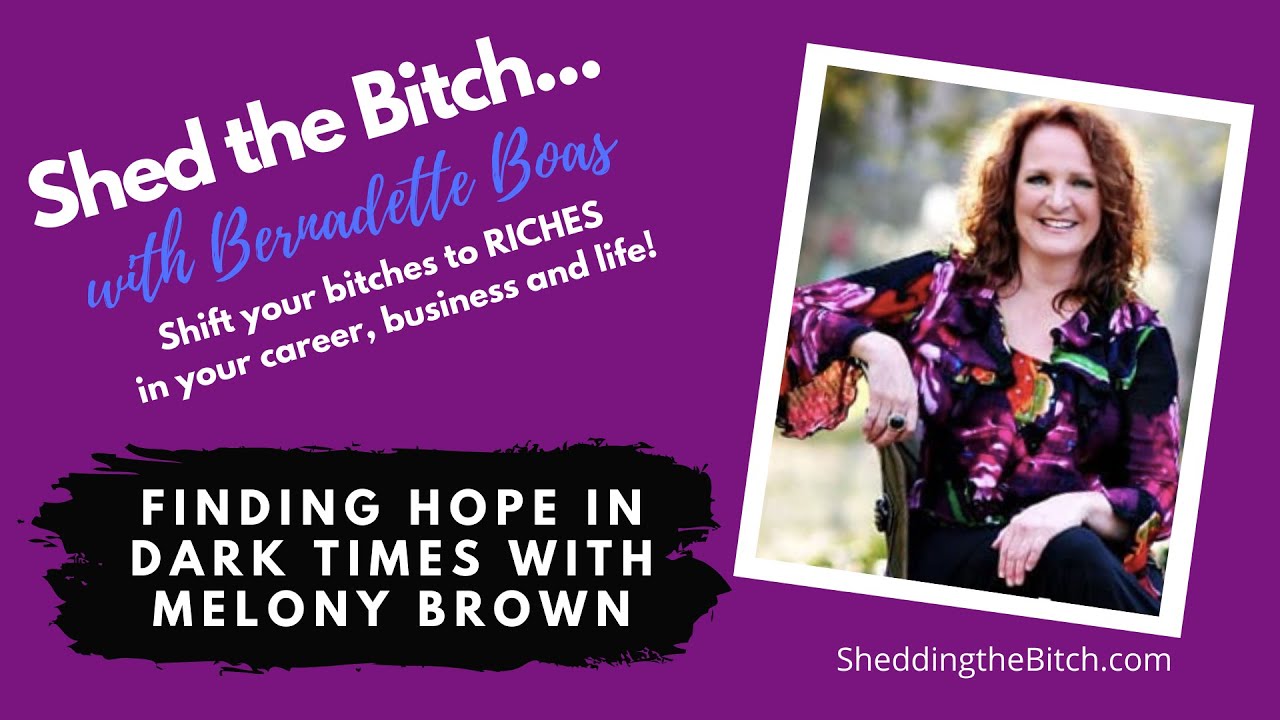
Melony Brown survived a stroke at age two and Moyamoya disease, a progressive brain disorder that caused decades of migraines and mini-strokes before diagnosis in her mid-40s. She now shares survival stories through her podcast Zigzag and One and an upcoming book, emphasizing how mindset, faith, and humor can transform struggle into growth.
Chapters
Hello and welcome to Shedding the Bitch Radio, where you can discuss, debate, and get advice on how to discover and shed the bitches of fear, insecurity, self-doubt, and negative mindsets so you can realize your dreams and life purpose and create and accelerate the riches you want in life. Join us here live every Tuesday at noon Eastern and dialogue with us at 818-572-2910. You can also chat with us at blogtalkradio.com/sheddingthebitch or share your stories on our website at sheddingthebitch.com. Whatever the bitch is that's holding you back from living your life to the fullest, it's not worth giving up the riches in life that you deserve. So call in now and let Bernadette Boas know what's holding you back. 818-572-2910.
Good day, good day, good day everyone. How are you? We are coming to you from both BlogTalkRadio.com, so thank you very much for those of you out there on our Shedding the Bitch radio channel through BlogTalk. We're also going live, at least we hope we are, on Facebook via Zoom on our Shedding the Bitch page. So be sure to go over there and check that out. We're still waiting actually for that to come up. All right, so let me introduce this. I'm just going to switch over to my other studio. Studio page. All right. So today we are going to be talking about finding hope during tough times with our guest Melanie Brown. Say hi, Melanie.
Hi.
Oh, so great to be with you again.
Yes, I know it has been a while, huh?
It has.
What did you say, October of 2015?
That is right.
Wow.
It has been quite a while and I am so excited to be back again.
Well, I'm glad you're here, and I just absolutely love your background. And for those of you listening on BlogTalkRadio, she has this beautiful background of all of these bright, vibrant umbrellas. It's absolutely gorgeous. But I'm excited to have you here too. So what we're going to be talking about is that finding hope during tough times. And each of us face tough times in our lives. Will we drown in hopelessness, or will we cling to our hope in God and trust that he will show us how these struggles, um, have purpose. And I have to tell you that I've been sitting with for many, many, many weeks now, um, as well as I do, you know, throughout my life. But many, many people are sitting down and just reflecting on— there's got to be something coming out of all of this. There absolutely has to be. And we have the power in ourselves to do to do that. So what are you going to, um, listen for and learn today? We're going to talk about that struggles will come in your life, and your attitude toward them either defeats you or fuels you. We're also going to talk about getting stuck in the struggle and how to prevent doing that, find the lessons within those struggles, and possibly your passion and your purpose in life. We're also going to talk about the fact that there are some who struggle, uh, to defeat them and then get comfortable in the misery. Raise your hand if you're, if you're like that at all, getting comfortable in the misery. That's a choice you have. And you can also make the choice to accept the struggle but not let it define you or defeat you. Then you fight to overcome those struggles with those gifts, the determination, the grit and the perseverance that you have. So, um, for Melanie and everyone else, if you're listening to this for the first time or watching us, I always ground you in a rich question regarding the topic at hand. That way you can immediately work to relate to it and figure out for yourself, is there something that I need to be listening for because I am dealing with X? And I would love to get some tips and advice on it. And I can pretty much guarantee you that our Melanie will provide you that, that tip, that guidance, maybe that inspiration that you're looking for. So actually, your rich question is a combination of two. I didn't want you to go without kind of really considering it deeply. So your first question to consider as we have this conversation today is, what is the one thing you need to overcome? What is the one thing, one event, one situation, one struggle, um, that you need to overcome? I want you to add to that, because I need you to be excited to work on overcoming. I want you to add to that what benefits will it have on your life, in all aspects of your life, should you overcome it? So just as we said in the introduction, you can choose to let it defeat you or you can choose to let it fuel you and thrive. All right? So if you are Facebooking with us, tweeting with us, Instagramming with us, you can also use hashtags #overcomer, #hope, or #shedthebitch. Okay? So let me do a brief introduction of our guest, Melanie Brown. Melanie is passionate about Spreading Hope Through Stories of Overcoming Life's Tough Challenges. Having fought a progressive cerebrovascular disease— and I even practiced that multiple times— cerebrovascular disease for most of her life and undergoing brain surgery to slow it down, she knows what it's like to fight to overcome. Over the last 7 years, she's interviewed more than 100 women and shared their stories with the deep desire to encourage those struggling that if those women could survive and thrive, then you can too. If you are facing life's tough challenges and don't know how you make it through, Melanie believes the stories on her website, MelanieBrown.com, and her podcast Zig Zag and One will fill you with the hope and the hunger to fight to overcome. I absolutely love that. Absolutely love what it is you're doing, Melanie.
Thank you.
I do too, and I have to tell you that it is a passion that has been birthed out of struggle.
Well, okay, so you first need to correct my pronunciation of that progressive disease that you had to make sure it's— well, it's everybody's cerebrovascular Cerebrovascular.
And so what it means is cerebro is brain and vascular is blood. And so it is a brain blood disease. It's a progressive disease called MOYA. MOYA. It's M-O-Y-A. M-O-Y-A. And it was unknown to me until I was 45 years old. Oh, wow. I had a stroke when I was 2. Back in 1972, which of course will date me and everybody will know that it's coming up on my 50th birthday this year in July, but when I was 2 when it happened, the neurologist had no clue as to why a 2-year-old would be having a stroke. Most people at that time that had strokes were 65 and older, and so I didn't fit the profile at all. And they did treat me. They, they took care of me as best they could, given that they really didn't know what was going on. But if you fast forward into my mid-20s and 30s, I also struggled greatly with debilitating migraines, which are also neurological, just like a stroke. Right. And I was being treated all that time, again, not knowing precisely what was going on. And then just before my 40th birthday, I started having mini strokes, again, a neurological incident. And after my 4th mini stroke, my neurologist said, we need to get you checked out through an angiogram of your brain. And there is a good possibility that you are going to need brain surgery.
Oh, wow.
And as scary as those words sounded, it was relieving in a way to know that there was a possible treatment to end the suffering that I had faced. And I don't want your listeners or you to think that every single day of my life was suffering because by no means was it. I struggled occasionally, but when I struggled, I struggled hard.
Yeah.
And so had the angiogram done and within 20 minutes, the neurosurgeon said, you have this disease called Moyamoya. And I said, okay, tell me about this. And he said, it is indicated by 3 different ways. And that is if you're having strokes or you're having migraines or you're having mini strokes, those are the 3 indicators of Moyamoya disease. And so when he did the angiogram, there was the picture of my brain and the middle cerebral artery was, for those who live in Atlanta, you'll understand what I mean. It went straight like yours does, and then it hit Spaghetti Junction and went crazy, and then it went straight again. And so at Spaghetti Junction in my brain is where the Moya Moya sits.
Yeah, and Spaghetti Junction kind of looks like that.
Well, it's like this major amount of highways all overlapping each other and In the case of Spaghetti Junction in Atlanta, it has a definite purpose and it's wonderful for traffic, getting everybody where they need to go in a very congested area. But in my brain, it was causing the blood to get stuck and not flow, and it was causing the stroke and it was causing the migraines and it was causing the mini strokes.
And did it, did it, did it heal it? Did it kind of put that to rest and Just having an angiogram, did that heal it? No, no, no, I'm sorry, the brain surgery.
Oh yes, so soon after I was diagnosed, we scheduled a brain surgery and what they did, and it is still just mind-blowing to me that they are able to do this, is they took a blood vessel from above my right ear that was healthy and hooked it to the part of my brain that was not getting blood flow.
Wow.
And that was 4 years ago. And I have had a few migraines since then. But overall, I would say that was the most incredible turning point in my health journey by far.
I bet. I bet.
I have a visitor down here. I bet. I mean, my gosh. I mean, talk about, you know, our subject being you know, overcoming. Wow, someone wants to say hi before I have to put her—
Oh, now him or her? Her.
Her.
Isn't she beautiful?
Yes, she is. She's just bugging my leg right now though. Well, that is unbelievable. So 4 years ago, you're healthy, wealthy, and wise?
I'm not sure I can agree with the wealthy part. Wealthy in spirit. There's been some wisdom gained. Yes. And definitely health gained from that point in my life, yes.
Because you look awesome.
Well, I feel great.
You look absolutely awesome. And like I said, that background is just very cool and it's giving you so much more color. But wow.
I'll take it.
Yes, what a story. Okay, so based on that, is that what kind of propelled you to want to share other people's struggles as much as yours and the overcoming story, which I think is Fabulous.
Yes and no. I started the ministry about 7 years ago and my surgery was 4 years ago. So I was in the midst, heavy in the midst of doing Overcomer Stories and sharing them while I was going through all that. Now I did take a little bit of time off so that I could allow my brain to heal. But the ministry really started because I had had people throughout my life tell me, wow, you have such an incredible positive attitude. And no matter how many times life knocks you down with your health issues, you just keep going and you just keep having this never give up attitude. And I was like, yeah, I'm not really sure what else I would do. I'm not going to let it defeat me. I'm not going to just fold up and die. I've got way too much on my heart that I want to share and do and experience. That, so I knew others had called me overcomer and it was a word that at first didn't feel real comfortable to me 'cause it's a very big word to say someone is an overcomer. But when I looked around, I saw that there were other people who had experienced different struggles than mine that also had that incredible positive attitude. And had that never give up no matter how many times life had knocked them down. And I said, I gotta share those stories too. And that's how it all got started.
And where do you think your— where do you think your undeniable, you know, strength came from, that you weren't gonna let it beat you down? I mean, that comes from somewhere. Where would you say that's coming from in, in your universe?
I'm gonna give two people, earthly people credit, and then I'm gonna give God credit. So the two earthly people, I would give the largest shout out to my parents. I, when I was 2, they were 21, 22, I can't recall exactly, and it shocked them as much as it shocked the doctors about what had happened to me. And they, the doctors really didn't give my parents a lot of tools of, here, you go home and do this with her. But they went home and they decided for me, I didn't have a decision then, I was only 2, but they decided for me, we're gonna have her do everything that a normal child at age 2 would do. And they kept teaching me things, kept expecting, having high expectations of me. It continued on all through my life. I did sports, and my left side is considerably weaker than my right side because the stroke at 2 paralyzed my left side and it messed up my fine motor skills. And I did sports. I learned how to ride a bike. It took me until I was 10, but that was because it messed up my balance as well. Mm-hmm. But you did it. But I did it, and my parents were always encouraging me, really putting things out there that probably they knew were going to be really hard for me, but cheerleading me from behind saying, "You can do it. You can do it." And the only thing that I ever got a pass on was in high school at the time, and this sounds so laughable now, but at the time we had to take typing class. And because my left hand doesn't work, the fingers don't work independently enough to learn typing, they went to the counselors and said, hey, I'm not real sure about this and it's gonna wreck her GPA. Is there any way she can get an exemption from this. And honestly, that is the only exception that my parents ever made happen for me.
Nice.
And so they were the ones that taught me about persevering and about grit and about determination.
Yeah.
And God has also been a huge, huge part of my story from very, very early on. And any time that I struggled and said, I can't do this, or it's too hard, I would pray about it. And I felt certain that God was pushing me on just like my parents were. And so I have to give my parents and God credit for this, this attitude, this determination, this overcomer fighter spirit.
Yeah, that is, that is awesome. But you said two people you had to give credit.
Is it because it's mom and dad?
Okay.
Yeah, I just wanted to—
Sorry, I lumped them together. I apologize.
That's okay. I just wanted to make sure we got both the, the credits that you wanted to provide, um, out there. Um, that is so awesome. And yes, I mean, it's unbelievable when you have— whether it's your parents, a friend, a, um, uh, you know, a teacher, a coach, uh, just having someone that just, you know, regardless of anybody's shortcomings or warts or, you know, whatever else they might be, you know, challenged with. It's just awesome to always have somebody, you know, in your corner, you know, pushing you forward and letting you know that, you know what, you're capable of doing anything. And your, you know, your health, your whatever challenges you're having is not going to prevent you. The only thing that's going to prevent you is up here.
I would agree with that. Yeah, so very much. It's important to have— and in my book that I'm working on, I call those people our companions, those people who are in our corner, as you said, that are encouraging us, that are saying, I believe in you, I know you can do this. And we need to surround ourselves with those people, and we need to make sure that we are good companions to other people who might be struggling, because they need that encouragement just as much as we do when we struggle.
Absolutely. Amen.
Amen.
Can I get an amen? Okay, so we talked about your parents, we talked about, um, God, uh, which, you know, is obviously is grounding you in your faith.
Absolutely. I could not have made it where I am without my faith in God. And I will tell you Just as a small side note, when I was teaching at the time when I got my diagnosis and I came back to school the day after my angiogram, and I had several of my teacher friends asking me about what happened and what was the treatment and what were the next steps. And I just, I was completely filled with that peace that passes understanding. And you read that verse in the Bible and you think, I don't think I've ever experienced that. And up to that point, I really hadn't. But I felt so peaceful at that point about having brain surgery that my teacher friends thought I had really lost it. I was giddy about having brain surgery. And they still remind me of that from time to time. And I, I I can only explain it because I experienced that peace that passes understanding.
Wow.
Wow.
I love that, by the way. I was scribbling. I wanted to make sure I didn't miss that statement, peace that passes understanding. That is awesome because many people that are struggling right now, they feel like everything is working against them. And if they could just— get still and get quiet and go internal and call it praying, call it meditating, call it whatever you want, but just find that stillness, uh, and then ask for what it is that you need and trust whether it's God, the universe, whatever you believe in to kind of work in your, in your favor, uh, do the work for you, then, um, you, you certainly can find the peace that passes understanding. That is so awesome. That is so awesome. All right, so, uh, you started this ministry, uh, with the sole purpose of—
oh, are you, are you leading me in? I'm sorry. Yes, I was waiting for the rest of the question.
Oh no, no. So you, so you, you started the ministry with the sole purpose of doing what?
I have this theory that the news is really hard for us. We know we need it. We know it's important to be aware of what's going on in our neighborhood, in our city, in our state, in our country, in our world. We need to know those things, but the news can be extremely overwhelming with stories of fires and terrorist attacks and pandemics and school shootings. And if you spend any time at all listening to that, whether you're sitting in front of the TV listening to it, scrolling through your phone, reading it, listening to it on the radio as you go into work, all of that negativity is coming in. And it can sabotage any hope that we have of things getting better. And my goal, and it has continued to be my goal through all of these interviews and, and my desire to share them, is to provide hope and to provide encouragement and inspiration. Because we all will go through difficult, tough times. And all of us are experiencing that right now, for sure.
Yeah.
And sometimes it's really easy to lose sight of the fact that there are good things happening all around us right now in amongst this pandemic.
Right.
We often forget when we are in a health struggle of our own, or we are really struggling financially, our kids are struggling and we don't know how to help them, whatever the struggle is, it's helpful to know there are other people that have gone through struggles. Maybe not the exact same thing, right? But you can read those stories and say, oh, I forgot to do that. I forgot to sit down and just be grateful for the things that I have. That one thing might be a great way to turn your perspective back to feeling hopeful.
Mm-hmm.
And so the purpose of those stories is to highlight not necessarily famous people. Most of my interviews are everyday average people, and those— whatever they have gone through, they have learned so much about themselves, about life, Right. And oftentimes, just reading those stories, it helps the reader to understand, yes, I can learn things from my struggle.
Absolutely.
And oftentimes, and not every single story, but a lot of the stories do point to how that person, in amongst their struggles, whatever they were, found a passion and purpose just like I did. I am very passionate about overcomers because I know how hard you have to fight to overcome, but what wonderful things happen on the other side of that fight.
Exactly. So give us an idea of some of the challenges that, uh, some of the people that have come to you and allowed you to tell and share their story what is it that they're dealing with so we can help people that are listening or watching relate to what other people are going through.
Wow, it has been such an eye-opening experience because when I started this 7 years ago, I interviewed my friend Stacy and she had dealt with addiction and abuse and how that propelled her into the ministry that she was a part of and still is doing much of that same work today in a different ministry. But it's not just abuse and addiction. It's sex trafficking. It's various types of cancer. It could be a chronic illness like multiple sclerosis. It could be mental illness like bipolar disorder. I have met so many incredible women who have faced just about everything that is out there for you to struggle with. And on Tuesday of next week, I am sharing the story of a Holocaust survivor.
Oh, wow.
Wow.
Miss Eva is just incredible, sharing what she had faced and how It definitely changed her, but so many positive things that she took away from those experiences.
And what is the most important part of their stories? What, what are you finding, you know, to, to really glean out that's really moving and inspiring and helping others to grow and overcome as well?
Well, I do think it's important to share what they have struggled with. So a part of the written story or a part of the podcast episode will be describing what they have struggled with, because I think that gives context to the person who's reading or listening, right? They know, wow, it's not just a hangnail, or it's not just, I got a flat tire on the way to work and I was late and then my boss chewed me out. You know, those things are tough, but we're not talking about those kind of things. We're talking about true, true struggles that impact every area of your life, right? And so that is an important part of those stories, but I like focusing a lot on the lessons learned because I feel like each person, as they go through different struggles, they take away different things. And when I read, let's say, Story A I, if I read the lessons learned, I might say, oh, well, that's nice, and yeah, I get that. But I read Story B, and all of a sudden it hits me like a Mack truck, and I think, I need that, I never thought of that, and that would make a huge difference in me fighting to overcome.
Right, wow.
And so the other thing that I make sure to do is to ask the overcomers to share what advice they have. And it could be advice about what they specifically have fought to overcome, or it could just be about life in general. And those— the lessons learned in the advice part of those stories, to me, is the most powerful and the biggest takeaway.
Right. Do they, do they tend to get into, um, not only their struggle but then the impact it has on all aspects of their life, you know, whether it's relationships or finances or their career or their business or their, you know, spirituality. Uh, do they—
some of them do. Yeah, some of them do. And some of them, um, maybe don't want to be as vulnerable and share that, but you can tell as they talk about the different aspects of the challenges that they faced, that it didn't just impact their health. Mine didn't just impact my health. And I think that is powerful, too, because when we struggle, just like right now with the pandemic, it definitely impacts your job. It impacts your finances. Being in a house with your family all day long, every day impacts your relationships with your family, no matter how much you love them. So when we struggle, it is good for us to really unpack how it is impacting us in all of those areas because it provides an opportunity for us to make changes. And we don't necessarily have to make a change in every single area of our life, but it's really important to sit and think about how it impacts those areas and is a change needed? Because when we face struggles, that oftentimes, and I was going through my notes from the lessons learned and the advice that the overcomers shared. I'm doing a story, a chapter about that in my book. And so I had my assistant compile that information and I was reading through it before we went on today. And the idea that we need to examine and make changes is one of the best opportunities that happens when we struggle.
Absolutely.
But you have to make that choice, right? It's not just gonna roll out in front of you and say, hey, it's time to make some changes. You've got to do some self-reflection and really think about where you're heading in life and what changes you could make. And I'll tell you, I'm making some changes. I've already done some self-reflection during this pandemic, and I'm— I've got some changes ahead, and I'm excited about them because I know that they could potentially open some doors, right?
Well, and it's, um, so do you have— through all these stories and even through your own, like you're saying, your own self-reflection What do you find kind of is that door? Like, you know, so many people are kind of reflecting, but then their fears or doubts or uncertainties cause them to kind of go blind to that door being even cracked. So what can people look for? What can people pay attention to? What can people sense about, you know, about a struggle they may be going through, like what we're— everybody's going through right now, and that self-reflection.
Well, I'm going to relate it to something that happened to me about a year and a half ago. I went to a conference, a writer's conference, and presented my book proposal, and a couple of the literary agents really liked the book idea, and they said "Hey, you should start a podcast. That would be such a great compliment." And at the time, I will be very honest and tell you, I went back to my room and wanted to crawl in a ball and just, every negative thought in my head was like, "You can't do this. You're not good enough. You have a terrible voice." I mean, every single thing you can think of came at me. And I went home and told my husband about it. And I wanted him to say, it's OK, you don't have to. But that opportunity was there. And no, I wasn't going through a struggle at the time. But oftentimes the opportunities come and they freak us out. We feel so overwhelmed and out of sorts. And we feel, I don't have the skills for that, or I don't have the knowledge for that. But this is a beautiful opportunity during this pandemic. If we get those thoughts, write them down and really explore them because those are those open doors. And is it going to be easy? Heck no.
Right.
But I will tell you, the podcast has been a huge opportunity for me to to grow and to learn about myself and to learn about others. And I can't imagine not doing that podcast now. And that was because I saw that door open and I wanted to slam that thing shut. I did not want to go through it. My fears were so big. And I, I trusted what those ladies said. And I went through that door. And that's what we have the opportunity to do anytime we face struggles, whether it's during this pandemic or you have a financial situation, you lose your job, anything that you struggle with. You are in a, in a, a dangerous relationship and you know you need to leave. Any of those struggles provide opportunities, but we really have to go through that door.
Yeah, well, I think you said something critical that I, I want to make sure we reiterate too. Um, you use the word trust, and though you, you also use the words you have to trust, you know, what other people, you know, are telling you, or whatever the case might be. But I, I think the biggest struggle people have is they don't trust themselves.
Yes.
What they really need to do is they need to trust themselves that they have everything that they need right at this very moment in time to allow that creak of an opening in that door to be pushed open just a little bit for them to go through and then to kind of then throw open at some point as they, you know, trust themselves to face the fear, the insecurity, the doubt, the not knowing, whatever the case might be. Wouldn't you agree?
I would agree so much on that because it's just about taking that first step. Yes. And then you take the next step. And if it's not the right path, there's no shame in saying, hey, I tried it, right, and it didn't work for me, right? There is no shame in that.
Yep.
Yep. Now let me ask you, um, you know, um, well, let me ask you a couple questions. So you're hearing all these stories all this time, and you have your podcast, uh, you're, you're writing the book. What is the— what's the name of the book? Do you have one yet?
Yes, it's called Journey On: A Survival Guide for Overcoming Life's Tough Challenges.
Oh, very nice.
So it is intended to be an interactive book where you write in it, you answer questions. There will be black and white drawings that correspond to the different parts of your journey that you can color if you're one who likes to color.
Nice.
Nice.
The intention is, is that when you finish that book, it should be a mess. Not a mess in a bad way, but a mess in that you have thrown yourself into it and you have tools now that you can carry away that will help you as you go on your journey of overcoming.
That's awesome. And when is it due out?
Oh, can't ask that question yet. We're not finished writing it yet.
Fair enough, fair enough. Because I, you know, those things are so unpredictable anyway. So even if you had a date, it would, you know, it could change on any, you know, on you or anybody else. But that's exciting, that, and very exciting. And I definitely want to have you back when you do, you know, whether you have a publishing date or it is published. I definitely want to have you back to talk about it. So are you accepting stories still? And if so, how would someone reach you? But if not, then what's your journey from, you know, from here? What are your next steps?
I am always looking for more stories because even though I have shared almost 100 stories at this point, I feel like there are other people out there fighting hard and having that never give up attitude. And I want to honor their journey and, and not lift them up above everybody else and say they're better than, but to, to put a spotlight on them just for a small while and show how they have faced life's tough challenges and give an opportunity for others to learn from what they've experienced, the hard times and the good times, and again, what lessons they've learned and what advice they have for others. Because again, to offset or overtake, in a good way, the media and all the negativity that we unfortunately take in when we watch that and listen to it and scroll through and read it, we need stories of hope. To offset all of that. Because I think it's really interesting how the news might share a story about a family's home being invaded, but they don't have a follow-up story about what happened to that family as a result of that tragic situation. And that, to me, would help our society greatly. To know, hey, you know, they, they hit a rough patch. It was very unfair. Those things should have never happened, but they didn't— they didn't let it defeat them, right? In fact, it gave them fuel to do X, Y, or Z, and now they are helping the community in this way, right?
And so, and I think you probably find too that, you know, obviously drama you know, gets ratings, right?
Yes, it does.
But at the same time, that drama can be the overcoming. It's why there's so many great shows on that do talk about, you know, people overcoming, you know, overcoming, even if it's, um, you know, those weight loss programs or home improvement programs that I have been addicted to for the past like month. Uh, you know, they're all about people overcoming something and, and realizing a dream in their world. And those are just as popular as all the hate and all the violence and all the, the, the drama that, uh, often wants to be put out there. Uh, so you're right, I wish they would focus more on that. And I just absolutely love, uh, what you're doing in regards to it. I know for myself, just as a tip for folks, I used to watch— I used to have a very, um very OCD routine that I'd have to be up at 6:55 in the morning so I could kind of get up, do my— well, stay in bed and do my meditation, my prayers, and all my little routine, get up in time that I'm turning the TV on at 7 so I can get that 90-second blurb from one of the news morning shows. And I can't even do that. I can't even listen to that 90 seconds anymore because it's just filled with with negativity and, and anguish. And yes, and so I just don't even— I don't even turn it on anymore.
I think it's interesting how even on the news with the pandemic, it's showing the number of cases and the number of deaths, but nowhere can you find the number of people who have been healed of it.
Right, right.
And I think that is very valuable information, right? Because if you only hear and only focus on the fact that people are dying from this. What would happen if you got that and all you could think was, I'm gonna die, I'm gonna die, I'm gonna die, and not even be aware that there are far more people being healed of it, right, or dying?
And, and fortunately, um, you know, what would we be called, the civilians have taken control of that. And if you go onto Facebook or Instagram or Twitter, you'll see people wanting to share that type of data, share stories of healing, stories of, like you, stories of overcoming. So it's just the average person like ourselves that are ensuring that our Facebook pages and our streams of all kinds are being full of positive things, uplifting things, inspiring things. As opposed to all the noise and quite honestly the crap that—
Yes. And you gotta love all those funny memes. I need those. So whoever's making all those funny memes about the pandemic, please keep doing it.
Exactly.
Because I love the inspirational stuff. I love the funny, the videos. I don't know if you've seen any of the videos. They're making parodies of different songs and it includes about the coronavirus and how it's impacting our lives. Yes.
Well, there's one about pickleball. I'm a pickleball player. My nose is itching so bad, but I don't want to necessarily put my hand on my face. But I'm a pickleball player, and there's this great one that's going around about, I want to dink with someone, you know, I want to dink with somebody. Yeah, it's hysterical. Okay, so I want to make sure I want everyone to make note of MelanieBrown.com, and you could go there and you know, kind of read up on all of the stories of women overcoming a wide variety of life's tough challenges. Uh, you can also subscribe, and I want you to explain this a little bit. I want you to also subscribe to Zig Zag and One on all the podcast apps. But where's the one that they could get to like right now, would you say, um, for them to be able to subscribe?
Well, you can go to my website, and I'm going to spell my name because of course, as much as my parents have done wonderful, wonderful things, they— I don't know what they did when they spelled my name. So it's M-E-L-O-N-Y and then brownlikethecolor.com. And you can read all of the stories there. And you can— there is a tab that says Zigzag in One. And so you can Listen there.
Awesome.
You are asking about the title and what it means?
No, no, no, no, no, no. What I wanted to ask about in regards to Zigzag and One is one, where do people go?
Oh, got it.
But also because you make note that it, you know, through humor and creativity and music, they're kind of important to people's journeys. So I kind of wanted to understand a little bit more about that.
The idea of the Zigzagging One is a lot of the overcomers, when I talked to them and interviewed them, they, they referred to their journeys as having zigzags in their path when they faced challenges. And I— the whole idea of zigzag really stuck with me, and so I use that as my podcast title. And the one is the one takeaway. And so each time we do a podcast episode, I ask them to do a one takeaway.
I love that.
That is—
and zigzag, because when I first saw it, I was like, oh, that's awesome.
That's different, but it's catchy. And so once you understand what it means, you're like, oh yeah, because I can tell you, I hit a lot of zigzags in my path. And so I think it really stuck. With me. But part of what I wanted to do is to have the audio version of the interviews instead of the written, just to have something different. But I didn't want to just limit it to overcomer stories because I felt like it was so important to understand that when we go through, some of the things that we don't even think about really play an important role in helping us to overcome. And so I have interviewed people that may or may not have an overcomer story, but they shared about how humor is important when we are going through our struggles, how creativity— and maybe you've never painted before, or maybe you've never written poetry before, but if you could expand and think about being creative during your challenges, that helps us to process and to come with new ideas and maybe a door flies open because you express yourself creatively.
Right.
And so I wanted to make sure to also have guests who could share. And coming up in May, I have 2, possibly 3 interviews on my podcast with people who are going to talk about how important music is to us. As we go through our journeys.
Absolutely. That's awesome. I absolutely love— I love that layering. You know, I love the fact that, yes, you want these stories of, you know, these hardships that people have gone through and how they've overcome, but then layering, you know, the music piece, the creativity piece, and the humor piece of it. Because without those things, I think we'd all be ugly messes.
Well, I know from myself, I am a very serious person, and when I go through struggles, I lean really hard on that being very serious and stoic, and I need humor. That's why, like I just mentioned a minute ago, the memes, the funny videos, I need right now desperately.
I need to laugh big time. I absolutely agree with you. I absolutely— and I would— I mean, creativity, you could throw in there, um, even kind of like entertainment, like You know, I'm watching some certain shows, like I won't watch any show that is violent or is something of a pandemic type of theme to it.
Correct.
Like, it's just way too heavy right now. So I'm going for those lighthearted, even those old-time, you know, comedy shows or even movies. I was watching Hallmark Channel the other day. I was watching Christmas movies because I needed some levity. I needed some calm. Um, all right, so, uh, where— what last kind of tips or last suggestions or ideas or thoughts, um, can you share with our listeners in regards to, um, you know, finding their way through challenging times?
I really think that it is so important for us to not look at the struggles that we have as bad and hurtful and painful. Yes, they are those things, but really look at them as, what can I learn from this? What can I take away from this? What changes do I need to make? And don't put a ton of weight on your shoulders about making these grandiose changes or these plans that will alter every single aspect of your life, but they are there for a purpose. And if we can see past the pain and the frustration, there are so many things that we can learn about ourselves and our lives when we go through struggles. And to me, it may sound really a big stretch to some, but I see struggles as a gift.
Yeah. Yeah. Yep. I absolutely agree with you. That's beautiful. That's beautiful. I— because like what you said from the very beginning, struggles show you other things about yourself and opportunities that are presenting themselves that maybe a change is needed.
Yes.
Yeah, absolutely. Love it, love it, love it. Well, I am thrilled that we kind of caught up again, uh, as we started the top of the hour saying that, uh, you know, it's been since 2015, um, that I had you on the show.
That's okay. Lots happened in my life since then.
Oh yeah. Well, and that's why I'm so glad to hear kind of where you've evolved and transformed and shifted and what your focus is on. Although it hasn't changed much, but it's evolved and enriched and you can hear the passion and you can hear the heart within your story. I so appreciate you sharing that with everyone. And I want to remind everybody, meloniebrown.com. So let me spell Melanie, M-E-L-O-N-Y brown.com, and take a look throughout her website, but take a look also for Zigzag and One, and be sure to subscribe to her podcast because I'm sure you'll get a great deal from that as well. Stay, you know, stay in touch with her on Facebook, Twitter. Just look for Melanie Brown. You can see her smiley face whether you're watching the video today or you see the image that I've been posting on Facebook and Twitter. You'll see her big smile. So make sure that you're following her and kind of taking in what it is that she's sharing because we could all use that opportunity right now to kind of sit and, and learn from other people who are— have been through struggles as well, and glean a few things from those stories that you can use in your own life. But I want to thank you, Melanie.
This was awesome. Thank you so very much. And I didn't fully answer one of your questions before, and I want to take just a second to do that. If someone feels like they have an overcomer story that they would like to share, they can go to my website and they can click on the contact button Fill out the form and it goes directly to my email. So I will be able to get it quickly and then get back in touch with them if their, their story is a good fit with, with this ministry and with the other stories that I've posted.
Awesome. MelanieBrown.com, everybody. And we'll be sure that as we share some posts and tweets, you know, throughout the week in regards to this interview, we'll make sure that that information is there as well. Because we want to support all of you having an opportunity to tell your story, um, as well as you can be listening and reading about other people's stories. Thank you, Melanie.
Thank you, thank you, thank you so much, Bernadette. It's been wonderful.
You're welcome. And I'll look forward to having everyone right back here on Shedding the Bitch Radio next Tuesday at noon Eastern time. And be sure to also check out for our intermittent, uh, videos on Shedding the Bitch and our Shift to Riches private Facebook group.
Group.
I'll look forward to seeing you out there. Take care, everybody.
Thank you for listening to Shedding the Bitch Radio with Bernadette Boas. Join Bernadette every Tuesday at noon Eastern as she helps you shift your bitches to riches. And the dialogue is always going on at sheddingthebitch.com. See you next week.
More from Bernadette



From Stuck to Leading, Episode 2 — Meet the 5 Inner Fears Destroying Your Leadership



