Habits of Successful People with Kate Meiner
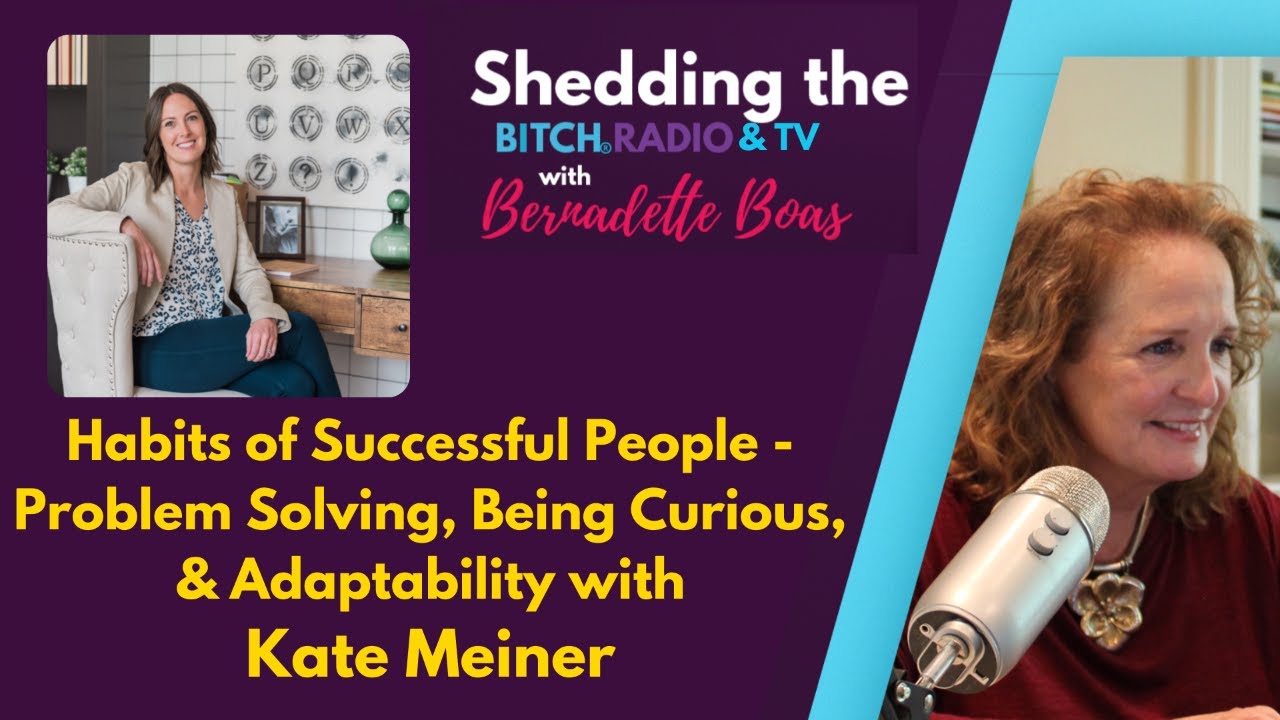
In this Shedding the Bitch Radio episode, host Bernadette Boas interviews business coach and author Kate Minor about the habits that drive high performance in entrepreneurs and leaders. Kate shares her professional journey from real‑estate trainer to middle‑market business coach, explains why she views resourcefulness as the umbrella habit that unites traits such as curiosity, problem‑solving, adaptability, and creativity, and outlines concrete practices for developing discipline, tracking, accountability, and effective communication. The conversation delves into the importance of asking high‑quality questions, using metrics to measure progress, and creating a culture of curiosity within teams. Kate also promotes her book Figure It Out, which distills five foundational trait‑skills for resourcefulness and offers a framework for leaders to assess their current state, set goals, and implement systems that drive sustainable results. Throughout, the hosts emphasize practical, actionable steps for both seasoned and emerging business owners, especially those in the 10‑50 employee “middle‑market” segment.
Chapters
Are you ready to create riches in your work and life? It's time for Shedding the Bitch Radio and TV, where you can discuss, debate, and get advice on how to discover and shed the bitches of fear, insecurity, self-doubt, and negativity so you can realize your dreams and life purpose and create and accelerate the riches in life you deserve. So let's welcome your ball of fire host, Bernadette Boas.
Good day, good day, good day everyone, and welcome to Shedding the Bitch Radio. Yes indeed, I'm Bernadette Boas and I'm so excited that you're here today because we need to have a conversation. We do. We need to have a conversation in regards to habits of highly successful people. So who wants to be successful? Raise your hand whether you're listening or watching us on, uh, podcast streaming services or on our Shedding the Bitch TV YouTube channel. Um, but we all need to focus on those skills that will make us successful. So before we get into, um, that topic of conversation and introduce you to our guests, let me just make a couple of announcements. Of course, I always have to thank our new and ongoing listeners and viewers. Man, your comments and likes and tweets and subscriptions and ratings and reviews, even your suggestions into support@bullafirecoaching.com. You are providing us great ideas for topics and experts, so keep them coming, um, keep them coming. We certainly appreciate it, and you're helping us to really build our community here, whether that is in any one of the podcast streaming services or on our Shedding the Bitch TV YouTube channel, as well as on Facebook and Twitter, Shedding the Bitch. Um, so thank you so, so much. We also have to thank our ongoing longtime sponsor, North Georgia Tax Solutions. Debbie Snelling and her team, uh, provide full-service financial and tax services to small to corporate-sized clients around the country, not just North Georgia. And, uh, her team is just fabulous and will also help you with your individual financial and tax services needs. So please go out and check her out at ngtaxsolutions.com. Tell her I said hi. All right, okay, so let's get into the conversation. We are talking habits of highly successful people, and the reason is, is because growing skill sets in resourcefulness, self-improvement, business habits, entrepreneurships, and more, um, you really want to do it through growth mind learning and developing your people, even yourself, within your organization. So we're going to touch on around these habits, we're going to touch on problem solving, being curious, adaptability— key, key for right now, let me tell you— creativity and productivity and results. So let me introduce you to our guest, Kate Minor. She is a business coach and trainer and has a passion and personal mission to influence inspire and impact the lives of others. She has served as an executive leader in a top real estate franchise, producing growth, market share, profitability, and organizational leadership. And she has a passion for coaching, training, and developing leaders in the world of business so the people and the business aligns with the company's mission and vision to achieve massive results. Kate believes that resourcefulness, is the most underrated skill in today's business environment. And that sparked her mission to write the book Figure It Out: How to Harness the Power of Resourcefulness and Achieve Success, which teaches each reader the 5 foundational trait skills which are crucial in the journey to becoming a master of resourcefulness. Kate resides in a small town just west of Orlando, with her husband Tim and daughter Logan. Welcome to the show, Kate.
Hey, thanks for having me here. So great to be here.
Oh, you're very welcome. How old's your daughter? How old's Logan?
Yeah, she's 6 and a half.
Nice. How sweet is she? Well, she's back in school, right? Yes, yes, yes.
All day, every day. Take her.
And I'm sure you're like, oh, finally, finally.
Yep.
Some relief, some relief. Um, well, let's get into this. Well, one, this is— I love this subject. I love this topic because we don't focus on our business skills enough, um, when it comes to our everyday, whether we're entrepreneurs or corporate professionals. So tell us your backstory, even from a personal perspective, and then kind of lead us up to kind of how this area of, of coaching and training became your passion?
Yeah, absolutely. Um, so I actually was a business major in college and then graduated and went into sales like most business young professionals. And from there I kind of stumbled into a real estate career. Um, and when I joined the real estate brokerage, I actually never sold real estate. I was actually always a trainer and support system for realtors. And teaching them and educating them how to structure their business like a business. Because most independent contractors, they, they don't have, you know, the roadblocks and the roadmap to kind of outline how to have a successful business. And when you incorporate tools and systems and some education, you really can function like a true business. And so from there, I kind of went through many positions at the brokerage, and that launched into me expanding outside of the field of real estate and connecting with other businesses, other corporations to help bring the same structure, systems, and accountability into their organizations and, um, with their people.
And then is that how it kind of led organically almost into your business coaching, or was that a, a different path you took?
Yep. No, it was pretty much, um, very, uh, simultaneously on towards that path because that's what I had been doing originally with inside the real estate brokerage. Um, and to go into the business coaching allowed me to take it outside of the industry. But coaching and training was always something that I had been doing for the past 9 years.
Yeah. Oh, nice. Very nice. And obviously your background, you know, speaks well to it or, or works in well to it. So that's fabulous. Now I'm curious, what type of clients— are you in the real estate industry with your business coaching, or do you expand beyond that?
Way beyond that now. Yeah. So, um, a lot of affiliated with real estate, mortgage brokers, home inspectors, roofers, construction companies, things like that. But mostly middle-sized businesses that have grown and seen success and they really want to refine that success. They want to have it be more efficient and systems running and developing people and having less turnover with their people. And that's really a great niche for clients to be working with.
Right. Nice. And just curious again, that's just how I am.
I love it.
When you say medium, help us understand, help our listeners and viewers understand what that looks like in case they are.
Yeah. So 10 to 50 employees, maybe 1 or 2 offices, like a regional. You've got 1 location and a few other offices regionally. That's going to be a good privately owned, good size structure for that medium-sized business.
Right, right. Awesome. Awesome. All right, everyone. I also have her website. Down. And for those of you listening, it's kateminer.com, and miner is M-I-N-E-R dot com. So be sure, as we're talking, uh, to— you can multitask unless you're driving, um, you know, check her out and what, what it is that she does. So I love this subject about, uh, you know, habits of highly successful people and the fact that you talk about resourcefulness, productivity, results. All of them. But which is your favorite?
So I would have to say curiosity. Being learning-based and curious has got to be my absolute favorite. And I think that they, I mean, they all really do encompass this idea of resourcefulness. And I think that we don't call it that. People will say that we've got grit, we've got, we're growth-minded, we've got structure and systems and all those things, or we're great problem solver. And that's how they will identify their skill set and what's led them to success. You know, failing forward is a really good way of saying, hey, I've been adaptable, and I have kept a positive mindset around it. And there's countless books on failing forward and concepts around— same with like grit and tenacity, right? And yet, if we, if we could just put all those things under one category, it would be resourcefulness, right? And so that's kind of— I really wanted to bring awareness around this word to the business community and industry and leaders, because I think that we need to start calling it that. We need to understand like, hey, this is what's required of us. We need to be resourceful. This is what we should look for in talented people. And so I really wanted to identify it and start getting that word out there in the business community.
Yes, I love that. Because another aspect I would, would think too is important is especially with like with the internet, you know, with Google, you know, there is nothing that we can't figure out for ourselves first, right?
Right. Very true. Yeah, we've got— now more than ever, we have more information readily available to us, right? And Tony Robbins said it best: it's not a lack of resources, it's a lack of resourcefulness that keeps us from actually discovering solutions. And, and, um, and so that's, that's actually a huge—
I, I love that. I now, I do have to, um, ask you on a different angle of this though. So there's a resourcefulness, right? And then as a business coach, would you also make sure that, you know, all these DIYers, right? You know, there's— there comes a point when you're, you know, in the business and you're running a business and growing a business where, you know what, Yes, be resourceful and try to figure it out yourself. But at the same time, kind of almost like set a clock, set an alarm to say, if I don't figure it out in like a certain amount of time, I have to go and delegate it or hire it or do something else. Do you find that to be also kind of a skill that your, your clients need to learn?
Absolutely. And there's a lot of times where people, you know, that could be ego, that could just be like, you know, I competition, like, no, I'm going to be the one to do it, right? Like, it's my business. I want to be the one to take the lead on this. And then it could be a number of different things. And yet, if we're just running around chasing our own tail, what good is that really? That's where we have to bring in the measurements and the results. Is this working? Is it not working? What part is working that we can continue to do and what part isn't that we can just get rid of?
Right.
And so usually when I say, you know, be resourceful, I don't mean isolate yourself and figure it all out on yourself. I mean, you know, who can you go to? Who has already done some of these things or has a connection in this area, or you can go to that's already kind of had some of these challenges that you can start with? Right. That's a huge thing when we've got mentors and other businesses that we can look to as examples and say, okay, well, if I can start at their step 20, that's going to shorten my learning curve. That's going to shorten my length to getting results. And that can be a huge resource in itself, is finding other successful people that we can then emulate.
Right. Well, and especially, and I want our viewers and listeners to, uh, hear this, um, especially when it comes to Kate, because the fact that you are, uh, working with the middle market, that means they figured out a lot of stuff. You help them figure out a lot of stuff in order to get to that middle you know, middle market level. And therefore, those listening and watching that are still struggling to get and grow your business, um, you know, those are good, good businesses to emulate, good leaders to emulate, good business coaches to have to support you, get to get you where you want to go.
Absolutely.
Would that be a valid statement?
Yeah, it's a sum of experiences. Who's already gone through something like this? Who can I go seek counsel from? Who's had experience in this thing that's already going to give me some perspective of what I don't know yet?
Right. And what would you say is the business leader's biggest challenge or struggle when it comes to resourcefulness?
Yeah, I would say it's developing their people. I think that we have an idea in our head of how we should manage or how we should lead and a way that it should be conducted versus letting our people tell us what kind of leader they need from us, right? Like, we just think in our minds, this is the leader we need to be without listening to our people and saying, what, what do I, what's required of me to be the leader that they need, right? And so I think if we reverse that perspective as a manager, as a department head, as the business owner, that's going to give us a little bit more insight as to what we need to go be resourceful about. Yeah.
And as a business coach, kind of how do you approach that with a business leader? Say a business leader is from— I'll call it the old school— who comes in and just thinks, well, I've got the title, I've got the position, I've got the, the role of leader, and therefore it's not about what you need from me, it's what I need from you. And yet, you know, they're not getting the results that they want, or they don't get the retention. And so, you know, what do you have to do as a business coach to kind of set them straight?
Yeah, the short answer is we dig. We've got to uncover, we've We've got to unpack, we've got to dive in there. And then what we know is that once we've hit awareness, that's our first step to change, right? And we can't get to better until we get to different. So once we have an awareness around, hey, this isn't working, maybe it's time to bring in another approach. And then what's that next approach going to be? What are some of our options? Have we considered this? And we start kind of going through what would it look like if we were to change a few things? What are we comfortable initiating? On those changes. And then, hey, let's just do this temporarily. We'll circle back again, maybe next week, maybe at the end of the month, and we'll evaluate. We don't know if that's the right answer. Why don't we just test it out and see? And we'll keep tracking and measuring to see if we're moving in the right direction.
Yeah.
So it starts with awareness. That's, that's key. And then it's— we have to understand that in order to change something or to get to different or better, we've got to change something.. And usually with the leader, we know that's our— we have to own that. That starts with us. And so it's getting them to have that awareness, recognize that it starts with them, and then we start tracking once we start making some changes.
I love that. And I want to make sure I captured something that you kind of, you know, kind of walked through, um, but I— but it landed on me and I want to make sure I understood it. Did you— because it was great— you said you have to get better before you get different.
If you want to get to better, you have to get to different.
Okay. Well, yeah, yeah, yeah.
Okay.
If you want to— I love that because I can't tell you, and I'm sure you experience it all the time, how many business owners, they want to kind of jump, you know, they want to go over here, over here, without really working on and improving what they already have, right?
Yeah, absolutely.
Okay, that's a Kate Minor quote, everybody.
And I'm sure I heard that from somebody else somewhere.
That's okay. That's all right. But I'm sharing it for you.
Okay.
So I love that. Now, what is the one thing in your business that you didn't expect?
Yeah, I think I had a hard lesson in patience these past couple of years.
Yep.
Full disclosure, I'm not a very patient person. And in venturing into new business territory and with different companies, That's the part that I just had this idea, this high optimism that because of my experiences, because of my skillset, because of all the right resources, that it was just going to be this, okay, very attainable, very realistic kind of expectation. And boy, was that just not what happened. So patience. I'm really, to this point, I'm still learning to be a student of patience and understand a good question. I'm big on journaling. A good question I've been asking myself lately is, what am I supposed to be learning? What is this period teaching me? What is this season of my life teaching me? What is it revealing to me about myself, about my business? Just a number of different things. And I've really learned to embrace that component because things definitely did not happen as quickly or as, I would say, the way in which I thought that they really would. And I think Most business owners experience that. In fact, I'm almost positive every single business owner has this idea of what it's going to be like, and then they get hit with this reality bomb and you're just like, oh.
Yeah, yeah. Yes. I mean, that is resonating all over me. How would you say it showed up for you?
I would say in my reflection, in my journaling, I was just— and you switching your mind frame when you're frustrated, typically what I have learned about myself is that when I'm frustrated, it's because I have indecision. I'm not working in a direction. I feel stuck. And that's why the frustration sets in because if it continues to happen day in and day out or week in and week out or month in and month out, that just builds up this anxiety and this frustration and this, this feeling of I'm not good enough. I don't have the resources. I don't have the experience. I'm not connecting to the right people. It's just all this emotion and negative heavyweight. And so in order to not go down that spiral, I have to say, okay, well, what am I learning about myself? Where is the opportunity? Now that I've learned this, what can my next step be? And I really have gotten into asking myself questions. As a coach, we're trying to ask questions of other people. And I think a way to really help me work through all this is to be somewhat reflective and ask the questions of myself. I love that.
I absolutely love that. I went off camera because I was going to start hacking. We keep it real here at Shutting the Bitch. Um, so excuse me. Um, so yes, I— because I do believe, um, well, I love these resourcefulness and patience, um, recognizing what these business owners deal with, you know, each and every day, but more so what their leader— and I'm saying you— with their own business coach, um, dealt with themselves in order for them to help them and coach them how to work through what even you're, you're dealing with. So I absolutely love that. Now, what would you say? So of all the things that you do work on and the conversation around habits of successful people, it often comes down to skill. What would you say is the most important either personality trait or skill that someone should focus on in order to become a better leader?
I would say a skill set that you can learn— communication. Ah, I think that's tremendously valuable in the world of business. So from a skill set, I think it would be that. From a trait, I think that's going to be the discipline, the self-accountability that we can partner alongside some of those hard skills and then, and start seeing some success with. Because that's the, I mean, that's why habits don't work, right? Is because sometimes we, we let ourselves off the hook and we do that because we don't have the right accountability person or system in place. And so I think that the more that we can learn that, that idea of accountability and discipline will help highlight some of the skills that we can learn, like leadership and communication and things like that.
Right. And when you say discipline, what does that look like? Yeah.
So for me, that means tracking. If I want to be disciplined in an area, like let's just take health, right? So my goal is to lose a certain number of pounds, go down a certain dress size, maybe just to eat more greens or colored things versus bland things, right? Whatever my goal is, how do I know I'm winning at that? How do I know I'm doing better, worse, or the same as the day before? And the only way we can measure that improvement of discipline of, hey, how consistent have I been or how committed have I been? It's through tracking. It's when we can put stickers on a planner or we can put tally marks on a book and just say, okay, hey, it's been 10 days that I've done this every single day. It's been 5 months. It's been 6 years that I've continued to do this day in and day out without failure. And so I think that when we start to see that consistency, when we start to see what we're capable of, because in the beginning we just think, oh, I'll never be able to do that. I've tried that so many times. And I talk about this a lot when it comes to habits is I've had more day ones than I would ever care to admit. And it's because I have— I start over, I get off the bandwagon, something happens, I go on vacation, you know, I get sick and I'm like, oh, I can't continue to run 6 miles a day when I have a fever and I'm lying in bed. And then a week goes by and then I'm like, well, I gotta, I gotta be kind to my body. I've gotta ease back into this. And I start that talking myself out of why I should do it. So, and I'm a visual learner. So for me, I love having the stickers and the tally marks. And when I can start to see that, wow, this is compounding in a good way, whether it's 5 days in a row or 5 months or 5 years, it's like, whoa, is now that we see when we're just diligent and enough in one small thing, like having greens on every single plate that I eat, or a vibrant color like yellow or red on every single meal, can drastically impact my life. And I think that's really where understanding the art of discipline is, is learning that consistency and allowing that to show our potential.
Nice. I love that. Not many people talk about discipline.
It's because it's not a fun word. It sounds punitive. It sounds negative. It's not sexy to say, oh, let's be disciplined today. Like, no one wants to say that. And so I think that when we, when we look at it from the benefits of what's the benefit of being disciplined, and do we have to be disciplined at every single thing? No, I can be disciplined around my diet, but, but be, you know, not disciplined in, in something else. And that's okay if my goal is around my health right now. So as long as it's in alignment with your goals and what you want to be seeing, then you don't have to be disciplined in every single area. You don't have to live this military lifestyle. It can just be in what's most important for you at that time.
Right. I wish my diet was— I was disciplined right now. That's for another day.
Hey, awareness is the first step, right?
Exactly. And that's for another day. But you also mentioned accountability. And so what would you say, based on all the work that you've done, is the biggest challenge people have with accountability? And do you have one tip? Because it is such an issue. Do you have one tip, or maybe more, that you could share around that?
Yeah, I would just say share your goals with other people, because it's almost like when you declare it It's like, crap, now I know people are watching me.
Right.
And we could— it could be a close friend. It could be publicly on social media. It could be in groups. There's so many people that I think that when we share our goal, some of our scary goals, some of our intimate goals, some of our goals that we may feel shame around, when we share them with other people, then it becomes— they get almost— breathes life to it. And when it's in a group that we trust and that we feel supported, we have people who are cheerleading us on that we never thought would possibly happen. So when we're vulnerable enough to share our goals with other people, then we give ourselves a community of accountability. Then we can say, hey, maybe you and I team up together and I'll help you with this if you help me with that. And we can have one-on-one peer accountability. We can hire a coach and have professional accountability. Or we could just go to a group of people and say, hey, that we work with or in Facebook and share it and, and have that kind of just community around us.
Right.
And what, what is your observation as to why people don't have or don't like accountability or don't own up to it?
Yeah. So again, it's this, it's this idea that it's punitive, it's shaming, it's, oh, I said I was going to do this and I didn't follow through on it. I'm a failure. I, I'm not committed. I lack discipline. It exposes us to all the reasons why we didn't do something. Instead of saying, okay, well, how could I do it better next time? Or what happened in my week that really caused me to get off track with this? What can I insert into my structure, my systems, my planning, my day that's going to allow me to not have to fall into this trap again? So I think when we think of accountability, it's this firm, hey, you didn't do this, you're punished for that. And really, if we are, if we understand accountability at a high level, it's saying, okay, well, we did make progress this week. We didn't quite hit the goal. And yet here's what we can alter, change, or do differently next week to make sure that we move the needle further next week. And it's this, it's just this self-evaluation process that if I say, yes, I'm committed to this, or I'd like to see this happen and I want you to hold me accountable to it, we can, we can almost feel like, oh my gosh, that's a huge undertaking. I'm not gonna be able to accomplish that. And we can feel defeated before we even start. Right.
Yep.
And yet again, if we know it's an environment of who we trust, someone we can find and someone who we know cares as much about the goal as we do, it can help us reframe the way that we approach accountability to have it be the small wins and celebrate some of those things and know that, yeah, we didn't, we didn't completely knock out of the park, but we did make progress.
Sure. Yeah. One small step will, you know, one small step after another. Because you also mentioned and you tied this whole discussion into tracking and it's kind of like, what are you working on if you don't, you know, kind of put it down on paper, create a goal around it and track it? And then be accountable to it.
Yeah. How do we know?
Yeah.
How do we know if we don't track it?
Right.
There's no, there's no way for us to get that information. And the reason that information is so valuable is because that's how we make decisions on what to do. So it's all about understanding where we currently are. And sometimes people don't want to admit where they currently are. And that's usually the challenge. So we just like, oh, I'm going to ignore it. And if I ignore it, then I don't have to think about it. But the challenge is with humans, we want to strive for something better. We want the challenges. We want to overcome certain things and grow and develop and learn. And we rob ourselves of that every single time we say, nope, I don't want to— I don't want to focus on that because I'm too— I'm too afraid of that or scared of that, right?
Oh, it's— it is so true, and, and it's so transformative. If all of you could just take Kate's advice and just own it, own it, you know, the world's not going to end by you owning the fact that maybe you did something or you didn't do something. Right.
Yeah, it's just understanding, hey, that's where we currently are and we can still move forward from there.
Right.
Well, what would you say, um, has been the biggest lesson, or one lesson that you have kind of learned through your own experiences that you would want other people then to really learn from as well?
Yeah, I would just say, um, to, to really catalog the lessons from your experiences. What have— what— in what areas have you learned and grown? What areas do you still need to develop? And understanding how that can help catapult you forward. Knowing where you've been is going to help you to where you want to go. And I think that's, you know, a lot of times we get so tunnel visioned on what's the vision, where do we want to be, what do we want the business to look like? And we forget, you know, kind of all the things that, that led us to where we are. And so when we kind of merge those two together, it's going to actually bring us more clarity to where we want to be in the future.
Absolutely. I have a, um, I have a, um, series on Facebook. It's called, uh, my The Lessons from Shedding the Bitch. And, you know, and it gives me an opportunity to, you know, and it's not an already published— it's kind of, okay, so what have I learned today that I then put out there. So I love that idea that you're bringing up because I never really thought about it as something as instrumental as what you just said and how much that could help propel me forward.
Yeah, that's what most business owners, their challenge is, I don't know where I want to be. I'm not clear on how to get there or what the next level of success looks like. And usually we can identify it if we go back to say, hey, well, how long have you been in business? Where did you start? What kind of things led you to where you are now? And then it just starts bringing into focus the next level and where they want to be from there.
Right.
That's, that's, that's a great exercise that I've done with business owners before that's really helped them gain clarity. And then we map out the strategy of how to make it happen.
Yeah.
Because I would, I would guess, and you can clarify, that everything that we're talking about, everything from initially understanding where you are today, so almost like baselining, to then setting the goals and then helping them to kind of, you know, take the action themselves, assess and be accountable. That's everything you do as a business coach.
Absolutely. Yeah. And more. But yes, overall, that's a great, great example. Yeah. Okay.
Because I really want our listeners and viewers to understand, because every one of you, you might not be middle market like Kate was talking about, But at the same time, wherever you are in your business growth, you know, there are people like Kate that are out there that can provide you all of that, almost like that security blanket, right, to ensure you're doing what you're doing.
Yeah. Or just validate. Maybe, maybe you have a great idea. Maybe you have the right structure. Maybe you have the right people. And so maybe just sitting down, having a conversation is going to just affirm that, yep, we're doing everything right. Right. That could be a huge, huge win for business owner.
Right. KateMiner.com. All right, we have more to talk about. So, um, you have a book, Figure It Out. Yep. Help us understand, share with us what that is all about. And everyone, you can get it on Amazon. But let us, you know, in on what you cover in Figure It Out.
Yep. So we definitely cover the whole idea around resourcefulness and kind of what I was saying earlier, bringing awareness to the business industry and to leaders to understand, hey, this is a quality you want to be looking for and demonstrating in the field of business. And so identify 5 of the trait skills. So the problem solving, adaptability, learning-based, those things to help identify and grow your level of resourcefulness. And we also talk about mindset. We talk about results and productivity. We talk about coaching in there. There's a number of good lessons and ideas around this idea and how we can learn and grow and use it to achieve success.
Awesome. Awesome. All right. Figure It Out on Amazon. Where is problem solving? Because I want to get to the kind of that list that we provided at the, at the beginning of the discussion. What would you share about problem solving and what leaders need to know in order to really become a good problem solver?
Yeah. So I would say, one, be excited that you've got a challenge in front of you. Most people see challenges as roadblocks. They see challenges as things that are keeping them from where they ultimately want to be. And I would say if you can approach a challenge or a problem with enthusiasm and a sense of, OK, I'm excited about this. Because it's in our struggles, it's in our challenges that we understand what we're capable of. And so without those roadblocks, then we would never be able to break through them and get to that next level and tap into some of our strengths that we, that we can actually, that we possess and that we can harness and that we can tap into to help us through those challenges. So the first thing when it comes to problem solving is be excited about it. And then the next thing is going to be that they are roadblocks. They're not complete end of the road dead ends for you. They're just a roadblock. And if we can remove it, go around it, then that's actually— that's what we— that's our goal is to not completely eradicate it. It's just to understand it for what it is and move past it. So be excited when you're confronted with a challenge and then start, get creative, start thinking about what you haven't thought about, start getting outside of that box, right? And coming up with unique ways to overcome them.
So is that what you mean when you also listed out, um, some of the traits, um, around curiosity and, uh, creativity?
Yes, creativity is a big one. Creativity really taps into problem solving and thinking outside of the box. What haven't we done before? What haven't we tried? What could we try? And just thinking of things from that unique angle and flipping things on 180 and saying, hey, have we looked at it from this angle yet? And just being a little bit creative. And I think for entrepreneurs, most entrepreneurs are creative. We don't fit the mold of 9 to 5 and employee mentality. We have some kooky ideas. We have some off-the-wall fun things that we want to implement. And so when we allow ourselves and we give our permission to play in the creative space, we may come up with some amazing ideas. Yeah, that's fun. Yes, fun. Yes, this should be fun.
Yeah, I was having a conversation this morning with, uh, Chris, um, and she was just like, okay, wait, I just need to tell you, you know, you, you, you, you know, I'll say something to you and you come up with these great ideas, while at the same time she's like, I'm trying to process them all. Because you're, you know, because you can come up with them so fast. I find it to be so much fun. I find it to be fun. And I love your, your mindset shift in that look at problem solving as, you know, an opportunity. It's, you know, it— don't look at it as something negative, look at it as an opportunity, right? And that's positive.
I love that.
Absolutely love that. Anything else you want us to know about your— especially about your book Figure It Out?
Um, nope, just that, that's it. If you want to learn more about resourcefulness and how to tap into resourcefulness, it's your, it's your book to helping you become more resourceful.
Yeah, I love that. I love that. All right, any last tips that you would want to share, um, with everyone? Because we could, we could talk a great deal, and I know, uh, but anything that you would really want so people can make a shift, um, even through this conversation? That you would want them to know?
Yeah, I would just say, do your check-in, do your baseline check-in, do kind of that self-reflection, ask more questions of yourself and start tracking. Even the things that you don't want to admit, just start tracking and then get yourself some numbers so you can get on to better.
That's what I did want to ask. I knew there was something missing that I wanted to ask. You had made mention just now, but also earlier that as a business coach, you know, your job is to ask questions.
Mm-hmm.
At the same time, I, you know, are you also saying, and if so, how are you also saying that business owners, especially when solving problems or wanting to create something new, it's, you know, a matter of asking questions?
Absolutely.
So where does asking questions and then how can they kind of master that type of skill come into play for a business owner?
Yep. So you've probably heard this before, but the quality of the answer that you get is based off the quality of question that you ask, right? So whatever, whatever we ask of ourselves or of our people, that's going to determine the response that we get back. So asking the right question is critical. Even more critical is asking the right question at the right time. And so a way to get really, really good at that is through practice. It's repetition. You know, going through the certification course, we had to write 100 questions a day. So as someone who's not used to asking questions, could you, could you write 10 questions a day? Could you do 20 a day? Could you ask, get in the practice of asking questions? It also forces us to listen better. So in the whole realm of growing your skill set of communication, when we ask questions, it allows us to listen and, and have the other people share their advice and things like that. So yeah, I would say the best way to get into practice is or get really good at asking questions is practice and repetition.
Yeah, I love that.
And create a culture, create a culture of tying in that curiosity, right? So if we, a fun exercise would be like to only go through answering a question with a question. One, it's gonna be super fun. It's gonna be a great team building activity. And then we're building this culture of, hey, we value curiosity and here's how we're gonna demonstrate that as a team. Team. We're going to ask 6 questions before we respond to 1, or, you know, just whatever that, that standard is or that you want to bring into the organization. But it's going to be a great thing when not only you as the leader or the business owner does it, but when you empower your people, it becomes a culture of who you are.
Yeah, I, I love that because, yes, I, I definitely feel very strongly about having a skill around asking questions, most definitely. And then you had mentioned Communications being, you know, kind of that, that top, you know, trait or top skill one should work on. Where within communication, because it could cover a lot, do you, do you find people struggle with, and therefore if they focused on it, they can improve?
Or did it—
is it something that we already talked about?
So I think the, the biggest area of opportunity with communication is assumption. When we hear something, we assume that we know what that means. And so we just take it for what it is in our filter, and we don't stop to ask the question. Now, when you say, like, just for example, using resourcefulness, when I say resourcefulness, I may mean something completely different than when you say the word resourcefulness. So if we don't have alignment on what we understand a word to mean, how can I then meet the expectations in the conversation if I don't even understand what you're asking?
Yeah.
And so I think a lot of times we just assume that we understand what's being asked or told to us, and we don't stop to ask the question and clarify. So, um, you know, there's some rules around that. If it's not clear, get clarity, right? And never take non-commitment as a commitment. And assuming is the worst thing we could possibly do when we hear something or we're in conversation with another person.
Because that's where everything breaks down is through those assumptions, right?
Yep. And because, and when we assume it's our filter, we're running it through our, our, our values, our experiences. And then when we deliver based off of that, we, there's probably not in alignment with what their expectation is, because their core values and their experiences are completely different than ours. And that's usually where we have some type of just nonmet expectation because they communicated something and thought they were very clear and said, this is how I need something to be done, or I need you to help me execute on this. And then I hear that and I'm like, okay, and then I go and do that through my own frame of reference without asking any questions or getting further clarity.
Right. And that can be applied— everything that we've talked about actually can be applied to both in the work environment but also in the home environment.
Absolutely. Oh my gosh. I mean, you want to talk about communication? Kids are the greatest experiment with this, guys. I cannot tell you how easy it is to use some of these tactics and practice with the toddler, with a teenager. Oh my gosh, you could, you could learn and grow so much just through having conversations with kids. They will teach us a lot about communication.
Yeah, because kids certainly ask a lot of questions, right?
Yes.
Yeah. So if we turn the table and learn how to ask great questions too, and I love that about the quality of the question determines the quality of the answer.
Yep.
Um, yeah, I absolutely love that. This has been fantastic, absolutely fantastic, Kate. Um, I want to remind everybody, please pick up her book, go to Amazon, Figure It Out, Kate Miner. Um, or you can check her out at kateminer.com and just, um, learn more about her. And if there's anything that she can help you in your business with, then, uh, please reach out to her. Kate, thank you so much for being part of the show.
Yes, thank you, Bernadette. I had so much fun. Thanks for having me.
Oh, you're very, very, very welcome. And for everyone else, thank you so much for, um, participating and joining with us today, whether that is on any one of the podcasting streaming services or on Shedding the Bitch, uh, TV on YouTube. And be sure to like, subscribe, rate, review, and, um, continue sending your emails to support@ballofirecoaching.com with topics and expert suggestions. And we'll look forward to having you right back here next Tuesday at noon Eastern time for another episode of Shedding the Bitch Radio. Thanks everybody, bye!
Thank you for taking part in Shedding the Bitch Radio and TV with Bernadette Boas. We would love to know what your biggest takeaway was. Go to Shedding the Bitch on Facebook or YouTube and leave a comment. You can also subscribe to the show on Apple Podcast and YouTube so you don't miss a single episode of the show. And with your input, we can help other powerhouse women just like you find the show and decide if it's right for them. Learn more about Bernadette at balloffirecoaching.com.
More from Bernadette



From Stuck to Leading, Episode 2 — Meet the 5 Inner Fears Destroying Your Leadership



