How to be a Powerhouse Negotiator with Katie Evans
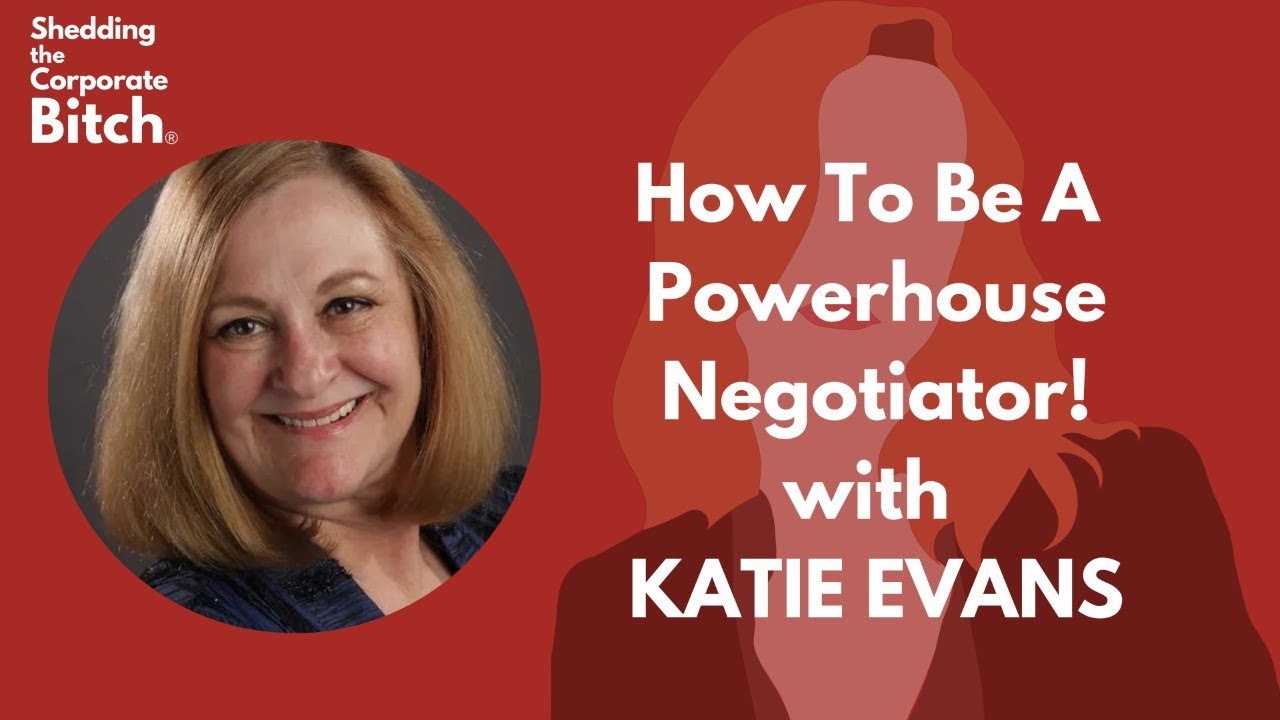
Katie Evans, a negotiation coach and hypnotherapist, shares tactical tools for confident negotiating. The word "because" alone increases compliance in requests, even without a reason. She teaches square breathing, strategic listening, mirroring, and the power of "I want" statements to shift how you show up in negotiations.
Chapters
Negotiating for what you want is a valuable skill in any profession, and it's important for women professionals to approach negotiations confidently and effectively. Today, our guest powerhouse Katie Evans will help us to understand the magic word that all women should use when negotiating, how our mothers negotiated, and how we can use that knowledge. Also, how to know when to Stop talking so you win. And what is strategic listening and how to use it to improve your negotiating skills. You will walk away with some powerful tools you can use right away with your negotiations. Tips on how to stop caring if you are liked and replace it with respect. An understanding of why you have to stop talking when you're ahead and how to be more confident in your negotiating skills. So if you are unsure of how to ask for what it is you want, stay with us. Welcome, welcome, welcome to Shedding the Corporate Bitch, the podcast that transforms female corporate executives into powerhouse leaders by showing them how to shed the challenges and overwhelm along with any fear, insecurity, self-doubt, and negativity holding them back. I'm your host, Bernadette Boas of Ball of Fire Coaching. Bringing you powerhouse discussions each week to share tips, advice, and sometimes tough love so you create the riches in your work and life you deserve. Let's do this! Katie, I'm so excited that you're here. Thank you for joining us.
Thank you for inviting me, Bernadette. It's a pleasure to be here.
Yes, and I absolutely love this subject because it is is so critical to success, especially that of women. But before we get into talking about how to become a powerhouse negotiator, tell us a little bit about Katie.
Well, I live in Seattle, Washington, the only place in the country apparently, or in the world that's not broiling or flooding or on fire. So we're very happy to be here.
Yeah.
I graduated from the University of Washington in psychology, you know, when God was a boy. Way back when, when it was affordable. And, um, I, I became a hypnotherapist and did that for 30 years. And during that time, I taught a lot of classes, and I— my focus was on women and weight loss. And what I learned over the years was women— too many women have fattening jobs. They work in toxic workplaces. They feel they're powerless in too many cases. And they eat about it. And so what I've done is create a program or a talk or a presentation or classes on how to be more powerful, be a more powerful negotiator in the workplace. And we use negotiation everywhere. But my goal is to help women. And as a woman, and as a woman who's been discriminated against and been called a bitch and on and on and on, figured that's where my calling is, and I'm just thrilled to do it. And I live here with my dog Chipper, and I play golf, and I teach water aerobics and have fun with family and friends.
Oh, that's awesome! Okay, I'm gonna ask, what kind of dog?
He's a Shih Tzu, and he's a rescue. There's a place called Old Dog Haven here. They rescue old dogs and And so I foster him and I'm his last home.
Nice.
And it's way cool. And he's just so— he's been in homes where he's been loved. I can tell that.
Right, right. That's awesome. Everybody who is part of the Shedding the Bitch community know I am a fanatical dog person. Fanatical. Like, you know, they're better than people. You know, they're better than people. I just want dogs surrounding me all the time. So anyway, I love what you said about, you know, everybody needs to— we negotiate all the time, you know, in life. Help us understand that because some of us really think about it as kind of a formal, structured, purposeful, you know, type of situation that we get into. But yet I totally resonate with what you said. So can you further explain that?
Sure. When you're a kid and you want to go somewhere, you negotiate it. And usually a parent is the final word, and the conversation can be very short. And here's the key, and this is what a lot of people don't understand: we carry childhood stuff with us, and some of the stuff we carry is around I don't like to confront. I don't like to argue. I don't like to show my feelings. I don't like— and we learned that from our upbringing, and we still operate on a lot of those scenarios, right? And what we need to do is give ourselves— we need to delete the files and update the program. And that's what I help people do.
Which is our mental program. Is that right? Our mindset program?
Exactly. And emotional.
Yeah. Oh, that's true. Oh, yes. Because negotiation can be very, very emotional. All right. So I love that. Delete the file and reprogram. I love, love, love that. So help us understand, what can someone do to start even recognizing what it is in their childhood or upbringing that is influencing those emotions around negotiation? How do they kind of identify it?
Listen to yourself. What is the story? What are the stories that you tell yourself about yourself? Oh, I'm no good at negotiating. Oh, I couldn't do that. Oh, that's just not me. What are the stories you tell yourself? And just kind of sit quietly for a moment and say, where'd that come from? And a lot of people know right away. Yeah. And so it's very easy to just spend some time on yourself and isolate that deliberately. And then in, as you're remembering, imagine yourself as an adult being there and do what I, I call a child rescue, where you get that child out of that scenario and/or you have yourself as an adult talk to whoever is intimidating you as a child.
So it's almost like role-playing with yourself toward that person that kind of has instilled these beliefs.
Yes. Yes. I don't have to believe that anymore. I'm an adult. I can take care of myself. I can stand up taller and prouder, which is one of the tips I'm going to give later on in the program. Yeah. Oh, there you go, there you go.
A little, little, uh, uh, preview, a little preview.
Yes.
So let me, um, ask you something. So they identify this, they identify where it's coming from. What do you mean? Because for some people it sounds very woo-woo. It did for me, you know, 5, 10 years ago, right? Um, when you say to kind of change the story that you tell yourself, how— I mean, that sounds simple enough, but how does one really do that?
See, part of what happens, you don't even notice. All of a sudden, you're going to be a little more assertive. You're not going to, you're not going to jump out and be Superman, you know, da da da da. You're just going to be a little more, a little less fearful, a little more assertive. And combined with the tools that I'll give that are so easy to use that women— we women are great negotiators. Look at a mother, look at a child. If you're a mother, look at the child and how the kids want to negotiate and what you say back. And there is one word that is so powerful and people just don't know about it, but this is evidence-based. Research has been done on this word and the word is because. Because. Mm-hmm.
So how is it used?
A study was done several years ago where people cut in line during the holidays at the post office, and some people just cut in line, some people said, do you mind if I cut in line? And the third group said, can I cut in line because— and then there was an explanation. And so they found out that the 'because' got better results. And so they tested that one and found out that you didn't even need to say anything after the word 'because.' 'Can I cut in line because' got something like an 80% response rate, the same as 'because I have a child in the car' or something. So all you have Isn't that amazing?
Yes, because I'm trying to run through my head and pretend I'm in a post office and someone does that to me. I'd be like, because what? But if they put in, now that you know, be very curious as to what follows that because.
And you— some people said because there's a cat on the roof. Didn't matter. Didn't matter. It was the word because they discovered. Now, What I did, I thought about that and I thought, what was one of the first words that we learned when negotiating how a negotiation ends? Because I said so. You remember that?
Yeah. Oh, yeah.
And I vowed I would never say that right up until the time I said it. My patience was out. I'm done. And I thought about it as I said it. I said I wasn't going to say this, but I'm going to say it anyway. So if you're in a negotiation, all you have to say is, you know, this is first of all, in a negotiation, you gotta be clear on what you want. Don't play he say, she say before it happens. Well, he's gonna say, and I'm gonna say, and then she's gonna say, and then I'm gonna say, don't do that because they will always say something you didn't plan on.
What shouldn't you do?
Well, worry.
But shouldn't you do some preparation of the objections that you think, or the questions that you think may come up, even though you may not get 100% of them?
Reframe it. This is what I want, and when I know what I want, when I'm clear what I want, it doesn't matter what questions come up because the answers will support my position.
Awesome.
And then, if you say, "I need this raise because..." "I need this sale because..." And you know, you're going to tailor the sale. But rather than play he say, she say, what I'd like to see people do is visualize the end result. Visualize the result you want. Stay focused on that. And the details frequently will fall into place. And of course, it takes practice.
Yeah, sure. And is the power of because also, which came up for me, is it's also almost the business case as to why you're asking for what it is that you're asking. It's almost like, okay, so I have a— I have something I want and I know the reason why I want it, and that's with the because in between. And therefore you know, having a business case, not just asking because you want to ask, right? Someone told you should be asking, right? But because you have a reason to ask, and maybe you have several reasons. Yes.
And that's fine. So focus on what you want and the reasons you want it. Visualize the outcome. Spend a few quiet moments. Relax before the negotiation. Can I tell you how the easiest, quickest way to relax? Sure. It's called square breathing.
Square breathing.
Yes.
What in the world is that?
Breathe into the count of 4. Hold it to the count of 4. Breathe out to the count of 4. And hold it to the count of 4. Feel everything just kind of slow down a little bit. Yeah. Do that several times before your negotiation. It will help you stay present, as will what I call strategic listening.
Ah, yes, yes, yes.
Now, a lot of us—
pardon me, I said I saw that, that you have the philosophy around strategic listening.
A lot of us are familiar with active listening, where we just, we pay attention very closely. Strategic listening is when you hear Someone say, 'I, I this, I that, I want, I can't,' because every time they say 'I,' they're giving you a little insight into them.
Oh, that's true.
So when you hear that, you've been actively listening for certain words, right? And when you hear 'I,' 'we,' anything like that, you really listen because they will tell you how to sell to them. They will tell you how to negotiate with them. They will tell you how to win, right?
It is true.
It is so true. It is so true.
I used to, um, I, I, I used to not like rejection, you know, when I went out. Yeah, who does, right? Um, I'm still working on my personal side of, you know, rejection, but on the professional side, and yet very much like what you're talking about, which I love is that picturing the end result. But at the same time, I did happen to add something for myself. I'm going to add the square breathing because I think that's brilliant. But at the same time, I have a mantra that I say to myself at, you know, like about an hour beforehand as I'm going to it. And then I even, you know, say it within myself throughout the conversation. And, and it's just what I found in one of my readings, and it was— it's, um, if God is for us, who can be against us? So basically saying that, you know, if they're against me, so who cares? If they say no, it's okay because I have a, you know, a different power. That's right. But I love that. I love these, these tips around just different things you can add to your process, I guess.
Right, exactly. To your skill set.
Yeah, to your skill set. So You mentioned very briefly, but I want to dig into it a little bit more, as to why people don't like negotiating. But let's, like, if you could kind of paint us a really even deeper picture, because I want people to recognize their fears and insecurities when it comes to negotiating within themselves. So then you're— all these magnificent tips can really hit.
We— you touched on it. Nobody likes to be rejected. Um, there's fear around it. There's the way we were raised.
Fear of what?
Rejection. Fear somebody's going to say no to you. Fear that you're going to look like a fool. Ah, fear you're going to be embarrassed. Fear the attention's on you. The way we— many, many, many women were raised It's be a lady, don't get angry, ladies don't show their anger, um, you're compliant, you're a sweet girl, you're all of these stereotypes. Oh, I was talking to a friend of mine who's in HR, and she's the head of HR at her company, so she's kind of a mucky muck, um, in her 40s. And someone, one of the other managers, a male— she's in a male-dominated field— one of the other managers says, well, maybe you're just being too sensitive. And I said, you know what that's code for, right? She said, oh yeah, I know. I said, you can put lipstick on that pig, but it's still a pig. It was still a sexist remark, right? So they're getting better at— sexists are getting better at couching. But it's still there in the workplace. And so, what we do, we have to use different tools. Because is one of the tools. Here's another one. Call them by their whole name. I was in a negotiation, Zoom negotiation with a lawyer, and it was an adversarial situation. And his name tag said Jonathan. And he introduced himself as John, so I called him Jonathan. Because you know who else calls him Jonathan?
His mother.
His mother when she's mad at him.
Yes, yes, yes, it's so true.
So if you've got something— you're just being too sensitive, Jonathan, that wasn't nice, that wasn't necessary.
Yeah.
And you get them right back Because it's all a power struggle, right? And women are raised to be uncomfortable with power, and so we become bitches, or what they call bitches. If we were men, they call us dynamos and going to get it and yeah, just take it on. Really?
Right, right. But you did say that, you know, uh, sexism has kind of, you know kind of changed in the workplace, but sexism is ingrained in the individual.
Yes.
What do you think they're doing? Is it just the fact that, you know, HR policies, D&I, they're just repressing? Or do you think it really— the dynamic between men and women in the workplace and in life has changed?
I think it's definitely changed for the better. And I think there's some holdouts, if you will. I talk about my father, exceedingly sexist, and back in the last century.
Yeah.
And he used to say to me, don't confuse me with facts, my mind's made up. And I thought, does he know what he's saying?
Right, right.
Wow.
So, and I said, there, these things won't change until all the gray hairs die off. He's like, until all the old men die off, it's not going to change, you know.
And they keep, they keep getting older and older.
It's true.
And teaching the kids. Yeah, it's true.
So apart from, um, because and use the full name, what are some other tools that women could be using in their negotiations? And let's Well, first off, help me under— help me paint a picture for our listeners and viewers around what negotiations are we talking about in the workplace? Because it's not only the formal negotiations.
Right. Right.
So very much like you mentioned about negotiation, you know, when you're a child, what is it that we really need our listeners and viewers to be thinking about? Because everything is a negotiation.
Well, let's say you're going to change desks. I want that desk. But ladies don't do that. And yes, you do. I want, I want is very powerful. And women don't use it enough.
Right?
Negotiate. Yes, in negotiating. I want— this is what I want. Everybody, let's everybody be clear. I want that desk over there by the window, preferably in the corner office, but That's a negotiation, right? So, um, or I want to call a meeting and this is when I want it to be, and I want everybody to bring to that meeting XYZ, and the meeting will be 1 hour long. We're not going to ramble on forever and ever. We structure it. I want it structured. If somebody's rambling on in the meeting, you always agree with them and then tell them they can talk about it with you privately later. Because we don't want to get— someone can take a meeting and trash it very, very quickly if you let them. Yeah, we know that. Yeah.
So, so when someone asserts themself in that way, but someone comes back and maybe this is in a kind of like a group email and someone comes back and starts debating or disagreeing, then what is— especially on email— what is a good mechanism for them to use to be effective in negotiation, negotiating for what it is that they want?
First of all, take them to a private email, not group email. You don't want to do that private negotiation in a group because then it's just going to flame up, right? So you take them to a private email. I heard you, I understand your concerns, and this is what we're going to do because—
but when is there compromise? When is there— when should they be willing to kind of listen to see if there is something that maybe they haven't thought about?
You know, I, I can learn from everybody, right? That's my philosophy. Somebody's got an idea and they can convince me that it's a better idea or take part of this and part of that and make a new idea. I'm in. I'm not going to negotiate my position for no reason. Yeah, I'm in.
Right.
And I give them credit. Right. So-and-so and I had a conversation in the group chat. So-and-so and I had a conversation, and this is what we created.
Nice.
Absolutely.
Yeah, yeah, because I do think too many people's egos get in the way and their pride gets in the way, that especially if they have an angst already with that individual that might have— because they are, there's, they're there, right? You know, those antagonists, you are there, and even if they agree with you, they're going to disagree with you, especially in a group environment. Right. So the best thing you could do is kind of work with them offline. And what you're saying, I hear, is then credit them in having this discussion and coming up with this final plan. Is that right?
Yes. You know what they say, chastise in private, compliment in public.
I like it. Yeah, yeah, absolutely. So true, so true. Okay, so what are some things that they should stop doing when it comes to getting into a negotiation? Because I know you have—
great question. Number one thing to stop doing: stop talking. We talk too much. And if you find, if you hear, listen to yourself, if you hear yourself repeating yourself, stop talking. When you hear somebody say, I understand, stop talking. You've made the sale. Um, we, nobody likes long, uncomfortable silences. Including the other person.
Yeah, yeah.
So my goal is to better you be uncomfortable than me. And the way I stop being uncomfortable is I control it. Here's my negotiation, are we done? You know, back and forth and back and forth. And when I get a sense that I don't have anything more valuable to add to the conversation, I shut up. And let them be uncomfortable, because when they're uncomfortable, they will rush in to fill the silence, as we have done.
Right, right, right, right.
And when I give my presentation, people all the time say, this is my big downfall, I, I just keep talking and talking. Stop talking. And one way to stop talking is square breathing. When I'm done, I'm just going to take a square breath. And frequently, that's all the time the other person needs to go, okay, okay, okay, I give up. I can't stand it any longer. I can't stand the silence any longer.
Right. Well, it doesn't— well, and I've always heard too, is, you know, so many people talk themselves out of a sale by continuing to talk.
Exactly.
Is that the reason why you just need to shut up and, you know, let them kind of tell you where they stand?
Yes. I'll give you a great example. I was, uh, I was out with some friends one time and this man came over and started talking to me and he was interesting and I, I was listening and I thought, well, he's kind of cute, maybe there's something here. And he kept talking and talking and talking And at some point I got so bored, I said, nice talking to you, and I left.
Right.
Another thing is, when you, um, when you're— the other person is talking, they're giving you information, and that's what you want. That's information, ammunition, you know, same thing.
So that guy gave you information about the fact that he's just gonna be nonstop talking in your ear about himself. At least you would have maybe given him a chance had he stopped like 5 minutes earlier. Yeah, he's giving you so much information that you can make a decision very quickly.
And I went out on a blind date with a guy one time, and he just talked and talked and talked, and I thought, I'm just gonna shut up and test this. And he just talked. And we, after the date where I hardly got a word in edgewise, he said, you are the most interesting person I ever met.
I'd be like, give me 3 things that I said to you in the last 3 hours. Exactly.
So that became kind of a test when I go out with somebody. Are you going to ask me anything about myself at all?
Yes, anything.
Too busy trying to impress me and give me ammunition. Ah, well, that's on the social side, but it works on the business side as well.
Sure, absolutely, absolutely. So, and I, I can, I can see, you know, also how that might play out. And maybe you can help us when it comes to going in asking for a raise, asking for that promotion, you know. Help us understand, when should they stop?
When you've made your case. And there's another technique called mirroring, and you may be familiar with that. I think I deserve a raise. And while you're saying it, you're nodding, and people almost invariably will nod along with you.
It's true.
I know. And as they do, you've gotten them to start saying yes. Another thing, back when I was in college, it was called the foot-in-the-door technique. And now it's called the yes set, where you get them to say yes to something. May I have a glass of water, please? Do you mind if I sit there? Yes, that's fine. Yes, that's fine. What— get them to say yes. And now they're used to saying yes and nodding. And so when you make your case, and you got to make your case for a raise, right? I deserve a raise because that, that, that, that. And if you're negotiating with a man, they love bullet points. They love— this is why, because I'm here on time every day, because I never take days off, because I get my work done before, and I always ask for more work. And because Joe Blow is making twice what I am, and now he's only doing it because You know, be careful with those, right? And then shut up, give them a chance to respond. And if you've been having the conversation all, you know, all along, you haven't just monopolized it as we women don't do. When you hear him say, or her, yeah, I understand, I understand your position, then shut up. And this is really powerful. We know how men take up space with, you know, mansplaining and arm spreading and legs out to here. Women take up more space by lifting your rib cage about an inch and then put your hands on your hips. This is before you go into a negotiation, right? Take a deep breath in, square breathe. This is the Wonder Woman pose.
Yes, yes.
And this gets your energy out there. So you're a bigger presence when you walk in. 7% of everything we communicate is words. The rest is impression and, and body language and subconscious communication. So if you walk in communicating I'm somebody to be reckoned with.
Yeah.
Watch what happens. I love it. I love it. All right.
So, wow, we've covered so much. What one big tip or tool did we not maybe mention, or did you want to make sure they walk away with that they could even put into practice today?
Practice mirroring. And, um, The best way to do it is with your kids. So you, when, when your child is sitting all slumped over, you know they're sad, you know they're depressed, they don't want to talk about it. Go over and sit by them or sit across from them and kind of slump a little bit. What's going on? Talk to me. Number one, you've established rapport and communication by mirroring them. You've given them permission to feel how they feel. And you're training them to be more powerful negotiators. And they don't even know it.
Nice.
Very nice. So practice on kids. They're wonderful little, little petri dishes, if you would.
And if you don't have kids, you could practice on other people that you're sitting in a meeting with just to see how the mirroring works, right? Yep. Yep.
And mirror their language and mirror how they look. Don't be obvious about it. They'll think you're making fun.
Yeah.
And that's not the goal. Right.
Well, you mentioned earlier practice.
Yes. Yeah. No, practice this day. Because when you say because to a kid, don't say because I said so. Say because it's healthier for you, or, you know, give any other answer.
Right.
Because I love you and I want you here. I don't want you to go drag racing with the kids.
Right, right, right, right. Love that. Okay, love that. I want— because negotiation is stressful, and you happen to have a, like, a downloadable recording that would help reduce that stress, especially if they were to listen to it before going into a negotiation. Tell us a little bit about it.
Well, I was a hypnotherapist for 30 years. I still am, I guess. Once, once a therapist, always a therapist. And this helps you reduce stress. First, identify it in your body and reduce it overall. And you can even listen before you go to sleep because most of us don't have an extra 20 minutes.
It's true.
To take out of our already stressed out day. So listen before you go to sleep. You will still learn it. You will still get it. You will sleep better than you can ever imagine. Do not listen while driving.
Yeah, yeah. We don't need to be falling asleep while you're driving.
No, exactly right.
Exactly. Awesome. And you can— everybody, especially listening, you can go to tiny.cc/reducestresskatieevans. That's tiny.cc/reducestresskatieevans. We'll also have it in the show notes and everywhere that you are viewing or listening to this podcast. Katie, thank you so much. This has been fabulous.
Thank you, Bernadette. It's been great fun. You are such a good interviewer.
Why, thank you. Thank you.
Thank you. Thank you.
I will talk with you soon.
Thank you. Bye.
What a powerful conversation with Katie. Katie Evans of Katie Evans Speaks. We went through so much when it comes to negotiation because, as she said, You negotiate all the time at home with your friends in the community and especially at work. So really honing in on the skills you need in order to put into practice to win what it is that you're negotiating on is going to be very, very vital. And she provided some amazing tips. She talked about the fear of rejection and what that means to negotiating, and then how to overcome the various fears that come, especially for women, when it comes to negotiating. But I loved when she talked about the fact that, um, there's too many fat jobs out there. And I was like, what is a fat job? But then she went on to explain how there are jobs that are very toxic, very stressful, very demanding, very pressure-filled, not in a good way. And therefore they make people overweight, depressed, you know, anxious, so forth and so on. Um, and she talked about what you can do and what you need to do actually to overcome that. And then she talked about deleting the file and reprogramming yourself, and that was all around the stories that we tell ourselves. Especially when it comes to negotiating. I won't give anything away. You can definitely go back and listen, or I'd be interested in what you took away from that conversation. She then went into the one word, the one word, because, that is powerful to use as you're going into a negotiation. You kind of build your case, you make your request, and you say because, and she explained why that is so powerful. And then of course, something that I will definitely be using is square breathing. Square breathing. So, you know, go back and listen if you didn't pick up on that, but I love that square breathing. Breathe in for 4 seconds, hold for 4 seconds, let it out for 4 seconds, and hold that for 4 seconds, making a square. She talked about, let's Let's see what else. She talks about mirroring, mirroring. So, and at the same time with the mirroring, even go into your negotiation as you're in it, you know, nod and kind of watch what they do because they'll start mirroring you as well. So you're actually affirming yes as you're having your conversation with your, with the, you know, the other party. Gosh, she was just full, full of great tips. So I'm glad you were here with us today with this powerful conversation around negotiating so you could become a powerhouse negotiator at work and in life. And I would love to understand what you took away, what any comments you have for Katie or I, or questions that you might have. So be sure to go out to LinkedIn at Bernadette Boas. And share your thoughts and your questions with us. And I'd love to know just what you took away from the conversation. And thank you so much for being part this week, and I look forward to having you right back here next week. Take care, everyone.
Bye.
More from Bernadette



From Stuck to Leading, Episode 2 — Meet the 5 Inner Fears Destroying Your Leadership



