How To Build Relationship Capital To Succeed in Work & Life with Judy Herbst
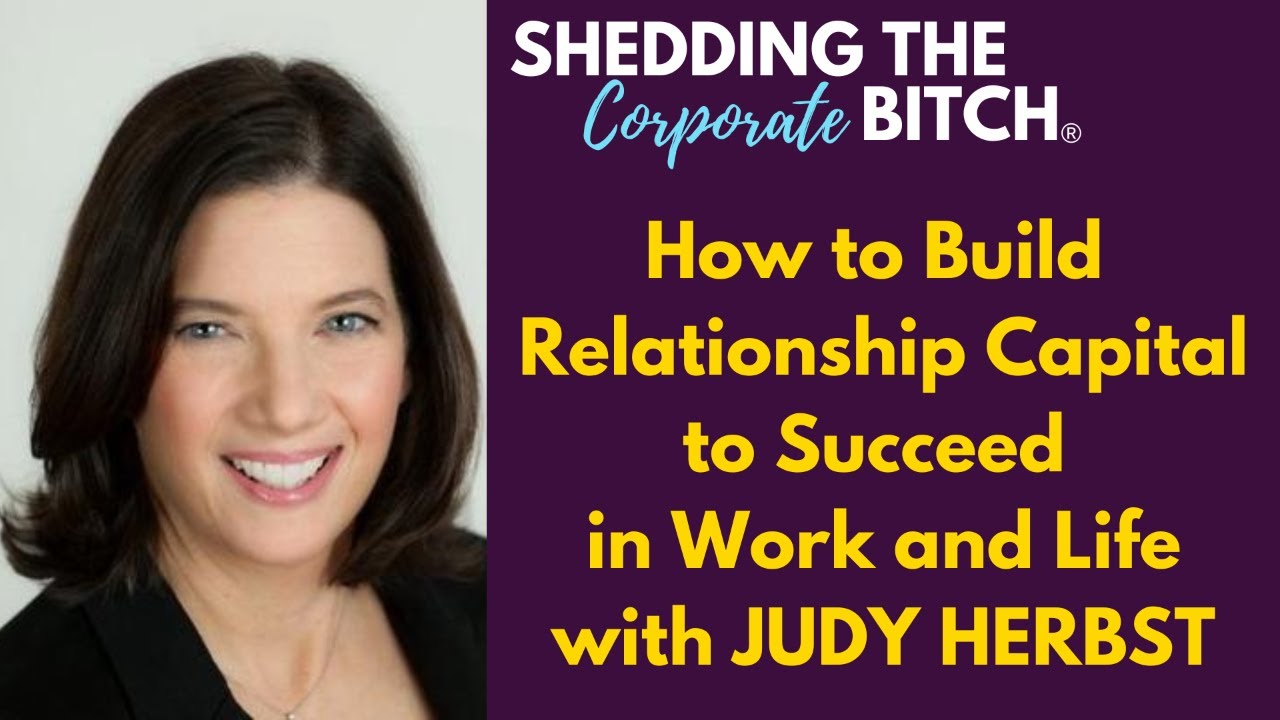
In this episode of the "Shedding the Corporate Bitch" podcast, host Bernadette Boas interviews Judy Herbst, Executive Director of the nonprofit Savvy Ladies. The conversation traces Judy’s career—from corporate marketing roles at iconic brands and a tech startup to volunteering and ultimately leading Savvy Ladies—illustrating how relationship capital can pivot a career. They define relationship capital as the intentional cultivation of authentic, reciprocal networks, emphasizing giving before receiving, personalized outreach, and consistent follow‑up. Practical tactics are discussed: leveraging LinkedIn, volunteering, publishing articles or comments, and using technology to amplify personal brand. The biggest barriers for women are identified as limited time and self‑doubt; Judy advises carving out regular, even brief, dedicated time and building confidence through small, genuine asks. The interview delves into Savvy Ladies’ tech‑enabled pro‑bono financial‑advice platform, which matches women seeking financial guidance with volunteer advisors, noting growth from 12 to over 600 women served annually and a volunteer pool expanding from 35 to 169. Outreach strategies include webinars, large virtual meetings, hybrid live events, watch parties, and partnerships with corporations (e.g., Microsoft) and media coverage (CNBC, Forbes). Finally, Judy shares concise tips for women to build relationship capital: be thoughtful, allocate consistent time, personalize outreach, give grace, and persist with genuine follow‑ups.
Chapters
Welcome, welcome, welcome everybody to Shedding the Corporate Bitch, the podcast that helps transform corporate executives into powerhouse leaders by shedding their challenges and overwhelms along with the fear, insecurity, self-doubt, and negativity holding them back from creating riches in their work and life. I'm Bernadette Boas of Ball of Fire Coaching And today our guests will be addressing the challenge many female leaders have, and that is, how can I elevate not only being technology savvy and creative, but sincere, authentic, empathetic, and honest when building relationship capital so I stand out and make a difference in my work and life? Today's guest is Judy Herbst, Executive Director of Savvy Ladies. How are you, Judy?
I am terrific. Thank you so much for having me on today. This is just so fun.
You are very, very welcome. I'm excited to have you and to talk about this. First off, I love, love, love your brand, Savvy Ladies. We're all savvy, aren't we?
We all are savvy and need to become even savvier every day. Absolutely. And build a network, which is what's so important about Savvy Ladies.
Absolutely, absolutely, absolutely. So tell me something before we get into all the business stuff. Yeah, tell us a little bit about yourself, your background, and then how did it evolve into what it is that you're doing?
Yeah, it's really, um, a great— what I like to say, it's a great story, and it is what Savvy Ladies is about, is about networking and building those relationships. I've always been in the for-profit market. I've been in marketing, PR, building community, building events, finding what is unique and different to stand out for your brand. My, my history is I've been with Tiffany Co., really iconic legacy brands where the brands are so, so important to American Girl, you know, part of Mattel to Madame Alexander, another iconic toy brand, to then be at a startup. And being at a startup was when you really, at my point in my career, had to start to reinvent myself with technology at the forefront. But using what I knew that propelled myself forward was that network and being authentic and real. And what sort of community did I want to build around me when I'm with all these really fast-paced startup men who are like pushing fail fast? What does that mean? What does fail fast mean? Like, you don't want to fail. But I finally understood, try, try everything and give it a chance. No idea is really bad, but you got to stand by it and believe in it. So having been at a startup to really understand that, I understood the need at a young startup to connect with important nonprofits to sort of legitimize that startup and why is— what is the cause and the mission so you connect with a good community. That's what good PR is all about. Right. And from there is how I found Savvy Ladies. It was a community of women that believed in financial empowerment. And were delivering free financial education, believing in financial literacy for women. It was something I was personally passionate about, but it made sense for the brand I was with at the startup. So that was a great 5-year run. And through COVID, those jobs, the job I had at the startup, you know, got, you know, furloughed and terminated. But I still volunteered my time with Savvy Ladies. And Savvy Ladies became an organization that, because I was giving back to them, they actually gave back to me. Because they gave me, you know, at that moment, as we all went through COVID, what do you do when you're furloughed? You know, you just can't— if you're like energetic like we are here, you just don't sit down and do nothing. So I had to do something with all that, with that time I had. And I volunteered at Savvy Ladies. I volunteered with them through their Mother's Day promotions, with their marketing, and helping them with their Mother's Day PR, trying to figure out what I wanted to do as my next career steps. Here we are in our mid-50s trying to figure out those next career moves for us that are going to work because we're not retiring.
Not yet, right?
If ever. Right. If ever. Really, that's the word. And we say that at Savvy Ladies. Why? So Savvy Ladies then reached out to me, and it was a need that we both met, but they asked me to consider the opportunity to join them as their executive director. So I was able to make the switch from volunteering at an organization that I felt passionate about to become their executive director, which I've now been since March 2020. What are we in? '22. So yeah, this year. I joined them actually in last year.
Okay.
So right over a year I've been with them and it's been fabulous. Every day has been a joy. It's been a blessing to be at this organization. So I really want to be able to share with people how they can find their passion, find that job in their passion. Volunteering is a great way to become more involved in an organization because you never know who you meet. You never know how that can leverage you into another career or just propel your career forward. And that's what has been so amazing about, about the people I've been meeting.
Now, that is absolutely awesome. And I do need you to finish what you had said about the fact that if women retire, if they choose to retire, and you said that that's what we say at Savvy Ladies.
No, we mean by that, well, because we always want to say you need to invest in your future. So women need to learn and understand the game changing is really learn how to invest. And learn how to invest for that future you want to live. And is that— what does retirement really look like today? And we hear that so many people are continuing to work, but what level of work do you want? What do you want that type of work to be? Because many people need to work for healthcare coverage, and that is very, very important. So understand, as you are maybe peaking in one career, what becomes your next career as you ultimately want to Maybe still stay connected and work, and is that consulting? Are you going to be an independent contractor? Is it important to work with a company that provides you benefits? Those are the things you need to take into account because also it is energizing your life as well. Many people really enjoy the interaction of working. So you don't need to retire at 65. Many women in our organization are in their 70s. They still like to give back. What does that mean to them? So it's investing wisely. And that's what we really say. Women leave so much on the table because they're not thinking about investing early in their lives, in their careers. And we have many women we partnered with Dress for Success as one of our new partnerships. And the women are reentering the workforce. Yes. And we have many women in their 40s saying, is it too late for me to invest? And our volunteers will tell them, no, you need to invest. You need to do your 401s, your matching, or put money in your IRAs yourself because you're going to outlive your spouse in many cases, and you're going to live into your 80s and 90s, right?
And you're going to want to— I see women especially wanting to continue to work.
Yeah.
And there's an expense to even working. You know, it's the expense of getting there. It's expensive eating lunch or whatever the case might be. So there's an expense there. And do you find, too, that we're talking about building relationship capital? Do you find as well that it doesn't— it doesn't matter whether you're 40 or 60 or 70? I can't imagine retiring.
I'm 60, right?
I can't imagine myself slowing down and retiring.
I say the same thing. Me too.
I love what I do and the relationship building part of it. I continue to just, you know, absolutely love to do. So do you find that women still have an opportunity regardless of what age they are to really build that capital, that, you know, that capital and relationships and networking and building out your so-called Rolodex as it used to be called?
Yeah.
Do you find that that is still a critical piece I think absolutely.
And it's also what I've learned is don't be scared to ask. Because I have found— you might— you will find that the most atypical person might be the person who you didn't think would be your help, would be there to help you and network you further, is the person who's going to help you the most. So I've had instances in my career where colleagues that I thought would be the person to really help and network me and help me find that next job did nothing. They didn't know how to do that. But other people jumped right in. So I've made it sort of a promise to myself that I will help everyone who asks me because they might be connected with me. We like to use LinkedIn as a great way to network now in the virtual age, or just say who you might know. But you need to ask your network. You need to ask your friends, your colleagues, for them to ask their friends because they might know of someone who can connect you in. And I wanna say I'm the best example of that. I never thought that by volunteering my time would land me in sort of my dream job. And it really has. And it was sort of all network by people that were not my best friends, were not people I worked with, but people I was willing to share my knowledge with and help them with their, websites, help them with their marketing, help them with their PR. And in turn, they thought of me when they heard of an opening. So that's what I mean about building your relationship capital. It's okay to give and get in return. You do wanna manage it because I also have been on interviews where they want a full presentation and I feel like they're draining my knowledge and then they don't offer me the job.
Right, right, right.
Absolutely. So there is a fine balance, but I always find that if you enjoy doing it and you don't find it a chore, then do it.
Yeah, you'll do it for free if you really love what you do, right? You don't want to do it for free, but you're willing to do it for free because that's how much you love what you're doing.
And just know, when you're willing to do it for free, do it so you give them a taste of what you can do.
Absolutely.
Give them a snippet.
Yeah, yeah, yeah. Because that'll get them hungry for more. Yeah, that'll get them excited for more. And don't you also find— I loved what you were saying about the fact that you can't be afraid to ask, and it may not be the people closest to you. So don't you find that it's the closer the people are to you, they don't want to disappoint you? They don't want to, like, let you down. They don't want to not have the help or support they could provide you. So, and sometimes they even have a little bit of, like, jealousy and jealousy and other things going on. And therefore they may not be the best people to even start with, and therefore go outside. And there— and I learned over the years, Judy, is that the best way to approach that asking, you know, is, who do you know? And then that way it doesn't take— it takes the pressure off of that person thinking you're asking them for help. And, and then it gives them the opportunity to go, wait a minute, I could help, you know, I can help you. Right?
No, and it's so true. And then there's the part of cultivating. Okay, so cultivating that relationship. So as you are building and connecting with people, don't wait for them to always reach out to you, for them to ask you, or them to find something. Always remember to— we— it might be a little more work on your part, um, and I know there's a lot of, you know, buzz around, um, don't chase people. But sometimes it's really good to just reach out and reconnect and say, hello, how you're doing? I'm thinking of you. And also add a piece of important content. So if you found a quote that, you know, connects to them, or you have just published a piece, or something happened in your organization, or something happened that you said reminds you about this, send it to them with that personal note. So I think that's what's so important is to personalize it. So they recall. So I was at Tiffany, what, 25 years ago? It was an amazing network, and I've cultivated that network ever since. And it's because we stay in touch, not just personally in some cases, but we share different pieces of what we're doing in our careers.
Right.
So I think that's so important because some of them actually can have helped me at Savvy Ladies because they were involved with PR. They've moved on. We've all moved on. And moved in our careers, and we can connect each other, right, and help each other that way, which I think is so important. So I think when you reach back out, when you make an ask, make sure that you also personalize it and share pieces. Maybe it was an article you just read that reminds you of them, or remember this, um, think you might be interested, but share something that makes them want to hear from you again.
And haven't you found— because I have, I have seen even online on LinkedIn, you brought up LinkedIn, where especially over the last few years with all the people being laid off and all the people pivoting and making changes in their life, well, they've left a long-term career.
Yeah.
And they go to and look at their network and the people they can connect to for suggestions and thought leadership on what to do next. And they didn't build and cultivate those relationships, so they didn't have a, a good strong foundation of support to help them, which caused even more stress and anxiety.
Did you—
have you found that?
I have, and it's really funny because when I now go looking or searching for people to be speakers at Savvy Ladies or sit on our panels, I'm also looking at those, um, their social media and to see their outreach and their connections. And to see when someone, you know, is not connected very well, I sort of question, you know, why, why aren't they connected as as well as I would hope them to be. And it does make me pause a little. So I think it is building those connections, continuing to build those and leveraging. I think it is important as we, as we are aging and becoming more successful and sort of honing our own sort of expertise, right, to write about it and become published and understand where are the avenues you could publish. There is the free, there's pay to play. And you can choose. And I think that's really, really valid. So when someone is searching you or looking you up, they can see. And I've always said there's great places to publish for free. It changes every year. You know, it used to be Thrive Global when it was coming out was a great place to get published. Now they've changed their platform. There's still Medium, there's LinkedIn, there's other places you can, you can become published and then you decide where is that important for you. To publish. You could publish your own blog in many cases, right? Um, right. But, but have a presence is really what I'm saying, is have a presence where you feel it's important, um, and look to where that goes. If you're a coach, maybe Psychology Today. Like, there's all these other areas you could reach out. Yes, it's time and effort, but it really, um, makes you an authority on a topic, which I think is so important, especially as we are looking to maybe shift our focus, um, move into different areas to test and learn, um, before we, before we jump, right?
Yeah, no, absolutely. And I, I'm also hearing that, that we, we women also need to be focused on our personal brand. We have to be, you know, focused on getting recognized, getting visibility, getting, you know, our, our name out there familiar. And through the publishing and through various other things, whether someone writes, speaks on a podcast, does, you know, does speaking engagements, whatever the case might be, or just simply engaging with people through all the media platforms that are out there.
No, I agree 100%. And part of one of the easiest lifts to do, as my recommendation, is just comment on people's other posts. Like, if you're interested in, you're following other people, like even here on your, on your on this podcast. If you like it and love it, just don't do I love with the thumb tag, you know, the thumbs up. Write a comment, right? Um, showcase yourself, showcase your intelligence and expertise by commenting and sharing that. That goes a long way to build, um, find those communities you want to build that are important to you.
I love that. So what would you say of everything, um, that we've talked about already, but even outside of that What would you say is the biggest challenge women are having in regards to kind of building that, what I'll call equity, and, and that capital in themselves?
I'm going to say the biggest challenge is time, like carving out the time to want to do this because it does take time and you might feel you're not good or you're not the expert to do it. There's someone else who can do it. And I think trusting in yourself. Is really important to come to. So come to an area and a space in your own head that you're good enough to do this and you can do this and spend that time, be it once a week or give yourself 20 minutes a day. But you need to devote the time to do this. And it's okay to state what you want and, and write it. So I would say, you know, it's part of that idea of like everyone should journal a little bit. But what are you writing and what do you want published around yourself, right? So then that can grow into something larger. So, you know, when you Google yourself, what do you find about yourself? What comes up?
And I'm also, you know, I'm also picking up that— so there's a time element. When you, when you use the word publish, some people might think, oh my gosh, she's looking for me to write this long article or for this book or whatever the case might be. And that's not what you're saying. You're even saying like little, like the comments or even a quote, just something that reflects to others who you are and what your opinion is and what is important to you, correct? That's not exactly what has to be—
blah. No, I think that's exactly the sort of the, the baby steps to follow first and then understand like where you want to go so you can have that, have an impact. So, you know, I have people coming to me— it's so funny— all the time, like sending me emails just to info Savvy Ladies, um, saying they want to write for Savvy Ladies. You know what, first of all, what do you need to like tell me what you want to write about? They're writing because they just want links or backlinks for SEO, but they're not connected to the organization. So what I want to say is you need to be connected, have a passion for that company, that organization, and you might get lots of nos, but when it clicks, it clicks. So, you know, I do read every one of those that come through, and the ones that really take their time time and effort. I want to say it's almost like people are pitching PR to editors.
Absolutely. Yes. Yep.
Um, you know, how do you pitch that? You need to write what they want, um, and you need to under— also understand what their background is and where they're coming from. So here we're at Savvy Ladies, um, you know, don't send me articles around, you know, maybe it could work, but, you know, around travel right now. Like, I'm not a travel destination. I don't need to, like, link to travel and have people spend money on travel. So that's the sort of disconnect that doesn't make sense for me. So when people write that, you know, it's purely for— it's not worthwhile. But then we have volunteers that want to write about their expertise to share with our clients around, you know, how to budget. They want to write about investing or, you know, a divorce topic that makes so much sense. And we lean into those volunteers because that's the expertise we want to share.
So they have to do the research.
Yes.
And find what is it for the organization's readers, listeners, audience, whomever, what's important to them. And then if you happen to write something that fits, then, then present that or pitch that. But just don't pitch something kind of totally out of the air without understanding what the purpose of the, of the organization is.
And that is being authentic. Like you really then took, took the time to read and research the organization, learn a little bit more, you know, address it and have a conversation in that opening email that you will send. Absolutely. I think you nailed it. It is do your homework and just don't write a cut and paste.
Yeah, because I get those through my website. Oh, I want to write about medicine. I'm like, what is— I just got this one. Yeah. What about my, my business says medicine?
Exactly. Exactly. Exactly.
Talking about Um, all right, so you talked about two elements that are the biggest challenges: time and then even their mindset. And so how do you help women recognize their value to where then they aren't afraid? You know, maybe they worked out the time issue and yet they're still kind of apprehensive about asking or stepping forward or doing whatever. How do you, you and, um, Savvy Ladies help kind of women to recognize their value?
I want to say first and foremost, we like to host many webinar— seminars, actually. So not webinars. When I started, they were doing many, many webinars, which are great educational, but it's one way. It's a one-way presentation. So I quickly shifted that to large meetings. So those large meetings allow our audience, our clients, all the women to come on board and actually speak and have a dialogue and conversation. And I think that's what is so critical is to have that dialogue, have that conversation, conversation. Join those many sessions that you can. There's so many different events and programs happening now virtually that it makes it easy. Find the ones where you can ask those questions. Find the ones where there are sessions. And if there's one that happens to be a webinar that you love and you get on it, you can always take the speaker's name, find them on LinkedIn, and say, I just listened to you. May I— can we have a coffee and meet for 20 minutes? I would love to ask you and chat with you. So take it that next step, right? And say, I just heard you on this. Recognize what they just did, the topic they spoke about, and ask them a question and ask them if they will meet with you. Most likely they will. Right.
Yeah. And yes, because why? I mean, why wouldn't they unless they're totally slammed and swamped and traveling and whatnot? But it's not a no, it's more like this isn't a good time.
Right, right. And, and know like what level you're asking. You know, there's many, you know, like if you're on the chief group, they get, you know, the top tier. You may not get them because that's just— you're not going to get the Michelle Obamas to have the conversation with. But there are many, many level people that are speaking, high-level people, CEOs, CFOs, marketing, so, so forth, that will be happy to speak with you. Find those groups that are offering those. And, you know, part of it is identifying, and maybe it is setting aside some of your, your capital, your cash capital, and joining some organizations. There's many, many organizations. There's virtual organizations. They're now beginning to meet in person. Some of those could be a cause organization. And you really recognize in those cause organizations there is a group of supporters and donors that are high net worth people that really can help you. Yeah.
So it's also an invest in yourself and in the advancement and success you want because it doesn't come free.
No. And you, and you budget yourself. So part of building your personal budget is investing in yourself. And that's sort of, you know, once you save, you have money to invest in yourself, right?
Yeah, I absolutely agree with that. I love this. I absolutely love this. So what gets you kind of pumped up and excited about Savvy Ladies and, and just where and what opportunities there are in front of you, um, for not only the organization but all those women that you're serving?
I love the idea that I've joined a nonprofit and I can infuse technology into their strategy. So what I've seen is many nonprofits— Savvy Ladies was also one of them. It's— it was founded in 2003, had not been leveraging technology as technology is out there today being used by all the startups, right? Um, let's really aggressively optimize, um, technology to advance the platform and build the right platform so we can connect more women. That's what gets me up every day. I'm really excited to see how we can continually connect women with a financial question with a pro bono advisor, be it a financial advisor, a CFP, a CDFA, so we can answer their question. So I am super excited and I get jazzed when I see that we connected now over 1,500 women year to date. Which is more than the organization's ever connected. When I joined, it was last March in 2021. We connected— they were connecting about 12 women a month. We upped it to 100. We ended last year at right over 600. And this year we're now doubled that and we still have the rest of the year to go. So we could easily hit 2,000 women this year. That's what jazzes me because it's technology that will continue to advance us. And that's where we can continue to build our partnerships because financial literacy is still not a topic being covered for women as they are learning through, you know, their young years, college, early career. They are not saving enough to invest when they are, you know, they should have some good cash invested at this point that is building their wealth, right, when they're in their 50s, because there's still another 40 years to go. You know, 50 is really, you know, a midpoint. We're living into our— at that point, we're going to live into our 90s, right? God bless. We should.
Yes, we should. So, okay, you said two things and I want to drill into both of them. Uh, so one of the things that you said was you, you're connecting 1,200 women. So explain for all of us to understand, when you say connecting, what do you mean by that?
So women are finding us, um, online in many cases, or referrals. So we are working with organizations that, um, are working with women in need, such as domestic abuse or Dress for Success that are reentering the workforce. So career or financial planning becomes really important because they hadn't been taught it. So as they are beginning at Dress for Success to go back and reenter the workforce, how they can save and invest for their future is one of their most important top questions. Financial abuse happens with domestic— from domestic shelters. So we've partnered with a number of organizations. Hope Store is one of them in Hawthorne, New York. They are sending referrals to us, and we are actually putting together now a financial abuse video series to help recognize financial abuse signs so women can understand, hopefully before they get trapped. But they know, we know that it kind of creeps up on you in many cases, that when you are not, you're blindsided in many cases going through a divorce. You may not know what, where the finances are, where the, what are the bank accounts, what are the passwords. You're given an allowance. People, you know, your spouse gives you money, you have no control over your own money, you don't have separate credit cards and so forth. So that is really important to educate around these topics, which is, which is, yes, gets me jazzed. And that's how we are connecting women today more and more. So women do search online. So we now come up for search, free financial advice, and we are connecting through, um, key search terms as well as referrals are how women are finding us. And we've been doing more programs like this so people out in the general public know that, um, not to be scared to ask your financial question. No question is too stupid, and it doesn't matter what your income level is. If you're low, moderate income, if you are making over $100,000, you may not know that answer to your financial question. We don't check your finances coming in the door, like, we want to just answer your questions. So we've grown our advisor pool of volunteers from about 35 last year to about 169 right now. Active volunteers on the platform. And that's what I mean about technology. To do this now, you have to speed up and use technology to help us. And we're doing that based on the client's question and the area of expertise. We're able to match much quicker. And that's what we're doing. We're connecting those women with their question with an appropriate Volunteer, right, for 1 hour of time to help them sort of identify and set them on a path for their financial education.
Nice. So the technology, you just answered it. It's your platform of which, and it's the belly of which you're able to do this connecting digitally, online, behind the scenes, however anybody—
yes, yes, back there.
You know, and making it easy for them to find the resource that they need.
Correct. And what it comes down to is we're still offering a one-to-one client volunteer interaction. So typically that happens over the phone. So while the connection might happen behind the scenes from like a virtual, you know, we're connecting more quickly, we can do more clients to volunteers in a quicker pace because we're identifying your need and the client's expertise. The volunteer is still calling with and working with you on the phone for 1 hour. So there still is a one-to-one. It's a personalized financial guidance and advice that is being offered to help set you up and then provide you with additional resources for you to connect and continue learning.
Okay. So is it a one-time thing?
It is a one-time. We do offer some email follow-ups because we do have great, as I said, these sessions. For other questions. We are actually just launching a Savvy Ladies financial literacy knowledge path that we'll be launching in October. So putting you through some courses that have been put together and curated by our volunteers and our experts on the key topics that we do cover, such as family finances, divorce, budgeting, debt management, and so forth.
That's fabulous. That is absolutely fab. You should be so proud of yourself.
I love it. I love what we're doing. I love the people, you know, I love the professionals we're meeting. I love the women we're helping. You know, we're now getting testimonials and we're sharing those. So we're building trust with the clients coming in because it's still sort of scary. But we have real volunteers, real people that want to give back and help.
And how are you getting the word out? Especially, especially, I love what you said about It doesn't matter if you have no income or you're making over $100,000. So you can think of that as like the corporate female professional who makes a nice paycheck but has little knowledge on their financial—
Right. They did not learn it. It could also be some cultural biases as well. So we want to break this down. We want to make it easy for them to ask their question.
Yeah. So how are you getting the word out, especially to that community? Because they're so busy and heads down. And at the same time, quite honestly, they're a lot more proud. You know, they, they kind of have an ego there, you know, thinking, well, wait a minute, I'm this professional, you know, professional person making a good amount of money. I should know this stuff. And I'm not going to admit that I don't know it, right?
Yeah. No, of course not. Many of it is referrals. So we continue to build sort of that referral to us from all the people we touch. So many of our donors and supporters who believe in financial education are coming from sort of the big institutions. So they are referring their team, their team and their friends and their colleagues. So a number of referrals continue to come to us from this group. And then it's, you know, I tell, we get it all the time. Like I do track, how did you hear about us? I do. I'm so curious to always know, how did you hear about us? So In many, many cases, it's also our PR. We have some great articles that we are covered from CNBC, Forbes, Fortune. So we have some amazing coverage that is press related. So we've been really blessed, like Jean Chaski refers clients to us, speaks about Savvy Ladies and our pro bono free financial helpline all the time. Sharon Epperson also speaks about us from CNBC. Veronica Dagher from the Wall Street Journal will be emceeing our upcoming gala this November. So that's a great way to support Savvy Ladies, become involved, meet the community. It is as easy as $125 for a virtual ticket to meet the community. And as I said, it's going to be a large meeting. You get to like talk to people. You won't be closed off in a webinar room.
Right, right, right. And so apart from the virtual, when you do have live events, where are they?
So we are hosting our very, very first live event live and we will be streaming it and it's done in person. This one is at the Akris Boutique. So we ask our donors, our supporters, our contributors to open up their spaces and, and put together small parties. So that's what we're doing. So the gala this year, I'm very excited to share, will be some in-person watch parties at some of our key stakeholders or key members' homes, or they're opening them up where we can host maybe 30, 40, keeping it small so we can do some in-person and live streaming. What I love about the live streaming and keeping it virtual as a hybrid programming is that we get women and supporters and advocates and allies from across the country.
Absolutely.
And that's been the best thing for a nonprofit. Should be the best thing for any group right now. Should— it's never going to go away.
Nope. Nope.
And here to stay. It is here to stay. And for a nonprofit, for a small nonprofit like ourselves, it makes the most sense. So I love these in-person watch parties, which can be intimate with a little larger crowd, you know, like Binds, and you get to mingle. But we're really supporting the program because we're not spending on renting out a big space.
Right, right. And at the same time, do you have any plans? Because I do want to ask you about your future opportunities in the future, things that might be going on. But the first thing that jumps out at me as well is, well, you could have ambassadors all over the country that are doing their own watch parties and their own virtual— yeah, not virtual, but in person along with the virtual.
Yes, it's— that's exactly it. It's so brilliant. So Yes, we would love pockets of like Savvy Ladies watch parties or Savvy Ladies groups to ultimately— that would be like the ultimate vision is to pop up across the country and host parties and bring in their friends to learn more about Savvy Ladies. And the gala is the best place to do that. So anyone who is willing to open up their homes, by all means, let's have a conversation because the gala will be wonderful. And it's November 16th. And if you want to open up your home, let's talk about a watch party. All you need is a big screen and we can have lots of fun.
Yeah, absolutely. Would you say— do you have a particular target market? I mean, we've been talking women, but is it— are you targeting entrepreneurs? Are you targeting corporate professionals? Are you targeting somebody, anybody that's over a certain income? Is there a particular target to Savvy Ladies.
So I want to say Savvy Ladies, think of Savvy Ladies. Are you, um, there's the clients who need our help. So we really are going out to connect with those communities, those organizations that we can become the financial literacy partner to their cohort of women. But there is also the other side of all of our donor supporters, our allies. Those are men and women who believe in financial education, believe in empowering women, because when you empower a woman, financially, you're empowering her household. Yeah. So we are looking to anyone who really is a supporter of financial empowerment, financial literacy, male, female, young generation, at any level. It is great to contribute. And we work with different, you know, family foundations. We're working with the JPMorgans, the Morgan Stanleys. Small entrepreneurial startups that are getting bigger and bigger, like Hello Prenup. Hello Prenup was a great sponsor for us, and they supported us around— we did panel conversations around divorce. Perfect for them as they're building their audience and a great partner with us as well.
Yeah, gosh, that's so exciting. I mean, yes, you're hitting in all the buckets. You're hitting all of them.
That's all hitting all of them. You know, it's always technology. So I like to say, what is that new frontier? It's It should be all— there's fintech. So this whole fintech group of financial technology, we become a great nonprofit partner for so many of them. And I would love everyone who hears this that if I, you know, any technology company would be— we're a great place to become a partner with them. You know, last year we had Microsoft reach out to us. They were looking, which was really interesting. They reached out to us. They were doing a virtual I guess, big seminar. And instead of typically leaving gratis on the seats if they were in person, right, they said instead they're going to make donations in kind for every person who attends. And they chose Savvy Ladies as that in-kind donation. That was a marketing— so instead of taking their marketing dollars for the gratis bag, right, they made a donation from the marketing fund. So people are thinking very clever around how to make donations when it makes a lot of sense. And it's a great way to give back, be meaningful, back to being authentic and real. Yeah, it's much better to say, I gave money, we gave money as a donation to Savvy Ladies, than giving you gratis of a swag bag.
Right, right, right. Yeah, there was a, there was a cast of one of the shows on TV. I think it's Elementary, this new. Oh, yes.
I love that.
Yes, I love the show, this new comedy show. And they were talking, and someone was awarding them, I think it was at the Emmys a couple weeks ago, and they announced the fact that they gave their swag and their whatever funds they, they were awarded, they gave it away. Yeah, yeah, they didn't keep it for themselves. I think that's a great way for someone to serve and to give back. That's fabulous.
Yeah. And we got such positive reaction. So like some of the participants who received, who just knew that the money from, say, Microsoft came to Savvy Ladies, we got emails from them. So it was— it's just a really nice thing. So people really can think creative— creatively around, you know, coming into the holiday season. How are they gifting?
Yes.
People, how are they gifting? Is this a good way? Do you give back to a cause? Right.
Absolutely. All right. So what are— what are a couple of tips that you would share with women when it comes to them really building their relationship capital? What would you say as we kind of close out the discussion?
I would say that take time to do it. It doesn't happen overnight. Build your network and it will grow. So be mindful about it. Be thoughtful about who you're reaching out to. Spend a time. If it's like one a day, if not, or one a week, you can build. But meet new people, ask other people, find different ways to meet people. If LinkedIn is not sort of your secret sauce to meet people, try it, see how that happens, or join an organization or, um, go to a session, go to different events and see who you can meet there and follow up with that with other follow-up. Just say it's not one and done. That is not the way to look at this. So try to be thoughtful, mindful. Give yourself that time. And it's a slow process. It's not going to happen overnight.
So be just—
I want to say thoughtful again, but give yourself that grace. Give yourself that grace time to let it happen.
Yes. And wouldn't you say— I do have to ask a follow-up question. Would you say to that they need to make sure that they're genuine connections, that they're just not them thinking, okay, I need something and therefore I'm making this connection. It's, it's totally genuine. Yes.
When you're reaching out, make it a genuine ask. You may not know that person at all, but make it a genuine ask that you're asking them. And also know, I get asked sometimes, how many times is too much to follow up? So they might just be ignoring you or you might be annoying them. And don't ask the question, oh, I've sent you this, I want to put this to the top of your email or something like that. That just is going to annoy them more. So understand that it's okay to move on and pass. So if you tried someone, you don't hear from them, you try them one more time, pass and move to the next person. Like, it's okay to not get a response. Because I actually had a boss tell me, you know, and this is from the PR mind of me, this is— you're basically marketing yourself here. You're going to be your own PR agent is what you're doing. You need to ask about probably 30 to 40 times to get that one connection. And don't be afraid to continually ask, ask, ask and go out. Just make sure it's not all the same.
Right.
And it is genuine. It doesn't have to be a book, a short snippet of a request. Yes, exactly.
I love this, Judy. Thank you so much.
Oh, well, thank you so much for having me.
Oh, you're absolutely welcome. And everyone, I mean, seriously, think about it, ladies. Amp up your relationship building capital, and it could serve you today, tomorrow, and in the Um, so absolutely, absolutely love that. Thank you so much. Um, I appreciate that. And for everyone else, if you, if you picked up anything from this and, uh, you go and apply it and it, you know, and it works and you have some great information, then please go to savvy ladies.org and share that with Judy and her team. She would love to hear how her conversation with you today and her tips and strategies have helped you to build that relationship capital. All right. And then if you have any other questions beyond that in regards to becoming a powerhouse leader, then don't hesitate to reach out, even schedule some complimentary time with me and let's have a conversation about it. And I might send you to Judy or I might send you to, you know, somewhere else. But don't sit there and struggle on your own. Don't think that you don't have a place to go and ask questions and get the support that you need and you deserve. Um, so you can always schedule time with me at coachmebernadette.com/discoverycall. All right, and then until next Tuesday at noon Eastern time, I hope you have a blessed and prosperous week. All right, take care everybody.
More from Bernadette



From Stuck to Leading, Episode 2 — Meet the 5 Inner Fears Destroying Your Leadership



