How to Ditch Your Debt Like a 4-Letter Cussword with John Nicholas
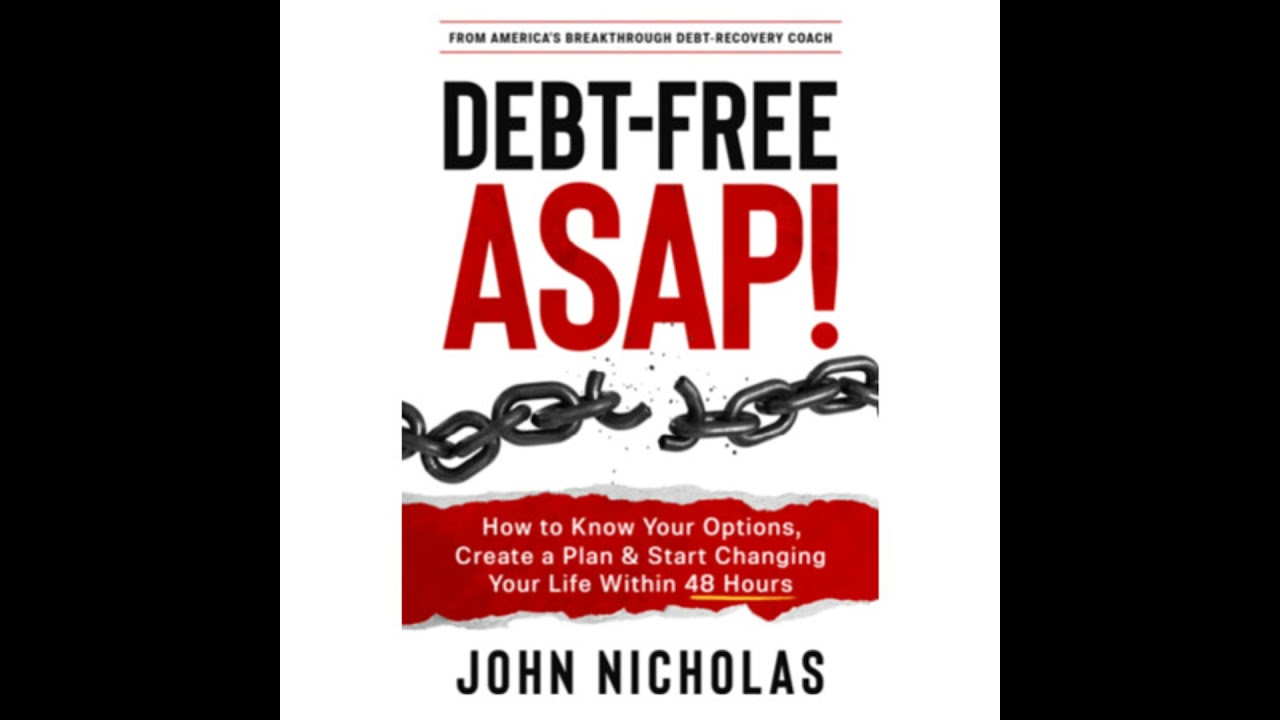
John Nicholas, a debt-recovery coach and former pro-football player, breaks down why people get stuck in debt and walks through his three-step ASAP protocol: assess your situation, review options, create a plan. He outlines seven solution categories from DIY payoff to bankruptcy, emphasizing that debt harms you financially, emotionally, mentally, relationally, and spiritually.
Chapters
Hello and welcome to Shedding the Bitch Radio, where you can discuss, debate, and get advice on how to discover and shed the bitches of fear, insecurity, self-doubt, and negative mindsets so you can realize your dreams and life purpose and create and accelerate the riches you want in life. Join us here live every Tuesday at noon Eastern and dialogue with us at 818-572-2910. You can also chat with us at blogtalkradio.com/sheddingthebitch or or share your stories on our website at sheddingthebitch.com. Whatever the bitch is that's holding you back from living your life to the fullest, it's not worth giving up the riches in life that you deserve. So call in now and let Bernadette Boas know what's holding you back. 818-572-2910.
Welcome, welcome, welcome everybody to the Shedding the Bitch Show. I am so excited that you're here. Of course, I'm Bernadette Boas. We have a great show for you and a great conversation for you because I don't know about you, but we could all use some stress release when it comes to our money and our finances. And if you should have debt, certainly your debt, and you would want to be able to get that stress release ASAP, right? So that's what we're going to be talking about today with our guest. But before we get into all of that and before I introduce them, I just need to make a couple announcements, one of which is thank you, thank you, thank you to all, all of our new listeners and followers. We couldn't do the, the show without you, and I am so excited that you're able to find us, um, on our Shed the Bitch TV YouTube channel. You're finding us on any number of the podcast streaming services such as BlogTalkRadio, Apple Podcasts, Stitcher, TuneIn, iTunes, you name it. And I so appreciate it, but more importantly, I appreciate the likes, the follows, the subscribes, the ratings, the comments, and the feedback. And please continue to do so because I love to hear from you exactly what subjects, when it comes to your business or life, that you'd like to hear about. And even better, if there is an expert or a coach or a consultant or a personality out there that you would love to hear from, then certainly feel free to share those on any one of our YouTube or streaming service platforms, as well as on Facebook in our Shedding the Bitch page. And you could always go to Twitter as well to our Shedding the Bitch page. So please, please, please continue to share and like and let us know what we could be doing for you within the Shedding the Bitch community as well. It's our ongoing listeners and viewers that have really drawn all the new eyes and ears to the program, and we couldn't be so more honored and grateful for all of your subscriptions and likes and comments and ratings. And again, just ask that you can continue to do so, so we know what we can bring to you on the Shedding the Bits program. So lastly, I'd like to also thank our ongoing sponsor, North Georgia Tax Solutions. Debbie Snelling and her team are a full-service financial and tax services organization that supports the entire country, not just North Georgia, in order to help you with your financial or tax services. And she serves small to corporate-sized clients. So I'm sure you would fit into that as well. So reach out to Debbie and her team at ngtaxsolutions.com and tell her I said hi. All right, be sure to, to reach out. They are a fabulous, fabulous, um, organization and they'll take great care of you. All right, so today, today, today, today we are going to be talking with John Nicholas of Debt Free ASAP. But let me give you an idea of what we're going to talk about. We're going to talk about how you can ditch, um, your debt like a 4-letter cuss word. Don't you love that? Like a 4-letter cuss word. He's going to share colorful stories, he's going to share insider secrets and a breakthrough way to become debt-free ASAP. Now we're also going to review the most common causes and worst side effects of debt and how to start changing your life within the next 48 hours. How do you like that? Now, to introduce John, John Nicholas is America's breakthrough debt recovery coach thanks to his Amazon number one new release book, Debt Free ASAP, and the free and affordable resources he shares through his website. He's a former Ivy League scholar, pro football player, pastor, and entrepreneur who has built award-winning companies worth millions. But he's also been jobless, broke, and buried in debt, so he knows how it feels. He also knows how to recover from his own experiences and from working in the debt relief industry, where he's learned many insider secrets, including why debt programs fail more often than not. That is why he left that field, only to return after he was inspired during the COVID-19 pandemic to present a new and better way to help people conquer their debt. Well, John, I want to welcome you into the program because this is going to be fabulous. How are you? Take yourself off mute. How you doing?
Yeah, that's okay.
How you doing? How you doing?
Oh, so, so well. And so great to be with you and your listeners and your viewers, your whole tribe. I've been excited about this since I heard about y'all and, uh, can't wait to get into this and hopefully help, help some folks out.
Yeah, absolutely. And the fact that you're going to share some insider secrets and some ways for them to do it within the next 48 hours, that is fantastic. Fabulous, because I love how— I love when guests can give, give my community immediate actions to be taking, because that's what it's all about, right?
Hey, I don't want to put you on a 9-month course or tell you how to remake your entire financial— we're just gonna get to it, right?
Right.
You have a leaky roof, you don't want to learn how to build the house, you want to stop the, stop the water pouring in, right?
Absolutely. So absolutely, absolutely. But tell us a little bit about you before we dive into all that.
Tell us a little bit about you.
We We heard some of it in your intro. Fascinating. Pro football player to pastor to entrepreneur, you know, whatnot. But tell us a little bit about you.
Well, I've tried to stay busy over the years, uh, have a lot of different interests, but I'll tell you what, uh, debt unfortunately has been a common thread because as most of us know, when you're in transition, whether you're moving or whether you're moving from one profession to another or one job to another, Oftentimes those are the times where we pick up some debt because it's, you know, just because. And so I've had transitional debt over the years, but after 9/11, I mean, that's when I was a high-flying, six-figure sports media company co-founder and executive meeting with fancy ad agencies and Fortune 500 clients and just going great. But man, when those towers came down in New York City, All of our clientele froze. And it was just the wrong time for me and my partner, our company. We had just been acquired and within a year that company did a big cost control move and it started with me. So out I went, no golden parachute. And I had a very traumatic experience with debt. More so than ever before or ever since.
Right.
And so got very well acquainted with it, realized I didn't know my options. Most people don't. I floundered about— I was embarrassed to really talk about it with others, whether family or professionals or whatever. Kind of tried to figure things out on my own and made some mistakes and all that. Fortunately, you know, by the grace of God, there's been, you know, some things that came along after that. Built a real estate company from small to number 2 in the US, number 1 in Texas with a friend, and another great opportunity.
Wow.
But even there, you know, you had the Great Recession come along, and that dealt a blow that really caused a lot of folks to deal with, you get and restructuring things at least if you're doing well. And if you're not, a lot of people have never recovered, actually.
Right. And is that what— what was the aha moment to say, well, wait a minute, I need to be able to put something together, in your case, write a book. I need to put something together to kind of really not only help other people, but initially probably to help you and then to help other people with what you've learned. How did that come about?
Great question. It didn't really coalesce until after I spent a couple years in the debt relief industry. Okay, I went in there because I really had reached a point where I really wanted to help people in distress. So I went in there. I also knew you could make some pretty decent money in that in that field, especially in the settlement field, which is where I worked. But I was able to speak with thousands of people across the country and hear where they were coming from, what their situations were like, what the most common causes were, and what the real, you know, damage— damaging effects were. I was able to realize you cannot have a cookie-cutter solution for everybody, which is what most companies do. They scam you, they slam you, they cram you into their program. If they can get you to say yes, they're gonna get you in there because that's how they make their money. And, and I, I wasn't very good at that. I coached and counseled people, and, and they loved me for it, and my rankings were very high, but But I also gave people permission that, hey, if you find that something is better, if you find that this isn't the solution for you, then you— so I couldn't stay in that business without the ability to consult on a more broad basis of what kind of options exist and really care about their situation because—
Sure.
You know, if somebody's on disability, you can't treat them just like somebody who's over here, uh, you know, with a decent job but just a big pile of debt. If somebody's taking care of mom or dad, or they have, you know, extenuating circumstances, you have to care about that stuff because everything depends on everything, you know. And anyway, I'm answering your question in a long, long—
No, no, no, that's fine because I mean it's It's good, and I would have you continue because it's good for our listeners and our viewers to really hear just what you bring to the table when it comes to, you know, the work that you do. And that is the fact that you're going to listen to them and their needs and make sure that what you're, you know, what you're able to do is specific to them and not a cookie cutter, just every, you know, one size fits all. And I think when people are dealing with debt That's such a— oh, that's such an intense emotional state of being that they need somebody that they, that they can trust is listening to them and is appreciating without judgment, without judgment, the situation that they're in.
Yes.
Yeah. So I know, I think it's, I think it's very important what you're saying.
In fact, you're just putting your own words to what we're seeing with reviews to the book. There's a good number who just say, finally, somebody is starting at the point of listening to our situation or seeking to know, you know, like really assess where each person is at. And that's where it starts. And so, so that's, that's a huge factor. And I'll tell you what, whether somebody is disabled or retired living on $1,300 a month, or whether somebody is six figures but they've got a couple hundred thousand dollars worth of consumer debt racked up. I mean, we had a recent Supreme Court justice through the hearings, uh, not the last one but the prior one, I believe, uh, had over $100,000 of credit card debt. You know, that, you know, with his income he could handle it, but still, it's amazing No matter who you are, wherever you are in the US these days, especially since the pandemic, chances are you've got some debt, uh, you know, discomfort at the very least.
Yeah.
And if you're in serious debt or substantial debt, which most people are, um, relatively to— relative to their situation, you know, there's, there's a— there's need for some help.
So where do you— so where does your focus and your coaching, where does it focus? Like, what is that level of debt that someone is dealing with, and/or what is their current situation, um, that you're then helping them to shift out of?
Well, that— people are coming from every type of situation, uh, but for someone, $5,000 of debt may seem like Mount Everest. Yeah, somebody else, that's like, hey, I've got that on my, my Amex card and I pay it off next month, no big deal, right? What we have found is that oftentimes people with about $20,000 worth of credit card debt start realizing they got— they're in trouble, okay? But that's not to say that, like I say, $5,000, $8,000, $9,000 or whatever is enough for somebody. It really— everything depends on every right? And that's— and so I would say in general, there's, there's a grid of like plus or minus $20,000 worth of consumer debt. That's not household, that's not a mortgage, that's not cars, but those things play a role.
Okay. Okay.
It's really, it's really that combination. Whenever somebody is dealing with any number of setbacks. And by the way, let's talk about the causes of debt, significant debt, okay? Because a lot of us, you know how you were talking about how we feel guilty or we don't want to be shamed or we don't want to be like judged? Yeah, exactly. Well, it helps to know that the most common causes of debt are not just being, you know, lazy or, you know, just dumb, you know, like buying things that you can't afford, uh, you know, sitting there buying everything online or watching TV and buying every, you know, every shiny object. You know, most people don't get in significant debt that way. And, and the, and the, the top causes are retirement's a big one, job loss or business failure, Another one, illness. Medical is huge. You would not believe how many folks are dealing with medical issues and everything that cascades from them. Divorce. Divorce is kind of a stealthy thing. It's not discussed much in the realm of debt, but I'll tell you what, it's one thing to have combined incomes. And shared expenses, especially when you have children. But when you're separated or divorced, you know, everything changes dramatically.
Sure.
So that becomes a huge factor, especially for single parents. I mean, and there's a lot of people who are what I call limping. They're just limping along, and we all know it if we've ever been in it. You're juggling bills, you're juggling debts and you're just constantly, you know, getting to the next income payment or been there, done that, been there, done that.
Yep, absolutely. Paying Peter to pay or stealing from Peter to pay Paul.
I was in a situation where I was considering bankruptcy, but I couldn't afford the $1,500 for to have an attorney repair it. So I started looking at how I might be able to do it because as a business guy who had done lots of deals and stuff, I figured maybe I could work that out. But here's the thing, I had— I was paying for gas out of the coins in my ashtray. And when you're in serious or significant debt, things are tight. So anyway, let me finish the list. So divorce, there are also what I call force majeure, which is those acts of God or acts of just catastrophes that are beyond us all, whether it's a pandemic or a Great Recession or a 9/11 attack or these kinds of things.
Right.
There's also student loans, whether you're the parent on that end or whether you're a student carrying on that end.
Right.
And then there's just bad plans, bad decisions, and bad habits.
Yeah, yeah.
That's, you know, we all, we all know something about that.
Right, right. So what do you, why do you call debt like, you know, a 4-letter cuss word.
Because debt sucks. And I'm going to give you 5 ways that debt sucks. Okay, let's talk about it. Number 1, obviously, is financially. It drains your best dollars down the drain. Yeah, especially when it has high interest, which most of the time it does. By the way, there's good debt and there's bad debt. I'm not one of these people who says avoid every kind of debt, everything's got to be cash. That's ridiculous. I'll come back to that. A little bit later if we get to the right topic. But here's the thing. So you've got good debt and bad debt, but most debt we're talking about is bad. It sucks. It literally sucks your dollars down the drain through interest, and it's impossible to make real headway towards wealth when you're having your dollars drained.
Sure, absolutely.
So, so obviously there's the financial impact. Debt sucks also emotionally because let's face it, you know, it's depressing because just every time you look it's there and it doesn't go very far unless you're making dramatic efforts. So emotionally it's tough. Mentally, I mean, it just turns you negative because you're seeing numbers that are negative, right? I mean, Yeah, you know, I can't believe how negative I became. And I became obsessed with reviewing all the, all the line items and all the different accounts and everything, and was like micromanaging it because it just took over my brain. It's like, this is, this is crazy stuff. So there's the mental side, then relational. Okay, so you've got financial, emotional, mental, and relational. How many kids are scarred when they have squabbling parents or struggling single moms or single dads and they know debt's in there? And then as adults, you know, relationally it's horrible. I mean, how much sex appeal do you have when you are dragging debt around, right? How good do you feel about yourself? Yeah, yeah. That's why I say debt sucks, but debt-free is sexy.
Yeah, it's true.
It's new sexy anyway, right?
Well, it's true because I'll remember when I was a number of years ago and, and I was single and I, I, I did not want to go be out and about. And I was a very social, you know, I've always been a very social woman and I did not want to be out and about and actually go on any dates because, oh, if we ever had to get in the conversation about like, you know, how I spend my day or where, you know, how how I spend my money or what I spend my money on, I'd be like, you know, I'm eating peas, okay? I'm eating peas. That's my next book, by the way. But yeah, so no, I think you're absolutely right. Yeah, it's not fun or sexy at all.
And after the relational, to finish up those 5, the 5 most damaging or destructive elements or effects of debt, The last one, believe it or not, is spiritual. And, you know, most people of faith believe there's a sense of abundance when you're, you know, whether it's, you know, shalom among the Jewish or just being blessed among the Judeo-Christian or, you know, whatever. But Debt is the opposite of abundance.
Yeah.
And it literally will drag you into a hellish place and leave you there till the cows come home. But when you start making headway, it becomes well with your soul. You really start feeling that blessing and you are walking in grace because, by the way, There is stuff that goes way, way back, even back old, old Bible stuff where there's forgiveness of debt.
Sure.
And so part of what we look at in terms of options are different kinds of grace that you can experience to help you get out of your debt. And grace is not easily found these days, I'm telling you. So you have to know where to look, right? How to work or how to address one program over another. We can talk about those 7, you know, solutions, uh, if you like. But, but here we are. So those 5 negative effects of debt.
Yeah. And, you know, just talking about it kind of like brings you down. So I do want to shift into—
sometimes I get down with it. It's great.
So I do want to shift into, okay, so, um, wouldn't— is one of your top things when you, um, work with, work with clients is the fact that they need to take a, a kind of a new, different approach to confronting it, and then, you know, kind of working a plan out around it. Because I— don't you refer to it as like you have to treat it like a diet or an exercise plan?
We have a— I, I have a 3-step, what we call the ASAP protocol. Okay, we all know protocols, right? Yeah, you know, uh, wash your hands, keep your distance, wear a mask. That's, that's been the protocol, you know, for the last year, right?
Yes, it has.
Well, yeah, and everyone's tired of it. Uh, the protocol for, for debt is, is this: number one, properly assess your situation. We're going to talk about that. Number two, Review your options. We'll talk about that. And thirdly, create a plan with the support you need to succeed. So create a plan. So simple as 1, 2, 3. Okay, so if you want me to kind of walk you through this?
Yes, please. Yeah.
All right, so to assess your situation, recognize that many times when we are in debt We don't want to look at it. I cannot tell you how many people are clueless as to how much they actually owe. You say, so how much do you think you have? They have an idea. There's an 80/20 rule here. 80% of the people have no clue. They say, oh, I've got, you know, I think 12 or 13. It turns out they have 22 or 23 when you really break it down. I've had one that I talked about in one of the chapters is a couple, they're on speakerphone, they're talking. She's got a bunch of stuff and he's got a bunch of stuff. She thinks she's got like $40,000 or $50,000. He thinks he's got like $20,000 or $30,000. By the time we detailed all 28 of their cards— these are not cars or homes, cards, accounts— she had over $90,000. He had over $70,000 when detailed it, when you detail it out.
Wow.
So you've got to assess your situation, your debt load, your net worth, because there might be some valuables that are involved in your net worth equation, right, that might be usable to help get out of the debt.
Yeah, yeah.
Or you might be able to leverage something, right, to get the kind of, uh, maybe loan that can help you consolidate, because most of the time people can't really qualify. And so Net worth becomes the— you know, most people in America don't know their net worth. They've never sat down and really done the simple math. I make everything simple. So you assess your situation simply. You assess your debt load or your, you know, your debt load, your net worth, and your P&L, which is your—
Is there a percentage? Is there a percentage to your net worth, for instance, um, that is appropriate debt? Like, you know, is kind of good debt versus bad debt, but is there a percentage that you don't want to necessarily start hitting that ceiling or going over that ceiling?
You know, Bernadette, that's a great question, and I've never broken it down that way, but I will. I will as a result of your question. Uh, it, it doesn't come up so much in that respect. It's, it's more like You know, there's the good debt things like a home or protect— or potentially a vehicle. You know, most of the time vehicles are just a matter of fact. Yeah, but I will say this, a lot of people just have way too much car. And so one of the assessments is, you know, what— why do you have to have the $1,000 truck or SUV each month hitting your P&L? That gets into the third thing I was talking about, your P&L, your monthly income and expense.
Right.
And so one thing that, that we do every single time, and I have the free forms for your viewers or listeners, you know, when we get to there, uh, I call them X-Factor forms because they change how you look at your financial life and they, they change how you kind of come at finances altogether because all of a sudden you're using the tools that corporate leaders, wealthy people of every kind, and just accountant types and smart folks in finance, they, they know these things. They use them every day. But the rest of us that are just doing life, we don't get trained on that. You're not trained in high school or through your family or even at college. Nobody teaches you these basic instruments, but they are X factors, game changers. And so we give you forms to handle that. So assessing your situation is critical, and, and really looking at extenuating circumstances is another thing. Are you taking care of Grandma? Are you dealing with, you know, kids in college? Those things make it impossible, in my opinion, just throw out all the opinions that are on radio or TV or wherever for people. I heard a lady call in, a young, young woman. She said she makes about $70,000 of income, has no consumer debt, but she has a car loan. She wants to buy a house, and but her car loan, she's a little bit underwater, which means owes a little bit more than it's worth. You know, have you heard that term before? You know, underwater or, you know, upside down or, you know, whatever. It's called different things.
Yep.
So she's on this radio show with this very well-known, uh, uh, you know, expert and his sidekick. And she goes, is it okay for me to buy a house? And without asking any further questions about her situation, her background, this, that, or the other thing, it's just like, oh no, no, no, you got to pay off that car. Before you do anything. And I'm sitting there going, what? And it's like, and she's kind of going, oh, okay. I kind of thought I had, you know, by being debt-free except for a car, she thought she was pretty well suited to buy a house. And I'm sitting there going, don't tell her she can't buy a house because she may have extenuating circumstances. She may have a mom that she needs to move in with her and the apartment doesn't fit her or or just, she may just want to be happy living in a home that she can afford.
Right, right.
There was no good reason to say you've got to pay off that car before you do this. That was a dogmatic mindset imposed on somebody rather than say, so what do you have in mind? Right. You know, what kind of house you think you, you can afford? If you have—
that's the review you're talking about, is that you dig in deeper and deeper to understand kind of exactly what they're going through, what their situation is, what their circumstances are, so then you can put a plan together for them.
Yeah, and their goals. How about their goals in life? You know, if their goal is to— she's saved and gotten rid of debt and she's come to this point and now she wants to buy a house. If that's her heart's desire, you're going to let being slightly upside down on a new car, which happens to everyone, —there's a period of time when you buy a new car, if you do buy a new car. I advise buying pre-owned. I do. Low mileage and all that. But, you know, everybody goes through a period where they owe a little bit more on a new car, and then it takes care of itself, and over time it corrects. Right. Or if she doesn't like it, she could, you know, if it means selling that car off to get into a new house, she would probably do it. The point is, what are your goals? What is your vision? What is your heart's desire? Those things matter. And that's why I take them seriously.
Yep. Okay. So, so they're assessing, you're helping them review, and then you're creating a plan. And are there kind of facets of that plan, of a plan that someone would want to have within their debt-free plan?
Yes, we just covered the assessment, assessing your situation part. Oh, okay. Review your options is, and I'll just zip through them real quick because one is kind of a high-low payoff plan of your own where you kind of do it yourself and you pay off the lowest hanging fruit first or the highest interest. You can kind of make your decision on that and I go through, you know, kind of, you know, what might make sense for you. Debt consolidation through a loan, a transfer card, or if you can't qualify for those things, you know, and by loan I mean a low-interest loan to get rid of high-interest debt, right? Yeah, consolidation loan. If you can qualify for that, great. Most people cannot. And so there are consolidation programs that can work with you to just kind of manage things and get a little bit lower payments each month and work it like that. But you have to close those accounts, by the way. There are hardship programs. I have a cheat sheet called The 7 Debt Solutions You Need to Know, and it's also a free thing that we offer. Okay? Right. And so it covers the high-low payoff plan, which is what I said, consolidation, which has various approaches, hardship programs, which means you're really just sucking wind, you're really taking on water, and you just need some real mercy. And, you know, there, there are programs available, but you got to know when and how to approach them. Yeah. Okay. And some of that's outlined. Family assistance. For some people, family assistance is possible, but how do you go about it in the right way rather than just go, can I have some money even though I've been really you know, not reliable in the past, or, you know, you've given me help in the past and I've just blown it. I haven't turned over the new leaf or turned things around. And, you know, how can I get family help in a way that's more organized, more respectful, and just more strategic? Yeah, you know, sure, it can, it can be done. It's following these same 3 steps Assess your situation, review your options, and create a plan. Just to finish off the options, so family would be number 4. Settlements, whether you negotiate them yourself or work with a company to negotiate settlements on debts with the creditors.
Okay, so that would be, so to be specific, that is that you make a call to each of your creditors and try to find out if you can make a settlement and come to an agreement on maybe a percentage or, You know, okay, okay.
Yeah. And then that, that, that won't happen until you're way, way behind. Yeah. And I tell people exactly when the sweet spot is to engage and we talk about that.
Nice, nice. But yeah, they won't settle until your, your credit's ruined, right?
You've got to have missed 2 or 3 months and you're, you're already suffered, right? So settlements is that bankruptcy Chapter 7. Chapter 13. Those are realistic options, but most people want to avoid them for good reason. And yet there are things you need to know about how those things work because they're scary words, but what do they actually mean?
Right.
Right. The truth is bankruptcy is designed to protect you during a period of time where the court is going to either assist you to liquidate what you have or to work out a managed payment plan if you have assets that are valuable. Right, right. And so, and then finally, there's this, the seventh option that I, I say you need to at least know about it is just status quo, do nothing. Because there are certain situations, um, I won't bore you with, with the, the array of, of those, but There are situations where it just makes sense to sit tight, either temporarily or forever. Yeah, depending on, you know, so yeah, so you review those very quickly and, and, uh, you pretty soon start feeling like, well, this kind of makes sense. Would this work for me? It's like, yeah, you know, when you understand it a little bit more, if you're reading the book or having the conversation So once you assess your situation, you start seeing your options in new light, and then you're able to kind of dial in the one that makes sense, and then you create a plan with support you need to succeed. Because just like a diet or an exercise plan, failure rates are sky high when you're just doing it alone. Right. Okay, you need somebody, a trusted mentor, an accountant. Well, maybe not an accountant, but, you know, at least they know what's, what's going on with finances. And so we try to provide some level of support, whether somebody needs a little bit, just some, some support, you know, periodically, or whether they really need somebody in their corner, you know, holding their hand, walking them through that type of thing.
And so, well, plus it's, it's always good, um, to have someone like yourself in their corner because then they can lean on you, ask questions, work through the emotional overwhelm that they'll most likely experience as they're going through it, and to just kind of navigate, you know, navigate through the plan with you. Yeah, I would totally, totally recommend someone to find someone like yourself to do that with.
Yeah, and I mean, I encourage people, if they have somebody in their life, you know, maybe they know somebody, you know, in their family, extended family, or at church, or in their community, or whatever, So, the right person can be found in certain places, but I'm certainly in the business to help in that way.
Right. Yeah, definitely, definitely, definitely. But when you— okay, so saying though that then they would create a plan, what does that really look like? Because I mean, it can be used very generally, we're going to create a plan. Literally given them like kind of step by step, you know, what they should be, you know, who they should be calling, what they should, what they should be telling them, how they should position that. Like you said, it's kind of timing, it's timing and it's grace. Uh, so where do those things come into play when, when you're talking about the actual plan now that they're going to go and act on that plan? That's the great question.
And Thank you for asking it because it really does boil down to the nitty-gritty of like, okay, you can say, oh, create a plan, but what does it look like? Yep. Everything depends on everything. So your situation and the best option for you are going to dictate the outline of a plan. But just so I don't give you just a generic BS answer, 'Cause hey, we are talking about ditching the bitch here, right? So, you, let's use an example. Let's use an example. Let's say, and I've got a zillion running through my brain, but let's just say somebody decides, hey, you know what? I'd like to consolidate somehow, you know? Well, the first order of business is, all right, let's see if you can qualify for a consolidation loan. Uh, there's different kinds. You can look at a home, a home leverage loan if you have some equity in your home. Is there enough equity? So let's look at that. Let's look at your FICO score and your home, if you have a home, to see whether you can leverage those to get a low-interest loan to really just knock all this high-interest noise out for good. Sure, you know, get a 4 or 5% HELOC or something, which is a home equity line of credit, right? You know, boom, that's great. If so, if that is the order of the day, then it's like, okay, so you're going to contact your credit union or your bank and you're going to check on that. If it's more like, hey, you know what, if I can just get a good zero-interest transfer card 'You know, I can probably put $10,000 together with zero interest for 18 months. That would be great.' It's like, great, let's do that. That will be the first step is let's see if we can get you into— or let's just see if you can get, you know, a transfer card. If you can't, then we'll cross that bridge and we'll say, okay, well, let's then look at a managed consolidation program. Where you're just gonna give a certain amount each month. They'll divvy it up based on agreements with your creditors and everybody works that way. So it takes some pressure off you each month. Things are more organized and like that. So that would be one process. Obviously if somebody's looking at settlement or bankruptcies or something, there's more detail in terms of what those steps would look like.
So based on what you established in the review session or the review portion, then you just craft them a literally maybe close to a project plan of the step-by-steps of what they need to do, um, and then you're there along the way with them.
Okay, all right, to whatever extent, you know, they're interested. But even, even a basic, uh, 1-hour consultation is going to have some of this homework done ahead so that, you know, I can review it and then discuss it in the course of very brief period of time. But then, so assess the situation, review the options, and create a plan can actually be done quite, quite quickly. And then the follow-up will be there in terms of, uh, you know, what they need, right? Just— and I, I always call back a week after and say, so how's it coming along? Proud to have that happen. And each person has their own unique, you know, interests, so we style it accordingly. Nice.
All right, so since you brought up the consultation, um, I want to mention to all of our viewers and listeners a couple of things, um, where John's concerned. You can receive a $50 discount on a personal conversation with John when you buy his Debt Debt Free ASAP book, and you can do that on Amazon, or I have the link there of debtfreeasp.com. And so go get that book and then go get a $50 discount and get a consultation. Don't sit there all stressed out and all in your head about this burden that you might be carrying around, if it's, if it's minor or if it's huge. It's, it's not worth you exhausting yourself emotionally, mentally, even like he mentioned, spiritually. It's going to impact you physically, let alone financially. So take advantage of the fact that all you have to do is, you know, buy a copy of his book on Amazon or at debt-freeasap.com, and you'll get a $50 discount to his consultation. I mean, you'll know within a short period of time how you could be moving forward. All right. And then he also had mentioned his 7 Debt Solutions You Need to Know checklist. So why not really get a good understanding, if not education, on what are those options out there that he might discuss with you within the, you know, review, you know, step of his 3 steps where it's assess, review, and create a plan. Why not know what those 7 options are and, you know, kind of think through them and then plan that consultation call because then he can absolutely kind of help you along in that regard. Now you had mentioned, you had also mentioned in the introduction that, you know, they can get moving forward in like 48 hours. Do you have a specific tip or step that they can be taking right now, you know, beyond beyond getting a consultation, is there something they can start doing right now, even after leaving this interview program?
Absolutely. Go to 7, the number 7, debtsolutions.com and get the free cheat sheet, and it comes automatically with the X-Factor forms so that you can start assessing outlining, managing, you know, getting visibility on your situation. It's all right there. It's super simple. It's either something you can print out, PDF, or it's Excel if you like, if you're into Excel. Either way, you can start assessing your situation right there, and you'll have the 7 debt solutions that you can start reviewing, like you say, perfectly stated, get an advanced feel for what's there. That's on the cheat sheet. You get all that, you know, it's free, it comes with no strings attached, it's good stuff. And it gets you going. And Bernadette, in this world, so much is mindset and vision. And when we're under duress, We don't think well. We don't even see things that are right in front of our nose. Right. And this starts breaking you out of that fog. Yeah. And you start taking command of even your basic information. All of a sudden you start, you know, you're starting to feel a little bit of something. Yeah. And then you start realizing, you know what, there's hope. And that's another thing, you know, reviewers talk about. They say, you know what, There's an injection of hope that this is doable. This cat's been through it, other cats have. He's given us a new person in each chapter that we're looking at and listening to conversations. It's like, you know, this is not rocket science, right? You have to know the basics and just pull it together and take some action. Within 48 hours, you can have all your assessment stuff done. You can have a good feel for your review. And you can be ready to say, let's, let's put a plan together, whether it's on your own or whether you want a little help.
And let me remind everyone of the, the specific website to go to for the, for the 7 Debt Solutions You Need to Know. It's 7, the number, debtsolutions.com. And of course, you know, his website, his website, debtfreeasap.com, will give you other information. But if to get that checklist and to get those X-Factor, uh, sheets, go to 7debtSolutions.com, um, and, and be sure to download them. Absolutely. That's awesome. Thank you. How do you take action, right? Yes, yes, yes. I mean, to your point, why spend another minute all wigged out? Take, take command. I love what you said— take command. You know, and once you start taking command and you're taking very, you know, constructive, productive, positive steps, um, toward even in the smallest step, it'll give you that confidence and that energy and that determination to just keep moving forward. And then you can reach out and get that consultation with, with John, uh, and get a $50 discount too for buying his book, and you'll be on your way to kind of being able to breathe and really, really put all your energy and your focus and your wow into your business and into your life. So that's awesome, John. Thank you, thank you, thank you. I appreciate it. Thank all you guys, and let's work together.
Let's make it happen ASAP.
Absolutely, love it, love it, love it. So everyone, please, please, please, please go to debt-freeasap.com, learn more about John, But then jump over to 7DebtSolutions.com, get his checklist and his X-Factors. And I'm telling you—
It takes you there. It takes you there. 7DebtSolutions will get you in the right place.
Awesome. No problem. And it'll just get you moving, moving, moving, moving. Love it, love it, love it. Thank you so much, John. I appreciate you being part of the program. Yes, thank you. And for everyone else, be sure to come right back here next Tuesday at noon Eastern time when we have another episode of Shedding the Bitch Radio, and I'm so happy that you are here today and look forward to seeing you back here in the future. Take care, everybody.
Bye. Thank you for listening to Shedding the Bitch Radio with Bernadette Boas. Join Bernadette every Tuesday at noon Eastern as she helps you shift your bitches to riches, and the dialogue is always going on at sheddingthebitch.com. See you next week.
More from Bernadette



From Stuck to Leading, Episode 2 — Meet the 5 Inner Fears Destroying Your Leadership



