Leadersheep vs. Leadership:: Why Change Initiatives Fail
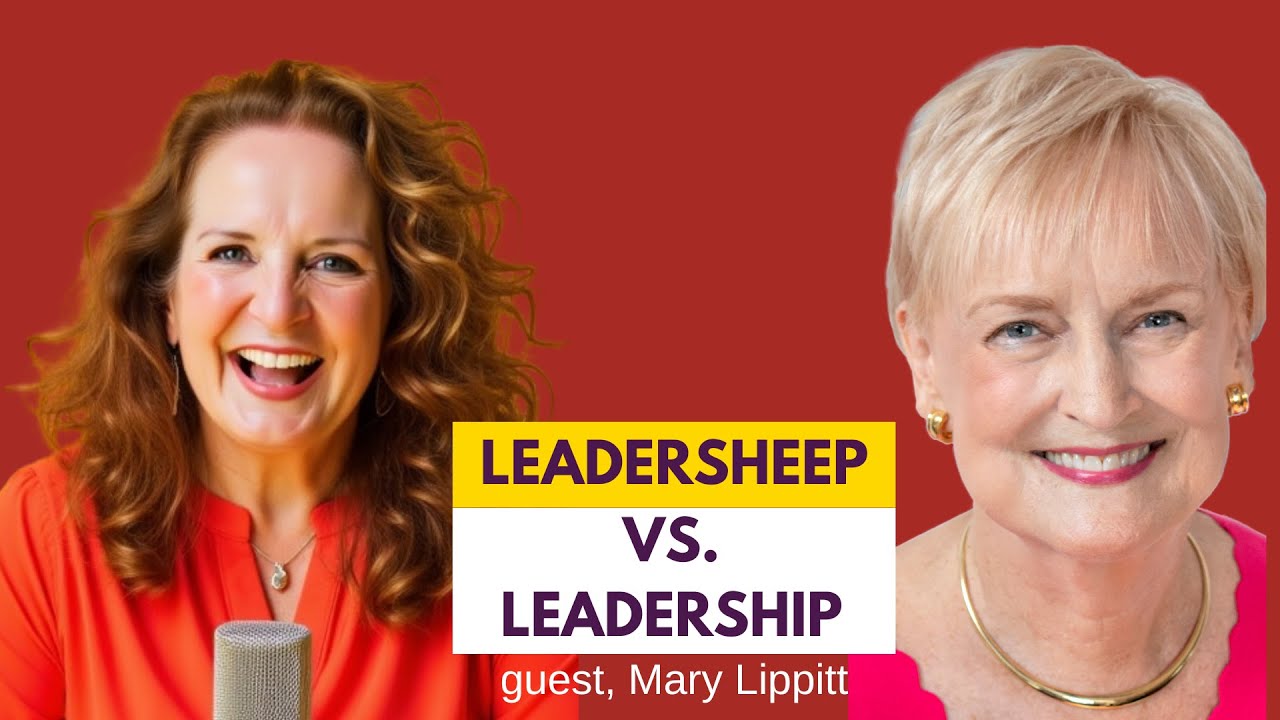
In this episode of the "Shedding the Corporate Bitch" podcast, host Bernadette Boas interviews Dr. Mary Lippitt, founder of Enterprise Management and author of the fable‑based book Leader Sheep: Saving the Herd. The conversation opens with a stark statistic that roughly half of all organizational change initiatives fail, and Dr. Lippitt argues that the root cause is an outdated command‑and‑control leadership model. She introduces a shepherding metaphor—leaders as shepherds of a herd of intelligent, social sheep—rather than the traditional lion‑like, top‑down approach. Drawing on 40 years of experience, she outlines five critical components that make change stick: (1) a clear, culturally‑aligned vision; (2) the development of technical and soft‑skill competencies; (3) alignment of personal incentives; (4) adequate resources (budget, data, policies); and (5) detailed, adaptable action planning with accountability. Throughout, she stresses the power of open‑ended questions, small‑group engagement, pilot testing, and a simple monthly “start‑stop‑more‑less” team‑building routine to surface ideas and build trust. The episode also touches on generational shifts in expectations, the cost of neglecting any of the five components (often project failure), and practical take‑aways listeners can apply immediately. The discussion concludes with a call to explore Dr. Lippitt’s book and resources at enterprisemgt.com.
Chapters
Did you know that 50% of change initiatives fail? That's not just a statistic. That's millions in wasted resources and burned-out teams in your organization. So what's the problem? It's not your people. It's your leadership model. Today, Dr. Mary Lippitt, founder of Enterprise Management and author of Leader Sheep: Saving the Herd, exposes why the old command-and-control approach is dead and what really works. After 40 years leading organizational change across private, public, and academic sectors, she's cracked the code on the 5 components that make transformation stick. You'll discover why announcing the vision and delegating doesn't work, how to turn resistance into progress, and the critical element missing from every leadership competency framework. As we get into this conversation, you can learn more about Mary and her book at enterprisemgt.com. If you're tired of watching change initiatives collapse, this conversation will transform how you lead.
Welcome to Shedding the Corporate Bitch, the podcast that transforms today's managers into tomorrow's powerhouse leaders. Your host, Bernadette Boas, executive coach and author, brings you into a world where the corporate grind meets personal growth and success in each and every episode. Let's do this.
Mary, welcome to the show. Thank you for being here.
It's a pleasure. Thank you for having me.
Oh, it's going to be a pleasure for us too, because I'm not sure how many people know about leadership, and I know for me, I am very curious as to what that is all about. But before we do, I always like our listeners and viewers to get to know our guests. Beyond the, the business aspects. So could you share a little bit about Mary?
My love is travel, as I've been to 37 countries and 50 states, and I love my two grandsons. It's the reward for being a parent.
Oh, isn't that— that is, I'm not a parent, but at the same time, I adore my nieces and nephews and happy to give them back when I'm done playing with them. But that's wonderful. That's wonderful. Now, When it comes to your book, Leadersheep, well, first off, help us understand what inspired this book and this fable, because it is a fable mixed in with some questions that can guide the reader along. What inspired you taking that approach and the subject matter as a whole?
Well, the subject matter has always been of interest to me. Because over 50% of change initiatives fail. Now, and I'm saying over because it used to be 70%. The research has not established a new percentage, but I'm gonna use 50%. So that's a huge waste of resources, people, effort, time. So I started to look at leadership because the old leadership was really a real commanding approach. It was almost like we imaged leadership as a lion, a solo activity, command control. And what I found is that sheep not only are more intelligent than we think, they're not docile. If they were docile, we wouldn't need a shepherd or sheepdogs. So they're independent, but they're very social. They're so creative that they can get over cattle gates by rolling over them. So, this is, we've got an animal breed that has been misstereotyped. So, I started looking at what it takes to lead and in a change effort rather than just leading more of a concept of just keep on doing what we've always done. To me, leadership is different than management. So, we're taking a look at the concept of change And in my opinion, change is going to continue to accelerate, unfortunately, and we need to master it much more effectively than we did. And in my work, I just found that there are 5 components. And if we look at those 5 components, we can get change to successfully deliver the results we want it to deliver.
Right, right. And we're going to get into those 5 components. But before we do, All right. So leadership being about herding, and you make a comment that organizations have too many herders and not enough leaders.
I think we think that we can herd people. But if we talk about herding cats, we really know what the challenge is with herding. We can get people to all do something. But basically, it's only if they want to do it. And what we're doing with change is giving them a business reason for change. We're not talking about how that change can help them. If you ask somebody to accept a pay increase, you don't have to do a lot. They know what the benefit is for them. But for a lot of these change efforts, it's, a little different. I have a friend who, who worked on a change initiative, an optimization, and as a result, she lost her job. So, we have to be a little clearer because some people think any change is going to negatively impact them. More work, longer hours, more demands, you know, kinds of things. So, I'm trying to look at how do we get the people together in a herd because we need more people than we have traditionally thought to really make change happen.
And look at it as change can be a good thing as opposed to it's always a negative thing. And it's a matter of creating these change agent leaders who are adaptable and flexible and know how to inspire and get people aligned to what that objective is?
Correct. If I call it change, it's because I'm not sure what it is, whether it's going to be good for me. If you offer me something that I like, I call it progress. So just the use of the word change tells you, I'm not sure about this, tell me more. And what happens is historically, the leader just repeats the same tagline. I worked for one client where the tagline was empower, free, and serve. Boy, does that sound good. What does it mean? It was repeated in cafeterias. It was on your badge. It was everywhere, but nobody knew what it meant. And so we have to recognize that we want to give a vision. It has to be clear. It has to be precise. And it has to address how everyone will benefit, not only the customer, not only the business, but the people in the organization or sometimes the community.
Explain why did you approach it as a fable?
Well, I think that people think change is so hard that I thought that if I put it as a fable with animals being successful, we could realize that we could do it too. And sometimes when people give a case study of a change effort, it becomes so detailed that that the process itself is not really clear. And so I wanted to make it clear. And I think that a fable helps people recognize that this is very doable. It's not rocket science. It doesn't require, you know, a genius-level IQ. It doesn't have to have an advanced degree. It's something we all can do. Right.
Well, and oftentimes it's very simple, relatable, and easily digested. So it does seem as if it's relevant to, yes, I can do it.
Yes. But again, the role of the leader has been so misunderstood in change. They think that their job is just to announce the vision and then delegate.
Right.
What happens then is that they aren't available for all the modifications, the alterations, the questions that come up. If two people aren't sure what happens next, Is the leader available? So part of the concept of leadership is that you have to stay engaged. You can't just announce it and expect people to follow through. Right. They don't know. It's not that they don't want to help, it's that they aren't sure what to do next.
And they need that direction, they need that thought leadership, and they need that leadership.
She reminds you that military leaders come up with a new plan and it's as good as the first engagement, then they have to modify it. So the leader has to stay engaged to make sure that it is still as relevant, as efficient, effective a plan as it had been first planned to be. Because I think most of us know that our plans frequently have to shift.
Yes, yes. And especially at the speed of which changes happening. That is absolutely true. So that comes back to the flexibility and the leader being nimble and adaptable. So you did talk and mention the 5 components of change and successful change.
Correct.
Could you break that down exactly what those 5 components are?
Sure. The first is vision, which is the plan, but I need to specify that that vision has to be communicated. It has to be clear. It has to be aligned with the culture. It is interesting. You can't expect people to get on board with a very different culture. So, there's a lot more to it than just saying, "Hey, what would I dream that we could do?" What is— the question is, what is feasible for this organization? Just because some other organization was able to do it this way, doesn't mean that we can. We, we need to really tailor the vision to our actual situation, whether that's the manpower, whether that's the timeline, whether that's the culture, whatever. It has to be specific.
Okay. Number 2?
This competencies. If I want to execute the vision you've announced, but I know I can't, I become very anxious. I become very concerned. So I not only have to learn a new skill, but I also have to have the time to practice that skill so I'm confident. And in the fable, the sheep had to learn to swim across a river. They could swim, but they'd never swam, swam that far. So, you know, it took practice. And you, you can't just put me in a class for one day and then expect me to execute beautifully on that skill the next day. I need practice to build my efficiency as well as my confidence. So the second is skills and competencies. And those competencies are technical, but they're also soft competencies. I was working with one client where they wanted to have self-managed teams. Well, you just can't announce that this is a self-managed team and go away. What does that mean? Right. So, you have to help people with the skills, soft and technical. Sure. And then the third issue is the incentives. And this is actually where most of the organizations fall down. The incentive to them is, it's a business case, but we don't ask the question of them, what is important to you on this? And again, using a fable, I was able to show that the sheep were willing to swim, but they were worried about their fleece. So the plan was to have them sheared first. Hmm. So if you know what my concerns are, you can address them. And I would like to make a point. This is not active listening. A lot of people say, oh, I just have to actively listen to everybody and I'll get on the same wavelength. Active listening is hearing them out and repeating. What I gotta do to understand their incentives is to hear them out, go away, think about a way to solve it, and then come back to them. So I'm just— it's not just repeating, it's finding solutions. And the sharing is just one example of helping them feel comfortable implementing the plan.
Fabulous. All right, number 4.
I have to have the resources. How many organizations start a plan with wonderful launch efforts, they're fully funded, but then when it comes down to actually doing the work, they're short of resources? And I know we're thinking budget and facilities, equipment, but it's also information data. It's also policy data. You know, if I'm getting rewarded for X, but the change wants me to do Y, We have to change the policies. So it's much more complicated. And what I have found is that a lot of the resources that are allocated at the beginning seem to evaporate by the time that they're actually needed. So resource planning and resource management is an area, again, that requires leadership. It requires attention. It just doesn't happen. I think some people think, Well, we'll get to that stage, the resources will appear. No, frequently they've been reassigned. So resource planning is, is a key aspect of getting things done well. And then the last one is the action planning. People are told, just go do it, but at what level? How many? What are the milestones? What are we going to review and monitor to make the adjustments? Action planning, again, is just assume that it will take place when really it is something that requires careful attention. Sometimes one unit in an organization doesn't know that they're supposed to cooperate with another unit. There's, there's a lot of interdependence these days that does require some action planning. And so that is really an aspect that should start at the beginning but constantly be revised based on the needs and the opportunities that are seized. And again, leaders need to stay active to be able to do that action planning.
So, and it's part of the action planning to setting those goals and milestones and measurements, and you said tracking and reporting. So that also means accountability.
Accountability. But you know, you have to tell me what I'm going to be held accountable to before you hold me accountable. If you expect me to produce 10 a week and then you say I'm not doing my job because I'm producing 40, you know, that, that's not going to work.
So that happens far too often with, with bosses and their employees that they didn't set those expectations, and therefore there's this clash.
Yes. Well, I, I actually had a client that had an interesting thing. They wanted to do a major change in their accounting system, and they wanted to do it in December. December is when the accounting department is actually overwhelmed. If you wanna do a change, you don't wanna start it in December, January. Right. So again, the planning plays a role in making sure that we get things done right.
Well, and I think what you also mentioned about the cross-functional, the fact that, you know, there's all this interdependencies across the business as well in achieving goals, and therefore you have to involve the right people at the right time. And so many want to work in their silos. Is that what you find as well?
And also, sometimes somebody is dependent on another unit, so I can't start what I'm supposed to start until I get their product, right? And so I could be wanting to do the work but not have the information to do it. And again, that's part of cross-functionality. But it's not just saying, hey, you know, play nice with each other. It's actually getting down to the details. If I need something from the 10th, maybe it has to be done by the 8th so that I can get it, because there are surprises that always happen. So this assumption that it will be done on the 10th and I need it on the 10th it's not a good bet, right?
Well, and it goes back to that action planning, making sure it's a realistic plan, it's a detailed plan, and it has all of those dependencies aligned with it. Now, of those 5, and you mentioned incentives already, when it comes to which ones are the most overlooked and not really, not really dug into, and what's the cost of them overlooking one or more of these components?
Well, the cost is failure. And I mentioned that the success rate used to be 70% failed. Now that we say it's 50%, there's actually a new book out that says in technology projects, and there's a lot of technology change projects, the success rate of change is 7% if we measure on time, on budget, on expectation. So a lot of change effort that I'm making, but it was supposed to be done in 3 months, takes 6. So you could say that's success. You could label it a success for my own sense of pride. But that depends how we label success. If it took twice as long, maybe it really isn't a success. And again, I once had a client tell me, I'm on the B team. What's the B team? I'd be here when it starts, I'd be here when it ends. I'm just gonna wait it out. Because what happens is we have a change, it's not working, so we let it evaporate, and we just introduce a new change. So we have a lot of opportunities to really improve the way we handle change. And again, if I could go back to leadership, the image— when I ask people what animal Do you identify with leader? And they, they, they talk about the lion. The lion is lone person and makes a lot of roars. Being alone and using command and control, it, it's not the way to lead change. Mm-hmm.
And, and it won't be successful, especially nowadays with even the generational changes that have occurred. You know, the younger people wanting a whole different work and experience than say people, you know, our age. That, you know, had an expectation and were kind of bred into, you know, a certain behavior.
Yeah, I was told I had to pay my dues, which was one of the things, you know, that was when I started working. Paying my dues is not something that the younger generations expect to do. They should be based on quality. They should be based on excellence or creativity. It's not tenure. And again, one of the difference in terms of incentives is also my generation. I don't expect a command and control environment in the workforce. I want to be heard. You may not agree with what I have to say, but I want to talk to you about it. And I don't want to just be told something without the opportunity to discuss it. So again, a different approach to leadership that is more like a shepherd helping the herd rather than a lion just roaring at it.
So we know change is hard. These 5 components sound okay, they're doable, but that's certainly probably not the reality of things. If a particular leader wanted to ensure that they had at least one of these things in place at the beginning or right now, which one of those would take top priority for you?
They actually have to follow the sequence I gave: vision, the incompetencies or skills, incentives, resources, action planning. And I think that one of the reasons people don't go into the detail is they don't think they have all the information. So one of the things I really stress is the importance of asking open-ended questions, because I won't be able to have all the detail.. And I can gather a lot of information that is not available digitally, but is, is key by asking open-ended questions. And so what I've done in the book is I've put a list of 10 questions under each to try to help people understand how to collect the data they need, which at the same time is communicating what you expect., and also engaging people to get on board because I can object and be verbal about it, but there are people who could be quiet and just passive, be on the B team kind of thing. So, it's the ability to ask open-ended questions. And, you know, what could go wrong? What is our long-term impact? What are the options that If we take this, we're avoiding— how long will this take to have impact? How will this impact our customers? Are we including them in our stakeholder input? I mean, there are a lot of things that we could be asking just to come up or verify the, the vision itself. And again, instead of thinking that it's the leader's job to come and announce it, it's the leader's job to recommend that we have an opportunity We have to solve a problem, and let's look at what all we have to handle it in the most effective manner. And that's the reason for the open-ended questions.
And you mentioned something really key, and that is those individuals that are more passive. So of course you're going to have those individuals that offer it up. I mean, they're just going to fire hose, you know, their ideas and their opinions and their views. How Or the questions that you provide that you mentioned, how do they facilitate helping a typical passive, maybe introverted individual to open up and provide their thought process and their ideas when typically they won't?
Well, I think that having them in small groups In other words, if you start talking to 100 people, that person is going to be quiet. If you get them into smaller groups, you're gonna get more accurate information. Whether, if somebody says, we have 4 concerns, and you could arrange, okay, people with concern A, you're gonna meet in this room on this date. People with concern B, we're gonna meet in this room on this date., and you actually honor their concern, show that you're interested in dealing with it, solving it to some degree, you're gonna get them because they're already reinforced knowing that the other people are thinking like they are. They're going to get evolved. And I think the other thing that we don't do often enough is do a pilot. If we did a pilot and then the employees themselves could testify to the success, the benefit, the enjoyment, the pride, the teamwork, whatever the impact is. Not only hearing it from somebody that has a beautiful title, but having it from someone who's implementing helps bring people on board.
Right, right. And pilot— when you say pilot, you mean pilot any one of these changes or any of the change or problem you're trying to solve or the opportunity that you found, you know, work to pilot that. Is that what you mean?
Correct. Yeah. And in the fable, they got some young sheep to go to the new location to show that there were no predators there. And they came back and said, hey, we like the grass. There's plenty of water. There are no predators. We've got to go back there. So there was a pilot test of the new destination. I know that when people move a corporate office, they sometimes will take a group of people over the new office, you know, check out whether there's coffee shops or, you know, what the parking's like or something like that. And then they can come back and tell, because it— coming from someone who's actually done it moves it from a theory into something that we want to accomplish.
Well, and if one of their peers or one of the people that are really like deep in whatever that change is going to be. If they can validate and confirm and, you know, kind of give testimony to that change being positive, then it'll help get other people on board. Now, you mentioned, and I, I know our listeners and our viewers would definitely be interested in this, you talk about 4 team building questions that should be asked every month.
Yes.
And You know, so what are they? And how do they work in really building a team?
My experience with staff meetings is they become rote. They're really not a staff meeting. I talked to one person, that's finished. I talked to second person, that's finished. So, I'm suggesting once a month, you ask your team to get together and you say, what is it that we should start doing that we're not doing? What is it that we should stop doing that we are doing? What is it that we should do less often? What is it that we should do more often? And by doing that on a monthly basis, or whether it's 6 weeks, I don't know, it's showing that you're open. It's also preparing you and keeping you alert so that you're not caught off guard when a change comes. And it also shows you as the leader the actual tremendous power of questions. But it creates an open environment, and creativity and innovation comes from openness. I mean, this whole concept that every innovator is a lone person is not valid. I was gonna say baloney, but it's not.
I would absolutely agree with you on that one. Absolutely agree with you on that one. And You know, that kind of started, you know, creating rumbling within me about trust. It really builds trust and safety between the employees and the leader. You know, being that that leader is open, is asking these open-ended questions, is curious and interested in understanding what it is that they need to, to be the best that they can be and potentially solving problems, creating new ideas with them. So it builds and secures that stability of trust that it takes in order to be a successful team. Would you agree with that?
I would agree. I would just add one more word. It also shows respect. Mm.
Love that.
Most of us want to be respected. I don't mind being told I'm wrong, but as long as I'm told I'm wrong with respect, it's sort of like, you know, it's not like You're incompetent, Mary. It's like, that's an interesting idea, but there are certain realities right now, da da da da da da. And, you know, we could have that conversation. I want to feel respected. I think that a lot of people feel they're a number and they're just a plug-in player. And what we're trying to do, particularly with that technique with meetings, staff meetings, is to show respect, to stay alert, to to develop the creativity that actually comes frequently from the frontline. And we don't recognize how much the frontline really contributes to meeting new customer demands or saving time in process or improving processes. So, again, it doesn't take much effort. And I think it also breaks up this— staff meetings could become automatic, and, you know, the same report. We're working on it, or we've done this. And it's— there's no cross-communication usually. It's usually a series of one-on-ones.
It's a readout. Even if it's in a group, it's typically just a bunch of readouts, and then later we got to get busy, you know, with our head down. Correct.
And the readouts don't usually cover all the details. They have a tendency to be on the positive side, right?
Right. As opposed to the challenges and the issues and the risks that the employees are seeing that are negatively impacting the team or the needs I have. Right.
I don't want to ask for something in a staff meeting, but I really would like it. But, you know, if we ask, what should we start, stop, do more, do less? I, I can bring it up.
Yeah. I love that. What is one thing that our listeners and viewers could actually walk away from this great discussion and start acting on that would make a difference for themselves and their teams, even as early as today?
I would like them to recognize that no matter what the initiative is, to take a look at what the idea is, what the new skills are required, What the incentives are, what are the resources required, and what will the action plan actually look like? Because when we get into the details in the vision, you know, the devil's in the details. So we could be much more effective. And again, whether we call it a change project, whether we call it an initiative or an opportunity or whatever else, think it through with others. I like to think that I could come up with an idea that it's brilliant, but I can always be corrected, improve upon. And so I would like that done in a collegial manner and one that shows trust and respect. And I think that that goes a long way to having the pride and the opportunity to celebrate success.
That's fabulous. That's fabulous. Mary, thank you so much for all this. It was so rich and so meaty. And so executable. I really appreciate you taking the time to share with us everything about leadership.
Thank you. It's been my pleasure.
What a powerhouse and a powerful conversation with Mary Lippitt. So let's recap the game changers that she's discussed. Change isn't slowing down, but your ability to lead through it can get exponentially better. The old announce and delegate model is costing you millions and burning out your best people. Mary showed us that real change requires 5 critical components: sustained engagement, personal benefit clarity, adaptive planning, collaborative implementation, and long-term wisdom. Not corporate buzzwords, but actual practices that turn failed initiatives into successful transformations. Remember, if you call it change, people will resist. If you make it progress that they benefit from, they will engage. Wanna go deeper? Get Mary's book, "Leadership: Saving the Herd," wherever books are sold. It's a game-changing fable that makes organizational transformation actually doable. You can also connect with her and her resources at her website, enterprisemgt.com. Now, if this conversation challenged how you think about leadership, even if it's just one insight, you would reconsider your approach to change, then this show is doing exactly what it's designed to do. Hit that subscribe button and follow us on LinkedIn, Instagram, and YouTube, where we share bite-sized leadership insights you can actually use. And here's the real impact. Share this episode with your leadership team, your HR director, the colleagues stuck in a failing change initiative. Or anyone who keeps saying our people resist change. Send them the link, tag them in a post, forward this episode because the leaders who transform organizations aren't the ones who hoard insights. They're the ones who spread them. Lastly, on our next episode, I'll be sharing some powerful time management tips and strategies to ensure that you are the powerhouse leader that you are meant to be. I'll see you then.
Thank you for tuning into today's episode of Shedding the Corporate Bitch. Every journey taken together is another step towards unleashing the powerhouse leader within you. Don't miss any of our weekly episodes. Subscribe to our podcast on Apple Podcasts, Spotify, or wherever you love to listen. And for those who thrive on visual content, catch us on our Shedding the Bitch YouTube channel. Wanna dive deeper with Bernadette on becoming a powerhouse leader? Visit balloffirecoaching.com. To learn more about how she helps professionals, HR executives, and team leaders elevate overall team performance. You've been listening to Shedding the Corporate Bitch with Bernadette Boas. Until next time, keep shedding, keep growing, and keep leading.
More from Bernadette



From Stuck to Leading, Episode 2 — Meet the 5 Inner Fears Destroying Your Leadership



