Lessons from a Difficult Person on How to Deal with Us, with Sarah Elliston
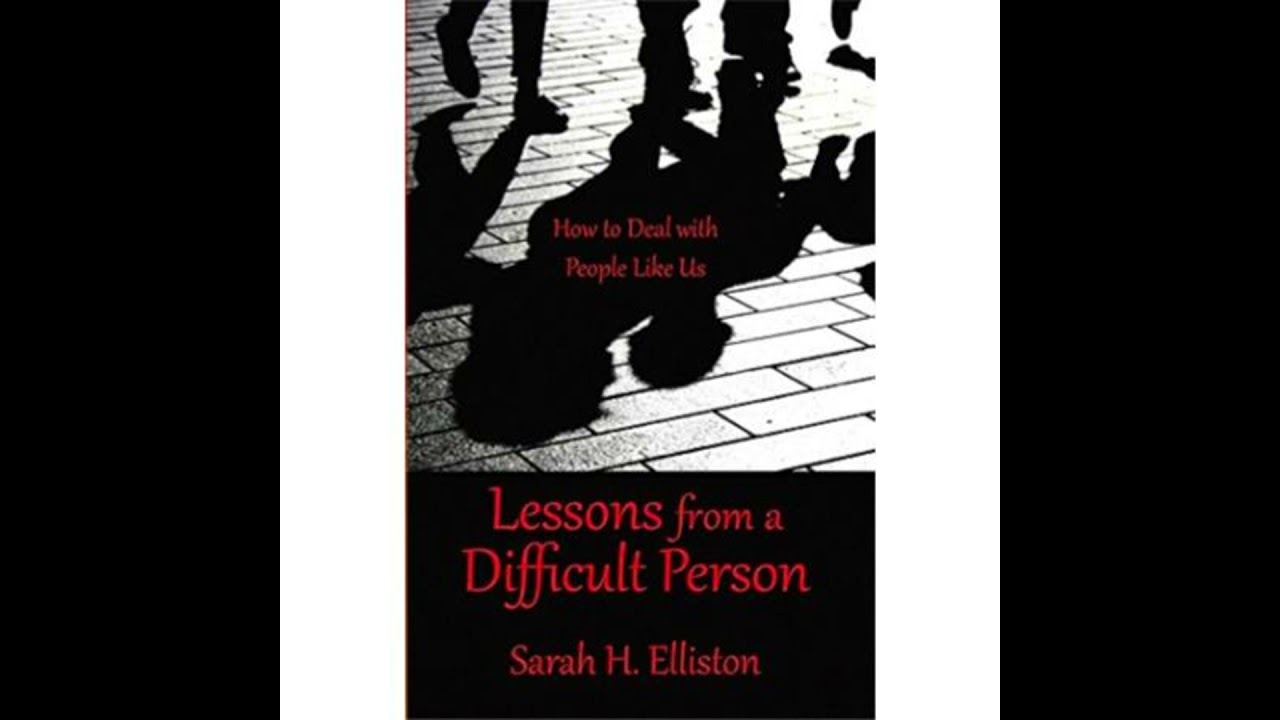
Sarah Elliston discovered she was a difficult person in her 50s and developed a six-step workshop to transform challenging interactions. The process moves from describing the behavior objectively to reframing negative traits as positive motivations, then preparing a compassionate conversation about change.
Chapters
Hello and welcome to Shedding the Bitch Radio, where you can discuss, debate, and get advice on how to discover and shed the bitches of fear, insecurity, self-doubt, and negative mindsets so you can realize your dreams and life purpose and create and accelerate the riches you want in life. Join us here live every Tuesday at noon Eastern and dialogue with us at 818-572-2910. You can also chat with us at blogtalkradio.com/sheddingthebitch or share your stories on our website at sheddingthebitch.com. Whatever the bitch is that's holding you back from living your life to the fullest, it's not worth giving up the riches in life that you deserve. So call in now and let Bernadette Boas know what's holding you back.
818-572-2910. Good day, good day, good day, everyone. How are you around the world and right here? In Atlanta, Georgia. It is a beautiful last day of February. Can you believe it? We are wrapping up what, the shortest month of the year, and I can't believe we're already a full 2 months into the new year. Someone said to me the other day, actually my coach Joan, who I mention a lot on the program, she said, "You might as well start Christmas shopping," and I'm like, "No, no, no, no, no, no." So it is an absolutely gorgeous day. We're pretty much pretty much into spring here at least. Hopefully it's just as beautiful and just as lovely wherever you might be. We have a great show for you, and I'm very excited about it because you know how this conversation around difficult people is one that's dear to my heart in many weird ways, and we'll get into all of that. But a few things. I don't know if anybody— did you catch the Oscars the other night? This kind of made me think of our subject today for many reasons. So if you watch the Oscars, regardless of where you are in the world, because they had like, I don't know, like 70 million people going to be watching it. And, you know, of course, the disaster at the very, very, very tail end with the biggest, biggest award of the night. Now, why I relate it to kind of today's show is, you know, of course, the— I'll call them difficult people. Came out of the woodwork wanting to just rip apart anything and everything. And really what I was disappointed at is it took away from the other 3 hours and 20 minutes that occurred. And my being now in the entertainment industry, as you all know, with my scripts and whatnot, you know, I kind of am more sensitive to what it is and all the hard work that people put in to kind of those awards, not the show, but their talent. And so I really felt for them. But more so, you know, Granite, you know, Granite, that accounting firm, it'll be a surprise if they're actually still doing the Oscars or any of the award shows going forward. Not to say that they deserve that or not. However, oh my gosh, even up until today, I mean, it's 3 days later or 2 days later, and even the morning news, which really disappointed me because because I really respect this morning news, this national morning news. And they still kind of were repeating and rehashing and dramatizing everything as far as what happened that night. You know, after yesterday, last night, everybody took accountability and, you know, everybody said rolls will head and what— heads will roll and whatnot. But it just made me think about kind of how difficult people— and we're going to talk to our guest about how does she define that and how do they look, because I understand even from my own time period as a difficult person, there's a lot of different layers to what makes up a difficult person. And I just felt that there, you know, 90% of the people still commenting on these are what I would deem to be difficult people, those people that just love drama, love to point fingers, love to make somebody look bad. And it's really kind of sad because it's taken away from the celebration of even the one that, you know, the Best Picture that really deserves to be the ones that are hurt and the ones that are offended. And yet they're not. And yet no one will allow, you know, everything else to move forward in order for people to start celebrating their victory. So anyway, I'm kind of babbling, but it just kind of really hit a nerve for me because I would have been that person that would have spent days, if not weeks, just being like, "Ah, they deserve it," and, "Oh, it's all rigged," and, "It's all political," and, "It's all this and it's all that," and, "Who cares?" and, "They're just rich, you know, millionaires making a lot of money anyway." I mean, I would have just definitely soaked up the opportunity to kind of knock people down. So it just hit a nerve as far as our whole conversation today. But on a better note, congratulations to Moonlight. I have not seen it yet. I have been, you know, obviously watching and reading hundreds of scripts and films this past few years, writing my own. But I did not get to see that particular one, and I will, especially to honor honor their win. So let's see what's going on else in the world. It's been kind of a quiet week, which we always appreciate. So we're going to dive into our conversation, but I will let you know that we have some great guests coming up throughout the month of March. Obviously, next Tuesday is the first Tuesday of the month, so we have Ask Bernadette, which is your time, your opportunity to ask your career, business, or life questions. And get some tips, advice, and some tough love every once in a while that you might need to be able to kind of move on, get unstuck, address an issue, that kind of thing. So be sure to be posting your questions, stories, or challenges on our Facebook page, on our Twitter page, @SheddingTheBits. You can send them directly to me because some of you like to stay private. So feel free to send them to me, email them, BernadetteBoas@sheddingthebitch.com. Just don't hesitate to ask. Be sure you're asking, and we'll figure out a way if you don't want to be, you know, heard, or you don't want your name used, or you want to do it privately, but yet we can share the situation so other people can learn from it. There's a lot of ways that you could be doing that with us, so be sure to Take advantage of Ask Bernadette. We get some great questions that cover the gamut, all right? Then in the month of March, we're really getting what I'll call technical that will definitely benefit you as an individual, business owner, entrepreneur, corporate professional, it doesn't matter. We're gonna talk to Gleb Sapirsky, Sapirsky, Gleb Sapirsky, about decision-making and how decision-making can and does play an integral role at home and at work. And then we're going to talk to Sharon Bolt, all around your individual and business branding, but more so publicity. How can you really kind of shine some light? And we call it honoring your riches here. But how can we— how can you shine some light on all the great talents and work that you're doing? Should you want to, and we'll have a conversation about how every— everybody nowadays. They want to shine light on themselves in order to kind of start pursuing and achieving the goals that they have. And then we're going to talk to Ed Burdow. When I ran across Ed, his whole expertise is around negotiating. And this is one area that, apart from goal setting and some time management things and some bullying conversations I have, I'm asked a lot about when it from women when it comes to them being able to negotiate basically just about anything in life, whether it's buying a car or wanting a promotion or going after a raise, it doesn't matter. Or if you own your own business, how do I even kind of sell and negotiate with my clients? So I ran across him, and I think it's going to be a fabulous conversation all around negotiation. So you can see between negotiation, decision-making, branding, publicity, we're really going to spend March amping up those skills that you might not necessarily pay attention to and really get some focus on. So we're going to do that. All right. Now, of course, we've been rolling out our private Facebook page called Shift to Riches. Would love for you to join us. We will be, you know, amping it up and putting out programs there and competitions and challenges and things that you can just get involved with and engage and collaborate on. As a way of kind of helping yourself but also supporting the community. All right, so go to facebook.com/groups/ShiftToRiches and be sure to like and follow the group and ask to be joined in, and I will certainly make sure that that happens for you. All right, okay. We are talking Lessons from a Difficult Person: How to Deal with People Like Us. And so that is our guest's kind of approach. And yet, you all know me, this is going to be a conversation that comes from the heart from both our guests and myself, because this is an area that none of us deserve to be treated in any way but wonderful, and therefore, uh, you need to be armed with what exactly you could be doing around handling difficult people. Bernadette Boas discovered she was difficult when she was 50, and her experience of learning why and how she was difficult and why nobody had told her before led her to serve other difficult people and those with whom they live and work. And that's kind of just what pulled at my heartstrings. So what are you going to hear today? What are you going to learn today? You're going to learn how to describe a difficult person. Like I said, they come in all sizes and shapes. The key elements that will give you power in your message in order to handle and be able to minimize the impact those difficult people have on you, and steps to take to prepare for a conversation with a difficult person. So this is what I want you to be thinking about as your rich question. And this rich question, for those of you who may be listening for the first time, we give you a rich question that you can think about as we're having a conversation. And hopefully, and 9 out of 10 times, you get the answers to it. So if there is something about a particular subject that we're going to be talking about, in this case difficult people, then we want you to really be thinking about a situation you might be in that you might need some tips and advice. And if you don't hear it, it doesn't mean that our experts or myself can't help you. You would just want to then go out to Shedding the Bitch or go onto Twitter and be sure to reach out to myself and the guest, and I make sure you have all their information. So today's rich question around this topic of difficult people is: What is the one situation from a difficult person that has left you hurt offended, insecure, or some other pain, and how did you handle it? And the reason why I ask you it in that way, because I want you to listen to what our guest is going to provide you, because it's not right or wrong, but she is definitely going to make you more effective. So your Rich Tags to follow and tweet with us and Facebook with us are #DifficultPeople and #ShedTheBitch. So when we get back, I'm going to introduce you to our guest and we're going to dive into this conversation and really make sure there's some nitty-gritty for you. So we will be right back with our difficult people conversation. Talk to you in a minute.
You are listening to Shedding the Bitch Radio with Bernadette Boas. We are inspiring individuals around the globe to discover, confront, and shed their bitches of fear, insecurity, and negativity. So they can create the riches in their career, business, and life they deserve. Be sure to check out Bernadette's book, Shedding the Corporate Bitch: Shifting from Bitch to Rich in Life and Business, available on Amazon and sheddingthebitch.com. We also want to thank our sponsors, TSR Consulting, who offers a broad range of tax services for small to corporate size clients. Go to TSRConsulting.com to learn more. And Parker House Virtual Services, who provides virtual assistance and social media support for small to medium-sized businesses. Email Deborah Parker at deborahparker78@gmail.com for more information. To become a sponsor or advertiser on our program, email us at mediarelations@sheddingthebitch.com. Shedding the Bitch Radio airs every Tuesday at noon Eastern time. Be sure to go to blogtalkradio.com/shuttingthebitchradio and follow the program for all of the updates and announcements of our guests and show topics. Now let's return to Bernadette and Shedding the Bitch Radio.
Welcome back everyone. We are talking difficult people today. So our guest Sarah Ellison discovered she was a difficult person halfway through her life and wondered why she hadn't known before. Her process of identifying how others had actually tried to tell her led her to want to help others and the rest of the world understand and talk to difficult people so they could actually hear. She presents workshops on this theme and now has a book, Lessons from a Difficult Person: How to Deal with People Like Us, to help more people than she has been able to reach in her workshops. It is a resource to help people manage the challenging people in their lives. She also coaches individuals who are looking for assistance in their relationships and their lives. But I wanted to paint a little more of a picture for all of you around her book, so, and then I'll tell you where to go and look at it. Allison lays out a proven script for peacefully transforming the difficult people's behavior and the environment, or inviting that person to move on. She gives you the tools for a successful change conversation with a difficult person. So be sure right now, go to SarahElliston.com and check out everything about Sarah and her book as we get into this conversation. How are you, Sarah?
I'm great, thank you. Thanks for inviting me.
Oh, you're absolutely, you know, you're welcome, you're welcome, you're welcome, because I do think I think what you're doing and how you're helping people is critical. So let's step back a little bit, and if you would share with us kind of what was your situation and then what made you say, okay, I need to put this on paper and share these ideas with other people?
Well, I've always been a teacher, and I was working as a trainer for the United Way and doing a whole lot of other things with volunteers and working with people who coordinated volunteers. But I had a new boss and she valued me and I valued her quite highly. And so she mentioned one day after telling me what I had done so well, she said, by the way, you know, you have this annoying habit when you get disturbed about things, you really create havoc in the office. I said, what are you talking about? She said, never mind, never mind, I'll tell you when you do it. Next time you do it. Which is a clue, right? Excuse me. So a couple of weeks later I had lost my glasses and couldn't find them. I swear even now I never did find them. I put them in my purse. I put my purse over my shoulder. I went out to my car, drove through the drive-through, you know, to pick up some lunch and never even opened my purse because it turned out I had money in my pocket, right? I got back to the office, walked in, sat down with my food and my glasses were gone and I never I never did find it. It was a riot. Looking at it now, it's a riot. But so I spent a good deal amount of time, probably, I don't know how long. Anyway, I spent some time back to the car and back to the office and out to the car and back to the office and picking things up and dropping them, you know, lifting those flippers that they have in the little cubicle offices, looking everywhere. And she leaned out of her, out the door of her office. She said, Sarah, in here. I went in and she said, "That, what you're doing right now, that needs to stop." And I said, "What am I doing?" I literally was not aware of what I was saying. I was muttering, I was stomping around. I had no awareness of it because I was, you know, wrapped up in it. And she said, "We can't get our work done when you're doing that. You're completely wrecking the energy in here." And I had no clue that anyone even noticed I was there. I mean, I was completely wrapped up in my, my issue. Now, that was the tip of the iceberg. And when I realized what I was doing and that it was bothering everyone, I stopped. I remember sitting down in my chair in my office and going, "Oh my God." And I tell a story in my book about observing my mother doing the same thing a couple of weeks later. She was in her late 80s and she was not a happy camper because my father had been dad for a while, and she didn't like being without him. And I observed her having this little mini tantrum, and I went, oh, well, no wonder I've done it all my life. I mean, I learned it, right? However, what I, what I also realized was, as I, as I began to kind of watch myself and watch the way people reacted to me, I realized that my presentation to the world is one of confidence and knowledge, where of course there's this little tiny person inside saying, I don't know, I'm guessing on this, what do you guys think? But everyone perceived me as knowing what I was doing. Have you been there?
Oh yeah, oh yeah.
Yeah, well, so there I, I found that I had been, my mother was an educator and all of her family were educators and my sisters are both teachers and so we all were We were just taught to be in that kind of mode, I guess.
And that mode being what though? What would you say that mode is though for everyone to understand?
I think it was perceived— well, there's two things that's going on here. One was they perceived me as combative in the sense of how would I dare ask the Vice President that question? You know, I mean, how did I see myself at the same level? I remember beginning to realize that there was some kind of— way that I was talking to people that they didn't like, and it wasn't that I was rude. It was that I dared to ask. That was part of it, but the other part was because of the way I experienced my childhood, I was pretty combative and probably went through most of my life, at least until age 50, with my fists up, kind of in a defensive— Yeah, yeah. Waiting for the other shoe to drop, kind of. And so if they were— if, if they thought I was being combative, they're probably right. And I, I, I remember in one case with a young woman who had offered to share with me her video that her mother had copied, you know, it's a videotape of a movie, and she wanted to know if I wanted to watch it. And I went off on her about not copying people's creative work, and it was it was— now I wasn't going to watch it because it was against the law. And I, I asked her a couple of questions about it and she just started to cry, poor little thing, because I came across as this horribly mean, critical person. And I think people who are perceived as difficult have those characteristics. They— you said something about they like to have drama and they like to point Fingers. I think they are complainers. They criticize. They whine. They blame. They punish. They threaten. I think I threatened people completely unconsciously. I don't— I didn't ever start out to threaten a supervisor or a vice president or something like that, other people in my life.. But I think I did. And it took a long time for me to figure it out. That was part of it was the tone of voice. Part of it was being mad at the world at a level that I wasn't aware of. And part of it is habit. And I just want to say one thing. You were talking about the folks who are criticizing the TV and, you know, they're just As far as I'm concerned, the people in the media are just trying to get folks to listen and they think it's going to grab a listener. And it's the trigger for you that I would encourage you to look at. It annoys you and I can get that. So talking to some women the other day who were just— we had just met for coffee just having fun and they said, okay, we've got this woman that we work with on a board and she is so bossy. And she wants to know the answers to all these questions and she acts like she's the only person who would ever ask these questions and we've been on the board for a while and she's just hammering us with all this information and acting like it's unusual that we should be doing this or we would know it. She's just so offensive and so pushy. And I smiled and said, I have this little book. And they both have the book. So that was funny. That's the kind of person— my question is, well, first of all, she doesn't know she's doing it. All right? It's a habit. It's the way she is. She's retired and this is the way she's been all her life.
Right, right, right.
So the question is, how important— my question to these women is, was, how important to you is it to foster a closer relationship with her? That's really the first question.
Actually, okay, but before we get there, before we get there, because I think that is now getting into kind of like, what do they look like, what do you do? So before we get there, so you discovered this about yourself. You were, you know, if you were like me, you know, it took me to my knees, physically took me to my knees when I realized kind of what I was doing to people and how that was just wreaking havoc on them and on me. And then you said, then what you said to yourself, I think other people can learn from this.
I need to talk to other people. Oh yeah, you wanted to know about that. I was already teaching a workshop on how to deal with difficult volunteers with some of the same tips that are in the book, some of the same exercises, not quite the same, but trying to invite people who coordinate volunteers, teaching them to have a conversation with a difficult volunteer. Difficult volunteer rather than just firing them because that's what they usually did. Right. And, or moving them around and, you know, making things and then having the other volunteers working with them who were uncomfortable. And so I had been teaching that for quite a while and I realized at some point about 6 years ago I guess that this would make a pretty good workshop for dealing with difficult people. And so I ran it a couple of times for free for all my— everybody I could think of. I said, just come and tell me what you think of this model. And so I developed a workshop where, you know, you spend some time identifying the person, identifying the behavior, and then you walk through the process that the book develops. And we can do it in about 2.5 hours.
Right, okay.
Depending on the size of the group. And people would say, oh yeah, this is really great and your materials will be helpful, but I need more. I need level 2. I need to be able to work with it more. That's why I wrote the book because— That's it. I mean, I love doing the workshop. It's absolutely my favorite thing to do and it's been fun consulting with folks. You know, many of the people who took the workshops either called me afterwards or wrote me emails, you know, and asked questions or told me how it went, you know, how their conversations went. But that's where it came from. I was teaching all kinds of classes on working with volunteers. And then as I took early retirement from that and then started working as a volunteer coordinator at my church, I do that less and less now. We have younger people doing that now using corporate language which I don't like. That's just my personal thing.
Well, and I want everybody to go to SarahElliston.com, but her book's also available on Amazon as well, and it's called Lessons from a Difficult Person: How to Deal with People Like Us. And again, like I mentioned, it lays out a proven script for peacefully transforming the difficult person's behavior in the environment or inviting that person to move on. And I'm gonna, I'm gonna even suggest, based on what I've already read, is it doesn't even just help transform that other person, it helps transform you. And we're going to get into that as we continue the conversation because, you know, we want to give you tools and tactics for how you handle these people. One of the things though I read that I found very interesting that I'd like you to kind of help us understand is you say you were trying to do— you were just trying to do what you thought was right. And you had this emphasis on the word right. What did you mean by that? What does that look like to you in that state for those people that might also be dealing with the same thing?
Well, there's— I mean, standing on the other side of it, I can look and see there are people in the world who have to be right. It's the only way they feel comfortable in the world. So, I mean, it's how they control the world is that everybody has to do it their way. And I'm not sure that's where I was as much, although I, hmm, it might have been part of it for me was needing to operate on certain principles. And I know that I would get into passionate, what I thought was passionate and probably came across as argumentative and defensive conversations with different people about how they perceived volunteers or how they treated volunteers. I remember looking a CEO in the face and he said, "Oh, we really value our volunteers." And I said, "Well, you could have fooled me." Which, you know, was just not a really wise way to deal with it because he'd cut all the funding for babysitting for the volunteers. And as far as I'm concerned, if you're not going to support the volunteers, you can't keep them. So I knew I was right in that sense, and, um, that wasn't— you were right about appropriate.
You were right about what?
Oh, that he had cut his support for the volunteer. He had all these volunteers coming and leading all these support groups for various people, but— and they had— and they brought their kids, and they had— and they paid for babysitting, but they decided they couldn't afford to pay for the babysitting.
Yeah, no, I guess what I'm trying to stand is, do you think that your combative, your behavior you thought was doing right because you were standing up for those babysitters, you were standing up for your volunteers, and yet other people were perceiving it differently?
At the time, I wasn't aware that I was being combative and difficult. I was standing up for the volunteers. Yeah, as I look back on it, I've gone to that guy and apologized, and he just laughed. We were actually friends. We had done some We had been co-trainers together, so it wasn't like somebody I didn't know at all. But he did say, "Well, it did kind of catch me off guard." But if I hadn't known him, I probably wouldn't have said it that way. But it's just something that truly annoyed me. Organizations that say, "Oh, we love our volunteers, but oh no, we can't put out any money to support the program." So that sort of thing just used to eat my lunch. And, and, and, you know, one of the things one has to learn with dealing with difficult people is how to allow folks to do things differently. Yeah, well, I wasn't as good as that.
Yeah. Now let me ask you something though, and then I want you to answer— I'll ask you that question too.
Is—
so you believe— because I've been asked this and I just kind of like roll my eyes. But I'm going to ask it to you, and you can roll your eyes at me. All right. So you believe people can change. Is that true? Yes. Okay, so you believe that even though someone's difficult, you know, today doesn't mean they always have to be difficult.
Absolutely.
Perfect, perfect. Okay, so why should we even try to be nice to begin with to those difficult people when they're already like causing us to, like, just want to jump off a rooftop?
Well, if you work with them or live with them or have consistent relationships with them, it might— you might be a lot happier if you have a better relationship with them, which means you might want to consider having a conversation. But even if you don't have a conversation, the The first step in this whole process is acknowledging that that person doesn't know what she's doing. Mm-hmm. And you know what's fascinating? There's a lot of information in the text from, from Dr. William Glasser, who founded and created Reality Therapy and Choice Theory, and I love that he says this. He says, the world gives us information. It's up to us to figure out how we react to it.
Oh, amen, amen.
They're not being horrible, they're just being themselves. Well, there's that. And then the other piece of it is that, uh, he, he talks about, um, behavior, and he says that, you know, it's— behavior is really doing, uh, thinking, feeling, and your physiology. They're all connected. And the one that's the easiest to change is the doing, you know, how you move and how often you get up and how often you drink a glass of water or whatever. The doing is the easiest to change and it is the least, the one we are the least aware of. We know what we think, we know what we feel, but we're not always paying attention to how we're sitting or walking or standing unless we do a lot of yoga and then we probably are paying more attention. For the most part, most, we are least aware of what we're doing and it's the easiest thing to change.
Okay.
Having said that, having said that, I'm going to encourage you to change some thinking too and that's part of the process. But, and you're thinking about the other person then, we're saying, okay, this difficult person, like the woman I was describing that my friends were talking to me about yesterday, she doesn't know she's doing it. This is the way she's been all her life. No one's ever said, "You're driving us crazy with all your questions." They've probably said joking things to her. She may or may not have understood them, but she never got the message that her approach, which is kind of rat-a-tat-tat-tat-tat, you know, puts people off and makes them uncomfortable. And so she doesn't know it. It's a habit. It's the way she lives. I watched her doing business with some decking people who were putting in decks, and I was very impressed with the way she got the information she wanted. And they didn't find her difficult at all because they wanted to sell her the decking.
Right, right, right.
But the other members of her board found her difficult. So the first step is acknowledging that. Wait, wait.
We have one more person though I want you to talk about. How about the person who knows, how about the person who knows and likes and gets off on being difficult and being demeaning and being curt? I mean, I was that person. So help me understand. Well, one, you don't have to go into that because I do want you to talk about your steps. But so would you agree that there's people who don't know, but then there's also people who are very intentional?
I think people who are intentional about being difficult in terms of criticizing and whining and threatening and punishing and saying unkind things and trying to manipulate others, that kind of thing, they're getting what they want from it and they don't know they can do it differently.
Right, okay, so you agree that they exist, so then I would, you know, then I'm expecting and anticipating that the steps that one can go through to help that individual can also be for that person who is even intentionally doing it.
If you—
yes, hopefully. I mean, we have a fairly important person in the world right now who appears to be this way and is getting exactly what he wants.
Absolutely.
So, or—
Absolutely.
Seems like he's getting what he wants. So why would he change? So if you know people— the other thing is, and maybe you were intentional, but I like to look at people and assume that they're not aware of their impact on others and they're not very happy in their relationships. The most important thing to us as human beings is to have relationships, to have closeness, and when we don't, we develop some pretty negative habits or activities that we think will get us relationships, and they don't always work, but, but we're not— we don't know what else to do, so we keep doing the same thing over and over again. And unless you get with a really good reality therapist who might help you understand what to do about it, that's just my personal opinion. But there are a lot of good therapists out there.
I just—
okay, the thing about reality therapy I'm sorry?
You were going on about your first step before I cut you off earlier.
Well, the first step, I mean, it's just the very first step is, you know, what is the behavior that the person is doing and can you describe it in words that are just the— what they say and what they do without all the emotionally laden drama, critical words that we dump. I mean, when we talk about Some, when we say they're manipulative or they're energy grabbers or they're control freaks. I mean, whatever word you want to— what did— how did you describe yourself when you were a difficult person?
Me? I described my— I described myself as, um, uh, well, when I realized I was difficult, I was very curt. I was abrasive. I was demanding. I was, you know, in some ways I described myself as cruel.
Mm-hmm. So all of those, curt and abrasive, well, curt is coming close. In other words, your responses to people were short and didn't have any empathy. And abrasive is it appeared that you were looking for, you argued with everything that people said. Yep. I'm guessing.
Yep.
So, but that's delineating the doing behavior, if you will, or the what people say or what they're doing. And taking cruel out of it and taking all the other words out of it that even abrasive is, an emotion-laden word. When I did have one boss who said, we just need you to know that the staff thinks you're very abrasive. Now the volunteers loved me, so it was a little bit weird. But they sat me down and said, we think you're abrasive and aggressive and, you know, we really need you to change. And I said, oh, okay. And came in the next day and I was going to quit because I just, that wasn't— they were very surprised that I was going to resign and I said, well, we obviously don't get along because I don't think I'm those things, but of course I was. Okay, but you identify the exact, what the person says and what the person does and take all the emotion out of it and then look at the impact and this is, see, this is where if somebody doesn't resonate with the impact, impact, they're not going to, they're not going to have any motivation for change unless you can point out to them that it's, this impact is pretty sincere. Now, I had a new boss and she was saying, we can't get our work done. Of course I wanted to get along with my colleagues and I certainly wanted to get along with my boss. She didn't say, if you don't change this behavior, you're fired. But it was a work situation and that's an ultimate kind of, that's the ultimate thing that will hang over people's heads. If somebody who is responsible for you suggests that you make a change, you best change if you want to stay there, right?
Yep, yep, absolutely.
So now the people I've had, I've had counselors talk to me about this and say, well, there's people who don't want to change. And my reaction is they aren't aware of their impact, or whatever, however the impact is described to them, it's not as— it's not strong enough to invite them to take a look at themselves. So as you think about what's the impact— like the woman on the board that I was describing, you know, the impact of her behavior is that it's off-putting to these particular people. Others don't seem to mind. So how important is it to talk to her and tell her that she's she's putting people off and making it difficult to communicate with. How important is that? Because other people don't seem to have a problem with her. Right, right. So that's one of the first questions. Now, if it's a family member or somebody that you work with, I can see that you would sit down with her perhaps and talk to her about the impact of that kind of— it's probably curt. I don't think it's abrasive as much as is just demanding, you know, asking lots and lots and lots of questions and acting as if no one else has ever thought of most of the questions that she's asking. Yeah, yeah, exactly. And just, you know, some people would look at that and say, well, this person's coming from a place of superiority. She thinks she's better than everyone else. Well, that is a total— you know, maybe she does, but it doesn't help us work with her or have a relationship with her if that's how we look at her. So having identified the behavior and identified an impact and a consequence of that impact, I tell a story in my book about a family who were, where the children said to the parents, we won't go to the Christmas party because this particular relative is so demeaning and says hurtful things to us. And the parents were kind of like scratching their heads. The one I was working with I was working with a mother and we had long discussions about it and eventually her husband, who was the sibling of the individual who was so unkind, he finally spoke to her and they worked it out so the kids could go to the grandma's party. But I mean, if the impact is strong enough that you say the kids don't want to come and the response of course is, Oh, for goodness sakes, I've always been this way. No one's ever been a problem. Well, it's a problem now. You know, this is what you say and this is how they react and their response is they're getting old enough to say we won't go and that really hurts us, it hurts you, it hurts our family. Is that what you want? Right. So that's the process of the question.
So you're actually saying to get to the person's— almost get to the person's ego. Describe in words what the behavior is, and then really try to understand not only the impact, but, you know, what are their goals and ambitions, and therefore what's feeding their ego that should they not change, it's jeopardizing what they've laid out in their, you know, in their ego as far as their goals and ambitions and intentions. Would that be another way of looking at it?
I guess so. It feels a little bit awkward, but I think so. I would say that the consequence to them that is in relationship to you, if you know their goals and dreams and you see that there are consequences. If somebody wants to make it in the theater world or the— you're writing scripts I understand, like for movies and things? Correct. Okay, so if somebody knows that about you and they also know that the way you're writing this or the way you're presenting that isn't going to work, then they can say that to you and you'll hear it because that's the goal you're shooting for. So if we know their goals, but I guess I like to stay a little cleaner than that and not worry about their ego as much as, Knowing that they do want connection. That's the primary thing they want is connection. And also valuing the person enough to— part of the exer— there's a whole series of exercises, as you've mentioned, that we have to go through as we prepare for this conversation, and one of them is making a list of the things we value about this person. And maybe that's part of knowing what their goals are or their dreams are, if we know them that well. We may not know them that well.
Right, right, right. Sweet. Okay, so describe in words the behavior, look at the impact or the consequence to them as it relates to you, and make a list of the values is what we have so far. We have more to talk about, but did I capture those correctly before we move on?
So far, yeah. The behavior, the impact, the consequences. Yeah.
Yeah, cool. Okay, we're going to take a quick break because we have tons more to talk about as far as how to handle difficult people and what is that, you know, what is that one thing you could be doing in order to kind of help your own situation as we continue talking with author Sarah Ellison, and she is the pro when it comes to dealing with difficult people. So I want you to go to SarahElliston.com and look up her book, Lessons from a Difficult Person: How to Deal with People Like Us. And check out the book, buy it, it's on Amazon and her website. And we'll be right back to talk more about what you could be doing to help yourself. We'll be right back.
You are listening to Shedding the Bitch Radio with Bernadette Boas. We are inspiring individuals around the globe to discover, confront, and shed their bitches of fear, insecurity, and negativity so they can create the riches in their career, business, and life they deserve. Be sure to check out Bernadette's book, Shedding the Corporate Bitch: Shifting from Bitch to Rich in Life and Business, available on Amazon and sheddingthebitch.com. We also want to thank our sponsors, TSR Consulting, Consulting, who offers a broad range of tax services for small to corporate-sized clients. Go to TSRConsulting.com to learn more. And Parker House Virtual Services, who provides virtual assistance and social media support for small to medium-sized businesses. Email Deborah Parker at deborahparker78@gmail.com for more information. To become a sponsor or advertiser on our program, email us at mediarelations@sheddingthebitch.com. Shedding the Bitch Radio airs every Tuesday at noon Eastern time. Be sure to go to blogtalkradio.com/sheddingthebitchradio and follow the program for all of the updates and announcements of our guests and show topics. Now let's return to Bernadette and Shedding the Bitch Radio.
Welcome back, everyone. We are having an unbelievable conversation regarding how to handle difficult people with our guest Sarah Elliston. And before I get too much further, I want to make sure— go to her website, sign up to be part of her mailing list, and she is going to then provide you 3 pages of workshop handouts that will help you on this journey of how to really master or even just learn some, some skills to handle difficult people. So that's SarahElliston.com, and of course there or on Amazon you'd be checking out her book, Lessons from a Difficult Person, and it is a proven script for how you can peacefully transform that person's life as well as your own and the environment around you so you could be a lot more productive and successful in the workplace, or at home, or in the, in the school, you know, education system, wherever the case might be. Alright, so we started getting into the steps. So we've moved from describing the behavior in words, looking at the impact or consequences, making a list of the values that you see in that person, even if you don't know them them very well. Where else do we, you know, where else do we go, Sarah?
Well, part of the exercise also is to list all the things that we don't like about them, you know, with all the words like you said abrupt or abrasive, and then try to find a way to describe that behavior with a positive motivation. So somebody who's abrupt, for example, I would say that person is in a hurry to get to the answer, knows what she wants. Somebody who's abrasive may also be someone who's caught up in her process and is working towards a goal. She's a goal seeker, you know. So do you see the difference? Okay. So it's really, really, really hard to do this. Yes, I mean, this is one of the areas in the workshop we spend a good deal of time and people just shake their head at me. But you know what, I said at the beginning that the only thing we get from the world is information. It's how we receive it that makes it good or bad. I would say 50% of what I'm saying in this book in about 60 different ways is we have to change the way that we look at them. When we hold on to our resentment our anger or our disappointment, it's like taking poison and expecting the other person to die. Right, right. The more we— I'm sure you've heard that other, other ways, but the more we look at them critically, the less we are able to have a real conversation with them. I mean, the people that were telling me I was abrasive and aggressive and whatever. Those were the words that they used. Well, they were very blaming words to me, and my reaction was, well, you can stick that in your ear and take this job and stick it there too. So I didn't really like them very much, but I was working my best to do the things that they wanted me to do with their volunteers. And we obviously just, it was not a good match in terms of the job. I— anyway, because what you're also saying—
go ahead.
I was going to say I was wrapped up in my opinions about them. You know, we get triggered. People do something and it triggers something from our childhood or from some time experience in our life, and we have an instant reaction to it. And as we age, hopefully we learn to control that a little bit more. And we have to do a lot of self-reflection. So there are exercises in the book that invite you to reflect on how you're looking at them, how you're describing them, whether— this is the one that's really tough. There's a concept of being in someone's business. I don't know if you've ever heard of Byron Katie, but she's— if you haven't, you really want to go to thework.com and just watch her work with people. She has a series of questions that you can ask yourself about an issue, but one of her concepts that's just, huh, it's taken me so long to get my brain around it is whose business are you in? If you want the other person to be different just because you want them to be different, not because they have any particular impact on you except it triggers you. Well, you know what? You're in their business. Because if something they're doing is bugging me, something someone's doing is bugging me, it's because I have something in me that needs a little bit of attention.
Right.
And I think they shouldn't do it. But you know what? I'm in their business. And it's the hardest concept. It really is.
Right.
Because—
Well, I think where the concept gets hard is— like, so you should just tolerate it or you should just ignore it?
Well, do some work on it. Do some work on it and make sure that you do some reflection and do some of the exercises in the book because if you really are just in their business, then know that if you're telling them to change, that you're really interfering in them. Now, if you can come up with the behavior and the impact and the consequence, that, that means something to them and it has a significant impact. And if it's going to be, we're not going to stay married any longer, I mean, if it's that kind of a thing, they'll probably listen to that. Right, right, right.
Well, that goes back to your impact, right? That goes back to your number 2, look at the impact they're having or the consequence to them as it relates to you.— you know, um—
And the world. I mean, it could be the customer, it could be the clients, it could be the family.
Right, right, right.
And if you know their goals, yeah. We all know that everyone wants to feel a part of and accepted and wanted. And I can guarantee you that someone who is really difficult will have been married a number of times because they don't feel the connection that they think they're supposed to.
Right. Wow. Now I've never been married, but it was— now it could be because I haven't gotten that connection yet, and that's probably 99% of the truth, but it's not any longer because of my being a difficult person. But yeah, I can definitely understand that. That is definitely, um, yeah, that is definitely one of those impacts, right?
Yeah, it really is. Do you know Don Miguel Ruiz? Is that a term? No. He wrote a book called The Four Agreements. Oh yes, I've heard of that. It's a very short book. Yeah, okay. And his Four Agreements are, if we live by these we'll be peaceful and, you know, and a lot happier. And I find them difficult. Be impeccable in your words so you only say what you mean and you don't use pejorative, nasty, complaining, critical terms. You don't take anything personally. So when someone, you know, blows up at us or appears to be blowing up at us or attacking us, we don't take it personally. We know that they've got something going on. We don't make assumptions. We don't make any assumptions about anybody. And we always do our best. And if you can do those 4 things, I just, I didn't put this in the book and I wish I had because I really think if you can do that, then people will not appear difficult to you. Now, if you're a supervisor and your team comes to you and says, "You got to get rid of so-and-so, she's driving us crazy," and you say, "Oh, well, try to live by these 4 agreements," that's just not going to cut it. And that's another reason I wrote the book.
Well, you can write a follow-up book. Absolutely write a follow-up book. Because I think this is just a subject, everybody, that Sarah's touching on that we all, you know, we all have difficult people in our lives and we all can be difficult to other people in our lives. And just acknowledging that and paying attention like she's suggesting and using the tips and the exercises that she provides in her book, Lessons from a Difficult Person, how to deal with people like us Yeah, which is what I love about Sarah is she recognized that, you know, she was one of these people and she wanted to not only change herself but also help to change other people. So it's a beautiful, beautiful thing. And I can't believe we're almost out of time. What is like one last major tip that you would suggest to everyone other than, you know, go to SarahElliston.com and buy her book? That I'll do for for you, but what is that one tip that you would provide folks when it comes to dealing with difficult people?
I don't know if you know Brené Brown. She's a social— sociology researcher. I love her books. She says that to assume the best about people is an inherently selfish act. So my statement would be, if we can assume the best about the other person, and not question their motivation and not ask why on earth are they doing that. If we can assume the best about them, we will be more at peace. Our life will be a little bit easier. Right. And then we can start the process of maybe talking to them, but we have to assume the best about them first.
Love it. All right, everybody. Now one thing too from you know, Sarah's work is it's things that can— you can easily start applying and even challenging yourself to apply in your life one day at a time. Heck, let's take one minute at a time, one interaction at a time, one, you know, whatever. So I think that's a beautiful statement. Just try, you know, try to assume the best in everyone and not question it. And you could do that by the next time that you run into someone and they do something that may not align to you. So I love that. Thank you so much, Sarah, for being part of the program. I can't believe how fast this hour has gone, actually.
It was fun. Thank you very much. I enjoyed it.
You're very welcome. And I want to make sure everyone— difficult person, how to deal with people like us— sarahellison.com. Sign up, she'll send you 3 pages, and at the same time you could even put Sarah H. Ellison, like put Sarah Ellison in there and found her very easy. And on Twitter it's Maine SAM, State of Maine SAM is the easiest way I can describe Maine Cam, and be sure to follow her on Facebook and check out her book for sure. All right, everyone, we have a couple great guests next week, and this week is actually Alberta that week. Tonight we have Glen— with us about decisions. Then we'll have We're going to talk to Sharon Bolt about branding and publicity, and Ned Burdow is going to help us amp up our negotiation skills. All key pieces that you need to work from home. All right, everyone, thank you so much. And be sure to check out her book, and I'll look forward to having all of you right back here Tuesday at noon Eastern time for another session of— Take care, everybody.
Thank you for listening to Shedding the Bitch Radio with Bernadette Boas. Join Bernadette every Tuesday at noon Eastern as she helps you shift your bitches to riches. And the dialogue is always going on at sheddingthebitch.com. See you next week.
More from Bernadette



From Stuck to Leading, Episode 2 — Meet the 5 Inner Fears Destroying Your Leadership



