No Matter Your Role, You Are in SALES... Learn Why and How with Jane Gentry
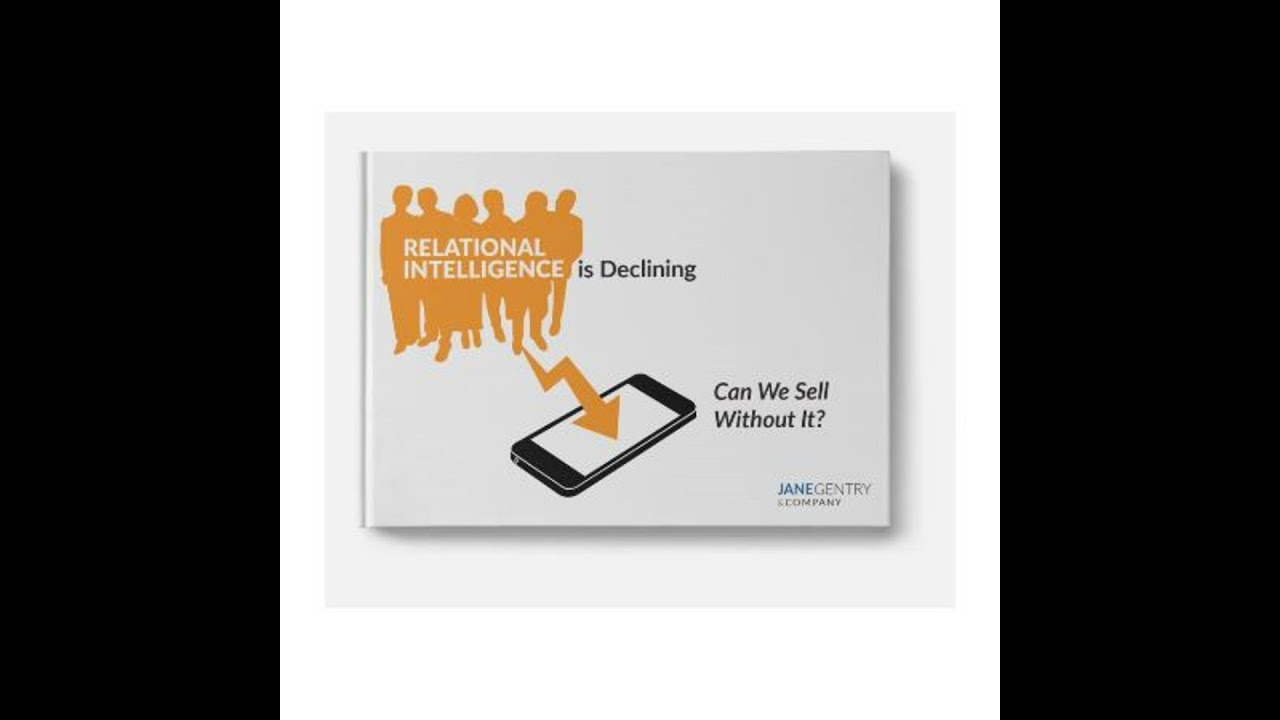
Jane Gentry, a 30-year sales veteran, explains why everyone is in sales and how to do it better. She argues that data alone isn't insight, that you need to enter the buyer's decision cycle early, and that the next generation of salespeople lack social intelligence: emotional intelligence, empathy, and conflict handling that training alone can't fix.
Chapters
Hello and welcome to Shedding the Bitch Radio, where you can discuss, debate, and get advice on how to discover and shed the bitches of fear, insecurity, self-doubt, and negative mindsets so you can realize your dreams and life purpose and create and accelerate the riches you want in life. Join us here live every Tuesday at noon Eastern and dialogue with us at 818-572-2910. You can also chat with us at blogtalkradio.com/sheddingthebitch or share your stories on our website at sheddingthebitch.com. Whatever the is that's holding you back from living your life to the fullest, it's not worth giving up the riches in life that you deserve. So call in now and let Bernadette Boas know what's holding you back. 818-572-2910.
Good day, good day, good day everyone, and welcome to Shitting the Bitch Radio. Yes, it's Bernadette Boas, and I am in studio today with our guests. So when you get to see this on YouTube, you're going to see the smiley face of Jane Gentry, our guest for today. Say hi.
Hi.
And we'll get back to all of that in just a minute.
Happy, happy Halloween, everyone.
Now I know we have an international audience, so it might have been yesterday. It could be tomorrow. Whatever. But happy, happy Halloween.
Woo!
Are you doing anything for it, Jane?
You know, I canceled the whole thing because it was going to be cold out tonight. I usually host a party in the driveway. And my sister and my niece, who's 15, when I told them I canceled it, completely reprimanded me as being very crabby and uncool. So it's back on.
Oh, cool.
There you have it. Yeah. Oh, cool.
I might crash.
Kind of an annual thing. And I was like, no, I'm tired of sitting out in the freezing cold weather hanging out with you.
It's going to be nice.
Is it?
Yeah, it's going to be nice. It's going to be like 60.
Well, there you have it.
Yeah, so you'll have a beautiful, beautiful day.
Yeah.
I kind of turn off the lights. You're one of them.
And hide.
Well, I'm up on a hill and it's dangerous for kids to come up on my Fleet Steps and I don't need accidents and liability. So I turn off the lights and, you know, keep walking.
Well, we'll hand out the candy that you don't.
Yeah, there you go. There you go. All right. Well, happy Halloween, everyone. Please be safe, but have a lot of fun. Okay? Safe and a lot of fun. Hey, Deborah, are you with the kids tonight? Getting out there? She's on mute. Interject anytime you want, Deborah. But yes, have fun, everybody.
Sorry, I've got my kids. That's okay.
Poor girl. Are they going as anyone fun, anyone exciting?
They are going to be ninjas, more precisely LEGO Ninjagos.
Oh, because that is a big thing in our house right now.
Yeah, never go out of style.
They never get old. They don't. They never.
I'm telling you, the ninja is never a bad choice.
Yeah, girl or boy.
No, right?
Yeah, girl or boy. Yes, yes, yes. Um, well, on to other news, um, because we talk a lot about just, uh, women, women empowerment, lifting up women, rising up women, leaning in women, standing up women. So obviously with everything going on around the sexual harassment, you know, accusations that keep popping up from, you know, not only the Harvey Weinsteins, but now the Kevin Spaceys, but also of the industry. Meaning, you know, there's business professionals from— we all know about Uber, but then there's been people from Google, and there's been men from all kinds of industries that are getting called out because men and women are really kind of standing on the shoulders of those that have come forward.
Yeah.
To really kind of, you know, put it out there. And I am just curious, and Deborah, if you would kind of pose a question out there in regards to this. But I am just curious of what your thoughts are in regards to it. Because sometimes I sit there and think to myself, now I, I am a Me Too. So #MeToo is the popular hashtag to use if you have had a situation of sexual harassment of any kind. And I've had several. I don't, I haven't even talked about them a lot, although this has kind of given me more security and confidence to do so. But anyways, at the same time, I am kind of on the fence about calling people out 25, 30 years later, yet at the same time, And more so because, you know, was it really a one-time incident or a drunken incident or a— and it's no excuse, trust me. It's no excuse of the personal torment and psyche that I've dealt with even myself over the decades. Because mine, my very first one was when I was in my young teens. So I, you know, I'm not excusing it. I'm not defending it. At the same time, I'm just kind of like unsure about whether or not one situation with someone makes them all of a sudden they're using the word predator for everybody.
Well, Bernadette, my first career was as a professional actor. This is not new.
No, no, no, no.
In that industry or in the music industry or any entertainment industry business. It just, I think, maybe as the women have gotten to a point where they are able to get past the shame and the fear. And that's the thing in any abusive situation that holds people back is the fear of their careers, losing their career in some way, and just the shame of that.
Absolutely.
So I think it's great that— first of all, I think it's great that some of these women are speaking up.
I do. I agree.
Especially with the more recent situation. At the same time, I think it's a shame that some of these actresses and actors who are no longer in a place where their career would be in jeopardy for speaking out about some of this have not done it.
Yeah, true.
Very true. That's sad because it makes it— it gives permission to people to do that.
No, I agree with you. And, you know, and like I said, I definitely want people who are, you know, causing this type of harm— mental, emotionally, physically, spiritually, whatever the case might be— I want them called out on it. I just want to be careful that we use the appropriate words. When we do so. Because, you know, without being in all those instances and being part of them, you know, accusing someone of being a predator is very different of accusing someone of bad behavior.
Agreed.
You know, corrupt behavior even.
Agreed.
One time. If it is one time. So I just, that was the only thing that has been bothering me about some of these reports that are coming out. But I'm so, and so my point of bringing this up is that it is giving us an opportunity, ladies and men, to not only do it as far as our sexual harassment situations, but even doing it as far as our discriminations and our being held back and being repressed, our voices, you know, in business and in our lives. It's a great opportunity to leverage it and use it for confidence and courage to kind of bring up situations that are not in the best interest of anyone, but of you specifically.
Yeah, so, and I think too, I think we have to take control of what we have control of.
Mm-hmm, great point.
One of the times that I was treated very unfairly because of my sex, I quit and took all my clients to a different company. I mean, some things we have control over. We don't have to stay in a situation like that. So you have to take ownership of what you own, right? What you control, right, and not give ownership of all of that away to somebody who may be treating you poorly.
Absolutely. And I have to admit that I kind of did that in my— the situations in my teens. In my 20s, late 20s specifically, when it came to a couple of business situations and then it came to a cop situation, I put it out there. I was not afraid of losing my job. I was not afraid of being, you know, condemned or harassed because it was just too, too important and too critical. So I did reach out to HR. I did reach out to some supporters. And thank God I was very supported and I was believed. And so that was, that kind of helped kind of quell some of the other shame and crap that comes out of those type of situations, quite honestly. If I want to be honest about it. All right, so I just wanted to bring that up. And let's leverage each and every day that we're all working to support each other and lift each other up. Let's just continue to do that and hope that it'll make this world a kinder, kinder world. Mm-hmm. All right, just a shout out, because I know my core posse tunes in. So happy early birthday to my little sister Patricia.
She turns 50 tomorrow. Oh my god.
On All Saints' Day, and she is a damn saint. Love you to death. I do, I do, I do. And hugs and kisses to you. I wish I was there to kind of smack you on the butt and go, hahaha, now you're on the dark side along with the rest of us. So that's that. And then I am so excited, and it's a shout out to everybody. And Deborah, I don't even know that I've told you this. It's a shout out to everybody in the Shedding the Bitch community who have supported me for the last 4 years through my ups and downs of writing my screenplays and my television series all around shedding the corporate Bitch, turned it into Confessions of a Bitch. And I am going to LA next Monday for pretty much the week to pitch it out there to executives from all kinds of studios and television networks and streaming, you know, organizations. And I'm so excited. I just firmed it up late last night and early this morning. So thank you to everyone. But I'm going to continue to need your support and your cheerleading because it's a very roller coaster type of—
it's a hard business.
It's a hard business. And then there's ups and downs, and yet my heart is so, um, in the right place, uh, when it comes to all this hard work that I've been working on. So I'm very excited. But thank you for all your support in regards to that. Okay, we have an exciting program, and I want to make sure we can get into it. So I'll introduce the, the program discussion. We met Jane but we'll do that again. Um, and then we're going to take a break, and then we're going to come back and dive into the conversation. So we're talking about overcoming your biggest challenges of sales growth, of selling, basically. So whether or not you're a solopreneur or you're a stay-at-home mom, or even if you're a corporate professional, uh, as a sales individual or a sales leader, it's really important to understand kind of what is and what are the trends and the must-dos, so to speak, when it comes to selling and growing your sales, and what are the critical things that need to be paid attention to. And that's what this woman is all about. So the description of the, of the topic is going to be all around sales leaders, like I said, solopreneurs or corporate leaders searching for the secret sauce, the combination of things that will drive sales growth in their organization and business. But it's no secret there are clear drivers of growth, and Jane will share what you should consider when determining whether or not you can grow with the sellers, processes, and development strategies you currently have in place. Maybe there's some changes you need to make. So I want you to be listening for the specific lever she's going to discuss that drive growth in your organization, your business, your household? 'Cause even, you know, you moms out there, stay-at-home moms that listen to the program, you know, you're selling yourself when you go to try to, you know, get a new car, or when you're going to PTA and you want something, you know, done, you know, in your community. What are the top-performing organizations doing that others are not? And what are the attributes of the most successful salespeople?. And this definitely is going to be, you know, you want to be listening for, for those, um, attributes, uh, and determine how you can kind of embed them in yourself and your team members and those around you. Now, your rich question— I always give them a question to be thinking about while we're having this discussion— your rich question is, what is your biggest challenge when it comes to selling and that growth that you're looking for? Um, a lot of people think they know what it is, and yet they're really kind of brushing over what the core, core issue is. And this woman can kind of tell you whether or not you're, you know, you're hitting on the right levers or not. So I want you to be thinking about it, and I want you to be honest with yourself, and because it's going to be in the best interest of yourself and your team and organization. So what is the biggest challenge when it comes to selling? Your rich tags, selling effectiveness, selling or sales. You can pick one, Deborah, but, and everyone else that's out there selling, sales, selling effectiveness, and of course, #ShedTheBitch. Hashtag with us on Facebook and Twitter. Deborah's out there. And of course, if you're listening to this downloaded after our live broadcast, obviously you can continue the conversation out on our Facebook and Twitter pages of #ShedTheBitch. All right, now, and before we go, I want you to go and do some Googling and searching on Jane and her organization. So go to JaneGentry.com and kind of read her profile, see her proven methodology, which I'm also going to want to talk to her about, and the systems and the things that she uses with her clients. And also be sure to look for her Twitter and Facebook and LinkedIn social network hashtags. Hang— what are they called? And handles, thank you, handles. And I'll make sure you know them when we get back from our break. All right, so when we get back, we're gonna dive into this conversation about sales effectiveness. We'll be right back.
You are listening to Shedding the Bitch Radio with Bernadette Boas. We are inspiring individuals around the globe to discover, confront, and shed their bitches of fear, insecurity, and negativity. So they can create the riches in their career, business, and life they deserve. Be sure to check out Bernadette Boas' book, Shedding the Corporate Bitch: Shifting from Bitch to Rich in Life and Business, available on Amazon and sheddingthebitch.com. We also want to thank our sponsors, TSR Consulting, who offers a broad range of tax services for small to corporate size clients. Go to TSRConsulting.com to learn more. And Parker House Virtual Services, who provides virtual assistance and social media support for small to medium-sized businesses. Email Deborah Parker at deborahparker78@gmail.com for more information. To become a sponsor or advertiser on our program, email us at mediarelations@sheddingthebitch.com. Shedding the Bitch Radio airs every Tuesday at noon Eastern Time. Be sure to go to blogtalkradio.com/shuttingthebitchradio and follow the program for all of the updates and announcements of our guests and show topics. Now let's return to Bernadette and Shedding the Bitch Radio.
Welcome back everyone. I am in studio with our guest today, Jane Gentry, and for those of you listening listening, you're going to be able to check this out on our YouTube channel by day end tomorrow. All right. So some of you like to look at our pretty faces as we're talking, and others like to download us and take us with them, and we love all of you for it. All right. Let's introduce formally Jane, and then let's dive into this conversation. So Jane Gentry has had a successful 30-year career in sales, sales management, consulting, executive coaching, and keynoting. Since forming her practice in 1999, Jane has partnered with her clients to improve sales, profitability, client retention, employee retention, and leadership capabilities. The world's most successful organizations have brought Jane on board, including Assurant, The Home Depot, Milliken, Philips, Coca-Cola, Lido's Healthcare, Mercedes-Benz, Stryker, and GlaxoSmithKline. Today, Jane is bringing her expertise to leaders in the middle market organizations and providing them the resources they need to drive sales growth. She uses rigorous, data-driven, validated diagnostics that provide a clear strategy and results, and her clients often experience 10 times return on investment. Jane is also a regular on the speaking platform at high-profile meetings from Canada to the Czech Republic.
Sweet! That's pretty cool.
She addresses topics from relational intelligence to inspirational leadership to selling value. Audiences and clients have described her as a woman with a vision, energetic and inspiring. Jane holds a BFA from Kent State State University and an MFA from the University of Pittsburgh. She also holds a CPI, Certified Professional Innovator, distinction from Georgia State University. Earlier in her career, she was a professional stage actress. She mentioned that before. That is so cool. And Jane lives right here in Atlanta, Georgia. Woo-hoo!
Are you a dog fan?
Or are you one of those—
Oh, no. As soon as I got divorced, I didn't ever watch sports ever again. Are you kidding?
The beauty of the world.
I watch golf and tennis.
I don't really watch tennis, but I watch golf every week. Yeah, couldn't care less.
Oh, that's hysterical.
I love football.
Okay, I watch a Steelers game, but that's, yeah, that's about it.
Oh well, I'm from Philly, so I don't like them anymore. Um, I love this subject around sales, and the reason why is because just the opposite, I'm one of the people who hate to sell.
Yeah.
And yet I've, you know, being a business owner, I've had to kind of get my, you know, get over that, get over that. So what are those challenges? And I wanna talk two things, challenges that individuals face when it comes to selling, right? And then how that translates to then what happens in their organizations or on their teams or in their own business, right? That impact. Um, but what are the challenges that you're seeing?
So I would say for individual sellers, the biggest thing is that sales have definitely changed in a lot of ways from when I first started selling. And thanks to my mom for that wonderful bio. It sounds like my mother wrote it. Wish the 30-year part wasn't in there because it kind of ages me. But, you know, back when I started selling, frankly, I didn't even know a lot about my clients' products and I was very successful. That is not the case today. You can't do that, right? Um, so there are some very specific areas though that are different. So the first thing is we are now aligning— you know, every company, every salesperson should have a sales process. We pretty much got everybody on board with that today. What the best companies are doing though today is aligning their customers' buying process with their selling process.
Oh, nice.
So, um, our clients sometimes buy a little bit differently, so we have to be able to adjust the way that we are selling to them. So that would, that would be one thing I would say for salespeople. Secondly, don't fall into the trap of thinking that sales is not a relationship business anymore. You know, I've read some articles that say relational selling is dead. I would call bull— baloney on that, right? So relationship selling is different in that, yeah, people don't buy from you anymore because your kids are on the same soccer team. That's not going to happen, but we still have to be great relationship builders, and those relationships are looking a little bit differently. We're starting relationships online, we're starting relationships using technology, but we still can't fall into the trap of going wide and shallow with those relationships. To really build client relationships, you've got to be able to go deeper. You've got to be able to add value to that person the way that you add value in your personal relationships. All relationships are kind of a bank account.
Mm-hmm.
We deposit and we withdraw.
Yeah, I love that analogy.
Sellers are constantly depositing value into that account with their customers.
And so is it as simplistic anymore as people want to do business with people they like, know, or trust, or is it even deeper than that now? No, no, it's the same.
It's the same. In that, in that, in that—
Respect?
Yeah, thanks for lost my words.
I do it all the time.
Now that is my age, right? Yeah, so in that sense it is the same, Bernadette, but in addition to that, clients are looking for people that help them solve problems, that add value to the situation, and the way we used to add value was to be the expert in our industry, right, and to go and tell them, you know, we were solution providers to our customers. Well, we can't do that anymore because they probably know more about the situation than you do before you even walk in the door. That's another thing that has changed in sales. So it's harder and harder to add that value because customers are so knowledgeable about the industry, your competition, what they need to solve their problem.
And is that because of the availability of information?
Yeah.
Is that, is that because they're doing their own research, they're doing their own problem solving?
Yeah.
And then they're just looking for someone to now you know, bring them a solution to that.
Yeah, so I think the statistic is somewhere around 78% of the buyer's decision has already been made before you walk in the room.
Oh wow, oh wow, yeah, that's huge.
Yeah, so the best sellers are trying to figure out how to get way early into the sales process ahead of everybody else so that they can start to define the problem with the customer.
Interesting. And what kind of challenge— so what is that doing to the salesperson as far as combining that relationship with their, you know, what— especially because if you're my age and you're used to being a solution salesperson, but one who is a subject matter expert, and then adding relationship to it, it sounds like, well, that's kind of being turned on its head now because you have to take out the fact that the customer is now a smart as they are, right? They're the subject matter expert in a lot of cases, so that leaves relationships and then just knowing their product that they're bringing to the table.
We have to be, as sellers, so much more informed, so much smarter, and such better business people than we had to be when I started selling.
Interesting.
The most successful salespeople are taking the customer back a step and saying, here's an endgame that— here's an end result that you're not thinking about. Here's a problem that's going to happen that you're not thinking about. So we're kind of redefining, to the best of our ability, that problem for the customer. Otherwise, we're all commodities. Right, right. Right?
Right.
And even if your product is a better product than somebody else's, selling products head-to-head still makes you a commodity. And commodity selling is not gonna get you a really great pipeline.
Well, that's not the value, right? So talk about the value you talk— you mentioned, because the value is going to be what differentiates commodities. You know, what is the value? Is that Is that quantifiable ROI as a result of your product or service that you're providing, that you're able to quantify or qualify the return on investment? Is that kind of— now everybody's paying attention to that?
Let me give you an example. So there's a company, a big company in Atlanta that I was doing some work with, and part of it is having this— and you said something in the intro that struck me, and I don't remember exactly what it is, but it had something to do with what I thought of is this idea of being self-aware. Part of the problem with companies— he said something to the effect of, you know, you think you know the problem, maybe you're thinking about it incorrectly.
Oh, right, right, right.
And it's this idea of having self-awareness, right? What life is all about.
—helpful way.
So, part of— so, I was starting the story and then I freaked— flaked out on you. So, this company thought that their problem was that their salespeople were poor presenters. They thought that they would go into these meetings with this client that were supposed to be joint business planning meetings, and they were doing a very poor job of presenting. The reality is, it— yeah, they might have been Poor presenters, they probably could have done better, but that wasn't really the root of the problem. The root of the problem was that they weren't adding any value to the customer, right? So they kept talking about insight, insight, insight. And in these big consumer companies like Coke— wasn't Coke, but like Coca-Cola— insight is a term that they use all the time. And so I asked them, I said, "What kind of insights do you have?" And they said, "Well, we had this, we spent half a billion dollars last year with a company helping us craft insight." And I said, "Great, can I see that?" So I got this 100-page PowerPoint deck.
Love corporate.
Oh my gosh. And I looked through it and I said to them, "Great, so can you tell me the insight?" And they said, "Jane, you're looking at 100 pages of it." I said, "No, I'm looking at 100 pages of data." data. What you infer from the data is insight. Wow. And so they weren't really arming their sellers with what they needed to really bring that value to the customer. Customer has a crapload of data, right? They probably have more data on that topic than you do. Yep, yep. They don't need you to bring them data. They need you to bring them vision. And when I say vision, what I mean is they need you with all of the industry knowledge that you have from even other clients that you work with. You have a viewpoint that, that these clients don't have in that you see either what all their competitors are doing, or for some of us, we work in a variety of different industries. You see best practices of other industries, and they're looking for that kind of vision, right? So what might I be missing? What might I not know about that's coming down the pike in the industry that I'm not preparing for right now? That being the customers not preparing.
Right. And that you have that extra vision.
You know that, yeah.
And that insight. Now, and at the same time, that's really relevant when it comes to any entrepreneur that is servicing corporate. 'Cause they have such a different view, a different vision on what the world looks like. And that corporate is so kind of tunnel vision sometimes.
And so you can't take that for granted, right? Yeah, I tell young sellers all the time, look, I used to be terrified to walk into a Coca-Cola, like almost till I was 40. I would think to myself, oh my God, these people are gonna find out that I don't know diddly squat about what I'm doing, right? I'm faking my way through sales. I would be terrified to go into these big companies, and especially the more consultative the product I sold, the higher I was up on the food chain in these companies, and I would think, "Lord, just let me get through this meeting without these people figuring out that I don't know anything." You're not alone. I know. You're not alone. What I realized though, more and more, is that trust me, they have it less together than you do. And, and that is the truth, right? So you go into some of these big— here, I'll give you a perfect example. I went into an enormous— a brand everybody knows— into their offices, and they said, we've got this awesome new sales initiative, we're so excited about it. I said, great, what's it— what is it? They said, we're calling it Customer Back. Tell me more. We're going to go to the customer and we're going to ask them what their what their goals are and what their challenges are and what are the things that are holding them back from meeting those challenges. Then we're going to come back to our office and we're going to craft our solutions around those problems. Yeah, I see you making a face. So like, I had a very hard time not going, well, the rest of us have been doing that for 30 years. What the hell are you doing, right? And so I did say to them, without the what the hell are you doing part, I said, what What have you been doing?
Right. Oh, great. See, that's a great question versus what some people might say.
Yeah. And they said, well, we are so-and-so, fill in the blank. We go there and say, how much do you need? But right now they're getting their butts kicked in the market. Yeah, sure. So they cannot be that way.
So they're finally picking up on what people have been doing for— how— oh my gosh, since I was 25.
And I'm telling you, this is one of the top 3 brands in the world, and you would think as a salesperson, you'd walk in there and go, "Hope I can add value to these people because they've really got it together." No, they don't. And so, um, so, you know, the next part of that conversation, I said to them, "Well, tell me what your processes look like." And their processes were all them first. So the second question was, "What makes you think that you are going to get customer-first behavior When you put your salespeople into your company first, and not in the process, yep, right, it's— and that's a no-brainer. It is a no-brainer. It's a, you know, you would think when you walk into these companies, boy, they've really got it going on.
Yeah, but you probably have also seen though that not only do the corporations not have it going on, as you say, But even, you know, those individuals that go out there on their own, they get also in their head. You know, those that have businesses of their own, they also get in their head that this is about them and not about the customer. Did you— don't you see that? To where they also have a, have a challenge in getting rid of their desperation and their need to close a deal and their need for income and just completely always make it about the customer and put their needs and wants out.
Do you see that? And salespeople in general do that, right? Right, because we're compensated based on revenue. And so this is going to sound very, very fairy to you, but it's proven, and I can prove to you by my own career, the minute I stopped thinking about my, my goal number I had to hit, or I stopped thinking about my pocketbook and how much money I was going to make, and I started 100% focusing on making my clients successful. Like, the thing I, the thing I put forth in front of myself was, I want to get my client a promotion. Mm-hmm, absolutely. That's the value that I want to add. The minute I shifted my mindset that way, I tripled my income, probably, on the low end. It's really just, it's a mindset shift, but it is a mindset, it's a shift that takes some courage because it's hard to not, you know, your boss is pounding that number into your head, which is a whole other problem on its own. Or your family's not eating. Managers are focused on weight, totally the wrong thing, but beyond that It takes a little courage to focus on that. It requires a little bit of a different perspective as a salesperson. What am I focused on? What's it going to take to make my client get a promotion? But making a shift like that changes your whole career.
Yeah, I went with the— I kind of grew up with that whole philosophy, and I won't get into it, but I also have learned in the past, like, 8 years, 9 years and I carry it around with me all the time, is serving others serves me. Now at first when I heard that statement, and it's right out of the Bible or whatnot, but when I heard that statement, I thought it was very selfish. Well, if I serve others, then I'll be served. And it kind of bothered me for a long time. And then I just started sitting with it, and like you said, really just kind of stop being so desperate, stop being so scared.
Well, you give off desperation pheromones or something. You do. A person can spot that desperation a mile away. I, you know, I give this advice out a lot. You gotta fake it till you make it. Yeah. Honestly.
I mean— Hung over my desk for years.
Really. And so whatever it takes, a coach, a class in presenting, a sales expert like Jane. Yeah, whatever it takes for you to be able to walk into that room leave your ego at the door, leave your needs and desperation at the door, and completely focus on what's it going to take for this person to succeed. Because trust me, they want that too. They are desperate for you to provide that for them. And they'll pay for it. And they will pay for it.
And therefore you shouldn't be as desperate and whatnot. Put their, put their, their goals, their needs first, and everything else will take care of it. Take care of it and take care of you. Well, I want to hold— can you hold that? Yeah. Okay, because I want to take a quick break, but I also want you to go to JaneGentry.com and really look over her website, look over her resources, look over who she is. Be sure to link in with her. Just go to Jane Gentry, you'll find her. Her Twitter and Facebook— I love people that make it easy on us. If you just Google her, Jane Gentry, you're going to find her everywhere. So she's very hooked in, she's very LinkedIn. Like she said, she has some top, top, top companies that she works with, but at the same time she works with the middle market, and I'm sure she has kind of a flurry of other clients in that mix as well. So don't hesitate thinking that she's dealing with just the big guys.
Right, we're actually moving away from enterprise companies. There you go. So, JaneGentry.com.
We're gonna take a quick break. When we get back, we have a lot more to talk about. And so we're gonna take a quick break, and when we get back, we'll continue with our Sales Effectiveness conversation. We'll be right back.
You are listening to Shedding the Bitch Radio with Bernadette Boas. We are inspiring individuals around the globe to discover, confront, and shed their bitches of fear, insecurity, and negativity so they can create the riches in their career, business, and life they deserve. Be sure to check out Bernadette's book, Shedding the Corporate Bitch: Shifting from Bitch to Rich Shedding the Bitch in Life and Business, available on Amazon and sheddingthebitch.com. We also want to thank our sponsors: TSR Consulting, who offers a broad range of tax services for small to corporate-sized clients. Go to TSRConsulting.com to learn more. And Parker House Virtual Services, who provides virtual assistants and social media support for small to medium-sized businesses. Email Debra Parker House at DebraParker78@gmail.com for more information. To become a sponsor or advertiser on our program, email us at MediaRelations@SheddingTheBitch.com. Shedding the Bitch Radio airs every Tuesday at noon Eastern time. Be sure to go to BlogTalkRadio.com/SheddingTheBitchRadio and follow the program for all of the updates and announcements of our guests and show topics. Now let's return to Bernadette and Shedding the Bitch Radio.
Welcome back everyone. I am in studio with Jane Gentry. She is a sales guru and she can do it for you too. Go to JaneGentry.com for more information. We're talking about overcoming the biggest challenges of sales growth. At the same time, before we went on to break, she was about to give you a resource.
Well, a couple things. We were talking about clients will pay for it. Yes. So one of the organizations that I belong— I'm not much of a joiner, I'll be honest with you, but I do, I do belong to a particular organization called Women Sales Pros. Women Sales Pros is about You have to be invited to join, so it's a very small organization, probably under 100 members. It's women who own practices like mine in sales. Some are bigger than me, some are smaller than me. We all have different expertise around sales, but the point of that organization is to promote women in the sales business, right? There aren't enough women in sales.— and statistics show that women, frankly, are better salespeople. And so, not being sexist, I can show you the data that says that hiring women would be better for your organization. But one of the things that we are constantly telling, especially women in business, is don't be afraid to charge what you're worth. One of the things that I tell women— and it's not mine, it came from one of the ladies in the group— is figure out what you think you should charge, turn that into a scary number, a number that you are very nervous about putting in front of your customer, add 10% to that, and then give it to your customer. Amen! We are hurting ourselves by not charging enough, and we're worth it, frankly. Yep, I love that. So that's one thing. The other thing is I just wanted to give your listeners and your viewers a resource where they can get a ton of free coaching from experts that you normally have to pay a lot of money to get in front of. It's called the BrightTalk channel, brighttalk.com, B-R-I-G-H-T dot com, and you're looking for the sales channel. Somebody asked 100 sales experts this last year, a lady named Deb Calvert, this was her inspiration. She's a top sales leader, she's a fantastic lady. Deb reached out to 100 sales leaders and said, would you provide a minimum of 2 free webinars on this channel this year? And of course we all jumped on to support Deb because she's amazing and she's a great contributor to the industry, but you will find people on there that you cannot get in front of, and you certainly couldn't get in front of all 100 of them. There's a lot of great content on there, so tool around in there. I don't know if it's going to happen next year, I don't know if that content will still be available next year, but I have been introducing everybody to that because the BrightChannel.com, right, top The Bright Talk. Oh, the Bright Talk. Yeah, the Bright Talk, brighttalk.com, and then there are several channels, so you're looking for the sales channel.
All right, right, well, we'll fix that, Deborah. We'll get, get on to that. Right, brighttalk.com and look for the sales channel.
That's awesome. Oh yeah, I mean, you're awesome.
Well, awesome, awesome.
I'm one of 100, so I don't know that I'm that awesome.
You're awesome for sharing. We love people that share. Yeah, um, you mentioned in our early part of the conversation about the young salespeople and what you tell them and whatnot. So how will the influx of the next generation change and impact sales organizations, sales teams, even, you know, just the engagement of selling? How will they change it?
Dramatically. That's the short answer. All right, we're done. We're done. So we're doing a lot of research on that right now. Really, really the impetus of that was the complaining that we're hearing from clients about young people. And, you know, we— everybody's referring to them as millennials. Well, millennials are 35 right now, so we've got even younger people than millennials coming into the workforce. I just refer to them as next gen, the next generation. What we are finding in our research— so first of all, let me just say this. I'm not the millennial whisperer. Me either. Me either. Don't email me and ask me why millennials are bringing their mom to their job interview or anything like that. I can't answer those questions for you, and I get that a lot. What I care about is how young people are going to impact sales, and what we're finding is that there are some pretty big gaps in skill sets that didn't seem to be a big problem in the past. Hmm, interesting. The majority of those gaps are what I would categorize in the category of social intelligence. And we could talk all day about why that happened. The short answer is technology and letting technology be our master instead of our servant. But the biggest opportunity for people who have young sellers in their organization is to understand what these skill gaps are, to treat them like skill gaps, because that's what they are, to get past the stereotyping, the biases that we have about millennials, and figure out the things that we have control over. And we have control over upskilling them. Uh, and so making that a serious part of your development program of your salespeople. Interesting. And, and I'll tell you what those are in a second, but first I want to get on my little soapbox for a second and just say sending somebody to a training program is not development. Sending somebody to training program has never in the history of the world changed the behavior of one single salesperson. That doesn't do it. So here's how I want you to look at training. Training is Content delivery. Training says, "These are the things that you should do." Development happens when they're out of the classroom. And applied. Yes. Development happens with manager interaction and with manager engagement. So, if a manager's not engaged in developing salespeople, they're not going to get developed. So, quit sending them to training because it's not going to do anything unless your managers are reinforcing that, practicing those skills, putting those skills into your processes. That's my little soapbox on learning and development.
I have a similar one regarding certification.
That was the short one.
It's just, that was my— yeah, book learning. Yeah, that's applying it.
So, so that's one thing. But let me say this, the gaps around social intelligence are turning out to be very specific. One, emotional intelligence. So there are a lot of A lot of things that you can do to get that conversation started with them around emotional intelligence.
Leave your mother at home.
Yes. Leave your mom at home, number one. Number two, conflict, dealing with conflict. Now, nobody likes to do that. We didn't like to do it in our generation, but by and large, the level of anxiety in this generation just beats the hell out of any anxiety that we've ever had. So— Why? I would love to tell you that, but research says that millennials are more anxious than the same age group during World War I. Wow.
Well, I can understand that. I mean, with what I went through with my phone last night. Yeah. And they're so connected.
That's their whole identity. Yeah. Yeah. Yeah. Okay. So conflict, how do we deal with conflict? How do we manage difficult conversations? For salespeople, I mean, come on, that is one of the top 3 skills that you have to have. Absolutely. Another one of the top 3 skills where they are lacking in general is empathy. The ability of college students to empathize has dropped 40% since 2002. You can't sell if you can't empathize. And people say to me, can you teach that? Yes and no. Yes, I can teach you to read the signals that somebody's giving off and react appropriately. I can't teach you to give a crap, but I can teach you Right? It's true. I can't teach you to be in that environment with a customer and get a sense of what, where they are, what's important to them, what their body language is saying, what their vocal intonations are saying, and react appropriately. So empathy. Situational awareness. I'm a military brat, I use a lot of military terms, sorry. But situational awareness really means, am I aware of the fact that this situation with Bernadette is a little bit different than a situation I might have over here with a customer or a boss? Do I adjust appropriately to that? Am I able to anticipate what the, what the consequences of my actions are? Am I thinking that far down the road to say, if I do this, this is what might happen? Or if I don't do this, this is what might happen.
Or if they say this. Right.
And then another one would be, what I call rules of engagement. So you may or may not have heard of this young lady. I think her name is Talia Jane. She worked for Yelp. She was unhappy with her compensation. She was unhappy with her boss. She was unhappy about this and that. She wrote a scathing open letter to the CEO of the company. It went viral. She got fired. She didn't know why. Really? Really. Wow. Did not understand. And that's a pretty dramatic example, but managers are complaining all the time. This person's been here 6 months and they think she should get promoted. This person's been here a minute and a half, they think they should have an open door to the CEO of the company. There are— there's just a lack of understanding of the rules of engagement. Entitlement. It's all— well, I'm super careful about that because like I say, we have a lot of stereotypes and biases about them. I'm not necessarily disagreeing with you, but I will say that even the comments that I have made are a trend. So a lot of times when I speak to younger sellers, a lot of them come up and say to me— when I first said this, I thought, oh my God, people are gonna throw stuff at me. Seriously, they don't. The majority of them come up and say, you're kind of freaking me out how you're in my head. Ah, a small percentage come up and go, Jane, that's, that's baloney, I'm not like that at all. To which I say, of course you're not, you know, self-awareness, right? So think of, you know, Jack Welch's little GE example when he was talking about those of the people in the organization, 20% of them excel. 20% of them are the rainmakers, right? 20% of millennials don't need any help with this. 40% are that big group that we need to move. If we move it a little bit, it's going to have a huge impact. And then that other 20% are just the, hmm, can't help them, need to put them in a different job kind of a thing. So yeah, there are young people, Next Gen, that don't need this kind of help. But by and large, I would say if you can move the needle a little bit on some of these skill gaps with your new sellers, you will see a huge improvement in your— and also training your leaders about how to deal with this. We can't lead the same way that we've been leading. So, so that's part of it. We usually come into organizations from both ends because this really, at the end of the day, social intelligence is a little wormhole into a much bigger conversation around culture.
Yeah, no, it is. Well, in culture and leadership, because I will tell you that as you're describing all this, there's a lot of, uh, leaders, sales, whatever, are my age. I won't, you know, categorize us together, that they aren't even comfortable with all of these different things, let alone then have to manage and coach and mentor their, their, their teammates. And you let alone the 28-year-old Well, and leadership is changing.
That old transactional leadership, you do it because I'm the boss of you and I said that, that gets you nowhere. So, but self-awareness is another thing. When I say to leaders, this is the shift you need to make in leadership to be successful with— forget millennials, Gen Xers, right? They look at me a lot of times and they go, Jane, I couldn't have been promoted into this role if I wasn't good at those things.
Oh yeah, you want to bet?
To which I say, that might be true, but what I find is that more often than not, it's not true, right? That leaders have a severe lack of self-awareness. Absolutely. So if you think that's why you got promoted, I would challenge you to do an anonymous survey of the people that report to you and see if they see you that same way, because I would be willing to bet they do not. Amen to that, sister.
Amen to that. That's what Shedding the Bitch is all about, because it's all about the fact that we walk around in a fog and with a perception and a view of ourselves that are— is so untrue and untapped. I'd rather say untapped. And therefore, that, you know, self-awareness, people, self-awareness. And we could go on and on and on about this. And actually, she brought up two things that I'm going to have her back to discuss, and that is leadership, but more so the cultural shifts that are going on in the, in the business world. Um, all right, well, gosh, it always goes so fast, especially when there's so much here. And, uh, so you'll have this podcast, you'll have this video, and you'll be able to share it with your teammates, you'll be able to share it with your friends and your peers and your bosses, and come back to it on occasion too, to make sure that you can take these checklists of all the tips and advice that she's provided so you can start embedding it into not only your own behavior, but also your organization's behavior. Jane, thank you so much.
That was awesome. My pleasure. And what I would say is if there are topics that are interesting to your audience that we haven't talked about, and they look among the things that I've written and they don't see it, and they think it would be interesting for me to write on that, feel free. Don't Twitter me, tweet me, whatever. I rarely follow Twitter, but shoot me an email, Jane, and let me know what would be interesting to you, and I will do my very best to—
yes, she will. She is an awesome resource. Um, so yes, email Jane at JaneGentry.com, and of course her LinkedIn is actually— it's Jane M. Gentry, but you'll find her. I'm telling you, just see her face and she's everywhere. So, but do reach out to her and don't hesitate, big or small company, you know, shallow or wide, get your sales issues and concerns and questions addressed. Jane Gentry, everybody. Thank you so much.
Thank you for having me. You are so welcome.
And I can't believe that it is November come tomorrow. So what does that mean? Next Tuesday is our Ask Bernadette. Episode, so make sure you post your questions, stories, and challenges out on Facebook, Twitter, LinkedIn. A number of you will send me emails directly at BernadetteBoas@sheddingthebitch.com, or post them to any one of those forums, and we'll make sure that we bring them right here onto Shedding the Bitch Radio the first Tuesday of every month. That's next Tuesday. And then we have a packed house in the November-December time period to wrap up the year and make sure that you are doing everything that you can to shift from bitch to rich. Thanks everyone. Thanks, Deborah.
Happy Halloween.
Happy Halloween, everybody, and have a great, great week. We'll talk to you right back here next Tuesday at noon Eastern time.
Thank you for listening to Shedding the Bitch Radio with Bernadette Boas. Join Bernadette every Tuesday at noon Eastern as she helps you shift your bitch To Riches. And the dialogue is always going on at sheddingthebitch.com. See you next week.
A Napa guy knows more isn't always better, unless we're talking about full-size vans. These beasts do more than get you from A to B. They have so much space a man can live in it. With shag carpeting, water bed, and a sweet lava lamp, these mobile abodes have all the comforts of home. With quality parts and plenty of Napa know-how, you can keep the original tiny house running longer, stronger. That's Napa know-how. Napa know-how.
More from Bernadette



From Stuck to Leading, Episode 2 — Meet the 5 Inner Fears Destroying Your Leadership



