RICH Tip - Managing Difficult People and Situations in the Workplace
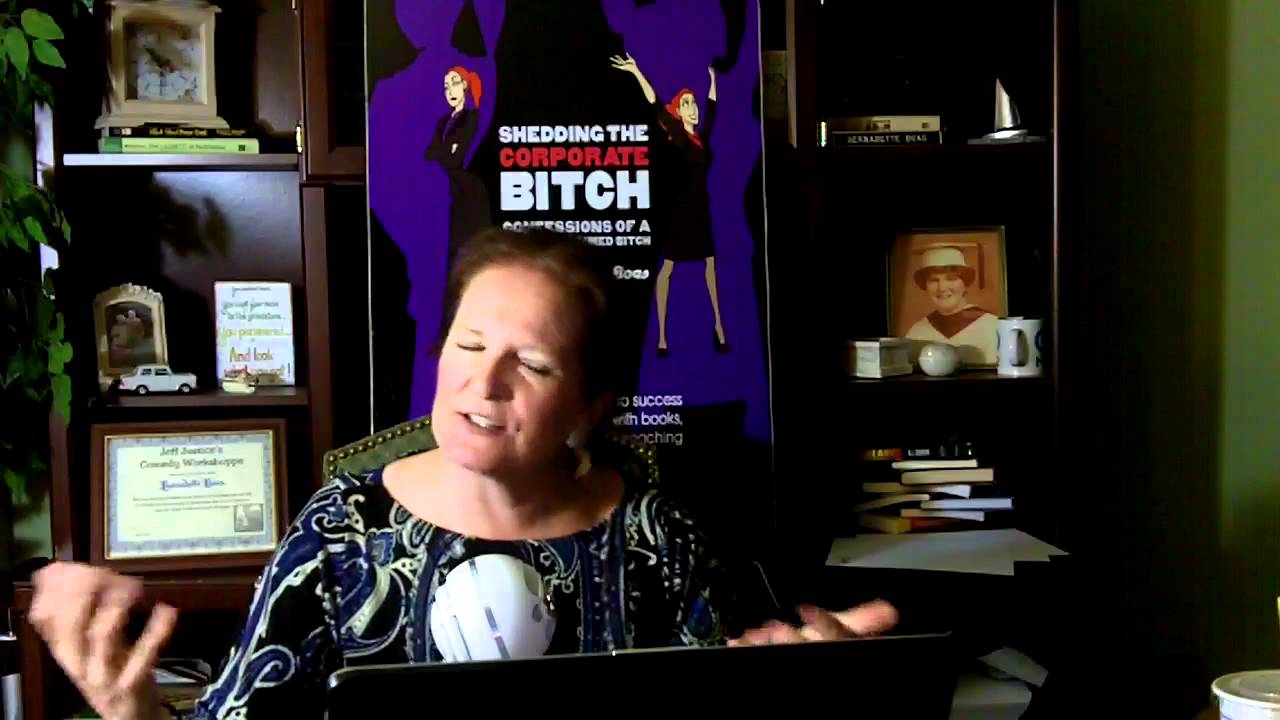
Bernadette Boas teaches how to handle difficult workplace conversations by shifting your own attitude and behavior, not by trying to change the other person. She offers a free 17-question self-assessment and practical steps like breathing, asking permission, and listening actively before proposing concrete solutions.
Chapters
Welcome everyone to the Shift to Riches program. My name is Bernadette Boas and I'm so glad you were able to join us today, whether you're watching or listening live, or you'll be listening and watching this on the archive. You can always go to sheddingthebitch.com and find it within our programs area. But I welcome you to the Managing Difficult People and Situations in Business and in Life webinar. This particular webinar is one of the most popular ones that I have done, and on occasion, like now, it will be asked of me kind of back to back, uh, just as a result of whatever my fans and friends and, and business colleagues might be going through. And therefore, uh, beginning the start— I guess we're 5 months into the, to the year We've offered it for a second time due to the high demand for this particular subject matter. So I'm so glad you were able to join us. And I am going to hit the Start Record button so we can make sure that we do get this captured, and we will kick off from there. But I want to welcome— but I want to welcome everyone to the Managing Difficult Situations and People in Business and in Life webinar. And we are going to get started with slight introductions and get to know who I am, as well as we'll then dive right into the subject matters. This is part of the Shift to Riches program of webinars that I hold every Tuesday afternoon at 1 PM Eastern time. So I welcome you to come back each week, or regardless of what week you join in, you won't be missing out on anything. And those that might be on one, a part of a series, we will always highlight the discussions from the previous event so you will be caught up in a very short period of time. And one of the things that I like to do within these programs, or at any time that I'm working with clients or speaking or just out and about partnering with business and personal colleagues, is I want to emphasize your ability to take what you learn in these webinars and to teach someone else, even if it's just one person. I even kind of throw out a challenge early on in this, in the program, to say if you do go out and teach even one of the tips that you've learned from today to someone else, let me know, acknowledge it, and you know, I'll share it with people as well. And you can email me at BernadetteBoas@BallOfFireInc.com and and just put in the subject line, I, you know, either regarding today's call, you can say teaching, managing difficult situations. You can just say, I taught someone today. Anything to kind of just help you to acknowledge your contribution to the world in helping to educate and pay forward in what you're spending time here, especially on this call for an hour, in learning and developing yourself. You also have the opportunity and the, the opportunity to help and educate someone else as well. So I welcome you to do that. Diving into it again, my name is Bernadette Boas, and those of you who've been part of the programs that I've been holding for probably about 2 years now know that I am determined and dedicated to educate and advise and just help in any way, shape, or form to ensure that you are kind of pursuing all those goals and the dreams that you want. You're able to live confidently and fearlessly and boldly. And as a coach and a mentor and a shifter, I really just take great pride in serving you. So, a little bit about my background is I do come from a long line or many years of the corporate environment, predominantly in management positions. In retail and technology, and that experience led me into consulting and coaching for some of the top retail organizations around the world for a good many years. And then I went out on my own 3 years ago and started a business and business consulting practice that then has allowed me to leverage all those years of helping to drive business improvements and business leadership into organizations to the small business owner and helping those that are really, whether they're solopreneurs or they have a business up to, you know, $5, $10, $15 million to really provide those corporate best practices and processes and learnings into the small business environment. And then from there, I kind of had some epiphanies in the time since I've left corporate, and I wrote my first book, Shedding the Corporate Bitch, to kind of share with you and acknowledge and take accountability for the type of person I was when I was in corporate, and especially from a management and leadership perspective. And I'm trying to educate and inform you or other people as to the dos and don'ts and the successes and failures that come along with a corporate or any type of business type of responsibility. So that allowed me and has allowed me to then spearhead all that experience from both corporate and my entrepreneurial background into coaching, consulting, mentoring, speaking, to small and large organizations, and I even initiated my own radio show this past year beginning in January called Shedding the Bitch Radio on BlogTalkRadio. And again, I'm just dedicated and determined to helping you shift or kind of shed all any negativity, fears, mindsets, angst, or attitudes that that you might have in your life that are holding you back as they did me in a lot of situations in my life, personally and professionally, and helping you to propel and leverage all those skills and talents you have into the riches that you deserve in life. And so that's kind of how I've come across these type of topics that have been important to my customers and my audiences and my clients. And one of them, like I said, managing difficult situations and people in business and in life, are one of those top in-demand topics that I'm being asked about. And I will openly admit that who better to tell you about that than an author or the person who definitely lived in a persona of somewhat of a nasty person. And created a lot of those difficult conversations, a lot of those difficult situations that you probably come across in your personal life or professional life. And therefore, I wanna help you understand kind of what's in the mindset, what was in the mindset of me, but what's in the mindset of the people that are creating those antagonistic or confrontational type of situations, and then how can you productively and proactively and effectively confront that situation or that person and deal with it in a way that you walk away— whether or not they do or not, but you walk away with a great deal of satisfaction as to how you approached it and how you handled it. And hopefully, it benefited you greatly as a result. And so, today's call, what I wanna— talk about is really understanding your role. Are you the antagonistic person or are you the one being antagonized? Are you the victim or are you the one causing the situation? Because that's important. It's important for, obviously, you to understand it because if you are the antagonizer, you want to kind of identify what's provoking that and getting rid of it. And I talk a lot about shedding any of that. Out of your person and out of your life so you don't have all that angst and that kind of negativity around you. Because as you probably hear and learn and listen to from a great many of experts out there, you know, what you put out in the world is gonna come back to you in the same way. And so what my goal is for you is to have that to be in the more positive affirming way as opposed to the negative. So you need to understand your role, plus you want to understand your role in order to then figure out solutions to the situation. I'm going to help you really dissect what a difficult conversation looks like, uh, because sometimes they don't start off in a difficult way and then they move to that, to that, uh, difficult or confrontational type of situation, or even just, um, stressful. And then some of them are full-blown outright conflict, and then therefore, how do you handle that and approach it and plan for it or plan to get out of it effectively? And then we want to understand the dos and don'ts for both parties, but more importantly, we're concerned more so about you here in this dialogue today. So understand what to do and what not to do to ensure that that situation is is prevented and/or is eliminated immediately. I'm missing the word there, but I'll come up with it. And then I'm going to give you a call to action because there are going to be tips and tricks that you're going to learn here today that you're going to be able to immediately act upon. And a lot of it, trust me, it's not rocket science. It is pure, simple basics, and it's pure blocking and tackling 101. So you might just have a little aha moment, or you might just, you know, just say, well, this is ridiculous. It's, you know, this is basic, you know, not very, you know, strategic brainstorm of ideas. And I have to tell you, conversing, as difficult it can be to converse with one another effectively, it really is— comes down to the basics. So you might walk away going, huh, that's pretty simple. And yet it seems to be so hard to implement for a lot of people. And then I'm going to invite you to not only the free programs that we have offered up within our business to serve you. We have a 3-week program coming up to really help you discover, confront, and shed any of those angst attitudes and negative mindsets that you might have so you can shift, shift anything that's happening to you toward riches as opposed to anything else. So I'll invite you to do that as well as You can always choose to work with me individually or in a group environment, and I'll talk about that briefly at the end as well. So kicking that off, um, please feel free at any time to send in your question through the chat function, and I would be more than happy to take them during the call, or I might choose to, depending on how well we're and how fast we're going through the materials, might choose to take them at the end, but please chat it up and send me your questions through the chat function within your GoToWebinar console. And if you are listening to this in an archive mode, then feel free to drop me an email at any time at BernadetteBoas@BallOfFireInc.com. And then the other objective or challenge that I'm gonna give to you, the first one was to teach someone else, and then if you'd like to acknowledge that to me. You can email me at any time. The other one is I do have a goal that I really want you to be able to walk away with this, with tips and advice as to how to approach conflict in a confident, positive way as opposed to an aggressive, defensive, reactionary way. So that's my goal for you. And if you learn one thing from today's call and today's webinar, I would love to hear it. I'd love to share it for you. I'd love to promote you and your tip to anyone else within my network as well. So feel free to also to email me that one thing that you walked away with from today's subject, and I will be more than happy to share it. So make sure I have your name and maybe your business or your area of expertise and any other kind of contact information you might want to share with my, my audience as well. I would love to do that for you. And put it in the subject line because one of them, if you're teaching and learning, you might put the subject line to be Hey, I taught someone today, and then this email might be, you know, I learned my number one tip that I learned today, whatever. But make the subject line at least apparent enough so I will recall which call or which webinar or which discussion you're responding to. So let's get started, and if my forward button wants to Okay, there we go. I love this quote. I thought this quote is very appropriate for our conversation around conflict today, and it's from William Jones, and it really touches on the, the core of what it means to you. Remember, we're only going to be talking about you today. How can you kind of manage and confront and approach difficult situations and people so you can walk away feeling good and satisfied with, with the outcome. But when— and his— William Jones's quote is, whenever you're in conflict with someone, there's one factor that can make the difference between damaging that relationship and deepening it, and that factor is attitude. And it's more, more so, he's stating, that's quote unquote, it's your attitude, it's your mindset, it's your approach to the situation. Because what I've learned over the years is how I approach things is how I'm gonna walk away and either feel victorious, so to speak, or feel like, you know, even worse than I did going into that situation. And again, I'm more so talking about if you're the victim as opposed to the one antagonizing. But we will go back and forth in speaking about both of those roles. And again, we'll talk about how you can understand what role you play in conflict or in difficult situations. But your attitude, as William states, your attitude about it is going to make the difference between success and/or failure. Not necessarily failure, I hate to look at it like that, but additional stress that is put on you will be decided on how your attitude affected that or impacted that situation. So we want to come into this with good attitudes. So I'll just stress that right now. But again, this quote is a great quote. Feel free to take it, share it, like I mentioned, teach someone else something from today's call and really share any of the content that you would, you would like. And if you would like the materials beyond the, the recording or the video that you might go back to and, and view, feel free to email me, Bernadette Boas, at ball of fire, inc.com, and I'd be more than happy to share, share the materials with you so you can also share it with other people. And feel free to take the materials and teach it. I mean, you know, I'm not, I'm not one to want to hoard my materials. Again, like I said at the beginning, it's not rocket science, you know, this, this topic. It just so happens that people don't take a minute to really focus on it. So that's what I'd like you to do. So great quote from William, and you'll find that in each of the webinars that I do, I always try to find quotes or tips from other individuals beyond my own. That you can learn from and glean something from. And if you've had been a part of my past webinars, and if you choose to participate in that 3-part webinar series we'll start next week, you'll hear me talk a lot about a methodology that I use to help people kind of shift their life from the situation that they might be in today— good, bad, or indifferent— to a kind of a mentality and an approach of riches. And today, since we are talking about dealing with difficult people and situations, we're kinda touching on the part of the methodology around confrontation. But it could be— not confrontation as to that communication mode of two people, it could be just confronting anything in your life that you need to deal with in order to have more of a positive, optimistic, confident, empowered mindset. Today's conversation is gonna— and topic is gonna help you with that, at least where you're concerned. And the one thing I was stating earlier that I had learned, you know, over the years is we can't change the other person. And when we try to, especially in a confrontational conflict type of mode, we end up being kind of shorted because that person, especially in a difficult mindset, is not looking to kind of change it. I mean, if they're coming at you or coming at that situation in a very aggressive, negative, uh, cup runneth over with, um, just pure attitude, then you're gonna have a very difficult time shifting them from anything from that from that mindset that they're in. So, what I wanna stress to you and what this call and conversation is about is what can you do to change your attitude, change your mindset, change your approach. So, the first thing that you would wanna do, and we'll talk about this in a minute, is to understand your role and understand how you are approaching those situations. So, that's where we'll talk in this space of the methodology around developing yourself personally in how you deal with conflict and stress and confrontation. And then, that'll spill over into what you can do in order to handle those situations in a more effective way. Alright? So, the— one of the first things I'd like to offer up is, as a free resource, is a self-assessment or a workbook around managing difficult situations. So, you can either copy this down, which it's kinda difficult to do so, or you could just go to sheddingthebitch.com/programs. No, I'm sorry. You can just go to my homepage on the website and you will find on the homepage this workbook. And it'll say free workbook, tips for managing difficult situations and people in business and in life. And feel free to download that, that workbook. What it will do is it will walk you through some questions that you can just assess what is your role in the situation or when it comes to conflict and difficult environments. Do you antagonize it or do you, are you the victim of it? And when you're a victim of it, do you approach it and mirror that other person? So, if they come at you in a very aggressive, angry, curt way or defensive way, do you mirror that? Or do you try to kind of relinquish it, or distinguish it— that's not the right word— and kind of put that fire out, so to speak, in order to get that person kind of calmed down or settled? So, do you productively approach it or are you part of the situation? And what we want, Our goal is to get you to be the productive side of that conflict or that situation, regardless of how difficult and aggressive that they're coming at, coming at you. So there's 17 questions that you can go and answer each one of them as to whether, you know, what your part or your role is. And then I provide you 12 tips for taking that assessment, so to speak. And getting it to work for you and approaching the conflict or the stress point or the stress person in a more positive, productive way. So, download that ebook. Again, you can go to sheddingthebitch.com, right on the homepage you should find it right there. And feel free to, again, feel free to share that as well if there are other people in your life or at work or in a situation that you might be dealing with that might benefit from it, feel free to share that, that workbook with them. And again, because what we want to do is we want to dissect that conversation, which we'll talk about in a minute, and then kind of come up with a plan and approach, whether it's a situation that occurs immediately or it's a situation that's brewing over time. All right, but I want to first stress, because it's brought up to me a lot, and I want to first stress The whole program around Shifting to Riches is really centered around the whole methodology around shedding the bitch. And yet, people get really turned off when, you know, some people get turned off by that word. And what I wanted to stress and point out is— and again, this is also gonna be very applicable to how you approach a situation. But the word bitch is in my world and in my— practice is not a person. And it might, you know, and yet we're here talking about people that create difficult situations, so you might want to call them and refer to them as that. However, that's not how we use that word. How we use that word is, what are those angst and attitudes, fears, insecurities, negative mindsets, belief systems that we carry around in ourselves that then are projected out onto other people, whether we are the victim or the antagonizer. And so, that's how I refer to— what I refer to as bitches. So, when you hear me say that, although I try not to use that word often, I tend to refer it to the mindset that we're in. Because again, like William Jones' quote that we mentioned earlier in the program, it's all about attitude. How our attitude, your attitude, the way you approach things. But I wanted to point that out because what we're looking to do is take it from that left side of that page, which for those of you who might not— who might be listening to this as opposed to watching it, there is a kind of a bitchy-looking graphic woman on the left, and then you— we want to move it to the happy side of it, whether you're male or female. It just so happens these are girls. But, so that's what our goal and our objective is, is to help you get into a more positive mindset and approach to difficult situations. And that's going to be key, so I'm going to mention it over and over again. You can influence a situation. Your attempt to try to change the other person in that situation is probably going to be self— not self-defeating. Probably gonna have you defeated before you even get started, because that person is probably approaching, um, that situation with you, that conversation with you, that interaction with you in a very defensive, aggressive way. And all the best thing you could do is control that situation or influence that situation by the, by the attitude and approach you bring to it. So I'm kind of putting the onus and the responsibility on you. So, you know, some people might not want to hear that because, well, that other person's causing me to get into that mindset, that other person's provoking me to yell and react and get mad or upset or cry or break down, whatever the case might be. It might be even a woman or a man standing in line who have standing in line and they butt in front of you, or, you know, they, they decide that, you know, they're, they're in a, on a time crunch and you're not, and therefore, you know, they interject. So it could happen in a split second, but you're— the way you kind of respond to that is going to influence how you walk away from it. You might not even ever kind of deal with them directly. You might just talk under your breath, oh, what a 'What a witch.' And yet you were in a great mood 2 seconds before that, and now you're in a kind of a negative mood. If we can get you to kind of think about the fact that as long as you stay in a certain mindset, regardless of what that other person's doing, you're going to remain in that mindset. So if you can wrap your head around that, because taking that example, what if you just kind of went, 'Fine, you know, that person can go because obviously 'You know, they have a mission, they're on a mission or they have an agenda and I don't need to deal with it. It's just not worth it. It really is just not worth it.' And therefore, if you kind of come up with that attitude, you know, I speak a lot, if you listen to my radio program or hear me speaking or on these webinars, you know, I speak a lot about my attitude and my affirmation and mantra to myself is, 'It is what it is.' and I say that all the time because it kind of really just helps to ground me more effectively and, you know, responding to things and reacting. So, but we'll talk about some of that, those affirmations or those tips and techniques in a little bit. So first, let's understand what makes up a difficult conversation, and, and keep in mind it could be different for you than to somebody else. I happen to be that typical Type A personality and happen to, like, not have an issue with confrontation or conflict. Now, of course, I don't want it, and it's not in my best interest physically, mentally, emotionally, spiritually, as it's not for you to welcome it. I don't welcome it. I just find that when I'm in it, I can deal with it more so than maybe some other people, and therefore that's what I want to kind of stress and point out for you and provide you some tips on. And then what difficult situations do you face? Because believe it or not, we talked very early on in the program, it's your mindset and attitude that you bring to it that might come back at you. So that whole Law of Attraction, you know, it's been so popular and well received simply because of the fact that it is proven over and over and over again. And like I said, you can practice this. You know, you can go out today and smile all day long and see the reaction people bring to you. Or you can go out with a nasty attitude regardless of what attitude you woke up with, but just pretend or act and go out with a nasty attitude and see what comes back at you. It's quite apparent when it happens. So, if you— a lot of times if you are in that negativity or angry or just fearful or lack of confidence and self-esteem, type of mindset, it might create situations that you're not even welcoming. So again, the approach and the attitude that you, that you take to it is going to make— be a great difference to how you handle things and how things come at you. So what makes up a difficult conversation? Well, a difficult conversation could be simply that you and your boss have a disagreement over something. That happens on a regular occasion. Now, it depends upon if you handle it in a, you know, in a kind of a negotiating, discussion, dialogue, conversation type of way, or whether you handle it— or whether you handle it in a defensive approach type of way will make all the difference in the world. And we'll talk about that in a minute. You might have been denied a promotion that you felt that you deserved. You might have been overlooked for a or project that you wanted to be a part of and you earned, and, um, and it was given to somebody else, you know, that was not with the company as long as you have, or haven't earned the stripes that you have. Um, it, you know, it could be because, again, favoritism. It could be because they're part of the boys club, as they say, or the girls club. It could be because, you know, it's the parent, you know, in a, in a company that is, uh, kind of family-owned. It could be in your personal life, you know, a difficult conversation could come personally around bad news or good news. Not necessarily good news, but— or maybe it could be good news because all of a sudden it could, uh, it could create jealousy, or it could create, um, it could create some, some stress points. I'm gonna excuse myself for 2 seconds and just open up this door for a minute. Sorry, guys. But, um, it could be that, you know, there was, um, some, you know, kind of stressful, stressful news, or news that, you know, someone else shared with you that was— should be positive for, for them, but you're taking it in a negative way. Some other difficult situations could be you have to, you know, face someone or deal with someone you know, around their hygiene or the way they show up at work or even personally. I mean, hopefully friends will tell each other, you know, from a personal perspective, if you're leaving the house and you really should never have left in the first place. But at the same time, when it comes to a professional environment, it can be difficult to bring up those, those things that are just not typical or not— we're not accustomed to. And yet, you know, they might be causing an issue in the work environment. Obviously inappropriate, illegal, lewd dialogue can, you know, definitely create a difficult environment. You know, I have a client that they are a family-run business and it has not been, up until I've been working with them, it's not been unusual for them to come together. There's about, well now there's about 35 people in their company and When I started, there was about 20, 25, and it wasn't unusual for the managers to come together and sit around the table and the tongues run loosely. And, you know, they really didn't think about and understand the impact that that was having on the other people around them. And of course, no one in that environment that's been around for 20 years was going to say anything because it was kind of like just a known and common thing. And yet A few of them, as I came on board and started doing my magic, so to speak, a few of them would always be offended by it. And yet they weren't sure how to deal with it because it's just been the way it always has been. So that could be a situation. If there's a— you have to fire— if you're a manager and you have to fire someone or lay someone off, that makes for difficult conversation. Or if you're the one being fired or laid off, that could make even more. Flirtations, inappropriate behavior, your friend is doing something that you really don't think is the best thing for them, and even though you're thinking that you'd be going at it in a, you know, in a loving, supportive way, they might take it, you know, the wrong way or in an offensive way. The list can go on and on. Like I said, it could be someone you run into at the gas station, you know, on the road, someone who's kind of driving like a maniac. And even though you might never come in direct confrontation with them, you know, it— you're sitting there car to car and it could be a bad situation. And I bring that up because that actually has happened to, to someone that I know, and they kind of came to me afterwards to discuss it with me. So there's a myriad of difficult situations that you might find yourself in, and therefore you need to understand it first to understand how you might be able to walk away from it in a very productive, satisfied way. So what are some dos and the don'ts about dealing with difficult situations, dealing with difficult people? And again, I bring up the fact that if you have any questions or specific scenarios around this Please feel free to share them on the chat room today, or if you are listening to this or you come across it, you know, even beyond listening to this or watching this in archive, feel free to drop me a line, give me a little snippet of the scenario and let me provide it to you. Because again, I wrote Shedding the Corporate Bitch because of my— you know, I was that person that was creating these situations, these difficult environments for people. And so, who better to help you understand how to get out of them than the person creating those situations? And it doesn't matter what scenario it was in, I probably provoked it at one time in my life. And I saw the— I eventually woke up and saw the impact that it was having, not only on the people around me, which was devastating to me when I realized it, but on me as well. And that's one of the first things that I want to talk about in regards to really getting in the head of the other person, because you just don't know what's going on with that other person either. And we'll talk about that because that's a huge part of really understanding how to approach difficult situations or people, and whether it's at home or in the office. So the first don't is don't react. Like, don't get in the person's face, whether it is something that happens instantaneously or it's been brewing over time. The worst thing you could do is to kind of mirror that individual, mirror that person. And therefore, what is critical for you to be able to do is to go at it, or come at it, I should say, in a very positive and kind of calm way. Now sometimes that will be hard, sometimes that will be hard to do, but at other times it will be, you know, it will be the best solution to the situation is if you just step back and you just kind of breathe is a big factor here. And you just kind of get your head around what is actually happening at this very moment in time. Like, take that situation in a grocery store if someone cuts in line, or at the movie theater, or whatever the case might be. It happens all the time. And what happens? A very lovely little, you know, situations we put ourselves in just turned kind of, you know, angst, or in a kind of a stressed way. And that's not what we want. So, whether you have like 30 seconds to kind of ground yourself or you have, you know, a great deal of time, you definitely want to be able to ensure that your head's on right, okay? And if I was standing in front of you, which I do many times, even to smaller audiences or large audiences, you know, you'd have me, you'd see me standing up and my feet are about 2 or 3 feet apart from one another, and I'm just grounded, you know, and I'll just stand there while I'm talking to the audience because I want to stress that if you can get yourself grounded and kind of as calm as possible and as calm as you can get yourself, then you'll find that you're able to kind of immediately change how you're going to react or respond to that individual or that situation. It's just as if— it's almost like smiling, you know. The minute you smile, you can't be upset. You just can't be upset smiling. Now, can you have a fake smile? Sure. But you really can't be. You pretty much are, you know, instantly kind of shifted or transformed. And that's the same with if you just kind of step back, ground your feet, and breathe. You can even try to smile, and— but that might antagonize the other person. But we're gonna go along as we talk these dos and don'ts to where, you know, that might be that, that thing that calms that other person down. Because, you know, you don't want to mirror them. That's the one thing I want to stress. You don't want to kind of— just like this, the— if you're watching this versus listening to it, you'll see two people kind of just staring at each other. Both of them have their, their arms crossed and they're just like shouting at each other. Uh, they're mirroring the exact image of that other person, and you don't want to do that. Especially in any form of conflict or confrontation. So just step away and kind of get your head around what the situation is and decide on how you're going to approach it. Because again, we are not concerned about the other person walking away feeling satisfied or feeling like they were victorious or overcame that situation. We're only concerned about how you walk away and how you feel when you walk away. So the best thing that you can do is to ensure that you do whatever it takes so you're successful in however that might be. It might be just the fact that it didn't erupt into anything more dramatic than, than how it started. Okay, so that's, that's a key part of how you're going to be able to find great success in in handling a difficult situation. The next thing is you don't want to kind of walk away and ignore it. You don't want to say, okay, you know, that person will be different tomorrow, especially if it's an ongoing thing. And this isn't that grocery store or gas line example, but you don't want to ignore it. And I'll, you know, I'll tell you my personal stories as we go through any of these webinars and whatnot, especially this particular one. Because like I said, I was the one for many, many, many years creating these difficult environments. And I can guarantee you that person's not going to change if that's kind of a natural or pseudo mindset that they have to be aggressive, to be curt, to be condescending, to be demeaning, to be confrontational. It's not going to change. And therefore, you don't want to just walk away and ignore it. What you want to do is you want to make sure that you can address it early. Now, I, you know, that sounds like I'm contradicting myself. I do want you to, you know, step back, ground yourself, even walk away if it's a longer-term ongoing situation, and kind of get a plan together and figure it out. But what I'm also saying is don't ignore it. Address it early enough, but early enough to where you have had time to walk away and prepare your head and get your mindset in the right place and come at it with a plan as to how it needs to be addressed. Very much so, if you were on my radio show today at noon Eastern time, I talked about a gentleman I met at the airport on Sunday and he was You know, he instantly— he was instantly drawn to my book as it was sitting there next to him, and he asked me about it because he just left a company— didn't get fired, left a company as a result of the individual he worked with. It happened to be a woman who, of course, he, you know, immediately tagged as a bitch. And he said that, you know, for the 2 years of the 6 years he worked there, he really made his life you know, not hell. I mean, he wasn't intimidated by her. He pretty much, you know, didn't let her get to him in a lot of situations, but he said that the environment she created just was not productive and was not effective. Now again, he worked with her for 2 years, so again, addressing it early was one tip that I gave him if, should this situation ever occur, because he had asked me, you know, was, is there anything I could have done differently? And I said, "Well, you know, you certainly don't deserve to and you don't want to live in that environment and have to get up in the morning and go to that environment every day for weeks and months, let alone years." So, had he kind of walked away from it, assessed it, realized that this person isn't changing and then confronted and dealt with it but with a plan and with an approach that was going to benefit him. Then, you know, it might not have been 2 years, it taken 2 years for him to unfortunately have to leave the company. He might have been able to be moved. He was like the top producer of the organization, a sales organization, and unfortunately, you know, he didn't have much choice at that point as to whether he stays or goes, and it just wasn't worth it to him. It wasn't worth him dealing with it for another day, and therefore he left it. So I would say address it early, don't ignore it. It's not going away if it's, you know, kind of a characteristic of the other person. And then you might find this interesting, but I do suggest that people kind of ask permission to address the issue. And what I mean by that is is one thing that I often overlooked, because I really for a long, long, long time wasn't concerned about the other person, you know, what was in their head, how they were approaching the situation, what might have happened to them, you know, that might have caused them to lash out. And certainly no one was addressing it with me when I was kind of that antagonistic person. And according to even Carl, the gentleman in the airport, And many people that I speak to, you know, they're so consumed with themselves and their part of that situation, not necessarily the role, but their part, their involvement in it, that they really don't consider the other person. They don't consider what might be, you know, driving that other person to being, you know, this antagonistic, curt, aggressive individual. And yet, until you really understand what might be going on with them, you might be overlooking a really big piece of the puzzle and something that could be, you know, used for you and used in your benefit as well as that other person. So let me give you a few examples. You ever see a person, you know, road raging it down the street, down the highway, whatever? I've always had long commutes. So I predominantly am on the highway, and you know, the next thing you know, your good attitude, your good morning, your good evening, your good, you know, drive to a happy hour to meet friends, whatever the case might be, was now really kind of just turned upside down because this person was riding your tail, and then he was cutting in front of you, and he was doing anything and everything because he obviously had a huge, you know, mission, you know, to address. And you're the person in the car ranting and raving to yourself toward that person, obviously, but it's really— you're the— you're only talking to yourself. And you're getting all, you know, heated up and your blood pressure is boiling. And the next thing you know, your good mood and good attitude just went, you know, just went down the toilet. And the next thing you know, you approach your event or your evening out or your morning, and now you have this little angst and attitude that some guy, some person you don't even know, kind of created for you as they were driving down— as you were driving down the highway. Well, think about this. What if that person in that other car that was cutting you off, riding your tail, speeding down and not giving much thought or concern to anybody else on the road. What if they had a sick child or a dying child in their car, or their wife was pregnant, or they just got a phone call that said that someone was injured or hurt— damaged— injured or dying at the hospital, or maybe their house was burning down, which is one scenario. That I can attest to. It wasn't me, thank God, but it was a friend of mine. Or in my situation, I lost a very expensive diamond ring at a park, and I was, you know, racing to get back to that park before it, you know, got picked up and, you know, taken from me. And unfortunately, I got 2 speeding tickets doing that. And yet at the same time, you know, who knows what I provoked the other people on the highway to feel and to and to experience for themselves. But if you could just take a moment, you know, that person that shows up at work and they're yelling and screaming at you, you know, you don't know if they got in a fight with their spouse or significant other before they left the house, or maybe the children was colicky all night. You know, that person, for instance me, for year after year after year, you know, I openly admit in my book, you know, I just was not happy with myself. I just was not that confident, secure person that my persona projected, I had a lot of things that I was dealing with personally that was just creating it. And people have that. There are those situations. You know, I tell people, people that lash out, those people that you might consider to be a bitch or nasty or curt, there's a reason for it. We are not born with those attitudes and those mindsets. And therefore, if we can just try to consider what might be going on in that other person's life, we just might, you just might be able to kind of prevent a bad situation or a bad interaction, or you at least might be able to mitigate it a bit. So just consider the other person as well and ask that permission to talk with them, to discuss it with them, to confront them with it. Regardless of the outcome. And that's where the ask permission comes from. It's not kind of bowing down to them in any way, shape, or form. It's simply getting them off guard, getting them kind of off their game by simply saying, you know what, you know, is it okay if we talk about this? Because this isn't working for me, or this isn't, you know, a good environment, or this isn't a productive way about going about something. So, and that immediately kind of takes them off a defensive mode. They might still get defensive, but, you know, you asking permission or you asking, just requesting that you want to talk about something or deal with something, kind of will, will reset that person's mindset for you. So that's a really big consideration and a big do. The other thing too is you just don't want to You know, you don't want to just assume anything. You don't want to, you know, you don't want to give in to what that person is maybe saying or demanding or, you know, confronting you about. You want to really understand the situation, especially if it's an ongoing situation. You want to understand it and get as much detail about it as possible. Excuse me, I'm just gonna take a little drink here. You want to just get as much information as possible that might work for you, that might— you might be able to use to your advantage in that dialogue or in that response that you're gonna make to that person. And again, you know, it could be something that happens instantly or something that's brewing over time. So you ask questions You consider options, you're open to feedback because keep in mind, if you're playing, you know, if you're part of the problem, if you're the antagonizer in any way, shape, or form, whether you started out as it or you allowed that other person to bring you into their mindset and you became the antagonizer, you know, you're going to need to be just as open as you want that other person to be, to hear, you know, positive things as well as negative things. So let me give you a for instance. You often, you know, I often have, whether it's my own employees, past or present, or it's my clients, and I'll forewarn when it's my clients and their managers and they're doing performance reviews, I'll forewarn them and say, Your employees are going to come with a totally different perception of their performance, of their contribution, productivity, than you might have. Because there are situations where that individual will think they're doing a great job, they're producing, you know, they're working hard, they're working 10, 12, 14 hours a day, and therefore you're just ultimately going to be and automatically going to be very receptive and positive and congratulatory to them, toward them. And yet all of a sudden, you know, you're constructively giving them feedback to the contrary. Well, that person might have walked into the, into that little performance review in a very positive mindset and up, you know, feeling optimistic and confident about you know, getting a raise or getting a promotion or just getting a pat on the back, whatever the case might be, and then all of a sudden you're having to deliver, you know, difficult news. And therefore, what you need to do in that situation, because that individual is going to either get upset or angry, defensive, in a number of modes and mindsets, and you're going to need to be able to drill into that and ask as many questions and be very open to any feedback they might give you. So for instance, you're, you know, You're getting that defensive mindset from the other individual now, and yet they come at you and say, "Well, you didn't ever give me very clear goals or objectives. I didn't know that that's what you were expecting of me. I didn't realize that that's how I'm gonna be judged or measured or evaluated. And now the ball's in your court." I mean, you definitely have a disconnect. Between yourself and the other party. And therefore, you just really need to recognize that you're, you know, just as much as you're trying to create these positive environments, you know, there might be some other kind of negativity and judgment and antagonism coming towards you that you then need to stay positive and confident and self-assured to be able to handle. And asking questions and getting as much information and detail about that situation, that dialogue is going to be your best, best weapon and the best tool that you can have in order to make sure that the outcome is what you want it to be. So, and then we did discuss a lot, but you'll see a note if you're viewing the materials, that a great deal of anything that has to do with coming out on the other side in a positive, constructive, effective way when it comes to conflict and dealing with difficult situations is how you approach it. You're not going to change the other person. So actually, you have to be willing to change yourself. You might have to change your thought processes. For instance, in that scenario with the performance evaluation, you know, all of a sudden you're giving negative feedback, they're coming back at you with, well, you never told me, and therefore you have to make a judgment. Do you, you know, try to influence them as to how, you know, changing their mind, as if they're going to change their mind from, okay, maybe you did tell me and I just didn't hear you, or are you going to have to make a change? Do you have to kind of account and take responsibility or acknowledgement that maybe you didn't do your part or your role and your job And therefore, the other person, you know, the way they're coming at it is purely appropriate to what their understanding was. So again, if you're attempting to change the other person in these difficult situations, you're not— it's not going to be successful for you. So you need to figure out what you need to do and what adjustments you might need to make in order to really find an effective outcome to the difficult environment that you might be dealing with. So a key point about not trying to get the other person to change, but realizing that you might have to yourself. Okay. The next one is, and you know, this tends to be the hardest thing for people, is to really to listen and listen carefully. A lot of things will be, will be uncovered in confrontation or conflict or emotion. Therefore, if you can really train yourself and tune into what the other person is saying and try to, again, not make assumptions and not to read between the lines, but to really listen specifically and then ask the questions to get as much clarification as needed, and therefore you'll be listening purposely and thoughtfully and really be open to understanding what that other person's dealing with. You'll also find that that is a very effective way of ensuring that you come out of it in a very positive, satisfied state. Is just be, you know, going at it and thinking and listening purposely and thoughtfully to the other person. And then of course, there needs to be a solution and a positive outcome The other person might not view it that way, but you need to feel good about whatever that outcome might be. So if it's something very short-lived, if it's just that you want to get your voice heard whether or not that person responds, well, that might be your outcome. That might be what, you know, the solution that you have for yourself for that situation. Or it might be the fact that a plan has to be put into place for the two of you to be able to, uh, you know, rectify and eradicate the situation as opposed to letting it, you know, foster and develop and just continue. So you want to establish a really good solution to the problem, you know, small or large, short-term or long-term, and you want to establish when that issue, you know, needs to be resolved and when that solution needs to be implemented completely. And again, that could be really formal or that can be informal. If you're dealing with business personal HR issues, it's more formal. If it's just dealing relationally, interpersonally with someone else, then it could be a little— it could be informal. But you definitely want to make sure that your outcome is met and satisfied, and that might require an actual solution to this situation, and therefore a deadline and any follow-up to make sure that it's not going to be an ongoing an ongoing situation. So the dos and the don'ts there are very important. So apart from that, you know, like I said at the very beginning of the call, the solutions aren't rocket science. The information isn't rocket science. The remedies, the, you know, the actual scenarios aren't anything new or unique or, you know, distinctive from just basic interpersonal interaction, conversation, dialogue, relationship building. And yet some of them can be so difficult to implement, such as listening. Some people have such a hard time just shutting up, and I have to say it that harshly. But shutting up and listening and letting the other person talk and be heard. So I, you know, I really want to stress to pick one of the things that we've talked about, one of those dos, and, and just work on it and just try it, even if it's just taking that self-assessment and really trying to understand your role and the way you approach conflict and, you know, antagonistic type of environments. And decide for yourself that you are going to make one change within yourself that might contribute to the benefit and the outcome in a more positive, effective, productive way for everyone involved. And then, like I said, address these situations early. Carl, you know, poor Carl, took him 2 years. You know, who knows what environment he lived in. Employees that I've worked with, people that create very challenging environments at home or at work. At home, it could be someone that, your partner, your spouse, your child, your sibling. None of us deserve to live and to exist in those challenging, negative, draining environments. And unfortunately, some hard decisions are made. You know, there's a lot of people in my life I have— I don't associate with anymore. And I know a lot of clients or friends or peers who have to change the companies that they work with, like Carl did, or they have to change the vendors that they decide to take business from, or they have to change the friends that they hang out with. Um, they have to change their family dynamic. Because of the fact that you don't deserve to live in an environment that's just going to deplete your self-esteem and your confidence and your energies. You need to find it in a more positive, enlightening way. So, you want to definitely address it and address it early or as early as you can and, you know, just be straightforward and honest and open and hopefully that other person, if not at that immediate time, at some sooner or later will come, come around. Or you just then— again, you're not changing them, right? So you then need to decide what's in the best interest of you for, for existing and, you know, dealing with that situation. Okay, um, your call to action— what I'd love to, to have you do is to really give meaningful thought to kind of what are those, the 3 situations, the last 3. It could be the last for one situation that you really kind of got thrown into, whether you were the antagonizer or whether you were the victim, and really think through how you handled it. What could you have done differently? What might have been, even from what we've talked about today, applied to that situation that might have, you know, caused it to be more positive or more effective or more productive for you? And then identify ways that you can change Because again, you have to make the change and the shift. The other person's not going to, and/or it's not your responsibility to get the other person to change. You know, you're just concerned with how you are going to be able to, you know, walk away from, from whatever experience or encounter that you have. You can always practice and try to implement one of these tips and focus on it, and even try that one tip that I— we were talking about, you know, the law of attraction, in that You know, go out and smile for one day, even if you have to force it, and pay attention to, you know, what comes towards you. And then the next day, go out and even if you're in a great mood, just, you know, act, role play, and, you know, have a scowl on your face and be curt to people. Not, not too bad, just kind of a little sarcasm. Or talk to yourself negatively and kind of then pay attention to how the world responds to you in that mindset. Because again, like the William Jones's quote at the very beginning, The one factor that will influence whether you're damaging relationships and yourself or you're, you know, able to save them and, and, um, uh, rectify them is the attitude that you have in that environment. So I just stress, stress to you to do that. And then of course I always mention to find mentors, coaches, confidants that can help you deal with some of those difficult situations and environments, even if it's not the person immediately involved or some, you know, even centrally involved. It could be somebody totally outside your environment, but yet has a good way of looking at things and has good perspective, and it's going to be honest and upfront with you about your role and how you're handling it. Just like Carl asked me for advice on how he handled his ex-boss and I gave him some advice that he wasn't expecting, but yet would be beneficial to him long-term. So, I, you know, I welcome you to join with me each and every week on Tuesdays at 1 o'clock. Like I said at the beginning, we do start a new webinar series, a 3-parter, next Tuesday at 1 PM, and we'll talk about how to, you know, discover, confront, and shed any of the pains and angst and attitudes and negative mindsets, any fears, insecurities that you have that are preventing you from living a rich, productive, effective life and achieving all those goals and objectives that you have for yourself. And they are free, and I welcome you to participate in them. You can go to sheddingthebitch.com under our programs tab, and you'll find the links to register for the, for those events. And then you can also choose on the same tab, the programs tab, You can choose to engage with me individually or within a group. When it comes to groups, I only take 10 and I limit it to that, and I'm very strict when it comes to that because I want to be able to provide focus and attention. But I am starting up new groups, and therefore, you know, I would love to help you on a regular basis. It's a 4-week program, and you can get all the details at sheddingthebitch.com under programs. But it's a 4-week program that really works to put plans in place and to help you execute and assess your progress and maybe what is holding you up and getting you stuck in realizing all the riches in life you deserve. So I welcome you to look at both of those opportunities on our website. And then at any time, please feel free to contact me, share my— your stories, your experiences. We have places on the website to provide feedback and comments. And then I'm everywhere, you know. I have my own radio show at noon on Tuesdays, Shedding the Bitch Radio. You can go to BlogTalk and find it there. And then of course I have my Facebook pages, Twitter pages, LinkedIn, and I would love to link in and friend and fan you too and see how I could support you in all of your life adventures. But I want to thank you very much for joining today's call. I'm just going to take one last look to see if there's any questions coming through, but I welcome you to join me this time next week for another webinar series in our Shift to Riches program. Thank you very much for joining and have a great day. Look for the archive, it'll be up within about, um, 10 to 12 hours after the call. Okay, it'll be at sheddingthebitch.com. Thanks everyone and have a wonderful day.
More from Bernadette



From Stuck to Leading, Episode 2 — Meet the 5 Inner Fears Destroying Your Leadership



