Stop “clutter” from blocking you from your true potential with Felice Cohen
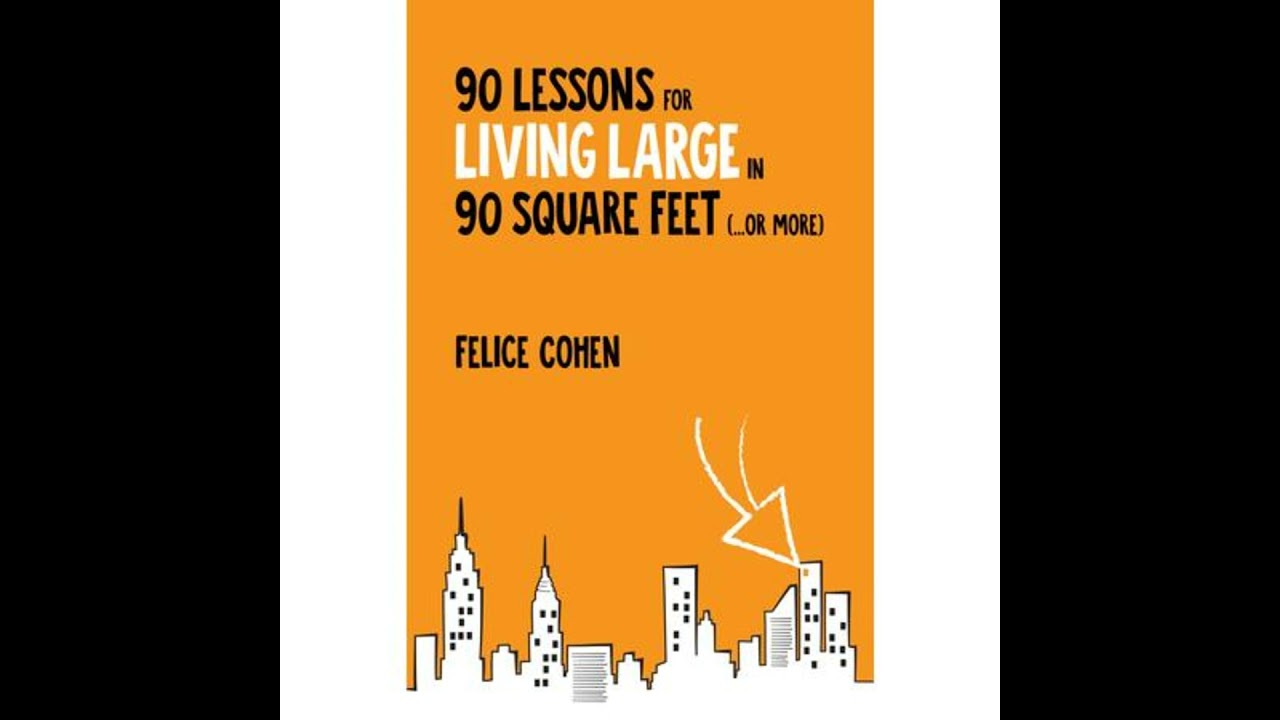
Felice Cohen moved into a 90-square-foot Manhattan studio to finish a memoir, then turned the experience into a decluttering philosophy. She teaches clients that clutter blocks mental clarity and productivity, and that finding your personal "why" makes letting go stick. Start small: sort socks, remove five items a day, keep your workspace to just a computer, phone, notebook, and pen.
Chapters
Hello and welcome to Shedding the Bitch Radio, where you can discuss, debate, and get advice on how to discover and shed the bitches of fear, insecurity, self-doubt, and negative mindsets so you can realize your dreams and life purpose and create and accelerate the riches you want in life. Join us here live every Tuesday at noon Eastern and dialogue with us at 818-572-2910. You can also chat with us at blogtalkradio.com/sheddingthebitch or share your stories on our website at sheddingthebitch.com. Whatever the bitch is that's holding you back from living your life to the fullest, it's not worth giving up the riches in life that you deserve. So call in now and let Bernadette Boas know what's holding you back.
818-572-2910.
Good day, good day, good day everyone, and welcome, welcome, welcome to Shedding the Bitch Radio. Yes indeed, I'm Bernadette Boas and we have a fun, lively conversation with for you today. We're going to be talking about how to stop clutter from blocking you from your true potential with our guest, Felice Cohen. Now I'll bring her in in a minute. But before we do that, I want to thank our new viewers and listeners. I am so grateful when we get comments and feedback and, and ratings and follows and subscriptions to one of our many platforms. From new viewers and listeners. It means that you're, you know, you're connecting with what it is that we're bringing you, and we're so grateful for that. And we would love you to continue to provide your feedback, your likes, your follows, your subscriptions, your ratings, because many of the podcasting streams especially, you know, require that in order to really ensure that we're getting more eyes and ears onto the program, as well as our ongoing current viewership and listenership. We always have appreciated you because you're probably the ones that are responsible for all these new eyes and ears, and we're so, so grateful for you. So again, continue to provide those likes and follows and, and tweets and shares and subscribes, all that kind of good stuff. And at the same time, feel free to share any of our episodes that you find on blogtalkradio.com. You might find them on iTunes, TuneIn, any of the streaming services, as well as our Shed the Bitch TV YouTube channel. We appreciate you. We want to hear from you. So if you have any ideas, suggestions for topics, or even guests, then feel free to email us directly at media relations at ball of fire media dot com. And we would love, love, love to kind of give you a shout out for bringing us a great topic and/or a speaker. All right, and then lastly, I need to thank North Georgia Tax Solutions, who's bringing us this episode. Debbie Snelling and her team are a full-service financial and tax services organization. They service small to corporate size clients all around the comp— all around the country, and you can find more information regarding her and her team and the work that she does at ng taxsolutions.com. All right, let's get into this conversation. Because our guest Felice Cohen is going to provide you motivating tips on how to clear the clutter from your home and make room for your goals. So as I bring her into the program, and she can take herself off mute and on camera, I will introduce the fact that Felice will be giving motivating and easy-to-do tasks to help you clear away clutter and create the home or office conducive for you working toward your goals. So what I want you to be listening for is how to begin the unclutter process when you're overwhelmed, how to motivate, and how— what tips you can use to start making a dent in your clutter, as well as how to create a workable, usable space. So for those of you like Felice, and others that are new to the program, I like to ground you in a rich question. It's a question that is relevant to the topic we're going to discuss. And you might have joined the program and thought, well, I don't have a clutter issue, really. And yet at the same time, this question might help you kind of draw out something that, you know, you might want to work on. And therefore, the conversation that I would have with our guest and the tips and the motivation that she's going to provide is going to lend itself beautifully to you walking walking away and being able to, to really build a conducive home and office environment to achieve your goals. Alright, so let me introduce her and then she can, you know, if she wants to turn on a camera, Felice, be my guest. There she is. How are you?
Good, good.
I'm very excited to talk with you, but let's make sure we fully introduce you so everyone can get the essence of All right, so Felice Cohen, author, speaker, Holocaust educator, is known nationally and internationally as the woman who's lived in the world's smallest apartment. Her second book, 90 Lessons for Living Large in a 90 Square Foot— in 90 Square Feet or More, she's the recipient of numerous self-help book awards— is a want-to guide motivating people to do more of what they love by letting go of extra stuff. Stuff. We're gonna have a lot to talk about. Uh, the book was inspired by the YouTube video of her 90-square-foot New York City studio that went viral with over 22 million views, gaining media attention across the globe. Felice has been featured on Good Morning America, NBC, CBS, Fox 5, Sirius, NPR, Time, Forbes, Globe and Mail, New York Daily News, and the Daily Mail, to name just a few. She is also featured in a documentary on tiny living. What enabled Felice to live large in that tiny studio is that she has been a professional organizer for over 25 years. As the grandchild of two Holocaust survivors, Felice is also the author of What Papa Told Me, a memoir of her— about her grandfather's life before, during, and after the war. I'm almost in tears already. The book has been endorsed by Elie Wiesel and Yad Vashem, is that close enough, in Israel, and is taught in schools across the country, has been translated into Polish, and has sold over 35,000 copies around the world. Felice is also featured in 2 documentaries focusing on grandchildren, um, of survivors. Oh my God, that's so heartwarming. Welcome, welcome, welcome.
Thank you. Thanks for having me.
Oh, well, when I saw this and I saw the 90 square feet, I thought I had a challenge when I moved from my main house, which I now rent furnished, and I moved into my 400 square foot guest house. Yeah, you know, I thought that was— and, you know, I know New York studio apartments can get really small, but 90 square feet, oh my gosh. So I usually start off by asking my guests about their backstory, but I think your intro kind of like speaks to it all. But at the same time, what was your adjustment? Like, what, what caused you to need to go to a 90-square-foot studio? And kind of what was that adjustment like?
Sure. Well, you know, the reason I moved into that tiny space was because I wanted to finish writing that book about my grandfather. He had asked me to do this years before, and it was the only thing he'd ever asked me to do besides eat, like most grandparents do. And I was working this stressful job. I was Chief of Staff to the president of a college and I worked tons and I knew the only way to finish this book was to quit my job. And to do that, I needed a place where I could live that wasn't that much money. I had savings and through a friend of a friend, I found this tiny apartment and it was tiny. I mean, it's 12 by 7.5 feet, but as an organizer, I've worked as a professional organizer for so long, I could see the space through all the clutter in this tiny space, what I could do with it. And that became my motivating factor, was to finish that book. The first night I had a panic attack because the loft bed had 23 inches, so you couldn't sit up in bed. And after freaking out, I had a friend sleepover. After freaking out, she's like, Felice, why did you move here? And without thinking, I said, to finish writing my grandfather's book. And that was my why. And I'm going to get into that later of how important that why is in any goal you have. Because that reminded me of what my sacrifice was for. And after that, I never had a panic attack again. And I love that space.
Yeah, that's awesome. Are you still there?
No, I was evicted after 5 years. Oh, wow. Yeah, the landlord saw me on Good Morning America, and I was subletting. Apparently, I wasn't supposed to. But in New York City, you get a good deal, you don't say anything.
Yeah, what, controlled rent or something like that?
Is something— yeah, I mean, it was really small. And but you know, I saved so much, I was able to buy a place after.
Yeah, that's fabulous. And, and yes, we will definitely talk about your why and definitely how that is so, so critical to one's goal. That's awesome. So awesome. Okay, so what's your view on clutter? I mean, you know, in regards to how it really affects us and how it, you know, influences our day and overall our life?
Sure.
So I find that clutter affects us in two ways. One is mentally and the other is physically. And so how it affects us mentally is when you see clutter, you're overwhelmed, you get anxious. The clutter is telling your brain, I should clean that, I should get rid of that, I should do that. And right away, those are negative thoughts. Those negative thoughts is a bad influence on yourself. So right off the bat, you feel bad, you feel frustrated, you feel mad at yourself, like, why am I not doing this? What's wrong with me? How come I'm not doing this? And that's not helping. That's not going to get you out of the gate at all. That's going to keep you stuck. So the solution for that is to tell yourself that, okay, it's overwhelming. Okay, it's hard to do. It's not impossible, but it's overwhelming, and take that burden off of yourself. The other thing, you know, I mean, it is doable, but The other thing is we are in the middle of a pandemic. This is a scary time. We have lost control over so much of our lives, but the one thing we have control over is our stuff. You are the king, queen of your domain. That's your stuff. And we have more time at home that we have the time to go through it. So, so know that it is doable. So when you take away that onus of, oh my God, you feel better about how to tackle it.
Yeah.
But the other way clutter affects us is this physical space. You know, you see it. And for me, I can't sit down and write until like the dishes are put away and things are done.
I need clarity.
You know, you need that. But also, you know, when— if you have no place to sit, you don't have friends over, you feel isolated. I mean, we feel isolated now anyways, but in general, you also have to waste time organizing that stuff, cleaning that stuff, moving stuff to get to other stuff, working to pay for that stuff. And that is taking up so much of our time, which was the beauty of that small space, was I was given— the best thing I was given was more time. Yeah, for sure.
Yeah. Oh, absolutely. But what do you say to those people, because I know a few, um, that believe that, you know, they're desk full of materials and they can find anything at the drop of a pin and it doesn't wreak havoc on them mentally, emotionally, spiritually. What would you say to them?
If it works for you, great. But does it really work for you? I mean, if everything works for you— I had a science teacher like that. It was like Mounds and he could find something. But it's going to take you time to do it. But I'm not telling people to change what works for them. If you really feel it works for you, you're not watching your program, you're not watching the show, you're not worried about clutter. It's your life, you know, that works for you. And, and, you know, I teach a class on organizing and decluttering to elderly, and they, you know, they're in their 80s, their 90s, and, you know, they like to see their pictures of their family. I said, that's not clutter. What's clutter is the stuff on the floor I don't want you to trip over. That's where you get into you know, the issues of what, how clutter affects you. If it doesn't affect you, fine. If you feel like you're the most productive you can be, great. If you need some tips, then maybe the piles aren't helping. If you need space to spread out, the piles aren't helping.
Well, I also wonder too, excuse me, I also wonder too that even though they think it's working for them, if they were to even like give you a day or give you a couple days and, and clear out even one part, one area, and just let them live in that and see if they actually, you know, find more energy and more space and more breath, you know, than when they're over in this, you know, in this space. That's fascinating because we do get comfortable in what we know, right? And therefore, unless we, you know, kind of get uncomfortable, do we really know if we were ever really comfortable in the first place?
Right, right. I mean, I like to think of my home, my workspace, my office, whatever, as a jigsaw puzzle. So the home is the frame and all the pieces are all your stuff. And everything, when you do a puzzle, every piece has one place it goes. When you put your stuff away, everything should have a place. If you've got piles of stuff, what is that stuff? Does it have a home? Can you create a home for it? If not, do you need it? Do you want it? If not, bye-bye.
Right. I have to say, it was the most— it was the most rewarding thing when I did have to downsize into my— and it was by choice, very— a very similar story to yours. But, you know, it was by choice, and it was just very freeing to kind of say, you know what, this is really nice, but I don't necessarily need it. It was just very liberating. Very liberating.
Yeah.
Yeah.
So what was your biggest lessons when you, you know, when you went from living in a large area to that 9 90 square foot. And I want to remind everybody, as she leads into answering that question, 90 Lessons for Living Large in 90 Square Feet or More, and you can find it at Amazon. So be sure to check it out on Amazon, but also check out felicecohen.com, and that's F-E-L-I-C-E, felicecohen.com. But what were some of your biggest lessons?
So I grew up in a huge house, and I have spent most of this pandemic in that house with my parents helping them out. And I'm back in New York for a week, but I always thought I would live in a huge house. I just thought, okay, I lived here, I'll live there. After one year, I planned to live in that tiny space for just one year, and then I would get it out of my system, finish the book, and get another job and another apartment. After that first year, I didn't want to leave. My lifestyle had changed. It got so much better. I realized that without tons of space and without tons of stuff, I had more time to do the things that I love to do. I could ride my bike every day, go to yoga, write, and I didn't have to— I wasn't beholden to some job because I had to pay some high rent to pay for all this stuff. And you get more when you have less. You get more. Now, I'm not advocating anyone to live in 90 square feet. That was very hard. But I am trying to help you see that stuff is just clutter unless you read it and use it and eat it all, all of it. It's just clutter. We have cabinets full of food we don't eat. But what I learned was how much more you get with so much less. Now, I was working a lot, but I was doing the things I love to do. Right. And I was traveling. And believe it or not, my savings went up because I wasn't buying stuff because I had no place to put it. You feel freer because you want to wake up and You know, this has been a scary year. We, like, every day feels like Groundhog Day in some aspects. But you're surrounded by your stuff now. And how many of you can look back and say, you know what, I've read all those books on the shelves, or I've used that, or our clothes have not been worn in how long? You know, we get up, you put on sweats. Yes, your comfort. We need that comfort. But you just see how much more you get. And suddenly, you know, that the video of that tiny apartment went, you know, international, and that's why the book on my grandfather sold exponentially. I never planned to sell any copies of that book. And then I suddenly became a Holocaust educator, and it gave me a career. I was asked to speak around the country to talk about my grandfather, to talk about his experiences, and to talk about living in that tiny space. And it's amazing because I moved into that tiny space to write about him, And then the tiny space did a pretty good marketing job and gave me so much more. So I was thrilled.
Yeah, no, that is absolutely, absolutely fabulous. And I think we're like sisters from a different mother because your story is like kind of directly aligned to mine, which is actually what's making me very emotional because it's fabulous. I mean, it's just, you know, it's great validation, you know, because people thought I was nuts. People are like, what the hell are you doing? But like you said, it's— there's a reason and there's a why, why for it. So what advice would you give folks for how they can become, you know, less cluttered in their life and more so, because that's more of the physical, right? But more so, how can they kind of recognize and, you know, and tap into the kind of the emotional clarity that you're, that you're even talking about, that, that freedom of breath, freedom of energy and creativity that is generated as a result of getting rid of the stuff.
Yeah, I mean, yeah, definitely there's the physical stuff, and I know we'll go into tips on how to actually do it, but you really have to kind of sit down and ask yourself, you know, yes, your why, but what is the goal? You need something tangible. Like, I had a book. It was a tangible thing. And you know when you're in school, you have a syllabus. And you working towards the final. In life, we don't have a syllabus. We have to kind of create those steps ourselves. You know, you get a bookcase from IKEA, it comes with steps. You don't just get a bookcase. And for me, that's fun. For a lot of people, it's not. But it's finding out what your goal is, what your intention is. Is it to write a book, to start a business, to have a Zumba room, to have an art room, whatever it is, to move into a smaller space, whatever your intention is, Write it down. Write it physically. Write it down the bottom of a piece of paper and then write down those steps to get you there. What do you need to do? Nothing's impossible. I'm not going to say it's not hard. It is hard. You know, my grandparents survived 5 years in concentration camps and labor camps and all. And when I think about it like that, I think, what do I need to do? Clean up a closet? Really? That's the hardest thing? I should be so lucky. But what are your goals to get you there? Use that. Were there moments when I lived in the tiny apartment that I thought, I wish I had a kitchen, I wish I had a couch? Yes, I'm not going to lie. But I would remind myself of why I was doing this, why I was sacrificing for this, to do this goal. I had no idea how fruitful it would be and how it would affect my life at the end. I had no idea. It was just something I wanted to do and it was my own goal. And some people thought I was nuts, and those would be my immediate family, and that's fine. But now they see how much it gave me. And you have to have that. Stick it on your fridge. Remind yourself, because it's going to be hard when you're knee-deep in clutter. Remind yourself why you're doing it. You know, do you want your mother-in-law to come live with you? Is it for safety? Is it because you don't want to trip over things or fire hazards? It doesn't matter what it is, but it will be unique to you, right? It should be unique to you because it's, it's your life, you know?
Right. So I love that. So like the goal for somebody, especially if you're, you know, a senior, um, would be, you know, kind of just to ensure, um, that, you know, I have some safety, that my environment is safe for me.
Everyone. Everyone.
Yeah. And her— and someone's why, right, would be— yeah, everyone. I just got that. And then, you know, the why just could be not just safety, but just a full, rich life, right? Would that make sense?
Absolutely. I mean, I speak around the country at tiny house festivals, and I tell people to have your why. You can't just move into a tiny house and think it's going to be great. It's going to be a challenge. But if you have your why— do you want to save money? Do you want to travel? Do you want to pay off student loans? You want to pay off debt? Do you want to live closer to your kids? I ask everybody who comes up to me, what their why is. Why did you come to this tiny house festival? Right. And your why will be unique to you because no matter what it is, it's going to be challenging along the way. It's not easy. Life is not easy, but it's worth it. It's so worth it. And even just the journey of it, you know, when you're knee-deep, when you're like looking around at papers and clothes and all this stuff, you know, you're doing something important. You're helping. And, and I always say, think of the donation box as a giveaway box. Because you're also helping someone as you're cleaning out your clothes. Do I need 27 sweaters? Could other people use them? You're feeling good about it.
Yep. So that's the key, is to turn it from a negative, heavy thing to something that is, that is productive and prosperous and, you know, could benefit somebody else, right?
And it's doable. Anybody can do it.
Yeah. So you might have mentioned it, but I want to dig into it. So what was your core why for moving into that 90-square-foot house? Beyond the writing of the book, because that's kind of mechanical, right? Because then there's why you're writing the book.
So what was your true why? Well, the why— I had always wanted to experience living in Manhattan. And I remember going with a realtor looking around, and she said, let's look on the Upper East Side, your money goes further. Well, I think she meant faster, because the rents were astronomical. I mean, it's ridiculous. Now there's a lull because of the pandemic, but the rents were crazy. But I wanted to experience what it was like to live in New York City. I didn't want to go broke doing it. I had worked for years, I had saved for years, and I wanted to experience what that was like. And through a friend of a friend, she told me about this tiny place, and I said, I can do it. I'm an organizer. I can make it work. But my why was the sacrifice I was doing was to experience living in New York. I love theater. I love going to shows. I love museums, walking through the park. But it was also I needed something where I wouldn't feel so much pressure to work so much that I could have the time to finish writing this book about my grandfather. And it really was about that. And I really, after 1 year, I was ready to go. I said that was going to be my goal. I put 77 boxes into storage. And that was it. But at the end of that year, the woman I was subletting from called me up and I didn't even hesitate. I said, "I want to stay another year." And every year I stayed and I went back to storage and I got rid of some boxes and some boxes. And by the end of 5 years, I got rid of all the boxes.
Oh, wow.
We didn't need it. And I was realizing how much lighter I felt.
Yeah.
You know, it's like when you go on a diet, you— it's hard. Right. It's—
you got—
once you start seeing the pounds go off, you get motivated and you think, I can do this, I can stick with this.
And yeah, but I, I wanna— because, because like I said, I was— when I was reading your intro and about the book that you wrote about your, um, grandfather, just the title in itself got me, you know. Um, but, uh, what— why was it important? And you said that you weren't going to sell the book, and yet it turned out that you sold it because of that video. So what was it that, you know, what was your why for even writing the book?
The why for writing the book was because my grandfather asked me to. Simple as that. I had been in college and I started writing and I found out that my grandmother, the woman I was named after, didn't die of cancer but she committed suicide. So when I found this out, I was a columnist so I wrote a column on this. And in order to find out why she did that, I called my grandfather and he told me what happened to her in the Holocaust, in the ghetto and all all the crazy things that happened to her. And so I wrote about her. And my grandfather, of all the people who responded, my grandfather felt relief having unburdened himself from her secret. And that's when he asked me to tell his story. And I thought I would just type it up and make copies at Kinko's for the family. But really, it was 18 years from start to finish. I moved to New York. I had other jobs. I did other stuff. And this was the one thing he ever asked me to do. And he started to call it a book. And I thought, okay, now he's calling it a book. How can I make it different? So I realized I wanted to write it from a granddaughter's perspective. So while it's in his voice, in between chapters are snippets of dialogue between us from when we wrote the book. And I didn't plan on selling any copies, but I produced it as though it could sell copies. And it started to sell. And it started to sell. And every time I would— my grandfather loved watching the ticker and he was so proud and he had worked so hard. And he would call me up and he'd say, how many books did we sell this week? And you could— it validated for him. I would call him up and I would read him the emails from strangers from around the world who wrote about him and said, you know, I read your book, your grandfather was a hero. And you could hear it validated for him that he survived for a reason. So selling the book was the icing on the cake. It was how happy he was to see this book that for me was worth every moment in that tiny apartment.
Right, every pain. Yeah. Yeah, every stress.
My head on the ceiling.
Yeah, exactly. Oh my God, that's beautiful. And how long ago was that written?
It came out 10 years ago.
Okay.
And, um, he just died, you know, he died 5 years ago. We just had the anniversary. And, um, but I'm still speaking. I had, you know, people on a Zoom call last week about him. And for me, it's a gift because I can still talk about him.
And, uh, and we need to continue talking about it. It can't, you know, it just can't be forgotten. And I love the idea that it's from the voice, or it's in his voice, but it's also from the voice of the, uh, granddaughter. Because that's what's important is really making sure the other generations understand, right?
Right, exactly. I mean, I speak in— I was speaking in schools, you know, do it on Zoom, but especially in New York City schools, you look around at these kids' faces, they or themselves or their parents or grandparents are from other countries.
Right.
What's the hardship they went through? So I tell them, ask your grandparents, your parents, how they got here, what they went through to get here. Maybe there's a book there, a story, and it opens them up to their own ancestry.
Right.
Absolutely beautiful, beautiful, beautiful, beautiful. Okay, so going back to decluttering, they go hand in hand. I like to just, you know, I just go with the flow. But so going back to decluttering, because, you know, even the simplest thing— I know making the bed isn't decluttering, But I think the point you're trying to make too is, you know, they'll even say the most successful people in the world ensure that their bed is made first thing in the morning before they start their day. And, you know, that just seems so like, duh, but yet I know a lot of people who don't. Um, and especially if you're in a small space or in a big huge house, you know, just that thing being undone, messy, you know, kind of, you know, can kind of like you know, get somebody feeling a little bit drained, I guess is the word. So what, what are your 5 tips? What are your 5 tips, quick tips maybe, to just start the decluttering process so someone can build an environment that is, you know, very attractive to them achieving their goals?
Sure. You know, I mean, the bed thing, it's, it's a motivator because, you know, your bed is made and it's your first step and it's an easy goal. And once you accomplish little easy goals, you can move on to bigger goals. So that's what I like to think of my, you know, here's 5 tips. Like, one, I say baby steps. You know, you don't give babies a whole bunch of food, you give them little pieces. So start with your socks, okay? Dump all your socks out on the bed, go through them. Socks are easy to do. Any with holes, bye-bye. Any missing a pair, any you don't wear, any that you hate go under your heel, bye-bye. Toss them.
But I might find it, but I might find it.
Right, maybe. So stick it by the laundry, stick it by the laundry. If it doesn't come out the next load, bye-bye. You know, use it to dust, toss it. But, you know, find the little— or just work in one little area, one little drawer, you know, baby steps. Another is have mini goals. I always say to people, how many of you could— raise your hands— can you get rid of 5 things today? In one day, 5 things. It could be a paperclip, it could be the envelope to a bill, it could be a Tupperware missing lid. 5 things. If you say, "Yes, I can get rid of 5 things today," in a week, if you do that every day for a week, that's 35 things. That's a lot. You're, so you're moving it. Another thing is set a timer. We all have a cell phone. Set a timer, 15 minutes, a half hour, 45 minutes, whatever your energy level is, and work on one area. Open a cabinet and just set the timer and go. Maybe a drawer, maybe a counter, whatever. When that timer goes off, Stop. You're done. What that does is it tells you, tells your brain, I don't have to spend all day organizing the garage, just this amount of time.
And they won't get overwhelmed.
It totally gets rid of the overwhelming part. Another thing is make it a routine. Maybe every day after breakfast you spend 15 minutes working on one area. Pull a drawer, open it, do a shelf, I don't care. Make it a routine. You know, if it says 2:30 on your in your schedule book to go to the dentist. What are you doing at 2:30? You're going to the dentist. Put it in your schedule book. We have nothing else on our schedule books, right? There's not much going on. So, you know, do that. My favorite thing— this works for me— is rewards. Reward yourself. You get this done, give yourself this. Have an ice cream, have a coffee, watch a TV show, go for a walk, whatever the reward is. Little things. Those things kind of motivate you. You know, what they do is they, like you say, it gets rid of the overwhelming aspect, but you start to see progress quickly. When you see that progress, like going on a diet, you get more motivated. A lot of people say, "Oh, I got rid of 5 things. That wasn't hard. Let me do 5 more." Right. Great. If not, that's fine too. But these little things make it more of like a game. So it's less like a chore. It's like, I can go through this pile of paper. Can I get rid of 5 things? Great, I got rid of 5. The pile goes back. I'll do it later. So you want to kind of get rid of that chore feeling, that I have to do this feeling, and try to make it fun. Maybe you do it while you're watching a TV show. Dump all your toiletries out. Do it while you're watching, you know, whatever you're watching. Right. Try to make it fun. Right.
Well, and I think your point too is, and correct me if I'm wrong, but you had mentioned that, you know, achieving or pursuing goals is hard enough, you know, because any goal we want to achieve is going to, you know, be hard. It's, you know, there's going to be— have to be sacrifice and whatnot toward it. So why not make it that much easier by, you know, eliminating all the noise that, that's around you in your clutter? Because clutter is noise. Like when I am currently looking at something that's laying on my couch over here, and I'm like, why is that there? Like, you know, like, why did I leave that there? Because it's just annoying. That in itself is like, okay, well, that's not a good energy we want to be putting toward our goal, right?
Right. And I like to consolidate, like if you have piles everywhere, that just looks like a lot. Like if you have a lot of stuff I put everything in one pile. Put it all in one, put it in a box, put it in a bag, don't look at it. And then when you have the time, take one thing out at a time, look at it. Is it something I have to pay, read, can I throw it away, can I file it? And then maybe you have, create, you know, like if it's a workspace, you create things you have to do, things you have to read, and then, you know, there's other stuff. And then whatever you don't get to, so at least you don't see the mess. It's in one consolidated place.
Right, right. Now, in your organization work, do you work on also, you know, kind of giving them— not compartments, like, you know, telling them how to organize in boxes or in, you know, things that go on the shelf or in their, you know, on their credenza or on their desk? I mean, do you work through all of that with someone as well?
Absolutely. Everything, nuts and bolts. I mean, you know, when it's your workspace, the only thing in your workspace really should be your computer, a phone, a notebook and a pen. That's it. That's all you could. And then when you work on one thing, you take whatever that one thing is, you look at it, and at the end of the day, goes away. I've created offices in linen closets. I've taken a linen closet and created an office for them because all we need is our laptop now, right? Everywhere we go, you know, you have a computer space. But, you know, it's the other stuff you don't need. You don't need a stapler on your desk. You don't need tape. You don't need 27,000 pens. You know, that stuff should be away. You don't want—
not even as a writer?
No, no, writer. I mean, I have a red pen everywhere I go, but if I have it up, but if I'm writing on the laptop, I don't have— I have notebook, write notes, but it's your to-do list. If you need to get something, get up, go get it. If you're working and stapling a bunch of things, have the stapler out. But as a general rule, unless you work in a third-grade classroom, you don't need a stapler on your desk or tape, you know. It's the basics, and I always say at the end of the day, give yourself 10, 15 minutes, clear off your workspace. A lot of us, our home offices are dining room tables.
Right.
When you're done, have a tote bag. Everything goes in the tote bag. You know, you don't need it. That tote bag goes away and the dining room table becomes dinner. Yeah. You know, people had said to me, you know, you live in this tiny space, and I said, when I'm working, the tiny space is my whole office. When I'm preparing a meal, the whole tiny space is my kitchen. When I'm hanging out, the whole tiny space is my living room. So It's compartmentalizing it and creating spaces for things. Yeah, you need out what you really need out.
I love that. I love that. Love that. But now we probably have some viewers and listeners and they're like, yeah, I get it. It makes sense, Felice. And, you know, and yes, I can start with 5 small things, but I absolutely have no desire or no motivation to do so. So how do you kick them in the butt and get them motivated?
I think you got to ask, why are you watching this podcast? Why are you watching about how to get uncluttered? Do you?
Why?
What's your— why are you watching? Why are you spending the time with Bernadette and with this lady named Felice who lived in a, you know, old woman lived in a shoe? Why are you watching this? And, and then are you doing it just because you have nothing else to do? Okay. Are you doing it because you want to better your life. You want to complete your goals. And your goals are doable. There's nothing that's impossible to do. So let's get started. Now, if I were to tell you July 1st the pandemic is gonna be over, it's gonna be over, it's all gonna be done, that gives you 4 or 5 months. What do you want to get done in those 4 or 5 months? You want to look back because it's gonna go like that. So you've got 5 months. What do you want to get done? When on July 1st you want to look back and say, hey, I got this done, I got this done, I reached my goal, I'm halfway to my goal, whatever it is. Picture yourself then and what you can do now to get there, and then kind of work towards that. So write out a step, maybe your steps to get to your goal, whatever your goal is. Maybe one is to clean out the junk drawer in my kitchen. Is that a step? Maybe it is. Maybe it makes you feel better. Maybe I want to find the old, I don't know, I want to find something my mother gave me. I haven't been able to find it in years. It's, you know, it's the key to a locked safe box in a bank. I want to find that. Okay, that's your goal.
How do we find my checkbook?
Right.
Okay, I find my checkbook. I need to find it for like 2 months.
That's easy. That's a goal. That's a goal. So Okay, if you can't find it, let's go through every drawer. Today, Monday, Tuesday, Wednesday, every day I'll do something different towards that goal. And you write it down. I love a list. You cross it off, you feel better, because it's those little steps that motivate you towards a larger goal. And that's what I try to do. There are days where I just feel like I can't really get into what I'm working on. I'll just open up my Tupperware drawer and let me organize that. Which never really needs to be organized, but you find like socks or you find something that motivates you to do it. And even just writing the list out is your first step. You're done. Motivating, right?
Motivating.
Little things can, can be, and then you kind of motivate yourself, you know, you reward yourself little things. And every day tell yourself, I'm one step closer.
Yeah.
So in our new norm, How do you work with your clients? So give our viewers and our listeners an idea of how you are actually able to help them and work with them.
Sure. I have been working with some people one-on-one with masks and the whole thing, and you know, you have the social distance. And, but I can also do it online. You know, you show me your space. You know, you can't do the whole thing. I like to see really all your closet spaces because you might always stick things in this one closet., and it might be better off in another closet. But, you know, you can go through stuff, and we can go through one-on-one. It's hard, but you try to give little goals and little steps and say, okay, let's just work on that shelf. Do you really need 17 hand towels? Maybe not.
They're actually like walking around with their camera. That's—
yeah, yeah. And I can see it. And then we say, okay, we give— and then I love homework, and people like homework too, because if I just tell you, okay, I'll see you in 2 weeks, do this or whatever. If I say I want you to do this, this, and this, I do that with my elderly students. I love them and they've got a lot of challenges.
Yeah.
But they want it. They need a goal because you need a why. You need a reason to get up in the morning instead of just another day of this, you know. Hopefully we're getting closer, you know, but this is all we can really control right now. Let's kick its butt while we're here.
Absolutely. I do it every day. Yeah, I do. I try to keep all that noise out. You know, there's enough noise in here. I try to keep all that noise out there. Yeah, love it, love it. All right, everyone, I want to, um, have you go to Amazon, buy this book. Actually, I want you to buy both books. So she has her 90 Lessons for Living Large in 90 Square Feet or More. And she— and so that's everything we've been talking about today. But, but Heartstrings: What Papa Told Me, look for her book, What Papa Told Me. That's also on Amazon. Beautiful, beautiful, beautiful. She also has— what is on your YouTube video? Is that a discussion in regards to your book?
The video shows other organizing, you know, organizing spaces, talks. You know, fun things, just, you know, playing pool with my dad, um, you know, just little things about life and enjoying life as well.
Nice. All right, so I'll share that link, uh, for everybody. I'll give you all that link, um, as we share this out, and, and, um, you can find it— you'll be able to find it on Facebook and Twitter and on our, uh, Shed the Bitch YouTube channel when this airs. We'll have it down in the comment section, so take a look for that. But at the same time, go to felicecohen.com, and that's F-E-L-I-C-E-C-O-H-E-N.com, to learn all about Felice. All right, uh, now, uh, any last comments? Anything we didn't cover that you really wanted to talk about?
You know, I think whatever you're doing, I want you to have fun. You know, my clients always say to me, you make this fun, and I say, why not? Like, when I— whenever I— you get rid of something, I tell my clients to say say bye-bye, bye-bye, I don't need it, bye-bye. But, you know, have music going, have snacks on hand, have water, make it fun. It's a trip down memory lane. You know, it took you a long time to get all this stuff. Tell a story about it. You're not sure if you should get rid of something, take a picture of it, post it, send it to a friend, whatever. Try it on, make fun of the shoulder pads, I don't care. Just enjoy it because why not? It doesn't have to be hard.
It can be fun.
You know, this is it. My grandmother grew up, she was living in a 13-room house with all her kids. When she died, she had one cardboard box of stuff left. That was it. And, you know, in that box was a folder of all the writing I had done. And that was like one of the last things she saved. And, and you just— life is so short. You know, one of the things I say is life is short, but it's this wide. Fill it with things you want to do and, and enjoy this journey of decluttering. So then you'll have more time to do the things you love to do. Love it.
Absolutely love it. Felice Cohen, everyone. 90 Lessons for Living Large in 90 Square Feet or More. And check her out at felicecohen.com. Felice, thank you so much. This has been fabulous.
Thank you for having me. It's a lot of fun.
Oh, you are so welcome. And we might have to have you back in the future as well, because we all know that we have to get organized at times. As life kind of moves on and on and on and on. So, uh, thank you so much for being here. And everyone, please, um, felicecohen.com. Also check out her, her books on Amazon, both What Papa Told Me as well as The 90 Lessons for Living Large in 90 Square Feet or More. And then join us next Tuesday at noon Eastern time for another episode of Shedding the Bitch Radio. So for everybody here and out there, have a rich and prosperous week. And I will talk with you then. Bye everybody.
Thank you for listening to Shedding the Bitch Radio with Bernadette Boas. Join Bernadette every Tuesday at noon Eastern as she helps you shift your bitches to riches. And the dialogue is always going on at sheddingthebitch.com. See you next week.
More from Bernadette



From Stuck to Leading, Episode 2 — Meet the 5 Inner Fears Destroying Your Leadership



