Tips and Advice from Rico Pena, Human Behavior Expert on Shedding the Bitch Radio
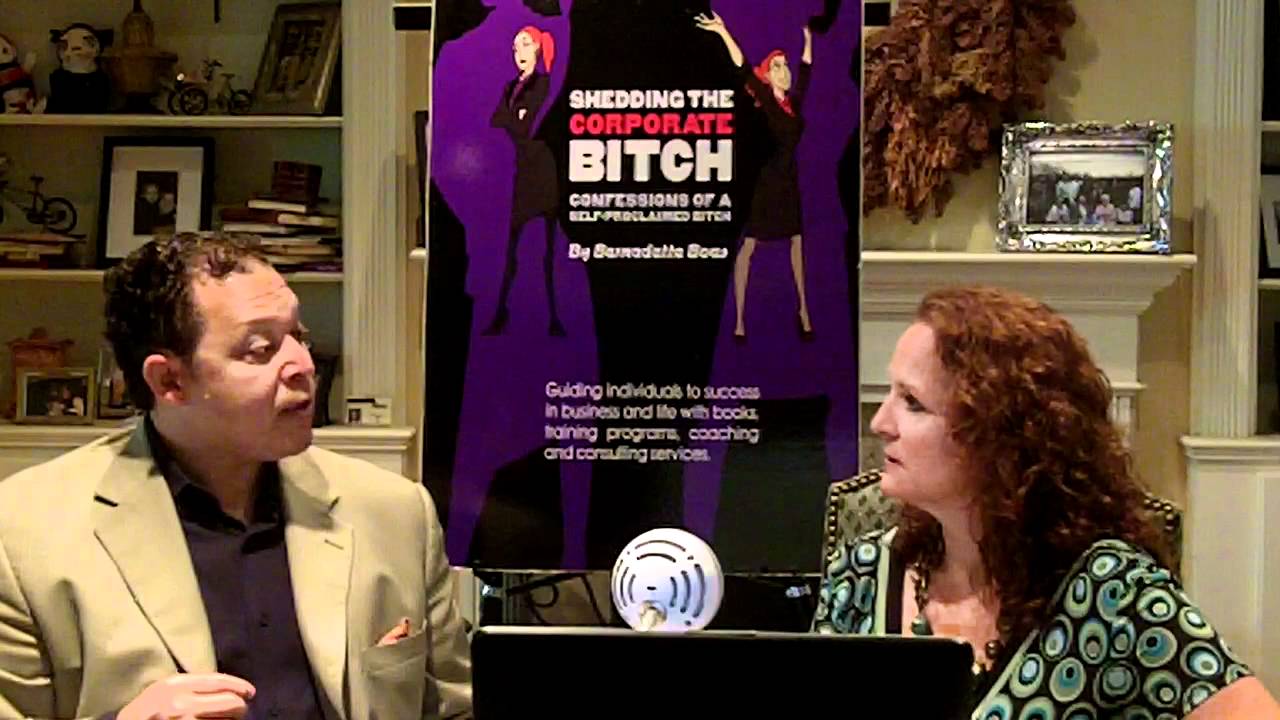
Rico Peña, a sales and behavior expert with 25 years in the field, explains how nonverbal cues drive 93% of communication and shape buying decisions. He breaks down how to read a prospect's decision style in the first three seconds, match their pace, and ditch the sales script. His new book The Client Nation maps five personality types to help salespeople adapt their approach.
Chapters
Well, happy Tuesday everyone and welcome to Shedding the Bitch Radio, and I am Bernadette Boas, and I'm so excited about today's episode because I have a unique twist on our dialogues that we have each week around shedding the bitch. And Rico Pena is with me— Pena, I'm sorry. Rico's with me, and I'm gonna go into a little bit about him in a minute, but before we get started, what I want to make sure is that you are either dialing in live, and you can do that at 1-818-572-2910, and get your questions ready because Rico is going to really inform you about how you can use human behavior, body language, perception, all of it to increase the prosperity in your business and in your life. Okay? So get ready to call in. You can chat in if you want to go to blogtalkradio.com/sheddingthebitch, and you can chat with us and pose your questions there. And of course, you're either going to be also listening to this in the archive or watching the video through YouTube or iTunes. And of course, everything's centered around Shedding the Dish. So go to any of those sources because Rico, too, has a great, great offer for you that I'm going to talk about toward the end. But you have to kind of listen through and listen and learn, and then we'll kind of give you that opportunity as we get into the program. But let me introduce Rico. Thank you for coming.
Thank you for having me. Thank you.
Thank you. And this is such a kind of a unique discussion that I think it's going to surprise our listeners and those that do either listen or watch in the archives because it's a different slant than what I typically talk about and what you do to help businesses, individuals, and associations with human behavior. But before we get into it, I want to just give you some background on Rico. Rico is a specialist in the field of human behavior and an expert in the client's buying perception. Now, We can interpret client to be anyone in your life. You can use any of these tips and techniques whether it's personal or professional. He is a highly sought-after bilingual speaker, key, for companies seeking to increase sales, employees' performance, and client loyalty. And I would say not only companies but associations and any other group that gets together and really wants to understand human behavior, sales, so forth and so on. He has over 25 years of experience in sales, marketing, and building dreams. Teams into profitable businesses, and he started 4 of his own. I've done 2 and I'm exhausted, so I don't know what you do when you start 4. Now, one thing I'm really excited about, and we're going to touch on this as we talk, but he is the author of a newly released book, The Client Nation: Their Perceptions, Your Profits. And we're going to talk about this because reading it and picking up some of the concepts, I have already been able to apply it to myself. So I definitely want I want you guys to take advantage of that. Rico is also the founder and co-creator with his wife, Andy, which I find fabulous, of Sensational You Professional Business Women's Association. And this is an association with local chapters. It's called SWAN. I've participated. Great group of women, great group of expertise from Rico and some speakers and presenters he brings in. And he really works to educate and assist business women on how clarity, direction, and purpose in order to grow their business. So he does blend the, you know, it's not just about business, it's about you and what you bring to it mentally, emotionally, and spiritually. And what I really like about it, women, and those men on the call, is the fact that it's a man telling the women and giving, not telling them, but instructing them and guiding them because, you know, we all kind of blame the man's club and the boys club and, you know, it's a guy's world and And there's no blaming. There's no, you know, you need to take accountability and reach out to someone like Enrico to educate what goes on in the man's mind that then you can apply to your business and to your life.
So welcome. Thank you. Thank you so much. That's a— thanks for the introduction.
You are so welcome. Well, okay, so human behavior and body language. Wow. So how can— because some people say they read people really well, and I'd like to say that I do, but then I get burned, you know, by a vendor. Burned by a friend.
Sure.
And/or I just kind of lose an opportunity, a date, or it could be a business opportunity, but let's talk dates. No, I'm kidding. But so help us understand, where do we fall down? Where do we make mistakes when it comes to interaction?
That's a very good question. 93% typically of how we communicate really has little to do with the words we use. 55% has to do with your body. That's what you— when you sometimes you feel like you're connected with someone or there's something about that person that you just can't put your finger on, that's your body telling you there's a problem here.
Okay, that's that inner gut, that gut feeling.
Yeah, exactly. And actually, women can read behaviors better than most men because we tend to react, where women tend to be a little bit more intuitive. 38% of what you communicate has to do with the tone of your voice. That's why, like, Have you ever noticed really good politicians, you can't remember what they said, but there's something about it that you liked? Well, that means that the body language and the words, the tone, were in congruency, so you felt comfortable.
Is it the words or is it the tone?
The tone.
It's almost—
Yeah, the body behavior. It's like music. One of the top reasons why Barack Obama was elected, if you listen to his great speeches, there was a tone of fluidity, a rhythm to what he was saying that you just fell into. Great orators do that. Great speakers, you can probably not really remember the words, but you can connect with them.
Right.
Only 7% of what you say word-wise connects with the individual.
Well, gosh, I mean, wow. Okay, I've got like 9,000 scenarios running in my head as to how that can happen and impact every, like almost every second.
Absolutely.
Sitting on this call right now, we're videotaping it.
That's right.
And actually, they're hearing our tone, you know, if they're listening to this, and they could They actually turn it on or turn it off based on whether or not they like what they see or they like what they hear.
The music industry has this down pat. If you think about the music you really like, when you hear it, you turn it up. How often have you looked at the words and realized the words that you thought were in your head had nothing to do with the words that were actually sung?
All the time. All the time.
The rhythm of that. And the same thing what we do, especially in today's technological world. When you walk in the room, you have 3 seconds to make an impression. That person's already formulated based on their experience influences a perception of you. And that's what we really focused on in the last 5 years of understanding perception, because that is the key element to everything we do, especially communication or sales or even relationships.
Yes. Okay, so I'm going to— you could look at this from a personal or professional perspective. Absolutely. And are men as picky about that? I mean, women are known to check out the women the minute they walk in, and they definitely check out the man the minute they walk in, especially the ring finger. But I'm I'm not saying that I do that, but at the same time, you know, do men do that as much? Especially do they do it in the work environment, in the business environment?
In a business environment, and that's the other key thing, I'm glad you brought that up, environment plays a role in how you perceive or communicate. So in a business environment, men tend to think generically, genetically, excuse me, in the task at hand. So they're really looking at how to create a better results of the task they require. Women being more intuitive are really focused on the relationship or how they feel about the person in front of them.
Hmm, okay.
Now that can go even deeper through the behaviors, and that's— I don't want to put anyone in a box.
Right.
But typically in that first 3 seconds in a business, a negotiation, a boardroom, most men tend to look at the task at hand and how do we get it accomplished. The women in the room tend to look at who is this person and are they a benefit to the situation. Wow.
So We both need to, men and women, need to pay attention that the minute they get in front of a prospective customer, and even their current customer.
Absolutely.
Because we think that just because we got a check from a customer that they're always going to be a customer, and yet I can tell you that you'll lose them if all of these things don't kind of come in alignment. So what are the biggest mistakes or tips that you can give to men or women when it comes to their first interaction with a prospective client?
There are two ways, the most effective and very simple ways to connect with anyone you meet is to look at two very simple areas. Number one, get rid of the script in your head if you're in a sales process. Walk in and observe. There's two things you're looking for. Is that person's pace or demeanor fast? That means their hands are going everywhere. Me. Yeah, Bernadette, for example. Or do they seem a bit more reserved? They tend to think before they speak. Everything's measured. You can tell when someone's very slow or someone's very fast.
Right.
You have to decide where you are first and to be able to communicate with that person at that pace. It's almost like, have you ever been to a foreign country where you did not speak the language?
Yes.
Kind of a tough experience.
Yes. Yes, it is.
But when you go to a foreign country and you at least know some words or phrases, you're a little bit more comfortable. Right. Because some people tell me, well, isn't that manipulation? No, it's learning to speak their language to create a comfortable zone to connect. Because if you can't connect with that person, nothing occurs.
Well, that's why I like Parisians, not to beat you up out there in Paris. I love France, but they get annoyed if you don't even attempt.
Correct.
And yet you can bastardize their language, and they really don't like that. However, the least the guards will come down and the attitudes will come down. And then, and I learned, because I have traveled the world and I've gone into strange companies like Dubai and yet other countries like, you know, Paris or France— and Paris is France— and all you have to do is, if you can't speak the languages, I smile. Yeah, at least put a smile out there. And don't assume you can put your hand out there because that doesn't work all the time, but at least a smile, smile. Yes, that So that's huge. So people come into contact with you. Oh, you know what I need to ask you? Networking events.
Yes.
All right.
Perfect.
Networking events. And this could be socially or professionally.
Yes.
So say you go to a party, but then at the same time say you go to a business event, and I can't tell you, I can't tell you how much it just appalls me when someone walks right up to you and the first thing that they do is hand you a business card. And then talk about themselves. So what, you know, how can you, how can you kind of use those skills of body language and human behavior to kind of offset that or influence that?
Well, that goes to that very next second step, is understanding if that person's decision process is based on task or based on relationship. So you'll be able to connect, you go to a networking event and I would recommend you understand your target market. If your predominant target market, say for example, is doctors, they're gonna be a little bit more laid back, more logical, and look at tasks. So you don't want to go in there telling stories about your vacation. You just lost them. And especially if you're really fast-paced. So in a networking event, as you're looking at the floor, you have to decide who is my target market and how do they perceive value. Connection begins next, meaning am I fast-paced, am I friendly, or I just Listen to what they have to say, then you decide, are they more about the product or service, or about building a relationship with me? For example, if they were more task, they might say, I have a project I need to accomplish, and I need your product or service to either get it on time or on the budget. That tells you that person's more about task, right? But if the person says, you know what, I've had some really bad experiences with people in your profession, what makes you different What makes you different? Now most people will start talking about their business, their product, their service instead of listening to what she said. What makes you different? They don't want to know about your company, they want to know how you are going to give them a much better experience.
I can't tell you how true this is everyone because right now, and those in my network know the pain I've been going through trying to find a PR media relations group. Group to work with me, and I fired one, and one unfortunately wasn't able to take on the project, and since then it's been just a continued downward spiral because they just keep talking about what they can do for me, but in what is going to be motive to them or benefit to them, and I want somebody that, you know, because I now have a trust issue. I now have a kind of a tainted feeling about PR media relations people, and I don't want to have that. And none of them— I'll take that back, there's like one and a half of them are trying to hear that or are hearing that, and yet I'm telling them flat out, I've been burned and I'm not looking to get burned again. I'm looking for a partner. And yet that's not getting picked up on.
And here's the thing, if you're in a situation where you're not quite sure if the information you are providing is connecting that's when the body gives you clues. You see, the body has no ability to lie. It cannot lie. Only words can. So you can pay attention to certain things and determine whether that what you're saying is connecting. For example, if that person— you're at a table and that person's hands are on the table anywhere and slightly leaning forward, they're attentive to what you're saying. They're actually listening to what you have to say. But if those hands go underneath the table and they're leaning back or have their hands on their face or somewhat across, That means they're trying to decide the next thing they need to say to try to convince you. So if you're speaking to someone and their hands are here, that means you're not getting to them.
Right, right. They're blocking you off.
They're blocking you off either to think or to say, "I don't agree with what you have to say." You need to change tactics. And that's my understanding. Is it your pace that's not connecting? Is it the fact that you're speaking relational or task and they're opposite? Right. Or are you really more speaking about how it benefits them? Benefits, you. See, in today's market, it's about how do you provide value to what I need to do. Benefits, results, solution, or value. If you're not speaking in those terms as the client perceives value, then you're always going to notice there's some form of battle going on.
As opposed to— a lot of them talk about what you said earlier, features, benefits.
Exactly.
About the product or the service they provide.
I do, I sell, I am.
Right, right. Like for instance, I have a client right now, and we're working on— you can tell me if I did this right— and we're working on their messaging. They didn't do— they haven't done a lot of marketing. So I get one of their pieces of content and it's all about them. It doesn't say, you know, and they're in— let's say they're in the retail industry. It doesn't say how their product or service is going to make the shopping experience much better. It's going to enhance the brand. It's going to help pull pull customers off the carpet or off the sidewalk and become their shopper. And that's what you're saying is to listen for that or provide that versus, "Oh well, we deliver on time and we got great quality and blah, blah, blah." Too often so many companies and businesses think that if they talk about what they do, it actually creates a benefit to them.
Well, you're already 5 steps ahead of where the client really is. All they're asking is, "How does it benefit me?" Especially in these economic times. I have a dollar to spend, why should I spend it with you? Here's the problems I'm having, how do you solve it? What companies should be asking themselves is two questions, one or the other. If my client is not using my product or service, what are they— how are they suffering? Or, how do we solve an existing problem my clients are having? Once you answer the question, every marketing, every presentation, should be surrounded around that solution.
Right.
Because that is what the client's going to hear. Yeah. We do a lot of work for Belk Department Store Clinic in particular. And the clinic person was struggling. They were only doing about 12% worth of sales every month. In her mind, she's a single mom with 2 kids. She's thinking college and insurance and tuition and all these things. The body language was so tense that the person on the other side of the the counter could feel that and see that. All they were thinking is, this person just wants to sell me something. The moment I switched it from how do you serve and listen to that client, they went from 12% to 300% in 2 months.
Okay, who doesn't want results like that? Whether it's professionally or personally, because I'm also running through scenarios like you can use these skills when it comes to negotiating, especially women. Like you're a mechanic, you know, when you're going to talk with your doctor, when you're— because I've done all these things recently, you know, when you're in a kind of interpersonal, you know, scenarios out in, you know, out in the world, whether it's with girlfriends or with significant others. Yeah, so yes, I can. Now, I know this is a big question, so I'm definitely gonna have him back because I'm like spinning with how this could apply. We talk a lot about on the show how we help people to discover, confront, and shed their bitches. So all that angst and attitude and negative mindsets and the fears especially from a business perspective, people really never pay attention to the fact that their unwillingness to cold call or their unwillingness to climb the corporate ladder, or they want to climb it but they're not getting there. They don't really think about, well, what inner bitches, as I call them, are preventing that.
Sure.
And therefore, if you could start learning human behavior and kind of deflect it, put the burden on, you know, the other person, so you learn about how, you know, their behavior, their body language is influencing your your results, you know, then start there. Start there. Start looking at the other person, and then you can also start working on yourself. And I think this is a just unbelievable conversation, so I've got 9 zillion ideas running through my head. But there is one thing I want to point out in his book. So those of you listening or watching this, again, his book is The Client Nation, and I love the subtitle, Their Perception, Your Profit. So again, personally or professionally, understand what they're saying nonverbally and you'll increase the results that you want. So what I found interesting is he also kind of breaks down the various types of personalities. So I, you know, he touches on the fact that, well, he touched on, I'm a dominant, I can pretty much guarantee you that.
Yes, very dominant.
And interactive probably.
Yes, yes.
And then I fall off the chart when it comes to So like steady and calculating, but he provides you, he provides you 5 main character types, I call them, that then, you know, he kind of drills into how you need to read them, how you need to understand them, how they are going to behave to where if you understood that, then you could influence your outcomes.
We created a roadmap. No matter where you are, who you are, you get to discover who you are as a person or a salesperson We are a blend of all and the environment dictates your behavior. Once you know who your behavior tends to be in a sales process, you can quickly recognize the opposing person or the client and how to create that comfortable zone, that communication that connects. Right. And how to present your product or service in a way they perceive as valuable. Like when you think about restaurants, vacations, hotels, you know, movies, Everything creates an experience that we want to return or relate to others. Right. Well, when you start thinking about that as a part of your sales, how do you create the right experience in a way they see it as such? Well, not only do you get more sales, you get more referrals.
Right, yeah, absolutely. Now, only because I know majority of our listeners listen to this in archive, so you're not going to be calling in, at least not to a recording you're not. So I want to make sure you have Rico's information as we go through the rest of the call. So you can reach him at clientnation.com. You can reach him, actually follow him because he provides some great information. Twitter, you can reach him @penaglobal, @penaglobal. And then Facebook, it's Rico Pena, so R-I-C-O-P-E-N-A. But of course, when you buy his book, you'll be able to pull up all that information, right?
Absolutely.
Okay. So how do you support individuals, associations, businesses around this? Like, what can you do to kind of facilitate this learning?
We come in and work with individuals, corporations, associations, and give them 3 things. We give them corporate clarity, clarity in direction, clarity in how to present their product or service, whether verbally or in marketing. We provide them with the sales methodology that's designed and tailored to their business. Who is your target market? What is their behavior style? Why do they buy psychologically? And how do you create presentations, whether on the phone or in person, to truly connect and create and lock down client loyalty? And lastly, we create a priority management system designed around the most profitable aspects of their business. So we're able to, all through body language and behavior, look at your staff, look at your design for your business, and look at your clients, and how do you maximize all of that in little time and tailor to your desired outcomes.
Now, you mentioned earlier when I was talking, man, you mentioned earlier that you can also work on that. So, yes, from a personal perspective, when we talk about, you know, helping people discover, confront, and shed, and then to create and accelerate their riches, right? How can you facilitate, or how can you support, coach, mentor an individual on a non-business perspective?
Oh, my wife, she has a master's degree in counseling and she's also a human behavior expert. She works on the emotional and mental component, and so she works great with relationships. She works great with business women trying to balance home and work.
Did you hear that, ladies? Now we know that there is no such thing as balance, but at the same time— and Andy is her name.
Andy, yes.
And how do we reach her?
You can reach her at 770-616-8080. But she's a great complement to what I do from a business component. So that's why we created Sensationally You, to provide the balance between— she's owned global companies, one of the top-rated martial arts studios. She's excellent at what she does. So when you bring those two together, you can now balance and identify the bitches in your life, right? Identify how to either reframe or move forward because your emotional structure depends on how well your business does.
Absolutely, thank you, absolutely. Okay, but no, seriously, Andy can also be reached how?
770-616-8080 or email me, rico@ricopena.com, and I'll be happy to set up a free consultation.
Okay, you get that? Rico@ricopena.com. And then there's clientnation.com. Can we buy your book there?
You can buy the book at www.theclientnation.com. You can follow our blogs at sensationalyou.net and contact us on either one of those websites.
And remember Sensational You, I want to reiterate Sensational You only because again, business women who are trying to kind of figure out how to grow an empire, whether how big or small that is for you. And yet balance life. Sensational You is a professional women's business association, and it actually means Sensational You Professional Business Women's Association, or SWAN, and it's dedicated to educating and assisting business women on how to gain clarity, direction, and purpose. And I can't tell you how many times on these calls, whether it's on my webinars, in person, I actually had a woman the other day just kind of look at me and go, "What do you mean, like, what goals and dreams I have?" And I just, I thought to myself, okay, that's a very profound question.
Yes.
And that says a lot.
In today's marketplace, more women are starting businesses than men. They're getting more education than men. 88% of decisions are made by women in the home. Place, and they control $198 trillion of disposable income. The reason why we started Sensationally You! is because there wasn't enough tools for my wife and my daughter who want to start their own business to do so effectively because it's been mostly male-driven. We design by women for professional women collaborating with successful businesswomen like Bernadette Boas on how if you have a passion, if you have a dream, you want to start your own business, how do do it right, both from a business, emotional, and structural way, and be successful at it.
See, isn't this the perfect conversation? Because here at Shedding the Bitch, it's all about challenging the paradigm that all you need is skills and talent. You first need an empowered mindset. It's so hard to run your own business, let alone work in corporate, let alone be married, let alone raise kids. You need to be secure and confident and empowered. Within yourself in order to do that successfully. So I love it, love it, love it. Okay, I want to make sure in the last bit of time that we have— Rico came with not so much gifts as much of a great, great opportunity for you guys. And I actually put it on my website, sheddingthecorporatebitch.com or sheddingthebitch.com, and you'll see it right there. Can you explain this?
It's—
first off, it's a unbelievably rich package. But can you explain body language?
Sure. Typically we have these packages at my 3-day workshop for behavior and professional speakers and trainers. So it's never been offered to the public before, but because it's Bernadette, we put together all the basics you're going to need on how to read body language, how to understand behaviors, how to connect, use it for business, presentations, everything. Typically it's about a $69 package. We're offering it for $19.95. For Bernadette's listeners only. It's never been offered. You have the opportunity for it. Everything you need is in this package, over 47 pages.
And I'm telling you, I didn't get much time to look at it, I'll be honest with you, but I did see it online. That's why I put all the detail online. So go to sheddingthebitch.com and you'll see it right there. I want to thank you so much for having me. You're coming back.
Absolutely.
I'm gonna try to get you on one of my webinars. Anytime. Which reminds me, 1 o'clock we have a webinar this afternoon, 1 o'clock Eastern Time., then come back here next week, Tuesday noon, live again for Shedding the Bitch Radio. Everybody, you guys have a fabulous, fabulous week. Thank you, Rico, for having me. And check us out on YouTube, iTunes, Facebook, Twitter. You'll find all the archives and the videos of this program. So thanks everybody, have a great, enriched, prosperous week. Bye-bye.
More from Bernadette



From Stuck to Leading, Episode 2 — Meet the 5 Inner Fears Destroying Your Leadership



