Tips and Advice Robert Gignac on How to Possess a Financial Mindset!
Robert Gignac, author of Rich Is a State of Mind, argues that wealth is about fulfillment and peace of mind, not bank balances. He recommends limiting media, using credit responsibly, setting SMART goals through quiet reflection, and hiring a financial coach. Start with three things: breathe to reset, envision non-monetary goals, and take a financial inventory.
Chapters
1.
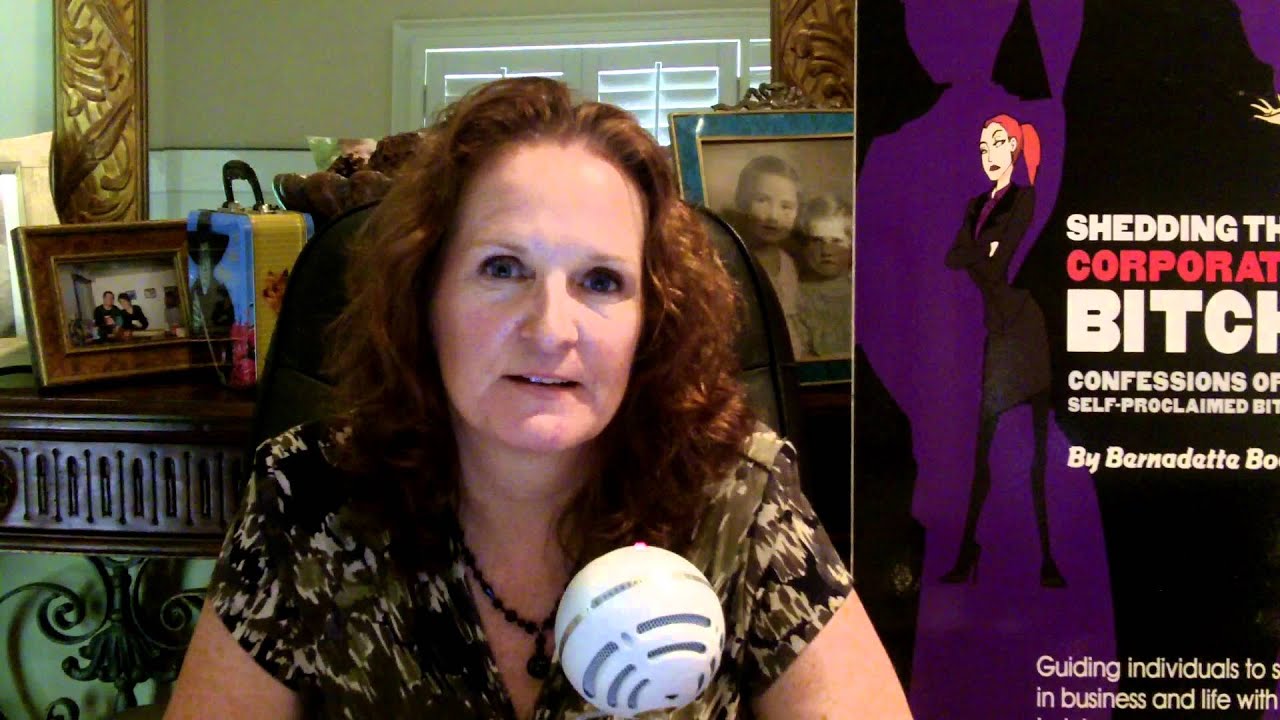
Well, good afternoon, good morning, good evening, wherever you might be. It's Tuesday and this is Bernadette Boas on Shedding the Bitch Radio, and I welcome everybody today. As you know, Shedding the Bitch Radio, we talk about all of the angst and attitudes, negative mindsets, belief systems, and and other fears or insecurities that might get in your way or might block you from really pursuing the goals and the dreams that you have in your life. And we have a lot of great guests, but today's particular show I was very excited about because a lot of times, especially in the trying economic times, financial times, jobless times that we are in today, We tend to really get inside our head, and the best thing that we can do is get out of our head when it comes to money. So on Shedding the Bitch Radio today, I have my guest Robert Gignac, and he is the author of Rich Is a State of Mind. How you doing, Robert?
I'm doing great, Bernadette. Thank you for having me on your show.
And I understand you are in one of the most beautiful areas of North America, Banff, Alberta.
I am. It's in the heart of the Canadian Rockies, about an hour and a half northwest of Calgary. And I must admit, the view out the window is a little distracting at the moment.
Well, feel free to get in the mood by staring out the window, because I was there many years ago for a business event, and it is absolutely stunning. And all I remember is the fact that there were, ah, I want to say they're antelopes, but I don't believe it was, that were walking across the golf course at the main hotel there. So I can picture exactly in the area that you might be.
If you want to come and see nature in real life outdoor settings in terms of elk, deer, the occasional cougar and bear, this is the place to be.
Oh, very cool. Well, considering too that it continues to be about 95+ here in Atlanta, Georgia, I'll just get in my head, you know, the nice breeze and the mountains and whatnot of Alberta, and hopefully that'll keep me cool for the rest of the day here. Well, I wanted to get into this conversation because I have a lot of questions, and I know the audience will too. And for those of you that are listening live or chatting in with us Feel free to chat in also at the same time. Be sure to call in at 1-818-572-2910 to ask Robert any question that you have in regards to just kind of money in the mind, and we'll dive further into, you know, his book Rich Is a State of Mind, and also what Robert's expertise and areas of maybe tips and advice for you would be. And then, of course, if you're listening to this in archive, feel free, I'll give all of Robert's information at the end of the show, and feel free to reach out to him or to me if you should have any follow-up questions or you just, you know, need him for— he's a great public speaker, which I'll get into with his bio. So, Robert, let me introduce you with your about the author. From his book. Again, it's, uh, Rich Is a State of Mind. Robert is the owner of Tynack and Associates. Robert focuses on personal and organizational development, a sought-after speaker at seminars across North America and Europe. Robert writes articles on personal and financial development for various publications, as well as a bi-monthly column in Enterprise Magazine. A student of the financial planning process and a client of financial planner Michael J. Townsend for over 15 years, He is happy to share what he has learned through his story. Robert is also proud to be a graduate of St. Clair College, Windsor, Ontario, and Wilfrid Laurier University in Waterloo, Ontario. So I'm thrilled to have you, and anything you'd like to add to your— to the description or the bio that I just introduced as to who you are and what your area of expertise is before we dive into your book?
No, I think you've covered all of the relevant highlights there, Bernadette. In terms of what I do, and one of the reasons I'm here in Banff is I'm speaking at a conference of Canadian financial advisors in order to share with them what it's like to be a client of their industry in incredibly trying financial times.
And I'm sure they're all kind of ears to the wall, as they say, and wanting to kind of soak up what advice and tips you could provide them. So I'm sure the audience today will also look forward to that as well. But I really was intrigued, I have to admit, when I first went to read your book, Rich Is a State of Mind. When it comes to money and when it comes to finances, I know I was kind of like hesitant. I was like, well, do I really want to, you know, listen or read, you know, stuff about money because it will just stress me out and it will be very kind of analytical and detailed. And what I found so beautiful about your book is the way that you position it in a story and the characters immediately drew me in. For instance, I was only going to I'll be honest with you, I was going to have time to kind of get it scanned, and the next thing you know, by chapter 3 or 4, I was like, okay, I really need to find out what this journey is that this, uh, you know, the financial planner takes after the death of his friend. So, uh, could you kind of talk to us about where, where the purpose of the book came from, why you wrote it, and the fact that it's so a perfect timing for it?
Well, first of all, I want to thank you very much for the incredibly kind feedback about the book. What I tell people that read "Stay Alive" is when I set out to write it, I didn't think the world needed another book on personal finance. There are a lot of them out there. The vast majority of them remain unread on people's shelves because they tend to be, as you suggested, very dry, very analytical, lots of charts and graphs.. And for many of us, it brings us back to days of high school, college, and university and economics classes. And in short, it hurts our brain to try to read that kind of material and absorb it. We know it's important, but we don't really care that much about it. Right. So, there were a number of conversations I had with friends of mine when I decided I was going to write this book. I decided to build the story of an American family. And what the attempt was to do was to create a novel about personal finances seen through the eyes of a universally dysfunctional American family. So short, like all of our families. And I thought if I could do that, I can engage the reader through the characters by creating characters that readers would identify with and go, that's exactly how I feel, or that's how my sister feels.. And if I could do that to get them involved in the family, then the lessons could flow out of that, as it were. And when I say lessons, I'm not trying to by any stretch make the point that the book is preachy. It covers all of the basic things that we need to know about personal finance, many of which our parents tried to teach us as teenagers and young adults, but we kind of lost those Yeah, yeah, yeah, I'll get to that when I'm older. Right. So the point is, for many of us now, we're older and we're just getting reacquainted with the lessons of now.
Oh, absolutely. And I have to, I do, I have to be sincere and say, or I am sincere when I say, the position of it being in a novel perspective. And again, I've read some books, not necessarily in the money arena, that also position themselves like that. They put it into the into a story so people can relate to it so much better. And it did. I mean, like I said, I was drawn in. And then I love the idea that then you kind of even very simply walk the story and therefore the reader through kind of steps they can take. So you talk about, you know, goal setting and then— and the SMART process, S-M-A-R-T process of setting goals. And then you And I do want to talk to you— you help to really settle people on what their definition of rich is. And I love talking about that subject, so I want to ask you about it as well, because my definition certainly changed through my transformation and my shedding of all my ugliness over the years. And therefore, my definition of success and riches has definitely changed. So how do you define rich and what is it that you're trying to get across in the book about how people should look at the definition of rich?
Well, the nice thing about the word rich is it does come with a lot of emotion for many people. And the best part is that it's different for everyone. And when I encourage people to think about what rich means to them, is you really kind of have to take a step back, focus on what's inside you and the things that you value at a very personal level. Because all too often the marketing gurus of Edison Avenue are trying to tell us what rich should be in terms of the things we should be buying, the things we should want to have, the lifestyle that it's— they see it that we should aspire to. But when you talk to people people who define themselves as rich, you'll find out that it's a very personal definition about the life they've chosen, the people they chose to associate with, and it has nothing to do with the bank account balance, what kind of credit card they carry in their wallet, if they do in fact carry one, and where they choose to live and what that house looks like.
Amen. Amen. Amen. And you couldn't have told me that 3 years ago, I can tell you that for sure. I would have only told you that it was, no, it's power and position and ego and bank account and all that kind of good stuff.
When it comes to things like rich, the very first thing people think about is obviously money when it comes to rich. But if you look in Webster's Online Dictionary and type in the word rich, the very first definition it comes up with is color. And it talks about hue and depth of color. And things that draw your eye into something appearing to be rich. And, you know, it gets to the money stuff, certainly, right? That doesn't happen to, like, definition 3 or 4. And immediately, for most of us, when somebody says, "Are you rich?" it's like, "Well, I don't have that much money." Right? I didn't ask you how much money you had. I asked you if you felt you were rich, right, in terms of the relationships you have and the friendships you have, the people associate with? Are your parents still around? Your relationships with your brothers and sisters? And how do all of these pieces fit? Because we all know people that if they've got $20 in their wallet, they feel like the richest guy in town. Yeah. And other people who have a net worth of $2.8 million can't sleep at night, terrified that it's all going to disappear.
Ah, so true.
At the end of the day, if you can't sleep at night, it doesn't matter how much money you have, you're not rich. The people who sleep well at night based upon the things they have and are comfortable in their own skin and where they are are the people who can truly define themselves that way. Right.
And I have to admit, my main kind of subtitle to all my programs is Shift to Rich, and I can't tell you the amount of times I have to explain I have to explain that because they think that I'm only talking about money. And yet it's, you know, it's like the last thing kind of on the totem poles of not only myself and obviously you, but even those people that are wealthy, or I'll say successful, have a successful full life. You're right, they'll say that it's one of the last things that they, you know, define as rich or success is the The bank account number. Well, let me ask you a question. How is your book, especially nowadays, how is your book, your message, the tips and the techniques that you provide, how is that changing individuals' lives? Like, you know, right now you're up in Banff, probably having similar discussions and using a lot of the content from your book. How are people being impacted by this story and this kind of view on what rich is?
Well, the one thing I hope that readers take away from the book, that one of the things that I'll be talking to financial advisors about later on today, is the fact that the best possible things your clients could do, or a reader could do at the moment, is stop reading the newspaper and watching television. I try to explain to people all the time, it's not the goal of the financial press in business newspapers and magazines to educate you about personal finance and money. Their job is to sell publications. And how do they do that? By putting in 48-point font and right, right at the top, "The end is near, tune in tomorrow." Right. That when you educate yourself about personal finance and start to develop an appreciation of your own skills around money, you will pay less attention to the day-to-day things that happen in the market and the sense that the world is coming to an end based upon things that are happening economically all over the globe at this point. That is not to say that those those things aren't important, but at the same time, they shouldn't be determining whether or not you sleep at night based upon your own personal life, because at the end of the day, you can't control them, right? So worry about the things you can control, which is your own budgets, the financial plans you've built for yourself, the amount of money you're saving on an ongoing basis, your process of eliminating debt, and making sure You know, people ask me all the time, are you anti-credit card? No, I like credit cards. I think they're a wonderful thing, but only and only if you pay them off at the end of every month.
Right, right. Which I'm sure you get a lot of people's eyes rolling nowadays.
Oh, absolutely. Yeah, so to that point, people are bankrolling their life on those pieces of plastic, and when they're doing that, they're doing themselves an incredible disservice.
Yep, absolutely. Well, going back to your statement of control, and I had mentioned earlier about your, um, the whole chapter you dedicate to goal setting, uh, you know, there is, there is this, this, or not believe, there is this self-control and feeling of freedom when you actually sit down and you, you do you do some planning and you really think through what it is that you want to accomplish and how you're going to get there. So could you talk to us about your thoughts on goal setting, why it's important, and how that can give someone a sense of freedom and control when they feel like totally, you know, out of control?
Well, the one thing— goal setting is a very funny thing for people all over the world. And I've had the chance to live in Europe for a bit. I live here in Canada. I've spent a great deal of time in the US. And it doesn't matter where you go, you talk to people about goals, and you run into some very common issues. The first issue is everybody says, "Yeah, I should do that." The second issue is, "But I'm not doing that." And when you take a look at goals for yourself, the one thing that goals what you do when you sit down. It really is kind of a creative process. People think that goal setting is just something you can jam in between watching The Biggest Loser and what comes on at 10 o'clock on television. And it really requires you to sit down in a quiet space over not just one 30-minute period of time, but over an extended period of time to really look inside you and go, what are the things that I truly what you want to have, the vast majority of which have nothing to do with money. Right. People think about financial— I know I need financial goals, how do I do that? It's like, no, no, no, don't worry about the financial goals. It's what— where do you envision yourself being? But sometimes we get too wrapped up in the day-to-day busyness of our iPhones and BlackBerrys and 600 messages a day that we never take the time to sit down in a quiet space and go, what is it I really want out of my life? And that's the very first beginning people understand that it takes some quiet reflection in order to do it. The second is there's no such thing as a wrong goal. Because sometimes people will share with me, I tried to do this but everything I wrote down sounded kind of silly. It's like, so why did you judge it that way?
Right.
Well, it if I showed them to somebody, that they would go like, "That's what you want?" And it's like, "That's okay." Because the judgment isn't based upon what your best friend said about your goal. The judgment is based upon how do you feel about that goal. Right. Because we all want different things. Yeah. And in some ways, we've become accustomed to not sharing with people what it is we wanted in life. We're just happy to go along go along with the flow. But it's not until the point where people start to create some hard and fast goals for themselves will they then really take the first step forward to acquiring them and crossing them off the list.
Absolutely. And I find, being that I talk about this shedding, right, to shed all those inner voices, and one of those inner voices are all the friends and the family and everyone else kind of defining you. And telling you you're not going to be able to accomplish those goals. So people don't do it. They just don't define them because they're listening to all these people in their head telling them that, well, that's a silly goal to be going after. And it's, gosh, what do you— you know, it's like, it's a lifetime challenge to try to get people to say, no, no, no, I don't care what anybody else says, thank you very much, but these are my goals.
Well, if people tend to look— is an all-or-nothing. And, you know, if perhaps it's a weight goal for somebody and they said, I want to lose 50 pounds, and then it's, you know, over— and you set it up and plan to do it over 24 to 36 months, and then at some point they kind of plateau and they clearly get to 38 instead of 50.
Right.
They somehow feel they've failed, right? Because, oh, I set 15, they think they must be some kind of a failure. And what I'm trying to get people to do is understand the concept that you set— A, setting the goal is step 1. Doing the work in order to accomplish it is step 2. The ongoing reflection on those goals and measuring where you're at is step 3. And if you don't achieve the goal as it was created, that doesn't mean you're a failure because my bigger question coming back to me, if you had never written this down, if you had never taken the steps, where would you be today if you hadn't done any of that? You'd still be pondering the fact that I really wish I should have lost this or saved this much or bought this car or changed my job. That the process of putting it down on paper is what takes it out of your head, makes it a little more real for you. It also allows gives you the ability to track it. Goals are never an all-or-nothing thing. 75% of a goal is a tremendous amount over 0% of a goal that you've never set out to accomplish.
Absolutely, absolutely. It's better than a blank piece of paper staring at you. Any kind of—
and trust me, I've stared at my share of blank sheets of paper.
Oh, you and me both.
Because I've I speak to people about it and wrote about it in a book doesn't mean I don't need to spend more time working on it myself.
It's so true. And everyone out there, I'm speaking about Robert Guignac, author of Rich Is a State of Mind, available on Amazon right now. And at the same time, you can always go to richisastatemind.com and get more information in regards to the book because it has such great tips and a story that will pull you in and help you kind of relate. That's what I really liked about it. It's so relatable, as Robert said at the very beginning as well, that you don't feel kind of intimidated or, uh, kind of insecure about, oh my gosh, you're out there alone. You actually relate to the story that he, he is saying, saying in his story, in his book Rich Is a State of Mind. So Robert, I do want to hit on, if someone walked off of here today from this from this show, what 3 tips, what 3 things would you tell them to do in regards to adopting this state of mind around richness and their financial prosperity and control? What would you tell them to do?
I think the very first thing I would do, Bernadette, is to tell them that based upon everything that's going on around us all of us today is close your eyes and take a really, really deep breath. And just try for 10 or 15 seconds, 5 or 6 really deep breaths in or out, and just go, "I feel better now." Because we get so consumed by what happens around us, we don't spend any time looking inside. And that ability to to take a couple of deep breaths regardless of where you are and go, things are not as bad as they seem, as long as I'm not wanting to pay attention to all of the stuff that's going on around me.
Right.
So the first thing is just try to relax a little bit. I know that's going to be hard for many of your listeners, and some days it's hard for me too, but it's like, it's never as bad as you think it is, and it's never going to be as bad as you think it's going to because we always jump into worst-case scenario.
Yep.
The second would be spend some time thinking about the things that you want to create for your life that have nothing to do with money. It gets your attention away from the day-to-day focus on credit card balances, bank account balances, IRA balances, 401 balances, and take the emotions side out of that and really spend some time thinking about where it is you want to go. The next part is take a financial snapshot of where you are today. The problem with many people, and myself when I was a little bit younger as well, is money was how I kept score. And money, money's a cool thing. We all need to have some. We need do better things with it, but it is a really lousy way to keep score. And when people do that with money, it creates a lot more tension because they're continually looking at their peer group going, "Well, I don't have as much money as her, and I don't have as much money as him." Right. And I really try to get them to understand is how much money they appear to have has no direct correlation to how much money they actually have.
So true.
People create lifestyles for themselves all the time based upon money they do not have. Right. So what I encourage people to do is take stock of where you are, and what typically happens when people take the time to really do that is they go, wow, this isn't anywhere near as bad as I thought it was going to be. And that's the first step.
Yeah, and but it's also, I, you know, do you find that it's the hardest because they also don't want to kind of stare at it on a piece of paper? It's almost like goals. They don't set goals because they don't want to be accountable to not accomplishing them. So all of a sudden, you know, they put it on a piece of paper, all their financial state, and all of a sudden they are like freaking out.
Sometimes we do that. The accountability thing is funny because the only person you truly have to be accountable to is yourself. Yes. And in some ways, that's the hardest person to be accountable to. People say, well, I never want to share my goal list with my friends. I said, that's okay. You don't have to. If you want to, you can. And it's a valid process because it can help you listen some more. Because every once in a while, you'll tell a friend a goal that you want. They go, I had no idea you wanted to do that, I know somebody who can help you do that.
Right.
So that's one area where sharing your goals and dreams can be very, very— I use the word profitable, but I don't mean it in a monetary sense. But there are people out there to help you all over the place, only if they know what you want. Yep. But they can't figure it out for you.
Right.
And I think that that process of the quiet reflection is the hardest thing to do when we're working 60 hours a week and we're shuffling kids to and from jazz, tap, piano, ballet, soccer practice, and all of these things is that we don't take the time to do this for ourselves. When there's little slices of time that add up to that contemplation, it can have a huge impact on where we end up being 5 or 10 years from now.
Absolutely. And you also talk about the fact that, okay, once you do spend some time for yourself, then go and get help. Go and find a financial advisor. Get some expert help. Don't do it alone because they have the expertise and they can bring you kind of the guidance as well as the comfort in what it is that you're trying to accomplish.
Absolutely. And I talk to people about this all the time. About the concept of having a coach. And people do it on the life level, or if they're involved in sports, they understand the concept of coaching. Right. But financial— because money is so emotional, people are like, "I don't need help with my finances. I'm not willing to open myself up to sharing my personal financial story with a stranger." Yeah. And I say to people all the time, "I get that, but here's something And you'll also get, and particularly with men, women are much better at this than guys are. There's guys who go, "I'm smart enough to do this myself. I don't need any help." Absolutely. And I'll ask them, "So do you golf?" And they go, "Yeah, I love golf." "So have you ever hired a swing coach to kind of help you with your game?" Right. And he went, "Well, yeah, I've done that." And I said, "So, okay, let me see if I can get this right. You hired a coach to to help you play a game that doesn't make you any money. If you would hire a coach to help you with your personal finances, maybe tweak what you're doing so that 5 or 10 years down the road you can play all the golf you want and not worry about it.
Yeah, so that's a great way of looking at it.
All of a sudden, you see the light bulb go off.
Right.
And they go, never thought about it that way. Exactly. That's my job in life, is to get people to think about it a little bit differently than they ever have before. The great thing about women is— 90 seconds. No, no, no. They have no qualms about going out and asking their peer group, "Do you know somebody who can help me with this?" Guys, on the other hand, typically go, "I don't know how to do this, but man, I'm going to figure it out all by myself, and I'm not even going to ask my best friend to about it because they think I'm an idiot because I don't know.
Right. Well, it's the same way that they don't like to ask for directions. Right. Well, it's like guys don't like to ask for directions. So, absolutely right. Well, I am talking— I am talking with Robert Gignac, and we always wish that we have more time on this show, and I'm definitely gonna have to extend this radio show because we just don't have enough time with our great guest, but I want everyone to go out to richisastateofmind.com, check out his book, it's on amazon.com, go and buy it, read it, get the stories. Thank you so much, Robert, for joining us. It's sad when it goes so fast, but I do appreciate you being on the show, and maybe we can have you back in the future.
It's been an absolute pleasure, Bernadette, and if you would like to continue the conversation, I would absolutely think that would be a wonderful thing.
Wonderful. Well, everyone, I want to thank you all. As you know, these half hours go so fast. And go to sheddingthebitch.com and join us next Tuesday at noon as well for Tiffany Chanel, the Corporate Goddess. Have a great week, everyone. Thank you so much, Robert.
Thank you again, Bernadette. I appreciate it.
You're very welcome.
Thank you for using BlogTalkRadio. Goodbye.
Robert, this is Bernadette Boas. I wanted to thank you so much for a great call. It goes so fast, but I think we got a lot of good information in and a lot of great tips, which was even better. So thank you so much for joining, and I will send you the link and other information in regards to, the show so you can then also use it with your network. So we'll talk soon and thank you again. Appreciate it. Bye-bye. Oh man, crap.
More from Bernadette



From Stuck to Leading, Episode 2 — Meet the 5 Inner Fears Destroying Your Leadership



