Tips on Leveraging Girl Poweron Shedding the Bitch Radio
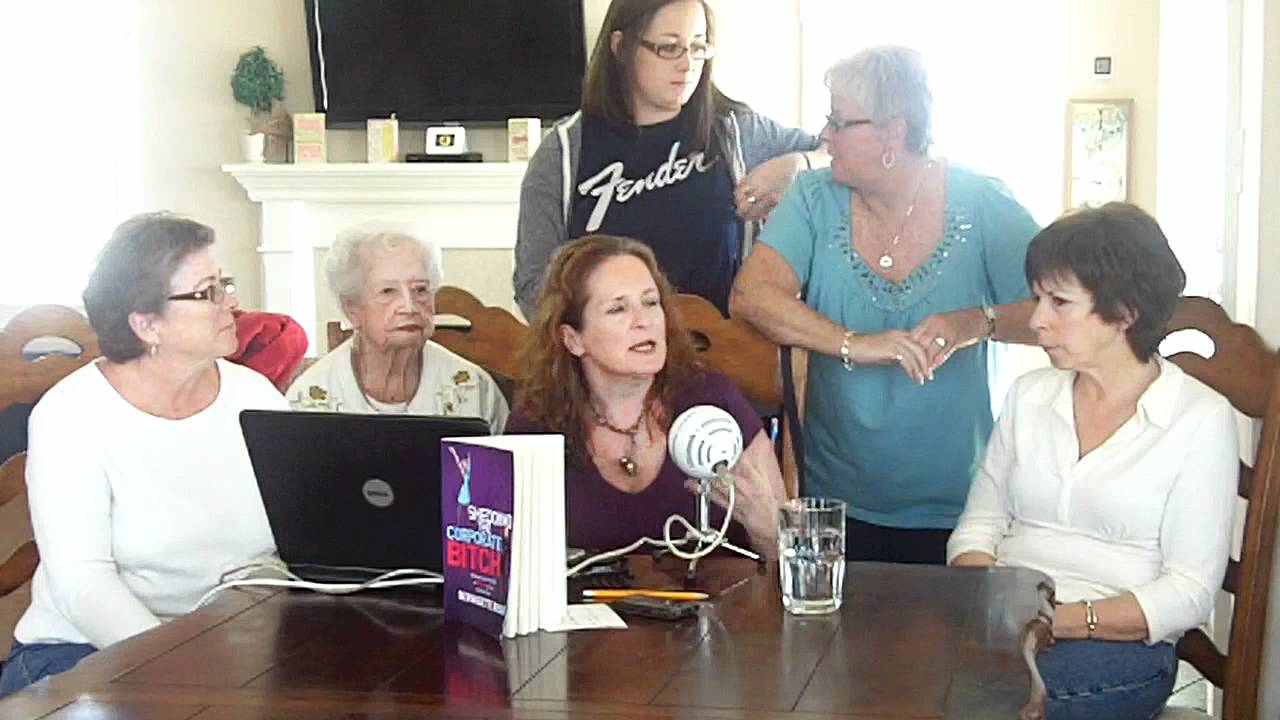
In a special Mother’s Day episode of Shedding the Bitch Radio, host Bernadette Boas gathers her mother, four sisters, and niece Ashley Marie (with sister Patricia calling in) to discuss the meaning and practice of "girl power." The conversation weaves personal stories about their annual "Jungle Chick Week" tradition—a women‑only beach getaway in Ocean City, NJ—into broader reflections on unity, solidarity, and the importance of women supporting women. Participants define girl power as unity, solidarity, and understanding differences, and contrast it with how men often resolve conflicts. They explore how maternal influence, family mentorship, and sports/team experiences have fostered humility, assertiveness, leadership, and confidence. The group emphasizes the need for reliable support networks, sharing a listener’s struggle to find one, and encourages listeners to reach out via phone, email, or the sheddingthebitch.com platform for resources, assessments, and community. The episode closes with a call to action for listeners to join future shows and to continue nurturing their own "girl power" circles.
Chapters
Good. I look like one of your sisters, just, you know, Bernadette, her 5 sisters and mother.
Hi everyone and happy Tuesday and welcome to Shedding the Bitch Radio. This is Bernadette Boas. I welcome you on my special edition and episode where I am celebrating Mother's Day week all week long and I have with me in the studio today my mother.
Hi, Mom.
Hi.
And I also have 4 of my sisters. Peg.
Hello there.
Theresa. Hello. Ann Marie. Hello.
Oh, I guess I only have 3. And then I also have my niece, Ashley Marie.
Hello.
And my sister Patricia is calling in, and my sister Mary unfortunately is working today. But from the Boas girls to you, Happy, happy Mother's Day week. I wanted to take advantage of us all being together. I'm back on the road again. I'm in Ocean City, New Jersey celebrating Mother's Day week with my sisters with what I've talked about in the past, our Jungle Chick Week, which is kind of a girl power week. It's the guys get their weekend to go away with their sons or their nephews to a fly fishing camp tournament, and therefore about, what, 10 or 11 years ago 10 or 11 years ago, we decided as a girls to head down south to the beach of Ocean City to take in a week of just girls and conversations and champagne sipping and game playing and laughter. So I thought today we could talk about girl power. And if you have any questions or you want to chat with us or just say hi, feel free to call in at 1-800-626-1000. 818-572-2910. Also go to blogtalkradio.com/sheddingthebitch and you can also chat with us. And I see that we have some folks out there already all prepared and hopefully wanting to chat it up. But today is girl power, so think of any questions that you might have about— what we've talked about in the past has been around how can women help each other, because women have to help women in order to be successful in life. We've talked about the fact that guys have their boys club, and we need some, we need some girls clubs. We need some girl power. So I was just going to ask my sisters to chime in and my niece to chime in about a couple subjects around girl power. So I'm going to open it up to the group, and I'm going to ask, how would you define girl power? When someone says to you, you know, we need more girl power, or let's like do a trip like this, girl power. Week. What does that mean to you? Anybody interested?
I'd say unity.
Unity, very nice.
Solidarity and understanding of each other.
Solidarity and understanding.
And understanding each other's differences. And, and that's where I think you can really tell your sisters or your friends, because you can fight and then you can you can have each other's back and help each other. You just kind of just let it go and you can make up.
You can make up. There's one thing about guys that's so different to women is the fact that guys can fight it out on the basketball court or in the boardroom and then roll up their sleeves and go have a beer and never bring up the subject again, whereas women tend to hold on to those things. So I do think that it's a good point that you raise in that You need to— women need to learn how to fight it out, duke it out, know each other, like Teresa said about understanding each other. And yet at the same time, then be able to roll up your sleeves, have a beer, and get over it type of thing, as opposed to holding on to it. Would you agree?
Absolutely.
Yep. I think we're more emotional and sensitive.
Definitely emotional and sensitive, but that could be good in some cases, right?
Yes.
Because the one thing guys are always accused of is being too cold and too unemotional in how they deal with things. And yet women get it, get a slap on their hand about being emotional and PMSing and those other things.
Very true.
Yeah, so if girl power is important, then, you know, what do you look for when you have, like, even what we're doing here? And trust me, there's a lot of differences in this room. Of personalities. That's for sure. Yeah, there are. There's some of us that are really sweet and kind.
I know.
But seriously, with those differences that we have, how do we— I mean, what do we really benefit from? What's really gained as a result of, you know, girls club or girl power that benefits you in your life? Anyone? Anyone? Would it be the fact that you can come together and just, just sit back, put your feet up, laugh, have a good time, play games, and at the same time while you're doing that, you're learning a lot about each other, are you not?
Yes.
Oh, definitely.
Right? And I mean, I know for a fact, and Amra, I think you mentioned it before we came on air, that that the fact that we come and do this trip every year for 8 days— some of us are here all week, some of us aren't— but it allows us to really get to know each other more so than 340-some-odd days the rest of the year. I live in Atlanta. Now granted, well, you're in New Jersey, right? And Delaware. I'm sorry, Delaware.
Rehoboth, Delaware.
Delaware. And, uh, and yet even though a lot of you are in Philadelphia, you know, near each other, you know, you don't have that opportunity day in, day out to really know what goes on in each other's lives.
True?
Yes.
Yeah. So I do think it's important that, you know, girls, just like men, they seek out— whether it's their sisters— we're fortunate enough that we have 6 girls and our mother, and then we have some beautiful nieces in Ashley and Caitlin and a number of others. We have, um, not sure how— what the number of nieces are. However, there's a lot of girls, and there's a lot of opportunity to have girl power even before we even look outside of our own family unit, which is very, very fortunate. At the same time, it's also very fortunate that we have this opportunity each year. To do this. So let me ask you another question, and it doesn't necessarily have to be women, but who was the number— and it doesn't have to be your sister, obviously— but who was one of your number one influences in your life that really helped you kind of become the woman that you are today?
May I?
Sure, Peg, go ahead.
I would say, and it's not because she's sitting in the room, but I would say my mom. Literally every day I learn something new, not only about her but about me, that astounds me or that just is a— it's that little tidbit of humility that you just happen to get that day because of something she's either shown you or something just— it's that little something. It's all the humor that's involved in life. It's all the power that she exudes when she walks into a room. You suck that in. You want to be a sponge. You just want to take it in. She's got so much going for her that you sit back and you say, wow, it's amazing what this woman has done in her life. 12 children. You sit back and you just marvel over a mother, period, right? My particular mother giving birth to 12 12 kids, and still at 84, Mom?
83?
I'm sorry.
Still, still, you know, God willing, we're able to, you know, for years to come, come down for our Jungle Chick weekends. And you just marvel over the strength. There's so much strength there and so much drive, so much humility, so much faith.
But what has that given you? What has that done for you? As a woman?
As a woman, it's made me accept— it's made me, uh, wow, more humble. It's made me look at my walk down the beach this morning in a totally different way. It's made me more relaxed. It's made me more of a content human being, knowing that this force has helped me feel this way, or knowing that this person man, woman, or child, but it happens to be a woman, is in my life.
Right, very nice, very nice. Anybody else have a major influencer in their life?
Um, sometimes I probably take it for granted, but I would say my parents as a whole. Oh, I'm gonna cry. My mom's sitting right here. Um, they've just done so much for me, and sometimes I might take it for granted, but, um, Sorry.
That's okay, that's all right. It is Mother's Day week, so we're celebrating, and we're celebrating girls. We're celebrating women being girls, being goofy, being just overall girl power. Girl, you know, the girls club. And if it's your parents, if it's your sisters, if it's your aunts, if it's the woman down the street, if it's somebody at work, Whoever it would be, we all need people to help coach us and mentor us and guide us and that we can lean on, like totally lean on and know that they have our back. So Teresa, anybody in particular that you know that regardless of who you are, what you want to confide in them, what, you know, struggle you're having, what pressures on you, uh, that you know that that person's just going to be there with an ear? To listen to?
Um, that's a hard question for me because I think with life as it changes, and I'm going to speak for my sisters, they've always been there at the times of my life when I needed them, and my mom is always there. So I think it depends on the situation. The situation. I think that's what's so special about women. They know how to come together. They can depend on each other, and they just— they, they can really trust each other. And I find a lot of comfort knowing the sisters, knowing the female friends that I have, and having the mom that I have. It's just comforting to know that I have that support.
Well, I do know that I want to raise one thing up because this came up a couple weeks ago on one of our calls. A caller called in and Wendy, if I remember specifically. And she had mentioned the fact that she really doesn't have a support system, whether it's sisters, brothers, parents, friends. She was just at a loss as to how to find that support system. And so, you know, when— as we deal with life issues, and in our vernacular, we work to, you know, discover, confront, and shed the angst, attitudes, negative mindsets, what we call bitches, out of our life.
We—
you need somebody, because if not, then where do you go for guidance?
So was that Wendy you said?
Yeah, Wendy.
My number, Wendy, so you can call for a little support.
Well, no, it's true. No, and that's a— that was a great segue because there's always somebody out there who wants to help. It's a matter of whether or not you're opening up and asking for the help. And I know for myself, for many, many, many years, I I was not good at asking because I was not good at receiving because I was just too wrapped up in wanting people to think that I have it all together and that I was, you know, confident and secure and I didn't need any help. I could handle being single. I could handle being a corporate executive. I could handle doing whatever I needed to handle. I didn't need a man, you know, that kind of thing. And yet it tore me apart for so long because there's so many times that you do I mean, you do need somebody all the time being in your life that you can confide on. So, you know, I really want to stress to everybody out there listening, whether you're live on the call or you're listening to the archives or watching the video, you know, just really think about who do you have in your life. And if you answer no to that— and trust me, I've heard a lot of people answer no to that question— that's okay, because at least now you kind of confront it and you face it. And you feel the pain or the discomfort of that answer. But now you can search those people out because you'll be amazed that once you open yourself up to receiving assistance and support and the ability to cry and be vulnerable and show your total insecurities and all your warts, there will be people there to catch you or to hug you and to support you. So I, you know, really do stress that if If you're one of those that are struggling with who that is, go and find it because they are there. And like I said, or like Peggy said, you can always call me or email me at BernadetteBoas@balloffireinc.com and I'll give you her phone number. Okay.
All right.
Now there's, I know there's one thing too that Every one of us— I'm looking around the room— every one of us in the studio, and many people will also talk about how being involved in sports or extracurricular activities, or in some way being not necessarily competitive but being in a teaming environment, whether it is personal or professional, is also one of those ways to get the support and the mentoring and the coaching and the guidance that you need. So I'm going to turn to anyone that can, you know, that wants to contribute to this question. But we've all been competitive athletes. Mom even, you know, competed, and she's a beautiful singer and whatnot.
What does—
well, Mom, let me ask you a question. You and Dad were very, very adamant about putting us into sports and team you know, team environments. Why did you find that so important to our growth and our ability to, you know, really learn certain characteristics and traits about ourselves?
Well, of all the years that we've been together, it's been many, the boys were always involved in sports, and I just didn't think the girls would, but they took right on and entered into the sports life. They liked all the sports, they played the sports, and I think we enjoyed going to all of their sports. We hardly missed any basketball, soccer, football, whatever it was, we were there.
And was there any particular traits or characteristics that us being in sports as women provided us as to help us be the women that we are today?
Well, in some ways, yes. But all the girls were so different than all the boys. And we're talking about girls today, but knowing me, you would have to say that I love my boys almost as much as I love my girls. Even more so.
Good answer, Ma! Good answer!
I better say that.
Yeah, yeah, right.
Communicated from the Catholic Church.
Well, how about you girls? I mean, what did sports, what did competing, what did being in team, like girl power, do for you?
It brought out an aggressiveness that I didn't know I had.
Aggressiveness or assertiveness?
Assertiveness, yes. Actually, in a negative way, yes, an aggressiveness. But an assertiveness is when I learned it was an assertiveness is when I helped knew how to use my aggressiveness and realize that being aggressive can sometimes be overbearing, and you got to pull back to the point where you're being assertive instead of aggressive. It really taught me how to work with— I don't have to be the one that scores the goal. I can help that other person across the room score the goal. That's all part of, of, of being successful, is allowing everybody within your to be successful by helping out. They'll do the same if you do the same back.
Well, I think both of those concepts can be translated into business as well, that, you know, women who are assertive— now granted, there are some women in business that are aggressive and therefore are bitches or are nasty people, but even assertiveness, unfortunately, women get interpreted as you know, being bitchy and being ambitious and whatnot, and yet you never hear the men. And yet we're not here to judge either side, but I think it's important to note that there is a difference between assertiveness and aggressiveness. And yet aggressiveness can be used in a positive way as long as it's going toward the benefit of yourself, the other person, and not leaving one person out, so to speak. Even though in sports someone's going to lose, but at the same time it's done in a very sportswoman-like manner, and therefore aggressiveness is okay on the playing field, but at the same time it has to be for the better of, you know, of everybody. So how about anybody else? Any thoughts on what sports, what competition, what being an athlete did for you?
I would like to fill in there. I think that I felt like I was a different person say on the field, hockey field. I felt comfortable out on a field because it made me feel comfortable. It made me feel very secure, but it made me feel important. I felt like I was more accepted in this world that can be very man-oriented and women are trying to step up their game here. I think it's really important to— it's not just, just because— I mean, what it really comes down to, I felt like that's where I was most secure, most happiest, is when I was on a hockey field. Hockey field.
Um, is that because you were in control of how you played that sport versus life can be very uncontrolled?
Controlling? Yes, because I could control. I knew I was good at it and I could control that, um, and life itself outside of that, it, it was, it's just hard to keep together.
Yeah, it is, it is. Life is just definitely unpredictable, whereas on the, uh, playing field it can be more predictable. Anybody else have thoughts on it?
I think too, same as Terry was saying, you feel like empowered because you know you're good at it, and I developed a lot of leadership skills in playing with the team too, being a captain. Even if you weren't a captain, you know, the other girls, it's just like a bonding experience that you have with the girls. You know, be it on a sports team or say, you know, in some kind of club or even at work. Like, I feel like we are a big team at work where I work in retail, so.
That, and that is, that's actually really nice to hear because you don't hear a lot of people like, you know, kind of bragging about what kind of team they have at work.
But do you think her leadership probably came from her feeling comfortable in sports and it carried over to her life after?
Absolutely. Now, are you, are you, are you the manager, are you the leader of that team?
Yes.
Oh, okay. So yeah, so you have a great influence on what that team dynamic looks like.
That's kind of like our core value is to be—
have a good—
oh, sweet!
Have a good, like, morale across the board. Sweet. You know, you have your struggles and whatnot, right? However, that's kind of like the core value is to be, you know, we're— be able to work together as a team. It's kind of like our brand too.
So you live by that core value? You know, in all the weeks that I've been doing this show and talking to individuals and them participating on the call, no one's really talked about that. No one's really talked about— we talked about actually at the very, very, very beginning is to find those things that you really truly believe in and that really are critical and important to you that are going to keep you somewhat in integrity. And I hate to say it like that because it makes it sound like then you're— if you're not in integrity, you're a bad person. And that's not what I'm saying. But I love the idea that you actually have— and your store is a small boutique?
Yeah, uh, it's a corporate company at large, but—
but is it a department store size store?
No.
Is it a smaller— smaller store? And, you know, and I just think that that's fabulous, especially if corporate has been successful to pass down that core value into the branch stores. I think that that's extremely impressive. And I think it speaks loud to the fact that if we all could really understand our core values, what really is important to us that we're not going to compromise on, you know, whether that's honesty or integrity or trust or security or safety, a lot of words that have been used here today, confident, confident, and we stay true to those core values, then we can never get in trouble. I mean, and, and/or we can never kind of fall prey to some of, some of the, some of the ugliness in the world. If we always stay true to ourselves, then we'll always be able to maintain contentment with our, with who we are, with who we are. That's great. So anyone else with any stories from the field, from the swim pool. I'm gonna check and see if anybody's chatting us up and anyone wanna join in. I'm not sure where our sister Patricia is. We'll have to talk to her after the call.
Yeah, we'll have to have an open conversation.
She's on every week. She's on every week and she's not here for the Mother's Day sisterhood, girl power, and actually, I do want to stress and since If they're not on, they'll learn about it this weekend. But, you know, even this weekend, yesterday I think it was, the girls here, we sat down and speaking of values that Ashley brought up, we sat down and came up with a creed that we wanted for our own Jungle Chick Week here. Something that, you know, kind of a few statements that really ground, you know, why is it important for us to have this girl power week? And why is it important for us to come together and collaborate and share and divulge and, you know, really just, you know, beyond just kicking back and sipping on some martinis and cosmos, but to really, you know, kind of get to know each other and be open and honest and vulnerable to one another. So we came up with a creed, and I won't share it here because my two of my sisters have not been able to contribute to it yet, but maybe one day if you want to hear it, we can share what our own creed is. That we came up with for our Jungle Check Week. A couple other things when we talk about in our last few minutes, so we'll only bring up one other thing actually. When it comes to really understanding who we are as individuals, not of each other, but of individuals, you know, Annemarie, something struck me before we got on the show that you had said earlier is You know, there is even some things that your sisters don't know about you as, as much as some of your girlfriends do. Um, so regardless if we're sisters or not, there's some people that you just feel more comfortable and more, uh, secure with to tell them your deepest and darkest secrets. And then there's others that you don't. And again, I don't think any of us take it offensive that just because we're sisters we expect each other to to do that. But what would you— what is kind of a tip or a piece of advice to the listeners around when it comes time for you to really have to dig deep and work on something with yourself? You know, do you do that inwardly, or do you go and try to find somebody to sit down with to confide in and talk about? And if someone doesn't have that type of support, what would you tell them? What would you suggest to them?
If somebody doesn't have that?
Well, the first part of the question is when you really need to kind of dump your cup, where's the first place you go to?
To a friend.
To a friend. Girlfriend?
Mm-hmm.
Okay.
And is it kind of a full disclosure type of thing, or do you expect her to just sit there and listen, or are you looking for— A listener. Somebody that will listen. Okay, okay. And, um, and to guide you. And to guide you. Okay. And that, that kind of confidence relationship is fully protected and you feel totally— yes, with certain people, yes. Okay, okay. But those would be the people you go to, right? Okay. And does everyone have one of those people? Honestly, yes. Do every one of you have one of those people that you can go and dump your cup, so to speak? That's a friend of mine, Steve. I have, I have, depending on the situation.
Yeah, where I am in my life.
So, right.
Yes, yes, yes, yes.
And I have to tell you, I'll be, you know, I'll be open and honest to admit with you, despite the fact that I have 11 brothers and sisters and 22 nieces and nephews, I probably only have really found mine over— well, I should say not found the person as much as I have found my ability to be fully disclosing, uh, probably over the last 3 or 4 years. I mean, only when I was pushed to the wall would I go with certain things. But, um, you know, and even writing the book, writing my book Shedding the Corporate Bitch, we all talk about that. But, you know, that forced me to have to face some things that I wasn't even ready to face. So that kind of, you know, caused me to have to go search out people to confide in and be, and be kind of totally vulnerable to. So what I want, you know, to leave— what I want to leave everybody with is the fact that girl power is a critical part of our life and critical part of kind of who we are or, and who you're gonna become.
Home.
And so whether you're girls or guys, um, find that little circle of friends, whether it's 1, whether it's 5, that you really can work and confide in and be vulnerable to and share and collaborate and strategize on whatever it is that's going to make you happy and fulfilled and complete. Um, and if you don't have anyone, like I said, uh, you can contact me at Bernadette Boas at balloffireinc.com and I'll give you my sister's name. But you know, that's my little tidbit for today. And what I would love to have you do is go to sheddingthebitch.com. There's a number of resources and assessments and white papers, articles. There's a lot of blog postings and people sharing some advice as well with you. But make yourself comfortable at sheddingthebitch.com and let me know how I can serve you and help you shift your bitches to riches in your life. And then I want you to join us again next Tuesday at noon Eastern time on sheddingthebitch.com. And everybody have a fabulous, wonderful day. We're headed to the beach to finish our Mother's Day week. Have a good one, everyone.
Bye-bye.
More from Bernadette



From Stuck to Leading, Episode 2 — Meet the 5 Inner Fears Destroying Your Leadership



