Using Regrets and Rewards to Move You.
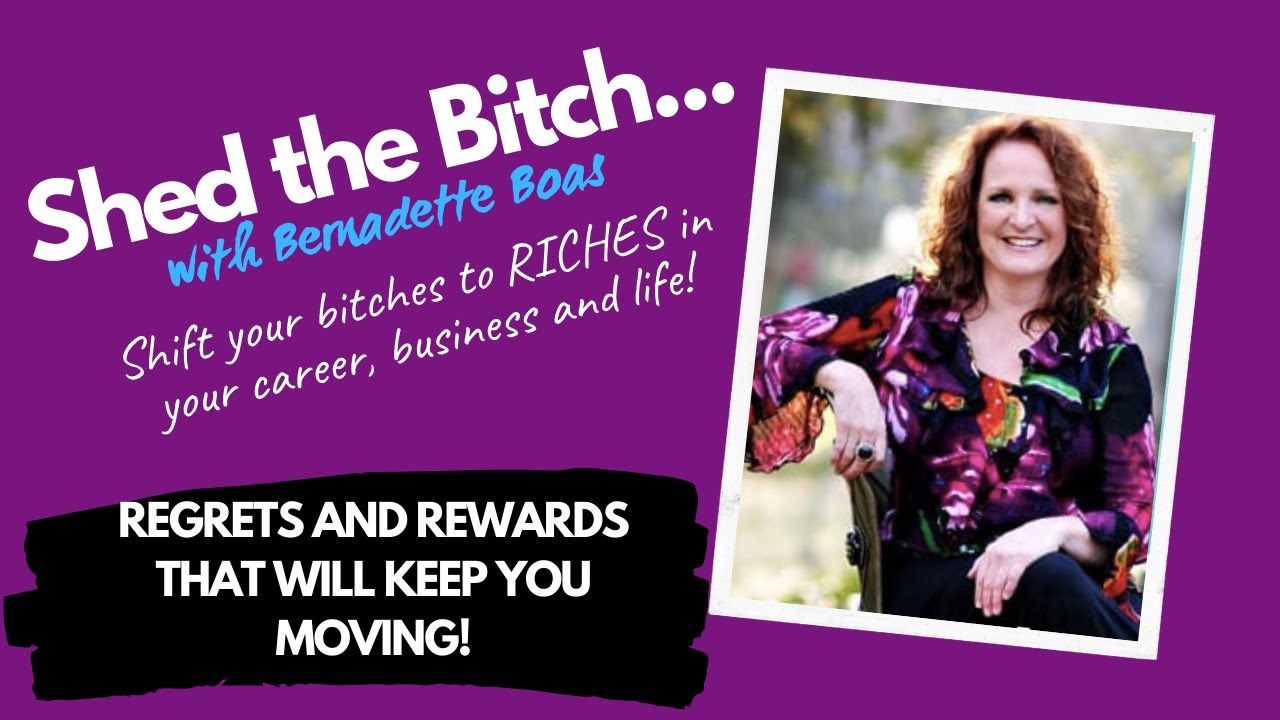
Bernadette Boas walks through three tools to reach your goals: list your regrets across health, finances, and relationships to clarify what matters; set an uncomfortable consequence for breaking a commitment; use rewards to sustain momentum. She shares a client who faced sardines as a penalty and shows how these reference points keep you moving forward.
Chapters
Tonight we're going to be talking about regrets and rewards. Now, we talked about this briefly on Tuesday when we had our Vision to Victorious achievement conversation, because the R of victory stands for regrets and rewards. However, there was a lot to cover that evening, and it sounds pretty simple. Okay, I understand what a regret is, and I I understand what a reward is, so why do we need to take any time to discuss this? However, when I'm working with my clients and we're sitting down and maybe it's been weeks or a few months in and we're discussing their goals and they're taking action and they're doing their thing and they're, you know, raising up progress, status issues, decisions that they're trying to make, problems that they're trying to solve. I'll also say to them, especially if they're kind of falling victim to their distractions, falling victim to their mindset, falling victim to all the chaos that surrounds them in their life, and they'll start— it's human, but yet you can get over it is the only way I can think of saying it, but they'll all of a sudden get into the excuses. You know, I don't have time, you know, my family commitments, my boss kept interrupting me, I didn't have enough money, so forth and so on. So I have to kind of remind them and/or have them think about it if it's for the first time. What regrets are they going to have if all of a sudden they fall short, if all of a sudden they give up? If all of a sudden they allow the challenges, the obstacles, the noise to totally take them off course. So we will sit down as part of their Victory Plan, as part of their goal plan, which then makes up their Rich Plan. We all have them outline what are going to be their regrets, and it's not only for you, but what are the regrets for the people in your life, the things in your life, the places in your life, the work in your life, the money in your life, the spirituality in your life, the health, the fitness, you name it. What regrets will you have if— and are you risking is more important— is because I don't believe in regrets. I don't have any regrets. High and low as I've been in my lifetime, I just feel everything kind of brought me to where I am today. So I've never, never held on to or possessed any type of regret. However, it happens, and so I'm not here to judge or ridicule or assume, so we have to talk about it. And so we'll talk about the fact that There's a lot of things out there. Your why included, you know, not only yourself but other people, other places, other things. So what are your regrets going to be? Put them down on paper, you know, outline them as part of the outcome, the possible outcome that you could have in your goal plan. Because again, just like the why, just like the B's and R's, these are all pieces of information about who you are and how you're motivated and what gets in your way and what you're committing to in order to pursue and achieve your goals. So they'll make out a list of their regrets, and my job and my desire and everything that I do with my clients is to support them and motivate them and sometimes kick them in the butt toward not having to experience that regret, not having to have that regret come into the picture in any way, shape, or form. Accelerate! Hi, Mary! Accelerate! Yes, let's accelerate with rewards versus regrets. Thank you very much for that. That got me all pumped up. So regrets, you definitely want to be asking yourself, as always, That's the job of a coach and that's the job of all of us as beings is we need to be asking ourselves a lot of questions. Remember when you were a kid or if you have kids and they always say about kids, "Oh my God, it's endless questions. Oh my gosh, it's endless questions." And a lot of times it's, you know, you saying no or you saying, you know, whatever the case might be. But kids, they are always asking questions. They're always so inquisitive, so curious. So free of bias, free of judgment. You know, let's take ourselves back to being a kid and treat life— whether you're 20 or 70, 80, 90— treat life as just one big curiosity. So ask yourself a lot of questions. That's why, you know, if you were to compile all the questions and you, you know, and I do have it as part of the Shift to Riches Accelerator. If you had this whole library of questions, it will fill pages. So as far as regrets are concerned, you know, some of the questions you could be asking is like, what, what will I be disappointed in myself if I were to fall short, give up, or allow the obstacles to get out of my way? We don't want to be disappointed in ourselves. We, you know, we may have people who are always saying that they're disappointed in you, you're not, you know, living up to expectation. What I would say to that is, who cares? It's not important what other people think. It's only important what you think of yourself. So really give thought to what would you be disappointed in yourself about if you did fall short or give up or, or allow challenges to get in your way? What will be impacted if you were to fall short or give up. So what will be impacted could be, is it your health? Is it your fitness? Is it your finances? Is it your job? Is it your career? Is it your relationships? Is it your family? Is it your, you know, spirituality? You know, so think internally first and then consider all the external factors that will be impacted, and it goes back to your why. Right? So if your why was not that you wanted to lose weight and get healthy, remember, that's not your why. Your why is, "I wanna be here for my family. I want to have a long life without, you know, pain and without ailment." So consider that when it comes to also thinking about what are you gonna regret if you don't commit to yourself and do the work. And go and pursue and achieve your goals. So let's see what else. What will this do to the vision I have for my family, my, you know, my friends, my community, myself? So again, going back to your Vision to Victorious Achievement Plan or your Victory Plan, you laid out what your vision's got, you know, you're anticipating your vision to be. So go back to that. All of this content and all this self-discovery we've been talking about that's going to fill the pages of your workbook. It's all reference points for you to be able to then go back and say to yourself, okay, so this is what I, you know, wanted. This is what I committed myself to. This is what my plan looks like, and these are now my results. And, you know, there is a chance that I'm falling off and I'm getting, you know, a little bit disgruntled and not sure of myself, and yet there's parts of me that are very energized and very motivated. Always go back to all that information. Your Victory Plan, your goal plan, your why, all of it feeds and hopefully feeds your movement forward. All right. Now, I throw in, when I talk to my clients about regrets, I throw in consequences. And this, it's funny. This always gets them. And actually, I started doing this probably about 7 or 8 years ago. I was in a mastermind group and I met this very lovely woman and we had— and actually this one conversation turned into— she worked with me for several years. And so I was having a conversation with her and her goal was to get fit. And I said, okay, why? And so she said, well, because I'm, you know, extremely unhealthy. I have a difficult time walking. I, you know, I have diabetes. I don't want it to, you know, turn any worse, so forth and so on. And I said, well, great, wise. And I said, and a great goal to have. And she had all her plan as to what she wanted to lose by when, how she was going to do it, what action she was going to take. And I said, "Oh, okay." So a few weeks later, because we met once a week, a few weeks later I asked her how she was doing and the excuses started. And I said, "Oh," I said, "Okay." And I said, "Let me just ask you something, C." I'll just use her first initial. I said, "Let me just ask you something. What consequence are you giving yourself?" should you not get healthy and be fit so you can have a pain-free, healthy, long life? What are the consequences? Not just what the regrets are. She had a number of them. She had no problem listing those. But I'm like, what consequence can you kind of give yourself if all of a sudden you strayed from, from focus on your, your plan? She's like looking at me and I'm like, seriously, what, what, what is something that you really would not want to have to do, uh, should you not make your plan? So it could be something tangible, it could be eating something, it could be buying something, it could be doing an activity of some kind, um, you know, a number of things. Give up something for a certain period of time. And like nowadays that would be great for a phone. Your consequence for not making your goal is you can't have your phone. Anyway, so, so I, and I might have mentioned this actually earlier in the week, so I said that my consequence was going to be sardines. Excuse me. Because I don't like sardines. Um, you know, I'm not sure many people do. Maybe they do. I don't like sardines. So I said, okay, I'm gonna make my consequence sardines, but what are you going to? And she wasn't prepared to answer it, but she walked away with a whole different attitude toward her goal plan. She actually walked away saying, you know, forget about the regrets, because like I said, you know, I had, I had her focusing on that. And I— she wasn't even my client, we were just in a mastermind group together. But I'm always coaching, it appears. So she came back to me a few weeks later and we were talking. She's like, I would have to do a public speaking thing. I would have to get up in front of people, even if it's for like 3 minutes, and I would have to, you know, present in front of a group. So our group had about 15 people in it, and I asked her, how would this feel? And she's like, oh geez, please don't have me do that. She didn't even like talking in the circle. When it came time for her to contribute. So, that was her consequence and that did keep her on track for quite a while and, you know, and she, you know, she had her own struggles like we all do and yet she had many successes. So, consequences are really good to think about because we need to be accountable. Nowadays, everybody just wants to be rewarded and that's why we haven't even talked about rewards yet because everybody wants to be rewarded even for not doing anything. Even for, for giving up on what it is that they're doing. I mean, think about the kids nowadays, and, you know, again, I don't have any, but I even experience how the kids just think that even though they didn't win, they should get a prize or a medal or whatever the case might be. And I just look at that and I'm just like, what is that teaching them? What is that, you know, kind of allowing them to experience if they're always being rewarded for giving up or for losing or for, you know, kind of falling short of where, you know, we know that they're capable of being. So regrets and consequences. And it's also just not fun because if it's a consequence, it's not fun, but it's also a good not fun thing to motivate you. I mean, if you had to go skydiving— that was going to be mine, and then I just decided no, that wasn't going to be it. Sardines is going to be it. But I was going to say skydiving, so it could be something to that extreme. Or, you know, for somebody like C, you know, getting up in front of a room full of people is terrifying to her, so that was her consequence. All right, so consider what your regrets are and what your consequences would be. Then consider the rewards, and we all need rewards. So I just kind of said, you know, we can't be solely focused on rewards, but if we know that we're working toward and we're working hard and we're, you know, clicking off, checking off our, our list and we're getting toward our milestones or at our milestones, there's no reason not to treat yourself to something. You know, for a long time, about a year and a half, 2 years ago, when I was getting fit, I did chocolate. It was like, okay, so Sunday I get to buy whatever chocolate I want, whether that be ice cream or, you know, a candy bar, whatever the case might be. But give yourself small rewards and then work it up to bigger and bigger ones. Maybe it's a wardrobe, maybe it's a trip, Maybe it's buying a piece of, you know, technology or equipment that you need or a new car or whatever the case might be. Have some rewards peppered through your plan, through your timeline, so that also keeps you motivated. I also actually did where I would stick $5 in an envelope every Friday that I took time to focus on my finances and my budget and my plan, and that I actually went through and did my P&L, so to speak, and, and balanced everything. And I really focused on it. And so every Friday I would put $5 in an envelope, and at the end of the month I had $20 to just kind of throw away at something that, you know, I wouldn't have before. It was just a little incentive. To kind of keep, keep me focused. So get creative when it comes to, uh, to your rewards. Okay, everybody have a nice evening, a happy Friday, and I'll see you tomorrow at noon. Bye, everybody!
More from Bernadette



From Stuck to Leading, Episode 2 — Meet the 5 Inner Fears Destroying Your Leadership



