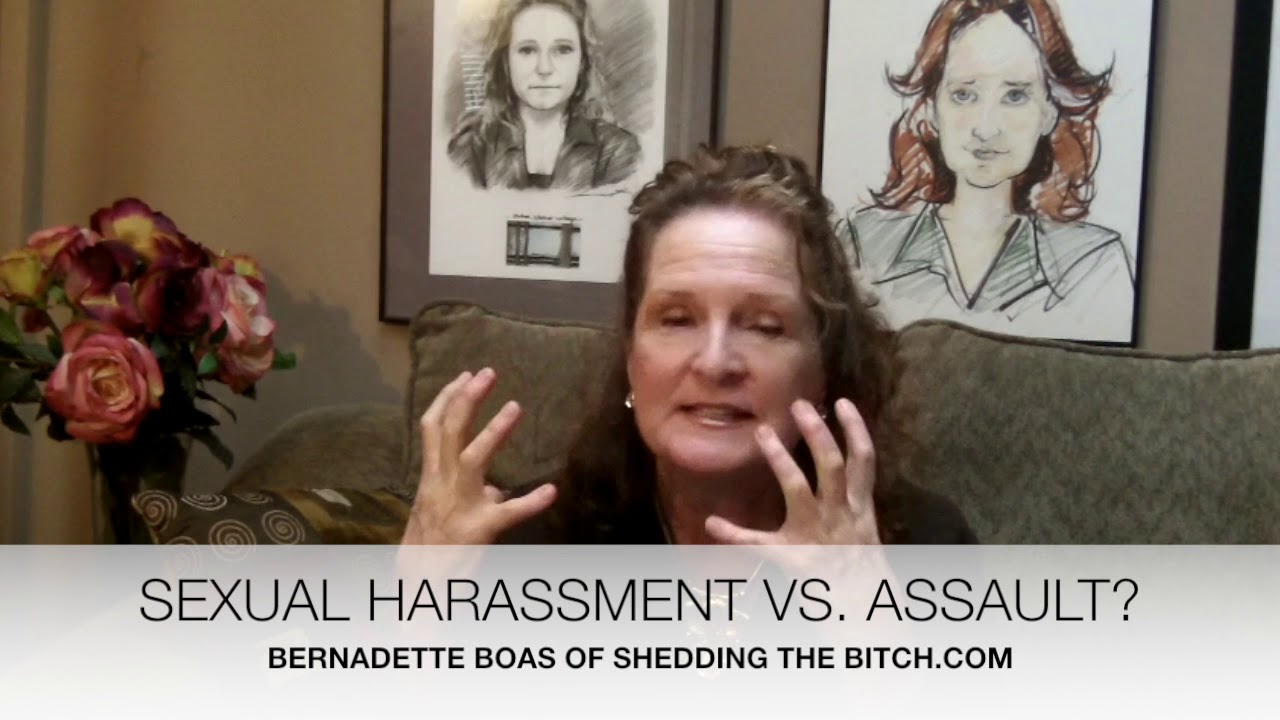
Sexual harassment is non-criminal workplace behavior like sexist jokes or unwanted comments. Sexual assault is any sexual contact without consent, including touching and rape. Victims should seek medical care, counseling, and report to HR or a crisis center.
Chapters
I first want to address, um, it came out of our last episode or one of the last two episodes, uh, that we devoted to the whole sexual harassment epidemic. And I shared some stories of my own and other people, um, when it came to the different scenarios, uh, that too often women deal with, uh, in the workplace. Even in their personal lives. And then I kind of walked through what those look like because some people don't get it, some people don't understand, and some people even are confronted with the situation but they kind of blow it off thinking that it's, oh, you know, there's nothing real serious about it. So go back to that episode on blogtalkradio.com or on our sheddingthebitch.com radio page. And download that episode. I even videotaped it, so it's up on our Shannon the Bitch YouTube channel as well. Okay, so one thing that was lingering after that— we're not going to repeat that show, obviously— was just wanting a better understanding of the difference between sexual harassment and sexual assault. Now, disclaimer: I'm not a lawyer. I did the same research you would probably do, or your lawyer would do, or an HR person would do., and I simply went as a, um, as actually a victim of sexual assault and harassment. I just wanted to go back and refresh my memory as well, because what we don't want to be doing is accusing people of these things if it doesn't fit one of these two categories. All right, so I'm gonna just give you what I was able to find for myself, and at the same time, you're gonna recognize some of the complaints that these women made, where they might fit within these two categories. So sexual harassment, basically they look at that as like locker room talk. It's not a crime per se. It's not a crime per se like sexual assault is, which we'll get to in a minute. So what could sexual harassment include? It could include inappropriate jokes. It can include pinups on or even a number of, um, female executives at all levels have reported where they actually got confronted kind of in meetings or going into a guy's office where they had like either pinups, which is a very, very old, old— I think I'm aging myself back to the '70s and '80s— but, um, or they had magazines. They had Playboy magazines. Um, Sally, um, Hockentech of, um Elevate. She reported that she used to go in and she, you know, with all these cubicles that don't have real full walls, she would go in to see someone and/or kind of look over their cubicle wall and there would be a guy with a, you know, a porn magazine on his desk, you know, flipping through it. And then Evan would joke with her and/or other women, but Evan joked about it and be like, hey, what do you think about this guy? That kind of treatment is sexual harassment. It's putting someone else in a very uncomfortable, inappropriate position. And so sexual harassment is any of those type of things. That whole tape of Billy Bush and Trump on the bus, and they were talking about the P word, which I won't repeat, and they were talking about women and body parts and that kind of thing. And everyone, the media, a lot of the media kind of threw it out, and so did Trump, as locker room talk. Well, locker room talk with a bunch of men putting women in a very uncomfortable, I don't know what to do, I, you know, I'm feeling threatened type of position. Sure, they say it's not a crime unless it falls over into sexual assault, which sometimes it does. At the same time, it's just not appropriate. It's just not appropriate. And None of us should accept it in any way, shape, or form. So if you're questioning whether or not the jokes that, you know, men are making in front of you, um, the pinups, maybe they're making comments about you. There was a video of Matt Lauer that he didn't realize he was being recorded. This was going a number of years back when Meredith Vieira was on his show, and the video basically has her must have been leaning over to get something and he kind of commented about how pretty her blouse was and to stay bent over because it's a, you know, it's nice to look at type of thing. And you could even see on his face that he wasn't joking. It was very, it was very serious. I mean, he was being serious about it. So any of those situations, um, you might deem, or they would deem, as sexual harassment. And we'll talk about what you could be doing about that next. Now, sexual assault— I'm going to read this directly. Because again, I'm not a lawyer, but I want to get it right for you. Sexual assault— any type of sexual contact or behavior that, that occurs without explicit consent. Now, for someone like yourself, like myself, I kind of looked at that and said, okay, what are the key words here? Well, obviously contact, behavior, and and then explicit. I mean, unless you say, unless you welcome it. But even these women who, um, you know, might have welcomed, been welcomed into someone's hotel room or to their private home or whatever the case might be, and yet it escalated into a situation that they are not explicitly consenting to, well, they, they, um, explain that sexual assault, define sexual assault as Inappropriate touching, rape, fondling, or even attempted rape falls under sexual assault. So it's just, again, it's something to think about and consider whether or not that any of that is being, you know, put upon you or, and/or someone you might know. So what can you do about it? Because again, I'm not going to repeat the whole show we had a couple weeks ago. But what can you do about it? Well, find an advocate. Find a, um, a rape crisis, uh, go to a doctor, find an expert, maybe a counselor, a psychiatrist, a psychologist, someone that you trust that you can discuss it with. Um, go to HR, as I did multiple times. Uh, you know, kind of find that confidant. Maybe you have a mentor or sponsor within your organization that you are close to and you're able and you trust that you can go to that person and they'd actually listen and appreciate you coming forward, and then you can kind of figure out what to do next. But whatever you do— and we'll close it out on this— whatever you do is you've already been a victim of sorts, even with that sexual harassment. You're put in an uncomfortable situation. You're already one. Don't be a victim by keeping it and holding it in and not holding that individual accountable. Make sure that you are addressing it. And I'm— one thing I am glad about everything that is going on is it is creating an environment where women feel more comfortable, feel more protected, um, about coming forward and acknowledging it and reporting it and making sure the person is held accountable. And when it comes to like retaliation, the that women are fearful of, or not getting ahead. There's all kinds of laws and protections for you that kind of prevent kind of any retaliation from happening or being legally happening to you. So that's all we'll talk about right now. Go back and listen to our previous episode. The whole hour was devoted to the #MeToo epidemic. And then at the same time, do research like I did. I just simply went out and kind of pulled various definitions to kind of see the consistency, to make sure that, you know, I was appropriate in the understanding that I had in regards to it. All right.