Why You're Not Being Advanced with Diane Taylor
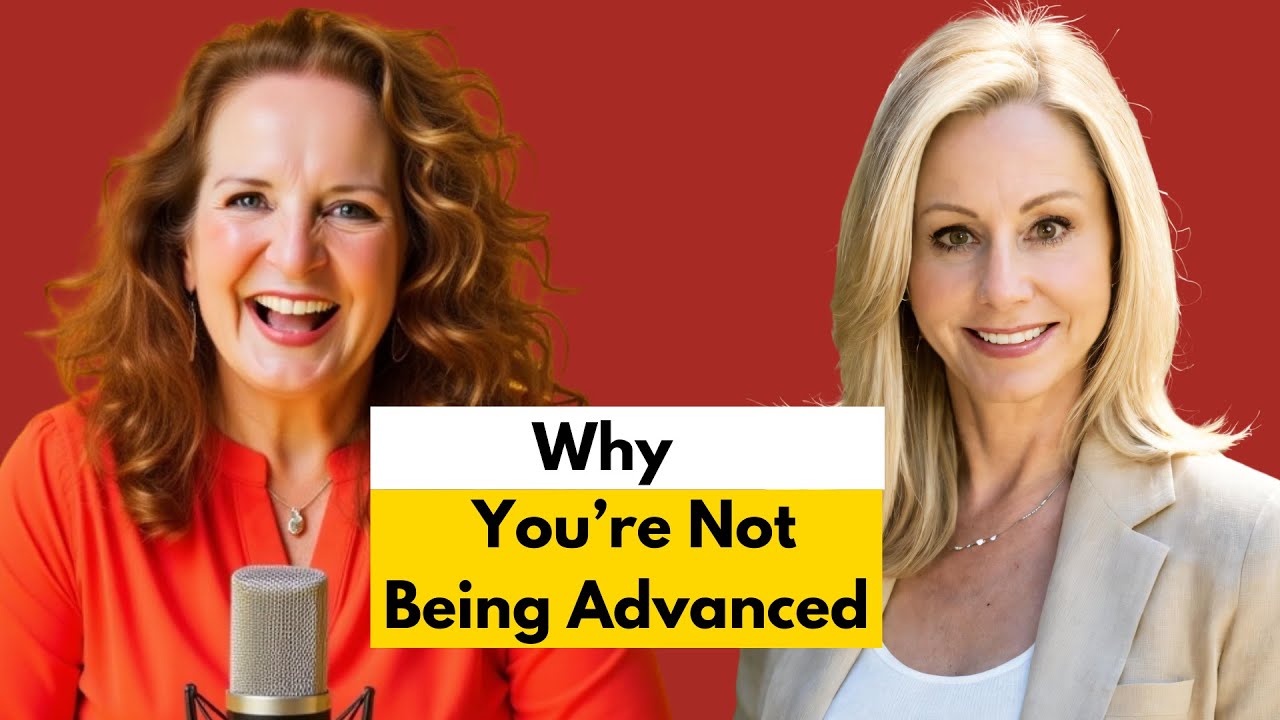
Diane Taylor, founder of Glow Leadership, explains why ambitious professionals get stuck: lack of self-awareness and unresolved trauma block advancement. True progress requires inner work and healing. She shares tools like reflective questioning and feedback-seeking to help leaders recognize burnout and build trust with their teams.
Chapters
Welcome to Shedding the Corporate Bitch. I'm Bernadette Boas. Today we're tackling a question every ambitious professional faces at some point: what's really holding me back? You've heard the myths—work harder, stay loyal, wait your turn—but the truth is, those beliefs may be the very reasons why you're not moving forward. In this conversation with Diane Taylor, founder of Glow Leadership and bestselling author of Elevate Potential, we dig into the blind spots leaders often ignore, like self-awareness, conscious leadership, and the toll of burnout. The takeaway? It's time to take your power back, stop chasing external validation, and do the inner work that creates ease, impact, and the career you deserve. You can learn all about Diane as we get into this conversation at glowleadership.com.
Welcome to Shedding the Corporate Bitch, the podcast that transforms today's managers into tomorrow's powerhouse leaders. Your host, Bernadette Boas, executive coach and author, brings you into a world where the corporate grind meets personal growth and success in each and every episode. Let's do this.
Diane, how are you? Welcome.
I'm fabulous, Bernadette. So excited to be here with you today.
I'm excited to talk to you because I do believe that we can never have enough conversations about individuals' blind spots, especially professionals' blind spots. And they're stressing themselves over why they're not advancing, why they're not getting recognized and noticed. And yet at the same time, there's a lot of myths out there that are kind of confusing professionals. Before we get into it, however, I always love our listeners to get to know our guests on a personal level. So could you share with us a little bit about Diane Taylor?
Okay, well, I live in beautiful Vancouver, British Columbia, Canada. Um, I'm the mother of two adult children. I have a 26-year-old daughter who's a grade 6, 7 teacher and a 20 almost 22-year-old son who is training to become a firefighter. And I love the ocean. That's why I moved to Vancouver intentionally many years ago. I love astrology, and I love the Vancouver Canucks. I'm, I'm a true Canadian. I love my hockey.
Of course you— how can you not?
How can I not?
How can you not? Well, um, and I might have to just tap into your astrology, you know, expertise at another time, but let me ask you something. When it comes to this subject of helping professionals really recognize why they're not getting advanced or why they're not being tagged for new opportunities, what is the number one challenge that professionals are having that is causing that stress point for them?
Right. The number one thing is it's a lack of self-awareness. We, you know, they say that 5% of what's happening and what we know is in our conscious mind, and 95% is in the unconscious. So that is where this— things are happening or feelings are being felt that we're not even aware of that are triggering the way we show up, the way we respond, the way we behave. And it's those behaviors that tint our ability to create the success we want, and they typically hold us back from that. So the more we become aware of ourselves, we become aware of our triggers, we become aware of what are those things that we need to heal within the more balanced, the more well, um, the more successful that we ultimately be. Right.
Now, one word that triggered me, uh, for what you just said is heal. And so do you find that many professionals, they don't even pause or slow down or take time to recognize that there are some things whether there's traumas big or small, but there are some things within that are then being projected out and impacting them because they're walking around going, I am fine. What do you mean I'm not self-aware? I'm not sleeping, right? So, and so the word heal that you use is very profound for me because in a sense that is what we have to do. Right. How is that received and what finally gets a professional to move?
Well, usually what gets someone to move is a deep pain point in their life. If you're not intentionally doing the work on yourself, you're here in this life to learn it. So something will happen to you. You will have a major loss in your life. You will get some form of a disease, you will be brought literally to your knees to find a deeper connection and realize that there's something else out there. So we can wait and be forced and pushed and be in a state of resistance, or we can say, hey, that doesn't sound like too much fun, I better get on this intentionally. Right. So that I can move through life with much more ease and grace. And success comes with ease. Yeah.
And you talk about conscious leadership. And as a matter of fact, your book is Elevate Potential: A Conscious Approach to Success. Yes. And so when you say intention, is that also what you're implying, is that one needs to be intentionally conscious of everything that they're projecting and that they're feeling internally as well.
Right. Yeah. So, most people will choose to do an advanced degree or they'll work all these extra hours. Those are common things people do to, you know, I'm not getting promoted. It must be this. It must be this. And we're looking outside and outside. What's the answer? What's the answer? But really, it's all in here. We've just never really been taught how to do this. And that's precisely why I wrote the book that I wrote. I wish as a 20-year-old woman, before I climbed that corporate ladder, before I made all those mistakes, before I made it really, really hard on myself and I was so completely exhausted and burnt out, that I knew an easier way. So that's why I wrote the book.
And so what is it really seeking for individuals to do? And, well, one, is it targeted to professionals, or is it targeted to just the general population, of which success can mean so many different things to so many different people? And so what is it you really want them to walk away with? From that?
So anybody, I really believe in working with humans. And I think one of the things I talk about in my book is we come, you know, we're born into this life and we start to divide. You know, we get a gender and we get a political party and we get, you know, a family, you know, socioeconomic reality, and we start to divide and divide and divide. I serve all humans. And so, there, if I've had people that are like 80 years old read my book and say that they found value in it. And I've had, you know, 20-year-old people read it and find value. Professionals, non-professionals, anybody. However, my experience, my personal experience has been in the corporate world. And that's where I still work. And I support emerging leaders and leaders to elevate to the next level.. So I speak to workplace examples and that sort of thing. So really the book is for anybody that is looking to— that feels stuck and can't really figure out why is this not working, right? Or is in a place where they feel, you know, why is this happening to me? Because that's really the basic definition of consciousness. When you switch from life is happening to me to a place of life is happening for me, that is a next level up in consciousness. And we start to look at things through a very different lens.
So dig into that a little bit more, if you would. Someone— you mentioned earlier that someone has to be brought down to their knees. And we're hoping, as coaches especially, but we're always hoping that we can catch them before they fall. And so what does it feel like, look like, to, to where someone can feel the first signals or to see the first signals first within themselves, let alone from other people? What are those first things?
Well, It's all dependent upon what's happening in someone's life. And you know, as I'm coaching individuals, they're bumping up against stuff and I'm in a position as a coach to shift them and maybe go deeper into when was the first time you felt like this. Is there a time? And maybe walk them through some deeper understanding of where that behavior is coming from, where that thought is coming from. I believe the people that I work with and, you know, have regular coaching calls with are hopefully not going to get to that, you know, low point. So it's, it's difficult to say how do you exactly do it because everybody's life is different, everybody's lessons are different. But it's when you hear someone saying something that sounds like they're in a place of victimhood, or it sounds you know, there's just too much going on, or you see a cycle of chaos. You know, you definitely see— I work with people that, you know, over time they've understood that they create chaos in their life because that's how they feel safe. Well, why is that? It's probably because there was chaos in their formative years and they don't know what safety feels like. So safety is foreign and scary. So I don't want to be in calm and safe, otherwise I might, you know, the rug might be pulled from under me.
I can definitely relate to that statement. That just brought up a bunch of stuff because I used to love living in chaos. And the idea of peace and calm and serenity was just so foreign to me. And yet in the last like 8 or 9 years, working, you know, very hard through myself. Yes. Um, you know, now it's like I embrace it and it's just such a wonderful thing. Um, but you said that you hope that the ones that you work with don't get to that point, right? But what brought them to you? How— if, if not recognizing or not feeling that, even if it's just you know, a small drop in their, in their emotional level. What brought them to you to recognize that they needed some support?
Well, the very fortunate thing for them is that I work with corporations, so, and small businesses. So their leader or their owner decided they wanted to uplevel their entire senior leadership team, so they get to work with me. Okay. Most, most of my clients, I'm not taking people that are like, 'Oh, something's off here. I need to work with Diane.' I don't do one-off coaching. Got you. I work with companies and my leadership training programs and my coaching is all done through an organization. The reality is most senior leaders or owners can point out exactly what's wrong with each one of their people. 'Well, they're really good but this and this.' And 'They're really good but can you work on this and this?' Right? Like, so the reality is that's the human experience. We're not perfect. We're not supposed to be perfect. We all have stuff. It's easy for their leader to identify it for them. But we need to grow to a place where they can identify it and then create some willingness to change and move beyond that. So when they start working with me, they just think, oh, you know, I'm here to, you know, level up and be a stronger leader. Well, how do you level up and be a stronger leader? You go within and figure out your stuff. It's in our day-to-day experiences and challenges where we can really grow and change, as opposed to, you know, most people have taken more than one psychometric test in their career, but really, are they really changing? Right, right. Not, not so much. Right, right.
And then how do you help push the professional who is stuck, who, who isn't advancing but is resistant to taking ownership and accountability, that it's not about everything else and everyone else around them, it is this inner demons or inner struggle that they have.
Sometimes, it's not possible, right? I can lead the horse to water. I can try and make an effort. I've been in situations where the only option was to move that person out of the organization and hope that they'll be more successful somewhere else. That has only happened a few times. Usually, I can create the trust that's required to create that openness and for people to go deeper. But if someone is so stuck, it's not worth— if I can't help, they're probably not— for their organization that has me on board as a partner to develop their leadership team. And if we're struggling to get past those fatal flaws, it might not be a fit. The challenge is wherever you go, there you are. So, you know, if you're not going to be a fit for this organization, what makes you think you're going to be successful there? Like, hopefully you are, but hope is not a strategy. And if things are happening like that and it's, you know, that might be the, you know, down on the knees moment and There's also oftentimes when we will do a serious conversation, a performance improvement plan where we say, these behaviors are just not working. And that's one of the down on the knees like, oh, I might lose my position if I don't have an about-face here. I better figure something out. Unfortunately, that's motivated by fear. And that's not But you know, that should be very rare experience. But some people, it's next to impossible to break through. The deeper the pain, the deeper the walls. Yes.
The thicker the walls, right? Right, right, right. And the more work they have to do, because again, you can only do so much, right, that they have to do to be willing to knock those walls down. Even chip away at them would be Beautiful thing, right?
Exactly, exactly. Within my GLOW Online program, when we cover strengths, we have the leaders go out to and ask for, what are my— how would you define my top 3 strengths? What areas do you think I need to do better in? I am working with their team and I hear what this person is experiencing and this person is experiencing and their supervisor is experiencing. So I'm already naturally collecting that, and then I can coach them accordingly.
We talked about signs earlier. What are those signs, even from other people, that say that one's behavior is creating not only the chaos you mentioned earlier, but burnout, stress, overwhelm, frustration, even kind of a degradation to their own feeling of value and, and self-worth, those that are experiencing this individual? What are those signs that one should pay attention to when it comes to the people around them?
Yeah, so the biggest one that I see, and it's been one of my own that I've had to, you know, do a lot of work on, is control. You know, the more people feel unstable, unsafe, the more they hold on. Or if they can't control— if something is happening outside of their circle of influence that is important or affecting them and they can't have an impact on that, they'll control something else. So control, and that, that shows up as a lack of trust, a lack of ability to delegate. So, either that. There's also what I call it in my book in Chapter 3. I go through some examples of the unconscious leader. One is the dreamer, which is they love to get you all in a room and brainstorm ideas and stuff. But they never execute on anything. So, hopefully, they have a great team around them. But they talk about big ideas. But so, they lose the respect of the people under them. And that's an escapism mechanism, right? I'm so overwhelmed, I just need to escape. So I'm gonna go and just dream all day. So people that are burnt out, you know, they start to look worse. They are short-tempered and bitchy, you know, cranky. So, and they might, they just become more assertive and all of the things that don't create influence, the most important thing we need to lead, their creating, their behaviors are creating a lack of influence.
Why, in your view, is influence the most important thing a leader needs to have? And to really master as a leader?
So, if we look at the basic definition of leadership, to be a leader, it's to have other people follow you. So as a leader, you have, say, business objectives that you need to achieve. The more easily you can influence people to align with your objectives and achieve them, the more successful you're going to be. So how do we create influence? We become a conscious leader and behave like a conscious leader to get buy-in and trust from our people so that as the team, we can row the boat forward faster, smoother, with more efficiency, and create success for everybody.
Those signals that we talked about Let's look at from a trust perspective. When a, when a leader has lost or has never had trust from their people, what does that look like to them? So say I'm the leader and I see certain behaviors and certain signals from my team members. What would the— what would that look like?
So, a leader that doesn't have trust, first of all, they don't trust their people. So, they don't delegate to their people. They don't train and coach. They want to hold everything so that they show their significance and their worth. They're CC'd on everything. So, there's a lack of trust coming this way. Well, what happens is their people start to distrust them. It breaks down trust. Trust, it's a mirror. If you give trust, you will be trusted, right? So we have to trust our people. They're gonna make mistakes. They're learning and growing. That's okay. But a leader— here's another definition of leader for me. You get to go on vacation and not take your phone with you. If you can do that, if you can go away for 2 weeks and your team can live without you, then you are an excellent leader. But the leader that doesn't trust, that's burnt out, 'Oh, I need vacation, I never get vacation,' and then they're on vacation and they're working the whole time. They don't trust their people to do it because they don't want to level up their people because then they'll lose their significance.
Right, right. But what is the behavior of the team members that they should pay attention to as far as the fact that they don't trust you as a leader?
It could be various things, but when, when people don't trust, they, they'll, they just will be missing deadlines, questioning, they'll be being cranky. They will, you'll, your absenteeism and sick days will increase. They'll start to perform at a lower level.
And that should send smoke signals that you have a problem. Right.
You have a problem. What tends to happen is the unconscious leader will blame instead of saying, oh, wait a minute, my team is not aligned and we're not working well together. And we're not achieving the outcomes by the deadlines. So they're like, what's wrong with them? As opposed to what's wrong with me? Right?
Oh, I love that. Yes. Yes. And would you agree that if a leader does see poor behavior or missed deadlines or something that's off that changed in their team from maybe, you know, 2 months ago to now, should their first question be Where am I? Where do I fit into this? Before they even start to, you know, point at other people or project onto other people, should they first say, okay, wait, let's see what my role is here, and then I'll look to see if it's something external from me, including my team members?
Yeah, it's always a good idea. Like I always say, when you— when you're pointing the finger, there's 4 pointing back at you. So it's always good to say, have I changed anything in my approach with them? Have I given them the same amount of time that I really should be giving them? And is it equitable with everyone else? Has anything changed in the way I approach this person? Then the question is, is something happening, you know, personally for them? Is something happening in their life? Like, they've, they've shown a track record of performance, And that's when, you know, if there's nothing that you've changed, it's worth having a conversation and saying, you know, I've noticed that in the last couple months it hasn't been as effective as it was previously. What's going on for you? What are you experiencing? You know, leaders unfortunately don't get issued crystal balls, right? The unconscious ones will make up stuff. And the conscious ones will have a conversation. Right, right.
Well, and, and, well, I'm glad you mentioned that, because what I was thinking when you described the fact that, you know, that conscious leader, or that leader, will first, you know, ask themselves and assess whether or not something's changed, even amongst themselves. But only if they're conscious. If they're unconscious, then they're— even if they come up with something, they're like, yeah, no, no, it's not me, it's somebody else. And that's the rub or the challenge when it comes to moving people, right? Moving their behavior. Yes. Yes. Yeah. Yeah. And, and, and is there a tip or a tool that you would have them do in order to kind of do that litmus test of, is it me or is it somebody else? And we're not looking to put place blame here, but we're just looking for the source of a potential issue? Is there something that you, you know, recommend that one do?
Well, it, it's just a regular practice, right, of, you know, always flipping back to, is there some way that I can approach this differently? Was there something that I— and this, you know, is for the workplace and all of our personal relationships, you know. Partnership relationships, which tend to experience conflict from time to time. It's a good practice to do anytime that something is not really going the way you want it to go, or as with as much ease as you want it to go. Look within. Step 1, make that your step 1. Internal reflection. Was there something I did that that person could have found offensive? Was there something I changed? And didn't give proper notice of the change? Was I responsible in any way for this? That's, that's what we call accountability. And that is one of the key factors of success in your life and in getting promoted is accountability. So, and if you've discovered you did something wrong, don't just try to hide it. Say, Hey, my bad, I messed up. I apologize. I will do my best to do better in the future.
And that in itself models great leadership and behavior for your people to where then they'll be accountable and they'll own up and they'll step forward, admit the mistake and make the adjustments that are needed. Would you agree? Yes.
And it takes away that fear of the need to be perfect, right? We're humans. None of us is perfect. So it's a step forward in vulnerability that really makes people feel more safe.
Yeah, I laughed because yes, we are all human and we all make mistakes and we all have a reason to swallow our pride and just go, you know what, I screwed up. Exactly. I had something running through my head when you were talking about that. So thank you. Thank you for that reminder. Is there any one last tip or piece of advice before I also remind people around your book that you would share to really help people get unstuck and really recognize why, you know, they need to look at themselves because that could be the reason why they're not advancing? Right.
Well, I'd like to just remind everybody that everyone is a divinely created unique individual. That's why we all have a different thumbprint, right? So you need to take your authority back. You need to take your power back. And the only way that you can do that is to go within and to discover more about yourself. The more awareness you have about yourself, the more awareness of how your formative years impacted how you're showing up today, the more success you will be able to create. And you'll be able to create that with ease. You'll be able to put the sword down. You'll be able to put the struggle down. You'll be able to put the resistance down and start to live the life that was intended for you.
At work and at home. Absolutely. In all of it. And it's a beautiful, beautiful thing. And I want to go back to what you said earlier about your book, and it doesn't matter if you're 20 or 80, it's always a good time, right, to have that self-awareness and to grow within, um, and find that inner peace. Absolutely. I love this. Thank you so much, Diane. But I do want to remind everyone, please go to glowleadership.com, learn all about the work that she does and all about how she could be supporting you, but as she said, and her team, your team, uh, whole, you know, as a group, as a collective. And then follow her on Instagram. She makes it real easy for you. It's Glow Leadership. So everything is Glow Leadership. And then pick up her book on Amazon. You can go to Elevate Potential: A Conscious Approach to Success on Amazon and pick up her book. Diane, thank you so much. This has been fabulous.
Thank you so much, Bernadette. You are such a bright light, and I really enjoyed our conversation.
Oh, why thank you. It just made my day. Thank you so much. Have a beautiful day. You too. What a powerhouse in Diane Teller of Glow Leadership. This is a great conversation, especially for those that may not be that conscious leader and that may be on the edge of unconsciousness or lack of self-awareness. And yet you're beating yourself up trying to figure out why you're not advancing into the positions or into the levels that you're looking for. Ultimately, her message she wanted to leave with all of us was, it starts with you. So she talked a lot about the inner work each and every one of us need to do to really understand— forget the career for a moment— to really understand ourselves, to understand what makes us tick, to understand what triggers we have, what blind spots we have, what strengths and talents we have, what, what childhood traumas, even if they're very small, let alone really big, have affected how we show up and how we lead and how we go about serving others the way they deserve to be served, but the way we're expected to serve, especially if we want to call ourselves leaders. So take a second listen if need be. Share it with your team members, share it with your peers, and really make a goal, put a focus on you and to really understand you and what it's going to take in order for you to get where you want to be. And be sure to follow the show so you can hear from other amazing guests that we have. You can also look back into our library of episodes and the topics that we've discussed that will really ensure that you're becoming the powerhouse leader you're meant to be. You can follow the show at balloffirecoaching.com/podcast and on any one of your podcast streaming services or on our Shedding the Corporate Bitch YouTube channel. I look forward to having you for another episode. Until next time.
Thank you for tuning in to today's episode of Shedding the Corporate Bitch. Every journey taken together is another step towards unleashing the powerhouse leader within you. Don't miss any of our weekly episodes—subscribe to our podcast on Apple Podcasts, Spotify, or wherever you love to listen. And for those who thrive on visual content, catch us on our Shedding the Bitch YouTube channel. Want to dive deeper with Bernadette on becoming a powerhouse leader? Visit balloffirecoaching.com to learn more about how she helps professionals, HR executives, and team leaders elevate overall team performance. You've been listening to Shedding the Corporate Bitch with Bernadette Boas. Until next time, keep shedding, keep growing, and keep leading.
More from Bernadette



From Stuck to Leading, Episode 2 — Meet the 5 Inner Fears Destroying Your Leadership



