Advice I Would Give My Younger Self
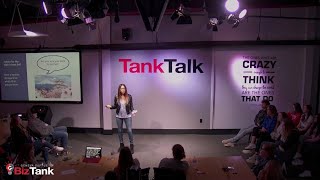
Beth Ridley quit her senior leadership role at Northwestern Mutual to start a consultancy on workplace culture. She traces her path from Milwaukee to Japan to New York to that decision, sharing what she'd tell her younger self: define success your own way, choose risk over regret, and chase what makes you happy.
Questions this video answers
English literature (University of Virginia).
Japan, South Africa, Thailand (also studied abroad in London).
Senior Vice President at Northwestern Mutual (worked there ~12 years).
She says she quit in June of the previous year (relative to the talk).
Married ~20 years and has three children.
Chapters
It's time to introduce your mascots for tonight's main event.
In the blue corner, standing at six foot two, he's the two time defending heavyweight champion, Buzz.
And in the red corner, standing at.
5 foot 2, sometimes 5 foot 7, the challenger, Izzy. It's time for Beast Tank. Please give a warm round of applause for your host in the father of his tank, Mr. Jack Peters. Hands together, flower.
Come on, bring them.
All right.
It is Wednesday night. It is Biz Tank. We're streaming all over the country, all over the world. Where are we streaming to? Albuquerque, New Mexico, where else? Keokuk, Iowa. Sydney, Australia. Like Elkhorn, Wisconsin, you know, B town, you know, all over the place. We've got a fantastic keynote speaker tonight. I want you to pay attention because honestly, she's doing us a solid for being in house. She came all the way in from Milwaukee, but she's from outside of Milwaukee originally. I think we're gonna find out. I don't know her that well. I found her on LinkedIn. She's super cool. She is a leadership engagement expert. She's a world traveler, She's a mom. Give it up.
Super loud. High five in the right bears. All right, bear, let's do this. I've done a lot of talks, but never introduced by two bears. So this is a really. Bear. Yeah, three bears. This is a really great way to spend a Wednesday. I think you guys are really fortunate to be part of this program. I wish I was part of this program when I was your age. Just to hear from everybody's different life experiences, their journeys as you try to figure out your own. And so that's really what I'm going to talk about today. When I was invited to speak, I said, oh, my God. I got to like dust off the cobwebs and think about what was going on in my mind when I was your age and reflecting back on my life and what advice would I give my younger self now that I have a little bit more perspective? So I'm going to talk a little bit about that and I welcome a lot of questions. I will tell you the overall theme is that really my belief, my philosophy to life is that you must have courage to live the life that you want to live, not the life that other people expect you to live. And that sounds really easy, but sometimes it's harder than you think, because as humans, we all care about what other people think. It could be your parents, your siblings, your friends, your neighbors, your coaches. And those voices seep in and get in your head and Are you going to have the courage and the fortitude to really stand strong and live your life the way that you want to, even if well meaning people are giving you different advice about what you should do? So here's my journey. So I'll start back in high school. Sort of like what my mindset was in high school. That was me at prom. And it looked like I was having a good time, although I was forced to go with my neighbor. So I actually wasn't having that great of a time. But I did smile for the picture. So I grew up in a suburb of Milwaukee. At the time it was a little bit more rural than it was suburban. And so it was a great place to grow up as a kid because there were lots of fields and farms and you could run around and really great for making up games and stuff like that. But honestly, by the time I got to high school, I was so bored. So I just remember my last two years of high school just feeling so bored, like, this must end. And one of my favorite things to do was to watch Miami Vice. I don't know if you guys have ever heard of this show before. No one's heard of it. You've heard of it, right? Yeah, it was really good at the time and so typical cops and robbers in Miami. So it was like really glitzy and fun. You can actually check it out, I guess on Netflix. But that was my escape. And I'm sitting in my house every Friday night, so bored and thinking there are more exciting places to be and I must be there. So my number one goal after high school was to get out of Dodge. I knew that I was going to go to college, but I did not want it to be in state. And I had not a clue what I wanted to study because I had not a clue what I wanted to do with the rest of my life. But I really loved English literature. It was my favorite subject in school. I loved reading, I loved debating and talking about what we've read. And I was really good at writing, so I knew that I wanted that to be my major. But in terms of my advice to my younger self when I was in high school is really to have a healthy disregard for what other people think. And it's because when you're young and you guys are probably experiencing this really well meaning people, whether you're parents, your coaches, they're giving you tons of advice of what to do with your life. And you're probably soaking it all in because you're not exactly sure. But I will tell you, even if you don't know what you want to do, you know you better than anyone else knows you. And you also have to think when people are giving you advice, it's based on their own personal experience. I had a little bit of a different path for myself in mind. My counselor was telling me, you should really apply to school in Wisconsin. I had a healthy disregard for that advice because I didn't want to go to school in Wisconsin. So even if I got in, I didn't want to go. So I stuck to my guns. And if I had listened to you should really apply to school in Wisconsin, I would not have ended up at the University of Virginia, which was a perfect fit for me. They had a really strong English literature program. It was not in state and it was in a warmer place. That was also something I was going for. But another piece of advice that people gave me is when I really had to declare my major, maybe I should choose a more practical major. I mean, English literature. By the way, what are you going to do? Be an English teacher? Maybe you should go into business. Again, well meaning advice. I didn't enjoy business. I liked English. I had no idea what I was going to do. But I thought, I can't go wrong if I do something that I enjoy. So I became an English literature major despite the well meaning advice because I knew me better than anyone else knew me. Now I will tell you, I went on to get two more degrees. This English literature degree is the only one I use every single day because every day I'm reading something and I got to have an opinion. Every day I'm writing something and I gotta craft well written messages. So to me that ended up being a really good choice and I'm glad I stuck to my guns. And then the third thing, if people had told me, are you sure you want to do that? So like I said, my whole goal was to get out of Dodge and to see where the action was happening. So I knew I wanted to travel. So I did a study abroad in London my sophomore year in college. And then I never set foot in the career office because I didn't want a regular desk job. I wanted to go as far as I possibly could. So I applied for a job to live and work in Japan as an English teacher. I had never been to Japan. I did not speak any Japanese. But I got hired and so I went and of course everybody was saying, are you sure you want to do that? So my advice to my younger self was advice that I really did stick to, which is I had a healthy disregard for what anybody else thought. I knew me better than anyone else knew me. Even if I didn't know exactly what I wanted to do. I just put one foot in front of the other, guided towards what brought me joy. And those are some of the absolute best years of my life that were very defining for me. So that was sort of like my life in high school and in college. Sticking with my philosophy of live your own life. I felt like I was really doing that then. So then in my 20s, things get a little bit more complicated. So when I finished working in Japan, I was there for two years. I started. I still didn't know exactly what I wanted to do, but I did want to do international work. So I got a master's in international relations. And after that I landed a job in New York City for a telecommunications company. And just shortly after working there, there was an opportunity to go to South Africa. Now, this was back in, I would say, like 96. So you guys have heard of apartheid, right? Yeah. So it doesn't exist anymore. But when I was in college, apartheid was like a big thing. And I was always organizing anti apartheid rallies on campus. And then I was asked to go to live in South Africa, which to me, just like, it was mind blowing because just two years earlier it was an apartheid state. It was in a state of civil war, and Mandela had just been elected president. So there was love to travel, but that seems a bit much. And so I was really confronted with how much do I allow fear to drive my decision making versus the regret of not having to do something. And I think as I became older, some of those decisions that I felt like I could be really carefree when I was younger started to weigh on my mind a little bit more. I did go ahead and accept the position in South Africa, really, because of the philosophy that I can manage. Fear and risk can also be managed to a certain extent. I'm never stuck with any decision. But once regret seeps in, like regret not doing something, there's no anecdote for regret. I like to say regret just sits with you and gnaws at you, and you can never reverse time. So that was another philosophy that I tried to live by. So I did go to South Africa and really, really enjoyed the experience. It was fascinating to be in a country to see how the is actually healing itself in transitioning from a violent apartheid state to an integrated democracy. So another piece to the story, though. Just a few months before I was sent to South Africa, I had actually started dating this guy in New York. And I didn't think too much of it because I was like, we just started dating. He's really lovely, but whatever. And so I went to South Africa, but we stayed in touch and we continued to email, and we became really, really close. And he was starting his career as an attorney in New York, and I was trying to convince him, this is ridiculous. Like, long distance from New York to South Africa, Someone should move, and I think it should be you. And I could not convince him to come to South Africa, so he was asking me to come back to New York. So here I found myself again, man, the fear of giving up a job that I loved. I always wanted to live and work overseas, and I'm doing exactly what I wanted to do versus maybe throwing that all away and throwing caution to the wind and going back to be with some dude who I didn't really know that well. We had only spent a few months together, and most of our relationship had been like, via email. But it was risk versus regret. Would I regret not going back, or would it be a huge mistake if I went back and gave up a career I loved? How many of you would choose career in that scenario? How many of you would choose love? You all left me hanging. You guys are really heartless. Went back. This is my husband. We've been married for 20 years, and now we have three kids that are pretty much your age. The choice was this. I could always find another job. I wasn't sure if I could find another guy like this. And I would have regretted. I would have always regretted. What if I didn't do it? What if I didn't do it? All right, so that was the lesson in my 20s. And my guess is at some point you will all be confronted with that decision. And you could think back on this day. There's no right or wrong answer, by the way. All right, so that was my 20s. So I ended up leaving my job in South Africa for two years, came back, and I didn't have a job. So I started all over again from scratch. And again I found myself, what am I going to do with my life? And remember I said, it's so important to live your own life and not let other people, you know, tell you or seep into your conscious about what you should do. So this is a case where I did not do that. So move back to New York City. New York City. My husband was an attorney, and it seemed like all of our friends were either attorneys, investment bankers on Wall street, or management consultants making a ton of Money. And I was never motivated by money. I was really motivated more by travel and life experiences. But when all that is around you, I started to think, I guess I want that too. And I didn't have an alternative vision for me to be a counter to that. So I started to also think, I, too, want to make a lot of money and live in New York City. I definitely wasn't going to go to law school, and working on Wall street just seemed horrendous. So the lesser of the three evils was to go into management consulting. So I applied to business school, I got in, and then I immediately was hired as a management consultant. And I immediately started to make a ton of money. And I thought that that was going to make me happy. But with that ton of money came a ton of work. Working so hard, I couldn't even enjoy the money that we were making. Couldn't even enjoy living in New York City. It turns out that the firm had actually sent me to Thailand for a year, which was kind of cool. Like, great. I get to travel internationally, but I had to fly back to New York every three weeks. So every three weeks I was doing 17 hours from Bangkok to New York, and then I would spend the weekend and then I would go back back. And I did that for almost a full year. And the straw, like the straw that broke the camel's back was there was one time I got on the flight, I flew back, the plane landed in New York. I got a phone call, and they said, turn right back around and come back. I didn't even leave the airport. I took the next. Can you believe it? And that's when I was just like, I. I am miserable. But I let other people define what I thought would be happiness for me. So that happened. And then so did 9 11. So we were in New York during 9 11. And it was just a tragic time, a really defining time. But one of the things I remember about that experience was when the dust settled. I mean, the dust never really settled. I mean, it was debris everywhere. I mean, for months, the ash, the debris everywhere. And everywhere you went, there was paper everywhere. And I just thought these were consultants, these were investment bankers, these were attorneys. The paper was their work. And now what? Now what? I really started to think, like, all this just doesn't matter. I really needed more perspective. And that's when my husband and I started thinking about family is really more important. We like working hard, but not to the point where we don't have a life and we can't invest in family. And you know what, how much money do we really need? So we made some very different life choices. And at that point, that's when we chose to move to Wisconsin and to be closer to family and to raise a family. And so ended up, you saw that we had three kids. And for me, I started to redefine life according to my own vision. And I started to define success on my own terms. And the things that were really important to me were family, having a certain degree of freedom, like I was only going to allow work to take over my life to a certain extent. And then travel, I still wanted to travel. And now I'm traveling with the family. So my husband and I actually both started working at Northwestern Mutual. He's still there. He's been there for 16 years. I was there for 12 years. I left recently and I grew my career there up to being a senior vice president. And it was a good job, but I made very conscious decisions. There were certain jobs I did not accept because it required too much time away from the family. There were certain times when I said, I will have to get you that report on Monday because I'm not going to work over the weekend. Did that compromise my career? Maybe, maybe I could have gotten to senior vice president faster, but so what? And be miserable along the way. So I was, I think having made the mistake of letting other people define success for me and realizing that didn't make me happy gave me the courage and the. To be able to stick to it in terms of defining it for myself and letting people know and appreciating that, yes, there are consequences of doing that, but there are consequences that I can live with. So anyways, raised a family, grew my career at Northwestern Mutual. But then I started to feel like, ah, just, I'm ready for the next challenge. I don't exactly know what that is. I feel like I want to do something more creative, more on my own terms. But after having invested in one company for 12 years, rising to a pretty decent level, you know, there's title, there's status, there's the pay with all the nice benefits to anybody on the outside. To say that you're a senior leader at Northwestern Mutual, one of the biggest employers in the state, that sounds pretty good, like, what's wrong with you for wanting to leave? And so I did struggle for a long time with, should I just stick it out and stay, even though I'm not really, really happy because it's not bad. And what would people say if I walk away? That's just people just don't do that. But I had to go back and think about my younger self and how courageous I was when I was your age in terms of defining success on my own terms, how courageous I was when I chose risk over regret. And, you know, the life lesson that I learned that money doesn't buy happiness. And so that empowered me, looking back on my all my younger experiences, to go ahead and make the decision. And I quit. I quit my job. I walked in and I quit. And so I quit in June of last year, and I started my own business, my own consulting business. And it's really focused on how to help people find happiness at work. Because my experience working for so many years in corporate America is that there's so many people who are not happy. And a lot of it comes down to, again, not defining success on your own terms. And once you can find the courage to do that, happier employees make a better place to work. So I do consulting, really, with leadership teams, and I help them to create cultures that are more positive and that enable employees to really thrive and be their best at work, because that makes better business outcomes. And I love it. I didn't really have a clear vision for what I wanted to do when I quit, but I also knew that as long as I continue to put one foot in front of the other towards the things that I truly enjoy, that it'll all work out. And so, so far, it has, but that's my journey. And so hopefully, I've inspired all of you to have the courage to define success on your own terms, because you know, you better than anybody else, and only you know, you. Only you know what will make you happy. And I truly believe if you do work that makes you happy, you'll be good at it. And if you're good at something, you'll find success.
Good question.
Yes. All right, so I got a question. So you had gone against the grain so many times, and I personally respect that. And I'm wondering, what did you say to these people that almost doubted you? Like, you know, when you went to Japan, you went to South Africa, people probably were like, whoa, what are you doing? You know, what was your go to terms on what to say back to them? You know, in a respectful man. That's a good question. And I don't know if I had anything really planned or practiced other than thank you. Thanks for your advice. I didn't feel like I had to explain myself. Thanks for your advice. And make my own decisions from there. I mean, I had to look myself in the mirror. So thank you for your advice.
I think that's key. That is a great question. Because it's so every day that you face that, no matter who you are, especially you guys, constantly having somebody suggest what you should do and give you guidance, you know, that is unsolicited. And how, like, let me reverse the question to you. You've gotten advice from somebody that you didn't ask for the advice. What did you say?
And I think I would honestly almost just say, you know, appreciate, you know, your advice and all, and I'd still do what my heart would suggest for me to do. But honestly, I really could, I really couldn't tell you what I, what I would say back to them.
I think most of you, probably most of you are respectful for the most part in here. I mean, nobody's come at me in a negative way so far, except maybe a couple of you. But I won't name names or past judgment. But I think authenticity is always going to be the most important thing in everything that you do. I talk about authenticity all the time. Be yourself. And Beth's talking about the exact same thing. If you have something that you want to say to the person and it's truly how you feel, and it is in a respectful way, go ahead and say it. I mean, there's no harm in. Even if it strikes up a conversation because you're wondering why they're giving that advice or why they think you should be doing that. If you're curious, go ahead and ask them, why do you. Why do you think I should do that? You know? Or if you're like, really don't want to deal with the whole conversation, you got your shit straight in your head, just say, oh, that's awesome, you know, see you.
I wonder if. So I just thought of this now, like, what kind of. Because I give advice to my kids who are your age all the time. Like, how can you not? Right? So I'm saying it's also well meaning. And I'm thinking if they, like, how would I appreciate and receive well if they were to push back on my advice and maybe you try. Yeah, but this would make me happy. And I think if, like, if I heard my own kids say that. Because truthfully, the ultimate goal of every parent is that their kids are happy. We just think you'll be happy if you do it like this. Or if you do it like this. I mean, because I traveled so much, I'm like, you must travel. And my kids are like, I don't really want to, you know, so. But if they Were to say, mom, doing this makes me happy. You know, I got nothing back to say because I'm like, ultimately, that's what I want for you. So you could try that and let us know how it works. Thank you, guys. Appreciate it. So could.
So you just did it.
That's exactly right. Because, you know, he is not gonna. He's not gonna do that at all. But thank you.
We'll send you a video clip, and you just memorize that you nailed it. That's perfect.
Okay, so could you expand a little bit more on your business and, like, your journey through and, like, the ups and downs you had and how you dealt with them? With the business I own now, yeah. Oh, yeah. So, yeah. So really, like, I talk a lot about, like, I try to make the workplace more positive, but what people really pay me to do is I go and I fix dysfunctional leadership teams, because a lot of times why the workplace isn't positive is because the leadership team is kind of messed up. So I go in and I engage the leadership team, and, you know, I almost become part of their leadership team, and I try to figure out, what are your common goals, how do you need to come together, and what behaviors do you need to demonstrate and model for the rest of the organization so that you're kind of spreading the positivity that you expect others to adopt? It's very much like intervening into a household. Your leadership team are like the parents. And so if the parents are constantly bickering and arguing, the kids are gonna know it. And it just casts a bad feeling across the whole house. And so that's kind of what I do with leadership teams. I help to improve their own communication among themselves so that they're leading with more optimism and positivity. And it spreads to other people. In terms of, like, the challenges, I mean, I guess the biggest challenge is that, you know, I have to find my own clients. When I was an employee, if I didn't show up for work or whatever, I still got paid. And so there's that added pressure of, you know, always having to have clients. But I wouldn't trade it for anything because I have the independence. I have the flexibility. I can work how I want, when I want, where I want. And, you know, after, like, 25 years of working in corporation, it's very much, like, collaborative. Very much your work is so dependent on other people, which is really great. And that's a great skill to have. And you can usually do more with, you know, collaborating with more people to move work forward. But it can also get sometimes exhausting. And I was just ready for a change. So, you know, different challenges, but I'm enjoying the challenges a lot.
Beth, question on the challenge. I would think one of your biggest challenges is when somebody's dysfunctional, they typically don't like to admit they're dysfunctional. So if you're going into a company because the leadership is out of whack.
Yeah.
Like, how many of them, like, don't want to call you in because they don't want to admit to it?
That's a very good point. So I actually don't work with those teams. So if they don't know they're dysfunctional, they. They don't reach out to me. Usually they reach out to me because there is something that happened that they simply can't ignore. Usually it's something blew up in a meeting, and they can't even come back to the meeting again. So at that point, they know they need help. There's one example of a company that it was a startup company. They had a core team of people that were part of the original company, and then they started hiring a ton of other people really quickly. And so there was disruption, discord between the original folks and all the new people. The CEO of the company built this beautiful new office tower because they were running out of space for everybody to move in. And on the day that they were all supposed to move, the core people said, we're not moving. Like, they literally put their foot. So usually it's like something happens that they cannot ignore the problem anymore. Because you're right. A lot of times you don't want to admit it's dysfunctional. You don't really recognize that it's that dysfunctional because you're in it every day. You have no comparison point, so you're not motivated to reach out. Usually it's like something happened and you can no longer ignore the problem.
Or Dr. Phil, like, just tells him, you guys gotta figure this out.
Yes, exactly.
You got a question?
How do you overcome language barriers when you went to other countries? Oh, yeah, that's a great question. Well, I spoke the language in England, so that was an easy one. In Japan, I spoke no Japanese. None whatsoever. It was actually a requirement for the job because I was an English teacher, and they didn't want. They wanted native English teachers. They didn't want anybody who spoke Japanese so that you wouldn't fall back on Japanese. However, I became really good friends with my next door neighbor who spoke no English, and she invited me to her house every Night for dinner and she taught me a smidget of Japanese. I taught her a smidget of English. So after two years her Japanese, sorry, her English became so proficient that she became English as a second language teacher. My Japanese became so proficient, I tested out of it for my master's degree in foreign affairs. And I will also say in college I was a Spanish minor, so I was fluent in Spanish. But in order to test out of the graduate level test foreign language exam, you had to be business level proficient. You have to read a business level newspaper and talk about it. I did not pass in, in Spanish after having studied it all through high school and college having only lived in Japan and never even studied the language formally because it seeped in. I passed with flying colors in Japanese. So I used to be fluent in Japanese. I'm not anymore. Then in Thailand when I was there for a year, I also didn't speak Tagalog. That was challenging, I gotta tell you, because I never did learn it. We communicated by pictures a lot. Some people on the team were bilingual, but not that good. So it was fun. But you know, if there's a will, there's a way. We had to get work done. So we, you know, talked in very short little words, a lot of hand gestures and a lot of pictures. But you know, as long as you kind of like keep a fun attitude about it, it can be done. I have a question about like your business. So when you go to these companies, how do you fix the problems? Do you do like team building activities or do you kind of like lecture them? I guess no, absolutely not. They'll throw me out if I lecture them. So usually there is a common challenge issue, business issue that they want to address. It could be they need to find new customers in order to grow the business. Right. So I make sure that I find what is that common business challenge that everybody needs to come around and what is the work that has to get done in order to do it. But then we talk about how does the work need to get done. So that starts to speak to the culture, right? So usually it means we have to share information more, we have to talk more, we have to collaborate more, we have to seek more input from diverse points of view. So then it comes down to fine, if this is what you expect of your employees, they're not going to do it if they don't see you doing it. Otherwise it's, it's hypocrisy. So then we find tiny ways for them to practice those behaviors amongst yourselves. Leadership, team, how are you going to be more collaborative? And I literally give them small little assignments that they can actually do and then they do it, Then they come back. Well, how did that work? Okay, that wasn't as horrendous. Can you do that more? So the trick is getting them to model these behaviors in really consistent ways. But the ways don't have to be big or grandiose, just the small little ways that they can do consistently. Because if they can do these behaviors consistently, they'll start to take root and then they'll start to see the benefits of it, the rest of the company will start to see benefits of it, and then that's how you sort of like shift the culture. It's really one small action daily, every day at a time. I call it making the most out of these little micro moments of every day that add up to be the entire work experience. That makes sense. Think of the idea for your company and how did you build it from the idea up? So the idea came to me when I was at Northwestern Mutual. You know, the company has been going through a lot of difficult organizational changes that I had to lead my team through. And I was struggling for how to be positive myself with all these changes so I could lead with optimism. And that led me to actually study positive psychology, which I don't know if anybody knows anything. Maybe you've heard of the science of happiness. But anyways, it's really the scientific study of what makes humans thrive. And there's like research based evidence of things like by practicing mindfulness, by having an attitude of gratitude, by investing in relationships like those basic things in life, if you do those, it actually fosters more positivity. So I actually started taking some of those little practices and applying them at work. And lo and behold, it started to work. Small things, if I do them consistently. And in the height of all this chaos that was happening at work, I was consistently getting the highest engagement scores. I didn't really think much of it. I didn't think I was going to leave and start my own business. Well, one year the HR department came to me and said, we've got a problem because a significant portion of our workforce is applying for a short term disability. In other words, they're going out on disability. They can no longer come to work due to stress and anxiety. Specifically, people are unhappy and burned out at work. Believe it or not, 79% of people are suffering from burnout at work. It's like a thing. We've noticed that you've been doing these things with Positive psychology, like, how could we take what you're doing and extend it across the entire company? And that was the first time I thought, hmm, big company losing money because employees aren't coming to work, having to pay more on healthcare costs. Suddenly people care if people are happy at work, if they're not burned out. And that's when I thought, I'm good at it. There's a big need out there. Maybe I can help people. And that was the beginning of me thinking about it as a business. But it still took me three years to actually get the courage to leave. So I know most of the speakers that come here, including yourself, wind up leaving a job they had for a while and then just getting up and starting all over and, you know, creating their own company. So, I mean, my end goal would be one day to have my own company, be my own boss, all that. So I'm just wondering what was like, I've always been kind of unclear on what, like the step by step process is like, what's the first steps you take to just get off on your own and just kind of start your own company? Because that's pretty much how all the speakers are. So I'm just kind of wondering like, yeah, what was the challenges in it and what kind of was the first few steps you took to have your own successful company? I think the biggest challenge was just having the confidence to do it. And maybe it's even harder. If you have worked in a corporate environment for so long, you start to get conditioned to how to be a good employee employee. You know, you get attached or addicted to the steady paycheck and the benefits. So for me, that was the hardest thing. Walking away from that. Perhaps if you start from ground zero, you got nothing else to lose. So that might make it easier. But you know, every business has its challenges in terms of starting. You know, there's a bazillion of them. To me, the biggest challenge is just having the confidence to do it. So when I had reached out to someone who was respected entrepreneur for advice and just saying, should I leave my cushy job and start all over or shouldn't I? How hard is it? I posed the same question that you just posed. And her advice to me was, your biggest challenge is going to be getting over your own mental mindset and not believing that you can be successful. If you believe you can be successful, all those challenges just become things that you deal with, but not complete roadblocks that need to shut the whole showdown. So I personally had to really work mostly on my own mental mindset and developing courage and just basic self confidence that I could do it. I would say that and I would say talking to positive minded people who you trust and then sifting through their advice and knowing when to have a healthy disregard for how they think I should grow my business versus how I believe I should. Because it's kind of like raising kids and maybe one day you'll find out, hopefully not too soon. There's a bazillion books out there and none of them are particularly helpful because your kids are so unique in your approach and your circumstances. So some of it is, there's advice out there, but the only way to do it is to actually just do it. But to do it with it becomes maybe more enjoyable. With a degree of confidence. I would work on the mindset more than anything else.
And Mason, I think part of it is don't be so set in your mindset now that you're going to start your own company. Because if you're not going to start your own company now, why not? And is it because you want to go get experiences? Because if you're always thinking about the next step in your life, you're not really getting anything out of your moments in life and the opportunities. I think like for me starting my own company, I owned a sports bar. I started Geneva Supply with a business partner. I didn't expect to do any of that. I was in completely different types of jobs that were great career moves, great jobs. I've loved every single job I've had because I went all in for the job that I accepted. If I accepted a job, I accepted it for a reason, whether it was I had bills to pay or I wanted to pursue that thing. But I gave it everything and I made it my own. And I think the big thing for me was as I went through it, I learned a lot about myself. I learned about what I wanted. And the passionate things started to come at me instead of me kind of saying, I'm going to do this and you know, I'm gonna go get a bunch of jobs because I need money to support what I want to do when you don't even know what that is yet. So, so let yourself be in your career path and those things are going to come to you and you're gonna feel passionate about it.
Does that? Yeah, it does. And it's funny because I think there's just a lot of societal pressure to figure it out and to figure it out at a young age. And so like, I've always been the type of person I never knew exactly what I wanted to do. Like I had a rough vision of I want to, you know, do something that involves different cultures but still have time for my family, like these broad pillars. But what job was that? I had not a clue. And I always would feel bad about myself because it always seems like good looking actors and singers always knew what they wanted because like they get interviewed on E. And they're like, like I'm so fortunate to do, you know, to get paid doing what I love. And I've always wanted to be an actress since age 3. And I'm thinking to myself, I have never known anything that definitively like, boy, that must be nice. And I always thought like I'm somehow flawed because I don't know. But I also think not knowing, but I also think that like you said, not being so locked in, you get to experience all that life has to offer and all your experiences will somehow come back to bear. And I suppose being a high paid actress is amazing, but hey, I've done a bagazillion things in my life rather than just the one thing. So I don't know if there's any right or wrong answer, but I think that more the benefits of not knowing what you want to do should be highlighted more than it usually is.
Totally. So if you couldn't do like if all of a sudden I said you can't do what you're doing anymore, your company, you can't do it right, what would you go back to and want to do for a career or that you've already done or what would you, you know, go back to and want to do that? That was not like not working for yourself. Yeah, like what would, what would that be for you?
I really enjoyed being in the classroom when I was in Japan. So I, I like education and it was a little entrepreneurial feeling because in that classroom for that hour, it was my classroom, I got to do whatever I want within the topic I was supposed to be teaching. So I really did kind of enjoy that. So I might do something related to education. But I also thought, well, I love traveling and I think traveling brings so many great experiences. Maybe if I could start a company or work for a company that helps young people travel and go overseas for educational experiences, so I would still draw from different experience, the education, the travel. Again, there's always been these pillars that have been important to me and one way, shape or form, I do tap into them. It just looks very different in all.
The jobs that I've had, anybody have any other questions? Yeah, go ahead, hit it. You're like, would you guys stop just talking to each other? I got a question. That's all good. He said, how turned everybody down trying to give you advice. Did your husband, Was he one of those people that said, like, are you sure about that? Like, did he ever doubt you? How did that impact you?
Oh, that's a really good question.
You know, he's your husband. He got the title.
Yeah, yeah, That's a really good question. I think part of the reason why I married him is because he really allowed me to, you know. No, no, he never really told me what to do. No, he would never try that. And he's always been supportive.
I would say that's fine.
Then. He's always really supportive. I've always been supportive of him. Now here's the thing, though, you know, I'm not crazy because family is important to me. So I believe that you can do it all in a lifetime. You just may not be able to do it all at once. So, quite frankly, I did make conscious choices when the kids were young that I was not gonna go take a job overseas. I did take a job overseas right after we were married. I went to Thailand. And he was supportive of that. He wasn't like, no, don't. You know, it was funny because for the two years that we dated, I was in South Africa, we got married, and then like a year later, I'm gone for a year. But he'd never said no. And then. But you know, when we had kids, you know, you make decisions a little bit more jointly, so it's not like I wanted to do anything I thought he would really have misgivings about. But now that our kids are a little bit older, I did choose to start my own company, which of course has consequences for him because I wasn't making any money when I first started. And so he had to hold down the fort. But he was very supportive. And I think that if he wanted to also make a big decision, that I would be supportive as well. So. So it's kind of like a give and take. But I think I married him because he is so open minded. Probably. Yeah. So, ladies, actually, this is not even a message for ladies. This is for the guys too. I think when you think of a partner in life, you really do want to think of someone who, again, is open to you being you, and you can grow together. Because I'm a very different person when we first got married in our 20s than I am today. And you can't anticipate that change. So also looking for someone who I call it a growth mindset and not a fixed mindset. I think you'll appreciate that as a life partner. So where do you think you'd be right now if you didn't, like, choose your husband? Like, you stayed in South Africa, and do you think you would think differently from, like, staying to, like, South Africa and, like, working there and not growing a family? So, you know what? A really good question. I actually don't even give it some thought, because I don't. For me, the regret was not having stayed in South Africa. The regret would have been if I didn't come home to marry him. And it was not even a foregone conclusion that we would get married. Right. So when you ask the question, and it's interesting, I have never thought about that. Which is a good sign. It's low. Yeah. Well, no, it's a good sign that I made a choice where I don't wonder. And like I said, letting opportunities pass and having this feeling like, what if is the worst feeling in the world because you can never get that time back. So fortunately, in most cases, even if it was, I was afraid or uncertain, there was a lot of risk involved. If I knew that one day I could look back and regret it. I did not want that. And I'm struggling to find an example of something I really regretted. There are some, but nothing that rises, like, to the major, major level. Thank you.
So one last question, and it's from me because it doesn't seem like anybody else is standing up. So I reached out to you. We don't know each other, like, at all, Correct. Like, at all. I reached out via LinkedIn messaging and just kind of briefly, kind of explained Biz Tank, like, why are you here? Like, like, like legit. I mean, you drove in from Milwaukee all the way out to Delavan on a Wednesday night. You've got family, you've got kids, you've got all, like, why. Why did you choose to do this for some guy that just reached out on LinkedIn and said, hey, Biz Tank, come speak to the like, what. What triggered you actually doing this?
Right. Well, I did think it was a bit odd, and I did have to look it up because I'm like, what is this? And it was a snazzy website, so at least it looked, like, legit.
So I wasn't, like, this total creeper. Like, I did so far.
This is good, right? And I guess, well, because, well, I've got kids your age, and so I'm kind of, like, always being reminded of how hard it is to be your age. I think it's really hard. Even harder than when I was your age.
I mean, they don't have Miami Vice.
They don't have Miami Vice. So that was a big motivating factor, I thought. You know, I love the mission of the program. Delavan is not that far to drive. And I just thought that this would be definitely something I would. Would have appreciated to expose my kids to, and I would have wanted to be exposed to it when I was your age. And I think the difference is like, hearing sort of like the unvarnished truth about careers life choices. Is helpful. Is helpful. So I was just really excited about the opportunity that all of you have by participating in this. And I don't know if I could offer something from my own life experience. It was worth the hour drive.
So we certainly experienced.
Matt, thank you. Thank you, thank you, thank you, thank you. Come on, one more time. Choices when the kids were young that I was not gonna go take a job overseas. I did take a job overseas right after we were married. I went to Thailand. And he was supportive of that. He wasn't like, no, don't. You know, it was funny because for the two years that we dated, I was in South Africa, we got married, and then like a year later, I'm gone for a year. But he'd never said no. And then. But, you know, when we had kids, you make decisions a little bit more jointly, so it's not like I wanted to do anything I thought he would really have misgivings about. But now that our kids are a little bit older, I did choose to start my own company, which of course has consequences for him because I wasn't making any money when I first started. And so he had to hold down the fort. But he was very supportive. And I think that if he wanted to also make a big decision, that I would be supportive as well. So. So it's kind of like a give and take. But I think I married him because he is so open minded. Probably. Yeah. So, ladies, actually, this is not even a message for ladies. This is for the guys too. I think when you think of a partner in life, you really do want to think of someone who, again, is open to you being you and you can grow together. Because I'm a very different person when we first got married in our 20s than I am today, and you can't anticipate that change. So. Also looking for someone who I call it a growth mindset. And not a fixed mindset. I think you'll appreciate that as a life partner. So where do you think you'd be right now if you didn't choose your husband? Like, you stayed in South Africa. And do you think you would think differently from, like, staying to, like, South Africa and, like, working there and not growing a family? So, you know what? A really good question. I actually don't even give it some thought because I don't read. For me, the regret was not having stayed in South Africa. The regret would have been if I didn't come home to marry him. And I was not even a foregone conclusion that we would get married. Right. So when you ask the question, and it's interesting, I have never thought about that. Which is a good sign. It's low. Yeah. Well, no, it's a good sign that I made a choice where I don't wonder. And like I said, letting opportunities pass and having this feeling like, what if is the worst feeling in the world because you can never get that time back. So fortunately, in most cases, even if it was, I was afraid or uncertain, there was a lot of risk involved. If I knew that one day I could look back and regret it. I did not want that. And I'm struggling to find an example of something I really regretted. There are some, but nothing that rises, like, to the major, major level. Thank you.
So one last question, and it's from me because it doesn't seem like anybody else is standing up. So I reached out to you. We don't know each other, like, at all.
Correct.
Like, at all. I reached out via LinkedIn messaging and just kind of briefly, kind of explained Biz Tank. Like, why are you here? Like, like, like legit. I mean, you drove in from Milwaukee all the way out to Delavan on a Wednesday night. You've got family, you've got kids, You've got all, like, why. Why did you choose to do this for some guy that just reached out on LinkedIn and said, hey, Biz Tank, come speak to.








