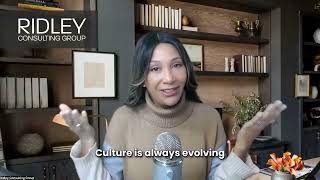
Speaker (Beth Ridley) frames current backlash and budget cuts to DEI as an opportunity to rethink how organizations pursue inclusion. She argues DEI’s core aim—appreciating differences and fostering belonging—remains essential for wellbeing, engagement, and competitive talent acquisition. Ridley recommends shifting from expensive, binary DEI programs toward embedding inclusivity as a leadership competency and focusing on belonging as the measurable outcome; her approach emphasizes practical, tailored, both/and strategies that make progress over perfection.
Chapters
People are often surprised when I say I'm energized by the current backlash and budget cuts around dei. Here's why, in the spirit of true inclusion, we make better, more thoughtful decisions when we seek out diverse perspectives, even if we don't agree with them. There's always something to learn when we're willing to explore multiple viewpoints. Too often we see DEI as all or nothing. Either we're committed or we stop. But there's business environments are complex and they deserve more thoughtful responses. This is where a both and approach versus a binary either or approach comes in. And here's how I apply both and to help clients determine their strategies around DEI in 2025 and beyond. Now, my personal belief is that the need for DEI is not going away. At its core, DEI is simply about appreciating differences, creating environments where everyone feels valued, and being flexible to meet people's needs. When we embrace these core principles, we foster belonging. And belonging is essential for well being, confidence and resilience. And we definitely need more of that at work, especially with loneliness, stress, burnout, anxiety rising across all demographics in the workplace. Also, the workforce is becoming more diverse in every way, not only in terms of gender, identity, race, ethnicity, but also in terms of geography, skills, backgrounds and life experiences. That means the best talent today comes from a wide range of backgrounds, experiences and identities. To stay competitive, companies cannot just hire people who look, think and act just the same. Casting a wide net is essential to finding the top talent companies need. And if you don't, your competitors will. Meanwhile, employees, especially younger ones, are speaking up about what they uniquely need to thrive at work. Flexibility is now the norm from where we work to how we work. Here's a simple example to make my point. Think about Starbucks. Just five years ago, there were only a few milk choices skim, whole or 2%. Now the selection is everything from almond, oat, soy, coconut, and more. People are used to having choices. And when employees feel that what they need to be their best at work is respected and valued, they are more engaged and perform better. And again, if you are not investing in this kind of workplace culture, your competitors are. Now, on the other hand, some some people do express concerns that DEI creates more division. It unfairly advantages some people or it drains resources. So how do we address these concerns and still meet the ongoing need for dei? My answer is to focus on belonging as the outcome, because belonging speaks to the human universal need for connection and acceptance that everyone can support and then position inclusivity as a core competency, especially for leaders to foster belonging. When inclusivity becomes part of how we lead and how we do our work, it naturally fosters belonging and the benefits of belonging. This approach does not require expensive programs or initiatives. It's about reinforcing a mindset and integrating behaviors into our daily work. This approach will engage more people with DEI core values, ensuring that the work is inclusive, integrated, and becomes sustainable so that everyone benefits. I've shifted my business to help organizations embrace inclusivity as the behaviors to fostering belonging as the outcome. My approach is practical and tailored to meet every client where they are, focusing on making progress over perfection. In short, I've embraced today's challenges to rethink, retool, and be smarter about this work around dei, and I'd love to help you do the same.