Conversation about Race When You are Neither Black nor White with Sumathi Thiyagarajan
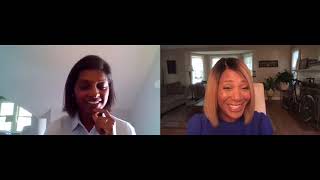
Sumathi Thiyagarajan organized three backyard conversations for South and East Asian immigrants after attending George Floyd protests. The small groups discussed anti-Blackness in their home countries, their own experiences with racism, and how to raise kids in white neighborhoods. Participants made action plans and connected with local organizations.
Chapters
Simathi, good morning and thank you for spending time with me to talk about the interesting conversations that you've been having around bridging differences. So let's just get to it. So explain to me, like, what are these conversations and what was your inspiration or motivation for even wanting to have them?
Yes, thanks, Beth, for having me this morning. So when the George Floyd murder happened, we were actually in Maryland visiting my parents. And at the time, my dad was like, hey, there's a protest. Let's go and march. And so myself, my husband, who is also Indian, and my dad, we went and we walked there and we did a protest. We went to D.C. and we went down kind of right in front of the White House where all the posters were and the BLM road. And, you know, I think we had always been doing things kind of behind quietly, like giving and kind of donating all this stuff. And. And we recognized when we came away from that, we're like, what else can we do, really? And giving, donating, all that. All that matters. Going to a protest, all of that matters. But for us, we wanted to take another step kind of out from our comfort zone and really push that. And part of the reason for it really is because we were looking, we were reading, and we were talking to people. And we fully recognize that whenever we talk to our white friends kind of about social justice things, we, while we bond with them, there was just this recognition of, you know, they experience so much more privilege than we've ever experienced. And then when we talk to our African American friends or colleagues, we keep away being like, we have more privilege than they do in certain situations. Right? And so there was this real kind of middle discomfort where we're like, where do we fit in in this conversation? And everything on the news was, white people need to do this. You gotta read these books. Black people need to do this. You have to read these books. And we were kind of looking around like, what do we do?
What do Indians do?
What do Indians do? What do people who are not African American, not Latino, but they're still people of color in this country, like, what do you do? And so our takeaway was to really act hyperlocally. And so we expressed this deep feeling of where do we fit in and how do we fit in? How do we be part of the solution and not part of the problem? I think as a first gen immigrant family, like, we can all very easily put our heads down and work and act like none of this is part of our issue. It's a black and white issue. But we, you know, we were raised in this country. We're raising our children here. This is our, this is our country. So we embrace the good and the bad. And so hyper locally. We were like, let's ask all of our south and East Asian friends if they feel similarly compelled and let's have a conversation about this identity, a South and East Asian identity, immigrant identity, so to speak, for us and its intersection with Black Lives Matter. So these conversations, we decided to do three to four socially distanced conversations in our backyard. We restricted it to eight people and we just kind of emailed out everyone that we knew of south and East Asian identity and we said, we want to do these conversations. Are you interested? And people wrote back and said, yeah, I want to have a talk. I want to talk about this and figure this out. And so we had three sessions. First one is actually about our countries of origin, south and East Asian community. Countries have had a lot of anti black racism for a long time and it's part of their history. So we talked a lot about that, which was really interesting because it gave us context of this has been ingrained in generations of our own family. And so in some ways, like it makes sense that we are struggling with this, right. And we need to figure out where it all fits in in our current life. Then we did a whole series on the immigrant experience. And I mean, that was interesting because people really wanted to talk about the racism they themselves had faced. And I think being able to do that helped them contextualize the racism that African American people face. Right? It kind of gave them that lens to be able to see it better. And then the last one, because as you know, I live in a predominantly white neighborhood and I am raising two non white children. And for a lot of us who have either been around predominantly white neighborhoods or grown up in those, how do you raise children in this atmosphere? How do you provide safe spaces and how do you make them not feel other? And that was the topic, I think that was the most popular because people really wanted to figure out how to do this right for generations to come. And so, yeah, we kind of did this. We recognized that there were people out there who wanted to talk about it and they just needed a space to talk about it and they needed to be able to talk about their own experience. Right. That wasn't necessarily wanting to appropriate anything that's happening in, in the African American community now. But there is their unique point of view and there is a way forward for them to take part in the actions that are Coming up.
And when you told me about this, I was so excited. And this is so refreshing to me because I think I shared with you one of the things that I felt was missing is this conversation about race in America. So obviously, I have that conversation a lot among my black friends, and I also have it very comfortably with my Latinx friends. And I feel like there's sort of a shared experience that we can talk about it. And in my previous job, I worked alongside of a lot of Indian Americans, Asian Americans, who I consider people of color. But for whatever reason, I never felt comfortable having the conversation. I wasn't sure where people might have felt in the conversation. My assumption was they felt that their experience was more aligned with the white experience and perhaps couldn't relate. Clearly, that's not the case. It's a different experience. But I think that a lot of times when we talk about diversity in America, it is black or white, because that has been the history. But clearly, America, with more people integrating, we are a melting pot. I would love to see. And it's so refreshing to hear other voices around, what does race mean in America? Because we are not just black and white anymore. And so if we're going to have this shape, our shared identity going forward, everyone needs to be part of the conversation, because I think we have a unique history in America because of slavery that no one can escape. Even if you immigrated here recently, it is part of the culture. But now it gets more complex. It gets more. There's so much intersectionality. And so I was just really encouraged that someone's having this conversation. Yeah.
Yeah. And I mean, very, very selfishly driven in some ways.
Right.
Like my husband, Jay and I. And so it's so grateful to have a partner who wanted to do this too, and who feels equally compelled. I mean, we just kept talking to each other, and I was like, we gotta talk to other people. You know, like, there's other perspectives here. And. And I think we just got to a place where we needed to know that there was just more than a handful of people who shared these values and beliefs. And our common ground, in some ways was our immigrant kind of arc of the. Like, a lot of south and East Asians have a similar arc of immigration. Right. They come to this country, they've left everything behind. They are told, essentially, put your head down, work, get a toehold. In this country, it's about survival. And you do all the right things of the American dream. You know, you go to college, you go to do these things. At least that's that's the myth that we all want to believe that we're all doing that. There's obviously, we're not a monolith either. There's a wide spread of us. But the kind of the white America myth is you come here, you work hard, you get a job, you build a house, you have your picket fence, you live in the suburbs. Right.
Like.
And they've sold that message broadly enough that when immigrants come here, they want the same thing and they think that they could do that. And in many ways, we are either told to ignore any kind of racism conversation. Right. Because it's about just getting forward. You know, we're often Asian American, Southeast Asian. The whole kind of stereotype is we're generally apolitical, we're generally quieter. We kind of just do our work and kind of try to be as white adjacent as possible, you know, and people have been rewarded for that, frankly. Like, we see people rewarded for that. And through this, I kind of got a lot of empathy for what that immigrant experience is. And because we shared that with so many other people and that they also had that common ground, it led for a pathway to talk about race relations in a more direct fashion. Right. So it's about finding the common ground so you can push beyond that to talk about things that really matter and that are deeper. And so, yeah, it's been really, really good for us and for us to be able to find some community that has some shared belief and values and have our families surrounded by people who will help test our ideas and thoughts and, yeah, make us more equipped to have the state of mind to keep kind of doing something and keep moving forward and having a collective group to go to.
So you took a risk by putting the offer out there. You weren't sure who was going to accept or if anybody did. So just tell me a little bit about maybe what you personally gained. You know, in other words, was the effort worth it? In what way have you personally benefited by spending your time and taking the risk to do this, to initiate these conversations?
Yeah, I think it has been truly rewarding, and it was all worth it. When worth it for one of the reasons I said, right. We've been able to create some community. We've met new people, we've deepened relationships with old friends because we're now having some really good conversations about things that really kind of matter and being able to not do the polite, let's not talk about politics. We're more about like, okay, let's really talk about this and let's help Help me grow in this space and I will help you grow in that space of deepening existing relationships. We've managed to connect people with other people who are in this space, which has been great. We personally have been involved with more organizations. We've gotten to learn about more organizations around Milwaukee and do work with them. And at the end of all of this, we came away with two kind of goals and putting it out there for Jay and I to work on because this is what we're committing to for the next year. Jay walked away with again, the question was always, how do you find the action that is doable and sustainable for you? If dialogue helps us get to a place of like, I process this in a much more thoughtful way and now I know what is my doable and sustainable action moving forward. And for him, he found that in community health. So he is a critical care pulmonologist and really wants to address health disparities in underserved populations. In Minnesota, sorry, in Milwaukee, I don't know why I smell Milwaukee. And so that's his space where he is going to operate for the next year. And these conversations really helped crystallize and meet the right people and find energy in that space. For me, one of the things I learned, we had all these well intentioned people around us and we got to that conversation of how do we change things for the kids, like how do we raise our kids here? Everyone went back to books and it was a very intellectualized approach, right. And what they all said is I have diversity in pockets, but they're not integrated into my daily life and really well intentioned people. And I think it's what happens is, you know, you go to your kids soccer games and you have your kids soccer games friends, you go to work, you have your work friends, you go home, you have your home friends. But none of these groups are coming together. And part of what they said, what people said was, you know, I'm a busy dual working family. So in the end of the day, I had a couple of hours at the end of the day with my kids or I had a weekend here and there. Like the intentionality of like, okay, now I'm going to cultivate some real integration and diversity somehow that takes a backseat with all the things that are happening or just doesn't come to the forefront. So how do you create a mechanism for busy, well intentioned people to still have more diversity? Not the books, but the real people. Right. And so one of the things I've always said is I think the greatest gift I have is Friends of Friends, because obviously we have something in common. So who are these friends that have outside of me, and how do we meet each other? And so is there a model for creating a Friends of Friends dinner and just creating a mechanism for people to come in, meet more people, you know, and then. And then grow their own communities and again, start hyperlocal. That's something I want to spend the next year kind of figuring out how to do that. And in a pandemic, it's really hard. I'm not going to lie. You know, because people don't really want to be on another zoom call at the end of the day, you know, I live on a diverse street. I don't know everybody on my block. Why not? Right. So how do we start just getting people to mingle? Because I think unless you know someone as an individual, it's hard to think about solving the bigger problem. You got to know people before you can come up with a solution.
You know, the funny thing is, it is, in fact, just that simple. Right. It's almost so simple that we take it for granted. If you want to replace biases and stereotypes with empathy and understanding, you have to broaden your data points around the human experience. And guess what that means. Meeting humans.
Yes.
Talking to humans.
Yes.
Behind a mask in your driveway. It literally doesn't matter. And, you know, the interesting thing is, I also think, like you said, a lot of us don't have a lot of diversity in our personal lives that we provide, proactively, tap into. For many of us, the workplace is the most diverse environment. But we are taught to, you know, avoid these conversations, be polite at work. So that's why I want to harness the diversity that you have wherever it is. And if it happens to be at work, there has to be some way that we can have difficult conversations. And just like you said, one of the things that you were surprised is that it deepened relationships. I think we are so worried that if we have a conversation about a delicate topic, it'll destroy the relationship. We never think about what could go right in terms of deepening the relationship. And when you have meaningful relationships, that's one of the biggest sources of joy and meaning in your life.
Absolutely. And honestly, it's all practice. Right. I recognize it more and more as I age. I guess everything just takes practice. So if I want deeper relationships, I kind of have to practice doing it right. And it's really hard.
You have to make the effort. So that's why I asked you, was it worth it? I always Ask, is the juice worth the squeeze? Cause you know, organize these conversations. I mean, yeah, that's something that you, you know, you had to give up something of your time in order to do that. It seems like it was really worth it.
Yeah, absolutely.
So final question I want to ask just like sort of practical tips. Like, obviously you invited people, you were having sensitive conversations. Not everybody agreed or was on the same pa. Did you do anything to set the stage or to create the environment where the conversations could be more productive than not as opposed to even when you disagree, it didn't turn into an argument or turn ugly, but even if you disagreed, it was still meaningful and productive. What were some of the things that you did that you think worked?
Absolutely. So kind of our process around it was telling people what the topic was, having them opt in. And then what we would do is we would have pre reads and reflection questions and we would send those out every time before a conversation. And it just kind of helped people write. Like, what does anti blackness mean? What does the immigrant experience mean? And how does that, you know, what is some data around it for some people who are really data oriented. And then some, like Hassan Minhaj did a great piece on, hey, South Asians, don't put your head down. Like we had it. This is part of our thing. And so we send out these small kind of pre reads and reflection questions. And then when we people came, we just asked them to be open to talking about these things. And yeah, there were definitely times where, you know, one of the bigger questions we had that we never necessarily got around to answer is, what's the difference between appropriation and appreciation? And that's out there right now, right? Like Adele, I think put on some clothes that people are like, you're appropriating South African culture. But is it appreciation? So we kind of butted heads in some of these things, right? Where some people were saying, you know, my parents didn't care about my social mental awareness or health. They were more worried about my schooling and education. And someone else in the group was like, hold the train. When you're a first gen immigrant parent, you're just trying to get by. And it's not that people don't care, it's that they didn't know how to talk about those things or how to, you know, have the language for it or couldn't necessarily put effort towards that because they were working for the bigger things. So we kind of set the stage by really trying to get people's awareness on the topic, trying to get people Thinking in their own minds before they came and then really just using the time and space to talk about some of those reflection questions. And at the end, we would send out an email that kind of had resources afterwards. If you want to keep reading more, if you want to protest, if you want to donate, we just had a list of things of here's go do this. And again, no judgment. You can come again. You do not have to come again. You can donate. You cannot. You can protest. None of it matters. But how can we provide a space and a mechanism for you to do things?
I love that helps. And so this is why I'm so glad that you're my friend, because you have conversations anchored in pre reads and follow up. Meanwhile, I just would have lured them in with cookies and wine.
If there wasn't a pandemic. There would have just been a.
But, yes, I always like to surround myself with people who are far more brilliant than me. I enjoyed our conversation so much. I mean, really, I leave so inspired by people like you who are doing what seemingly small things that really have such a big impact. And I love how you moved it from conversation to your own personal action and you have your own personal goals around here. And you know, what if, like even half of America or a quarter of America just did that one thing, one conversation, and then followed up with one personal action item, like, wouldn't we be so much better, like, if we all could just do. If we all just did one tenth of what you just did, right?
I mean, yeah. And I mean, not to toot our horn or anything, but like, yeah, I do think, you know, people often ask, like, how do you have these uncomfortable conversations or, you know, how do you get comfortable doing these things or whatever. It's all practice, right? In many ways, having these conversations now makes me have a little more confidence and a little more language. So now when I go out in the real world and there's a tough conversation going to happen, I feel a little better equipped, right? So even if we don't do it to commit to a future action, can we do it just to even make ourselves a little more comfortable so that you're not caught off guard wherever you're.
At, you know, and it's a win, win, because yes, you learn to do a. And honestly, I think like, the ability to bridge differences is probably like the number one competency for 2020 and beyond. And not only that, by doing that, you also build relationships. And relationships is the biggest currency these days. And so just thinking about the relationships that you're building because of that. And, yeah, you're right. Just with practice, with each conversation.
Yeah.
I love it. So inspiring. Thank you.
Thank you for having me. I really appreciate it.








