Conversation with Steven Olikara
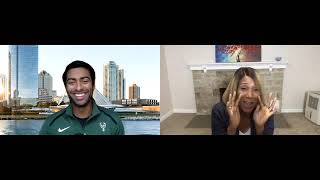
Steven Olikara founded the Millennial Action Project in 2013 to bridge political divides by training young leaders across party lines. MAP runs listening tours and dialogue series, like one across Wisconsin, and helped strengthen mail voting access through bipartisan local organizing.
Chapters
Stephen, I am really excited to talk to you because I think out of all the divisive issues that are really difficult to bridge across, either at home or in our community or in the workplace, politics has just gotten out of control. I mean, everything has been politicized. Wear a mask. Don't wear a mask. Send the kids to school. Don't send this. It's. And so it almost has become, like, don't talk about any topic if you don't want to get into a heated debate about politics. And unfortunately, that is just not the way it should be. So you believe that that's not the way it has to be?
That's right.
You built an entire organization around this belief that we can bridge across the political divide. So why don't we start there? Tell us a little bit about your organization and your whole, like, why? For starting.
You know, I think back to we were together at no Studios, and you sharing some of the experiences you had of bridging differences. And I was so moved by that. And the spirit you shared then is exactly why we started Millennial Action Project. We launched back in 2013. And I came. You know, I grew up here in the greater Milwaukee area, seeing political and racial divides up close and personal. But I also saw the avenues in which we could transcend those divides through real trust and relationships. For me, the best and most powerful vehicle I found was music. I played in every type of band you can imagine. I had a rock band, multiple jazz groups. I even had a klezmer band. And a lot of people don't know what klezmer music is. If you don't definitely look it up.
Is it even legal to integrate all those genres?
I know. Exactly. Exactly. And my bands were like a motley crew, each one of them of that cultural spectrum here in the community that doesn't usually come together. And I remember we would play shows where the audience would look at us kind of surprised that this type of fusion could even happen in one place. So that really got me fired up. And it led to the DNA of Millennial Action Project, which is completely focused, as you mentioned, on bridging the political divide through the activation of young leaders. And the second part of that equation is premised on the idea that the best investment we can make in changing the future is by training and developing young leaders who can emerge out of this darkness with a totally new paradigm of collaboration. And part of the why question, as you asked earlier, was not only seeing through music how we can bridge divides in really creative ways, but when you look longer term at this country and perhaps even in the world. The future of humanity, the need for diverse democracies to function well and thrive and as our world becomes increasingly interconnected is absolutely essential. And that was really what America is supposed to be. And that was one of our greatest exports around the country, is the idea of a multicultural, multi religious democracy where we out of our diversity can come together, reconcile our differences, and advance the public good. Part of that methodology, which I hope we can talk a bit more about today, is just like in a jazz group, where you have different perspectives converging and you're iterating, you come out with the new artistic creation. It's better than what you would have otherwise had in isolation of each other. And that methodology has been proven to be true with Millennial Action Project. Whether it's on our safe voting initiative, our criminal justice reform initiative, our on climate change efforts, having this dynamic exchange of conversations, listening and learning and co creating solutions together leads to a better result. And we have to build the case for that.
All right, so Stephen, you sold me on the vision, I get that. But in practical terms, is it possible? Right. So you see a lot in your lens in the sense that you're working with young people who are getting into politics. And so tell me, are you seeing that vision actually play out? Is it possible? Because I'm not seeing it anywhere. I'm not seeing it in my conversations with family members or friends. I'm not seeing it certainly not on tv. So are you actually seeing this ability to bridge across political differences? And based on your viewpoint, are you more optimistic or pessimistic about the future?
I often talk about the difference between the headlines and the trend lines because we know when it comes to headlines, there's a saying that says if it bleeds, it leads, because it's all premised around a business model of conflict. But I am hopeful for the future because when we reached out to, as an example, our young lawmakers and leaders here in Wisconsin to say we need to strengthen our absentee voting system to ensure we can vote in this pandemic. This is just one of a few issues we focus on. We heard from not just Democrats, but Republicans and Independents who wanted to join together on that. And because of that consensus we helped to build, our state was able to strengthen the absentee voting process. Voters this last week and this week are receiving voting in the mail, absentee ballot requests, just because we had built that consensus that would not have otherwise happened if not for that type of agreement. We helped to build and if you're unregistered, you're going to get a postcard saying how you can register to vote. So the point is, we have found these areas of agreement, and I think it's not that we all have the same ideas or the same perspectives, but when we have a shared goal of how we can vote safely in our democracy and open the conversation to hearing from people who might not otherwise be part of it. And trust me, in the voting rights conversation, we often miss a lot of people. We learned, like, Millennial Action Project learned a lot through what we called a. We called it a listening tour. And we discovered our own blind spots, and we're able to enhance our messaging, the way we frame the issue in order to get this kind of consensus. So that type of methodology, which I'd break down into a, building trust, B, reframing the issue, and then C, executing against this idea, I think can be applied to a lot of different aspects in our life or different issues that we work on.
Yeah, so I love how you called it a listening tour. Actually, that was one of my strategies in business. Whenever I started a new job, I just said, you know what? I'm not even going to jump to strategy or execution, which is kind of like the default. You know, you want to get to action right away. But I always went on a listening tour where I just literally spent time talking to people at all levels of the organization to kind of inform my thinking. All right, so I have a provocative question for you. So you said, you know, with the voting. Access to voting and voting registration was, like, one common theme that people wanted to come around. So just between you and me, like, which side is more willing to lean into these topics with the spirit of empathy and understanding and listening and compromise and collaboration? Which side or the Democrats?
Well, actually, I have some, like, concrete data I can share with you, because for two years, Millennial Action Project hosted a Red and Blue dialogue series across the state of Wisconsin. We were in Milwaukee, Sheboygan, Green Bay, Madison. We were all over the place, including my hometown of Brookfield, which was a really fun discussion we had. And it was modeled off of having local state representatives who are Democrats and Republicans, and then seeking to invite a cross partisan group of community members to join the dialogue. And typically, what does happen is that when you put out a call for a dialogue, there is often an immediate self kind of selection bias towards people who lean liberal. And to kind of balance out the partisan balance, you might have to do some intentional recruitment. But I think what we also learned Is that the language?
Pause there. Why? Why do you think that is? Do you have any hypothesis, like, why?
I think a lot of it is. I think there are two dynamics I think, at play. One is simply the language that we use. I think sometimes when people hear, you know, dialogue, for example, they wonder, are we going to get brainwashed to all think one thing? And maybe we found that community conversation, or there are other, maybe better examples of language that can help to attract a different audience. And again, going back to our blind spots, sometimes we don't even recognize that our language can create a bias in who decides to attend an open event. So that's one key thing. And we learned through the data that actually if we do this series again, we probably may not call it a dialogue. We might call it something else. The second dynamic is who are your community champions? Who are the trusted conduits of a meeting of this sort? And one reason I think we are successful in achieving this cross partisan or nonpartisan group of people truly from across the spectrum was because we had recruited local champions. Many of the times they were our local state representatives who've been involved in Millennial Action Project, or maybe they're part of the local chamber of commerce or the local tech college. They could go out and invite people, and through their networks, people will trust them that this is a worthwhile conversation that's not going to brainwash them. In fact, they might actually learn something new. So I think that's really important. And then I think the group that's hosting it needs to have true bipartisan credibility. I think too often we hear about nonpartisan groups, but they actually advocate for one side or the other or their funding or their boards. Their board membership is clearly slanted. And so we've taken extra effort at MAP to make sure we do have that political balance. And I think the credibility then lends to people willing to really step up and participate and sometimes stick their necks out in order to show that they support this type of conversation.
All right, so I hear trust and credibility really matter. Still didn't answer my question. Who leans in more, Democrats or Republicans?
You know, it's a good question, but I do think that I can think of many examples right now of Democrats who are open minded and closed minded, Republicans who are open minded and closed minded. The language used is often different from, well, maybe we'll get into this later in the conversation. But the kind of rationale for cooperation or hatred honestly can come to the same place with different language, whether you're more from the right or you know, from the left. So it's hard to say one or the other.
Not politics. It's more personality based than. Right.
Could be, could be. Exactly, exactly. I think a lot of it, if I just to add one more quick thing, is how people, it's just. And you know this in business, like the. How important does the first impression matter? Right? In that first few seconds, you're starting to place that person in a certain construct. And the same thing happens in politics where if you immediately see the D or an R next to their name, you start to associate all of these things with them that they may or may not believe. And one of my favorite examples of where that matters is we hosted a dialogue on criminal justice reform, had a table that we intentionally curated. And one of the women comes up to me afterwards. I knew already that she was one of the most furthest left, you know, liberal activists. And she comes up to me and she says, hey, Steve, I really enjoyed the conversation. I thought it was, you know, really well done. I just had one issue. I said, what's that, man? And she says.








