Creative Conversations Live from Fall X19: Arabian Prince
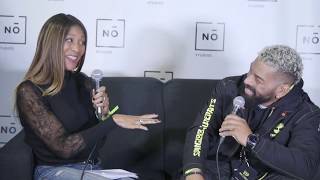
Live podcast interview (Creative Conversations) with Arabian Prince, hosted by Beth Ridley at Fall X Festival. Arabian Prince recounts his path from growing up in Compton to becoming a founding member of N.W.A., a self-taught technologist (starting computers in his teens), and a long-time participant in gaming, animation, and VFX. He describes recent work building a gaming product, launching and advising esports ventures, and creating Open Labs to bring technology/STEM/STEAM opportunities to inner-city youth; he emphasizes iterative prototyping, following passion, and teaching sustainable business skills.
Chapters
Good morning and welcome to our Creative Conversations podcast, which is a partnership between career and culture wellness company, the Brimful Life and no Studios, Milwaukee's social club for artists. And we are broadcasting live from Fall X Festival here in the Wisconsin Center. I am your host, Beth Ridley. I am so excited. My first guest of the morning Arabian Prize.
Morning. You said morning, and I'm the morning Arabian prince. Good morning. Good morning to you.
All right, I gotta read a little bit of your bio here.
I'll sit back for a while for that one.
Yeah, sit back.
I'll show off the spongebobs while you do that.
This is gonna actually take a while, right, because you are a rapper, a singer, songwriter, record producer, dj, best known as founding member of NWA and more recently, you are developing a reput as a master developer and marketer in the gaming industry. Yeah, that's a whole lot of twists and turns and integrating all sorts of skill sets.
You know what? Really? You know, I'm be honest. It's all the same.
Okay.
You know.
Yeah, so let's talk about that. Okay, so where. Where's the. The. The common thread line across all of those things that I just listed off?
It's all entertainment and it's all stuff that I grew up on as a kid. You know, I grew up watching cartoons, I grew up listening to music. I grew up wanting to be a dj. I grew up wanting to be an entertainer. I grew up playing video games. So all of the things that I grew up doing, I decided that's what I wanted to do in life. And that's really my message to kids is, you know, whatever your passion is, figure out a way to make money in your passion and you'll be happy for the rest of your life.
I think that's wonderful advice because I interview a lot of adults who go through life not really loving what they do because they don't do what they want to do. They always fulfill somebody else's expectations of what they should do. So where did that come from? This confidence, maybe this courage to just go forward with what you want? Did you have any external pressure saying, no, no, no, no, no, you should do this, you should be an accountant, or no, no, no, no, you should do this, you should go into law.
Well, you know what? I had a little bit of both. My mother child growing up in Compton. So you growing up in the hood, your only child, your mom's going to be, like, overly protective of you. So to keep me out of the hood and keep me out of the streets, she put Me in Catholic school. But what my moms didn't know is Catholic school was worse than public school because the nuns and the priest didn't know what was going on. So you could get away with a lot more stuff than you could in a public school, okay? But I had. I guess she thought she was going to put the fear of God in me, but it wasn't the fear of God. It was the fear of my uncles and cousins who. Who were the crazy dudes in Compton who were telling me, nah, you ain't going to be out here in the streets. Because if you out here in the streets, we out here in the streets and come here. Took me outside one morning. I was a little kid. I remember this, my cut. And he's passed on, so he can't go to prison for this. But he took me outside and put my face in the gutter in some mud. And like, you see that? That's what they going to do to you out here. So you don't want to be out here. And I'm like, okay, because I was scared of them.
Yeah, that's a little bit of, like, scared straight tough love going on right there, right?
They. They just said, stay, you know, just do what to do. Here's music, here's some electronics, here's a ham radio. Here's all kind of other stuff to get you motivated.
So you actually started integrating music, art and technology, like way back in the day, before it became cool, before there was like a whole fall X, you know, genre and festival around it. And in fact, you started mixing those two so early that you were not even, like, maybe, like, ashamed or like, embarrassed to say that you were interested in technology, right as a youngster.
I started in computers when I was like, 16, because when I was 15, I was a DJ, pretty well known DJ in the school system, you know, doing school parties. And I had my own little teen club at 15 years old called the Cave. And a lot of famous DJs came out of, you know, my club. And when I turned 16, I wanted to make a record because we started hearing rap come from the east coast, and even in la there was some rap bubbling up. And I'm like, I want to make a record. I didn't know how. I got saved up some money when the studio and figured it out. But what I found out when I got in the studio, they had sequencers, like computers and synthesizers to make music. And I'm like, oh, okay, I want to do that. So I need to learn how to get a computer and figure that out. So I bought a computer in like the early 80s, early mid-80s and taught myself how to code. And then I was really interested in video games. So then I figured out how to code video games and do animation and the rest was history. I just started then and have kind of lived this two parallel life, you know, for 30 something years.
So very pretty much all self taught then.
Yeah.
In terms of coding and computer and everything like that.
Like I say I'm from the before times. There was no Internet.
There was such a thing.
No Internet. Yeah.
Yeah. So how do you even learn if you can't? Like YouTube, a, a course and how to learn how to do something.
You read. You know what I mean? I got books, I read, I got magazines, I read. And I had just the hunger to figure this out because for me it was like I wasn't even thinking about money. It was kind of like, ooh, this is cool, I want to make games. Ooh, this is cool. I want to do animation and ooh, it's cool, I want to do music. And I ended up being like that tech dude that will be in the studio with everybody else helping them figure out how to make music.
I think that's another really important life lesson though that you shared, is that you can't be overly focused on the outcome. You can't go into something, say, I'm doing this because I want to achieve this. You really have to enjoy the journey because it is very much a journey. You may not know exactly where it's taking you, but as long as you're enjoying it and you're curious and immersing yourself in something that brings you joy, the outcome should follow. Right? Success should follow. Is that what you found in your life?
Yeah. And you can't be afraid to fail. You know what I mean? Because if you just say, I don't know if I should do that because I'm going to fail, or if you, I say, listen to your parents. But my mother knew nothing about rap. There was no such thing as rap. And when I remember when I started rapping and doing music, she was like, well, you still going to school? Because I don't know what this is.
Yeah.
And okay, I did both. You can do both. You can appease your family and your friends and the people that are trying to, you know, protect you and take care of you, but still go out and experiment and do things that you think that are your passion. And if it works out, then you've done something special.
Yeah, I love it. So failing forward it seems like you kind of embrace that through your whole life.
Yeah.
And so give me an example of maybe how you failed recently or at least you tried something. The outcome wasn't what you expected. And what do you learn? Like a recent example.
Recent. Wow. I'm not trying to be rude, but I don't fail much anymore. No. Because you know what? I'm going to tell you this, and this is the honest truth. Everything that you do in life, there's a formula. If you can figure out that formula and if you can figure out a way to go through the process, you can minimize failure. Not saying that you won't fail, like. Okay, I'll give you a good example. I have a new product that I just launched. It's a gaming product for game consoles and it's gone viral. We've almost raised a million dollars in two months. And the crazy thing about it is I failed making that product because I was prototyping and I came up with all these different designs and how to make it because I, you know, I do my own prototyping and I had some crazy designs. I'm like, oh, that's not going to work. Oh, that's not going to work. That's not going to work. But I didn't give up. Some people will try something and then. And it didn't work and they'll move on. I just kept going and kept going and I came up with something. Oh, there it is. That's amazing. Right, let's put this out. So now we got to hit.
So you had like micro fails.
Yeah.
What you're saying is you don't look at it as a face.
It's a process. Yeah. And I, and I admire iterative.
You keep building and working and working on it.
Yeah. And I, I admire the Richard Branson's. I admire the Elon Musk. You know, people like that, who, you see them doing all these different things and, you know, they just keep going.
Yeah.
Yeah.
Well, I think that's probably where your artist background gives you a good foundation for that process. Because think about it like the first rap song that you made or the first song that you created. It's what we hear on the radio is not where you started.
Yeah.
And so you're kind of used to. I'm going to start here. I'm going to throw away that draft. That was horrible. But I like that piece. And build on, build on until you get to something that, you know, then you put out into the public.
Yeah. And to be honest, my first record, I Ever created was not what I wanted, but it was all I knew how to do. And it became a hit. I was like, this is not what I came in the studio to make, but I don't really know yet how to make the sound that I want, so this is good enough for now. And it happened to hit the radio and do well. And then over time, I honed my sound and just like everybody else. If you look at the. I saw something on Jay Z when he was on a talk show. They showed him when he was young and he had a flat top and, you know, and he was like. Yeah. I hadn't figured it out yet, so. Yeah.
So somebody told me a quote once, today is the worst you will ever be.
Yeah, I like that. Yeah.
Every day you get better.
Yeah.
Then better and better.
There you go.
All right, so let's fast forward, then, to gaming. Right. This is. Now, how long have you been sort of, like, seriously into gaming? And how did you get into gaming and, like, what are you up to?
I've been in the gaming for about 35 years.
Okay.
So since the 80s, you know, since, like, since I started doing music, I've been in the gaming because I started learning how to code, learning how to do the sprite animation, and learning how to do animation. And then I got lucky. And I'm a. What you call a convention rat. Like, I go to conventions. That's what you would do. There was no Internet back then, so you had to go to conventions to learn stuff, so.
And interact with people.
Yeah. You had to talk to people. And I would go to Siggraph. I would go to something called Comdex. I would go to CES every single year. And I found out, because I had a lot of time on my hands, I knew just as much or more than some of the guys who were doing it because they had jobs. And when you have a job, you can only do what you do. I had time to experiment and play with stuff. So I would go. And they were like, who are you? Like, why do you know this and how come you know so much on it? Next thing I know, they're, like, inviting me to work on, like, projects. I did the first ever season of the Mighty Morphin Power Rangers and did all the visual effects on that. And then I worked on Casper and Addams Family and Silver Surfer and a lot of movies and, you know, video games because of stuff that I learned just messing around.
So what are you working on now? What are you, like, really excited about right now?
The whole Esport thing right now I'm really excited about. I've partnered with a couple of companies. I own my own esport brand. I partnered with a company called Black Dog Gaming, and we started an esport kind of consultancy, slash venture capital, where we'll do everything from help you raise money to help you manage your kind of entry into the whole esport thing. Because it's like the wild west. A lot of people, they know the name esports, they know there's money in it, but they don't really know what to do.
Yeah.
And they put a lot of money into it, and then they fail. We help them hopefully not fail, right? Yeah, yeah, I'm really deep in that field right now.
All right, so you have been integrating music, gaming, art, technology from way, way, way back.
Yeah.
You have such great perspective just from your own experience, having been doing this for so long. What do you see from the young people coming up? Like, do you feel that they're at a disadvantage because they just don't have the perspective and the experience that someone like you brings to the table, or are you kind of excited about, like, what they're bringing to the. To the sector?
I say both. And I say the disad comes from the kids in the inner city. That's where the disadvantage lies. Because if you look at the, you know, the STEM schools or the charter schools, they have everything. Inner city kids, a lot of the time don't. So what I try to do with my company and my open labs concept is bring technology into the inner city so that the kids can have a chance to do the same things that other kids do and actually give them a leg up because I can teach them how to accelerate that path. And my vision is very simple. I believe in STEM and steam, but I believe that there's so much more. Everything is technology. Like, everything we do, the coffee cup, water, everything that we, clothing, fashion, sports, it's all based around technology now. So whatever a kid's passion is, they can do something in technology and make money. You just have to show them the path, right?
Yeah. I love it. I love it. All right, so what's next? What are you kind of excited about going forward? Where are you going to take your. Take your passion next?
Like I said, just grow this esport business and really, really grow my open lab system so that kids can make money. It's up, you know, and I say money because a lot of kids that's there, like, I want to make money. They see the rappers, they see the sports figures making money, and I show them that there's other ways to make money.
Right.
And all you got to do is have an idea, and if it's a great idea, we'll help you cultivate it. And I'm just all about giving back right now.
But I do think, you know, follow your passion, but also you do need to make a sustainable income.
You gotta eat right.
Yeah, yeah. Bringing, like, the business sense to it so that they can make a living doing something that they really love.
Yeah, yeah, yeah. There you go.
Thank you so much.
Thank you.
It's a great conversation. I appreciate it. Certainly learned a lot. I know I'm going to look forward to seeing you on the main stage later today.
We're going to get jiggy with it.
And then we're going to get that tonight as well. All right. I can't wait. Thank you so much.
Pleasure. Thank you.








