Creative Conversations Live from Fall X19: John Zertasky and Kiran Vedula
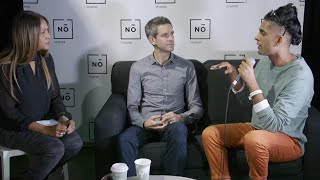
John Zyrotsky and Kiran Vedula talk productivity in business and music. Zyrotsky argues for process over output. Vedula uses fertility as a metaphor for creative readiness. Both discuss how technology pushes busyness and offer concrete fixes: walking, scheduling, removing apps.
Chapters
Hey. So welcome to Creative Conversations Podcast, a partnership between the Brimful Life Career Wellness company and no Studios, your social club for artists and creatives. And creatives at heart. So these conversations are all about creativity in art and in business to inspire your own creative thinking. We are live at the Fall X Festival here in the Wisconsin Center. I'm super excited about this conversation because we've got two really inspiring people that I think you're gonn learn a lot from. So let me introduce our guests. So first we have John Zyrotsky. And John is an author of Sprint and Make Time, two books that focus on how people in teams can work more efficiently and effectively. And you do a lot of writing and teaching on this particular topic, which we're going to dive into. And then we also have no studios member, producer, musician, dj, just sort of like music man extraordinaire Kiran Vadula. You probably also know him as Q the Sun. So thank you both for being here. So our topic that we're going to talk about is all about working effectively, efficiently, productively, and what that means in your respective worlds. You working more with businesses and teams in the business setting, and you working in the creative space in terms of music and production. So whoever wants to go first, like, just tell me, what does it mean to be productive in your particular space? What does that word mean to you? John, why don't you kick us off?
Sure, yeah. I try not to talk about productivity too much because I think it is for most types of work. It's not the right measurement. If you think of productivity, you think of machines, you think of output, number of widgets manufactured per hour, and that's not how humans function. Some people are in jobs where they do need to produce a certain amount, but for those of us who are trying to do things creatively and trying to think differently about our work, I think we need to be focused on the stuff that really matters to whatever we're doing, instead of just trying to focus on doing as much of it as possible.
Yeah. So not really about the quantity. I hear you saying that in not all cases. And are you also saying not necessarily just focus on the outcome specifically, but more of the process and the journey, and if you do that right, the outcome should follow.
Yeah. I think that being overly focused on goals or outcomes can actually have the opposite effect that you want it to have. You know, if you're obsessed with it doesn't even have to be in a business context. If you're obsessed with losing a certain number of pounds and, you know, being on the strict diet, you're going to be less successful at reaching that goal than if you focused on the process of, you know, learning to love exercise and learning how to cook your own food and things like that. And that applies to our work as well. I think the more that we can focus on the process of creating space and time for to really dig in and focus on the work that matters, the more likely we're going to be to reach our goals. We don't need to spend every minute obsessing over that specific outcome.
Yeah, I want to come back to that. Maybe specifically get a little bit more diet tips.
Sure.
Yeah.
Right.
You had me at lose 5 pounds.
Not an actual doctor, but.
Kieran, what did John say that you agree with? Is there anything that from a musician standpoint, you're like, nah, hold up here. I don't know.
No, I think definitely as an artist and as anybody, you find that you get better results if you're focusing on making yourself better and making the people around you better. So I think when you ask about productivity, like in the music space, productivity could be seen as like, I'm more productive if I'm making more songs, if I'm releasing more albums or doing more shows. But like you said, sometimes that can actually be destructive because you either become too stressed out or you're focusing too much on one thing without focusing on something else. So I like to use the word fertility instead of productivity. So because it's like. And you and I talked about this before, about kind of the creative processes, like nature, like a gardening process, make.
Sure you keep your mic.
I try to focus on making sure that the soil is really fertile for creation rather than how many vegetables am I pulling out of there.
It's a great analogy.
So I think that doing things like staying healthy and staying fit and keeping positive relationships with the people that I work with, I end up spending more time on that and products come out of that fertility, that time spent.
So, John, in the business world, when you're working with teams, do you get a lot of pushback? Is this more becoming more, like, universally accepted in the business world? Maybe backing off from leading with productivity as the goal? Or do you still find that you have to do a lot of education to get people to maybe think about work in a different way?
I think that productivity is a. It's a helpful starting point for these conversations because it's a word that people understand at some level. So to me, you know, I want to meet people where they are, and if where they are is thinking about productivity and trying to increase their output. Then I'm going to start the conversation there, but I'm going to try to dig into what is really important. Like, in every job, whether that's a job at the office or just our job in life, in every job, there is a part of that job that really matters. There's a core of that work that is, you know, that gives us purpose, that motivates us, and that's where the value comes from, too. That's the actual core of what we're doing and why. And so I try to dig into that, and then I try to help people sort of look at, well, how are you spending your time now, and are you spending most of your time on that work that really matters, or are you spending it on all the other stuff? Are you trying to stay on top of your emails and manage social media and go to all the meetings that you're invited to? So it's a bit of a process. But most people that I work with, regardless of what field they're in, they really. They can sort of relate to that idea that there's some part of their work that matters more than all the rest.
Yeah, totally. You know, I also feel like there's, like, our culture puts such a priority and a premium on, like, being busy.
Yeah.
It's almost like a badge of honor that we're getting stuff done. I'm actually on a personal mission to make being busy the new smoking and making out of the new kale, because I just don't think that, you know, we give enough credit to that opportunity to reflect on that downtime. But I guess. Well, maybe more of a personal question. Kiran, I'll start with you first. Like, you're both really successful in your respective disciplines, so obviously that takes drive and intention. Is there an inherent tension for you guys in terms of wanting to move fast, wanting to get a lot of stuff done, wanting to be accomplished, and either reflective time or time to focus and pay attention to what matters most. Do you just. Is this an inherent challenge for you that you've had to work on?
Yeah, I think the challenge comes down to. With any successful or driven people in any field, we attach so much of what we get accomplished to our own sense of, like, self worth and, like, place in the world that when we, like, for right now, I just accomplished a really, really big show last month, and it was such a great feedback piece, and I felt really accomplished myself. And then it's kind of like you reach that high and then you have to hit that valley afterwards where it's like, okay, let me. That's an important time too, of reflection and figuring out what my next moves are. But that's also when the insecurity starts to hit in, kick in of like, oh, I'm not doing enough, or I need to be emailing this person, or I need to be thinking about the next step. But if you jump right into that mode, it prevents you from actually allowing the inspiration or the right energy to come to you because you're filling it with that anxiety of like, unless I'm working, like, I'm not a person, or I don't exist unless I'm working. So it's fighting that impulse and knowing that the high came from the low.
Children.
John, do you have any theories on that? Because I almost feel like sometimes we hide behind being busy. Maybe it's easier to be busy than to be, like, alone with our own thoughts.
Yeah, definitely. Yeah. There's a famous quote that all of humanity's problems stem from the inability to sit alone quietly in a room. And, you know, I think that this sort of obsession with busyness, I actually think that it's. I think that it is a function of maybe a slightly earlier, different era of industrialization. Because, you know, if you think about kind of typical work in, you know, let's say just say the 70s or the 80s or whatever, like, there wasn't, like, information coming at you constantly. Like, we didn't have social media, we didn't have email. We didn't have the ability to be busy without actually doing anything. But now we do, you know, So I think. I think that the conversation might be changing a little bit. I think that maybe people are waking up to the fact that busyness isn't necessarily linked to value. And maybe it used to be just because the kind of structure of our world was a little bit different. But now it's so easy to be busy but not actually doing things that are important to us. And so that's kind of, for me, that's sort of this human conversation that we're all having is we're trying to navigate this transition that we're in with all this new technology and all these new sources of information.
So what do you see with, like, the younger generation? That is. So I feel like because I'm Gen X, I didn't always grow up with a device. So I feel like really, it's like an affront sometimes, this technology. But I would say my kids, maybe the opposite. They almost can't live without It. So for both of you, either in the companies that you work with or the audiences that you move, do you see that different generations have a different relationship with technology and how that makes them feel either refreshed or depleted?
Yeah, well, one of the important concepts when we're talking about this stuff is defaults and like what is considered to be normal for you. And so there are cultural defaults and norms that we generally like. Being busy is normal. Right. That's a good thing. But it also happens generationally. And so like you mentioned being constantly connected and reachable and online, that's not necessarily your default, that's not necessarily normal for you. And so you can have more of a balanced perspective on that. And you're absolutely right that, that younger people having grown up with smartphones and social media, it's just considered normal. It's just a part of the world for them.
I think my kids relax with it.
Well, yeah, I mean it's similar to, it's similar to how people relax by having a cigarette. You know, like nicotine is a stimulant. Right. And you know, the psychology of pulling to refresh Instagram or email is the same as slot machine. So like, you know, people are seeking so called relaxation by actually choosing to be stimulated.
Right.
As an escape. And so I, you know, when I wrote this book Make Time, that came out last year about how people can rethink their defaults and their relationship with technology so that they can actually make time for what they want to be doing. And I, I didn't expect that anybody under the age of, I don't know, let's say 25 would really, would really pick it up and find it valuable. But a lot of people have actually, I gave a talk earlier today and I had a couple of college students come up to me and say like, like I read your book and I had no idea how weird this was. Like I, this was so normal to me that I never took a step back and questioned whether it was good. And so, you know, I think it's, I definitely think it's more, it's a diff, you know, younger people have a different attitude. But I've been really heartened and encouraged to see that there's some, definitely some awareness.
Yeah, I'm glad you're introducing that conversation even so that they can give it some thought.
Yeah.
Kieran, here's a question for you. So with the, with your audiences, I would imagine most of your audiences at like the parties that you might DJ and throw or the consumers of your Music are on the younger end of the spectrum. Do you find that because of what you said, people almost relax by being stimulated? Do you feel like you have to give something more and different to appeal to that audience because they're always accustomed to wanting to be on and entertained and pumped with something?
Yeah. That's an interesting question because I think, yeah, definitely. I, I mean, because I'm, I'm, I'm kind of in between at 35, I'm like in between those two generations, I think. So I kind of got into technology when I was like in a senior in high school or in college. So it was a little bit later, so it's not as ingrained in me, but I've still gotten into that world a lot. Because as an independent artist, you use social media a lot to promote yourself or to network and communicate. So I think in general there's an add ness to consuming media that I definitely have incorporated into like the show that I just put together. It went from a rapper to a dancer to a big band. And that wasn't intentionally for the audience. That was even to keep myself interested and to keep, you know, my bandmates interested as opposed to just, you know, one solo singer even, no matter how beautiful that one singer is singing. I think people get a little bit tuned out for a 45 minute set, but if they just see them for five minutes and then it goes to something else and something else, they seem to respond to it a lot better. I wanted to speak to something else that you mentioned too, about busyness for the sake of busyness. I think that with the younger generation, like people my age and younger, especially artists, because social media is such a big part of promoting yourself and connecting, that there's become this trend of people showing that they're busy. Like, you know, it's a producer like me showing a picture of. This is my studio setup. Okay, I'm about to get to work, or I'm doing this thing. I'm a painter, look at me, I'm busy. Like I'm working on my thing, but it's like people spend more time actually showing their business than actually working on their craft, you know, and that's, that's really the trap a lot of times. And I found that over the past couple years, I've actually had to delete Instagram for a span of a few days to a few months.
That is one of your strategies in your book, make time. Right. Actually get rid of your distractions.
Right, right.
And you were like, for you, you delete email and I was like, whoa, John, easy now, easy now.
Right? That's a no. No Instagram, man.
I get what you're saying, but man. But yeah, you actually do delete Instagram.
Yeah, yeah. It's so necessary. And I have been encouraging so many of my friends and family and collaborators to do the same. Because like you said when you were speaking to kind of these stimuli, it's psychological. You can't avoid it in those spaces because it just draws you in in that way. Especially when you're seeing everybody else, from the most famous artist to your next door neighbor. It's like, oh, they're working on an album. Or, yeah, he's got a book coming out. Or, yeah, okay, I need to get to it. So then you sit down with your copy. Oh, look, I'm typing, I'm typing. Like I'm doing.
I love it.
But you're at.
Because you're posting and then you keep going back to see how many likes that picture got. At the end of the day, you're not even working on your book or your album.
It's a vicious cycle, John. Do you. Do you foresee a future where we rotate the other way? Like, are we getting to a point where, like, we'll be sick of ourselves and then, you know, the pendulum swings back or we're not. You can't quite envision that. You doubt it?
Yeah. I mean, I think it's part of why all these things we're talking about are so challenging, is that they're in our DNA. I mean, if you look at human evolution, like, we evolved to be highly social. We evolved to be. To care about what other people think. So when we see that photo of somebody else killing it or, you know, hashtag crushing it. Yeah, like, we evolved to care about social, you know, other people so that we could form sort of tight, cohesive groups. We evolved to be distractible. You know, if you think about a pre industrial age and you're walking through the woods, like there's a flash in the corner of your eye. Like, maybe it's something dangerous, maybe it's a tree falling, maybe it's a predator and you need to notice that that thing is there. So we've got all this natural wiring that has actually made it really, really difficult to sort of have control over these technologies. And a lot of the technologies are actually engineered specifically to take advantage of that wire. So I think that the best we can do, and maybe I'm not being optimistic enough, but I think that the best we can do is that we can all become much more aware of who we are as humans and what our interactions and relationships with technology are so that we can be intentional, so that we can choose to use technology in ways that really support us. I don't want to discount the power of, you know, the fact that this is a podcast that's, you know, on the Internet, like, like this is a great use of technology, but, you know, refreshing Instagram to see like, you know, how jealous you should be of people that you don't really know. That's not a great use. And so I'm just hoping that we very much, as we had to do as a, as a society when we adopted electricity and automobiles and like all these like, world changing new technologies. I hope that we'll get to the other side of that transition and have like much healthier, just sort of perspective.
Yeah.
What works for us.
That's actually like a very, I guess, calming way of framing it because, like when automobiles were first introduced, like so many people were killed because they forgot these things go faster than a horse and buggy and they're like crossing the street and then they get. So we had to evolve.
And so if you want to like, have some fun time on Google Sunday, look up some stories, like newspaper stories from when the first cars came out. And they were like, there were articles about like, how like this was gonna be the end of the world. Maybe it is. I mean, cars definitely have some problems. But like, but like there were articles about like how, like what it was gonna mean for horses, like the poor horses. There were articles about how like they.
Will now be not slaves anymore.
Right.
About how like carriage drivers, like, that was no longer going to be a job.
And that's fascinating.
And like, I don't mean to say that we've. That everything's perfect, but we kind of figured it out. We have emission standards, we have like.
But also the trend now is fewer cars on the road.
Yes.
Right. So maybe there's. Yeah, everything sort of evolves. And so you're right. I think we adapt and we will figure out a healthy way to incorporate it into our society. Yeah. All right, guys, so let's get a little personal here. Like your go to strategies. So Kieran, how about you, like, when you're starting to feel, oh, I should be taking pictures of me doing work instead of doing work, that's not good. So what, how do you catch yourself and what are your go to strategies for being more like, centered?
Yeah. I think the last time we talked and the reason you invited me in this Particular conversation is I was talking about my love of long walks, especially in nature, because. And making sure to leave my phone behind because that way. Because sometimes you can go for a walk in nature, but then you're still like, oh, look, I'm taking pictures. Hey, I'm going for a walk.
I'm so mindful.
Yeah, but walking to me is a great meditation because the scenery is constantly changing around you. So you're still simulated. You're, you know, you're moving so you're feeling your blood flowing. Nature, just in general is always an inspirational and healing space to be in. But even if I'm not in nature, if I'm just walking around downtown or whatever. Yeah, it's like your wheels are still spinning and you're thinking about stuff but you're not working. Like, you can't sit down and write something down. You just. The thoughts are passing through your head. Yeah, you're seeing stuff. Or you might see a person or sun shining or whatever it is. That, that's always my number one. Like, that's a daily practice for me.
And I actually started walking because you said that I had always been a runner. So again, if I'm gonna do anything with my time, it's going to burn calories. As many as possible. Efficient, efficient, efficient. And this whole concept of walking seemed.
Useless, and that's why it's good.
And I really, for all the reasons that you said, I really enjoy it. I still feel like I'm productive in doing something. But it's, it's not as intense. Like if I'm running, I'm focused on my breath and just getting through the run. But with the walking, I'm able to just still be more present, I guess.
And what I do with the walks too is I make sure I'm not walking anywhere. So I literally like, oh, that building looks cool. I'm gonna walk that way now. Or maybe I'll go by the lake. So each intersection I reach or each path I can just decide and then I know I'll eventually make my way back to my house or whatever.
You know what I like about that? I feel like so much of our day is focused on what we have to do or what we should do and not what we want to do. And even just being able to wander where you want to is kind of refreshing in itself. Right. Kind of empowering.
Definitely.
John, what are your go to strategies?
Well, I'm really glad that you mentioned walking because that's a huge one for me and I actually, I feel like I Do most of my writing while I'm walking. Not literally like on my phone, but like using it as just sort of space to think. You know, I call it like little M meditation. So it's not like proper like capital M meditation, following some structure, but it's like, it's basically what happens when you remove all the external stimuli. You have time to just sort of let your mind do its thing. And I find that whether it's small scale, like taking a walk, or whether it's big scale, like traveling someplace and really being unplugged for weeks or months at a time, that's when the ideas really start to flow. For me, it's almost like I've got a two lane road in and out of my brain and if there's too much traffic coming in, nothing can get out. Or the other way around, there's too much coming out, nothing can get in. So I have to keep those things in balance. Another strategy that I use, which is not going to sound like it's in keeping with anything that we're talking about, but I swear it is, is to like really, really aggressively schedule myself. And I don't mean like with meetings with other people and stuff like that, but actually scheduling my time for the work that I need to do and the stuff that I care about. And I'm in this period right now where over the next few months I'm going to be doing pretty much every week I'm either going to be doing a talk or teaching a workshop in a different city. And so that's a lot of, like there's, you know, giving the performance, which is one thing, but then there's a lot of work that comes ahead of it where I need to prepare slides, I need to develop new workshops, I need to rehearse things. And so I actually have gone through and said like, okay, I've got an event on, you know, the fifth, like when am I, how much time do I need to prepare for that and where am I going to schedule that in? So like two days before I actually schedule in like from 7am to noon, like all I'm gonna do is focus on that event. I'm prepared for that event on the 5th. Yeah, and it sounds like it would be just really, I don't know, sort of, you know, sounds like it'd be drudgery, you know, just sort of like be like not about, you know, mindfulness and not about finding that space in that quiet. But I find for me the opposite happens when I know that I've actually Made that plan and given myself the space for what needs be to. To be done, then I can kind of relax and I can kind of trust myself. Like, yeah, I got this. I'm good. Like, I. I know that I set aside the time for this and not be like, constantly worried about it or thinking about it.
Yeah. Scrambling to find the time to do it and rushing and cobbling it together and the like, little pieces of time here and there.
Well, and it works the other way around too, where, like, if somebody, you know, suggests a meeting, or if like, somebody, you know, there's a new article, I'm thinking of writing a new opportunity. And then I go to my calendar and I say, like, oh, I mean, I could do that, but I was supposed to spend time working on this thing. So, like, is that a trade off? I want to make, like, which one of these things is more important? And that just leaning on my calendar in that way really helps me kind of keep everything in balance.
Right. Who knew that, you know, reflection time and being quiet, it takes so much effort and so much planning.
I have to put it in the calendar.
But I do think the theme here is intention and self awareness. Right. So we all probably have different degrees of what we need to feel fulfilled and recharged. It's different for each of us. But you really have to know thyself and know those warning signs. But then be intentional and serious about creating that space where you can just take a step back.
And I would say whenever, whenever possible after you've gone through that step of the knowing yourself, then try to externalize it in some way. Don't count on yourself to exercise the willpower in the moment to go take that walk. Build it into your calendar or remove the apps from your phone like you said, or create a commitment to somebody else. Say, we're gonna make plans to go for a walk, or we meet every Thursday for drinks, or externalize that commitment so that you have this structure that you can fall back on. Because otherwise, for me anyway, when things get busy and I get stressed and I get into those moments, I forget all my good intentions, Right. And I just, like, end up just, you know, working like crazy.
And that's actually. And it becomes a vicious cycle, right? Because then when you're not feeling good, when you're not rested, when you're not stressed, you're not doing those things that you actually do need to recharge. Right. If you just sort of. Kieran, any final thoughts? What? Any recommendations? Any advice for people out there?
Delete your instagram app now. I think the conversation is just like, I hate stress. You know what I mean? I like getting a lot of things done. I like to think big. I like to affect people and work on big things. But I just. I go so ugly when I'm stressed, like, with the people I'm working with on myself. So all of the stuff that we're talking about is ultimately about reducing stress and anxiety more than anything, really. Whatever you can find. It's a combination of exercise, eating right, walking, meditating, whatever it is. But I really like what you said about actually scheduling that time, because those are the things that always go to the bottom of the priorities list when we feel like this is more important. But we just have to realize that both are as important, or even these might be more important. But it just feels like because this is our money and this is our livelihood, it becomes a lot more desperate. But this is also our livelihood, too, right?
Yeah. I like it. John Kieran, great conversation. Thank you. I learned a lot and really inspired, so thank you so much.
Thank you.
Appreciate it.








