Creative Conversations Live from Fall X19: Chris Messina and Ian McCullough
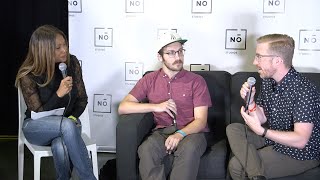
A live-recorded Creative Conversations podcast episode (Fall X19) hosted by Beth Ridley with guests Chris Messina and Ian McCullough. The conversation centers on creativity in art and business, personal journeys toward defining success and following one's passion, community-building, and (up next) the meaning and practice of open source. The tone is conversational, reflective, and encouraging.
Chapters
So welcome to our Creative Conversations podcast series where we talk about creativity in art and in business in order to inspire your own creative thinking potential. So this is a partnership between the career and culture company, the Brimful Life, and also no Studios, Milwaukee's organization or membership club for artists and creatives. So we are broadcasting live from the Fall X Festival here in the Wisconsin Center. I am your host, Beth Ridley. And I wasn't lying when and I said I saved the big guns for last, like the heavy hitters for last. I'm super excited about this conversation that we're going to have. And let's get to it. All right, so my two esteemed guests here are Ian McCullough, who is a musician, music producer and computer engineer. Fair.
Yeah, that's correct.
Awesome. And then also Chris Messina. So unless you've been living under a rock, you know that this guy invented the hashtag. And if you don't believe me, you should have been at his main stage presentation. And we also filmed it and you can also Google it. So true. Facts, facts, facts, facts, facts, facts, facts. All right, so you guys have, like, a lot in common, and we'll get to that. But one thing that you do have in common is you're both open source advocates. So we're going to get to that in a little bit. But first, you know, you guys have such interesting, diverse interests and backgrounds that really weave together in your work. I think my little, you know, one or two word bio didn't do you guys justice. I'm going to give you a little bit of time to explain, like, what you do or how you explain what you do. And Chris, let's start with you first, because during your main stage, what I love is that you really said, no matter what you do, you really have to start with your own definition of success. Not what other people expect of you, but define that definition for yourself and really tap into your why. Right. So let's just say, like, inventing the hashtag as an example of one thing that you've done. What was your why? What was your definition of success for going down that. Taking that journey?
Yeah, you know, it's funny.
Oh, I was. Wait, wait, wait. Sorry, Timmy. I said, look, everything is good until Jeff says something. And then Jeff said something. It's just. It's just that he's in awe. And that's what I said.
Right? Yeah, they Google it and they're like, what? How does that even.
Okay, back to the show. Go on.
I mean, it's like, you know, inventing the Seatbelt or something, you're just like, how does that happen? Well, I guess, like, what I wanted to say about, though, is that it hasn't always been clear to me that following my own why or setting my own definition of success was something that I could or should do. I think the only reason why I came to that conclusion was by following other people's types of success for so long and not being very good at it and realizing that most of the things that I'd done that had the most impact were things where I was doing it because of what I wanted to do or what I wanted to see in the world. And so, you know, with the hashtag in particular and with bar camp and with co working and some of these ideas that I think of as either behavioral technology or social technologies, the idea was to sort of, you know, like, I'm this strange person that has always struggled, I think, to, like, fit in socially. And so at a young age, I learned to adapt myself to my social environments, which meant that I observed people a lot, and I observed what they said and what they talked about and also how they behaved. So the behavior told me more about what they were trying to do than what they would say. And with things like, you know, bar camp or co working, it was like observing how people wanted to come together. But they sort of, like, said, well, you know, I could go to a conference or things like that. I'm like, well, what if we built this for ourselves? And, like, what is it that we would want to do in this kind of space? And, you know, you complain so much about going to a conference or whatever, and it's lame or something. I'm not talking like this about it, but like, conferences back in 2005, six or whatever, they're like corporate events you have to get all dressed up for. They're super formal, you know, they're not a lot of fun. And people spend a lot of time, like, in the lobby. It's like, well, if you made the lobby part of the experience, like the primary part of the conference, maybe that's more fun. And so if you design an event around that, then suddenly people are having the experience they want, and they're not having to, like, pretend to do something else. So I think in so many ways, for me, it was like realizing that I was sort of putting on other people's clothes to, like, you know, succeed in the way that they were describing success. Look like. And I was like, that's not really my jam. And a lot of people in Silicon Valley, I Think. Think that they go to Silicon Valley to make money, but really they want to connect to other people who are excited about the future, excited about product, excited about their passions, and want to unlock that. And ideally, you know, one of the reasons why we need to, like, make money is to, like, be able to feed ourselves with calories, because that's what humans run on. And so that's sort of like an auxiliary thing of, like, following your passion.
Yeah.
So it's just been a matter of kind of aligning myself closer and closer to what I actually do, observe my own behavior and saying, oh, that's actually what I want to do, as opposed to these other things I think I'm supposed to do.
Yeah, that's good. And if only more people would have that courage or that confidence to really just sort of, like, do what they want versus what other people are expected or just follow what has always been done before. Think of all the innovation and creativity. Right. Because if you're sensing that this isn't right, there could be a better way. I'm sure a lot of other people are thinking that as well and could benefit from it. But for whatever reason, it takes a lot of courage. And as Ian knows, I have a podcast where I interview a lot of people, adults, usually later in life, who get so fed up with the career that they're in because it was not really the career that they wanted, and they have to make bold and really big steps in order to course correct that. And so. But I do appreciate the fact that you said that you weren't, like, wired that way, that you had to work through that. That was your own journey. I think a lot of people can relate to that. So if anybody's listening who can get some courage to kind of, like, go for it, and I think if you're really passionate, authentic about it, something good will happen in the end.
I mean, you know, I keep forgetting, like, how much people still drive their own cars if they do, because, like, we're on the verge of autonomous vehicles. But, like, if you've ever driven, like, stick, it's sort of like, you know, keeping yourself in, like, first gear and never getting, like, out of that. And that's what it felt like most of my career was like. And so once I realized that I had these other capacities, abilities, but that they weren't aligned with the, you know, kind of corporate structures that existed.
Yeah.
Because they weren't made for me. Yeah, I went through the same school system that everyone else did. I went through public school, but, you know, that Was a. That was. I was also in first gear doing all that.
Yes. So, yeah.
The more that. I think what you're saying is you can identify the ways in which you feel some discomfort.
Yeah.
The way that you can, like, become mindful of it and tune into it and sort of recognize what it is that, like, you know, your gut is telling you.
Yeah.
And then respond to it. The more likely you might be able to come up with something, like, really great that actually unlocks what you want to do and see in the world.
The key is to listen to that inner voice. It won't be quiet anyway, but some of us got really good. So I actually got to play this tape for my own kids because I have hope for them that they just won't go through the normal channels. If there's something in them that is calling them in a different direction, I want them to have the confidence to do it.
That's amazing.
So, Ian, you totally get this from the little bit that I know about your background, and you've had, like, a whole lot of diverse experiences that you did follow your inner voice into all sorts of interesting paths. So tell us a little bit about, like, your. Your. Your background and, like, how it comes together in the work that you do. Sure. Yeah.
My. I grew up in a family of musicians and computer scientists, so it was pretty much a match made in heaven for my. And I just so happened to be interested in both of the different things. Not all my brothers and sisters were that. I just was the one who was. And had the abilities and tools to start networking computers when I was really little. My dad was able to show me that, and I was able to, you know, set up. Set up our Internet and set up everything in the house and get everyone. Give everyone access to the computer and the Internet and just became obsessed and lived on the Internet. And a lot of my, you know, I. I relate a lot to what you're saying about, you know, not really. And I don't know if that's everyone in grade school and stuff, but it. I just didn't vibe with these people. But when I'd go on the Internet, I could talk. I could talk to these people, and I felt the sense of community that I didn't feel even in my own. Even in my own surroundings. But then on the other side of that was music. And when I discovered how to express myself through music, it changed everything, too, about who I am and what I. I started to tap into that. Who I am. What. What do I want? And that started to become Louder and louder and louder and louder as I was getting older. And then when the time came to start releasing music, I was only. I was obsessed with reading all these articles about these corporate monopolies of the music industry. And I wasn't happy with the music on the radio and starting to dive into the Internet allowed me to access this music that I had no idea existed, that I resonated with so deeply. And so to me, when I figured out what I wanted to do, I didn't see first, I didn't even see a path in this corporate way. Like I had no, there is just. Most musicians just go up and if they're in your bedroom, you have no idea where to even go, where to even look, what to even do. So to me, I had these communities, I had this understanding of using an open source technology, using, using these ways to build with each other these communities. They're able to, to grow together in this open source mentality. And it just was kind of second nature to me. Be like, oh, I'm just gonna release all my music open source. I'm gonna release every single mixer track of every single song and let, let people use, use it as much as they want. And it was something interesting that you said in your talk about building relationships is the, that's if you're defining your success by building relationships, but not only that, but investing in other people's. And so to me, when I have filmmakers that, that come to me and they say thank you so much for music to use, I've been able to create this piece of art that I am so happy with. But the only way I could have made it was using your music. To me, that is the most fulfilling moments in my life when, when these people have these connections and when I connect with these people. And so once, once that actually started running and then, you know, once those things, relationships started building, I started. Like I said, it started to get louder and louder and louder. And it was. So then I decided to leave the software job that I was working on, you know, where I was, you know, writing software for a refrigerator company. It's like, okay, I like refrigerators, but not that much. You know, like, I'm really grateful for refrigerators. Like, don't get me wrong, but building web web apps for companies, you know, for luxury fridges, it's not the most fulfilling for me. What was screaming inside of me was, no, pursue the things that make those connections. And so it's very exciting and very like reaffirming to know that this has happened and this is possible and this stuff can actually affect people in a positive way. And then maybe even turn around and help me to help other people again. And then it's just this whole cycle.
Of two things that you're both clearly really passionate about Run. One is sort of your inner voice and the courage to pursue what you're interested in and allowing that voice to come forward out into the world to connecting with other people. And I love what you said, which is Krista, your theme around investing in other people as well, which is that some way foundations or pillars around open source. Right. But for those who may not be like totally familiar with that phrase, maybe Chris, why don't you give us your definition of open source and then, Ian, I'll have you build on that.
Yeah, I mean, open source largely comes out of like the software development world. And what it was was largely. I mean, actually the computer industry itself started out in a very sort of free form kind of way of sharing lots of things. I mean, you can imagine that prior to Microsoft, in a lot of ways software was almost developed more like jazz, where people who are like, sometimes they were hobbyists, sometimes they were like, you know, working for like an IBM or something during the day they would come home and they would like hack on this stuff because they were so excited about what was going on and they realized that they could move much faster as a group of people as opposed to an individual. There's some proverb about moving fast or moving slow, but together and going farther. And so I think.








