Creative Conversations Live from Fall X19: Kelly Fitzsimmons
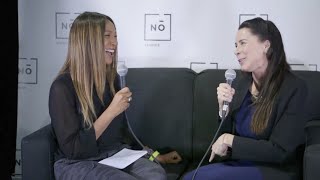
Live on-site episode of the Creative Conversations podcast (Fall X Festival, no Studios booth) in which host Beth Ridley interviews Kelly Fitzsimmons about her life as an artist and entrepreneur. Kelly recounts an upbringing with an artist mother, an archaeology degree, early success (Sun Tzu Security acquired via roll-up into Cisco), a later company (Prism) that failed during the dot-com crash, and personally guaranteed debt of $5 million. She describes severe health problems (including migraines and a brain injury), suicidal ideation in her early 30s, stepping down as CEO of Harken by 2012, and a creative recovery that began with using voice memos to write what became the book Lost in Startuplandia. Recent creative practices include Songtober (writing a song a day), band karaoke at radio station 88.9, collaborating on an EP, and reframing courage and failure into generative artistry.
Questions this video answers
Sun Tzu Security; Prism (Proactive Remote Information Security Monitoring); NeoHapsis (roll-up); Harken.
$5 million in personally guaranteed debt.
31 years old.
By 2012.
Lost in Startuplandia.
Chapters
Hi, Beth Ridley here. I'm at our no Studios booth at the Fall X Festival here in the Wisconsin center, and we're taking our Creative Conversations podcast live. So Creative Conversations is a partnership between the Brimful Life Career Wellness Company and no Studios, the new social club for artists, and we explore creativity in art and business. I could not be happier to have my first guest, Kelly Fitzsimmons. We were talking a little bit about before we started, and I think the 20 minutes we have is not going to be nearly enough time.
I agree. This is going to be a lot of fun.
I am so curious to get to know you a little bit better because you have such an interesting background and everything that you're working on. So we'll throw entrepreneur in the mix. Artist, you have a degree in archaeology, which I think is super interesting. You've worked in the tech space as an investor, and I was even talking to you this morning like, hey, how's your morning going? You're like, yeah, I'm creating songs. So I don't even know where to start. But let's start with this morning.
Yeah.
So what's going on with your songs? What's that all about?
So it's a wonderful bookend to the story. One of the things that I've decided to do is really invest in myself artistically and make sure that I'm actually actively creating. And it's really easy to get into traps where you're helping others or working with other musicians, but you're not making your own stuff. So a good friend of mine who's a professional musician and I were talking and he's like, oh, I'm so stuck. I'm like, let's just do Songtober. We'll send each other a song every day, and we can't tell each other what.
Let's back up then, in terms of, like, artists first. Right. What type of art do you engage in? And have you always been interested in art as a child?
Yeah. So I was raised by a single mother, and she was an artist. And one of the problems of that is my mother was really talented. So you can actually see her work over at the Milwaukee Public Museum. She did the murals for the Kwaki UTL Indians in the Northwest exhibit territory. So, I mean, if I ever want to see my mom's art, I can just walk over to a museum and see it.
That's pretty incredible.
It is. It's.
I could imagine, intimidating as a child. Totally. Can you measure up? Right?
Totally.
So how did you. How did that manifest in your own artistic expression.
Well, at some point, I told myself a really bad start. My mom, even though she was successful as an artist, wasn't making it financially. And that had to do with a lot of other things, including alcoholism. But as a kid, I blamed it on art. And I sort of fell into the story that artists starve. I'll never make it as an artist. And although I, you know, I picked up the guitar when I was 11, I was doing classical guitar. I put it on the shelf really early and decided to use my efforts to be more like my dad. And my dad was an entrepreneur. And there was a lot more social cred involved in being an entrepreneur than being an artist, at least in my world. And I was. I was terrified. What if I go out and I'm an artist and nobody likes my art?
Yeah.
And it's a public thing. It's a very public and extremely intimate thing. It's one thing to have a company fail, you know, and if it's a technology company, you can get credit for being an entrepreneur way before you're successful.
Yeah. Oh, it's almost like super cool to have a failed company.
Oh, yeah.
These days.
Exactly. And so you can sort of ride on that. But the truth is, you know, failure is hard no matter what it is, and it's still an intimate experience. And in the failure of a business, I didn't understand how hard it was until it actually happened to me. And I was in my 20s when that went down, and it was the dot com crash, and I had no idea what I was in for. Because up until that moment, if I tried really, really hard, I would succeed. And so the story I had in my head was that if I just worked hard enough, if I just put my nose to the grindstone, it would all work out. And that's not a true story. That isn't always the case. There are things that are beyond our control, and when we face those and we hit that wall and it can be really devastating to our sense of identity.
For sure. For sure. So you sort of put the classical guitar aside. Didn't feel that there was credibility in that. You went and you started a company in that whole dot com area that didn't work out.
Actually, the first one did great. It was my second one. So the first one, Sun Tzu Security, actually, through a series of mergers, would ultimately be acquired by Cisco Systems. The second company, called Prism, was Proactive Remote Information Security Monitoring. It's still the sexiest name I have of a company. I was so proud of It. But it was based on the idea of why have one company when you can have two? Back in the dot com go go 90s, there was so much bad information out there about what to do in business. And it was like I just fell for it all. You're reading companies, you're reading magazines like Fast Company and. And they're saying things like, you know, have multiple companies and then, you know, if one fails, the other one can succeed. And I just, I had no idea how to focus. And it was a perfect setup for failure.
So then how did you pick yourself up after that? And then. And where did you. Where did you end up going? And does the guitar ever weave its way back in?
Yeah, it does. So what ended up happening was that I didn't bounce right back. I faked it. I was the CEO of Now a combined company, Sun Tzu and Neo Hapsis, which is now taking the name of Neo Hapsis. And I'm down and sh. A massive secret, which was that when the company failed, I had taken on $5 million in personally guaranteed debt. Okay. And I was terrified that people would find out. And so I was, you know, putting on the veneer of professionalism and my game face during the day. I wasn't. I wasn't being true to myself.
Yeah, you can't be authentic. You feel shame and embarrassment. Right.
Oh, my God. I want anyone to find out crippling places. I, you know, dealt with suicidal ideation for three years, thinking, well, maybe if I die and they can't figure out how I could pay off the debt, you know, through insurance.
And you're so. You're still really young.
Oh, my gosh. I'm at that point, 31 years old.
Yeah. Wow, That's a lot to that. That's a lot to be carrying.
Yeah. And it was. And I had no other. No sense that anybody else had ever dealt with this. You know, you look at any successful entrepreneur and you read their bio and it's like they were always successful, you know, and you don't see this part of the journey in those stories. Right? Yeah. And so it leaves this dangerous impression that we're the only idiot that's made a cataclysmic mistake. And that can be deadly.
Yeah. Yeah, for sure. So tell me a little bit about then, how you worked your way out of that, because clearly you did. Right?
Yeah.
And I think that I 100% agree with you. We only shine the spotlight on the end game of success and not the journey to there. So anything that you can share that would be helpful advice as you found your way back. What would you recommend for other people who are finding themselves themselves sort of in a low period?
Yeah, there's a lot of low periods. So, you know, if you read any articles on entrepreneurship, it is always about Act 3, you know, the success, the, you know, the amazing moment. And my amazing moment was that Neo Hapsis actually got picked up for a roll up in the industry. And so we exited for brand, but we were for professional services firm. So we had no business exiting for what we exited for. So it was a really good outcome, which was completely, completely unanticipated. And it helped me pay off that debt. Yeah, the. There was money left over and so what did I do? Did I take a vacation? Did I, you know, go to an ashram? Did I do anything to like feed my soul or, you know, help my mental health?
Yeah, no.
30 days later I started a new company.
Yes, of course, of course I did.
Because that's what smart people do.
There's definitely a period in your life where you're a serial entrepreneur for sure. Right. So then, but you still, you still involved in so many other things. Right. Did you make time for other things or is your approach to doing it all more sequential, like one thing at a time?
Yeah. There was a gal that I was talking to at one point years ago and she said something so wise and it just blew me away. Somebody had said something about having it all and I just sort of rolled my eyes like, of course we can't have it all. It's just a setup for failure. And she said, of course we can have it all. And I looked at her and she's like, we just can't have it at all the same time. So it is sequential. So one of the things I learned is that when I was doing a startup, I really couldn't do anything else. And so by Neo Hapsas, I'd already resigned from all my boards, which in my 20s I sat on like 10, 10 nonprofit boards. And it was all about ego. And anybody asked me, I'd be like, yes. By the time I got to Harken, I had maybe one outside board. I had no hobbies, I had kids. But mostly my attention went to the business. And my husband and we had two nannies were really supporting me at home. So that was a hard choice, but one that I made because I felt much more successful business than I did at home. Like, at home, it's just, it's really hard to be successful.
Yeah.
And so, so I just opted Out, I was like, oh, okay. You know, I'm the new kind of mama, the one that doesn't show up.
Yeah.
And, you know, and that was almost okay when they were little. But then eventually Bryn really started. My oldest started to show some signs of real stress from me not being there, real anxiety. And ultimately I had to make a very hard choice. My travel was impacting her and I chose, I chose to go home and start to stay home more. And then my health started to deteriorate and by 2012, I had to step down as CEO of Harken because I was in a full blown health crisis.
Okay. And in a way that might have been like the wake up call that you needed to make some significant changes and your life. So fast forward to today, it seems like just talking to you, you really have balance, a lot of joy that seems like it's coming from an authentic place. Do you feel that you're sort of coming into your self in a healthy, balanced way because you still now have a business, you're clearly engaged in art, you're doing your October songtober, your kids now are teens. How are you? What is working for you? Now that you're able to pull all those parts of your life, mom, artist, entrepreneur, together, do you feel that it's coming together a little bit more seamlessly? I don't want to presume that it's ever easy on a day to day basis, but overall, do you feel like you're getting more of a sense of wholeness around those aspects of your life?
So the big difference for me, I would say, is really owning my artistry. Up until Senior, which is our virtual reality production company, I didn't have creative endeavors. All of my startups were tech startups. And so my creativity was really channeled into go to market strategy and new product development and really cultivating ideas of where we fit and how we branded ourselves. And so that is one aspect of my creativity, but it wasn't really scratching the edge. You know, the thing that really makes me different is that, you know, I have a very good ear for music and I'm really good at pattern recognition. And I wasn't owning that aspect with music. I was using my pattern recognition only for business and not doing it with art. And so there was a massive schism. And so when I got really, really sick, I started getting migraines and I couldn't listen to any music and I couldn't watch any movies and I was bedridden. And I was in that state for almost a year. And so what I ended up doing was using the voice memos on my phone and started recording songs because it was the only thing I could do. And I started to tell stories and started to compile through the help of Scribe Media, audio transcripts of what would become lost in Startuplandia. So I ended up writing the book from bed and really just saying, I'm an artist, let me start making art. And it was from there that I was able to really get the courage because everything else had been taken away. I really couldn't call myself an entrepreneur in that moment because I couldn't work.
Right, right. Wow. It really starts to come full circle. Right. So from sort of not feeling like art was a credible field to go into coming back to art when you are really at a low point and that helped to bring you up and it turned into a book that is phenomenal. We're not going to talk about the book because that's going to be part of your main stage keynote address tomorrow here at Fall X. But the little bit that I've read, I'm rushing out to get it because it's just, it's full of really great advice from your own story and I appreciate your truthfulness and your vulnerability in talking about your own past and your own upbringing and everything like that. Alright, so to bring this together and to conclude a couple things I want to ask. One is what's next for you? Where do you see yourself going next and how have you found the courage to just kind of continue to reinvent or maybe redirect your skill set is a better way to say it, into new things?
Courage is such a great word. Courage is built on our self belief. Do we believe we can? And if we believe we can or we can't, we're right. That's what it all comes down to. And so for me, I lost all self belief when I got so sick. You know, I had stepped away from my business and from, you know, even being a mother. I couldn't do anything other than this little bit of art making that was happening, you know, on this tiny little phone. And I think there was something about that where I realized that for me to be successful, I had to rebuild my self belief. I had to figure out how to believe in myself again. And so what I started doing was these little acts of courage things that scared the daylights out of me. Things that I'd see my friends do or other people do. And I'd say like, that's badass.
Give me an example.
So actually we share one of them. So one of them was band karaoke at 88 9.
Yeah, indeed. We do share that.
Yeah, we do.
What was your song?
So mine was Joan Jett. I love rock and roll. And I dressed up as a total badass. I mean, I pulled on my inner Joan jet and I got on stage. And that night I had a migraine and I really don't remember most of it.
Did you feel like you were gonna throw up?
Oh, yeah. Oh, yeah. Oh, I know. I was like, I was there for the. I was there for them for the pre show and it was terrifying. And I just owned it. I got on stage and I just killed it. And. And the thing that was amazing for me is I got to witness my own bravery. I got to witness me doing something I really thought I couldn't do. And once I did that, it was such an access to self belief. I was able to really ground myself. You know what? Maybe I am kind of a badass. You know, maybe like, I mean, if I see somebody doing it, like I saw you doing it, I'm like, that is badass. And so by the transitive law of badassery, I too am a badass because I did it.
So I think it's really important. I totally agree with you. Just challenging yourself sometimes in the smallest ways. Like, I got on a roller coaster that I was always afraid to. I thought I was badass. And those little. You have more and more experiences, confidence. But what's interesting is you've done amazing things at such an early age, starting so many companies, but you never looked back at that. Right? So I think you have to both do it, but then reflect and give yourself credit.
That's exactly it. And credit has to be built on something. Right? Like, so if you. In this case, for me, I really felt like I lost my identity as an entrepreneur. So the core problem was I couldn't read. I actually had a brain injury. And that took a while for us to figure out what was going on. And so there was a chance I could never work again. So who was I laying in their bed with my little voice memo if I could never work again? And so I couldn't look back to my previous glory and be like, that was me. Because it wasn't me anymore. That wasn't who I was in the moment. So I had to rebuild from ground up. There was also an aspect of my previous successes were so out of ego. It was all really to prove to the world that I could and that I was somebody and should believe in me. And it was all out of this very egocentric look at me. I got this kind of mentality. I'm going to prove it to the world. And the energy that I was being called into and that I really see the illness now as this beautiful sort of transition phase was I was being called in to step into something much more brave, which was stepping fully into being generative and creating things that were completely honest and weren't built from ego. The thing about music is if you put your ego into it, it breaks it. You know, if you're channeling source and you're really there and creating something beautiful, it really doesn't belong to you. It feels like it comes from a different place. Place. And you'll hear artists say that again and again. And the problem is then we try to put our ego and our brand on it. So full circle. Today I'm working on an ep. I'm collaborating with some exceptional artists that are also gifted and talented and all who, you know, believe in me, which is really fascinating. You know, they've been at this for, you know, some. Some of them for 25, 30 years here. I'm showing up and they want to collaborate. So that.
How fun though, right?
So it's so exciting and it's allowing me to be able to just really blast off. I mean, there is no training wheels here. I'm just sort of showing up and going full out and knowing that we're creating stuff that's actually high quality, which is crazy.
Yeah. I cannot wait for it to come out. So excited to see what's next. And I think what an inspiring message that I want everyone to hear in terms of leading from your own place of purpose and passion, not necessarily what you think you should be doing, or not necessarily just for the ego or even anticipating the outcome, but if you really do what's in you and pursue that and really invest in the journey, I think the outcome will come. Right.
I think that's so beautifully said.
It's a lesson that often we learn much later in life. I think we just need some life experience under our belts. But, man, it's a lesson that I want to pass on to my kids so that they can maybe avoid some of the hurt and pain by living somebody else's expectation of what they should be instead of being true to themselves.
And, you know, what I've come to learn through this experience is that we can't save them from that. It's like that's actually what's important. It's like you can't see the constellations until you're in the dark. And that's how purposes. It's like purpose emerges from our darkest times and places we get to start. That's the only time we can really see it. When reality shows up and tells us in no uncertain terms how we are doing. And that's failure. And you can't actually get to the other side and find meaning and purpose until you've failed. Otherwise it's, you know, a good guess. Yeah, but that's really the gift of failure. And that's where we can start to cultivate compassion for ourselves, that we are fallible, you know, delicate.
There's another side to it.
So even.
And you've had a lot of low moments and believe it. And at the time when you're in it, probably not even thinking that there is another side to be had.
Oh, no.
I mean, stick with it. And, you know, I always try to tell my kids, like, nothing is permanent. You know, every problem has a solution that will eventually materialize. So. But yeah, sort of working through that and getting to the their side and look at what the other side has in store for you. It's like so many amazing things.
It can be amazing. And I do actually, Jeff, my husband, is. Is trained to tell me, you do realize this is going to be better tomorrow. Yeah. And. And yeah, I mean, I.
Had gone to him one day because he was like, how's the business going? I'm like, I don't know. He goes, you know what? This is the worst you'll ever be.
Like, exactly.
Well, now I feel better. Right? He's like, this is the worst you'll ever be. Every day you're getting better. I was like, well, okay, now I actually do feel better because, yeah, if this is the worst, if this is.
The word, I got this. I can handle this. And that, I think, is also the gift of being stretched and creatively, right. Is when you get stretched and you feel the pain and you're really having a bad, bad day. Sometimes your worst day and your best day can be minutes apart. When you have a business, like the next email in might be that new contract or that new customer or that new opportunity that you didn't see and. And where you're sitting there wallowing, thinking it can't get worse. Suddenly, like, the light comes in. So I think that's also the giftedness and the gift of being in business for ourselves is that we get an extreme of emotions. The spectrum is wider. We get more out of life in some ways because we're taking the bull by the horns. And we're saying, look, I'm going to wrestle this, and this is going to be on my terms. And then the universe is going to kick us in the face and go, oh, no, no, it's on my terms. Just kidding. And then we're like, wait, oh, okay, do I have this? And then we get back in. And so it's this. I mean, it's this beautiful wrestling with our ego, our identity, our fears. And I think that's what makes entrepreneurship, and I do mean this across genres, because entrepreneurship is also musicianship. It is artistry. It is absolutely. Part of it is that you get this beautiful opportunity to live full spectrum, and you also can cultivate who you are, because from a professional and personal development standpoint, there's nothing like this gauntlet to help you become a better human being.
Yeah, yeah. So beautifully articulated. So beautifully articulated. I can't wait to hear your keynote tomorrow.
Thank you.
And I'm gonna go get the book. Lost in Startuplandia. I think there's so many good nuggets in there. So I'm so appreciative that you, like, wrote it on your phone memo, like it started there to bring it to the world. Now I know that you got a lot going on and you're working on your music thing. I do have a business idea for you.
I'm ready.
You really need to go into, like, market a Night Cream, because I don't understand how you did all this, but you look like you're 25.
Oh, my God.
I love you.
I love you so much. Well, I was actually thinking the exact same thing. Right. First time we met, I followed her around a party, and I was like, you are so beautiful. Okay, who's my stalker?
But see what you have to see. A beauty on the inside.
As do you.
Which you've talked about in your book and through this conversation. What a great way for me to start my day. Thank you very much. But you also, on the outside.
Yeah. You got it all going on.
You could sell this. You do.
Thank you, Kelly. This is awesome.
Thank you.








