David Cooks: I Can't Be Mad and Grateful at the Same Time
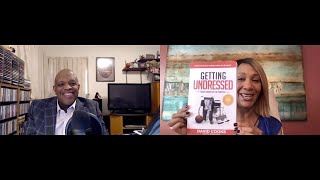
Transcript of a short interview with author and motivational speaker David Cooks about maintaining positivity, reflection, and practical coping strategies during COVID-19-related stay-at-home conditions. Cooks describes personal challenges (extended bed rest), sources of resilience (faith, gratitude, relationships), daily practices (quiet time, self-care, limits on social media, one-day-at-a-time planning) and encourages reflection, regrouping, and relaunching after setbacks.
Chapters
So I have the pleasure of speaking with David Cooks, who is an author and motivational speaker. If you have not read Getting Undressed, now is the time to pick it up and order it on Amazon, because you probably have a little bit more time at home than you usually do. And this is a great read on any day, I think a particularly really good read when we're all trying to figure out the new normal and leading through these challenging times. So, David, thank you for spending time with me.
Thank you for having me on. It's just good to have some person to person contact these days as we are all doing things virtually and staying home to try to combat this virus.
Contact from afar. All right, David, as a motivational speaker, before I started pressing record, I was saying, you know what, you built a business on being positive and helping other people be positive. But what is your emotional state of mind today? Has it changed much since the beginning of our stay at home quarantine?
Yeah, well, for me, and we talked about this a little bit before we start recording, I've been on bed rest for almost 120 days and got off just in time to be quarantined or staying at home. And so over that stretch of time, I had a lot of challenges mentally and emotionally and spiritually on where I was and what was going on. I learned a lot about clarity, clarity in relationships, clarity and intentionality, clarity and focus in terms of what it is I want to do and how I wanted to do it. And these things obviously changed quickly over the last three weeks as we literally have gone virtual around the world. And what this new normal will look, excuse me, will look like. But I'm still optimistic. I think it's a great time to be alive. I think it's a great time to reinvent yourself and to reflect. I think one of the things that we don't get enough time to do is reflect. And I've had plenty of time to do that these last three or four months. And I think everybody is getting a chance to pull back a little bit, pull the layers off of their lives and see what's really important to them and what drives them and what are the things that are essential. And so I think that as we move forward, yes, there's going to be a lot of change. I think some of the things that we have done in the past will leave in the past and then we'll start some new things. I believe that there's opportunity on the horizon. Even in the midst of tragedy and bottoming out. There's always A restart and rebranding. We talk about getting Undressed, you know, the name of the book. And we all do that every day. We do it several times. And that's a start over. That's a new direction. That's a new place we're going. And so I think that's how I've looked at it. You know, for me, you know, everybody has their source of inspiration and source of positivity, and mine comes from my relationship with God, and so I've relied on him my entire life, and I'm not going to change that now. And I always believe that there's good to come out of everything. There's. There's good to come out of everything. And you may have to look for it. And that doesn't mean that you won't have moments of doubt and you won't have moments of fear, but you don't stay there. You move from those places knowing that there's good that's going to come out of this for you.
On that point. I'm sorry to interrupt you, but I love what you're saying. Do you have any practical tips? Because I think, like, intellectually, we get what you're saying. This really is a time to reflect and be appreciative of the good things in life and those fundamental things. But any practical tips on how you move from. You still feel anxious, worried, uncertainty through the other side?
Yeah, there's a few things. One of the things that I do is I kind of come to grips with the things that I can and cannot control. As soon as I realize that I don't control a whole lot, it frees me to work on the few things that I can. My effort, my attitude, my outlook. One of the things that I personally have learned to do is. And even recently, I was struggling, struggling the other day with just being tired of being sick, you know, and not feeling well. And as I was in the bed, I began to think about how good my life has been and to rehearse that. And it kind of took me away from that place of frustration to like, wow, you know, gratitude. I can't be grateful and be mad at the same time. One of them is going to have to leave. One will have to. And as crazy as that sounds, that helps me a lot. One of the other practical things that I do that I've done, especially during this time, is I've been intentional every day about reaching out to somebody and sending them a text or making a phone call or during a zoom to let them know how much I Appreciate what they've done for me. The one thing that I have learned over these past four months or so is the importance of the personal touch. Although we may be distant now, socially distant, that doesn't mean we become relationally distant. Our relationships still need to be built and be strong. So I guess the point I'm making is that I rely on other people also to help me. I talk with them, I get encouraged by them. When you're in the business that I am and people, they think that I don't have issues. I'm a human being just like everyone else. I have days where I feel like I don't feel like doing it either. Okay. But I know that I've got a purpose and I got to keep moving forward. So that keeps me going. There's a couple of other things that I think they're important to have some sort of physical outlet of some sort. Whether it's a walk around the block or doing push ups or whatever you may do. I have to, I'm in a wheelchair. So I'll roll up and down my driveway and go in my backyard and just to kind of take a break and get away from it all. I think some of these things are important because when you're kind of in isolation, you've got to dig super deep to make it better because it's not easy, it's very, very difficult to do. But you just got to really dig deep and keep it simple. Some of those things that we have said that we would do if we had time to do, well, guess what? We got time right now.
It's funny you said something about when we're in isolation we really have to dig deep. Because I do think a lot of times our relevance or our feeling of self importance is relative to being with other people. Like I know who I am and the value that I bring when I show up at work, physically show up at work, because I know what my position is in these meetings. I know how I fit in with the bigger picture. And then when some of that goes away because we're physically not with people or the whole landscape has changed and it's just us, you don't know how we fit in or how important we are because we don't see that in terms of how the normal day to day relative to other people. So I think that's really important that it's kind of like we got to get comfortable with just ourselves.
Yes, it's so interesting you would say that because we live in a day of likes and shares and all those things from a social media standpoint. And one of the things that I found myself having to do during this time was reduce the amount of social media viewing I was doing because I found myself because I wasn't able to do the things that I wanted to do and seeing people do other things, I was like, man, I mean, am I getting behind? Am I going to be able to catch up? What's going to happen to me? And so I had to begin to really manage what I was watching and what I was seeing and making sure that whatever it was would build me up and not have me thinking that, man, I don't know if I'm going to ever be able to get back. You know, they're still making videos, they're still doing these things, and nobody's liked any of my stuff. And, you know, where. Where am I? And I think that's just real, you know, that's real because especially for those of us who are extroverts, I love people. I'm a social guy. I want to shake your hand. I want to see your expression. I want to see how I'm doing. And now I can't. And so now I've got to figure out another way to engage with others and get that feedback that I like. And you know what? Everybody's busy right now. They're busier now because of change than they've ever been, and they're trying to figure out their new normal and how to figure out how to deal with the family being home and all of these things. So their time for you is not there. Yeah, not right now.
It's hard to not take it personal, too, right?
Yes. And you're like, hey, man, you know, I'm your guy. You know, call me back or text me back or read my book, do something. And you get that and you're like. And you have to give people the benefit of the doubt so that you don't take it personally. Because once you take it personally, your relationship with them gets jacked up. And it's not because necessarily of anything they did. It's what you've created in your mind about the situation.
So much of this is the stories that we tell ourselves in our mind, right? And if we start telling ourselves certain stories, it does actually become the reality. So, David, so many good insights. So one question I have for you is, you know, you are a motivational speaker. You sort of live in this space of positive mindset. Anyway, is there, like, one thing? Either a new practice that you've really had to Adopt or embrace that you would like to carry forward. Like, well, like that. It's working really well. You've, you know, it's helping you during these challenging times that you want to continue to do even. Well, beyond coronavirus.
Yeah, I think there's a couple things that I've done. I have increased my quiet time and prayer, meditation time, spend with God and the word of God. I've always done that. But now I'm like, you know what? I need to really focus on that and not just make it a moment, but try to make it a practice throughout the day. Just have moments where I do that. And that's been pretty important for me. The other thing that has been important and it ties into that is self care. And I've gotten into reading more, listening to podcasts, and trying to find ways to better myself in this situation professionally, as a husband, as a son, as a friend, as in all of those areas. Because before I was busy running around and I was getting better. Okay. But I wasn't intentionally making myself better. Because as we get into this new economy or this new normal, the value that you bring the people is going to have to be obvious. Because right now we have learned that we need to be efficient and we need to be productive. And how to best do that, I think is going to be a challenge for all of us as we, as we retool into this next. Into this next phase.
So I've been taking a lot of notes. Let me recap here, because there's some good stuff. All right, so some of the things that you've been doing that have really helped manage through these challenging times is being really reflective on your purpose and really tapping into your why helps to give everything that you do throughout the day a little bit more meaning. Really taking advantage of this new normal in terms of utilizing that quiet time to be reflective. Actually even scheduling it throughout the day, which I think is such a good practical tip because, you know, especially when we're doing back to back, you know, virtual meetings, the day can slip away from you, right?
Yes.
Using this time to really invest in yourself, whether that mean reading more or thinking about the best version of who you can be as a son, you know, father, friend, but being reflective on that. I'm hearing a lot of themes around using this time to be reflective. Connecting and reaching out to other people is a source of optimism and positivity for you then. Oh, I like this practical one. Just know when you've reached your max on social media. I mean, I think that was a Good tip. Before coronavirus, because you do get sort of like comparison, you know, anxiety, and you can feel bad about yourself, look at what they're doing, and then you start to, you know, not feel confident with yourself. I think that's a good tip.
Yeah, well, let's. For me, it is because I'm, you know, and when you're competitive and you're trying to do the best you can, you know, you can't help but compare. And you've got to fight the comparisonitis disease because that can destroy you because you never win. Sometimes it's never win.
Sometimes it's a good motivator. Right. But you know, you. I think you have to know you. And when it starts to get into negative zone.
Yes, absolutely. You know, the other thing that has been helpful for me to know when I. When that day is done, when I can't do any more that day.
Oh, I like that.
Just stop like that, you know, and.
Not feel bad about that.
Right, Bad about that. Not feel bad about that. One of, one of my favorite scriptures is how God says he gives us new mercies every day. So that means we don't get any leftover. So whatever we were supposed to use for that day, that's it. So that means you may. And if you're having a struggle about something, you probably have used up your mercy that day, go to bed, start the next day because you get a whole new. A whole new fresh thing. And so, you know, not always fighting through everything. Sometimes you just got to stop.
Yeah, I love that message because I don't think we hear that enough. I think before coronavirus, we were so driven by busyness, productivity, even taking time to just reflect was. You felt guilty about it. I wonder if that will change. And I wonder if we can embrace more reflection time and if it's something that we can continue to do. Hopefully, maybe people feel the rewards of that and maybe we'll continue to do that after.
Yeah, I would hope so. I think one of the things I talked about in my book, after rejection and after disappointment, three Rs. Reflect, reflect, regroup, and then relaunch. I think we're all in that pattern right now of reflection. Find out what my strengths are, what my weaknesses are, what I can bring into this next era, what I need to leave behind, and then get myself together. Okay, you know, you had a tough day. Wipe your tears off. You know, you cried. You did what you had to do. All right? And that's healthy. That's mourning, that's grieving. Do that. But Then regroup, take a look, put some clothes on. One of the things I was telling my sister in Atlanta today, I said, look, you can't be shut in because you're shut in. And she said, what do you mean? I said, don't get ugly. Dress up, make yourself look good. You know, be excited about being. But, you know, don't, don't stop shit. Don't not shave and don't brush your teeth and all that kind of stuff.
I mean, look at you. You've got your suit jacket on. Oh, yeah, you surprised me with that. Now, I tried to. I tried to put on a nice blouse, but I love it. You went, you know what I mean?
And you feel better, you know, you really do. And so then it's the. Reflect the regroup and then relaunch yourself out there and then go after it again having learned. Because all of. If we don't learn and grow from every experience that we have, including the virus and staying home, then we're really not going to get there, you know, and so look for. Look for places to learn and grow and, you know, and just continue to move forward and get outside yourself, you know, it's not as somebody has it a lot worse than you do. I say that all the time. As crazy as my last few months were, the one thing I learned in that process, going in and out of hospitals and stuff, that there are people's situation that's much worse than mine, much worse than mine. And as soon as I can get out of myself and help somebody else or think of someone else, it really does help the day go by. The other thing I will tell you is this. During this time, don't count the days.
What do you mean?
Finish the day. So, for example, I had to do eight weeks of antibiotics, six weeks by IV to oral. I didn't count it. I didn't look at the whole eight weeks at one time. I couldn't take that. What I did do was just get through that one day. And every night we get in the bed and I tell my wife, we made it through one more day. We made it through one more day, through one more day, and before you know it, we made it through a week. We made it through two weeks. We made it through eight weeks.
Yeah.
And I just didn't allow for myself to get caught up in the future. I lived in that moment and I handled that moment because that's all you get anyway. You don't get beyond now. Yeah, don't get beyond that. And so master that and do that and then if. If you're fortunate enough to wake up the next day, you got one, you get one more to tackle, you know? And so everybody's trying to figure out what the economy is going to be like. When is this going to end? You know what? Handle today.
Yeah, no fair point. And I feel like when I try to project too far out, like, what's going to be left of my business come September, it does get overwhelming. And then you start to feel like, you know what? Why am I bothering? Because the future is out of my control at this point. But I agree with you. I started to say, what is one thing every day that I can do that feels good, that's productive? And just focus on one day at a time.
It's important to have a plan. Okay? It is important to have a plan. So I'm not going at this haphazardly, but I give myself a lot of wiggle room within my plan to change, to fail, to get it right, you know, to start over again, you know, and give yourself that. Give yourself that opportunity. Because we're experiencing something. As a coach having coached basketball, you not only prepare for the opponent and you watch the game film and you know what they're gonna do, but every once in a while they do something that you didn't prepare for and it hits you and you're like, oh, my gosh, what do we do? Well, if your fundamentals are right and you built your team on the right things, you can make end game adjustments. And those in game adjustments then can swing the momentum back in your favor. Right now the momentum is in the favor of the virus.
Yes.
Okay. But we can make adjustments now mentally, physically, spiritually and otherwise to give the momentum back to you and you can take ownership of where you're going. And I think that's pretty important. We're able to do that.
Yeah. That's amazing. You are dropping some serious knowledge nuggets. But I just have to say, we don't. We. I could talk to you for days, but I can't. So I am just going to say this is where people need to go, right? To hear more of the wisdom that you're sharing. I thoroughly enjoyed this conversation. I feel better. I feel really. I feel like I'm ready to do one thing today. Take it at a time.
Well, I'll tell you what, I feel a lot better too. I mean, I enjoy doing this and I don't take any of these things lightly or for granted or anything like that. And because you know what, there's somebody that didn't wake up this morning that thought they would do one of these.
Yeah.
And we got a chance to do so. For that, I'm grateful for the opportunity and for you asking me to do this.
Thank you so much, David.
Thank you.








