David Lee: Forging Ahead with the Most Right Thing at the Moment
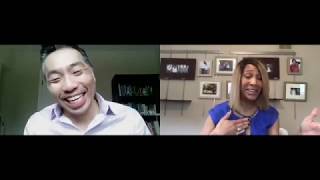
David Lee, CEO of Imagine MKE, launched an emergency relief fund for Milwaukee artists during COVID-19, aiming to distribute $50,000 in $500 grants to 100 artists by April 10. The fund raised $45,000 with over 270 more artists waiting for help. Lee worked 15-hour days to manage the crisis response, guided by a philosophy of optimism as action despite obstacles.
Questions this video answers
Up to $500 per artist.
Raise and distribute $50,000 to about 100 artists by April 10, 2020.
About $45,000 (approximate figure given).
Over 270 approved applicants still needed funding (queue of over 270).
Approximately 15 hours a day for the last week and a half.
Chapters
So today I am joined with David Lee, who is the CEO of Imagine mke, which is a nonprofit organization designed to support the arts and culture sector here in Milwaukee. And that is a sector that needs a lot of support under the best of times. And, of course, artists is really a segment of our community that's been hit really hard, Right. With social distancing. Obviously, we. We can't gather and go to productions and support artists in the traditional ways. But, David, you and your team have gotten incredibly creative. So before I sort of ask how you have been able to maintain your optimism, why don't you tell us a little bit about what you've been able to do to reach out and support artists during these very challenging times?
Sure. So, you know, it was. I think it was. It feels like three months ago, but literally, I think probably a week and a half ago when things started to get canceled. I think we really quickly recognized that our city's artists and freelance creators would be hit, as you said, really, really hard by this. Because not only do they perform at in performances or do contracts with businesses and schools which are all closing or beginning to shut down their public events, but also many of our artists also work in service industry jobs which were also being curtailed. Right. So we quickly learned from the Emergency Artist funds of some other cities. So we looked at the Emergency Artists Fund in Boston, in Minneapolis, in Durham, and in Seattle to glean some best practices. And in one day, with the help of some donors, stood up a MKE Artist Relief Fund. And now what this fund does is that it provides small grants of up to $500 to our city's artists and creatives to help bridge them through this time. Right. Because remember back a week and a half ago, all of the expanded unemployment benefits that were coming through the federal government would not touch freelancers and artists. Right. And people who work in bars and everything else. Right. So. And now with this stimulus bill that's hopefully going to pass today, those benefits will reach freelancers, but it still can take some time to move through the system to get to us. So this grant program is really to bridge that gap between if you need to pay rent or utilities or your credit card bill tomorrow or next week, these grants will help get you to that point. And I got to tell you, Beth, our community, as you know, except that you've been getting a lot of our emails, has just been so incredibly generous. We initially set out a goal to raise and distribute $50,000 by April 10 to about 100 artists. And I actually just stopped Writing checks to get on this call with you. We will hit our 100th artist by today. If my arm makes it through. That arm wrestling really helped, and I think we're getting there. I think we've raised almost. I don't know what the exact numbers are right now, but about $45,000. And a lot of that had to do with an incredible grant from the Greater Milwaukee Foundation's Gerda A Deblec Fund. But we still got a queue of over 270 artists who still need funding, who've applied and who we. Who we have approved. But we still need to raise funds for them. So even though we're gonna get to that goal, we still need to raise a lot more money.
Yeah. Well, amazing work, David. Thank you so much. I mean, that in itself is a silver lining. I think, through all of this, to see how people are really coming together and supporting other people in need, and to know that you're having that impact certainly, I'm sure, boosts your own positivity. But how could you maybe just like, describe your own mental mindset from maybe the very first day of when we were starting to take this very seriously with the stay at home order and self quarantine to today, what has been your own emotional journey? Because as a leader, to even get to this point where you're signing the check for the 100th artist, it doesn't sound like you had the luxury of resting, of staying in bed, of trying to figure out what does this mean you had to keep going. So take us on that emotional journey of what it felt like to be you.
It was weird because I am one of those people who probably didn't take it as seriously as we probably should have, like, early on. So we would joke around about in the office and kind of be like, well, you know, it's a flu. We'll deal with it like we deal with, you know, other influenza sort of things. And then when the. When the cascading event started happening, really about two weeks ago, I went through a very quick conversion. Right. When the NBA suspended its season the next day, we started thinking about how we can help artists. On Friday, we stood up the fun. And then that Monday, we went remote. Right. So it happened really, really fast on our team. And it's interesting. I don't know if you've been feeling or if you've been hearing about this from the other conversations you've been having, but now that we've been remote, I actually work more now than previously. Right. I've been putting and partially because we've been doing this fund and trying to communicate about it and also trying to keep up the other work. Right. Because we weren't built for this. But we're standing up, we're meeting the moment with this fund because it's what we have to do. So I've been working 15 hours a day for the last week and a half. And I think emotionally it's been interesting to go, go, go, go, go. And I know for me, I have a bit of a worry that our team went remote as we were doing this fund. And we have had this incredible thing of focus, right, for us over the last week and a half of how do we raise more money, how do we get more money out the door, how do we process these applications, how do we do all of the stuff of this emergency fund? And I'm worried that once we get to the goal line of April 10th and we wrap up this project, I'm worried that we're not going to have that work focus. I'm not saying that people are going to slough off and not do work, but it is this sense of like, we have this incredible, this incredibly highly focused thing right now and then it's gonna go away. And so how do we like sort of keep that sense of connection with everybody where we are still having the sense of forward momentum and progress as an organization, as a team?
Yeah, it is kind of interesting in the sense that, you know, I work with sometimes a lot of like dysfunctional teams and it's almost like when times were good, you had the luxury to be dysfunctional. Right. Be bickering about little things here and there in the politicking at work. And now it's like all that's gone. It's a little refreshing because everybody is singularly focused and it puts things in perspective. But obviously we want things to get better and to go back to, you know, a sense of normalcy, but maybe that sense of unity and that bonding and that ultimate laser focus. Yeah. How do we maintain that on an ongoing basis? So do you give thought to things that you've had to do differently because of coronavirus, that Covid maybe are a good thing and you would like to maintain these things in the post coronavirus world?
Yeah, that's a great question. So we have, because like everybody else, right. We are on zoom all the time now. And so we really quickly instituted a morning staff check in and an afternoon staff check in just to like, review what's going on for the day and then just get back in Touch at the end of the day. So in the morning time, we're really sort of, like, doing the blocking and tackling of what we have to do for the day. And then the afternoon time, we have carved out that time to sort of do a little bit more reflection of what the day was like for all of us to sort of maintain that sense of humanity that we have with each other. And so. And that really. And you've been to our office, right? Our office is pretty tight. And so our team, because of that tightness, has sort of gotten very close in some ways. And so that afternoon meeting really is to sort of try to like, maintain that sense of humanity that we have together. I think for us, one thing that this has really showed us, though, is that when we have tightly structured meetings, because we've had to now on zoom, the morning meeting is only half an hour. We have tightly structured meetings that I think we can actually import or rather export back to our normal time after coronavirus because we can actually have more structured staff meetings that are less sort of, like, less sort of rambly, but also. But really tightly focused to what we have to do for the week. And I think that is a practice that I'm really looking forward to re implementing into our normal operations.
That's awesome. So, David, what does it mean to you to lead with optimism? Do you feel that you are. And how do you. You know, what is your source of positivity? I guess during these challenging times, since so many people are looking to you for help and guidance?
Yeah. So I might have a take on this that hopefully is a little bit different than maybe what you've heard. Is that, like, for me, optimism is not. Is. For me, optimism is seeing very clearly the obstacles ahead of you and the challenges, but still forging ahead, knowing that you're gonna get to the other side anyways and that it is not the. It's almost like seeing and recognizing the possibility for failure, but still forging ahead and doing the most right thing that you can do in that moment. Because there's no other choice. Right. I mean, we are in this incredibly unprecedented moment of history where everything is uncertain and unknowable. And it's in this incredibly dark moment that it's only in that darkness that light can come through. Right. So I think that's where I get that sense of optimism, is knowing that we're gonna make this, make it through this. And if we can make it through continuing to do the next most optimal thing together, that is how we're going to get through stronger. Because what I know is that our city writ large and then our arts community sort of more specifically, and then more. Even more micro, our artists and individual folks who work in our sector are incredibly resilient, incredibly creative, incredibly innovative. And if we can just like sort of get through this darkness, we're going to be much stronger, more resilient on the other end. And so that's sort of, I think, what fuels my sense of optimism in this time.
So you can't really see to the end yet. We don't know what that will look like or when it will end. But I think I hear you saying you are just focused on what is immediately in front of you. Right. Whatever you can do immediately in front of you. But do you have past experience that you look to for that confidence of even just taking every one step at a time? Is there anything in your past that has helped you that you tap into for today?
That's a great question. So I think I've shared with you and the board and our team and many others who know me, know this, that my wife has gone through some. Some health challenges in the past and is continuing. Right. In different ways. Everything's getting better. It's good. Right. I think in some of those moments in the last 10 years, I have always had this incredible faith that she would get better. And that has borne out to be true. And so I think having that sense of faith again is not. Is sort of, to my point about optimism. Right. It's not the. It's not the. It's not shutting out the realities of what's in front of you. It's in fact, recognizing them to be 100% true, but then also forging ahead regardless, knowing that you're going to get through it. Because, you know, to be quite honest, I don't know what the alternative is. Right. The alternative is for us to. To stay in, inside this quarantine, eat quarantine snacks and watch Netflix. Right. I mean, like, that's the alternative.
Quarantinis.
Right. And have quarantinis. Right. We're actually going to have a staff. Right. We are going to have a staff happy hour tonight. And hopefully we will see if we can actually fabricate some quarantinis. That's very fun. But, yeah, I mean, you know, like, I think action, like, is the one thing that helps sort of get people into a sense of possibility.
Yeah. It's empowering to take any type of step. Right?
Yeah.
No matter how small. David, thank you. You have checks to sign.
I don't want to be that person.
Between, you know, me and an artist getting a check. So I'm going to let you know. Sign those checks. Thank you.
Thank you so much you and your.
Team are doing and for sharing your wisdom. I personally learned a lot.
Thank you so much for having me. This is so much fun.
Thanks. I'll see you on the other side.
Bye.
Bye. Bye.








