DJ Hines: We Can't Get Well if We Have Selfish Ambitions
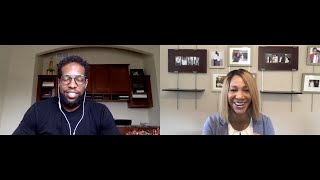
A YouTube interview (Apr 11, 2020) in which DJ Hines, COO of Christian Faith Fellowship Church, describes how pre-existing daily prayer and meditation prepared him emotionally for COVID-19 disruptions. He explains a two-pronged leadership approach—offering calm, faith-based reassurance while promoting public-health measures (handwashing, social distancing, stay-at-home)—and encourages routines, gratitude, family time, and intentional habit-forming during quarantine.
Chapters
So today I am chatting with DJ Hynes, who is. I want to get your title right. Chief Operating Officer at Christian Faith Fellowship Church.
Correct. That's a mouthful, but you got it.
Welcome, dj. All right, I'm excited to chat with you because churches, congregation, your whole world is about coming together physically.
Yes.
We're not doing that now.
No, we are not. But thank you so much for having me. I wanted to make sure I said that I appreciate you reaching out to have this conversation. I think it's a much needed conversation. And I appreciate the fact that you're taking the time to talk to people to get their perspectives and how they're dealing with this whole thing.
Well, I'm getting a lot of inspiration from everyone that I talk to, so you are top on my list to get.
I appreciate that.
Tell me a little bit about your own emotional state of mind, right from how it progressed from the beginning of the stay at home order. And then your world is completely turned upside down. But being a leader in the church, everyone's looking to you. Right. Comfort, a sense of calm. So just walk us through that little bit of the journey that you personally have been on.
Yeah. So personally, it's been very interesting. You know, I feel like last year unknowingly, really prepared me emotionally and even spiritually for this time. I made a commitment last year to really be very intentional about making sure that I was carving out time daily for prayer, for meditation. And I did that last year early in the morning, like typically around 5am or just before 5am and I think that it was that spiritual journey that really helped prepare me for what we're dealing with right now. And what. With. With. Yeah, with what I'm dealing with.
So I prompt you to take that action.
You know what? It was actually a message my dad ministered on, just kind of. And it was basically getting back to the basics of, you know, making sure that you had that relationship on your own. Because a lot of times, and even myself, people will go to church and they will consider that. That their relationship with God and that will. They will consider that their only, I guess, building of their spiritual health. And he talked about, you got to get back to the basics. You got to make sure you have your own relationship with God. And, you know, that whole thing. And after that, that really sparked my journey to say, you know what? This. He's so right. Like, I've been in church my whole life for 30 years, and, you know, even being a pastor's kid, you kind of feel like the closeness of Church really gets you close to God, and the reality is that you have to have your own relationships. So that's what sparked it. And I stayed committed to doing that. And, you know, fast forward to right now when everything began to happen. You know, I was, you know, really at such a place of peace emotionally because I feel that I'm connected in a way that won't allow me to really panic. So I really thrived on that place of peace. Now, of course, fear tries to find its way in there because the media is so loud right now, but I had to continue to find that quiet place of prayer and of meditation to keep myself at peace. Because when you are a leader, whatever it is you give off is what the people will respond to. So if you give off panic, if you give off, you know, worry, if you give off those things, and that's what people will resonate with. But when you give off a place of peace, a place of faith, you know, we are messaging was, you know, faith over fear. Because fear can. It can have. It can have such negative responses to yours, to you mentally, to you physically, spiritually. Fear can really impact you in a negative way. So we wanted to make sure that, of course, we are at the forefront of preaching the best practices, washing your hands, social distancing, stay at home. We were right out the gate making sure that we were given that messaging, but even in that messaging, making sure that people found this as a time to stand on their faith and not to give in to the fears that come with, you know, this whole pandemic.
So that's interesting. You sort of have like a two pronged approach, right? On one hand, you want to give people a sense of calm, reassurance and hope, but on the other hand, really practical, tangible advice. Stay at home.
Exactly. Because, you know, sometimes I just think that people of faith can confuse the fact that of course we. We trust God and we believe God, you know, to get us through these things, and we want to do that, but that doesn't negate the fact that we still have to do our part. You know, from a practical standpoint, we still have to do our part in practicing, you know, no large gatherings, you know, because people want to come to church. It's like we can't come to church right now because we. This. And this isn't. This isn't a government against the church, a government against this. We're all in this together. You know, we're trying to literally heal the world together. So we want to stand.
It does get complicated, right? Because I think it is an interesting intersection between policy, politics and science.
And you're exactly right. And at the end of the day, I believe that people have to understand that at this point in time, we're all truly in it together because we can't get well, the world can't get well, our country can't get well. If we all have our own selfish ambitions right now, we don't have room for that. And like you said, it is an intersection of multiple worlds, but there's only one human race. And, you know, right now we have to do our part to help each other stay well. So for me, emotionally, that's where I am. I feel like I'm in a very good place and I'm human. So, of course, I think about, you know, I consider, you know, what if this happens and what if that happens? I consider some of the bad parts about it. But I definitely try to stay at a place of peace. And what has really helped me is trying to keep a routine, because I'm very. My life is very routine. And it has to be when you have three children, you know, working, you know, I'm a husband and all of those things, you know, you have to find a balance. And my balance came in my routine. So I'm typically an early riser and like I said, do my prayer meditation, I try to work out, then I run the kids to school, come back home, get ready for work. Routine is what helped me find my balance. So with everything being all over the place right now, I'm trying to settle into somewhat of a routine again. Yeah.
Are you maybe integrating or embracing new practices that you hadn't before, that you're finding that you're actually enjoying and maybe you want to continue even once things do go back to normal?
Well, you know, I believe that I have found a new practice, and I've been spending a lot more time with my kids, you know, and it's fun because typically we're both gone all day. They're all day going at school and I'm at work. And when we get home, it's like homework, dinner, read a book, talk about your day, go to bed. You know what I mean? So now that that regimen isn't there, we're able to carve out time to play cards and play games and to even watch movies together. So I definitely want to incorporate more of that time when things go back to normal.
So, DJ any advice that you would give other people who maybe haven't quite yet found that same sense of calm and peace that you Have. What might you tell someone?
Well, you know, I think the first, first and foremost, we have to find the things that we can be grateful for. And I think that's one of the biggest things that we can sometimes overlook is that, you know, things are so, you know, things are moving in a bad direction really quickly and we're trying to get a handle on this thing. So sometimes it can be difficult to find the things that we can be grateful for in the moment. Even if that's just saying, you know, I do have more time to connect with my loved ones that are right here with me, or I am able to continue to put food on, on the table every day to feed my family. I am able to wake up in a comfortable environment, in a comfortable home. So we have to start to pay attention to the things that we have around us that we have to be grateful for. And just that thought, and just that attention to those things, it can bring positivity into your life immediately because we do have a lot to be grateful for. Things.
Someone told me, you can't be grateful and mad at the same time.
Time exactly.
Has to give.
Right, Exactly.
Practice an attitude of gratitude. It doesn't give room for some of those negative feelings.
Yeah, puts put. You know, everybody is dealing with different challenges and they're coming in and people's homes in different ways. And everyone is, you know, at some point in time during this is dealing with some type of challenge. So you want, you, you want to deal with the challenges the best way you can, but for a moment, put those things aside and start to think about, I'm grateful that I have someone in my life that loves me, that will love me as we're going through this together. Or I'm grateful, you know, that I am waking up and that I do have life because every day we wake up, that's an opportunity to do the thing that we could, that we didn't do yesterday. So that's the thing. Make a list of those things that you are grateful for and that will shed a different light on the situation.
So you spend a lot of time with people in your role in the church. And I think we see now that a lot of people are embracing the really important things in life, the things that matter most, doing more to live in the moment. My honest question. Well, my question to you is, and I want your honest answer.
Sure.
Do you think as humans, we are going to continue to embrace these things and, and put a priority on the things that matter most when we do go back to normal or Will we go back to our normal, petty, superficial selves?
Sure. No. That's a really interesting question. And my honest answer to that question is I think there will be some of both. And I think it has everything to do with how this impacted each individual. Right. So some people are being impacted and people are being impacted in different ways. And I think that the outcomes of how they react once we're done and the changes that they will or won't make will be how each individual, you know, how this affected. Some people are like, you know, in a position to where their businesses are taking off right now as a result of this. Right. Some businesses have closed as a result of this. Those individuals, once this is over, they're going to react different and their lives are going to respond different. That guy or that person whose business took off, he may just be. He may be the same, you know, after this, because he wasn't really, really affected necessarily from a business standpoint, but a person who may have lost their business, they're going to be affected one way as well. So I think you'll see some of both.
Yeah, really trying to be intentional about incorporating better habits or more intentionality around self care and attitude of gratitude while we are in quarantine. Because let's assume it's 21 days. And I've always heard if you can do something for 21 days, it becomes a habit. So I want to emerge on the other side stronger and better. And I might as well use this time at home to be able to do some of those things and maybe make it happen so I don't go back to my evil ways before.
Well, good for you. You go come out. You go come out better.
You got to have hope, right?
Right.
Well, dj, thank you very much. I really appreciate this conversation and certainly brought a ray of sunshine to my day today. So thank you.
Thank you so much, Beth, for having me and continue to have these conversations. I'm sure they're inspiring more people than you know.
Yeah. Thank you. I appreciate that. All right, take care. Stay well.
All right, you too.
Now.








