EWL Keynote 2
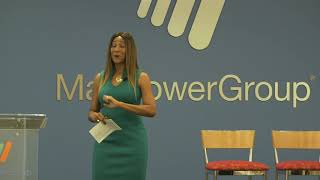
Beth Ridley spent a year doing one new thing weekly, from glamping to speed skating, to break her work-focused mindset. She found it built resilience and improved her leadership presence by fighting the brain's natural negativity bias. She shares the science behind habit change and practical ways to start.
Questions this video answers
Do one new, non-work thing each week for a full year (52 weeks).
September 26th.
BA in English Literature (University of Virginia); MA in International Relations (Tufts University); MBA (Columbia University); certification in Positive Psychology.
Chapters
Beth believes that life is short so we should live it fully and that's why she created the Brimful Life, a career wellness company that provides solutions to help individuals achieve professional success along with personal well being and helps leaders create organizational cultures that enable others to thrive both professionally and personally. Beth has diverse leadership experience working in startup in corporate professional services and the nonprofit sector. Beth is a former Booz Allen management consultant and a former Fortune 100 company executive who's led strategy, sales, training, operations, diversity and inclusion, and client experience functions. She's lived and worked in London, Tokyo, Johannesburg, Bangkok, Boston, Boston and New York City. Beth combines her broad professional experience with a certification in Positive Psychology to encourage and enable others to infuse careers and organizational cultures with inspiration, innovation, joy and meaning through speaking engagements, workshop facilitation, as well as consulting and coaching services. She has a BA in English Literature from the University of Virginia, an MA in International Relations from Tufts University, and an MBA from Columbia University. Beth now lives in Wisconsin with her husband and three children. She recharges with running, speed skating. Speed skating we can kind of understand here in Wisconsin, given our tradition, but also watching cooking competition shows on tv. Now my husband would point out that this is something we hold in common because it's ironic because she really hates to cook. Beth will be sharing her insights today in how to transform your mindset One week at a time. Please join me in welcoming Beth.
Thank you for the nice introduction. I appreciate it so much. Thank you. When you hear my own bio, I'm like, I'm 100 years old. I can claim that I appreciate it. And I will say I'm glad. These chairs up here, they look really appealing because these shoes were a good idea. First thing in the morning and a couple hours in I'm rethinking that decision. But anyways, good morning. I loved a nice full room. So I actually want to reiterate what Mary was saying and applaud all of you for choosing to be here this morning. Thank you. To invest in yourselves, to invest in your growth and development. I think you've got a wonderful day ahead with a lot of great speakers and content. So I know you're going to get a lot out of this. So my goal for kicking off your day this morning is really to inspire you to foster and cultivate a positive and a growth mindset which I think is so critical in order to be successful professionally, but also to balance that with personal happiness and a sense of personal fulfillment and well being. As we know, ladies, careers can be challenging right There are ups and downs, there are good things about them, but you know, there are some disappointments along the way. And if you guys know Amy Poehler, do you know the Saturday from Saturday Night Live? She talks about career and she always makes me laugh. So she's got this book called yes Please, has anyone read it? It's a memoir and she has a chapter in the book where she compares her career to a bad boyfriend. Right. So like a bad boyfriend who will say he'll pick you up at 7 and then never show up. Ladies, we've been there. Like a bad boyfriend who will ask to borrow your car and then crash it. You know your career will disappoint you along the way at some point, right? But you know, you may find yourself in situations that are not ideal career wise. You may find yourself in situations that a lot is out of your control. But I always believe the one thing that is in your control is your mindset and how you choose to perceive a situation, how you choose to respond and react in certain situations. So the good thing is your mindset is always under your control. The bad thing is sometimes it is the hardest thing to control. But there are things that you can do to foster and encourage a more positive growth mindset that actually will enable you to thrive even on the worst days. But to overall have a career where there's more harmony between professional success and, and personal happiness and personal well being. I think far too often, maybe women in particular, we feel like those may be in conflict or that we're always making a trade off or a choice. But it really comes down to mindset. So what I'm going to do is talk a little bit about this, share some life lessons from my own career journey and yeah, we'll sort of go from there. So before I launch into my specific experiences, I want to tell you a little bit more about myself. You heard my bio, but I'm really going to pick the story up. I would say when I was sort of like mid career. So for much of my early career I was living and working in New York City with my husband. That's where I went to business school. That's where I started working as a management consultant. And then when we had our first child we decided to move to Milwaukee, which is where I'm from originally, to be close to family. And so we moved here. I ended up having two more kids to complete our family of five. And at that point I started working for a large company here in Milwaukee down the road. They just bought or built a Shiny new glass tower near the lake, so you can guess maybe which one that is. And so that's really where the story picks up. So for me, you know, I was mid career. I had professional experience behind me. I wasn't sort of like a newbie, but I was really at a point where I was trying to decide where do I really want to go with my career Long term, I was starting to transition into leadership roles. So moving from being a team player to being more of a team leader and trying to grow my career, but also managing and caring for the little ones at home. So it was an exciting time, it was a busy time and it was a really stressful time, particularly as I was transitioning into more senior leadership experiences. So this is where I'm going to pick the story up. There is one more thing I have to disclose about myself though, that puts context around this story, is that I am a type A personality. So where are all my type A sisters out there? I know. Look, your hand went up first, so I know your type of. All right, so here's the thing about Type A. So I actually have a couple of descriptions of general characteristics of Type A. In case you're kind of wondering, well, what exactly does that mean? As I read these, I actually do want to see hands go up if you feel like this relates to you. Just so I can get a sense of the. Where everyone is falling on the spectrum of Type A. All right, so first of all, us Type A people, we're very goal oriented and we're obsessed with achieving outcomes. Games are only fun if we can win them. We're very career. Oh, yeah. We're very career focused. And when we commit to something, we really commit. Yeah, can really.
All right.
Yeah. Also, as Type A's, our lives revolve around to do lists. If there's another day to be lived, there's another set of tasks to be accomplished. We are impatient and constantly on the go. Yeah. We love getting things done. And anything that hinders us from achieving our to do list, we pretty much hate. So that includes traffic, waiting in lines or being put on hold. The worst. We also have low tolerance for incompetence. I love this. All right, who's with me? Who's with me on this one? We really have trouble understanding the stupidity of others. We are perfectionists when it comes to ourselves. And then finally, we find it difficult to relax. Downtime can feel like a challenge to us, unless, of course, we have scheduled it on our to do list. All right, so I am not alone. So knowing that that's sort of how I'm oriented is critical to the story. So just as a funny aside, so I've always known I've been oriented like this. I just didn't know to what degree and that I'm a little bit of an outsider in the sense that I'm extreme. And so many years ago, the company had sent me to a leadership course at the center for Creative Leadership. And one of the exercises is they do like a personality test, kind of like a Myers Briggs, to see what aspects of your innate personality may be impacting your leadership. So one of the personality traits that they tested for was essentially like how Type A you are. They use different terminology. And so you get your score on a scale from 0 to 100. And then on the first day, as like a icebreaker, they have everyone line up in the room, you know, according to your score. So if you're zero, you're down there. If you're a 100, you're over here. So I was closer to the 100. So I'm like all the way over here not thinking anything of it until I look across the room and there's no one. I mean, there's like this long space where no one else is, and then most people are over there. And that's when I realized, oh, I think I'm a little extreme in this category. But then of course, my like, type A personality kicked in. I was like, but I won, right? I had the highest score anyways. So I know some of these definitions of Type A aren't necessarily, like, flattering, but I will say it really got me far in my career up until that point. Right. So I was always eager to take on more responsibilities. I was highly accountable. If somebody gave me a project, I did it. I worked really hard and I did it really well. Well. So this characteristic, this personality got me that far successfully and quickly. At the company, I was identified as a rising star. And I really attributed to sort of this orientation, like work really, really hard. So I was then promoted into my first, I would say, significant leadership role. Right. I was asked to lead one of the most important strategic initiatives for the company at that time. So I had accountability for building out the whole long term strategy. I also inherited a team and was charged with building out that team. So I was like super excited. I was so humbled and honored to be asked to do this. And I was ready to roll up my sleeves and really dig in and do the hard work. As soon as I stepped into the. I really realized I was totally unprepared. I was facing challenges that I never really had to deal with before. So, like, for example, you know, there were so many senior leaders, stakeholders, and none of them were on the same page. They all had different opinions. And so I was really struggling to get, like, consensus around my ideas. I felt like I wasn't anybody. The team. There was a lot of dysfunction. I had not built trust and credibility with the team members. So that wasn't going particularly well. Morale was really low. And so the work that we were executing wasn't being done well. I felt like I was really failing on all fronts. And it was a situation where I couldn't work my way harder to fix. Just wasn't working. And I really started to question. I had a lack of confidence, really. And I started to internalize a lot of this, right? Nothing is going good at work. I am not a good leader. It started to really impact me at home. I was not present with the kids at home because work was just constantly on my mind. I remember I was telling someone, we were planning for this meeting. I was at my daughter's soccer game. I'm standing there watching the soccer game. She scores a goal. Everyone's cheering, and I don't know what they're cheering about. Like, I'm watching it, but I'm not present. I'm not there. I started to get really stressed out. Like, on Sunday nights, my stomach would be in knots at the thought of going to work on Mondays. Anyone been there, or is this just me? And then it started, like, Saturdays. I couldn't even enjoy Saturdays because Saturday was a day closer to Sunday. And then it was like going back to doomsday. And this went on for a year. A year. This is me. That's pretty much how I felt at the end of every day for a year at a very low point. And so. So anyways, one day I'm at Starbucks and I'm standing in line waiting to get my coffee and of course, stewing about work like I always do. But I happened to look over and I saw a woman sitting at the table sipping her coffee while reading a book. And my first reaction was, who does that, right? I mean, I got all this going on at work. I got all that going on at home. Who has time? My second thought was, but it looks so lovely. I mean, she's so calm and at peace. And my third thought was, I am doing that. I want to do that. So the very next day, I drove to a coffee shop in a random neighborhood. I'd Never been to before, because I didn't want to risk seeing anyone from work. And I grabbed the most mindless magazine I could find, like People magazine. Let's see what the Kardashians are up to. And I got my coffee, and I sat there for an hour, and I read my magazine. And it was like, the most glorious hour that I had ever had in my entire life for a couple reasons. One, just getting outside of my own head, forcing myself to not dwell on work, even if just for an hour. It was so refreshing. Also, I was in a new environment, a new neighborhood that I hardly ever frequent. So it was just kind of like fun and exciting, like, oh, who are all these people? And this is what happens during the day. And then also I felt empowered because all this stuff was happening at work that was out of my control. I took control over one small thing. It was a really small thing, but it went a long way for me to feeling empowered. So for those three reasons, it was really a transformative experience for me when I was at a really, really low point in my career. And right then and there, I decided I want to recreate this feeling more often. So I hatched the plan. Once a week, for a full year, I am going to challenge myself to do one new thing. And the only criteria is it has to be something that has nothing to do with work. So that's what I did. So for a full year, every week, I came up with one new thing I had never done before to do and had a lot of fun doing it. And I would say each of the individual things that I did really invigorated my day. Right? I got to face fears in a fun way, challenge myself. I got to learn and grow. But a year of doing this, the cumulative effect was really transformative for me. And I know you're probably thinking, ew, that's dramatic. So I want to share just three or so examples of what these new things were, how each individual one impacted me. So you sort of have a sense of when you add these up to 52, 30 things, it really can be impactful and transformative. All right, so the first thing I'm going to call the Yellowstone incident. Now, some of the things I did were really small and easy, like try a new brand of yogurt or, you know, go out to a new restaurant. A few of them were more bucket list items. So my family does a lot of camping locally, like state parks, and so we really wanted to plus up our camping experience. I decided that we were going to go glamping which is glamorous camping. And so I found this outfit in Yellowstone which is like the mecca of camping. And you know you have this beautiful like safari canvas tent right in the middle of Yellowstone. But inside the tent you have all the accoutrements of like a five star hotel. So there was like a hot shower and toilets and kitchen and that was like this is it. So we were so excited, packed up the family of five, flew out to Bozeman, Montana which in itself was a journey. So we had to change planes twice, get to Bozeman, we have to get in the car and drive two hours to the glamping site. So excited. Check in. Ridley here checking in for glamping. And you know they're at the reception desk and she's typing, I don't see that name. Oh, I think I put it under my husband's last name. You could check that. And so do do do do do. We don't have that. No worries. You know what, I've got my confirmation on my phone. Let me just bring it up. So I'm scrolling, scrolling, scrolling bottom line, I had no reservation on my phone. So I'm starting to panic a little bit. Like this is bizarre. Well I called my credit card companies because surely there's a record of the purchase. There was none. Long story short, I had no reservation. I guess I forgot. I don't know, to this day I don't know exactly how that happened, but I had no reservation. And here's the problem. We had no backup plan. And this was peak tourist season in Yellowstone. The reservation. The receptionist at the glamping place felt so bad she tried to help out by finding alternative reservations because they were fully booked. There was nothing within a three hour radius. And so I was crushed. I mean like a wall of emotions. I was on one hand, so disappointment. I was so mad at myself too for making such a rookie mistake. And I felt so bad for the kids because they're like, oh, we're not going to go glamping. I didn't know what to say. So we had to regroup. We drove to a diner, a roadside diner just to kind of like, well what are we going to do? Do we like fly back to Milwaukee after all this? And at this point I'm like seething. I couldn't even stand to be with my own family and ladies if you know, it somehow became all my husband's fault. So I didn't want to have anything to do with him. So I sat at a table by myself and one of the reasons why I was so excited to come to Montana is because it's the capital of huckleberries, and I love huckleberry. So I decided to order a huckleberry pie not to share with the family. Not a slice for myself, a pie for myself. And I consumed the pie, and then I thought somehow it would be a good idea to wash it down with wine. I order a bottle of wine not to share with my husband for me. And at this point, I am, like, immensely full and drunk. And at this point, I'm actually sobbing. But I do what any mature grown woman does in the face of adversity. I call my mom, and I'm sobbing to her on the phone, and she said, oh, honey, that's bad. But this is a perfect opportunity to show your kids how to handle adversity with grace. And that threw me over the edge because I'm like. And this is. This is how I do it. So, long story short, we actually did end up finding a dude ranch four hours away that had room for us. So we went there. I was still not happy because, like, from glamping to a dude ranch, like, not what I wanted. And the kids were disappointed, too. But as soon as we got there, the kids realized that they have freedom Popsicles, like, unlimited. And so immediately, this is the best vacation ever, Mom. And even my daughter said, you know what? Glamping might have been nice, but this is way better. And so it's interesting. Like, I got inspired by them and seeing their resiliency, their ability to quickly get over disappointment, forget the past, and in a turn of a dime, move forward. So. So I actually, my mom said, demonstrate resiliency for my kids. I learned resiliency from them. So this is an important lesson from this particular one new thing, experience. And honestly, sometimes when I start to feel disappointed about something that didn't go well, I do reflect on my kids and their ability to move forward with the vacation and to really keep in mind, at the end of the day, we arrive safely, we're all together, we're having a different experience, but it's. It's a fun experience. We did a ton of horseback riding, learned how to do the lasso. So that was just one example. The other example, I'm going to call the baseball surprise. Now, some of these things, I had a list of the new things that I wanted to do, but some of the things, I also just became more open to being spontaneous. And as people knew that I was doing one new thing a week, they would lob ideas my way or invite me to things. This was one example. My friend Roberta called me after work and asked if I wanted to go to the baseball game. In most cases, I would say, no, it's a weekday. I gotta get home. But baseball, like, I don't mean to offend anyone. I hate it. So, you know, like we said, the description for type A is you hate anything that's not productive. Like waiting in line. To me, baseball is, like, worse than waiting in line. Like, it's the slowest sport ever. And I normally would have said, no, no, but because one new thing, I said yes, more to spend time with my friend. So meet her at Miller Park. I thought we were going to turn right and walk up the stairs to the bleachers, like the nosebleed seat. But instead, we turn left and we start walking down towards. I don't know what they call it where the action happens. The arena, the grass. And we kept. At a certain point, I was like, we're going to be on the baseball field. Here were our seats. These were our seats. And I'm not zoomed in where they were playing the Cardinals that night. I am not zoomed in. We sat right behind them when they're sitting over there waiting to go bat. And I could hear everything that they were saying, and I could reach over and touch them on the shoulder. I wanted to be like, oh, sir, good luck. I hope you. I actually. I actually said, I hope you make a touchdown. And my friends like, wrong sport. So anyways, the game ended up being like. I went from hating baseball to. It was like, magical. Like, being so close to the. It was like. And imagine, I almost said no. And so then she was like, at the end of the game, oh, I'm going out with some friends for dinner. Do you want to come? Normally, Ugh, it's a school night. No, but okay, sure. And so her friends were the Cardinals. So we had dinner with the Cardinals. I know. So what I learned from this is just go enter with a curious, open mindset. You never know. You never know what amazing opportunities could transpire. Oh, that one I just threw in. So you know that I know people. This is so. Yes. You heard in the bio. Speed skating is one of the new things I picked up. I saw it on TV and I was like, oh, we have the padded center. Which actually, by the way, there are only two indoor Olympic speed skating centers in the. In the US the padded here in Salt Lake City. So it's a shame more people don't take advantage of it. So I took a Lesson it's super hard. But the people were so nice, I ended up joining the league. The cool thing about speed skating is you go to the Pettit and there's all the professionals, the Olympic athletes skating. So this is Shawny Davis, Olympian. And so he's part of my speed skating squad. Not really. He was just kind to take a picture legitimately my speed skating squad. Squad. So like the Olympians are all zipping around in the middle like super fast. And then us newbies are close to the edge, just trying to stay out of the way to not get run over. And close to the edge there's this whole contingency of like 70 and 80 year old women. That's my speed skating sweat. But I get, I get to get to know these ladies. People, believe it or not, fly in from all over the country to skate at the Pettit and I got to know them. So we'll, and then we'll go out to dinner. So it's just an example of I open my world to new people and meet new people, expand my network. So the last one I'll share is Dragon Boat. Now a lot of these new things I did solo. Oftentimes I involved family and colleagues. As people started to know that I was doing this, they were like really curious and excited, like, oh, what did you do this week? What did you learn? And started to sort of like attract other people to want to join in on stuff. So one of the things that was new that I tried, someone had asked me to be a captain of a Dragon boat. So it was a Dragon boat race that the Chinese Cultural center was putting on the first year that they did it. And it's basically like a big long crew. And There were like 25 boats that were racing on the Laguna, on the Laguna, I guess on the east side. And so I was like, well, I've never done anything like that before. That seems fun. The problem is now I gotta get 15 other people. I don't know if I can do that. So I sent an email out at work just saying, hey, if you recall, I'm on this journey, one new thing a week. Here's one new thing if anybody wants to join me. And probably within 15 minutes I had the whole team informed. Like everybody you know was in. And this was not a small commitment. So for two months we had to practice two or three days a week after work on, you know, it was called dry land practice, where we sink our rowing and everything like that. So I was really appreciative that people Were willing to invest the time on race day, we actually got third place. Not bad. And so I think what I learned from this experience is that if you enjoy what you're doing and if you're excited about it, that enthusiasm really comes through and it's a great way to mobilize people and to bring people together. So those are kind of like each experience, no matter how small, it had a learning for me. So you can start to see if you add these up.52 over time, over the course of the year, really, really transformed my mindset. And here's how I knew all of those bad things I described were still happening at work. I just didn't care and I still intended to do my best. It's not like I didn't care about the job. I didn't internalize all the stress. If something went bad, I didn't start to think I'm a bad person. I was far more resilient. I had a sense of inner self confidence because even if I wasn't like the best at my job, I knew I was good at other things. I felt more balanced. I went into work more open minded. And at the end of the day, quite frankly, these were the leadership skills that I was missing. Right. So sort of work hard, muscle through got me to a certain point in my career. It was these leadership skills that got me to the next stage in my career. Because frankly, as a leader, you need to model these behaviors that you expect in other people to be a leader and lead with credibility. Also as a leader, you cannot come to work wrapped up in your own issues. You have to have the mental capacity to be able to help other people and support other people emotionally. And also as a leader, if you are leading from a place of passion and purpose that will exude outward and people will want to follow you because they see the energy and the positivity. No one was leading me because the strategy was sound or I said that they had to. They were following me because that positivity created an emotion that was moving people to action. So this transformative experience for me really did set me up to be a far better leader. As evident, things did eventually turn around at work, right? I was able to, and I think it was because I came to work with like a more calmness, a clearer mindset. I was actually able to, to make some really harder decisions that I couldn't make before because I was fretting and worrying so much about what people would think about me. So I did. Eventually things did get better over some time. I mean, this is several years now. They got better at work. I then got promoted into a higher level leadership position. And my boss who promoted me said the reason why they selected me was because I had the ability to handle conflict and chaos with grace. And my first thought was she was not with me at Yellowstone. So then actually before I get to that, all right, so then I go on into this new role. I'm leading a pretty big division. Unfortunately, one of my responsibilities as a leader in that role is I had to do some reorganization which led to some roles being eliminated. So I had the unpleasant job of letting people know their roles were eliminated. I found it very fascinating because I saw I could deliver the same information and get different responses from people, right? So in most cases, people responded when I told them their roles were eliminated with negative emotion, which is totally understandable. I would, right. They were mad at me, they were mad at the company, they were really disappointed in themselves. In a few cases, when I told people their roles were eliminated, their response absolutely shocked me. And they would say something like, wow, I wasn't expecting this. I really valued my time here and I don't know what the future has in store for me, but I'm excited for it. And I just couldn't understand that. And so I really started to see it's the same situation. It's the meaning that you put into it that makes it the reality for you. You have a choice between interpreting news as bad or good. And I became very intrigued by that. And I just became sort of like a self student of this discipline called positive psychology. Some people call it signs of happiness for heard of it. So the science of happiness is really the study of what makes people thrive, what makes people have a sense of fulfillment and meaning in their lives. There's a whole body of research around this that goes way back, right? So the science shows a couple things. One, that as humans, we have a negativity bias that means that we naturally seek out, put more importance on, spend more time thinking about negative events and news versus positive events and news. So the research shows that. But even anecdotally, right. If someone were to give you a criticism and a compliment at the same time, how many of you would focus more on the criticism? I definitely would. All right, so that's the negativity bias at work. And how this came about is back in the early days of human development, there are a lot of things that were life threatening on a daily basis, right? So the brain became very skilled at seeking out danger, assuming the worst as A survival mechanism. So fast forward into modern times. You know, there's very little that we face on a daily basis that's life threatening. But our brains have adapted and they're so good at protecting us that they go into this automatic fight or flight negativity mode for sheer, you know, you know, it's trained to support us with survival like that. So that's really what the negativity bias is about. It's just human nature that we tend to focus on the negative. Now the science also shows that we do have the power to override our negativity biases to some degree. Right? And so there are simple things that we can do to exercise our brain to be more wired towards positivity. So just think of your brain like a muscle, like if I want to tone my arms, you have to go to the gym regularly. So if you want to train your brain to have more of a positive orientation, you have to start incorporating little things in your lifestyle as a routine, as a daily habit. And so there are actually habits that are backed by evidence and research that show if you make these small things a little bit more routine in your life, you will start to dampen and lessen that negativity, that natural negativity bias instinct, and have a little bit more of an orientation towards positivity. So depending on what studies you read, there could be anything from, I call them how happy habits from like 7 to 25. I kind of boiled them down to the categories that I think are like most relevant and most important, and these are them, right? So as a more routine than not, you want to be investing in experiences versus material things, right? Experiences become part of who we are. And, you know, the joy and meaning that comes with experiences last a lot longer than buying material things. You want to invest in healthy relationships with other positive people. You want to practice simply being in the present. You don't want to overly ruminate about the past or overly fret and worry about the future. And you want to practice gratitude, right? Reflecting on all the things that you have to be thankful for and accept, expressing appreciation to others. So I didn't really understand at that time. I was doing the one new thing. I hadn't studied positive psychology, so I didn't really understand, like why it would have such a transformative effect on me. But now that I have this language around positive psychology, I totally see why. So that one new thing a week was actually checking off the list all of these happy habits and making it routine. I think that's the key thing. It was making it routine. I think we all know that these are good things to do, but how many of us make it a daily habit? At least it became a weekly habit for me. And frankly, that was enough. After the course of a year, I could absolutely tell a difference in my mindset. No kidding. So I think that's my story. Let me just check my notes here for a second.
Yeah.
So, okay, so I don't know, is anybody convinced? Anybody want to try one new thing a week? I mean, here's the thing. Try it for a month, right? And try it for another month. You don't have to go all in on a year. So here's some tips if you are so inclined. So first of all, do make a list, especially when you're starting out so you're not like, oh, what's it going to be this week? You know, just you make a list so you have and sprinkle it with small things, but also like maybe more grandiose things. Definitely save room to be spontaneous, especially as friends and family know what you're up to. You know they're going to suggest some things and sometimes it's as easy as saying, sure, I'll do that. Now this one is really key. Be sure to journal because that's where the reflection, reflection and the learnings come from. Otherwise, honestly, throughout the course of your day, you're doing new things, but I think the difference is going into this with intention and you're doing something new, but you're also reflecting on it. And the nice thing about the journal is one, you'll have a fun time going back and looking at all the things that you did. But also I think the transformation will sneak up on you. You won't notice it right away. It's the cumulative effect and it will sneak up on. And it'll be kind of nice to record your reflections at the moment and look at it more holistically. Involve others. Some of the things certainly do on your own. I think doing things by yourself is always healthy and good. But the way that I was able to incorporate this in my busy life is I did a lot of things with the family, so I just sort of like brought them along. So I actually started a Facebook group for other like minded people who have embraced this challenge. It is fun to be part of a supportive community and to share your pictures, your ideas, your encouragement for other people who have embraced the idea of one new thing a week. So after this, you guys will all get a link to invite you to join the Facebook group. If you Want to. And I curate it. So I always, you know, make sure that I'm sharing interesting information. A lot of it is derived from, from the body of knowledge around positive psychology or the science of happiness to keep us motivated. And then last but not least, you have to purchase my card deck because I was telling a friend about the one new thing a week. He was like, well, one new thing a week, that's 52 things. Like, why is that not a card deck? To make it easy for people. And I was like, it is now. So who's going to do the challenge? Ok. I saw your hand go up.
Yes.
I was telling somebody it's I'm a bad thrower. I was telling somebody I used to. At the company I worked with, with the Big Tower, I would give like a lot of presentations and the like the giveaway was a Swiss army knife. And I would like. And you get a knife and you get a knife and one of the nice flowers flew out of the box and hit somebody in the head. I felt so bad. So I don't know how to throw. Who else? Who else? I can only throw it to. I can't go. Safety first. Thank you. Yeah. All right. So I think that's all I have. Just before I think we're going to. I did okay on time. Sorry. So I did leave that building the company with the big shiny tower 3 months ago really to focus on this. I personally saw that incorporating some of these happy habits for me personally really accelerated my leadership. But then as a leader, incorporating them in the way I led really enabled me to create inspiring inclusive cultures where people could thrive. And I was really sick of feeling like we always had to make a choice or a trade off between professional success and personal well being. I felt that with the right leader you can create the environment where both can happen in harmony. And then I just decided to leave and take the show on the road. So that's what I'm doing now. I do speaking workshops, consulting and coaching on this topic. Speaking of workshops, if anybody's interested, I do a series of workshops at the Hudson Business Lounge. You guys have flyers on your chair. The next one one is September 26th and we're addressing the topic of fear. Fear and self doubt and the role that fear and self doubt play in your professional lives. And suggestions and tips on how to better manage these self limiting beliefs. I shall leave it there because I think we have Q and A. Hi. That was amazing. Thank you so much. Beth, remind me to say yes to a baseball game when you go I'm ready for that. I would like to welcome to the stage Lauren Anderson. Lauren is the associated editor with BizTimes. BizTimes is the Tempo media sponsor. Lauren's going to moderate a brief chat with Beth, and then we'll have some time for some Q and A. So thank you so much. Yeah.
Well, thank you so much for that. I think I speak for the group when I say I'm feeling really energized and already kind of thinking of a list of things that I want to start to try out this year. So my first question for you is, do you still keep this up?
I do. I don't necessarily journal about it, but I would say it just became habit forming. And so I'm always thinking of, like, something new to do, you know, especially like with the kids and everything like that. They've been great to help keep me motivated and expose them to new experiences as well. So definitely, I think it's just become part of just sort of like my fabric now has absolutely become habit.
What was the craziest or most unusual thing you did during this year long experiment?
Well, probably the craziest thing is I joined a band. And I think, you know, this was another example of. Sure. Yes. And I used to play piano in high school. That was a long time ago. And for whatever reason, I thought I still had it. And I showed up to the first band practice, they put a sheet of music in front of me and it was like I'd never seen notes because before in my life. And so I was too embarrassed to say I didn't remember how to play piano. So I was like, oh, shoot, the kids are calling. Gotta go. And I went home and they had the song list for the concert. I had to go on YouTube and like, learn from YouTube how to play. And I had to like, mark little stickies on the keys. So I, like, knew which keys to play. And so we ended up having the first concert and the band was super excited because they had just formed. They're like, oh, we got practice time at Radio 9. I mean radio Milwaukee, eight eight, nine. And I was like, oh, great, this will be fun. And the woman was like, well, I'll send an email out, like when practices. And like, I never got the email. But I will tell you, the band went on to be somewhat famous in Milwaukee. So, yeah, just about you. Oh, they know me. I do sometimes show up for the concert, but it's just like a little awkward, like, still waiting for practice. Nice practice.
So it sounded like this process has Opened you up to just saying yes to a lot of things I'm interested in. What's your process now with all the demands that you have as a mother, as a professional, saying yes versus no to things and how do you determine what's worth your time and how do you make those calls?
Yeah, well, it's a really good question. It's a fair question. I do think you do have to be careful and know yourself. You don't want to overextend to the point where you're doing the opposite of what they should be doing. It's stressing you out more than energizing you. A lot of the things I did with this challenge though, they were one time things. It was like a one and done. There were only a few like the band or speed skating or the dragon boat that extended over a period of time. So I would say be cautious, but you'd be surprised. The things that you take on don't have to be monumental. Right. It's just more of again, doing one new thing that exposes your experiences, nurtures relationships, everything on those happy habits to make it a little bit more routine, more ingrained into your practice. So I would still say balance, you know, and make sure you don't go overboard and start to stress yourself out, but also think about efficient ways. And again, for me, doing things that help me connect more to my spouse and to my kids, I felt like it was, you know, I was killing two birds with one stone.
I thought it was really relatable what you talked about with like internalizing work to the point where it kind of becomes your identity. And there's a little bit of a blurring there of, oh, this didn't go well, I must be a bad person. I. I think a lot of us can probably relate to that today. What are the warning signs that you see in yourself when you're falling into that place of attaching too much of your identity to your work and then how do you kind of reroute and pivot from that?
Yeah, I mean, it still happens. I mean, I think again, negativity, self doubt, it is just part of our makeup. So these things are not going to work. Work wonders where you don't experience those. And in fact, I don't think it's a healthy life to not have a certain degree of fear or self doubt. They are healthy things. Our brain is doing us a favor by protecting us in some way. It's just that we have to recognize when those feelings happen, it's more of a mood and it doesn't know best. And so I do find myself, especially now as an entrepreneur, quite frankly, it is really hard and it is lonely and I don't know if it's going to work out. So I do kind of also sometimes spiral into, you know, self doubt, comparing myself to others worry for me. I know that I'm not on the right path when I wake up a lot at night when I have a hard time falling asleep. And so what I have to remind myself is that the lesson I learned from this journey that I, that I went on is that while it comes career should be worthwhile. It should not define your self worth. And just because something is going bad, I am not a bad person. I'm still successful in other aspects of my life. And so again I think that these happy habits, they work. It's just that we forget to do them. So the journaling, the practicing gratitude. I actually have a gratitude jar on my kitchen table because I know gratitude works and I have a hard time keeping it up and so it stays on our kitchen table with paper and I have everyone up and so it stays on our kitchen table with paper. And I have everyone in the family at least once a week throw in something that they're grateful for. And then when I am feeling down, I'll reach into the gratitude jar and I may not pull out my gratitude. But just hearing my kids say they're happy for trees, I mean those types of, types of things are infectious. So there's like a bazillion different tips on how to incorporate the happy habits. I think the hard part is we know this to be true. We don't do it just like we know you should eat kale and blueberries, but it's hard to do it, you know, regularly.
I love how you talked about what you learned from your kids through this process too. How have you seen this impact you as a mother and how, how has it brought into your family life?
Yeah, I definitely think it's been a healthy experience for the kids and they sort of articulate, facing new challenges. I think in a different way that I find very mature that I wouldn't have expected or I certainly didn't do when I was their age. So here's like a quick example. So every year at the end of the summer, I take them to Great America. And so every year we do all the rides, but there's the one ride that we're too afraid to do. Goliath. If you guys know Goliath, it's like 70. What is it like the drop is 80ft drop at 72 miles an hour. So it's like every year, it's beyond our ability. This year we literally huddled and I heard my daughter saying, we're just perceiving it to be scary. What if it's actually not really scary? And I was surprised that they had this language. And I do think they picked it up a little bit from my own experience and knowing that I was going through it and hearing me talk about it, we ended up and we just decided this is fear kicking in. Fear doesn't know best. And we said we're just going to go for it and not overthink it. We're just not going to overthink it. We got on the ride and it was like our favorite ride and it wasn't. It actually wasn't even all that scary. We just made it up to be Perception is reality.
I think we have a few minutes from. For audience questions. So we're going to open it up at this time. There's a mic coming for you.
How do you deal with negative energies that you inherit with other people? Because I think the happy habit sounds ideal, but in a work environment or even in day to day, when you experience somebody that's crabby or having a rough day, how do you not internalize that energy? It's the happy habits. I mean, that was my life as I was going through that journey. It was negative all around at work and especially things that were out of my control. But again, I want to reinforce the one thing, the one thing that is 100% in your control is how you choose to perceive the situation. And it does take practice. And a lot of times I think if I'm exposed to negative energy, I also try to appreciate the source of their negative energy. Right. And maybe things are really hard for them. They don't have the. Maybe the ability to express it in a more positive way. And that helps. So I think it's. You kind of build up the. I don't know if the force field is the right way. But you know, for a while I was like really into meditation and I noticed that I had this natural calmness around me and then I let it go. I have a hard time maintaining it and then it's like something will happen. And I was like, I wish I had been meditating to have that force field built up. So you got to keep these habits and eventually your mindset is just more oriented towards forgiveness, towards appreciation, towards seeing something from other people's lens. And I really had my honest belief Is I don't think people are showing up at work to make me miserable. That is no one's mission in life. They're dealing with their own issues in a very different way. And I can relate to it, because when things are really bad for me, I was showing up at work probably making other people miserable because I was projecting my negativity onto them. So I think just sort of like that resilience and that forgiveness and that gratitude and being able to see that other people's perspectives in a situation helps to temper my own, you know, stress that may come out of that. Can't help but notice your fantastic sense of humor. I know for me, that helps cut stressful situations. Did you find that that was something that developed more in this journey or something you've always had? 100%. I was not a funny person at work at all. I was not. I was very serious. And I did this so early in my career at the company with the big shiny building. I sent out this. It was a brand. It was a brand survey, my brand. And one of the questions was, describe an inanimate object that resembles my brand. And here I am thinking, I'm very nice, and I think I'm, like, the nicest person on earth. The feedback I got was I was so professional that I was a little standoffish. People wondered if I really cared about them as a person. And that was my own. Like, I was not confident at work. So I was kind of putting up an overly, you know, professional shield when I went through this one new thing and I started sharing about me personally. Like, that was the first time I shared anything about me personally. People are like, oh, you have kids? At that time, they were like, 16. Oh, you have kids? Oh, you did that on the weekend. And it became more of a natural. I felt more comfortable in my own skin being myself. And again, that personality, that positivity started to exude out because I was just feeling better about myself. I was happier. Bottom line, I was just happier. So I think, to me, that's like authentic leadership, right? So if you're willing to show that you are a full person, other people start feeling more comfortable sharing their vulnerabilities with you, and from a business standpoint, sharing with you what's not going right. So I thought that it really had a positive effect and momentum with my leadership. And the more people were curious to learn about me personally, I was curious, curious to learn about them. I felt more comfortable being myself at work. So the person that you see me now was very similar but three months ago at work, not what you would have seen 12 years ago when I showed up. Not at all.
I think we have time for one more. So, any burning questions?
You mentioned that when you can tell when you're starting to go towards the kind of bad place you're up at night, you're having trouble falling asleep, what are some of your quick indicators of I'm on the right path. This is a good thing. Beyond those healthy habits, are there any quick, Yep, this is good, I should keep going Feelings? Yeah. Sometimes I have moments where things didn't go as expected and I find myself saying, well, that wasn't a failure. It just didn't go as I expected. And here's what I learned from it. I find when I can be reflected, reflective, and not dwell on the past like I used to just. I couldn't get out of dwelling, dwelling and ruminating on the past like I was a really bad habit for me. I would dwell on mistakes for years. Sometimes later I'd still be dwelling about it. But I do find that sometimes I'm really proud of myself because I stumble and I fall and I make mistakes. And sometimes I even catch myself how proud I am that I'm not dwelling. I'm not really thinking about it too much, you know, or I've learned that lesson and now moving on and I can let it go. So I do notice. And when I catch myself doing that, I realize how far I've come because I was a massive dweller, you know, in the past.
Thanks so much.
Thank you.








