Frank Almond Interview Part 2: Healing Through Music
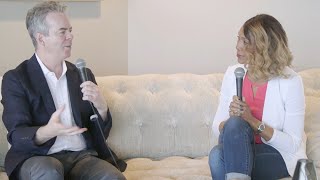
Frank Almond talks about the armed robbery of his 1715 Stradivarius, being tasered during the theft, and how music became his lifeline after his wife's illness and death. He reflects on the nine-day recovery of the violin and the community support that followed.
Chapters
I cannot conclude this interview without, of course, talking about the Stradivarius being stolen.
I thought you had it.
Yeah. No, please, no.
Don't come after me somewhere.
I do not. So here's what's interesting. So if. If. If you really want to hear, like, a beautifully told story about the whole incident, check out Frank on the Moth Radio Hour. You do such a good job. It's humorous and heartfelt in terms of. Excellent storyteller, by the way.
I had some help from their producers, but the mock. It was. It was a really interesting experience.
I bet it was. And so here's what struck me at the end of it. You said, you know what, the Stradivarius was stolen. There was a whole incident around it. But at the end of the day, that is a piece of this violence. 300 and some history. Right. That happened. It adds to its history. And you were kind of. I think you actually said you were sort of a blip in that occurrence. But. But you are here. It. That incident really had an impact on you. Right. Personally, professionally, and not to mention all the media and the attention and everything that comes with it. Just tell me a little bit about that. What did that incident. What was the impact that it had on you and the aftermath? How would you describe that?
It was really surreal, and it continues to be. That's one of the really interesting things about that story, is that it just doesn't. To die. Yeah. I mean, first and foremost, I think on a human level, you know, it was an armed robbery. And I don't care who you are, somebody shoots you with a Taser and steals your wallet, that's one thing.
Yeah.
But that instrument, you know, I had had it a long time, and it was a. As I said in the story, it really felt like somebody tearing off one of my arms. You know, it's a cliche, but you live with these things more. Almost more than members of my family in certain ways. And so there was that, and then the initial shock of what had happened. And then it was such an unusual crime. It's still singular. I mean, there's FBI people and MPD people who had never even heard of anybody trying to steal something like that. Right. For the simple fact that you can't do anything with it.
Yeah, yeah.
You know, it's worthless the minute you take it, because. And plus, the entire world is looking for you.
Right? Yes.
You know, I don't think that those guys got. Those guys just didn't get that far. You know, they knew how to steal it. But. So for I have to hand it to them, whatever, you know, anybody thinks of the police and the FBI. Some of these guys worked 18 hour days and they understood. We had a police chief who really got it right away. Ed Flynn was a huge arts supporter. He went to the symphony. I actually kind of knew him. We hung out a little bit. He got it right away. That was amazing to me because in a lot of other cities that wouldn't happen. So he had these homicide detectives. I'm laughing just because it's like they didn't know what this was. They're like, it's a violin, but it was a piece of history and they're singular and they're these weird anti functional antiquities, you know, that are perfect. And it was gone and it was in Milwaukee and it freaked out a lot of people because our biggest concern was that it would get damaged or destroyed. And I was just traumatized because of all of it, really.
Yeah.
So there's that. And then nine days later, they find it. I mean, I'm leaving out a lot, obviously. And then it all started over again. You know, then the whole media thing goes the other way. Then it's like, now, how do you feel today? You know, and then I could talk about it too, because during the investigation I was really not talking at all.
Do you feel like the media has sensationalized this? Do you appreciate maybe how media is treating this? Because, I mean, it's on one hand, it's just a really intriguing human interest story. Like, okay, that happened. That doesn't happen every day. You had a relationship with the Stradivarius. Right? Which I want. I want to get to some of my questions. But do you feel that the media does it justice when they ask you questions about now what happened? What was that like?
Some of them did really well. A lot of them didn't. It can become very topical and a lot of people just didn't understand the various layers of what was going on. There was a wonderful piece in Vanity Fair, which I think still told the story really, really beautifully. It's huge. But it got that kind of weirdness to it on so many levels. And this like, almost like a Coen Brothers movie. Aside from that, I think that, you know, it was sort of hit or miss. I would just try to tell the story from my perspective and hope that they would get enough of it to get across. One thing that I remember very vividly being cognizant of during that whole episode was, you know, this could have easily careened into a kind of social justice elites. Vs non elites classical musicians vs the guy with the barbershop on the north side. And that didn't happen. And I was really, really happy about that because nobody cared about that. I mean, I was talking to people in the city during those nine days and especially afterwards. From every socioeconomic background.
Yeah.
And, you know, of course, the symphony had their own views on what had happened, but, you know, the. The people that were friends of these guys or the people. When I finally made a victim statement and showed up in court, you know, I was talking to people and they're like, you know, they're basically apologizing. They don't want that. Like, we need more of that in this community. Right.
Why do you think that is, Frank?
And because I think we were honest.
Okay.
I think we were honest about it.
Okay.
It wasn't a racial thing. It was an artistic thing. And it was. It was almost a matter of. Of civic pride. That's really what it was.
Yeah.
It was almost like somebody, you know, kind of like, how dare you do that?
Do you think also that it was because you were involved? And I think the way that you carry yourself and how people know you is you're not this elitist. I mean, you spend your life trying to show that, you know, the symphony is an art form that has many ways about. And you try to connect with people on so many levels. How much of it was because of who it happened to and it was you?
That's an interesting question. I hope so. That's probably the best answer I could. I could come up with, because to me, it didn't care. I didn't care who took it.
Right.
Or, you know, all I knew is that this happened and it was about getting it back and something that affected the city as a whole, not just the mso, not just me. It was more important than that.
Is it true, then, you came to have the relationship with the Stradivarius? Because there was a couple here in Milwaukee, not far from where you live, that had it and reached out to you. I mean, is it true that it was that fortuitous?
It was even more random than that. I mean, I literally got an email one morning that said, we have 1715 Stradivarius as part of an estate situation, and we're looking to figure out, you know, various options. And I'm reading this thinking, this just has to be somebody that has something in their garage, you know, and I get these a lot of the time, and it's 80, 99% of the time. It's just not Incredible. But there were details in the email. So I talked to one or two people that I really trusted in that business, and it kind of added up over a day or so. I think I called the person or we got in touch later that day, and it turned out it was the owner. I didn't know where they were writing from. They didn't say, we're from Milwaukee, but they were here, turned out. And like a week later, we met. Just a couple days later, we met down a storage locker down in the third ward, and we happened to hit it off just personally. And they really were looking for guidance on what to do with it. Somebody had passed away, and they had this instrument in their family since, like, 1963. Right, right. And it turned out it looked like the same violin that nobody had really seen a lot of since about the early 90s. So it started to add up, and I was like, is it possible this thing, you know, when I first met them, the violin was nowhere to be found. And I finally had to say, like, where is this. Where is this.
This violin that you speak of?
Right. And. And. But I had seen a lot of insurance papers and authenticity things and stuff.
That, you know, they probably, at that point, didn't even trust you to bring it out. Right.
Listen, I don't know how this happened. They wrote me. I'm happy to talk. I'd had some of these instruments before. They told me later on. That's one reason they reached out.
Yeah.
I felt. And also, once we sort of made a connection.
Yeah.
I think that that was important. We were. I was interested. I think they thought for the right reasons.
Yeah.
It wasn't like, hey, do you want to play this thing? It was like, we're just looking for options. We know what we have, but we don't. That's not really our world.
Right.
So anyway, it turns out the thing, they had wisely put it in a bank vault downtown.
Yeah.
Like, 150ft from the concert hall. And I'm like, you're kidding. So we went down there and opened it up, and I was there with the expert friend of mine, and we were just. It really was like we had stumbled on some.
I can't.
Picasso or something. Imagine it wasn't playable at the time.
Oh.
So it needed a little TLC, you know, I mean, it's 20 humidity and a bank vault.
And that's interesting, but with TLC, obviously, it comes back.
And listen, they're 300 years old. The thing's been through way worse than. Than that. I'm sure.
Yes, I'm sure. I guess. Well, I guess that speaks to the quality of the instrument that with some tuning and tlc, it actually can come back in awesome form.
That's one reason, I think, that Stradivarius, so many of them are still around.
Yeah.
Because.
So what's up? Can no one make an instrument that good anymore?
No, they.
So what? So why.
Oh, my Makers around the world are all going nice.
Craftsmanship is not there anymore. Like, why?
You know, if you can figure that out, let me know.
Technology cannot.
Okay.
And that's actually a beautiful thing, really, to know that even with today, modern technology, you cannot replicate something made 300.
Years, in my opinion, as a player.
Yeah, no, you're the player.
It's like, okay, so nobody's painting the Mona Lisa anymore either. Why, like, you could do a poster and people do that all the time. But it's not one thing. It's a thousand, four thousand different things that happened at one time in a specific place with one guy.
Yeah.
Go figure. I mean, he was an amazing craftsman, engineer at a time where he became enormously wealthy through his gifts and then was able to crank out more of these things. Everybody started buying them. Nobody's made instruments like that on any level, in any kind of instrument as far as.
That's incredible.
Maybe 58 Gibson.
And I just. I just kind of like to just, you know, immerse in the wonder of that. You know what I mean?
It is incredible.
Super incredible.
Singular, you know?
But here's what's more incredible. So for someone, you had always said that you were open to possibilities. Right. You sort of, like, left it very broad. You knew that what you wanted to do was going to take lots of shapes and forms and you couldn't control so much. I love that. Just sort of like this open growth mindset around it, and then you stumble into this, like, what it cannot be. You can't write that script. You just can't write that script.
No. And I've had. I mean, this. Yeah. And that was a good lesson for me.
Yeah.
In a lot of somewhat painful ways. And in other ways, it completely shifted my thinking about what it was, what it meant.
Yeah.
How. I mean, I always knew how fortunate I was to have something like that to play.
Yeah.
But it just took on a different dimension.
And so. So it was a little. From what I read, it took a while for you to develop your own comfort level with playing an instrument of that historical prominence. Right.
Yeah. Plus the fact that it hadn't been played for about 20 years. And they really do change. They sort of adapt to you, and you kind of adapt to them, as weird as that sounds.
Yeah. No, but as I said, you. Like, it took you a while to establish a relationship that you felt comfortable with, that you grew into as your own. Then it's stolen. Then it comes back. So what was it like in terms of being reunited and like, Re. Do you have a different relationship with the Stradivarius now that you lost it and you. You came back?
Yeah. I mean, I. I don't think you can, you know, be human and not rethink the. Really Every. Everything about it.
Yeah.
I mean, whether it's how you're playing it or the appreciation level of it or the various security things that had to go into effect after that whole thing.
You keep, like, a low jack.
Yeah. There are various things that happen that I just are annoying more than anything. But. Yeah, I mean, it's. I think, like any other traumatic incident in someone's life, I think if you're aware, you can't help but back up and rethink a lot of different things. You have to. Otherwise, you know, you're just gonna plow ahead. On the other hand, we were fortunate that there were a lot of, really, silver linings to this. If 50 more people went to a concert to see that violin rather than it being played, yeah, fine.
Not a bad thing.
Okay.
Not a bad outcome.
Whatever gets them in the door, because a lot of them will come back, and they did.
So how do you feel about that? Because obviously, a lot of press and notoriety came to you personally as a result of this. Right. Just because it's an interesting story, how do you feel the impact on your career? Do you feel that it's been better because it's opened up new possibilities? Do you feel it's been a. Distracting. Just distracting. So good, bad, and different. How do you. How has. How are you internalized the aftermath of all of this?
It's really. All of it. You know, sometimes it's been awful because people only want to talk about that, or you're the person that got their violin stolen. So that's why they go to your concert now. Hopefully, they like the concert, but I'm a musician, and that's what I do. Okay. On the other hand, you know, the publicity was huge. There's never been a story like that. And I think it brought a lot of people's awareness to what these things are and how unique they are and how in. In a community like this, how unusual it is to have something like that. That anybody can go and see practically any week in a number of different situations, whether it's chamber music or whatever. The first thing they say is, like, it was an armed robbery and the guy used the taser. Like, that was highly unusual. Nobody uses a taser. Yeah, I mean, I'm glad he did. Don't get me wrong.
Right.
But. And the second thing they would say is that was by far, to a person, they all agreed that was the worst experience in the police academy that they ever had, because if you carry a taser, you got to get shot with one in the training.
Oh. So they're like, taser, I cannot even.
Yeah. It's not fun.
Yeah.
So.
Yeah. So not to minimize it. All right, so this experience that you had, I mean, I'm glad you said that. It actually, in fact, was an armed robbery with a weapon that was used on you.
Yeah.
Right. So, I mean, to be fair, for.
Many, many years, it turned out right.
Which then has its own level of, like, the feeling of like someone is, you know, stalking you and someone. You know what I mean? Like, well, they were. Yeah.
I mean, that's an element that I think a lot of people don't know.
Right.
And that I didn't even know it took me.
Yeah.
They didn't tell me that until three or four months later.
Yeah. I mean, so that, like the whole creepy factor. Very. So, I mean, I'm sure you don't even think of your own safety in the same way. Right. I mean, violated, really, essentially, your. Your space, your safety, everything.
It was strange. I mean, you know, the guy knew a lot.
Yeah, yeah.
Way more than I would have expected anybody, especially for what the result was.
Yeah.
Part of me was like, wait a minute, you spent three years doing this? And that was the goal, you know? I mean.
Yeah, yeah.
But.
But. But traumatic nonetheless. Right.
So.
So this topic of then you're an artist and you have the music to turn to, and then, of course, with the passing of your wife. So this topic of trauma, music for you, but arts in general, do you want to talk a little bit about that in terms of the role that that plays in your own healing personally, but in healing in general, and what we can take away in terms of the role that the art plays with that.
Well, I think it's two separate things, really. I mean, for thousands of years, the arts have been used in a sort of healing capacity. Hospitals have art exhibits and have musicians come in and play, and there are physiological benefits to patients. I mean, demonstrable. But if you're a professional musician or professional, professional artist and you have something either like your violin getting stolen or in my own case, within a relatively short period of time after that, within a couple, you know, it was just when things were sort of settling down, I felt like, you know, was kind of stabilizing a bit. And my wife got sick and we'd been together for quite a while and had two young daughters. There were, I think 10 and 9 and 11 at the time. And she passed away after about a year and a half, two years. And that those two things on top of each other in a way. I think when you're doing the kind of job we were just talking about, then you're really out of control. I mean, everything is upside down. Nothing. You just have to do what you can do. I made a conscious decision, for a variety of reasons, to use what was happening in my life situation to help as much as I could with my own, well, being artistically and with the situation I was coming home to every day. So what I mean by that is that, you know, there were some people that really didn't understand why I kept playing and I had to go down and just keep playing.
Yeah.
There were times, of course, when I couldn't be there just because of everything that was going on. But my life for about a year and a half was I was either in a hospital or being a caretaker or I was practicing or I was at the MSO or playing chamber music.
Yeah.
And those things fed off of each other. As strange as that, as that sounds. I was in a completely foreign world in one way. And then there's these two kids and you're just like, you know, it's. Unless you're in it, you can't really describe it.
Yeah.
And especially once I sort of sensed where it was all headed. So in a way, being able to go down and play was this escape. It was the only time in my life on a day to day basis, even if it was a few hours where I could just be in that world. And honestly, it was a lifeline. I mean, I don't know what I would have done without it, as weird as that sounds. It was the only real escape that I had, even at home, just to go up, you know, to my studio and just play. Because the alternative would have just been I don't know what I would have done, you know, So I chose. Not everybody would do this, but I chose to keep going and try because the other thing I knew that would happen if you're in that situation and you have to walk out on stage and play. You necessarily have to completely rethink the way that you concentrate, focus and be there now. And we do that anyway. I think if you're doing anything on a really high level, you have to learn how to do that. But really, when your life is completely upside down outside of the hall and you're thrown something like that, I also saw it as an opportunity to really hone those skills more.
Right.
And I know my playing changed a lot. The way that I thought of music changed a lot. The way I experienced everything artistically changed a lot. Way more so than when the violin was stolen. So the upshot is that I tried to turn it into something as meaningful, and hopefully that was going to improve whatever I was doing artistically to the extent that I could. But I was totally, totally winging it. I mean, there's no way around that.
Yeah.
And I think it. I think it did, you know, come out as best as it was going to come out. I was just going to say, at the same time, there was an authenticity about it, and I really didn't. I didn't want to be one of those cancer people. There were people that knew something about it, but I wasn't. That was. That's not my personality. And so a lot of people knew her in the arts community. A lot of people really came out of the woodwork to help us, which saved us. But there was no sugarcoating what was going on. And that was really important to me also to be honest with my family. And she and I were honest about what was happening, and we just. It was one of those things that we went through. So hopefully it ultimately, you know, had more of a positive impact artistically than. Than otherwise. But that's not the way it works with a lot of people. They just fold up, you know.
Well, they fold up. And you had said that, you know, you were playing the violin at that time. Practicing was almost escapism, which is completely, I think, a valid, normal reaction. I think a lot of people escape to things that aren't productive. You had this to escape to. Right. Which was.
Yeah, it was really, really, really helpful.
Yeah.
And don't. Don't get me wrong, there were. There were plenty of days that I was folded up.
Oh, sure.
I mean, there's no getting around that.
No.
But on the whole, yeah. I saw it as a. An off ramp from what was happening.
Yeah.
Sometimes on an hourly basis. And I have to say that, to their incredible credit, the MSO was incredibly supportive, especially my colleagues in the orchestra who knew what was going on. And I have two assistant concert masters. And sometimes they'd find out the night before I'm not going to be there because I got to go to the hospital or whatever. And, you know, everybody kind of empathized.
That's when you really appreciate your work, family, and the community. I think that's a really good community.
Really, really stepped up.
Thank you for sharing that. All right, so last question. I gotta bring it back to no Studios, right?
Yeah.
Thank you for being a member of no Studios. And what does membership at no Studios or no Studios mean to you?
I think this place is amazing. I mean, when I first walked through, I'd never heard anything about it except through a colleague of mine at Miso. And we came in, and I remember thinking, like, why didn't anybody think of this before? You know, it's brilliant. Anything can happen here. Like, you can show films, you can have lectures, you can have musical events that are. Because it's not so huge, you can have a kind of individual connection. You can mix all kinds of elements of the community together and have that overlap. It's a collective in, I think, the best sense of the word. And that word, I think, gets a bad rap in a lot of ways, because usually, you know, it's a bunch of people, like, let's put on a show, you know, and let's get some people together, and two weeks later, everybody hates each other, you know, because they don't know what each other's doing that can happen. And the. The vibe here is more of curiosity and respect. And even if you have no idea what you're in for for a certain event, you're still gonna have hits or misses, but hopefully you're gonna have more hits and then people crossing over and maybe collaborating. And I just think that's, you know, totally unique. Not just in this city. I wish it would happen other places, too.
Oh, my gosh. Well, that's great to hear, because you've lived and traveled and played all over the world, so I think to hear you say that, you see something special here that you haven't seen in a lot of times.
Yeah, it's really meaningful. I hope to get involved more.
Oh, my gosh, that's great. Thank you so much for spending so much time with me. I was inspired. I learned a lot. Gosh, what did I learn?
You learned kind of what a concert master.
You know, I actually did learn what a concert master did, which is really important because I was baffled. I learned that, you know, stuff goes down on the stage that we don't always see, which is actually also very interesting. But mostly I learned everyone said you were a nice guy. That is true. But in addition to that, I'm also going to add curious, outgoing, thoughtful. I just kind of like your your whole mindset and your whole perspective. You're always growing and learning. It's good for the it's good for the Milwaukee Symphony. It's good for Milwaukee. And because you're a member of no Studios, it's good for no Studios, too.
Thank you very much. Thanks for having me.
Thank you so much.
Thanks.
Outgoing, thoughtful. I just kind of like your your whole mindset and your whole perspective. You're always growing and learning. It's good for the it's good for the Milwaukee Symphony. It's good for Milwaukee. And because you're a member of no Studios, it's good for no Studios too.
Thank you very much. Thanks for having me.
Thank you so much.
Thanks.








